Category: parenting

  • Slow Parenting: The Counterintuitive Approach That Actually Raises Happier Kids

    Slow Parenting: The Counterintuitive Approach That Actually Raises Happier Kids

    Imagine a child who wakes up on a Saturday morning not to a schedule of back-to-back activities, but to a wide-open day. She wanders into the backyard, picks up a stick, and spends the next hour building a makeshift fort. She negotiates with her sibling over who gets which branch. She gets frustrated when a section collapses, pauses, and then tries again. By lunchtime, she is muddy, exhausted, and beaming with a quiet pride that comes not from a trophy or a parent’s praise, but from something she built herself.

    This is the promise of slow parenting—not a calmer, less frazzled mother (though that often follows), but a child who is more resilient, more self-reliant, and genuinely happier. It is a promise that runs counter to nearly everything modern parenting culture tells us to do. In an age of overscheduling, hovering, and the relentless pursuit of enrichment, slow parenting dares to suggest that the best thing we can give our children is not more of us, but more of themselves.

    This article explores the principles of slow parenting, the research-backed benefits for children, and practical ways to embrace this counterintuitive approach in your own family.


    What Is Slow Parenting? (And What It Is Not)

    Slow parenting emerged from the broader slow movement—a cultural response to the acceleration of modern life. Writers like Carl Honoré (In Praise of Slowness) and Kim John Payne (Simplicity Parenting) helped articulate a vision of childhood that prioritizes unhurried time, unstructured play, and child-led exploration over constant adult direction.

    At its core, slow parenting is an intentional approach that trusts a child’s natural developmental timeline and innate curiosity. It is the decision to step back from the role of manager—the orchestrator of activities, achievements, and outcomes—and embrace the role of guide: creating a safe, enriching environment and then allowing the child to explore it on their own terms.

    But slow parenting is not neglect. It is not the laissez-faire indifference of a parent who simply cannot be bothered. Boundaries remain essential. Safety remains non-negotiable. What shifts is the assumption that more adult involvement always equals better outcomes. Slow parenting challenges the belief that a child’s every waking moment must be optimized, structured, or supervised.

    Instead, it offers a different calculus: that children learn most deeply when they are given the space to discover, struggle, and solve problems without immediate adult intervention. That boredom is not a problem to be fixed but a gift. That a child’s confidence grows not from constant praise but from the quiet realization that they are capable on their own.


    The Child-Focused Outcomes: What Slow Parenting Actually Delivers

    The central promise of slow parenting is not parental convenience—it is profound, lasting benefits for the child. Here is what children gain when parents step back.

    Greater Emotional Resilience
    Children who experience manageable frustration, boredom, and even minor failure without immediate rescue learn that discomfort is temporary and survivable. They develop the capacity to self-regulate, to sit with difficult emotions, and to bounce back from setbacks. Resilience, it turns out, is not a trait children are born with—it is a muscle built through practice.

    Intrinsic Motivation
    When children are not constantly rewarded, praised, or directed, they learn to pursue activities because they genuinely enjoy them. This intrinsic motivation—the drive that comes from within rather than from external validation—is one of the strongest predictors of long-term satisfaction, creativity, and persistence.

    Enhanced Problem-Solving Skills
    Unstructured play is a crucible for problem-solving. Without an adult to mediate, children must negotiate with peers, invent their own rules, troubleshoot when things go wrong, and innovate with limited resources. These skills translate directly into the kind of flexible, creative thinking that matters far more than any single academic achievement.

    Deeper Family Connections
    Slower schedules create something precious: unhurried time. Time for lingering conversations at the dinner table. Time for spontaneous weekend adventures. Time to simply be together without the pressure of the next appointment. Research consistently shows that strong family relationships are one of the most protective factors for childhood well-being.

    Reduced Anxiety and Stress
    The overscheduled child is not a myth. Pediatric studies have shown that children with overly packed schedules exhibit elevated cortisol levels—a biological marker of chronic stress. Slow parenting intentionally reduces that pressure, giving children’s developing nervous systems room to regulate and rest.

    A Stronger Sense of Self
    When children are not constantly defined by achievements—the soccer goal, the test score, the performance—they develop a more stable, internally anchored identity. They learn that their worth is not contingent on what they do but on who they are. This foundation serves them well into adolescence and beyond.


    The Research Behind the Approach

    Slow parenting is not merely a philosophical preference; it is supported by decades of developmental research.

    Psychologist Peter Gray, author of Free to Learn, has documented the critical role of unstructured play in developing executive function, emotional regulation, and creativity. His work shows that the dramatic decline in children’s free play over recent decades correlates with a corresponding rise in anxiety, depression, and feelings of helplessness.

    Self-Determination Theory, developed by psychologists Edward Deci and Richard Ryan, provides another lens. The theory identifies three innate psychological needs—autonomy, competence, and relatedness—as essential for healthy development. When parents hover, direct, and control, they inadvertently undermine autonomy. When they step back and allow children to navigate their own challenges, they create the conditions for genuine competence to develop.

    Research on childhood anxiety offers a sobering picture: rates of anxiety and depression among children have risen steadily alongside the decline of independent mobility and free play. While correlation is not causation, the pattern is striking. Children who spend less time in unstructured, unsupervised play have fewer opportunities to assess risk, manage fear, and build confidence in their own judgment.


    Core Principles of Slow Parenting

    If slow parenting is more mindset than method, its principles offer a practical framework for shifting daily habits.

    Embrace Boredom
    When a child says, “I’m bored,” the instinct is often to solve it—to offer a suggestion, turn on a screen, or pull out an activity. Slow parenting reframes boredom as an invitation. Boredom is the fertile ground from which creativity, resourcefulness, and self-entertainment grow. The child who learns to navigate boredom learns to trust their own imagination.

    Protect Unstructured Time
    In a culture that treats empty space on a calendar as wasted opportunity, protecting unstructured time requires intentionality. Slow parents prioritize open, unscheduled hours. One committed activity that a child genuinely loves may be enriching; five that leave everyone exhausted is counterproductive.

    Delay, Don’t Push
    The pressure to accelerate milestones—reading earlier, specializing in a sport sooner, hitting developmental markers faster—is intense. Slow parenting trusts developmental readiness. It asks: Is my child doing this because they are ready and interested, or because I am pushing? The answer guides the approach.

    Step Back Before Stepping In
    When a child struggles, the parental instinct is to intervene. Slow parenting introduces a pause. Before offering help, ask: Does my child actually need my help, or do they need space to figure this out? Often, the most helpful intervention is no intervention at all.

    Simplify the Environment
    Too many toys, too many choices, too much digital noise—clutter overwhelms children’s capacity for deep focus. Simplifying the physical environment creates space for deeper engagement. Fewer toys, thoughtfully chosen, invite more imaginative play than a room overflowing with plastic.

    Prioritize Connection Over Correction
    Every moment with a child does not need to be a teaching moment. Constant correction—fixing how they hold a pencil, how they build a tower, how they handle a conflict—communicates that they are not quite right as they are. Prioritizing connection means sometimes letting the “lesson” go in favor of simply being together.


    Slow Parenting by Age: How It Looks Different

    Slow parenting is not one-size-fits-all. Its expression shifts as children grow.

    Early Childhood (Ages 0–5)
    In the early years, slow parenting means allowing toddler-led exploration. It means resisting the urge to interrupt deep play—even when it is messy, even when it is not what you had in mind. It means embracing unstructured outdoor time, offering simple open-ended toys, and trusting that a child’s natural curiosity is the best curriculum.

    Elementary Years (Ages 6–12)
    This is often the age when the schedule begins to fill. Slow parenting in elementary school means being ruthless about limits on organized activities. It means giving children increasing independence—walking to a friend’s house, managing their own small projects, experiencing natural consequences when they forget a homework assignment. It means protecting free time as fiercely as any sport or lesson.

    Adolescence (Ages 13+)
    Teenagers need guidance, but they also need autonomy. Slow parenting in adolescence means shifting from manager to consultant. It means offering advice when asked, allowing teens to make meaningful decisions about their own lives, and letting them experience the outcomes—good and bad—while remaining a safe place to land. It means trusting that the foundation built in earlier years will hold.


    Common Fears and How to Address Them
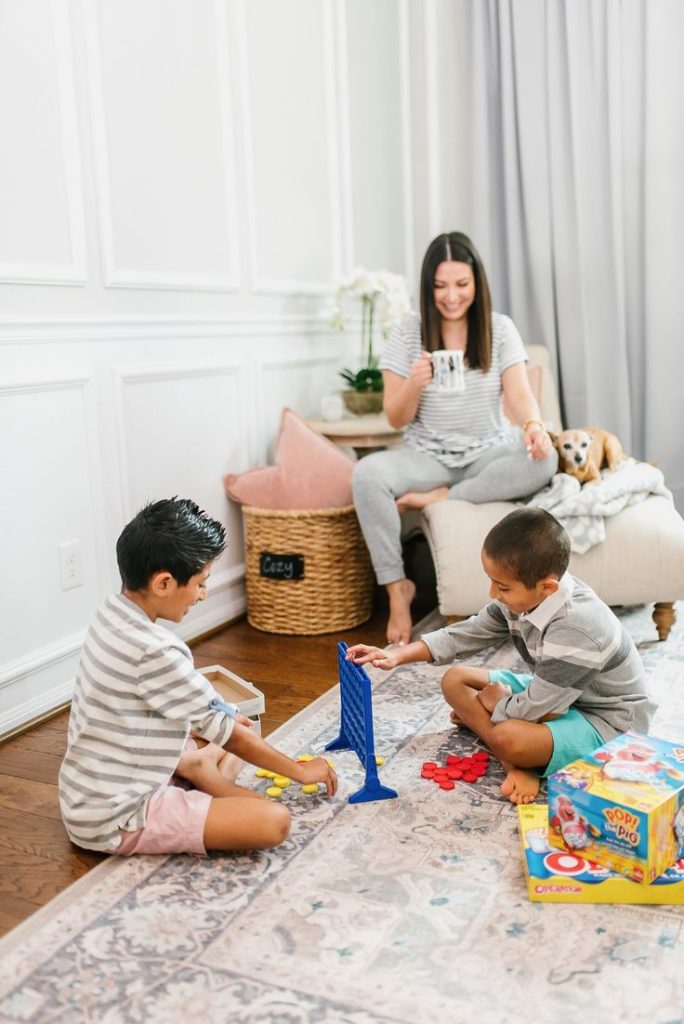
    Slow parenting sounds lovely in theory, but putting it into practice often triggers anxiety. These fears are worth naming—and answering.

    “Will my child fall behind?”
    The fear that slowing down means losing ground is powerful. But behind what? Behind the child taking three extracurriculars? Behind the one reading at a higher level? The question to ask is not whether your child is keeping up with peers, but whether your child is developing the skills that actually predict long-term success: curiosity, resilience, self-regulation, and the ability to form healthy relationships. By those measures, slow parenting does not cause children to fall behind—it positions them to move ahead.

    “Other parents will judge me.”
    Competitive parenting culture is real, and opting out can feel socially risky. But slow parenting tends to attract a quiet respect from other parents who secretly wish they had the courage to do the same. Having a simple script ready—”We’ve decided to keep this season simple” or “We’re prioritizing family time right now”—can help navigate judgmental conversations with confidence.

    “What if they get hurt?”
    This fear cuts to the heart of why overparenting emerged. The world feels riskier than it did a generation ago, even if statistics suggest otherwise. Slow parenting distinguishes between genuine danger and manageable risk. Climbing a tree carries the risk of a scraped knee—and also the benefit of developing physical confidence and risk assessment. Allowing a child to walk to a friend’s house builds independence. Protecting children from all discomfort also protects them from growth.

    “I don’t have time to slow down.”
    This is the paradox of slow parenting: it does not require adding more to an already full plate. It requires subtracting. It requires saying no to the things that do not serve the family. It requires trusting that a quieter calendar is not a sign of failure but a deliberate choice. For many parents, the shift feels less like adding time and more like reclaiming it.


    Practical Steps to Start Slow Parenting Today

    Shifting toward a slower approach does not require an overnight overhaul. Small, intentional changes add up.

    Conduct a Schedule Audit
    Sit down with the family calendar. List every activity. For each one, ask: Does this serve my child’s well-being? Does my child genuinely enjoy it? What would happen if we dropped it? The answers will reveal where the schedule has expanded beyond what serves anyone.

    Create Unscheduled Time
    Block out intentional white space in the weekly calendar. Protect it as fiercely as any appointment. When Saturday morning is intentionally empty, something remarkable happens: children fill it themselves.

    Practice the Pause
    When your child faces a challenge—a disagreement with a sibling, a frustrating puzzle, a moment of boredom—pause before intervening. Count to ten. Observe. Often, the solution emerges without your help.

    Rethink Screen Time
    Slow parenting applies to technology as well. Prioritize passive, child-led exploration over algorithm-driven consumption. A child who is bored with a screen will often, given time, find something more creative to do.

    Model Slowness
    Children learn far more from what they see than what they are told. A parent who moves through life in a state of constant hurry teaches that hurry is normal. Modeling unhurried presence—sitting with a cup of tea, working on a project without interruption, being still—gives children permission to do the same.


    Real-Life Scenarios: Slow Parenting in Action

    The Bored Child
    Instead of offering solutions or turning on a screen, the slow parent responds: “I trust you’ll find something interesting to do.” At first, the child may protest. But over time, boredom becomes a launchpad rather than a complaint.

    The Forgotten Homework
    When a child forgets an assignment, the urge is to rescue—to email the teacher, to drive the forgotten work to school. Slow parenting allows the natural consequence. The child experiences the discomfort of a forgotten task and is better positioned to remember next time. The parent follows up with a collaborative conversation, not a lecture.

    The Playground Disagreement
    At the park, children squabble over a toy. The instinct is to step in and mediate. Slow parenting means observing from a distance, giving children the chance to resolve conflict independently. They often do—and learn more in the process than any adult-mediated solution could offer.

    The Overpacked Weekend
    A weekend has become a blur of birthday parties, sports, and errands. The slow parent makes a choice: cancel one commitment, leave a day unscheduled, and notice what happens. Often, the unscheduled day becomes the one everyone remembers.


    Addressing the Counterintuitive Nature

    There is a reason slow parenting feels uncomfortable: it goes against nearly every cultural message parents receive. We are told that more is better, that involvement equals love, that a child’s success is a direct reflection of parental effort.

    Slow parenting asks for something harder than doing more. It asks for trust. Trust in a child’s natural development. Trust that struggle is not failure. Trust that a child who is given space will grow into their own capable self.

    This trust does not come easily in a culture of anxiety. But the parents who practice slow parenting often describe a shift: the relief of letting go of an impossible standard, the joy of watching children discover their own abilities, the deepening of family relationships when the pressure eases.


    Conclusion

    The promise of slow parenting is not a perfectly curated childhood or a collection of impressive achievements. It is something quieter and more lasting: a child who trusts themselves. A child who knows how to sit with boredom and emerge with creativity. A child who has learned, through practice, that they are capable.

    Stepping back is not abdication. It is a courageous form of love—one that says, I believe in you. I trust you. You do not need me to orchestrate your life in order to succeed.

    If you are ready to try, start small. Choose one weekend morning to leave unscheduled. The next time your child says “I’m bored,” resist the urge to solve it. Pause before intervening in a struggle. Watch what happens.

    You may find that the child who emerges is not behind at all, but exactly where they need to be: confident, curious, and quietly capable. And you may find that the parent you become is more relaxed, more present, and more trusting than you thought possible.

    We would love to hear your experiences. What is one small change you will make this week toward a slower parenting approach? Share your thoughts in the comments below, and explore our related articles on intentional parenting, child development, and building resilience.


  • How to Set Boundaries as a Mom Without the Guilt Trip

    How to Set Boundaries as a Mom Without the Guilt Trip

    The text comes in on a Tuesday afternoon. A friend asking if you can watch her kids for “just an hour” while she runs an errand. Your jaw tightens. You are exhausted, the house is a disaster, and you had finally carved out thirty minutes to sit down. But your fingers type “sure!” before your brain can catch up. The resentment blooms instantly, followed closely by shame. Why can’t you just be happy to help?

    If this scenario feels familiar, you are not alone. There is a quiet epidemic among mothers: the inability to say no, followed by the guilt of wishing you had. Somewhere along the way, many of us absorbed the message that being a good mom means being endlessly available, infinitely patient, and capable of pouring from an empty cup without complaint. We learned that love is measured in sacrifice, and that setting boundaries as a mom is somehow selfish.

    This article is here to gently dismantle that belief.

    The truth is that boundaries are not walls you build to keep people out. They are the structures you put in place to protect the most important resources you have—your time, your energy, your emotional capacity, and your ability to show up as the mother you actually want to be. Without them, resentment builds, exhaustion becomes chronic, and the very people you are trying to serve end up receiving a depleted, irritable version of you.

    “Boundaries are not an act of selfishness. They are an act of sustainability. You cannot pour from an empty cup, and boundaries are how you keep the cup from shattering.”

    This guide will walk you through everything you need to know about setting boundaries as a mom—from understanding why guilt hits so hard to practical scripts you can use, handling pushback from loved ones, and ultimately giving yourself permission to take up space. Because you are allowed to have needs. You are allowed to say no. And you can do all of this without the guilt trip.


    Redefining Boundaries: What They Are and What They Are Not

    Before we dive into the how, we need to clear up what boundaries actually are. Many of us carry around a distorted definition that makes the very idea feel harsh or unloving.

    Boundaries are not:

    • Walls designed to keep people away
    • Punishments for people who have disappointed you
    • Declarations that you do not care
    • Ultimatums meant to control others
    • Signs that you are failing as a mother or partner

    Boundaries are:

    • The guidelines you set for how you allocate your limited resources—time, energy, emotional capacity, and physical space
    • A way to protect what matters most so you can show up fully when it counts
    • An act of self-respect that, counterintuitively, allows you to love others more sustainably
    • A skill that can be learned and strengthened with practice

    “Boundaries are not about keeping people out. They are about keeping yourself whole.”

    The myth of the martyr mother runs deep. We have been fed generations of stories about women who gave everything, asked for nothing, and were celebrated for their silent suffering. But here is what those stories leave out: silent suffering eventually becomes loud resentment. Endless giving without replenishment leads to burnout. And burnout does not make you a better mother—it makes you a depleted one.

    When you reframe boundaries as essential maintenance rather than selfish indulgence, everything shifts. You are not saying no to your child’s request for another story because you do not love them. You are saying yes to your own need for rest so that you can read tomorrow’s stories with genuine presence rather than exhausted obligation.


    The Guilt Factor: Why It Hits Moms So Hard

    Let us talk about the elephant in the room: guilt. Even when you know intellectually that boundaries are healthy, the feeling that you are doing something wrong can be overwhelming. It is worth understanding why guilt shows up so forcefully for mothers.

    Guilt arrives for several reasons:

    Internalized expectations. Many of us grew up watching mothers who never said no, who put everyone else first, who wore exhaustion like a badge of honor. Even if we consciously reject that model, it lives somewhere in our bones as the definition of “good mother.”

    Societal messaging. The cultural script for mothers is still largely about availability and sacrifice. Say no to a school volunteer request? You might be judged. Take time for yourself? You might be called selfish. The fear of that judgment keeps many women trapped in yes.

    Comparison culture. Social media shows us mothers who seem to do it all—homemade birthday cakes, perfectly planned playdates, endless patience. In comparison, taking a break can feel like failure.

    Fear of being seen as “not enough.” Deep down, many mothers carry a fear that if they stop performing endless giving, they will be revealed as insufficient. Saying no feels like confirming that fear.

    “Guilt often appears when you do something new or different. It is not a sign that you are doing something wrong. It is a sign that you are breaking an old pattern.”

    Here is what you need to know: guilt is not a reliable indicator of wrongdoing. Guilt is often just the discomfort of change. When you have spent years operating without boundaries, the first time you set one will feel strange and wrong. That feeling is not proof that you made a mistake. It is proof that you are doing something different.

    The cost of letting guilt win is steep. Without boundaries, you will likely experience:

    • Chronic exhaustion that no amount of sleep can fix
    • Resentment toward the people you love most
    • Losing touch with your own needs, preferences, and identity
    • Moments of snapping or shutting down because your capacity has been exceeded
    • A quiet sense that you are disappearing inside your own life

    Setting boundaries is not easy. But the temporary discomfort of a difficult conversation is far less costly than years of resentment and depletion.


    The Foundation: Getting Clear on Your Own Needs

    You cannot set boundaries effectively if you do not know what you need. Many mothers have spent so long attending to everyone else’s needs that they have lost touch with their own. Before you can communicate limits to others, you need to do the internal work of identifying where your limits actually are.

    Start by asking yourself some honest questions. Consider writing the answers down—there is power in naming what you find.

    When do I feel resentful? Resentment is a boundary alarm. If you notice yourself feeling bitter after saying yes to something, that is a clear signal that your boundaries were crossed. Make a list of recent situations that left you feeling resentful.

    When do I feel drained rather than fulfilled? Pay attention to the people and situations that leave you depleted. Some relationships and commitments genuinely nourish you. Others take everything and give nothing back.

    What do I find myself complaining about most often? Our complaints are often unmet needs in disguise. If you constantly complain about being the only one who does bedtime, that is a boundary waiting to be set.

    When do I feel most like myself? This question helps you identify what you need to protect. Your peace, your hobbies, your friendships, your quiet moments—these are worth drawing lines around.

    “Resentment is a boundary alarm. When you feel it, something in you is being violated.”

    It can also be helpful to think about boundaries in categories. You may have needs in several areas:

    Type of BoundaryExamples
    TimeProtecting certain hours for rest, family, or yourself; limiting how long you will host visitors
    EnergySaying no to commitments that drain you; limiting emotional labor for others
    Physical SpaceHaving a room, corner, or even a chair that is yours; privacy around your body and belongings
    Emotional LaborNot being the default therapist for friends or family; expecting partners to manage their own emotions
    DigitalLimiting screen time; not answering messages during family time; setting expectations around work emails

    Your needs are valid. Wanting time alone is not selfish. Wanting your partner to carry equal weight is not unreasonable. Wanting to be asked rather than assumed upon is not demanding. These are basic human needs that motherhood does not negate.


    How to Set Boundaries as a Mom: A Step-by-Step Framework

    Now we arrive at the practical heart of the matter. Setting boundaries as a mom is a skill, and like any skill, it improves with practice. Use this framework to guide you through the process.

    Step 1: Start Small

    If you are new to boundaries, do not begin with the hardest conversation—the mother-in-law who criticizes everything, the partner who has never done a school pickup, the friendship that has been unbalanced for years. Start with a low-stakes boundary to build your confidence.

    This could be as simple as: “I can only stay for an hour,” “I need to leave by 4:00,” or “I am not available for that this week.” Practice on situations where the stakes feel manageable. Each small success builds evidence that you can do this.

    Step 2: Use Clear, Simple Language

    Boundaries often fail because they are buried in apologies, over-explaining, or vague language. A boundary that is not clearly communicated is not a boundary—it is a hint. And hints rarely work.

    Stick to simple, direct statements. Here are some sentence stems to borrow:

    • “I cannot do that, but thank you for asking.”
    • “I need to leave by [specific time].”
    • “I am not available for that right now.”
    • “That does not work for me.”
    • “I need [specific need]. Can we figure out a solution together?”
    • “I love you, and I also need to rest.”

    “A boundary that is not clearly communicated is not a boundary—it is a hint. And hints rarely work.”

    Step 3: Drop the Apology

    Notice how often you preface your needs with “I’m sorry.” “I’m sorry, but I can’t.” “I’m sorry, I need some time.” “I’m sorry, I’m just so tired.”

    Here is the distinction: apologize when you have genuinely wronged someone. Do not apologize for having needs. Dropping the unnecessary apology signals that your boundary is legitimate and not up for debate.

    Instead of “I’m sorry, I can’t watch the kids today,” try “I can’t watch the kids today.” The first invites negotiation. The second is a statement.

    Step 4: Avoid Over-Explaining

    Over-explaining is a common habit for women, and it undermines boundaries. When you offer a long justification for your boundary, you signal uncertainty. You invite the other person to pick apart your reasoning and convince you why you are wrong.

    A boundary stated simply is harder to argue with. You do not need to prove that your need is valid. It is valid because it is yours.

    If someone pushes for explanation, you can say: “I am not able to do that. I appreciate you understanding.”

    Step 5: Hold the Line with Kindness

    Boundaries are not about being harsh. You can be both warm and firm simultaneously. The combination is actually more effective than aggression or apology.

    Consider the difference:

    • Harsh: “Stop calling me all the time!”
    • Apologetic: “I’m so sorry, I know you need to talk, but I just can’t handle it today…”
    • Warm and firm: “I love you, and I cannot talk right now. Let me call you tomorrow when I have more space.”

    The third option communicates care while maintaining the boundary.

    Step 6: Expect Discomfort and Pushback

    Here is something no one tells you about setting boundaries as a mom: people who are used to you having no boundaries may react negatively when you start creating them. They may get angry, guilt-trip you, withdraw, or pretend they did not hear you.

    Their reaction is not proof that you did something wrong. It is proof that the dynamic is shifting. When you change, the system around you feels the shift. People who benefited from your lack of boundaries may resist your new ones.

    Sit with the discomfort. You do not need to rush to fix their feelings. You are not responsible for managing how others respond to your healthy limits.


    Real-Life Scenarios: Boundaries in Action

    Sometimes the abstract becomes clearer when we see it in real situations. Here are five common scenarios mothers face, with examples of how boundaries might be set.


    Scenario 1: The Constant Drop-In Relative

    Your mother-in-law has a habit of showing up unannounced. You love her, but the surprise visits disrupt naps, dinner, and your sanity.

    Old Pattern: Let her in, feel resentful, complain to your partner later, repeat.

    Boundary Approach: Have a calm conversation outside of a visit moment. “We love seeing you, and we need to protect nap times and family rhythms. Can we set up a system where you text before coming over? Even five minutes of warning makes a huge difference.”

    If she continues dropping by unannounced, you can say at the door: “We are not available for a visit right now. Let’s find a time later this week that works.”


    Scenario 2: The Partner Who Doesn’t Carry Equal Weight

    You have become the default parent—you do the mental load, the scheduling, the bedtime routine, the middle-of-the-night wake-ups. You are exhausted and resentful.

    Old Pattern: Keep doing it, snap at your partner occasionally, feel guilty for snapping.

    Boundary Approach: Choose a calm moment to talk. Use “I” statements rather than blame. “I cannot continue carrying the full load of bedtime and nights. I am exhausted and it is affecting my health. I need us to create a new system together. How can we split this so it feels fair?”

    If your partner resists, hold the line: “I hear that this is an adjustment. I still need us to find a solution. I cannot keep going the way things are.”


    Scenario 3: The Friend Who Dumps Emotional Baggage

    You have a friend who treats you as her sole emotional support. Calls are long, one-sided, and leave you drained. You want to be compassionate, but your own capacity is maxed out.

    Old Pattern: Answer every call, listen for hours, feel depleted, avoid her calls, feel guilty.

    Boundary Approach: Before answering, take a breath. You can set a time limit upfront: “I have about twenty minutes to talk right now. Let’s catch up.” Or you can shift the pattern: “I love you and I cannot take a long call today. Can we talk tomorrow when I have more space?”

    If the pattern continues, a more direct conversation may be needed: “I want to be here for you, and I am realizing I need to protect my own emotional energy more. Can we find a balance where our conversations feel supportive for both of us?”


    Scenario 4: The Over-Scheduled Child

    You feel pressure to enroll your child in every activity—soccer, piano, art, tutoring. The calendar is full, you are exhausted from driving, and your child is overwhelmed.

    Old Pattern: Keep saying yes, feel like a bad parent if you say no, collapse on weekends.

    Boundary Approach: Revisit your family values. What actually matters? What does your child genuinely enjoy? What does your family need to function?

    You can set boundaries with yourself first: “We are limiting activities to two per season.” Then communicate to others: “Thank you for the invitation, but we are keeping our schedule light right now. We will keep it in mind for the future.”

    “You are allowed to protect your family’s time even when it disappoints other people.”


    Scenario 5: The Work-Life Bleed

    You work from home, and the lines between professional and personal life have disappeared. You answer emails at dinner, take calls during your child’s bath time, and never truly clock out.

    Old Pattern: Always available, always behind, always guilty about what you are not doing.

    Boundary Approach: Set explicit working hours and communicate them to your team. “I am available from 9 to 5. I will respond to messages during that window.” Close your laptop at the end of the day. Do not keep work apps on your phone.

    If you are a stay-at-home parent, the same principle applies: protect certain hours as your own. “From 7 to 8 PM, I am off duty. That is my time.”


    Handling the Pushback: When Others Resist Your Boundaries

    You have set your boundary clearly and kindly. And then the pushback comes. Perhaps it is a guilt trip: “Oh, I guess I’ll just manage on my own then.” Perhaps it is anger: “You never used to be like this.” Perhaps it is withdrawal: your friend stops calling entirely.

    None of these reactions mean your boundary was wrong.

    When others resist your boundaries, remember:

    Their reaction is about them. People who are used to your availability may feel inconvenienced or even threatened when you change. That is their adjustment to make, not your problem to solve.

    You do not need to manage their feelings. Many mothers have been socialized to rush in and soothe whenever someone else is upset. Resist that urge. Their discomfort is not an emergency you need to fix.

    Stay firm, stay kind. You can hold your boundary without becoming defensive or aggressive. “I hear that this is hard for you. I still need to do what is best for me right now.”

    Watch for testing. Some people will test your boundaries—they will ask the same question again, make passive-aggressive comments, or pretend to forget. Respond consistently. Each time you hold the line, you reinforce that your boundary is real.

    “When someone resists your boundary, it is not proof that you did something wrong. It is proof that the dynamic is shifting.”

    A difficult truth: some relationships may not survive your boundaries. If a friendship only functioned when you gave endlessly and never asked for anything in return, it may fade when you start setting limits. That loss is painful. It may also reveal that the relationship was never truly mutual.


    The Guilt Management Plan: What to Do When It Creeps In

    Despite your best efforts, guilt will likely appear. It may whisper as you set the boundary, shout after you have done it, or linger in quiet moments. Here is how to manage it.

    Name it. Simply saying “I am feeling guilt right now” reduces its power. It becomes an emotion you are experiencing rather than a truth about your character.

    Separate guilt from truth. Write down the story guilt is telling you. Then write the counter-story.

    Guilt’s StoryThe Counter-Story
    “I am being selfish.”“I am protecting my energy so I can show up better.”
    “I am hurting them.”“They are experiencing disappointment, which is a normal human emotion that they can handle.”
    “A good mother would do this.”“A good mother models healthy limits and self-respect.”

    Ask the right question. Instead of asking “Is everyone happy with me?” ask “Am I honoring my needs?” and “Will this boundary allow me to show up better long-term?”

    Visualize the alternative. Imagine what happens if you do not set the boundary. The exhaustion, the resentment, the eventual explosion or withdrawal. The temporary discomfort of the boundary is the kinder choice for everyone.

    Find your people. Guilt thrives in isolation. Find one or two friends who understand setting boundaries as a mom and will cheer you on. Share your wins and your struggles. Let them remind you that you are not wrong.


    Modeling Boundaries for Your Children: The Gift You Give Them

    If the guilt still feels heavy, consider this reframe: when you set boundaries, you are not just protecting yourself. You are teaching your children something essential.

    Children learn what they live. When they see you say no with kindness, they learn that their own no matters. When they see you protect your time and energy, they learn that their own needs are valid. When they see you communicate clearly without apology, they learn that they can do the same.

    “You are not just setting boundaries for yourself. You are showing your children that love and limits can coexist.”

    Many of us did not learn this growing up. We learned that good women said yes. We learned that our needs came last. We learned that exhaustion was normal. Setting boundaries is not just an act of self-care—it is an act of breaking generational patterns.

    You can talk to your children about boundaries in age-appropriate ways.

    For young children: “Mommy needs five minutes of quiet so she can be patient again. I am going to sit here with my tea, and then we will play.”

    For school-age children: “I love spending time with you, and I also need time to rest. Let’s plan something special for tomorrow.”

    For teenagers: “I am modeling something important here. I am showing you that it is okay to say no, to protect your energy, to communicate your needs. You get to do that too.”

    Your children will not remember the moments you said no because you needed rest. They will remember whether you were present and patient during the moments you said yes.


    Conclusion: You Are Allowed to Take Up Space

    If you take nothing else from this guide, take this: setting boundaries as a mom is not a betrayal of motherhood. It is the very thing that allows you to mother sustainably.

    You are allowed to take up space. You are allowed to have needs. You are allowed to say no without justification. You are allowed to protect your time, your energy, your peace, and your body. You are allowed to disappoint people. You are allowed to be a work in progress, to set boundaries imperfectly, to feel the guilt and set them anyway.

    The guilt will soften. With each boundary you set, the voice that says “you should” will grow quieter, and the voice that says “you deserve” will grow stronger.

    Start small. Practice on the easy ones. Let the successes build evidence that you can do hard things. Forgive yourself when you slip back into old patterns. Try again.

    “The guilt will soften. With each boundary you set, the voice that says ‘you should’ will grow quieter, and the voice that says ‘you deserve’ will grow stronger.”

    You are not just setting boundaries. You are reclaiming yourself. And that reclaimed, rested, respected version of you is exactly who your family needs.

    You have permission to begin.

  • What Is Slow Motherhood? (And Why More Moms Are Choosing It)

    What Is Slow Motherhood? (And Why More Moms Are Choosing It)

    If you’ve spent any time on social media lately, you’ve probably seen the term floating around. Slow motherhood. It appears in Instagram captions next to photos of quiet mornings with coffee and picture books. It shows up in Pinterest boards filled with linen dresses and unstructured days. And if you’re a mom who feels perpetually behind, perpetually exhausted, and perpetually wondering why everyone else seems to be handling life better, the concept probably caught your attention.

    But here’s the thing: slow motherhood isn’t a trend. It’s not about buying the right wooden toys or achieving a certain aesthetic. It’s not another performance to perfect. Slow motherhood is a movement—a quiet but growing shift in how women are choosing to show up for their families and themselves.

    This article explores what slow motherhood actually means, why more moms are embracing it, and how you can incorporate its principles into your own life without overhauling everything.


    What Slow Motherhood Is Not

    Before we define what slow motherhood is, let’s clear up what it isn’t.

    Slow motherhood is not about being lazy or unambitious. It’s not about letting your kids run wild without boundaries. It’s not about quitting your job, homeschooling on a farm, or having endless patience 24 hours a day. It’s not another standard to fail at.

    And perhaps most importantly, slow motherhood is not about having more time. If you’re a mom, you know that’s not how it works. The laundry still needs folding. The school forms still need signing. The toddler still needs wiping. You don’t suddenly gain extra hours in the day.

    What slow motherhood offers is not more time, but a different relationship with the time you already have.


    Defining Slow Motherhood

    At its core, slow motherhood is a mindset shift. It’s the intentional choice to resist the pressure to do more, be more, and produce more in the relentless pursuit of “good motherhood.”

    It draws inspiration from the broader slow movement—slow food, slow living, slow travel—which emerged as a response to the culture of speed and efficiency that began dominating modern life. Just as slow food encourages us to savor meals rather than consume them in haste, slow motherhood encourages us to savor the ordinary moments of raising children rather than racing through them.

    Psychologists often describe modern motherhood as a state of “time poverty”—the feeling that there is never enough time to meet all the demands placed on us. Slow motherhood acknowledges this reality and asks a different question: instead of “How can I do more?”, it asks “What actually matters?”

    The philosophy rests on several core principles:

    Presence over Perfection. A slow mom understands that her children will remember how she made them feel, not whether the snacks were organic or the toys were aesthetically coordinated. She prioritizes being fully available for small moments—the spontaneous conversation, the impromptu dance party—over curating a flawless environment.

    Connection over Activity. In a culture that equips childhood with enrichment, a slow mom questions whether another scheduled activity is actually serving her family. She protects unscheduled time not as wasted time, but as space for connection, boredom, and unstructured play.

    Rhythm over Rigid Schedules. Slow motherhood doesn’t mean chaos. It means building flexible rhythms that honor the natural flow of your family rather than adhering to external expectations. It’s knowing when to push and when to pause.

    Sufficiency over Scarcity. A slow mom rejects the narrative that she is never doing enough. She practices the radical belief that she is enough—and that what she gives her children is enough.

    Screenshot

    Why More Moms Are Choosing Slow Motherhood

    The rise of slow motherhood isn’t happening in a vacuum. It’s a response to specific pressures that have made modern motherhood unsustainable for so many women.

    The Myth of the Supermom. For decades, mothers have been sold a story: you can have it all, do it all, and be it all. Career, perfect home, Pinterest-worthy birthday parties, homemade meals, emotional availability, and a thriving marriage—all while looking put-together and never complaining. This myth has left generations of women burned out and convinced they are failing.

    The Comparison Crisis. Social media has magnified the problem. Where mothers once compared themselves to the neighbor down the street, they now compare themselves to thousands of curated highlights from around the world. It’s an impossible standard, and it’s making us miserable.

    The Loss of the Village. Historically, mothers raised children within communities—extended family, neighbors, other mothers who shared the load. Today, many mothers parent in isolation, with partners working long hours and support networks stretched thin. The weight of it all falls on one person.

    The Over-Scheduling of Childhood. There’s a pervasive belief that if our children aren’t in multiple activities, we’re failing to give them opportunities. This leads to families running from one commitment to another, with no margin for rest, spontaneity, or simply being together.

    The Mental Load Crisis. Even when mothers scale back physically, the mental load remains. The constant tracking of appointments, school forms, grocery lists, and future planning takes a toll that slow motherhood seeks to address—not by doing more, but by consciously choosing what to hold and what to release.


    Signs You Might Be Ready for Slow Motherhood

    How do you know if this philosophy resonates with you? Here are some signs:

    • You feel perpetually behind, no matter how much you accomplish.
    • Your weekends feel more exhausting than your weekdays.
    • You find yourself snapping at your kids over small things because you’re running on empty.
    • You say “yes” to things out of guilt rather than genuine desire.
    • You can’t remember the last time you had a full hour to do nothing.
    • You look at your children and feel like they’re growing up too fast, but you don’t know how to slow it down.
    • The phrase “I should be doing more” plays on a loop in your head.

    If any of this sounds familiar, slow motherhood isn’t about adding another thing to your plate. It’s about giving yourself permission to take things off.


    How to Practice Slow Motherhood (Without Overhauling Your Entire Life)

    Slow motherhood doesn’t require a complete lifestyle reset. It starts with small, intentional shifts.

    1. Redefine What “Enough” Looks Like

    Ask yourself honestly: what actually needs to happen today? Not what the internet says should happen. Not what your mother-in-law would do. What actually matters for your family’s well-being?

    Lower the bar. The world’s most expensive rugs were woven with intentional “mistakes” because perfection was considered unlucky. Maybe imperfection is lucky for mothers too.

    2. Protect Unscheduled Time

    Block out chunks of time where nothing is planned. This might feel uncomfortable at first—like you’re being unproductive—but unscheduled time is where connection happens. It’s where kids learn to play independently. It’s where you remember what it feels like to breathe.

    3. Limit the Inputs

    Social media, news, group chats, advice columns—they all feed the feeling that you’re not doing enough. Consider a social media detox, or curate your feed to follow voices that remind you of your enoughness rather than your inadequacy.

    4. Say No More Often

    Every yes to something that drains you is a no to something that matters. Practice saying no without over-explaining. “That doesn’t work for us.” “We’re simplifying our schedule this season.” “No, but thank you for thinking of us.”

    5. Embrace Boredom

    Resist the urge to constantly entertain your children. Boredom is where creativity grows. When kids complain about being bored, resist the panic to fill the space. Let them figure it out.

    6. Create Rhythms, Not Schedules

    Instead of scheduling every hour, create loose rhythms for your days. Morning: slow wake-up, breakfast together. Afternoon: quiet time, outdoor play. Evening: dinner, wind-down. Rhythms provide structure without rigidity.

    7. Practice Single-Tasking

    Multitasking is a myth. When you’re with your children, be with them. When you’re working, work. When you’re resting, rest. Divided attention leaves everyone feeling shortchanged.

    8. Let Go of the Mental Load

    Share the load—literally. If your partner is capable, let them own tasks completely. That means no reminding, no managing, no checking. It might not be done your way, but it will be done. Your brain needs the break.


    What Slow Motherhood Looks Like in Real Life

    If you’re wondering whether slow motherhood is realistic for your life, here are some everyday examples:

    • Morning: Instead of rushing everyone out the door, you wake up fifteen minutes earlier to sit with your coffee before the chaos begins. You don’t scroll. You just sit.
    • Afternoon: Instead of filling every afternoon with activities, you leave one or two days completely open. Those afternoons become your family’s favorite time—walks, forts, or nothing at all.
    • Evening: Instead of a perfectly executed bedtime routine, you let go of the pressure. Sometimes bath time is a splash-filled mess. Sometimes it’s a quick wipe-down. The connection matters more than the process.
    • Weekend: Instead of cramming in errands and activities, you choose one thing. The rest of the time is for being together, with no agenda.

    Slow motherhood looks different for every family. For some, it means reducing activities. For others, it means leaving a career. For most, it simply means making small, daily choices to prioritize presence over performance.


    The Pushback You Might Face

    Not everyone will understand your shift toward slow motherhood. You may hear:

    • “Aren’t you worried your kids will fall behind?”
    • “You used to be so ambitious.”
    • “I could never slow down like that.”

    Remember: their reaction is about their own fears and conditioning, not your choices. You don’t need permission to protect your peace. And you certainly don’t need to justify slowing down to people who benefit from your burnout.


    Final Thoughts: Slow Motherhood Is a Return, Not a Trend

    Slow motherhood isn’t new. For most of human history, mothers raised children in rhythms that honored connection, community, and the natural pace of life. What we’re seeing now is not a trend—it’s a return. A return to what mothers have always known: that children don’t need perfection. They need presence. They don’t need constant entertainment. They need to feel safe, loved, and seen.

    If you’ve been feeling the weight of modern motherhood—the exhaustion, the comparison, the endless pressure to do more—slow motherhood is an invitation. It’s not about being a better mom. It’s about being a more present one. It’s not about doing everything right. It’s about letting go of what doesn’t matter so you can hold on to what does.

    The laundry will always be there. The mess will return. But your children are only small once. And the moments you choose to slow down and be with them? Those are the moments they’ll remember. Those are the moments you’ll treasure.

    Slow motherhood isn’t about having more time. It’s about making the time you have matter.

  • How to Be a More Intentional Mom (Without Overhauling Your Entire Life)

    How to Be a More Intentional Mom (Without Overhauling Your Entire Life)

    Motherhood today often feels like a race. A race against the clock, against the never-ending to-do list, against the highlight reels we see on social media. We’re bombarded with messages that we should be doing more—more crafts, more quality time, more organic snacks, more patience. It’s exhausting.

    The idea of “intentional motherhood” has become a popular buzzword, but for many of us, it sounds like just another thing to add to the pile. It conjures images of perfectly curated playrooms, handmade sensory bins, and moms who meditate for an hour before the kids wake up.

    But here’s the truth: intentional motherhood isn’t about perfection. It’s about presence.

    It’s not about doing everything; it’s about doing the things that matter most—and letting the rest go. You don’t need to overhaul your entire life, quit your job, or become a Pinterest-perfect homemaker. You just need a few small shifts in perspective and routine.

    Here is your realistic, judgment-free guide on how to be a more intentional mom, starting exactly where you are.


    What “Intentional Motherhood” Really Means

    First, let’s redefine the term. Intentional motherhood simply means making conscious choices about how you show up for your family, rather than running on autopilot.

    It’s the difference between:

    • Autopilot: Scrolling through your phone while the kids play, because you’re exhausted.
    • Intentional: Putting the phone down for 15 minutes to truly watch them build their block tower.
    • Autopilot: Saying “yes” to every school volunteer request because you feel guilty.
    • Intentional: Choosing the one committee you’re genuinely passionate about and declining the rest.
    • Autopilot: Yelling out of frustration because you’re overstimulated.
    • Intentional: Recognizing you’re reaching your limit and saying, “Mommy needs a quiet minute,” before you snap.

    It’s not about being a perfect mom. It’s about being a present mom.


    1. Define Your “Motherhood Mission Statement” (It’s Simpler Than It Sounds)

    Before you can live intentionally, you need to know what you’re aiming for. This doesn’t require a vision board retreat—just five minutes with a notebook.

    Ask yourself:

    • “When my children look back on their childhood, what do I want them to remember?”
    • “What kind of atmosphere do I want our home to have?”
    • “What is one thing I want to stop feeling guilty about?”

    Your answers are your compass. For example, if you decide you want your kids to remember a home filled with laughter and warmth, then spending an hour baking messy cookies together is a win—even if the laundry piles up.

    • Action Step: Write down one sentence that sums up your intention. Example: “I want to be a calm, present mom who prioritizes connection over perfection.” Keep it somewhere you’ll see it daily.

    2. Master the Art of the “Good Enough” Standard

    One of the biggest barriers to intentional motherhood is the myth that we have to do it all. Perfectionism is the enemy of presence.

    If you try to be a “Pinterest mom,” a “career mom,” a “fitness mom,” and a “homemade-everything mom” all at once, you’ll burn out. And a burned-out mom isn’t able to be intentional with anyone.

    • The Shift: Identify the areas where “good enough” is perfectly fine.
    • Let the kids wear mismatched socks? Good enough.
    • Order takeout for the third time this week? Good enough.
    • Skip the elaborate bath-time routine for a quick shower? Good enough.

    By lowering the stakes on the things that don’t matter, you preserve your energy for the things that do—like reading that extra bedtime story or having a real conversation in the car.

    3. Create Micro-Moments of Connection

    You don’t need hours of uninterrupted one-on-one time to be an intentional mom. In fact, the most powerful connections often happen in the small, everyday moments.

    These are sometimes called “connection points” or “micro-moments.” They take zero extra time, only a shift in focus.

    • The Car Moment: Instead of turning on the radio, ask one question: “What was the funniest thing that happened today?”
    • The Morning Rush: Instead of rushing them through breakfast, sit down next to them for just five minutes while they eat. Be fully there.
    • The Bedtime Routine: Slow down one part of the routine. Spend an extra minute on back scratches or talk about their favorite part of the day.

    Intentionality isn’t about quantity of time; it’s about the quality of attention you give in the time you have.

    4. Implement the “One Thing” Rule

    Moms are constantly juggling. Our brains are full of mental load—the grocery list, the permission slips, the upcoming dentist appointment. This makes it hard to be present.

    The “One Thing” rule is a simple way to clear the mental clutter and focus on what matters today.

    • For You: Every morning, ask yourself, “What is the one thing I want to accomplish today that will make me feel grounded?” It might be a 10-minute walk, it might be calling your sister, or it might be finally organizing the junk drawer. Do that one thing.
    • For the Kids: Ask yourself, “What is the one thing I want to make sure I do with my kids today?” Read a book? Build a fort? Play a game? Put it on your mental must-do list.

    This prevents you from feeling like you failed at a hundred tiny tasks. If you did your “one thing,” the day was a success.

    5. Schedule Your Priorities (Including Doing Nothing)

    We schedule doctor’s appointments and work meetings. If we want to live intentionally, we have to schedule our priorities, too.

    This doesn’t mean your whole life becomes a color-coded calendar. It just means protecting the time that matters.

    • Block “White Space”: Intentionally leave 30 minutes of unscheduled time in your afternoon. No activities, no plans. This is time for the kids to free-play while you drink a coffee that’s still (mostly) hot.
    • Schedule Connection: If the week gets busy, literally pencil in “Family Movie Night” or “Saturday Morning Pancakes.” It gives everyone something to look forward to.
    • Protect Your Own Reset: You cannot pour from an empty cup. Schedule your own reset, even if it’s 15 minutes with a book after the kids are in bed. This is intentional self-care, not selfishness.

    6. Let Go of the Comparison Game

    Comparison is the thief of joy, and in the age of Instagram, it’s the biggest threat to intentional motherhood.

    When you see another mom doing an elaborate craft or taking a perfect vacation, it’s easy to feel like you’re falling short. But here’s the reminder: You are comparing your behind-the-scenes to their highlight reel.

    • The Fix: When you feel the comparison itch, practice gratitude. Look at your own children, your own home, your own life. Say out loud: “This is my life, and it is enough.”
    • Curate Your Feed: Unfollow accounts that make you feel inadequate. Follow accounts that make you feel seen, inspired, or laugh out loud.

    7. Give Yourself Grace (The Most Important Step)

    You will have days where you lose your patience. You will have days where you’re glued to your phone. You will have days where “dinner” is cereal and you forget to sign the permission slip.

    This does not make you a bad mom. It makes you a human one.

    Intentional motherhood isn’t about being perfect 100% of the time. It’s about noticing when you’ve drifted onto autopilot, and gently guiding yourself back. It’s about trying again tomorrow.

    The fact that you’re reading this article, that you’re thinking about how to be more present, proves that you are already an intentional mom. You care. And that caring? That’s the whole foundation.


    Small Shifts, Big Impact

    You don’t need a complete life overhaul to be a more intentional mom. You just need to:

    • Pause before reacting.
    • Prioritize connection over perfection.
    • Give yourself permission to be “good enough.”
    • Protect the small moments.

    Start with just one of these shifts today. Put the phone down for ten minutes. Ask one question in the car. Let go of one guilt trip.

    That’s it. That’s intentionality. And it’s already within your reach.