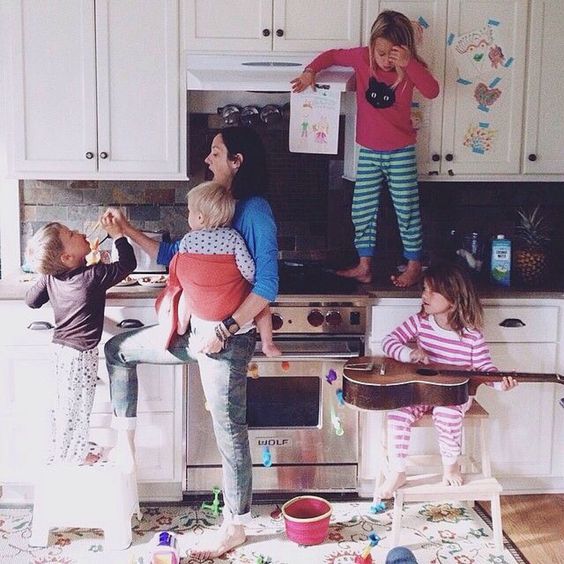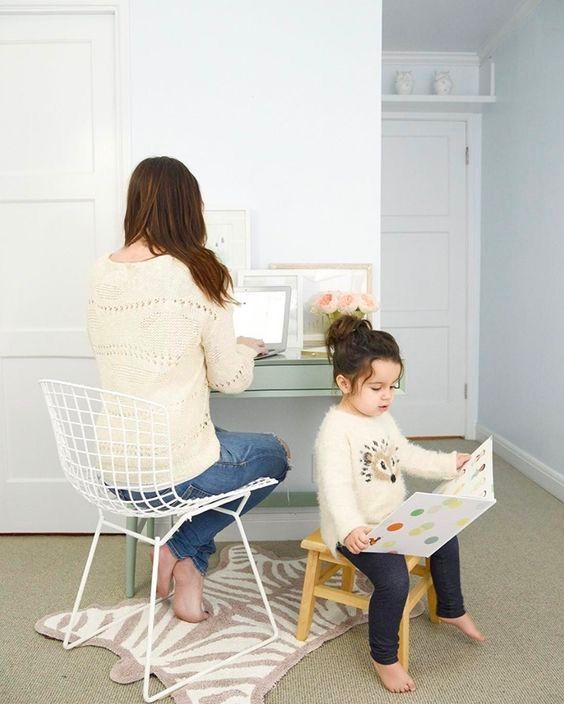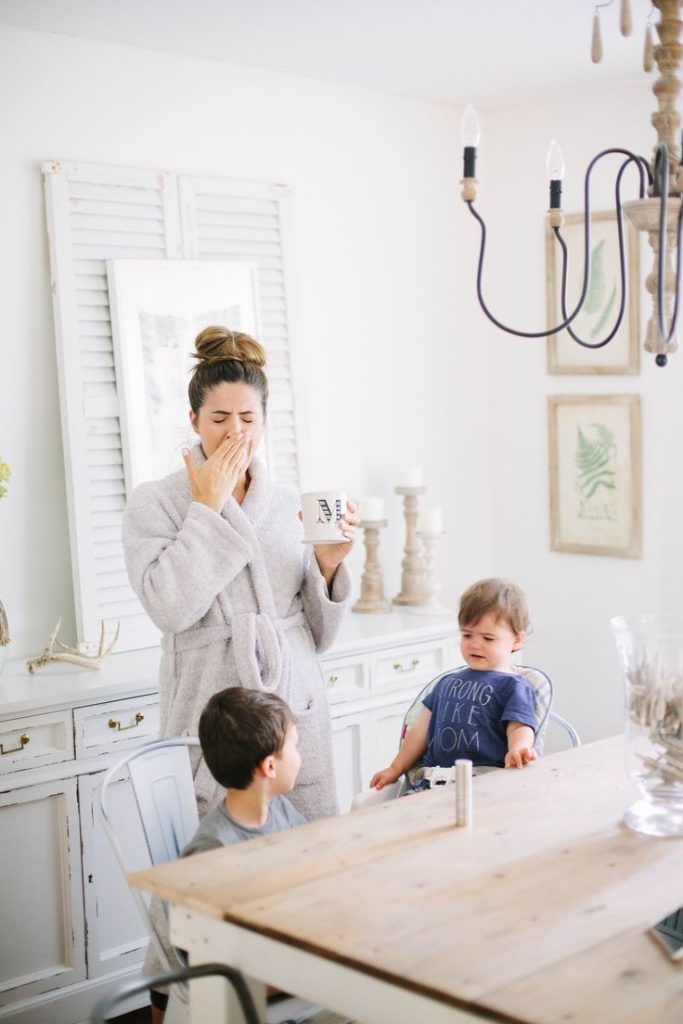
If you have ever scrolled past an article about mindful parenting habits and thought, “That sounds lovely, but I barely have time to brush my hair,” this one is for you. The mindful parenting tips you are about to discover are intentionally designed to fit into the smallest cracks of your day—because true connection does not require hours of uninterrupted time. It requires presence, and presence can happen in seconds.
Mindful parenting does not require hour-long meditation sessions, elaborate gratitude journals, or a complete lifestyle overhaul. In fact, the most powerful moments of connection often happen in the smallest windows of time—the thirty seconds before you buckle a car seat, the minute between finishing dinner and clearing plates, the brief pause before responding to yet another request for a snack.
The ten habits below each take less than two minutes. They are designed to fit into the margins of your already-full day, requiring no special equipment, no prior planning, and no guilt if you miss a day. What they offer in return is something invaluable: a chance to slow down, connect deeply, and parent with more intention—all in the time it takes to brew a cup of coffee.
What Are Mindful Parenting Habits?
Before we dive into the habits, let us clarify what mindful parenting actually means. At its core, mindful parenting is the practice of bringing your full attention to the present moment with your child, without judgment. It is not about being a “perfect” parent or never losing your cool. It is about noticing when you are distracted, overwhelmed, or running on autopilot—and gently choosing to show up differently, even for just a moment.
Research published in the Journal of Child and Family Studies suggests that mindful parenting is associated with lower parenting stress, improved parent-child communication, and greater emotional regulation in children. The best part? You do not need to be an expert. You just need to start small.
The 10 Habits
1. The Two-Inch Rule

When your child speaks to you, pause whatever you are doing and physically move two inches closer to them. That is it. You do not need to drop everything or maintain eye contact for a full conversation. Simply lean in, angle your body toward them, or take a small step in their direction.
This micro-movement signals to your child, “You have my attention. You matter right now.” It takes less than two seconds, yet it shifts the dynamic from distraction to connection.
Try it: The next time your child calls your name while you are cooking or scrolling, pause, take one step closer, and say, “I am listening.”
2. The Arrival Pause
Before you open the car door after school or walk through the front door after work, take ten seconds to pause. Place your hand on the steering wheel or the doorknob. Take one deep breath. Let go of the mental to-do list, the work email you were drafting, or the frustration from traffic.
Then, enter.
Children are exquisitely sensitive to their parents’ emotional state. When you arrive already stressed, they absorb that energy. When you arrive present, you set a calm tone for the entire transition. This habit costs you nothing but ten seconds, and it transforms the way your child experiences your return.
Try it: Set a mental rule: I do not open the door until I have taken one breath.
3. One Breath Before Responding

When your child says something that triggers frustration, whining, or a power struggle, take one single breath before you respond. Just one. Not a deep meditative inhale—just a pause long enough to interrupt the autopilot reaction.
That one breath creates a sliver of space between the trigger and your response. In that space, you have a choice. You can snap. Or you can respond with intention.
This habit is not about suppressing your feelings. It is about reclaiming control over your reactions so you can model emotional regulation for your child.
Try it: The next time your child whines, spills something, or argues, breathe once. Then speak.
4. The Bedtime Glance

After you have tucked your child in and said goodnight, pause for thirty seconds at the doorway. Instead of rushing to the next task, simply look at them. Notice something small—the way their hand is curled under their cheek, the sound of their breathing, how long their eyelashes have gotten.
You do not need to say anything. You do not need to stay longer than half a minute. This brief moment of silent acknowledgment is a gift to both of you. It reinforces that your child is seen and loved, and it reminds you, in the chaos of the day, of what truly matters.
Try it: For one week, commit to pausing at the doorway for thirty seconds before closing the door.
5. The Name Reset
When you need to redirect your child’s behavior or ask them to do something, start by saying their name first. Pause. Wait for them to look at you. Then deliver the message.
So often, we shout instructions from another room: “Put your shoes on!” “Dinner is ready!” “Stop hitting your brother!” Without the anchor of eye contact, our words become background noise. Saying your child’s name first—and waiting for acknowledgment—ensures they are actually hearing you. It also models respectful communication.
Try it: Before giving any instruction today, say your child’s name and wait for eye contact. Count how many seconds it saves you in repeated requests.
6. The One-Minute Play

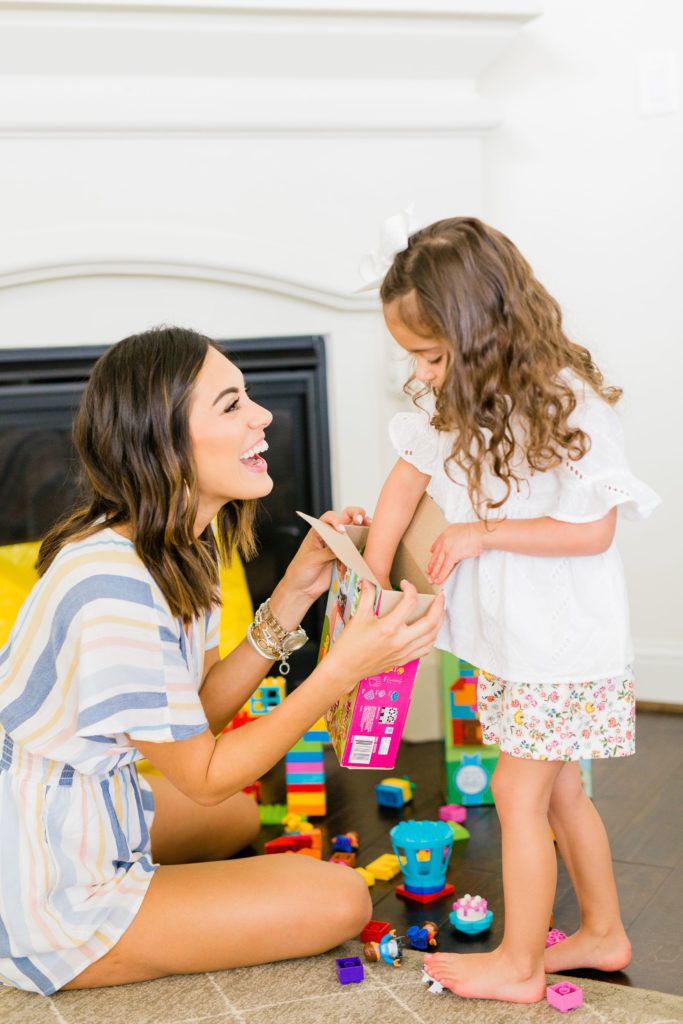
Set a timer for one minute. Sit on the floor. Let your child choose what you do together—whether it is pushing a toy car back and forth, building a single block tower, or simply lying on the floor while they jump over you.
The rule is simple: you follow their lead. No teaching, no correcting, no directing. Just presence.
One minute of child-led play is shockingly powerful. It communicates to your child that their interests matter and that you enjoy being with them. For young children especially, this tiny investment pays dividends in cooperation and connection throughout the rest of the day.
Try it: Pick one moment today to set a timer for sixty seconds and let your child be the leader.
7. The Transition Warning
Instead of announcing “Time to go!” and triggering an instant meltdown, give a two-minute warning. Use a visual or auditory cue—a timer, a song, or simply saying, “In two minutes, we are going to put our shoes on.”
Two minutes is not a long negotiation window. It is just enough time for a child’s brain to shift from one activity to the next. This simple habit reduces power struggles because it respects a child’s need for autonomy and predictability.
Mindful parenting is not about avoiding all conflict. It is about noticing where conflict repeatedly arises and making small adjustments. The two-minute warning is one of the smallest adjustments with the biggest payoff.
Try it: Before every transition today, give a two-minute warning. Notice the difference in cooperation.
8. The Repair Moment

When you lose your cool—and you will, because you are human—take ninety seconds to repair. This does not need to be a long conversation or a grand apology. Simply get down to your child’s eye level and say:
“I yelled. I am sorry. That was not kind. Even when I am frustrated, I love you. Next time, I will try to take a breath first.”
Repair is one of the most powerful mindful parenting tools. It teaches your child that mistakes do not define relationships, that apologies matter, and that emotional regulation is a skill we are all practicing. Ninety seconds of repair can undo hours of tension.
Try it: If you have a difficult moment today, take ninety seconds to repair. No excuses. No explanations. Just a simple, honest apology.
9. The Gratitude Whisper

At some point during the day—during bath time, while walking to the car, or as you are buckling a car seat—whisper one specific thing you noticed about your child.
Not “Good job” or “You are so smart,” but something specific: “I noticed how gently you pet the dog today.” or “I saw you share your snack with your friend. That was kind.”
This takes ten seconds. It requires no prep. But specific, genuine acknowledgment builds a child’s sense of worth far more effectively than generic praise. It also trains your own brain to notice the moments of goodness that often get lost in the chaos.
Try it: Find one moment today to whisper a specific observation to your child. Notice how their face changes.
10. The End-of-Day Anchor
Before you go to sleep, take two minutes to reflect. You do not need a journal or a formal practice. Simply ask yourself two questions:
- What was one moment of connection today?
- What was one moment I wish I had handled differently?
That is it. No judgment. No pressure to do better tomorrow. Just notice. This brief reflection helps you parent with intention because it builds awareness of patterns—what works, what triggers you, and where you want to grow.
Over time, this two-minute anchor transforms how you show up, not because you are trying harder, but because you are paying attention.
Try it: Tonight, before sleep, ask yourself the two questions. Let the answers be simple. Let them be honest.
Why Two Minutes Matters
You might be wondering: Can two minutes really make a difference?
The answer lies in how children experience time. For a child, a parent’s presence—even for sixty seconds—can feel monumental in a day filled with rushing, screens, and competing demands. These micro-moments of connection are the building blocks of secure attachment. They are not a replacement for longer quality time, but they are the foundation upon which deeper connection is built.
Neuroscience supports this. Research on “serve and return” interactions—the back-and-forth exchanges between parent and child—shows that brief, responsive moments strengthen neural connections in a child’s developing brain. You do not need hours. You need presence, repeated often.
How to Make These Habits Stick

The challenge with any new habit is consistency. Here are three simple strategies to make these two-minute practices stick:
- Anchor to existing routines. Attach a new habit to something you already do daily. For example, pair the Arrival Pause with turning off the car engine. Pair the Bedtime Glance with turning off the light. Habits stick when they are tied to existing cues.
- Start with one. Do not try to implement all ten habits at once. Choose one that resonates with you and practice it for a week. When it begins to feel automatic, add another.
- Let go of perfection. You will forget. You will have days when you snap without taking a breath. That is not failure; that is parenting. Mindful parenting is not about doing it perfectly. It is about returning, again and again, to intention.
Conclusion
Mindful parenting is often framed as something aspirational—a practice reserved for parents with endless patience, quiet homes, and uninterrupted time. But the truth is far more accessible. Mindfulness in parenting is not about grand gestures. It is about the pause before a response. The lean-in when a child speaks. The breath you take before opening the door.
These ten habits require less than two minutes each. They do not demand you become a different parent. They simply invite you to show up—just a little more—in the small moments that already exist in your day.
So pick one. Try it today. Not because you need to be a better parent, but because your child—and you—deserve moments of connection that fit into the life you are already living.