
Reframe boundaries as an act of love, not selfishness.
Let’s be honest: the word “boundaries” can feel uncomfortable. It sounds rigid. Cold. Like you’re building walls between you and the people you love most.
But what if we looked at it differently?
What if setting a boundary wasn’t about pushing people away, but about protecting something precious—your energy, your peace, your ability to show up as the mom you actually want to be?
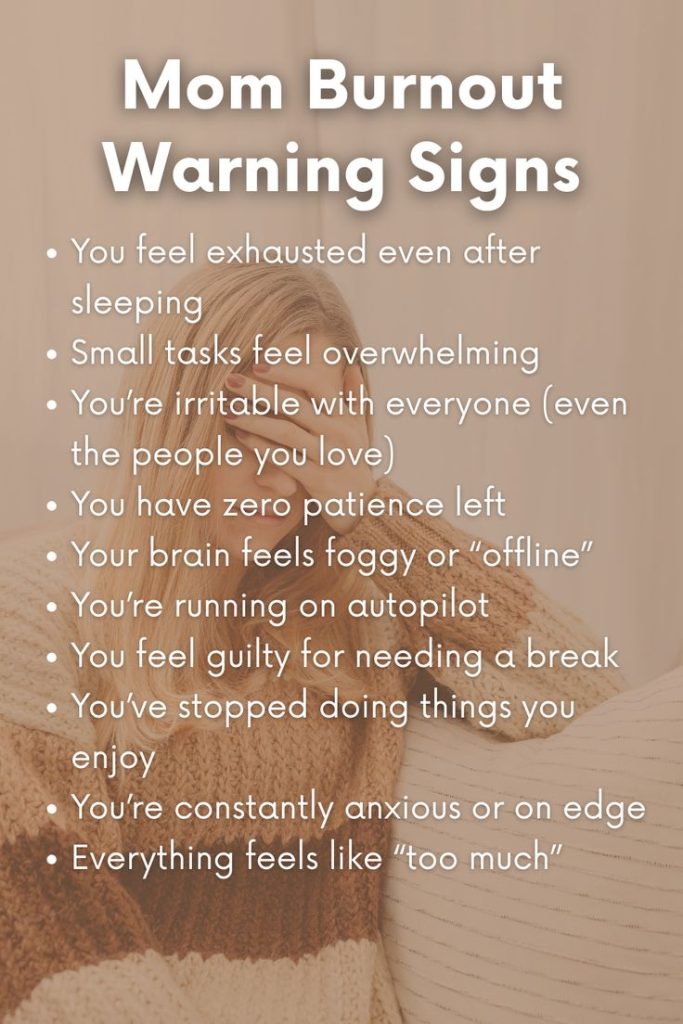
Here’s the truth most of us never learned: boundaries are not selfish. They are essential. And when you’re an overwhelmed mom running on empty, learning to set them might be the most loving thing you can do—for yourself and for your family.
Because a mom who protects her time and energy? She has more to give. More patience. More presence. More of the real her.
This isn’t about becoming cold or unapproachable. It’s about finally giving yourself permission to say “no” to what drains you so you can say “yes” to what matters.
Let’s talk about how to do it without the guilt trip.
Why Moms Struggle With Boundaries
If setting boundaries feels impossible, you’re not alone. There’s a reason so many of us struggle.
First, society has sold us a story: Good moms are endlessly available. Good moms put everyone first. Good moms never say no.
We’ve internalized this so deeply that even thinking about setting a limit triggers shame. When you try to say “I need a minute,” that little voice pipes up: A good mom wouldn’t need a minute. A good mom would handle this.
Add in the mental load—all the invisible tracking and managing we do—and boundaries feel like just one more thing to enforce. Who has energy for that?
But here’s what’s really happening: every time you say yes when you want to say no, you’re saying no to yourself. And eventually, that catches up. The resentment builds. The burnout deepens. The mom guilt multiplies because now you’re showing up irritable and checked out.
Boundaries aren’t the problem. The lack of them is.
Why Boundaries Are Not Selfish
Let’s reframe this completely.
When you set a boundary, you’re not saying “I don’t care about you.” You’re saying “I care about us enough to show up as my best self.”
Think about it this way:
If your phone battery is at 2%, you don’t keep scrolling and wonder why it dies. You plug it in. You recognize that charging isn’t optional—it’s necessary for the phone to function.
Mom boundaries are the same. They’re how you recharge so you can keep functioning. Without them, you drain to empty. And empty moms can’t pour into anyone.
Setting limits is actually an act of love:
- Love for your kids, who deserve a mom who isn’t constantly resentful and depleted
- Love for your partner, who deserves honest communication instead of silent resentment
- Love for yourself, because you matter too
When you protect your time and energy, everyone benefits. The family runs better because you run better. That’s not selfish. That’s smart.
Examples of Healthy Boundaries for Moms
Not sure what boundaries actually look like in real life? Here are examples across different areas of motherhood. Use what fits.
With Your Kids

- The bathroom boundary: “Mom needs five minutes alone in the bathroom. Unless someone is bleeding, wait until I come out.”
- The sleep boundary: “After 8 p.m., Mom is off duty unless it’s an emergency. We can talk about it tomorrow.”
- The personal space boundary: “My body belongs to me. You can sit next to me, but not on me right now.”
- The interruption boundary: “When I’m on the phone, wait until I’m done unless it’s urgent. Then tap my arm once and I’ll acknowledge you.”
With Your Partner
- The mental load boundary: “I need you to own [specific task] completely. I don’t want to remind you or manage it. It’s yours.”
- The time boundary: “I need 30 minutes after the kids are in bed before we talk. I’m overstimulated and need to decompress first.”
- The fair division boundary: “Weekends need to feel balanced. Let’s each get equal time to ourselves.”
- The communication boundary: “When I’m venting, I don’t want solutions. I just need you to listen and validate.”
With Extended Family

- The drop-in boundary: “We love having you over, but please text first. Spontaneous visits don’t usually work for us.”
- The advice boundary: “I appreciate your input, but we’re going to make our own decisions on this. Please trust us.”
- The holiday boundary: “We’re starting our own traditions. We’ll rotate holidays so everyone gets time with us.”
- The parenting boundary: “When you watch the kids, please follow our rules even if you disagree. Consistency matters for them.”
With Work

- The after-hours boundary: “I check emails between 9 and 5. If it’s urgent outside those hours, please text me directly.”
- The workload boundary: “I don’t have capacity for another project right now. Let’s discuss what can be deprioritized.”
- The meeting boundary: “I need meetings to end on time so I can pick up my kids. Let’s stick to the schedule.”
- The flexibility boundary: “I’m available during these hours. Outside that, I’m with my family and will respond tomorrow.”
How to Set Boundaries Without Guilt
Knowing what boundaries you need is one thing. Actually setting them? That’s where the mom guilt creeps in.
Here’s how to do it anyway.
Start With a Mindset Shift
Before you say anything to anyone, get right with yourself.
Repeat after me: “Setting this boundary protects my peace. Protecting my peace allows me to show up better. That’s good for everyone.”
Your guilt is a feeling, not a fact. Feel it, acknowledge it, and set the boundary anyway. The guilt will fade. The peace will remain.
Use “I” Statements
Boundaries land better when they’re about your needs, not the other person’s failures.
Instead of: “You always interrupt my alone time.”
Try: “I need 10 minutes to myself when I first get home so I can decompress and be present with everyone.”
See the difference? One blames. One simply states a need.
Keep It Simple

You don’t need to justify or over-explain. The longer you talk, the more room you give others to argue.
Try these scripts:
With kids:
- “I need space right now. I’ll be available in 10 minutes.”
- “I hear that you want my attention. I’ll give it to you after I finish this.”
- “My body needs rest. You can sit next to me quietly or play in your room.”
With partner:
- “I’m overwhelmed. I need you to handle dinner tonight.”
- “I need 20 minutes alone when you get home. Then I’m all yours.”
- “I can’t take that on right now. Can we figure out another solution?”
With family:
- “That doesn’t work for us.”
- “We appreciate the offer, but we’ve got it covered.”
- “We’ll let you know when we’re available for visits.”
With friends:
- “I’d love to catch up, but I only have 30 minutes right now.”
- “I can’t make that work, but let’s find another time.”
- “I’m in a season where I need to protect my weekends. Can we do a weeknight instead?”
Practice on Small Things First

If setting big boundaries feels terrifying, start tiny.
Say no to the school bake sale. Decline the playdate when you’re exhausted. Ask your partner to make dinner without managing how they do it.
Small wins build confidence. Confidence makes bigger boundaries easier.
Expect Discomfort
Here’s what nobody tells you: even healthy boundaries can feel uncomfortable at first.
People are used to the old you—the one who said yes to everything, who never asked for help, who absorbed everyone’s needs without complaint. When you change, they might resist. Not because you’re wrong, but because your change requires them to adjust.
That discomfort is temporary. Stay the course.
What to Do When Others Push Back
Let’s be real: not everyone will cheer when you start setting mom boundaries. Some people will test them. Some will get defensive. Some will try to make you feel guilty.
Here’s how to handle it.
Stay Calm and Firm
When someone pushes back, your job isn’t to convince them. It’s to hold your boundary calmly.
Try: “I understand this is different from before, but this is what I need right now.”
No justification. No over-explaining. Just calm repetition.
Remember: Their Reaction Isn’t Your Responsibility

If your mother-in-law is offended that you won’t host Christmas, that’s her emotion to manage. If your friend is disappointed you can’t do late nights anymore, that’s her feeling to process.
You are not responsible for other people’s feelings about your boundaries. You’re responsible for protecting your peace.
Offer Alternatives When Possible
Sometimes boundaries land better when paired with an alternative.
- “I can’t host Thanksgiving, but we’d love to bring a dish.”
- “I can’t talk on the phone during the day, but I’d love to text.”
- “I can’t do a full playdate, but we could meet at the park for an hour.”
This shows you still care. You’re just protecting your capacity.
Hold the Line
The first time you set a boundary, someone might ignore it. The second time, they might test it. The third time, they usually accept it.
Consistency matters. Keep holding the line. Eventually, people learn that you mean what you say.
Small Mindset Shifts to Reduce Guilt
Guilt doesn’t disappear overnight. But these shifts help loosen its grip.
Shift: “I’m letting people down” → “I’m teaching people how to treat me”
Every boundary you set teaches others what’s acceptable. You’re not letting them down; you’re showing them how to show up for you.
Shift: “I should be able to handle this” → “I’m human, not a machine”
There is no “should.” You’re a person with limits. Everyone has them. Yours are valid.
Shift: “They’ll be upset” → “Their feelings are not my emergency”
You can care about someone’s feelings without taking responsibility for them. Let them feel what they feel. You’re still allowed to have needs.
Shift: “Good moms give everything” → “Good moms give from a full cup”
An empty cup helps no one. Protecting your energy is part of good mothering, not separate from it.
Boundaries Are Love in Action

Here’s what I want you to remember:
Boundaries as a mom aren’t walls. They’re doorways—ways of letting in what nourishes you and keeping out what depletes you.
Every time you say no to something that drains you, you’re saying yes to something that matters. Yes to patience. Yes to presence. Yes to showing up as the mom your kids actually need—not the exhausted, resentful version of you that runs on empty.
The guilt will come. Let it. Feel it. And set the boundary anyway.
Because protecting your peace isn’t selfish. It’s the most loving thing you can do.
For yourself. For your kids. For everyone who needs the real you—not the depleted one running on fumes.
You deserve that. And so do they.
Start small. Practice often. And remember: every boundary you set is a reminder that you matter too.
You’ve got this