


Modern parenting often feels like a high-stakes race to keep our children happy and comfortable at all costs. As a parent, particularly if you identify as a “busy mom,” there is an immense pressure to fix every “everyday hurdle” and shield your children from the slightest discomfort. However, in our quest to be the “perfect” provider, we might be missing the most critical skill for the next generation: Emotional Resilience.
This is where the concept of Sturdy Parenting comes in. It is a strategic move away from a style that can sometimes feel permissive or over-functioning, and toward a psychology-informed approach where the parent acts as the “calm pilot” in a child’s emotional storm. By focusing on sturdy parenting and emotional regulation, we aren’t just raising “nice” kids; we are raising an emotionally sturdy generation capable of navigating a complex world with grit and confidence.
The Core Philosophy: Being the “Pilot in the Storm”
Emotional sturdiness begins with the parent, not the child. When a child is spiraling into a meltdown, they don’t need us to spiral with them. They need a “comforting presence during tough times” who remains grounded and unshakeable.
Think of the “Pilot” analogy: during heavy turbulence, you don’t want the pilot to come over the intercom screaming; you want them to stay calm and fly the plane. When we practice sturdy parenting, we acknowledge the child’s “big feelings” without letting those feelings dictate the boundaries or safety of the home. This creates a sense of safety for the child and a pathway to burnout recovery for the parent, as you no longer feel it is your job to “fix” every uncomfortable emotion. You are there to witness the emotion, not to be consumed by it.
The Wise Teacher: Modeling Resilience in Real Time

We often think of teaching as a lecture or a planned activity, but children learn most by watching us navigate our own lives. Your child sees you as a “wise teacher of life’s important lessons” through your daily actions. Resilience is caught, not taught.
When you hit a “stressful Tuesday”—perhaps a work deadline is looming or a project is failing—how do you react? By modeling healthy emotional regulation out loud, you provide the blueprint for their own resilience. You might say, “I’m feeling very frustrated right now because this didn’t go as planned, so I’m going to take a deep breath before I try again.” In this moment, you become the “role model for kindness and compassion” by showing them how to treat themselves when things go wrong. You are teaching them that it is okay to be human, and it is possible to be sturdy even when things are hard.
The Understanding Heart: Radical Acceptance and Validation

The image of a mother with an “understanding heart that accepts them as they are” is the foundation of long-term mental health. In psychological terms, this is known as Radical Acceptance. It is the act of seeing your child’s struggle without judgment.
Sturdy parenting teaches us to validate the feeling while holding the boundary on the behavior. You can be a “gentle guide” who says, “I see you are really angry that play-time is over, and it’s okay to feel that way,” while still moving forward with the transition. This validation builds emotional intelligence because the child learns that their internal world is valid and manageable. When we accept them “as they are” in their messiest moments, we give them the internal security to eventually accept themselves.
The Creative Problem-Solver: Building Grit through Collaboration
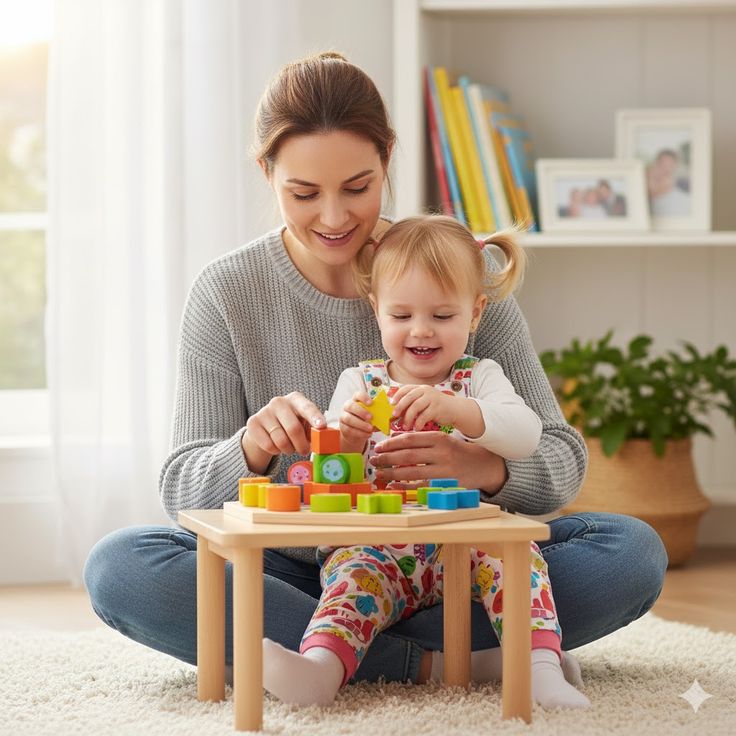
Instead of removing every obstacle in their path, a sturdy parent acts as a “creative problem-solver for everyday hurdles” alongside the child. Resilience grows in the “struggle,” not in the ease.
When a child struggles with a difficult task, our instinct as busy parents is often to do it for them to save time or avoid a tantrum. However, by being a “playful companion” who asks, “That looks really tough, what’s one way we could try to fix this?”, you empower them to build grit. You shift from being the “fixer” to being a mentor. This collaborative approach teaches them that they have the agency to change their situation. It transforms a moment of defeat into a moment of mastery.
Moving Toward the “Memory-Maker” Role
As we move away from the stress of over-parenting, we find more energy to be the “memory-maker who creates special moments”. When we aren’t constantly managing our children’s emotions, we have the emotional bandwidth to actually enjoy them.
Sturdy parenting isn’t about being cold or distant; it’s about being so secure in your role as the leader of the home that you can afford to be playful. You can be the “source of comfort food and warm hugs” because your “understanding heart” isn’t drained by the daily battle of wills. You are raising children who know that no matter how big their feelings get, their parent is bigger, sturdier, and always ready to listen.
Conclusion: A Legacy of Emotional Grit
The world our children are entering is increasingly complex, and the “nice” child may struggle where the “sturdy” child thrives. By embracing these pillars—regulation, modeling, acceptance, and collaborative problem-solving—you are providing them with an internal compass that will last a lifetime. You are being exactly the kind of mom they need: a “patient listener” who hears their stories and a “gentle guide” who helps them find their own strength.
Leave a Reply