

Save your sanity with these high-energy indoor activities that actually tire out active kids—no backyard required.
It’s raining. Again. The windows are streaked with water, the forecast shows no signs of stopping, and your children have officially reached that level of energy that makes furniture start to look like playground equipment.
You need solutions. Not complicated crafts that require specialty supplies. Not quiet activities that work for five minutes. You need movement—the kind that actually tires little bodies and resets everyone’s mood.
Welcome to your rainy day rescue guide. These indoor energy-burning activities for kids are specifically designed for times when outdoor play isn’t possible. They require minimal setup, use items you already have, and most importantly, they work.
Why Indoor Movement Matters
Before we dive into the activities, let’s acknowledge something important: children need to move. Their bodies are designed for it, their brains crave it, and their emotional regulation depends on it.
When kids can’t burn energy outdoors, that energy doesn’t disappear—it builds. It shows up as bouncing off walls, sibling conflict, or that particular brand of chaos that makes parents question every life choice that led to this moment.
The solution isn’t to suppress the energy. It’s to channel it.
These activities are designed to do exactly that: provide safe, structured ways for kids to move vigorously indoors, reset their nervous systems, and emerge ready for calm activities afterward.
Before You Begin: Setting Up for Success
A few simple strategies make indoor active play work for everyone:
Clear the space. Push furniture against walls, move breakables out of reach, and create a designated “active zone.” Knowing the boundaries helps kids feel secure in their movement.
Dress for movement. Remove shoes if that works for your space. Layers help since active play generates heat quickly.
Set clear rules. Before starting, establish non-negotiables: no throwing at faces, no jumping off furniture, stop when someone says “freeze.” Clear expectations prevent most conflicts.
Join in when you can. Your participation signals that movement is valued. Even five minutes of active play alongside your child builds connection and models healthy activity.
Plan a calm follow-up. Active play should be followed by a calming activity: water, a story, quiet drawing. This helps bodies transition back to restful states.
20 Indoor Energy-Burning Activities
Obstacle Course Adventures
1. Living Room Obstacle Course
Transform your living room into an adventure course using everyday furniture and household items. Create stations that require different movements:
- Crawl under the dining table
- Walk along a line of painter’s tape on the floor (balance beam)
- Jump over couch cushions placed in a row
- Do three spins in the center of the room
- Throw soft balls into a laundry basket
- Crab walk from the couch to the door
Time each child through the course, or let them run it repeatedly for fun. The best part? You can change the course daily by rearranging stations.
Skills built: gross motor, planning, following directions
Prep time: 10 minutes
Space needed: medium to large room
2. Pillow Path Jump
Create a path using pillows, couch cushions, and folded blankets spread across the floor. Children must jump from one “safe spot” to another without touching the floor (the “lava”). Make it harder by spacing pillows further apart or requiring specific landing positions.
Skills built: balance, spatial awareness, risk assessment
Prep time: 5 minutes
Space needed: medium room
3. Tape Maze
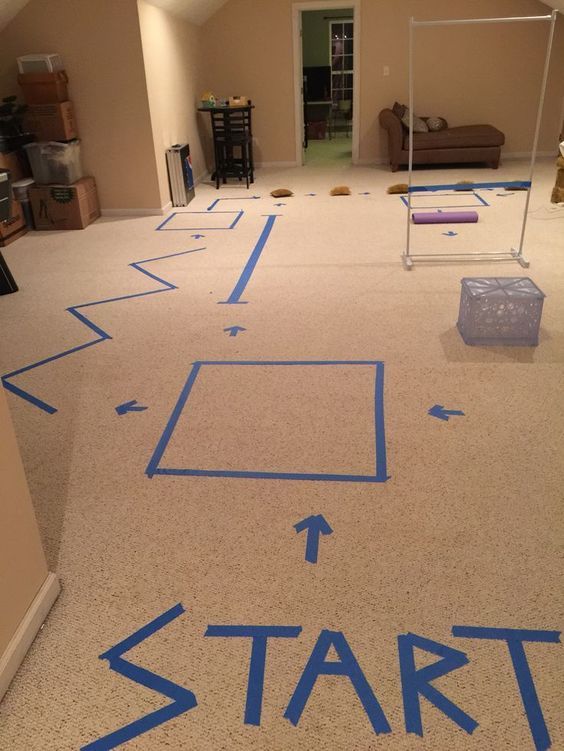
Use painter’s tape to create a maze on the floor. Include straight paths, turns, and loops. Children must follow the tape path—walking, crawling, or moving however you specify. For extra challenge, add “obstacles” they must step over along the way.
Skills built: following pathways, body control, focus
Prep time: 10 minutes
Space needed: any floor space
4. Balloon Obstacle Course
Add inflated balloons to any obstacle course. Children must navigate the course while keeping a balloon in the air—they can hit it, blow it, or carry it on a paper plate. The unpredictability of balloons adds challenge and laughter.
Skills built: hand-eye coordination, multitasking, persistence
Prep time: 5 minutes
Space needed: medium room (clear breakables!)
Classic Games with Indoor Twists
5. Indoor Bowling
Set up empty plastic bottles as pins. Use a soft ball (or even a rolled-up sock ball) to bowl. For variation, assign point values to different bottles, or have children crawl to retrieve the ball between turns.
Skills built: aiming, turn-taking, counting
Prep time: 2 minutes
Space needed: hallway or cleared room
6. Balloon Volleyball
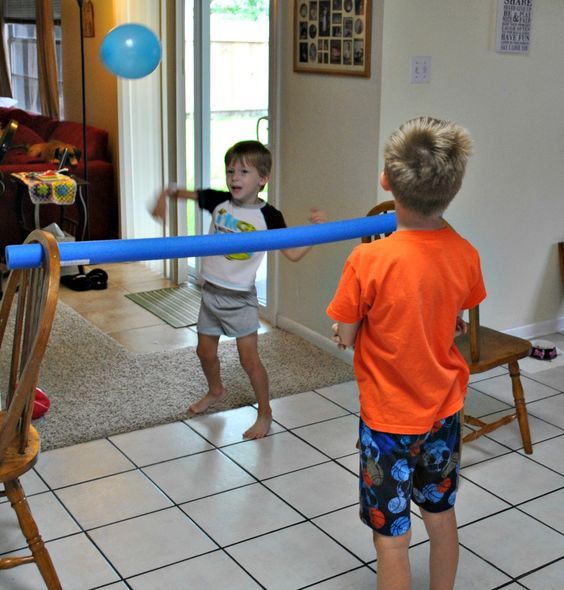
Tie a string or ribbon across the room at a reasonable height. Divide into teams and use a balloon as the ball. The slow speed of balloons makes this accessible for younger children while still providing active movement. No teams? Just keep the balloon off the floor together.
Skills built: hand-eye coordination, teamwork, gross motor
Prep time: 3 minutes
Space needed: medium room
7. Freeze Dance Marathon
Play high-energy music and dance wildly. When the music stops, everyone must freeze in position. Anyone who moves is out for that round—or not, depending on whether you want elimination. Add challenges: freeze like an animal, freeze in a silly pose, freeze with a partner.
Skills built: listening, body control, self-regulation
Prep time: 1 minute
Space needed: any cleared space
8. Sock Skating Rink
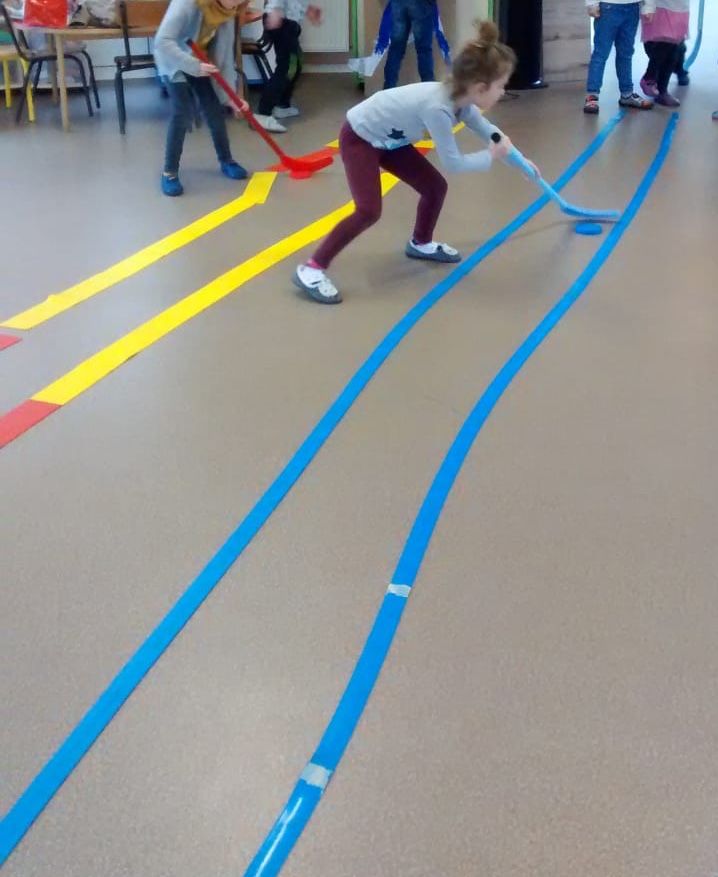
If you have hard floors, put on socks and go “ice skating.” Add music and challenge children to glide, spin, and move across the “rink.” For extra fun, push small boxes or stuffies across the floor while skating.
Skills built: balance, coordination, creative movement
Prep time: 1 minute
Space needed: hard floor space
9. Hide and Seek (Indoor Edition)
The classic game works perfectly indoors with clear boundaries. For variety, try “reverse hide and seek”—one person hides while everyone else seeks together. Or try hiding several small objects and timing how long it takes to find them all.
Skills built: patience, spatial awareness, cooperation
Prep time: zero
Space needed: whole house with boundaries
10. Animal Movements Game
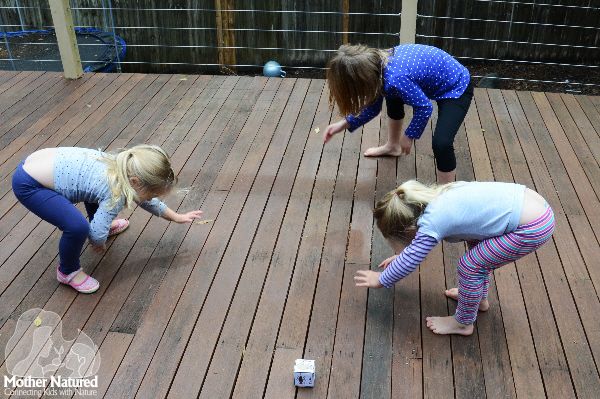
Call out different animals and have children move like them across the room:
- Bear crawl (hands and feet, same side movement)
- Frog jump (squat and leap)
- Crab walk (belly up, walking on hands and feet)
- Snake slither (on belly, pulling with arms)
- Kangaroo hop (feet together, jumping)
- Penguin waddle (feet together, arms at sides)
This builds strength and coordination while burning serious energy.
Skills built: gross motor, strength, listening
Prep time: zero
Space needed: medium room
Movement Challenges
11. Floor Is Lava (The Classic)
The beloved game works brilliantly indoors. Furniture becomes safe zones. The floor is lava. Children must move from one safe spot to another without touching the floor. Add pillows, cushions, or paper plates as temporary safe islands. Time them, or just let them problem-solve their route.
Skills built: problem-solving, risk assessment, gross motor
Prep time: 2 minutes
Space needed: any room with furniture
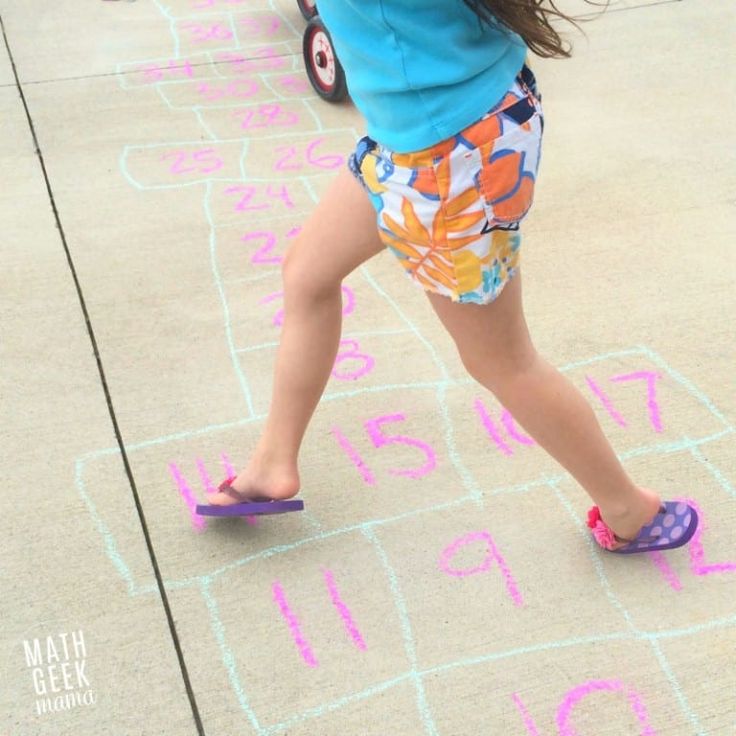
12. Tape Lines
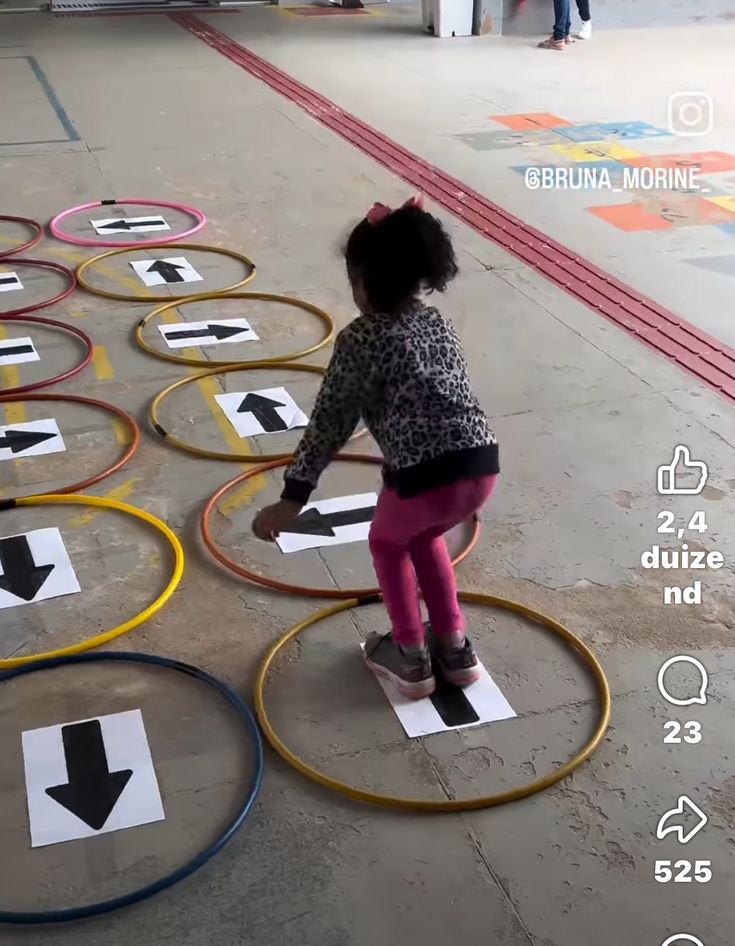
Use painter’s tape to create lines on the floor in different configurations: straight line, zigzag, spiral, hopscotch grid. Children must walk each line—heel-to-toe for balance, hopping on one foot, or jumping with feet together. Time them or have them race against their own best time.
Skills built: balance, coordination, following patterns
Prep time: 5 minutes
Space needed: any floor space
13. Laundry Basket Toss
Place a laundry basket at varying distances. Children roll or throw soft items into it: socks (rolled into balls), stuffed animals, soft balls. Keep score, or just enjoy the challenge. Move the basket closer or farther to adjust difficulty.
Skills built: aiming, force modulation, persistence
Prep time: 2 minutes
Space needed: medium room
14. Jump Counting
Mark a starting line with tape. Children jump as far as they can, then measure the distance in “baby steps” (their own feet placed heel-to-toe). Track their jumps on a chart—can they beat their own record? This adds math to movement.
Skills built: gross motor, measuring, number awareness
Prep time: 2 minutes
Space needed: hallway or cleared room
15. Simon Says… Move!
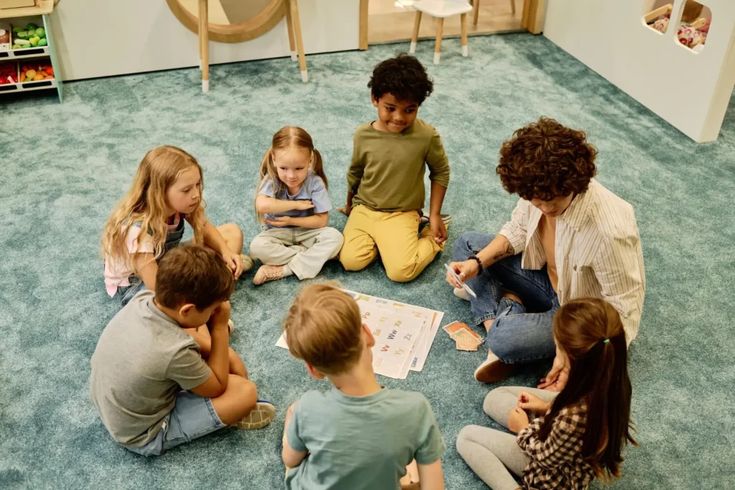
Play Simon Says with an active twist. Include commands that require big movements: “Simon says do five jumping jacks,” “Simon says crawl to the door,” “Simon says spin three times.” When Simon doesn’t say, children must freeze—even mid-motion.
Skills built: listening, body control, gross motor
Prep time: zero
Space needed: any cleared space
16. Stuffed Animal Toss and Catch
Children toss stuffed animals in the air and catch them. Progress through challenges: toss and catch with two hands, then one hand, then clap before catching, then spin before catching. For multiple children, toss animals back and forth.
Skills built: hand-eye coordination, progression of challenge
Prep time: zero
Space needed: medium room
Creative Active Play
17. Blanket Fort Building
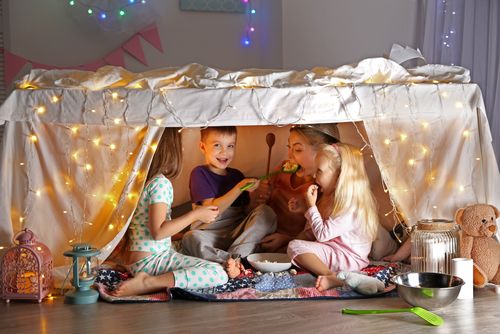
This classic activity is surprisingly active. Gather blankets, sheets, and pillows. Children lift, carry, drape, and arrange—all while problem-solving structural challenges. The result is a cozy reward for their physical effort.
Skills built: cooperation, problem-solving, gross motor
Prep time: 5 minutes to gather supplies
Space needed: medium room with furniture for anchoring
18. Indoor Scavenger Hunt
Create a list of items for children to find around the house. Make it active by requiring movement between finds: “Bring me something red, then do five jumps, then find something soft.” Time them or have them work together as a team.
Skills built: reading/listening, gross motor, problem-solving
Prep time: 5 minutes
Space needed: whole house
19. Dance Party with Flashlight
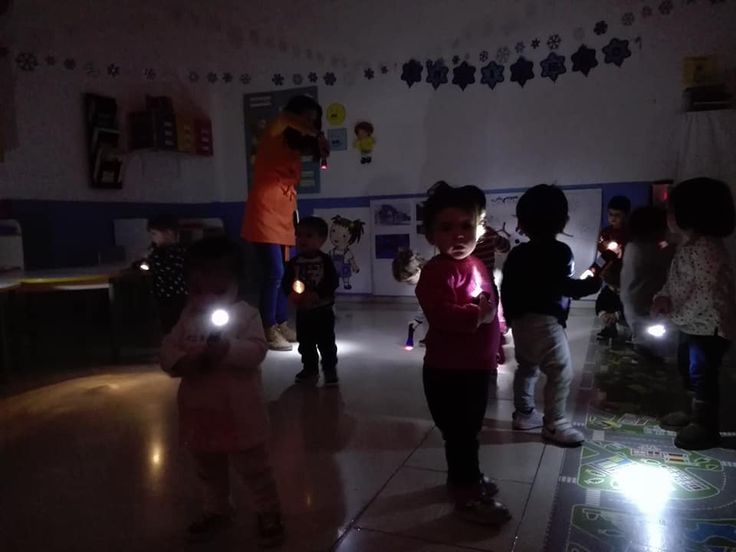
Turn off the lights (or dim them) and have a glow-in-the-dark dance party with flashlights. Children can dance, make shadow puppets, or play flashlight tag—shining light on each other without touching. The novelty of flashlights extends engagement.
Skills built: creative movement, spatial awareness
Prep time: 1 minute
Space needed: any cleared space
20. Balloon Keep-Up Challenge
How long can your child keep a balloon from touching the floor? They can use hands, feet, head, or even blow the balloon. Time each attempt and try to beat the record. Multiple children can work together or compete.
Skills built: hand-eye coordination, persistence, gross motor
Prep time: 1 minute
Space needed: medium room (clear breakables!)
Quick Reference: Activities by Energy Level
Not all active play is equal. Here’s how these activities stack up:
Highest Energy (Intense Movement)
- Animal movements across the room
- Balloon volleyball
- Freeze dance marathon
- Floor is Lava
- Jump counting competition
Medium Energy (Sustained Activity)
- Obstacle courses
- Indoor bowling
- Scavenger hunts
- Tape maze following
- Laundry basket toss
Lower Energy (Gentle Movement)
- Blanket fort building
- Hide and seek
- Sock skating
- Flashlight dance party
- Simon Says
Mix and match based on your child’s energy level and the space available.
Adapting for Different Ages and Abilities
For Younger Children (Ages 2-4)
Focus on simple, repetitive movements. Keep games short—attention spans at this age are brief. Use lots of praise and participate alongside them. Safety is paramount; supervise closely and keep obstacles low.
Best bets: Animal movements, blanket forts, simple obstacle courses with pillows, balloon keep-up with adult help.
For Older Children (Ages 5-8)
Add rules, competition, and timing. Older children enjoy beating their own records and competing with siblings. They can handle more complex obstacle courses and games with multiple steps.
Best bets: Timed obstacle courses, scavenger hunts with lists, competitive balloon volleyball, jump distance tracking.
For Mixed Age Groups
Choose activities that can be scaled. Obstacle courses work well—younger children can complete simpler versions while older children add challenges. Cooperative games (keeping the balloon up together) prevent older kids from dominating.
When to Stop: Reading Your Child’s Signals
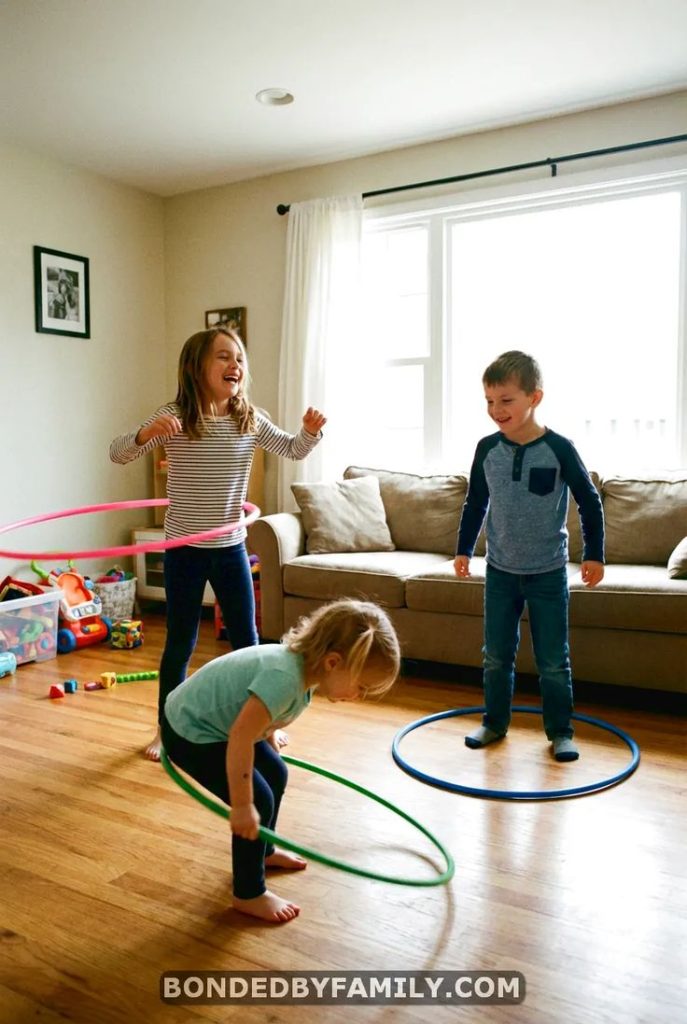
Active play should leave children feeling better, not worse. Watch for these signs that it’s time to transition to calm activities:
- Overly rough behavior or loss of control
- Frustration or tears
- Claiming exhaustion (real or performative)
- Loss of interest in the game
Have a calm follow-up activity ready. Water, a snack, and quiet reading or drawing help bodies transition back to restful states.
The Science of Active Indoor Play
When children move vigorously, their brains release neurotransmitters that support focus and emotional regulation. The proprioceptive input from pushing, pulling, and landing helps calm the nervous system. This is why active play isn’t just about burning energy—it’s about resetting the brain for better behavior and learning afterward.
The activities in this guide aren’t just time-fillers. They’re tools for regulation, connection, and development.
Creating Your Indoor Active Play Kit
Keep these items accessible for spontaneous active play:
- Painter’s tape (for lines, mazes, markers)
- Balloons (always have a pack)
- Soft balls or beanbags
- Empty plastic bottles (for bowling)
- Laundry basket
- Flashlights
- Playlist of high-energy music
Store everything in one bin or drawer. When rain strikes, you’re ready in seconds.
The Bottom Line
Rainy days don’t have to mean chaos. With these indoor energy-burning activities for kids, you can channel that boundless energy into movement that strengthens bodies, regulates emotions, and saves your furniture.
The best part? These activities cost nothing, require no special skills, and actually work. Your children will sleep better. You’ll feel more peaceful. And when the sun finally returns, you’ll have a toolbox of indoor activities ready for the next inevitable rainy day.
Save this guide. Share it with other parents. And the next time someone says “I’m bored” while rain pounds the windows, you’ll know exactly what to do.

Leave a Reply