
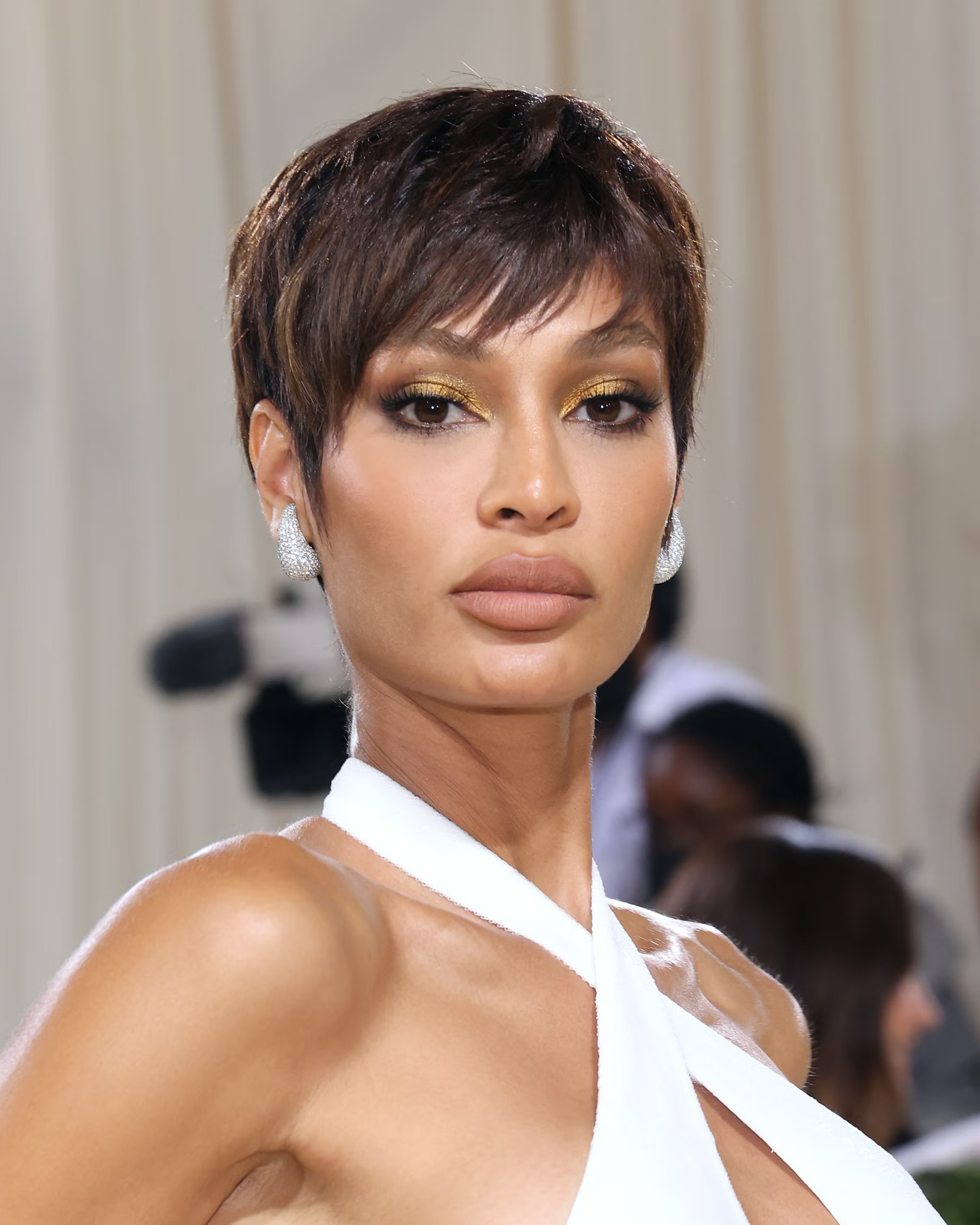
For women over 50 considering a shorter hairstyle, the debate between pixie vs. bob is one of the most important decisions you’ll make. Both cuts offer elegance, ease, and style—but they serve very different needs, face shapes, and hair textures. The pixie is bold, ultra-low maintenance, and creates dramatic volume at the crown. The bob is versatile, soft, and offers more styling options while still being short. In this guide, you’ll discover the key differences between pixie and bob cuts for women over 50, including which suits your face shape, hair texture, lifestyle, and maintenance preferences. You’ll also find 8 variations of each cut to help you find your perfect style. If you love short, flattering styles, these short haircuts for plus size women over 50 offer additional slimming ideas.
Why Go Short After 50?
Before diving into pixie vs. bob, let’s understand why short hair is so popular among women over 50:
- Adds volume – Shorter hair removes weight, allowing fine hair to lift at the roots
- Hides thinning – Strategic layering and texture camouflage sparse areas
- Low maintenance – Most short cuts require minimal daily styling
- Highlights features – Short hair draws attention to your eyes, cheekbones, and smile
- Cool and comfortable – Short hair keeps you cooler in summer and is easier to style
- Youthful – A well-chosen short cut can take years off your appearance
For women with fine hair, these low maintenance haircuts for women over 50 with fine hair offer additional inspiration.
Pixie vs. Bob: The Big Picture
| Feature | Pixie | Bob |
|---|---|---|
| Length | Very short (ears exposed, nape tapered) | Chin to shoulder length |
| Styling time | 2–5 minutes | 5–10 minutes |
| Maintenance trims | Every 4–6 weeks | Every 6–8 weeks |
| Volume at crown | Excellent (built-in lift) | Good (with layering) |
| Versatility | Limited (one main look) | High (updos, ponytails, half-up) |
| Best for fine hair | Excellent | Good (with layering) |
| Best for thick hair | Good (removes bulk) | Excellent (with internal layers) |
| Face shape flattery | Elongates round faces | Softens square and heart faces |
| Professional setting | Very acceptable | Very acceptable |
| Grow-out phase | Awkward (requires patience) | Graceful (becomes lob) |
The Pixie Cut: Bold, Bold, Bold
What Is a Pixie Cut?
A pixie cut is a very short hairstyle with the hair cropped close to the head, typically with shorter sides and back and slightly longer length on top. The ears are usually exposed, and the nape is tapered or shaved. Pixies can range from ultra-short (cropped pixie) to longer versions (long pixie or pixie bob).
Who Looks Best in a Pixie?
The pixie is incredibly versatile, but certain face shapes and hair types are especially well-suited:
| Face Shape | Why It Works |
|---|---|
| Oval | Most pixie styles work beautifully |
| Heart | Softens the forehead and highlights cheekbones |
| Round | The height at the crown elongates the face |
| Square | Softens strong jawlines |
| Oblong | Avoid very short sides; keep length on top |
Pixie Pros and Cons for Women Over 50
| Pros | Cons |
|---|---|
| Minimal daily styling (2–5 minutes) | Frequent trims needed (every 4–6 weeks) |
| Creates dramatic volume at the crown | Awkward grow-out phase |
| Hides thinning and fine hair beautifully | Less versatile (fewer styling options) |
| Cool and comfortable for summer | Requires confidence to wear |
| Highlights eyes and cheekbones | Not everyone’s face shape suits it |
| Makes gray and silver hair look modern | Can’t pull back into a ponytail |
4 Pixie Variations for Women Over 50
1. Classic Pixie
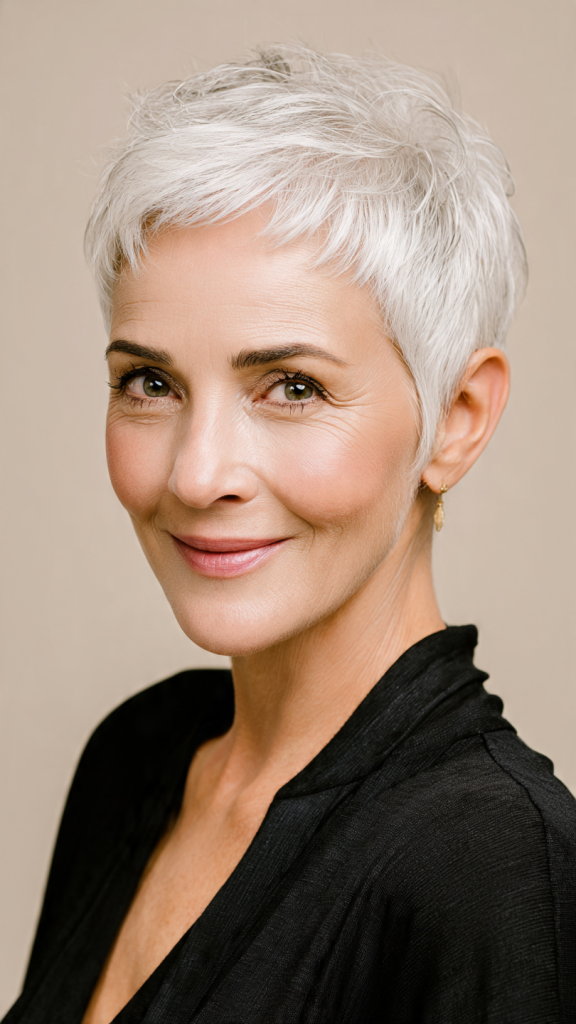
Why it works: The classic pixie has slightly longer length on top (1.5–2 inches) with tapered sides and back. It’s the most wearable version and works on virtually every face shape. The soft texture on top adds volume where fine hair needs it most.
How to style it: Apply lightweight styling cream to damp hair. Use your fingers to tousle the top forward while pushing the sides down. For extra lift, flip your head upside down and shake at the roots. Air-dry or blow-dry briefly on low heat.
Best face shapes: Oval, heart, square
Maintenance: Trim every 4–6 weeks
2. High-Volume Pixie
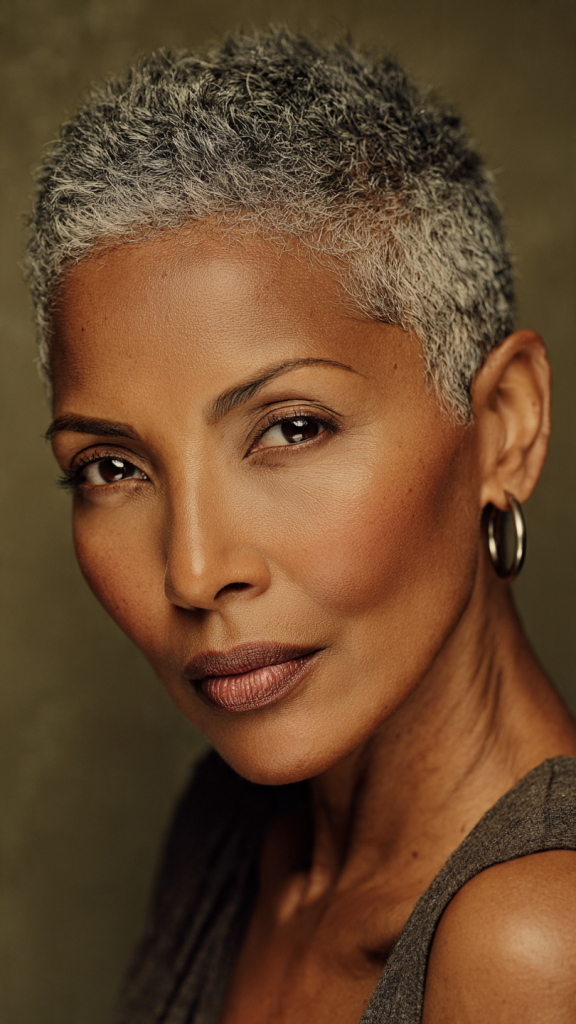
Why it works: The high-volume pixie focuses all the length and height at the crown (2–3 inches), with sides and back tapered close. This creates a tall, narrow silhouette that elongates round faces and addresses thinning at the crown.
How to style it: Apply volumizing mousse to damp roots at the crown. Blow-dry using a small round brush, lifting each section straight up at a 90-degree angle. Hit with cool air for 10 seconds before releasing. Finish with texturizing powder at the crown.
Best face shapes: Round, oval, heart
Maintenance: Trim every 4–5 weeks
3. Textured Pixie
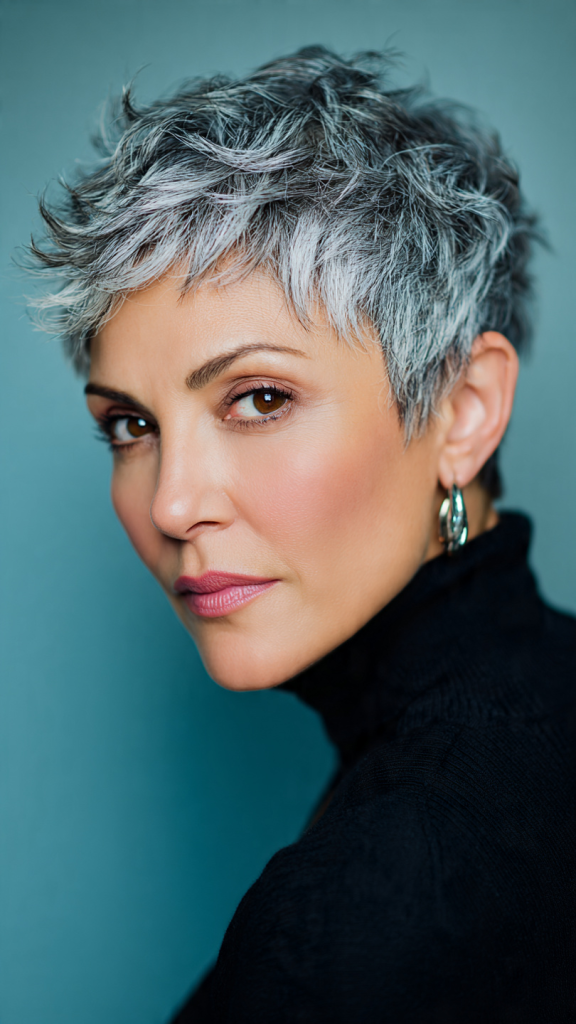
Why it works: The textured pixie features heavy point-cutting throughout, creating multiple endpoints that reflect light and make fine hair look denser. The choppy, piecey texture hides thinning areas and adds modern edge.
How to style it: Apply matte paste to dry hair. Rub between palms, then rake through the top pushing everything forward. The texture will create natural lift and separation. No blow-dryer needed.
Best face shapes: Oval, square, heart
Maintenance: Trim every 4–5 weeks
4. Curly Pixie
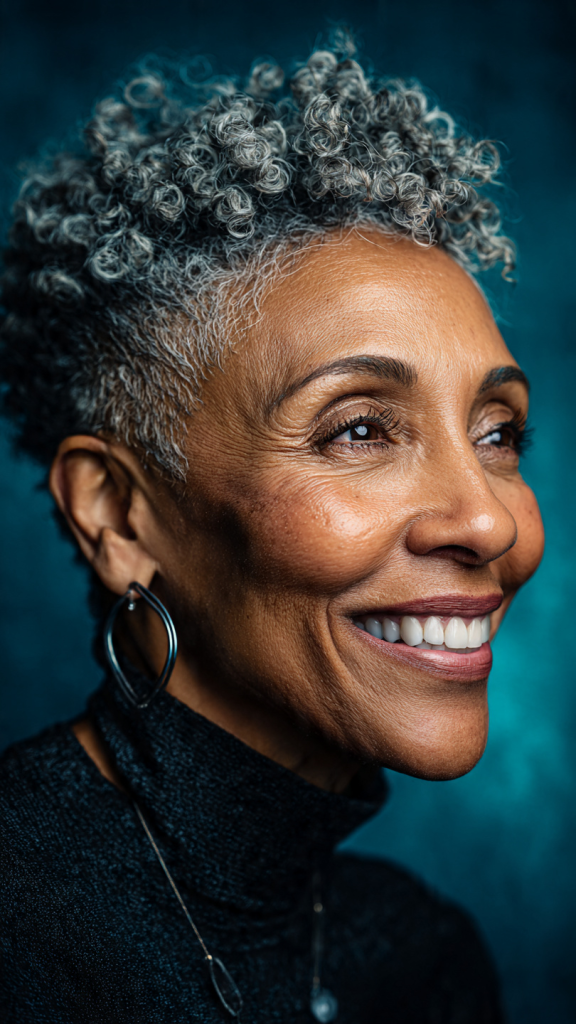
Why it works: For women with natural curls, a curly pixie is a dream. The short length removes weight so curls spring up tighter and bouncier, creating volume where it’s needed most. This cut celebrates natural texture.
How to style it: Apply leave-in conditioner and curl gel to very wet hair. Use fingers to define individual curl clumps. Air-dry completely—do not touch while drying. Never brush dry curls.
Best face shapes: Oval, heart, square
Maintenance: Trim every 6–8 weeks (dry cut only)
For more pixie inspiration, these short pixie haircuts for fine flat hair offer additional volume-building ideas.
The Bob: Classic, Versatile, Soft
What Is a Bob Cut?
A bob is a short-to-medium length haircut that typically falls between the chin and shoulders. Bobs can be blunt, layered, stacked, angled, inverted, or asymmetrical. The bob is one of the most versatile haircuts and can be customized to suit virtually any face shape and hair texture.
Who Looks Best in a Bob?
The bob is universally flattering when customized correctly:
| Face Shape | Best Bob Variation |
|---|---|
| Oval | Almost any bob works |
| Round | Angled or stacked bob (longer in front) |
| Heart | Chin-length bob with soft layers |
| Square | Textured bob with wispy ends |
| Oblong | Blunt bob at chin level (adds width) |
Bob Pros and Cons for Women Over 50
| Pros | Cons |
|---|---|
| Versatile styling (updos, ponytails, half-up) | More styling time than a pixie (5–10 minutes) |
| Grows out gracefully (becomes a lob) | Can look heavy on fine hair without layers |
| Can be pulled back off the face | May require more product for volume |
| Flatters almost every face shape | Can accentuate a double chin if too short |
| Works with all hair textures | Needs regular trims to maintain shape |
| Can hide neck and jawline concerns | Can be too warm for summer |
4 Bob Variations for Women Over 50
1. Classic Layered Bob
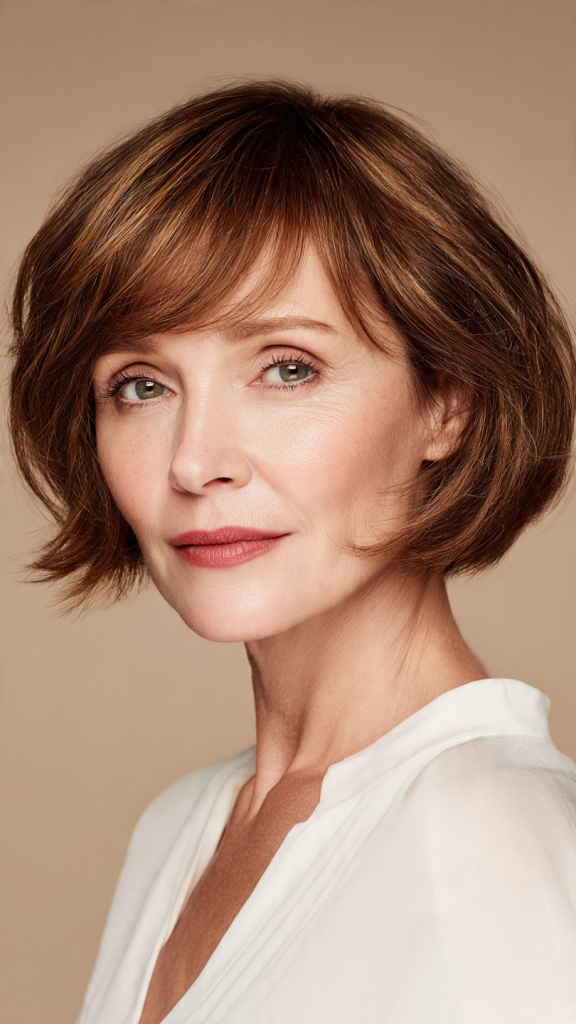
Why it works: The classic layered bob at chin-length removes interior weight so hair falls naturally into place. The soft, subtle layers add movement without sacrificing density. For fine hair, this length is ideal—short enough to avoid being weighed down but long enough to tuck behind ears.
How to style it: Apply lightweight mousse to damp roots. Blow-dry using a small round brush (1 inch), lifting each section at the root. The layers will create natural movement without curling. For an air-dry option, apply wave spray and scrunch.
Best face shapes: All face shapes (most universally flattering)
Maintenance: Trim every 6–8 weeks
2. Stacked Bob
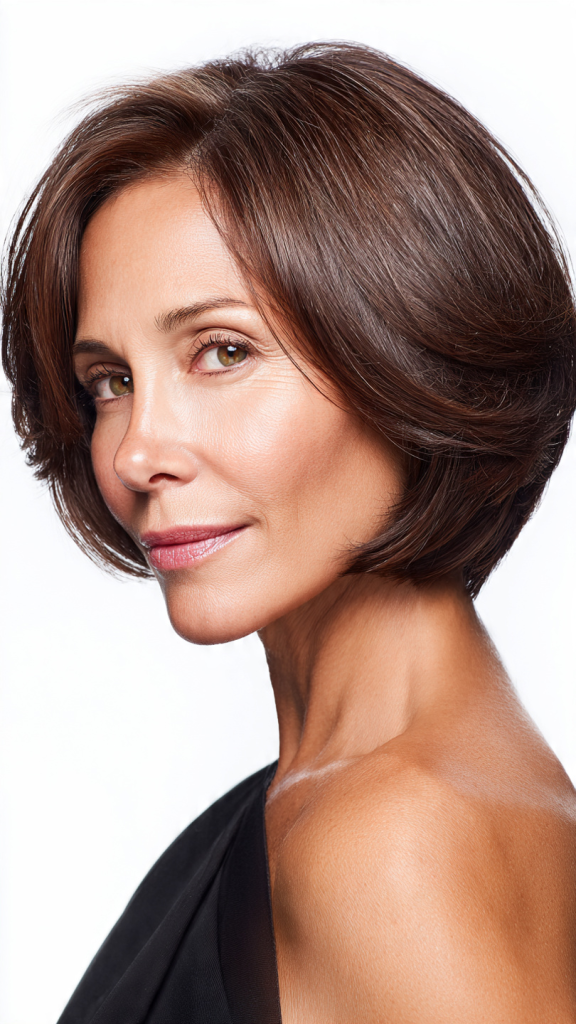
Why it works: A stacked bob has graduated layers in the back that create a built-in bump of volume at the crown. The stacking is cut into the interior, so volume comes from the cut itself—not from styling. For fine hair, this is one of the most effective volume-building cuts.
How to style it: Apply root-lifting spray to the crown area. Blow-dry the stacked back using a round brush, lifting aggressively. The front can be left longer and softer. The stacked section will naturally lift and hold volume without product.
Best face shapes: Oval, round, heart
Maintenance: Trim every 5–6 weeks
3. Angled Bob (Longer in Front)
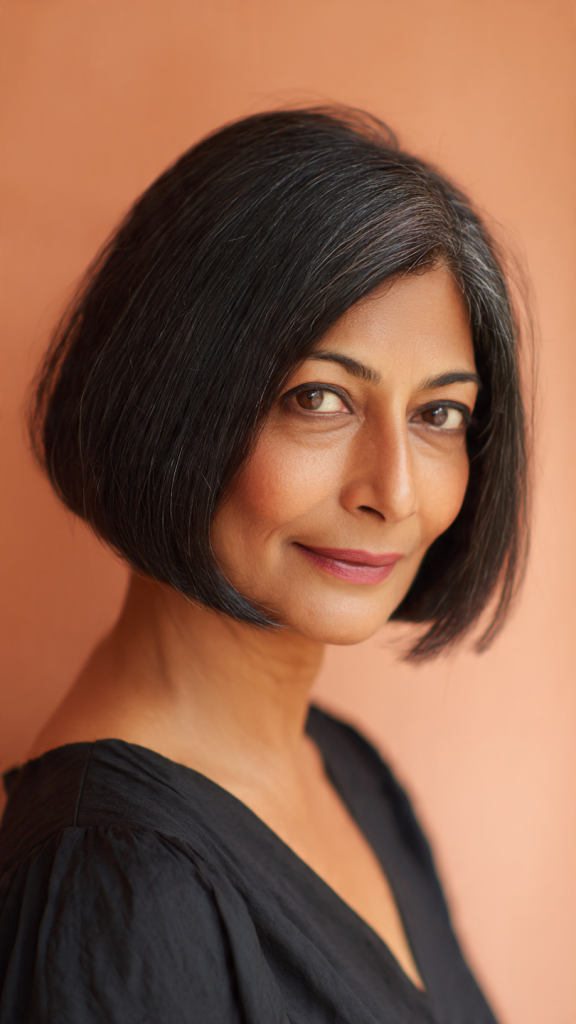
Why it works: An angled bob is cut with a distinct slope—very short in the back and significantly longer in the front (chin-length or below). The long, face-framing front pieces create vertical lines that slim the face, while the short back prevents bulk at the neck.
How to style it: Apply smoothing cream to damp hair. Blow-dry the back using a round brush for smoothness. For the longer front pieces, use a flat iron to create a slight bend away from the face. The front pieces should never be curled toward your face, as that adds width.
Best face shapes: Round, oval, square
Maintenance: Trim every 5–6 weeks
4. French Bob
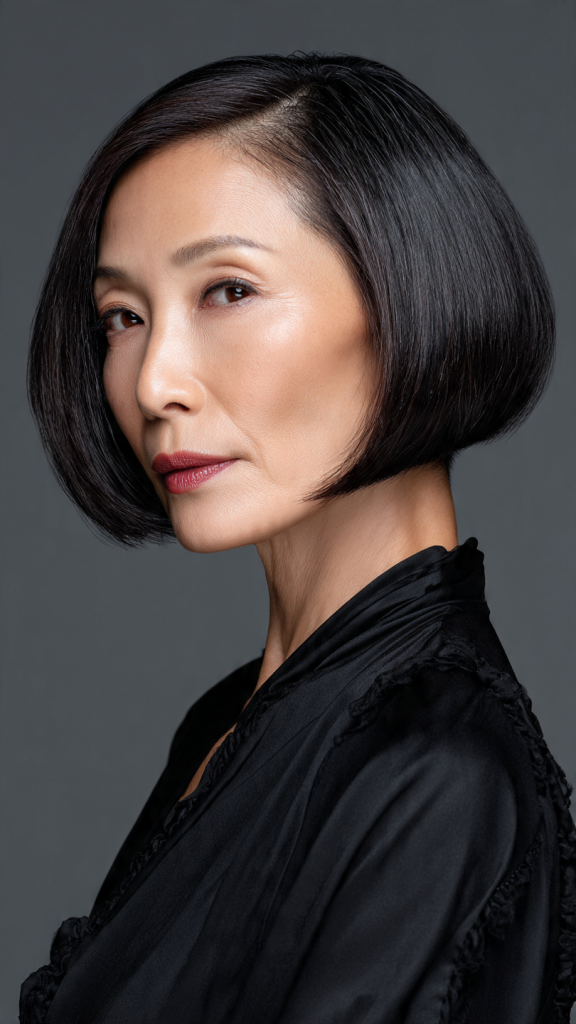
Why it works: The French bob is cropped between the earlobe and chin, often with a subtle undercurl at the ends. It’s effortlessly chic and requires almost no daily effort. The blunt edge creates the illusion of density, while the short length prevents wispy ends.
How to style it: Apply smoothing cream to damp hair. Tuck hair behind your ears while it air-dries to encourage that signature curved-under shape. Never use a straightener—the French bob celebrates imperfect, lived-in texture.
Best face shapes: Oval, heart, square
Maintenance: Trim every 6 weeks
For more bob inspiration, these choppy bob hairstyles for fine hair offer additional texture-building ideas.
Pixie vs. Bob: Direct Comparison for Women Over 50
Face Shape Suitability
| Face Shape | Pixie Recommendation | Bob Recommendation |
|---|---|---|
| Oval | Any pixie works | Any bob works |
| Round | High-volume pixie with height | Angled or stacked bob |
| Heart | Soft, textured pixie | Chin-length bob with soft layers |
| Square | Textured pixie with soft edges | Textured bob with wispy ends |
| Oblong | Avoid very short sides; keep length on top | Blunt bob at chin level |
Hair Texture Suitability
| Hair Texture | Pixie Recommendation | Bob Recommendation |
|---|---|---|
| Fine/Thin | Excellent (creates density) | Good (needs layering for volume) |
| Thick | Good (removes bulk) | Excellent (internal layers) |
| Curly | Curly pixie is stunning | Curly bob with layers |
| Straight | Any pixie works | Any bob works |
| Wavy | Textured pixie works well | Wavy bob is beautiful |
Lifestyle Suitability
| Lifestyle Factor | Pixie | Bob |
|---|---|---|
| Low maintenance | ✅ Excellent | ✅ Good |
| Active/sports | ✅ Excellent (stays put) | ✅ Good (can pull back) |
| Professional | ✅ Very acceptable | ✅ Very acceptable |
| Likes to style hair | ❌ Limited options | ✅ Many options |
| Wants to pull hair back | ❌ Can’t | ✅ Yes (ponytail, bun) |
| Hot climate | ✅ Excellent (cool) | ✅ Good |
| Frequent swimming | ✅ Excellent (dries fast) | ✅ Good |
How to Choose: Pixie or Bob?
Choose a PIXIE if:
✅ You want the ultimate low-maintenance cut (2–5 minute styling)
✅ You have fine or thinning hair that needs volume
✅ You have a round face and want elongation
✅ You’re ready for a bold change
✅ You don’t mind frequent trims (every 4–6 weeks)
✅ You never need to pull your hair back
✅ You want to highlight your eyes and cheekbones
Choose a BOB if:
✅ You want styling versatility (updos, ponytails, half-up)
✅ You prefer a longer grow-out phase
✅ You have thick hair that needs shaping
✅ You want to be able to pull your hair back
✅ You have a square or heart face that benefits from softness
✅ You like to change your style frequently
✅ You want a classic, timeless look
The Compromise: The Long Pixie (Pixie Bob)
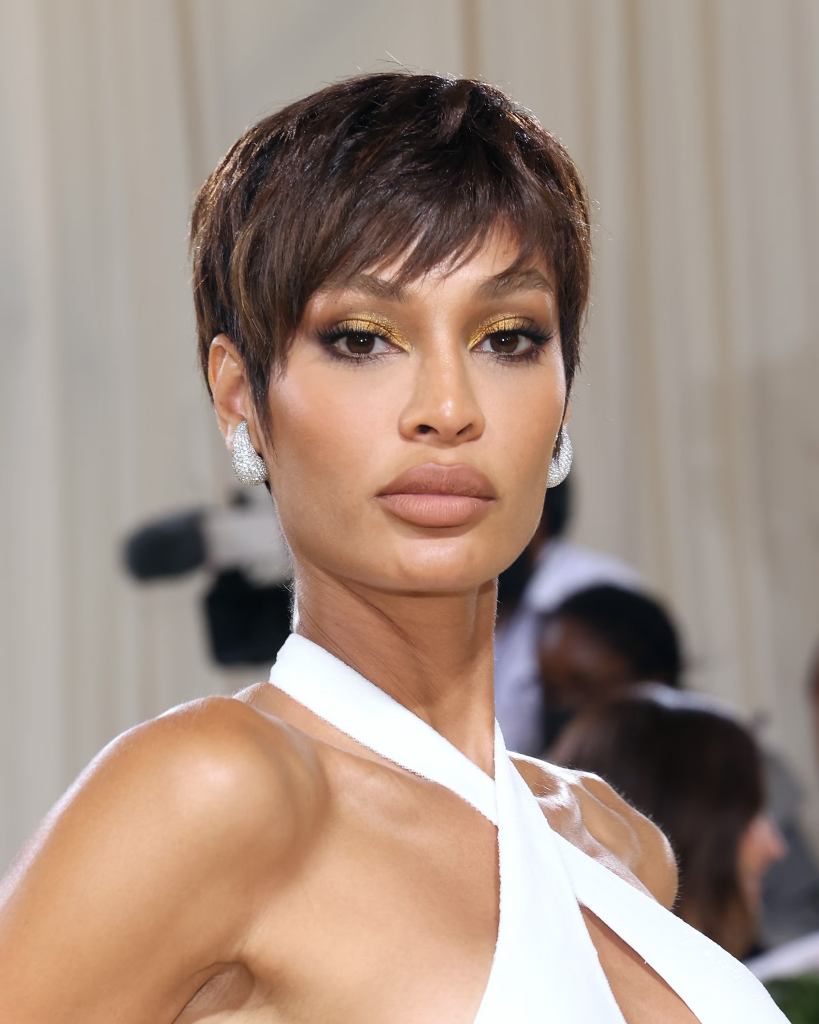
Can’t decide? The long pixie (also called a pixie bob) offers the best of both worlds. It’s shorter than a bob but longer than a traditional pixie, with length on top and at the crown but tapered edges. This hybrid is perfect for women who want the ease of a pixie with a bit more versatility.
For more on this hybrid style, these pixie bob haircuts for older women offer additional inspiration.
Styling Comparison: Pixie vs. Bob
Pixie Styling (2–5 minutes)
- Apply lightweight mousse or styling cream to damp hair
- Towel-dry or blow-dry briefly on low heat
- Use fingers to tousle top forward, push sides down
- For extra lift, add texturizing powder at the crown
- That’s it—no brushes, no complex techniques
Bob Styling (5–10 minutes)
- Apply volumizing mousse or smoothing cream to damp hair
- Blow-dry using a round brush (for volume) or paddle brush (for sleekness)
- For waves: scrunch with sea salt spray and air-dry or diffuse
- For curls: apply curl cream and diffuse
- Can be styled in ponytails, buns, half-up styles
Maintenance Comparison: Pixie vs. Bob
| Maintenance Task | Pixie | Bob |
|---|---|---|
| Trim frequency | Every 4–6 weeks | Every 6–8 weeks |
| Daily styling time | 2–5 minutes | 5–10 minutes |
| Product needed | Minimal (mousse, paste, powder) | Moderate (depending on style) |
| Grow-out phase | Awkward (needs shaping) | Graceful (becomes lob) |
| Heat styling needed | Minimal to none | Moderate |
| Can skip washing | Yes (looks better day 2) | Yes (dry shampoo helps) |
Real Talk: Common Concerns
“I’m afraid a pixie will make me look too masculine”
A pixie can be incredibly feminine when styled correctly. Soft, textured edges, side-swept bangs, and wispy layers all add softness. The classic and soft pixie variations are especially feminine.
“I have a double chin. Will a bob make it worse?”
A well-cut bob can actually minimize a double chin. An angled bob (longer in front) creates vertical lines that draw the eye downward. Avoid blunt chin-length bobs that end exactly at the chin line.
“I have very fine, thin hair. Will a pixie look sparse?”
A textured pixie with point-cutting and layering creates multiple endpoints that reflect light, making fine hair look denser. The wispy pixie is specifically designed for very fine hair.
“I like to wear my hair in a ponytail. Can I do that with a bob?”
Yes! A bob at chin-length or longer can be pulled back into a small ponytail or half-up style. A pixie cannot.
Quick Reference: Pixie vs. Bob at a Glance
| Pixie | Bob | |
|---|---|---|
| Length | Very short (ears exposed) | Chin to shoulder |
| Styling time | 2–5 minutes | 5–10 minutes |
| Trim frequency | 4–6 weeks | 6–8 weeks |
| Volume potential | Excellent | Good |
| Versatility | Limited | High |
| Can pull back | No | Yes |
| Best for fine hair | Excellent | Good |
| Best for thick hair | Good | Excellent |
| Grow-out | Awkward | Graceful |
Final Thoughts
The choice between pixie vs. bob for women over 50 ultimately comes down to your personal style, face shape, hair texture, and lifestyle. The pixie is bold, ultra-low maintenance, and creates dramatic volume—perfect for the woman who wants to spend minimal time on her hair and make a statement. The bob is versatile, soft, and offers more styling options—perfect for the woman who likes to change her look and wants the ability to pull her hair back.
Both cuts are beautiful, age-appropriate, and confidence-boosting. The best choice is the one that makes you feel like the best version of yourself. Take this guide to your stylist, discuss your face shape and lifestyle, and get ready to love your short hair.

Leave a Reply