

Motherhood is often portrayed as a journey of boundless joy and unconditional love. While those elements are undoubtedly present, the day-to-day reality for many moms involves a level of physical and mental exhaustion that can feel overwhelming. Often, this suffering is not caused by one big event, but by a collection of unhealthy habits—many of which are worn as badges of honor in our culture. From neglecting your own basic needs to carrying an invisible mental load, these patterns can lead to significant personal suffering, often manifesting as “mom burnout” or “depleted mother syndrome” .
The good news is that by identifying these habits, you can take the first step toward replacing them with practices that support your well-being. Here are some of the most common unhealthy habits that make moms suffer, and how to start breaking free.
1. The Habit of Total Self-Neglect

One of the most pervasive and damaging habits is consistently putting your own needs last. This goes beyond the occasional skipped meal; it’s a chronic pattern where your health, hunger, and rest are treated as afterthoughts. You might find yourself skipping breakfast to pack lunches, forgetting to drink water while managing everyone else’s schedules, or realizing at the end of the day that you haven’t eaten a single nourishing meal . This habit leads to low energy, poor concentration, and a weakened immune system, making you more susceptible to illness and burnout .
2. The “Leftover Cleanup” Crew
This is a deceptively simple habit with a big impact: eating whatever is left on your children’s plates. While it might feel efficient to finish the last few bites of a grilled cheese or the remnants of mac and cheese, this mindless eating adds unnecessary calories and often consists of low-nutrient, “kid-friendly” foods . It disconnects you from your own hunger cues and can lead to weight gain and feelings of frustration with your own body.
3. Being the “Default Parent” 24/7
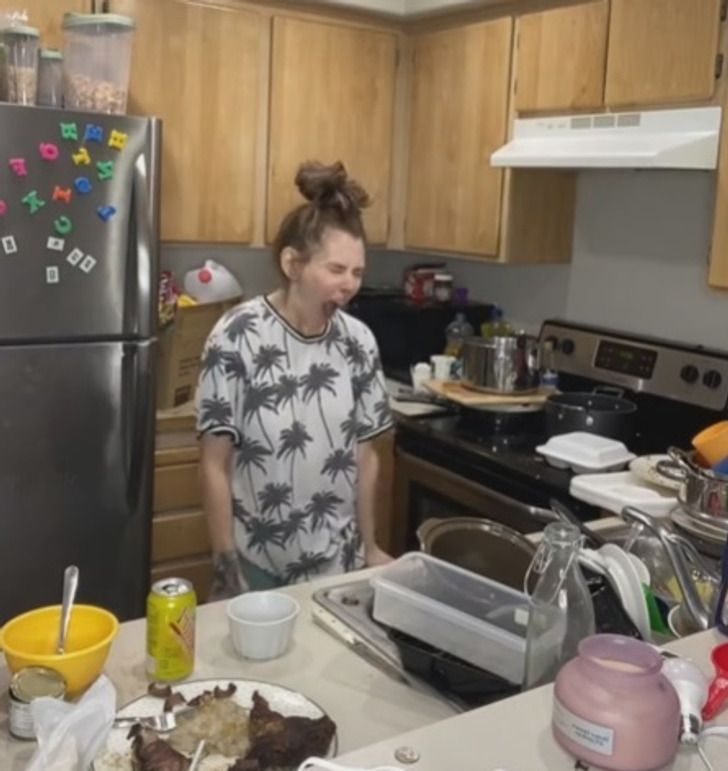
Carrying the “mental load” is one of the most exhausting and invisible habits a mother can have. This is the endless, often unacknowledged work of remembering, anticipating, and coordinating everything for the household . It’s knowing when the pediatrician appointments are, that the soccer cleats are getting too small, that the teacher conference is next Tuesday, and that you’re almost out of toothpaste. This cognitive labor is constant and relentless, leaving your brain in a state of perpetual “on” and making it impossible to truly relax .
4. The Perfectionism Trap

In the age of social media, the pressure to be a “perfect parent” is immense. The habit of comparing your behind-the-scenes reality to everyone else’s highlight reel is a fast track to feeling inadequate and suffering from “mom guilt” . This perfectionism extends to having a spotless house, orchestrating Pinterest-worthy birthday parties, and raising children who excel in every activity . This pressure is a major driver of parental burnout, leading to increased stress, anxiety, and depression for both parents and their children .
5. Emotional Eating as a Coping Mechanism
When you’re at your wit’s end, it’s easy to reach for the stash of cookies or a bowl of ice cream. While occasional emotional eating is normal, making it a primary coping mechanism for stress is an unhealthy habit . It provides a temporary dopamine hit but often leads to feelings of guilt and shame afterward, without actually solving the underlying issue causing the stress. This cycle can negatively impact both physical and emotional health.
6. Refusing to Ask For or Accept Help
Many moms fall into the habit of believing they have to do it all alone. Whether it’s from a sense of pride, a belief that no one else can do it “right,” or simply not wanting to be a burden, not asking for help—or rejecting it when offered—leads to rapid exhaustion . This isolates you from your support system and ensures the weight of responsibility stays squarely on your shoulders.
7. Skimping on Sleep to Get Things Done

The habit of staying up late to “have some me time” or to finish the laundry is incredibly common. While the desire for quiet time is valid, consistently sacrificing sleep leads to a cascade of negative effects, including impaired judgment, mood swings, a weakened immune system, and an inability to cope with daily stress . A sleep-deprived mom is a mom who will suffer physically and emotionally.
How to Start Breaking These Habits and Ease Your Suffering

Acknowledging these habits is the first, most crucial step. Here are some evidence-based strategies to begin replacing them with healthier ones.
- Make the Invisible, Visible: Start by acknowledging the mental load. Write down all the tasks, both physical and mental, that you handle. This exercise can be eye-opening for you and, if you share it, for your partner . The goal is to move toward a more equitable distribution of this cognitive labor.
- Practice Mindful Eating: Pay attention to your own hunger and fullness. Sit down to eat a balanced meal without multitasking. When the kids are done, if you’re tempted to clean their plates, pause and ask yourself if you are actually hungry. If not, throw the leftovers away without guilt .
- Embrace “Good Enough”: Challenge the perfectionist thoughts. Ask yourself if the task truly needs to be done perfectly, or if “good enough” will suffice. Let go of the comparison game on social media . As one expert notes, “I would much rather have a happy kid than a perfect kid” .
- Prioritize Self-Care as Non-Negotiable: Just like the flight attendant says, you must secure your own oxygen mask before helping others . Schedule small, bite-sized blocks of self-care into your day—10 minutes for a cup of tea, a short walk, or a few minutes of deep breathing . This is not selfish; it’s essential for you to be the parent you want to be.
- Learn to Say “No”: You don’t have to volunteer for every school event or attend every social gathering. Saying “no” to outside demands is saying “yes” to your own sanity and well-being .
- Ask For and Accept Help: Start small. Ask your partner to take over bath time completely, or let a friend bring a meal. When someone offers help, give a specific task . Remember, accepting help is a sign of strength, not weakness .
If these feelings of exhaustion, guilt, and being overwhelmed persist and interfere with your daily life, it may be time to reach out for professional support. A therapist or counselor can provide you with the tools and strategies to recover from burnout and prioritize your mental health . You deserve to not just survive motherhood, but to thrive within it.

Leave a Reply