
In an age where tablets, smartphones, and televisions constantly compete for our children’s attention, finding screen-free activities for kids that genuinely excite them rather than trigger eye rolls and groans can feel like an uphill battle. The good news is that with a little creativity and the right approach, screen-free time doesn’t have to feel like a punishment—it can become the highlight of your child’s day. This collection of 20 activities is specifically designed to capture imaginations, invite hands-on engagement, and deliver the kind of fun that screens simply can’t replicate. From messy sensory play to quiet creative projects, each idea prioritizes genuine enjoyment while offering parents a meaningful role in the experience.
Why Screen-Free Time Matters More Than Ever
Before diving into the activities, it’s worth understanding why intentional screen-free time is so crucial for child development. The average child spends between four to seven hours per day looking at screens, a number that has steadily risen over the past decade. This excessive screen time has been linked to delayed language development, reduced attention spans, disrupted sleep patterns, and decreased opportunities for imaginative play.
However, simply removing screens without offering compelling alternatives rarely works. Children need activities that spark curiosity, offer a sense of accomplishment, and provide meaningful connection with the adults in their lives. The activities below are designed to do exactly that—they respect children’s need for autonomy and fun while subtly building skills like problem-solving, fine motor coordination, emotional regulation, and creative thinking.
How to Use This Guide
Each activity includes:
- Age recommendations to help you choose appropriately
- Preparation time so you can plan ahead
- The parent’s role—because how you engage matters as much as what you do
- Simple instructions that prioritize fun over perfection
Remember: the goal is connection and enjoyment, not a Pinterest-perfect outcome. Embrace the mess, follow your child’s lead, and don’t be afraid to adapt activities to suit your family’s unique rhythm.
For parents who need more than activity ideas—who are ready to understand why independent play feels so hard and how to build it from the ground up—our guide to the Independent Play Blueprint offers science-backed strategies for regulation, sensory input, and creating a “yes space” that actually works. Beyond the Tablet: Mom’s Guide to Building Independent Play Stamina
20 Screen-Free Activities They’ll Actually Want to Do
1. The Great Indoor Fort Challenge

Age: 3–10 years
Prep Time: 10 minutes
Few activities capture childhood magic quite like building a fort. What makes this version different is treating it as a challenge rather than just free play. Declare it “The Great Fort Build-Off” and let your child take the lead.
Parent’s Role: Instead of building the fort for them, act as a consultant. Ask questions like, “What would make this structure more stable?” or “How can we make the inside cozier?” Supply materials—blankets, pillows, fairy lights, clothespins—but let them problem-solve. Your presence matters more than your construction skills.
Why It Works: Forts create a sense of ownership and privacy. Children naturally gravitate toward spaces they’ve built themselves, and the cozy environment often sparks extended imaginative play.
2. Flashlight Storytelling

Age: 4–10 years
Prep Time: 2 minutes
After the lights go out, hand your child a flashlight and take turns telling stories. The flashlight becomes a spotlight, a magical wand, or even a character itself.
Parent’s Role: Start with a simple opening line like, “One night, a flashlight discovered it could talk…” then let your child take over. If they get stuck, offer gentle prompts: “What happened next?” or “What did the flashlight see?” This activity builds narrative skills while creating a cozy bonding ritual.
Age Adaptation: For younger children (ages 3–5), focus on simple cause-and-effect stories with repetitive phrases. For older kids (ages 7–10), introduce story dice or prompt cards to add complexity.
3. Reverse Scavenger Hunt

Age: 4–12 years
Prep Time: 5–15 minutes
In a traditional scavenger hunt, children search for hidden items. In a reverse scavenger hunt, they collect items from around the house or yard and then must hide them for you to find—reversing the power dynamic.
Parent’s Role: Give your child a list of items to gather (e.g., “something red,” “something that makes noise,” “something smaller than your thumb”). Once collected, they hide each item while you close your eyes. Then you search while they give “hot and cold” clues.
Why It Works: This flips the typical parent-led activity on its head. Children love being the one with the knowledge and the power to guide.
4. DIY Obstacle Course
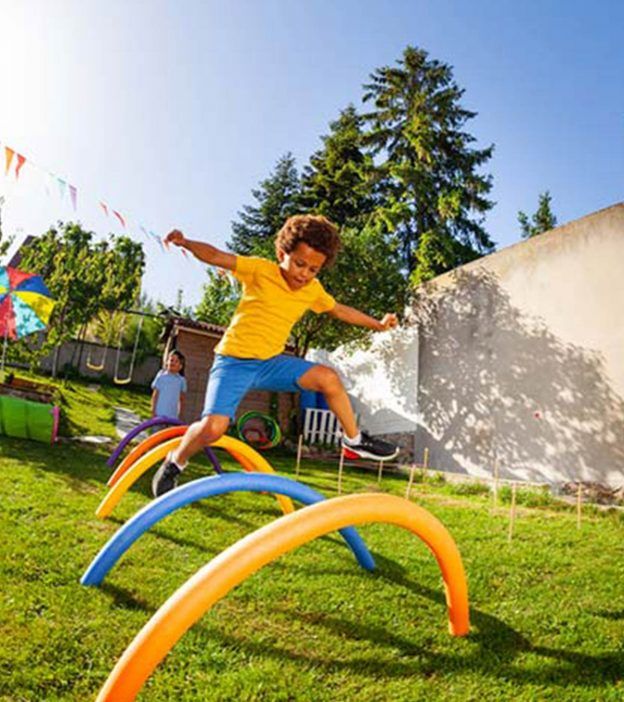
Age: 3–10 years
Prep Time: 20 minutes
Transform your living room or backyard into an obstacle course using pillows, couch cushions, hula hoops, masking tape lines, and chairs to crawl under.
Parent’s Role: Collaborate on the design. Ask your child, “What’s the hardest part we can add?” or “How should we time this?” Participate alongside them—modeling enthusiasm and effort is far more effective than simply supervising from the sidelines.
Age Adaptation: For toddlers, focus on gross motor basics like crawling, jumping, and balancing. For school-age children, add timed challenges, silly rules (hop on one foot while humming), or team-based races.
5. The Sock Puppet Theater
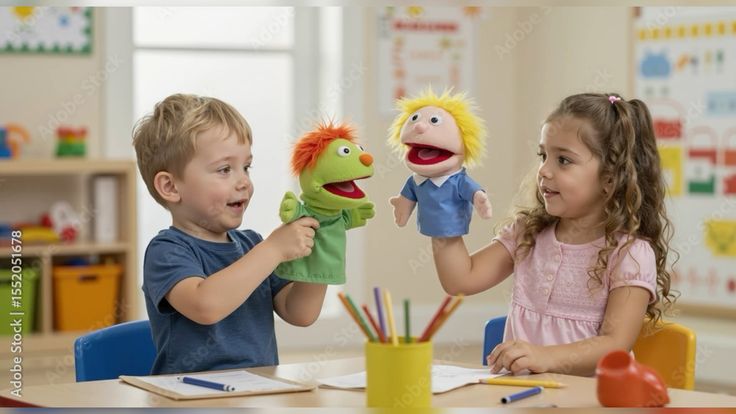
Age: 4–10 years
Prep Time: 15 minutes
Gather unmatched socks, buttons, yarn, fabric scraps, and markers to create puppet characters. Once puppets are complete, stage a performance.
Parent’s Role: Help with tricky assembly (gluing eyes, sewing simple features) but let your child dictate their character’s personality. During the performance, be an enthusiastic audience member—or better yet, create your own puppet and join the show.
Extension Idea: Record the performance on a device (ironically using a screen to celebrate screen-free creativity) and play it back for family movie night.
6. Nature Weaving
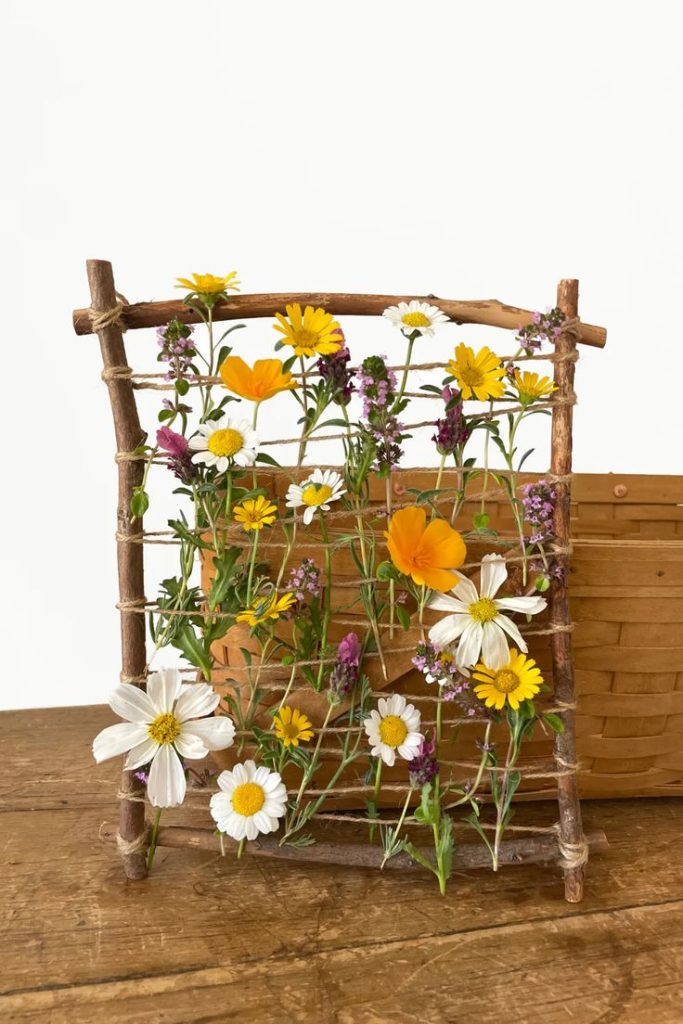
Age: 5–12 years
Prep Time: 10 minutes
Create a simple loom by tying string or yarn between two sturdy sticks or around a cardboard frame. Then head outside to collect nature treasures—leaves, flowers, grasses, feathers—to weave through.
Parent’s Role: Walk alongside your child during the collection phase, noticing details together: “Look at the pattern on this leaf” or “This grass feels different from the others.” During weaving, offer help with tying knots but resist the urge to “correct” their design.
Why It Works: This activity combines outdoor exploration with fine motor work and artistic expression. The result is a beautiful, temporary piece of art that celebrates nature.
7. Kitchen Science: Baking Soda Volcanoes
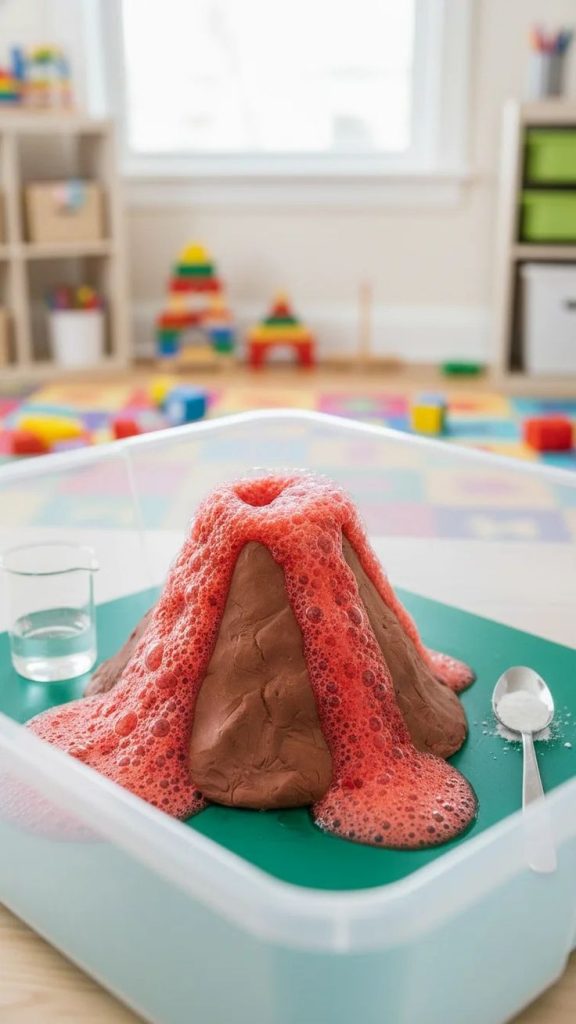
Age: 3–10 years
Prep Time: 5 minutes
This classic never loses its magic. Build a volcano shape using sand, dirt, or play dough, or simply place baking soda in a container. Add food coloring and vinegar to watch the eruption.
Parent’s Role: Introduce simple scientific language: “What do you think will happen when we add the vinegar?” “Let’s try adding more baking soda—what changed?” Let your child handle the pouring and measuring to build confidence with real-world tools.
Safety Note: Supervise closely with younger children to prevent vinegar from getting into eyes. Perform outdoors or on a washable surface.
8. Cardboard City
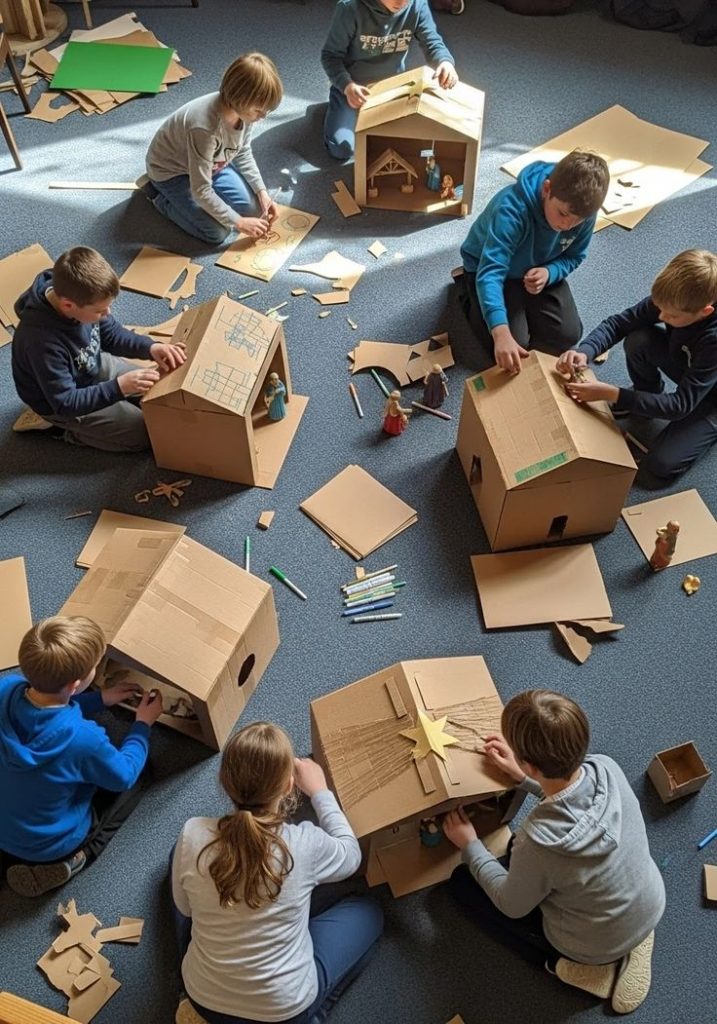
Age: 4–12 years
Prep Time: 5 minutes to gather boxes
Save shipping boxes, cereal boxes, and shoe boxes for one glorious afternoon of cardboard construction. Add scissors (age-appropriate), tape, markers, and any small toys to populate the city.
Parent’s Role: Resist the urge to build something impressive yourself. Instead, ask questions that extend play: “What does this building need inside?” “How do the people get from here to the park?” Offer technical help with cutting or taping only when requested.
Age Adaptation: Younger children may focus on decorating and stacking. Older children can design multi-level structures, working drawbridges, or themed zones like a zoo, airport, or medieval village.
9. Secret Message Codes
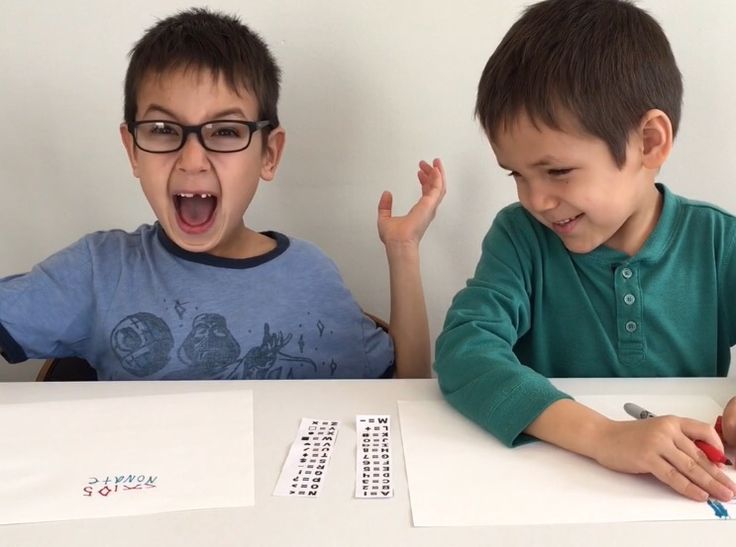
Age: 6–12 years
Prep Time: 10 minutes
Introduce your child to the world of secret codes. Teach simple ciphers like the Caesar cipher (shifting letters) or create a code where each letter is replaced with a symbol.
Parent’s Role: Write a secret message for your child to decode, then let them write one for you. For younger children, start with picture codes or reverse writing (writing backwards to be read in a mirror).
Why It Works: Codes tap into children’s love of secrets and mystery. This activity builds critical thinking, pattern recognition, and patience.
10. Sensory Bins
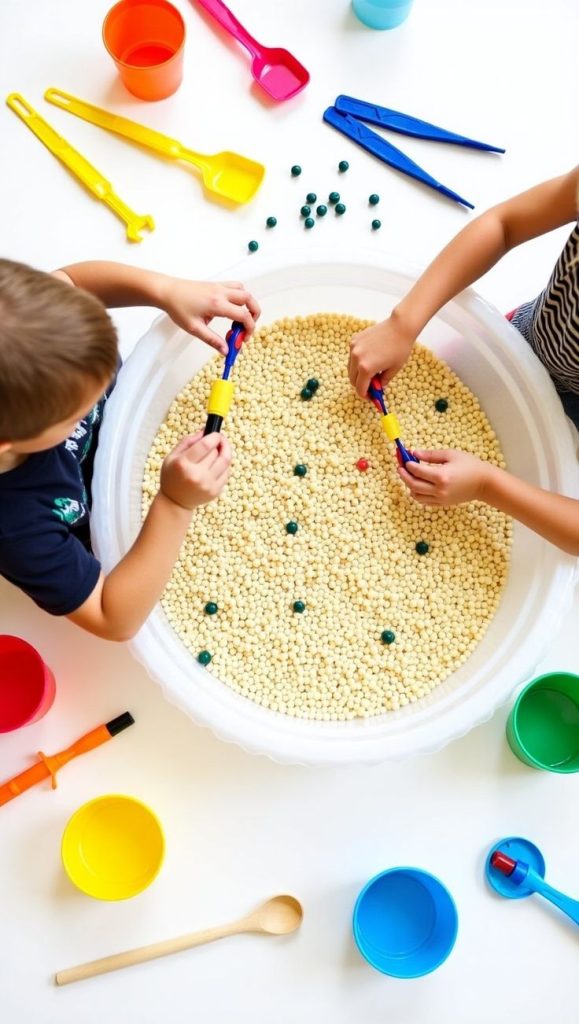
Age: 2–7 years
Prep Time: 10 minutes
Fill a large plastic bin with a sensory base—rice, dried beans, water beads, sand, or shaving cream. Add scoops, small toys, cups, and funnels.
Parent’s Role: Sit beside your child and narrate what you notice: “I see you’re filling the blue cup all the way to the top.” Follow their lead rather than directing the play. Sensory play is naturally calming and often leads to rich imaginative scenarios.
Mess Management: Place a shower curtain or old sheet underneath for easy cleanup. Establish clear boundaries (e.g., “the rice stays in the bin”) before starting.
11. Shadow Puppets

Age: 3–10 years
Prep Time: 2 minutes
All you need is a flashlight and a blank wall. Use hands to create animal shapes, or cut simple figures from cardstock taped to skewers.
Parent’s Role: Start by demonstrating a few shadow shapes, then let your child experiment. Take turns guessing what each shadow represents. For older children, collaborate on a short shadow puppet story.
12. Homemade Play Dough

Age: 2–10 years
Prep Time: 15 minutes
Making play dough from scratch turns a simple sensory activity into a meaningful project. Use a basic recipe: 2 cups flour, 1 cup salt, 2 tablespoons oil, 2 cups water, and cream of tartar. Add food coloring for vibrant hues.
Parent’s Role: Let your child measure ingredients, mix, and knead. This builds math skills, fine motor strength, and a sense of accomplishment. Once the dough is ready, join in the sculpting rather than cleaning up immediately.
13. Board Game Marathon
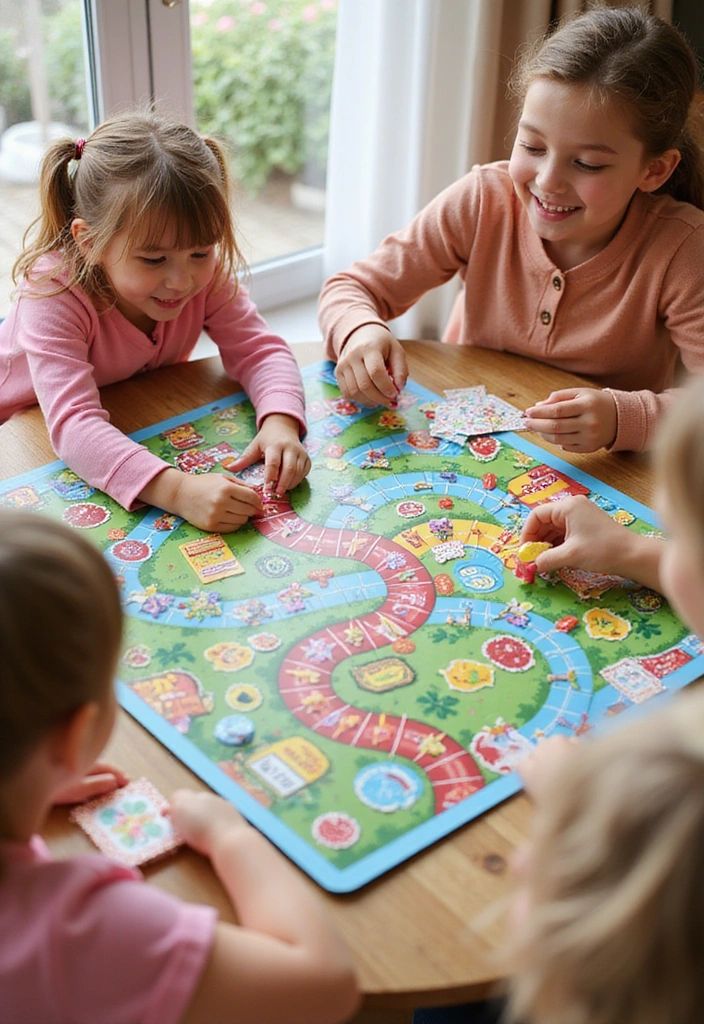
Age: 4–12 years
Prep Time: 5 minutes
Designate an afternoon as a board game marathon. Let each family member choose one game, creating a tournament-style rotation.
Parent’s Role: Play with genuine enthusiasm. Avoid letting your child win every time—graceful losing builds emotional resilience. Use game time to model good sportsmanship and strategic thinking out loud.
Game Recommendations: For ages 4–6, try Hoot Owl Hoot, Zingo, or Candy Land. For ages 7–10, consider Ticket to Ride (First Journey), Codenames, or Sushi Go. For ages 10–12, introduce Catan, Carcassonne, or cooperative games like Forbidden Island.
14. Paper Airplane Derby
Age: 5–12 years
Prep Time: 5 minutes
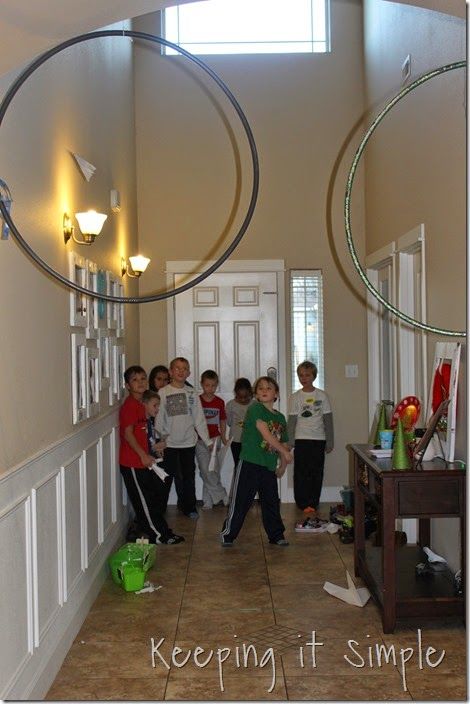
Fold multiple paper airplane designs—darts, gliders, stunt planes—then hold competitions for distance, accuracy, and hang time.
Parent’s Role: Learn a few designs together using online tutorials or books (printed ahead of time to stay screen-free). During the derby, track results on a simple scoreboard. Offer encouragement for creative designs rather than just winning models.
15. Photo Scavenger Hunt
Age: 5–12 years
Prep Time: 10 minutes
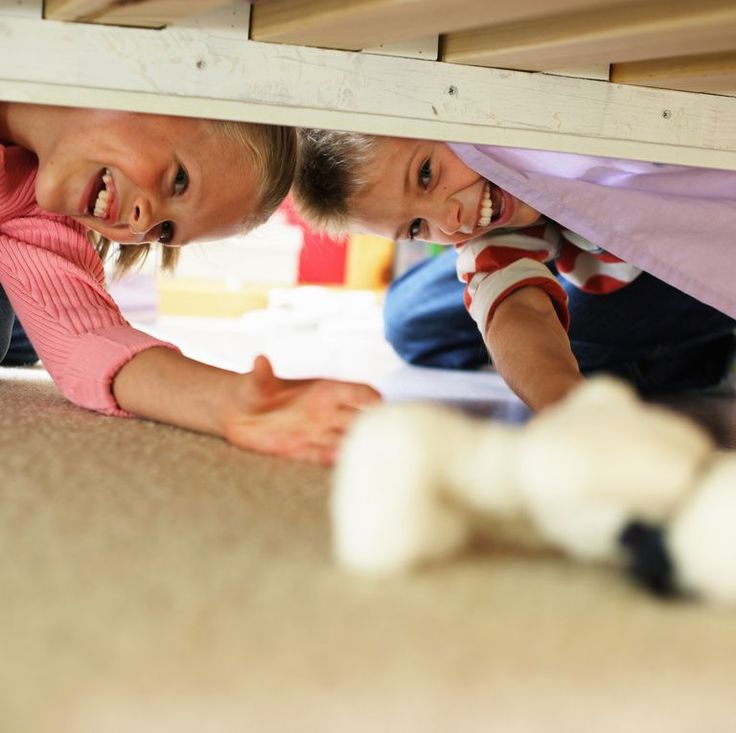
Create a list of items or scenes for your child to find and “capture”—not with a screen, but with a simple disposable or kid-friendly camera. If using a phone camera feels counterproductive to screen-free goals, set clear boundaries that the device is used only as a tool for this specific activity.
Parent’s Role: Walk alongside your child as they hunt, offering gentle hints when needed. Afterward, print the photos and let your child create a scrapbook or gallery wall of their captures.
16. Music Makers
Age: 2–10 years
Prep Time: 10 minutes
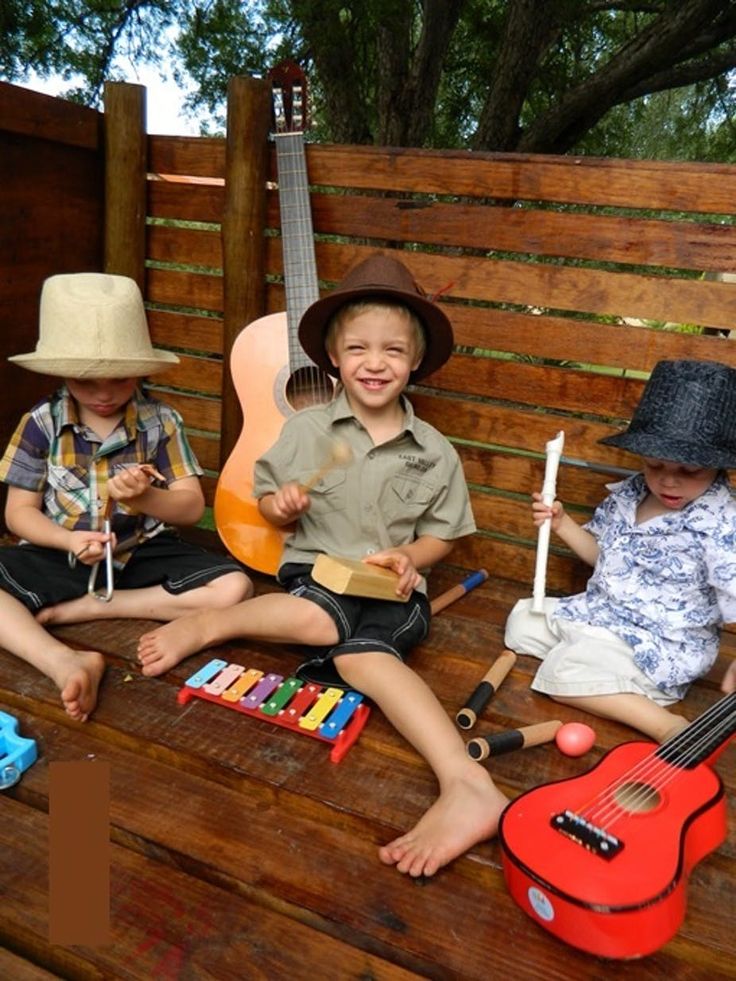
Create instruments from household items: shakers from rice-filled bottles, drums from overturned pots, guitars from tissue boxes with rubber bands.
Parent’s Role: Make your own instrument alongside your child. Then start a family band—take turns leading songs, conducting, or inventing new rhythms. The goal is joyful noise, not musical precision.
17. Story Stones

Age: 4–10 years
Prep Time: 20 minutes
Collect smooth stones and decorate them with simple images—characters, objects, places, or emotions. Store them in a bag, then pull out a handful to inspire collaborative storytelling.
Parent’s Role: Paint stones alongside your child, sharing stories about each image as you create. During storytelling, take turns drawing stones and weaving the elements into a shared tale.
18. Living Room Campout
Age: 3–12 years
Prep Time: 15 minutes
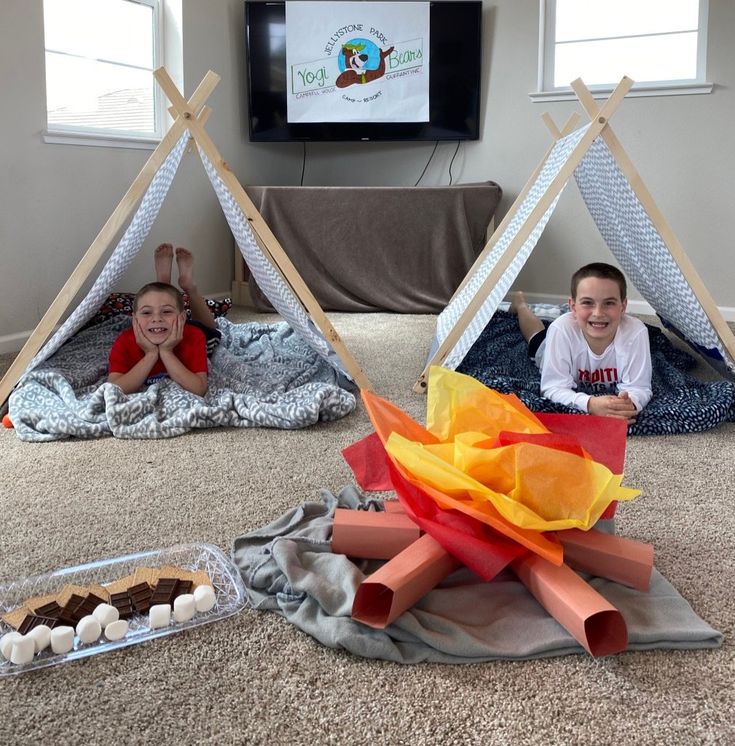
Pitch a tent indoors or build a blanket fort, lay out sleeping bags, and simulate a camping experience. Tell stories by flashlight, make s’mores in the oven, and “stargaze” with glow-in-the-dark stars on the ceiling.
Parent’s Role: Commit fully to the experience. Use a camping voice, prepare “campfire” snacks together, and spend the night in the living room. Your willingness to fully participate signals that this time together matters.
19. Baking Day

Age: 3–12 years
Prep Time: Varies
Baking offers a perfect blend of process and product. Choose a recipe that allows for hands-on involvement—kneading bread, rolling cookies, decorating cupcakes.
Parent’s Role: Assign real jobs based on age: toddlers can pour pre-measured ingredients, school-age children can measure and mix, older kids can read recipes and manage timing. Resist the urge to take over when things get messy. The learning happens in the process, not the perfection.
20. Community Kindness Project
Age: 4–12 years
Prep Time: 30 minutes
Channel screen-free energy into helping others. Ideas include making cards for a local nursing home, baking treats for neighbors, or creating kindness rocks to hide around the community.
Parent’s Role: Let your child take the lead on choosing the project. Discuss together why kindness matters and how small actions impact others. Deliver or hide the items together, celebrating the joy of giving without expectation of recognition.
Making Screen-Free Time Sustainable
Implementing screen-free activities doesn’t require perfection. Here are a few strategies to make it stick:
Start small. Designate one afternoon a week as a “screen-free adventure” rather than attempting a complete overhaul.
Create a visible menu. Post a list of favorite screen-free activities on the refrigerator so children can choose independently when boredom strikes.
Set realistic boundaries. Rather than banning screens entirely, establish clear times—such as “no screens before breakfast” or “weekends only after 3 p.m.”—that make space for other activities without creating constant negotiation.
Reframe your role. Your presence is the most powerful tool in your screen-free toolkit. Children are far more likely to engage deeply with activities when a parent participates alongside them, even briefly, before stepping back.
Final Thoughts
The goal of screen-free time isn’t to eliminate technology entirely—screens are a meaningful part of modern life—but to create balance. The 20 activities shared here are designed to offer something screens cannot: tactile engagement, shared laughter, the satisfaction of creating something with your own hands, and the quiet joy of being fully present with the people you love.
When children have access to genuinely engaging alternatives, they don’t miss the screens. They discover something better: their own imagination, the world around them, and the simple pleasure of time spent together.
What screen-free activities have been a hit in your home? Share your favorites in the comments below.

Leave a Reply