
The quiet act of resistance every parent needs to make.
What if the greatest gift you could give your child is not another lesson, trophy, or college prep course — but time? In a culture obsessed with acceleration, the decision to raise your kids slowly has become radical. To intentionally cultivate an unhurried childhood is to push back against everything modern parenting has become: frantic, scheduled, anxious, and exhausted.
In the time it takes you to read this sentence, the average American child has received a push notification, been reminded of a pending homework assignment, or heard a parent say, “Hurry up, we’re late.” We live in a world of accelerations—faster internet, quicker shipping, instant streaming, and nonstop schedules. And our children are drowning in the current.
To give your child an unhurried childhood is not merely a nostalgic preference. It is a deliberate, countercultural rebellion against a system that treats childhood as a performance, a resume-building exercise, or a series of sprints toward an ever-receding finish line.
This article will explore why rushed childhoods are causing anxiety, depression, and burnout in kids as young as eight. More importantly, it will provide a practical manifesto for slowing down—protecting free play, boredom, deep attention, and family rhythms in a world that demands speed.
The Problem – What Speed Does to a Child’s Soul
We have been sold a lie. The lie says: More activities produce better children. Earlier academics produce smarter children. Constant enrichment produces happier children.
The data says otherwise.
Anxiety and depression in children aged 6–17 have increased by over 40% in the last decade. Pediatric emergency room visits for panic attacks and suicidal ideation have skyrocketed. While screens play a role, the deeper culprit is the elimination of unstructured time.
When a child is rushed from school to soccer to piano to tutoring to dinner to homework to bed, they never experience:
- Boredom (the mother of creativity)
- Deep play (the architect of social skills)
- Lingering (the soil of wonder)
- Unsupervised problem-solving (the forge of resilience)
Psychologist Peter Gray argues that the decline in free play is the single greatest cause of the rise in childhood mental illness. When children are always scheduled, they never learn to negotiate, take risks, resolve conflicts, or simply be.
Part 2: What Is an Unhurried Childhood? (A Definition)
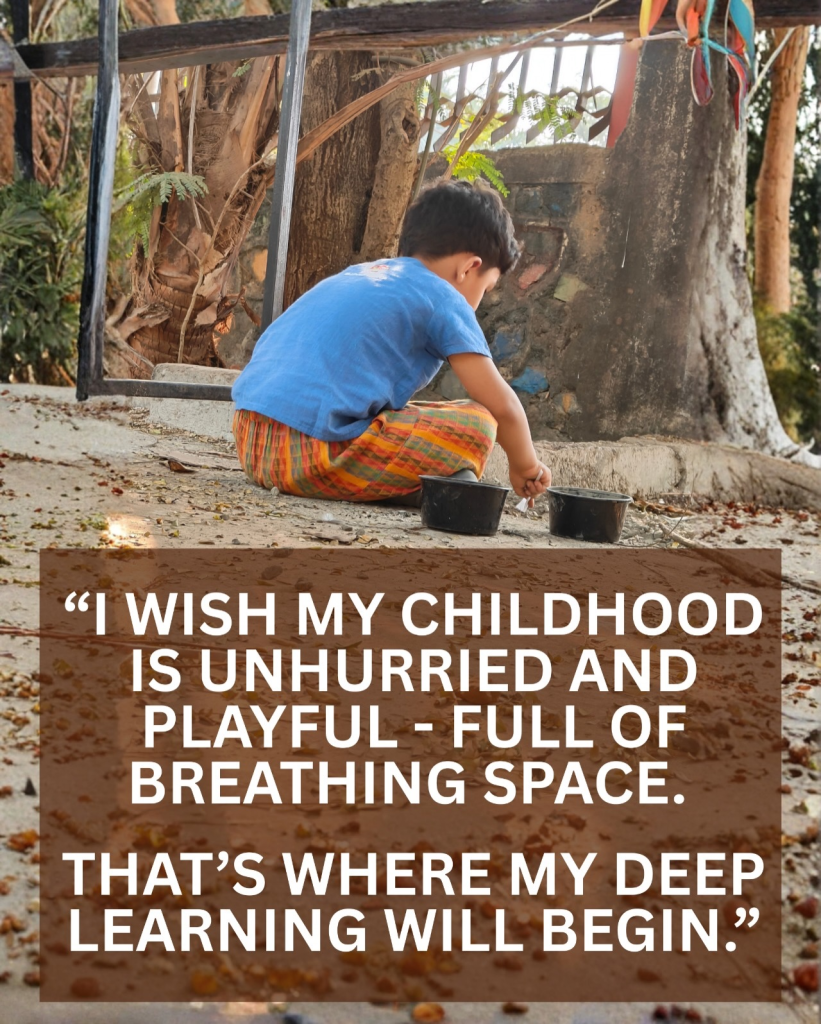
An unhurried childhood is not lazy parenting. It is not neglecting education or extracurriculars. Rather, it is the intentional protection of a child’s natural developmental pace.
Key characteristics:
- Margin: Empty spaces in the weekly calendar. Afternoons with nothing planned.
- Slow mornings: Time to wake up naturally, eat breakfast without a clock, and talk.
- Free play: Unstructured, unsupervised (within safety), undirected by adults.
- One thing at a time: No multitasking. When you play, you play. When you eat, you eat.
- Nature immersion: Hours outside, not measured by steps or achievements.
- Family rhythms: Predictable, unhurried traditions (Sunday pancakes, evening walks, read-aloud time).
This is not a luxury for the wealthy. Families in small apartments can create unhurried evenings. Single parents can protect one slow afternoon per week. It requires intention, not income.
Part 3: The Countercultural Angle – Why Slowing Down Is an Act of Resistance
Here is the radical claim at the heart of this article:
Giving your child an unhurried childhood is a political, economic, and cultural act of defiance.
Consider what the rushed world wants from your child:
- Consumerism wants your child rushed so they need convenience products (fast food, instant entertainment, disposable toys).
- Social media wants your child rushed so they stay on the dopamine treadmill, never pausing to question the scroll.
- The education-industrial complex wants your child rushed so they submit to standardized tests, homework overload, and college admissions hysteria.
- The economy wants your child rushed so they grow into anxious, overworked adults who consume to soothe their exhaustion.
When you say “no” to travel soccer for a 9-year-old, you are rejecting a multi-billion-dollar youth sports industry. When you say “no” to tablets before age 10, you are rejecting the attention economy. When you say “no” to homework for a kindergartener, you are rejecting a system that values data over development.
Slowing down is sabotage. The system cannot monetize a child lying in the grass watching clouds. The algorithm cannot harvest a child building a fort with sticks. The economy cannot profit from a family eating dinner together for 90 minutes.
This is why the unhurried childhood feels so threatening to other parents. When you opt out, you expose the absurdity of the rush. Your child’s peace becomes a silent indictment of their child’s exhaustion.
Do it anyway.
Part 4: The Science – Why Unhurried Brains Are Healthier Brains
Neuroscience backs up the countercultural parent.
- The default mode network (DMN): This brain network activates during rest, daydreaming, and unstructured time. It is responsible for self-reflection, creativity, and memory consolidation. Rushed children never activate their DMN. Unhurried children strengthen it daily.
- Cortisol: Chronic rushing elevates cortisol (stress hormone). In children, high cortisol damages the hippocampus (memory center) and shrinks the prefrontal cortex (impulse control). Unhurried children have lower baseline cortisol.
- Myelination: Deep, repetitive free play (climbing the same tree, building the same Lego city) strengthens neural pathways through myelination. Flipping between activities fragments this process.
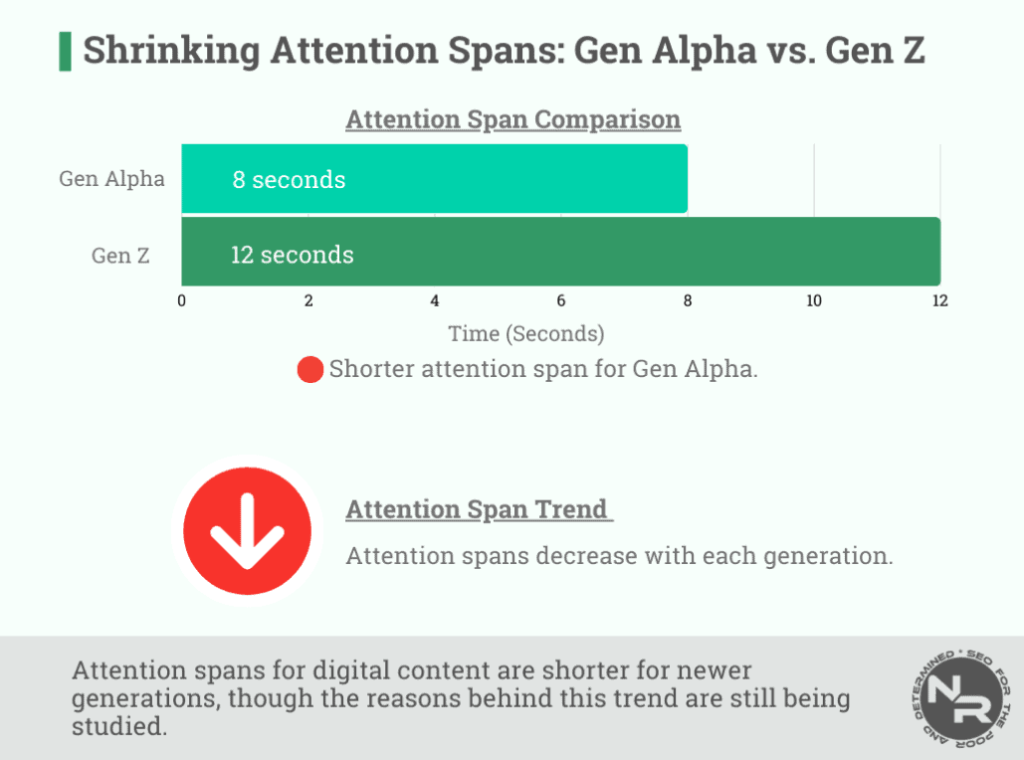
- Attention span: The average child’s attention span has dropped from 12 seconds in 2000 to 8 seconds in 2025 (shorter than a goldfish). Unhurried environments—long walks, board games, reading—rebuild sustained attention.
Put simply: Speed damages the child’s brain. Stillness heals it.
Part 5: Practical Strategies for an Unhurried Home
You cannot slow down the entire world. But you can slow down your home. Here is how.
1. Protect the Morning
The most rushed time in most families is 6:30–8:00 AM. Flip the script.
- Lay out clothes, pack lunches, and sign forms the night before.
- Wake up 30 minutes before your children so you are calm when they rise.
- No screens before school. Screens fragment attention and create time blindness.
- Build a 15-minute buffer into every transition. Leave earlier than necessary.
2. Slash the Schedule
The average American child spends only 4–7 hours per week in unstructured free play but 15+ hours in organized activities.
- The “one activity per season” rule: A child can do one sport, one art, or one club at a time. When the season ends, take a break before the next begins.
- Say no to travel teams before age 12. Local recreation leagues are sufficient.
- Guard weekends fiercely. Saturdays are for family, friends, and nothing. Sundays are for rest and preparation.
3. Boredom Is a Gift
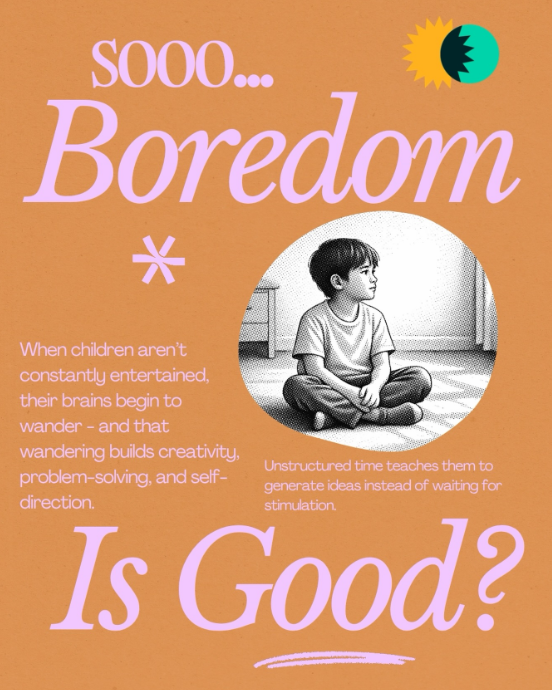
When a child says, “I’m bored,” resist the urge to provide a screen or a scheduled activity.
Instead, say: “That’s wonderful. Boredom is where creativity begins. I’ll check on you in an hour.”
At first, they will struggle. Within weeks, they will build forts, write stories, draw comics, climb trees, and invent games. Boredom is the soil of the imagination.
4. Establish Slow Rhythms
Children thrive on predictability. Build slow, daily, weekly, and seasonal rhythms.
- Daily: Family dinner (no phones, no rushing). Evening read-aloud time. A short walk after school before homework.
- Weekly: Pancake Sunday. Board game Friday. Saturday morning without plans.
- Seasonal: Apple picking in fall. A week of fireflies in summer. Holiday baking over multiple slow afternoons.
5. Reduce Screen Time Dramatically

Screens are the enemy of unhurried childhood. They speed up time perception, fragment attention, and replace deep play.
- No screens under age 2.
- Ages 2–5: 1 hour max per day of high-quality programming (together).
- Ages 6–12: Screen-free weekdays. Limited weekend use (2 hours/day).
- No phones before age 14. No social media before 16.
This will make you unpopular. Your children will protest. Hold the line. Their childhood depends on it.
6. Embrace “Enough”
The rushed childhood is fueled by scarcity thinking: If my child doesn’t do X, they will fall behind.
Reject this. Your child will not fall behind because they missed travel soccer at age 8. They will fall behind if they burn out by age 12.
Say this aloud: “My child is enough. Our pace is enough. This moment is enough.”
Part 6: What You Gain (Beyond Just Less Stress)
An unhurried childhood is not merely the absence of rushing. It is the presence of something better.
| Rushed Childhood | Unhurried Childhood |
|---|---|
| Chronic anxiety | Calm resilience |
| Fragmented attention | Deep focus |
| Superficial friendships | Loyal, negotiated bonds |
| Burnout by adolescence | Sustainable energy |
| Resentment toward parents | Secure attachment |
| Fear of missing out | Joy in the present |
Parents report that after slowing down, they actually know their children again. Conversations become longer. Conflicts become manageable. Laughter returns.
One mother wrote: “We dropped from six activities to two. My son cried the first week—out of relief. He said, ‘Mom, I didn’t know I could just play.’”

Part 7: Overcoming Pushback – What to Say to Critics
When you choose an unhurried childhood, other adults will question you.
- “But won’t they fall behind?” Behind whom? Behind what metric? Behind the anxious, exhausted children in the gifted program? No thank you.
- “They need to learn discipline.” Discipline is not exhaustion. Discipline is the ability to focus deeply, which requires unhurried time.
- “All the other kids are doing travel soccer.” Good. Your child can play pickup games at the park while the others drive three hours for a 20-minute game.
- “You’re being lazy.” Actually, active resistance to the rush is harder than surrendering to it. You are the courageous one.
Prepare a one-sentence response: “We’ve decided to prioritize rest, play, and family connection right now. It’s working beautifully for us.” No defensiveness. Just clarity.
Part 8: A Letter to Your Rushed Self
Dear parent,
You are not failing. You were raised in the same rushed system. You are exhausted too. The panic you feel when your child falls “behind” was installed in you by a culture that profits from your anxiety.
But you can stop.
You can say no to the next activity. You can turn off the notifications. You can sit on the floor and build Legos for an hour with no agenda. You can watch your child stare at a caterpillar for ten minutes without saying, “Come on, we have to go.”
The world will not applaud you. Your in-laws might not understand. Other parents will wonder why you aren’t at the tournament.
But your child will remember. They will remember the long Sundays, the unhurried breakfasts, the evenings when you read one more chapter because no one was tired yet. They will grow into adults who know how to rest, how to play, and how to say no to the rush.
That is the quiet revolution. That is the act of resistance. That is the unhurried childhood.
Start today. Right now. Put down your phone. Go outside with your child. Do nothing. It will be the most radical thing you have ever done.
Summary: 10 Commitments for the Unhurried Parent
- I will protect morning margin.
- I will limit activities to one per season.
- I will welcome boredom as a gift.
- I will eat dinner together without screens.
- I will read aloud to my child daily.
- I will refuse travel teams before age 12.
- I will delay smartphones until high school.
- I will spend one afternoon per week in nature.
- I will say “enough” and mean it.
- I will remember: childhood is not a race. It is a garden.
Final Word
The most urgent task of modern parenting is not preparing your child for a competitive world. It is protecting them from it long enough that they develop the inner resources to navigate it with wisdom, not wounds.
An unhurried childhood is not a luxury. It is a lifeline. And it starts with one decision today: to slow down, to breathe, and to let your child simply be.
The world will keep rushing. Your family does not have to follow.

Leave a Reply