
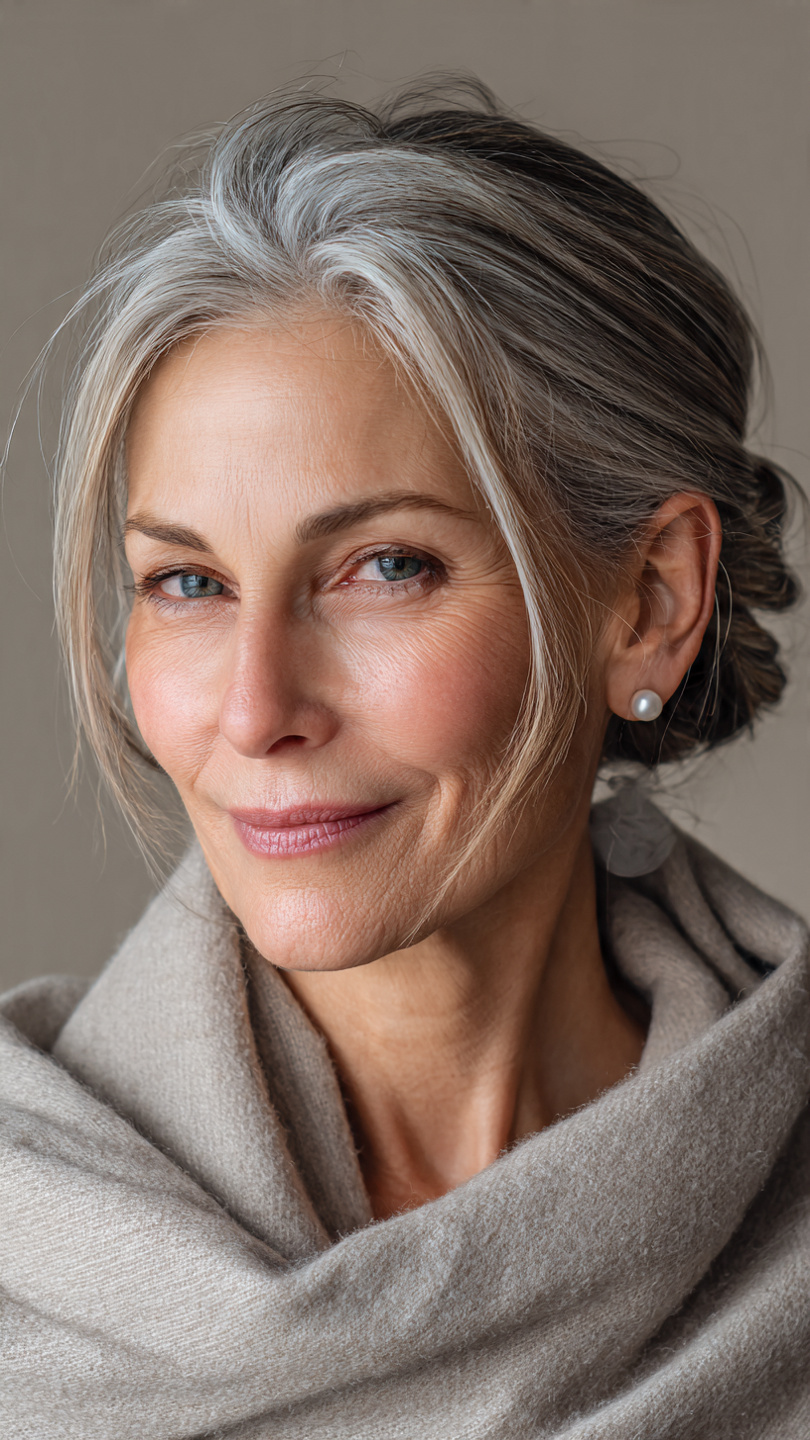
If you are over 50 and have been told to “just cut it all off” because your hair is thin or fine, stop listening. The myth that aging hair must be cropped into a severe, low-maintenance pixie is just that—a myth. The truth is, thin and fine hair requires strategy, not surrender. Check out our 10 hairstyles for thin fine hair over 50. This collection is designed specifically for hair that has lost its youthful density, changed texture due to hormonal shifts, or simply become more delicate with time.
Enter 10 hairstyles for thin fine hair over 50. This collection is designed specifically for hair that has lost its youthful density, changed texture due to hormonal shifts, or simply become more delicate with time. These styles use clever cutting techniques—like internal layering, blunt ends, strategic disconnection, and volume-building shapes—to create the illusion of thick, bouncy, healthy hair.
Whether you are dealing with genetic fine hair, post-menopausal thinning, or medication-related hair loss, these ten cuts will give you back your confidence. No helmets. No tight perms. Just modern, wearable, gorgeous hair.
Why Thin and Fine Hair Needs a Different Approach
First, let’s clarify the difference. Thin hair refers to the density (how many strands grow per square inch). Fine hair refers to the diameter of each individual strand. Many women over 50 experience both: fewer strands that are also smaller in circumference.
The worst thing you can do? Grow it long and lanky, which drags the face down and emphasizes every gap. The second worst thing? A uniform, one-length short cut that lies flat against the scalp like a cap.
The best thing? Strategic layering that lifts at the crown, texturizing that removes weight to create movement, and blunt lines at the perimeter that give the illusion of thickness. Below are the ten best cuts that do exactly that.
1. The Blunt Bob with Micro-Layers
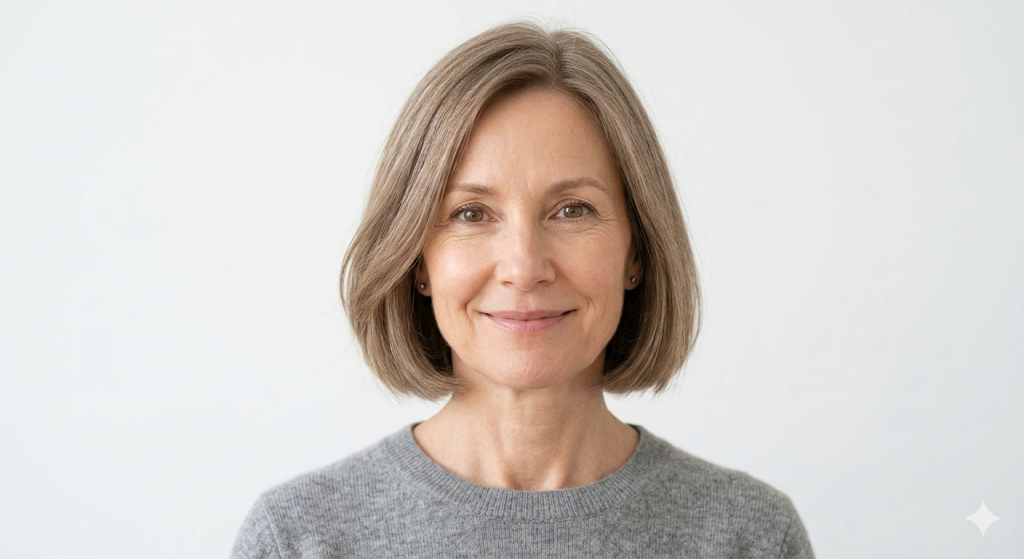
The classic blunt bob is often avoided by women with fine hair because they fear it will look “boxy.” But a blunt perimeter (straight across, no feathering at the ends) actually makes fine hair look thicker because the light hits a solid line rather than dissipating through wispy ends.
Why it works: Ask your stylist for a blunt bob ending at the chin or just below the jaw, with “micro-layers” (tiny internal layers no longer than half an inch) to prevent the dreaded flat-top look. The blunt line creates density; the micro-layers provide lift.
Styling tip: Blow-dry roots upward using a small round brush. Finish with a lightweight dry texture spray at the roots only.
2. The Stacked A-Line Bob
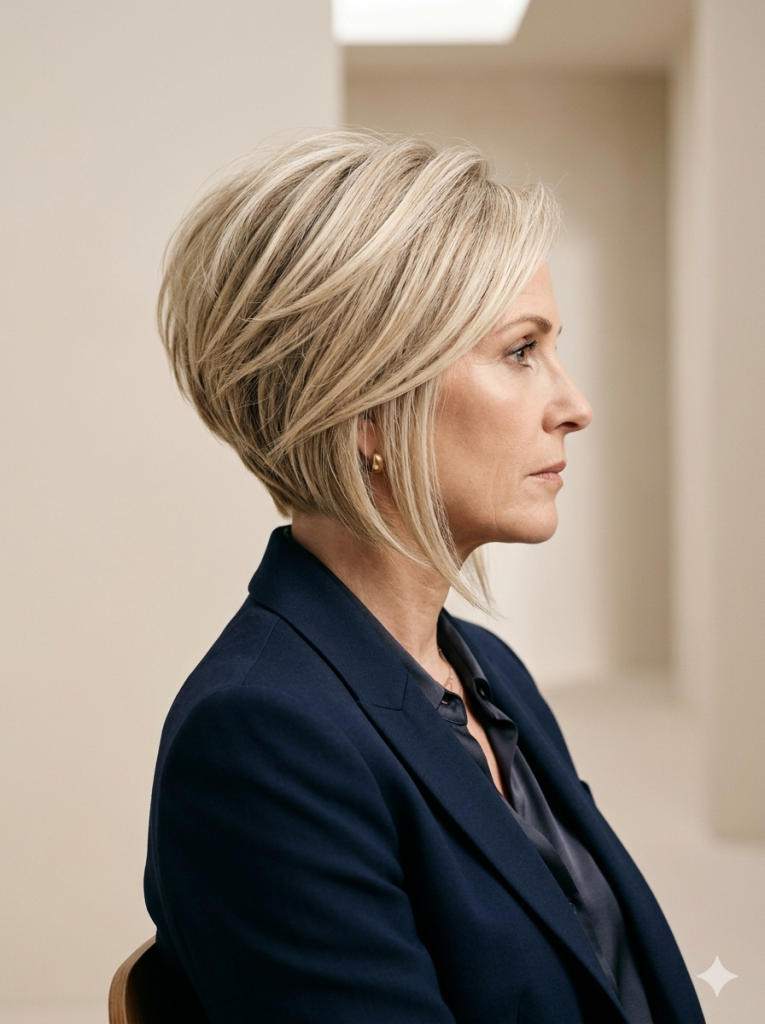
If you want maximum volume at the crown, the stacked A-line bob is your holy grail. This cut is short and tightly layered (stacked) in the back, graduating to longer pieces in the front that hit the collarbone.
Why it works: The stacking creates a shelf of volume that literally lifts hair off the scalp. Because the back is short, fine hair doesn’t have the weight to pull itself flat. The longer front pieces give you the elegance of length without sacrificing fullness.
Styling tip: Use a volumizing mousse on damp hair, then blow-dry the back section upside down. A flat brush works better than a round brush for stacking.
3. The Texturized Pixie (Not a Helmet Cut)
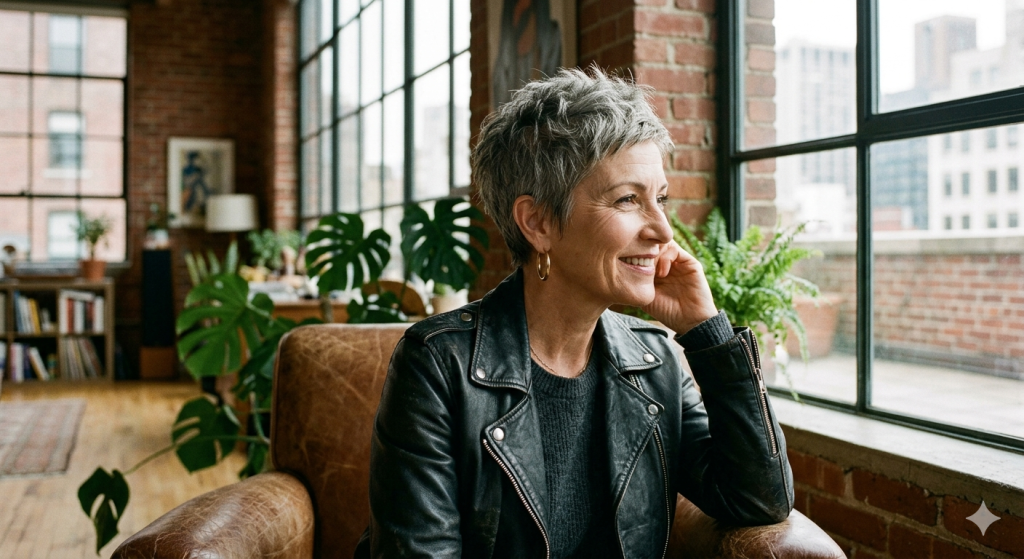
Many women fear the pixie because they associate it with the “helmet head” of the 1980s. A modern texturized pixie is the opposite: choppy, piece-y, and full of movement. It is cropped at the nape but left longer (1.5 to 2 inches) on top.
Why it works: Fine hair looks thickest when it is short enough that the strands support each other. On a pixie, each hair stands almost straight up from the scalp, maximizing volume. The texturizing (point-cutting or notching) removes bulk without reducing length, creating a soft, feathery appearance.
Styling tip: Rub a pea-sized amount of matte paste or clay between your palms and scrunch into dry hair. Do not brush—use fingers only.
4. The French Crop with Wispy Bangs
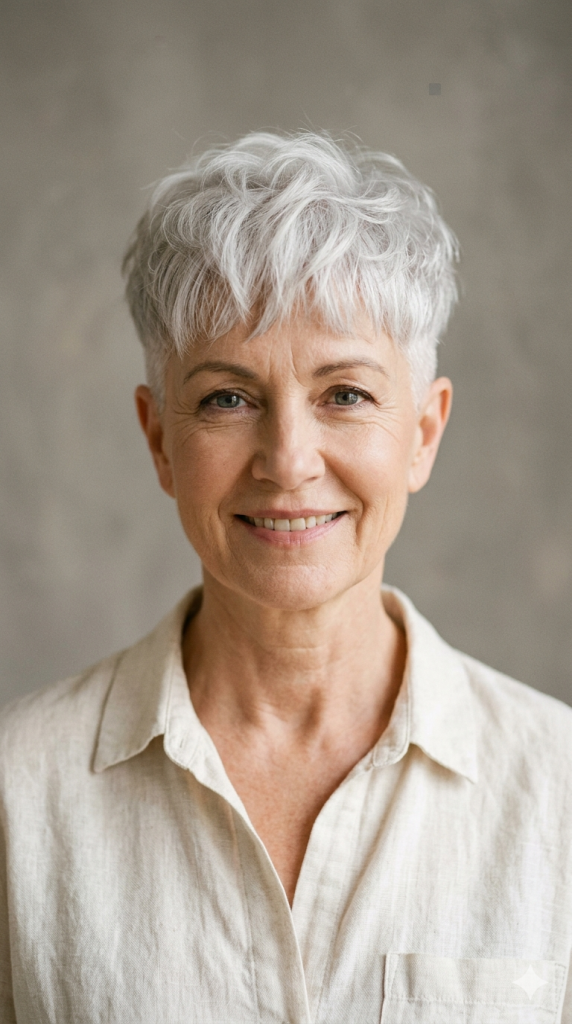
The French crop is a shorter style (often confused with a pixie) that features a heavier top section and very short, sometimes faded, sides and back. The defining feature is the wispy, textured fringe that sits just above the eyebrows.
Why it works: For women with a high forehead or significant thinning at the front hairline, the wispy bangs disguise sparse areas while looking intentionally artistic rather than concealing. The cropped sides remove the visual weight of thin side pieces that often look stringy.
Styling tip: Keep the fringe slightly piece-y. Use a tiny amount of lightweight pomade on the tips of your fingers to separate the bangs.
5. The Layered Lob (Long Bob) with Face-Framing
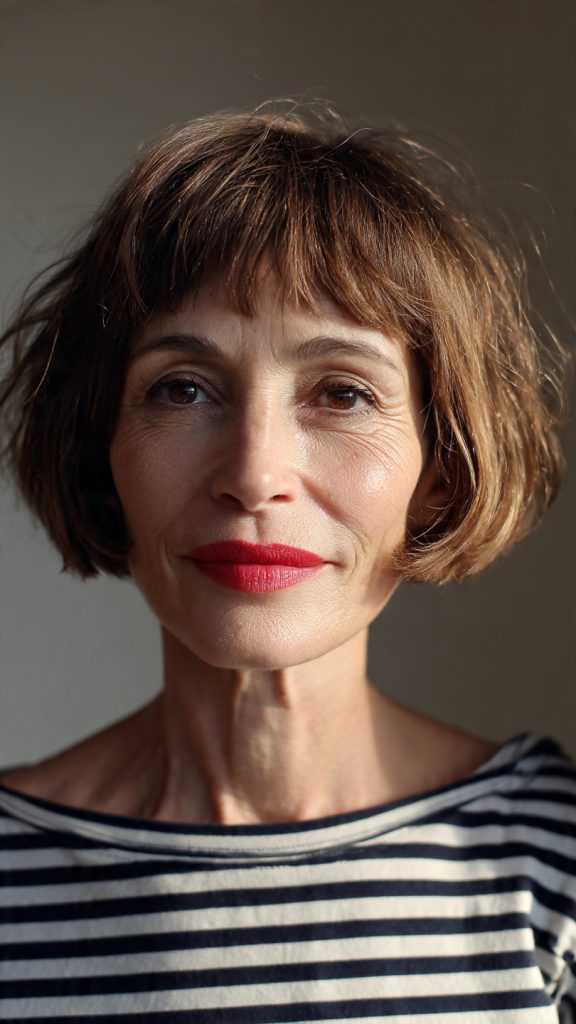
Yes, a lob can work for fine hair—but only if it is layered correctly. The mistake women make is asking for a “long bob” without specifying layers. The result is a limp, triangular mess. Instead, ask for a lob with long, face-framing layers and a slight undercut at the nape.
Why it works: The face-framing layers (shorter pieces around the cheekbones and jaw) remove weight from the front, allowing the hair to swing rather than stick to the face. The slight undercut at the nape removes the heaviest part of the hair, tricking the eye into thinking the remaining hair is thicker.
Styling tip: Blow-dry with a large round brush, focusing on lifting the roots away from the face. A side part adds instant volume.
6. The Soft Shag with Curtain Bangs
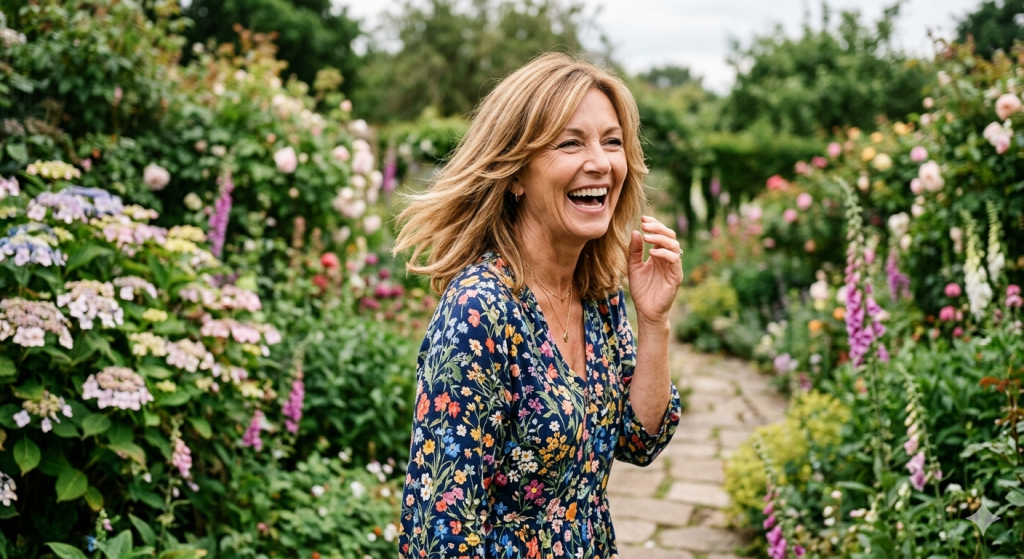
The shag is back, and it is a godsend for fine hair. Unlike the aggressive 70s shag, the modern soft shag uses light, airy layers throughout the mid-lengths and ends, combined with curtain bangs that part in the middle.
Why it works: Fine hair loves internal movement. The shag’s many layers create multiple “end points” that reflect light differently, giving the illusion of density. Curtain bangs add width to the forehead area, which balances a narrow chin and makes fine hair look more substantial.
Styling tip: Air dry or diffuse on low heat. Use a salt-free texturizing spray (salt dries out fine hair). Twist small sections around your finger while damp to encourage wave.
7. The Asymmetrical Bob
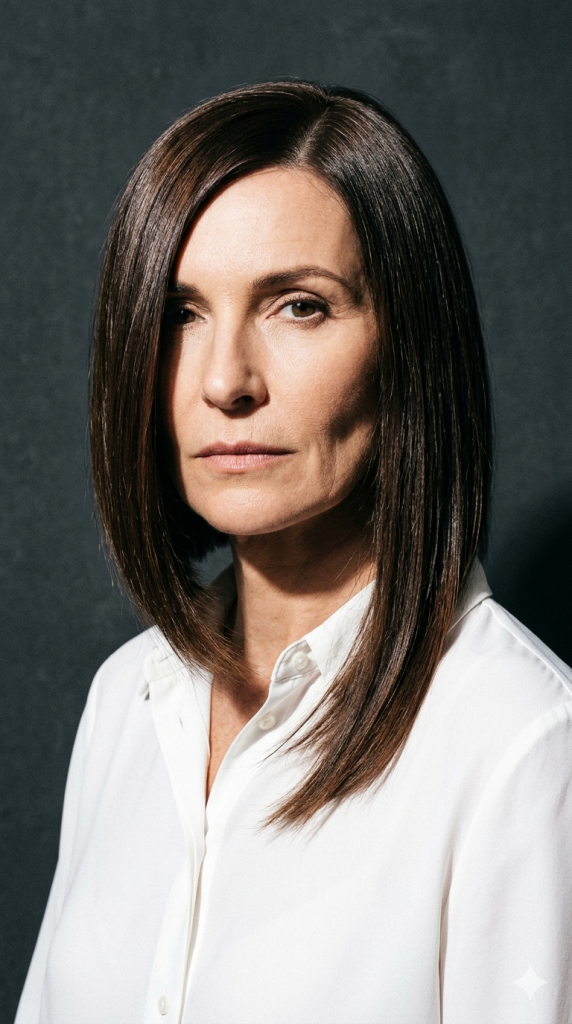
Symmetry is overrated, especially for fine hair. An asymmetrical bob—shorter on one side (chin length) and longer on the other (shoulder length)—creates visual interest that distracts the eye from any lack of volume.
Why it works: The human eye is drawn to the unexpected. When your haircut has a dramatic diagonal line, no one is looking at your scalp or the thinness at your crown. Additionally, the shorter side always appears thicker because the strands are not weighed down by length.
Styling tip: Flat iron the longer side smooth, and add a slight bend to the shorter side. This contrast in texture enhances the asymmetry.
8. The Cropped French Bob
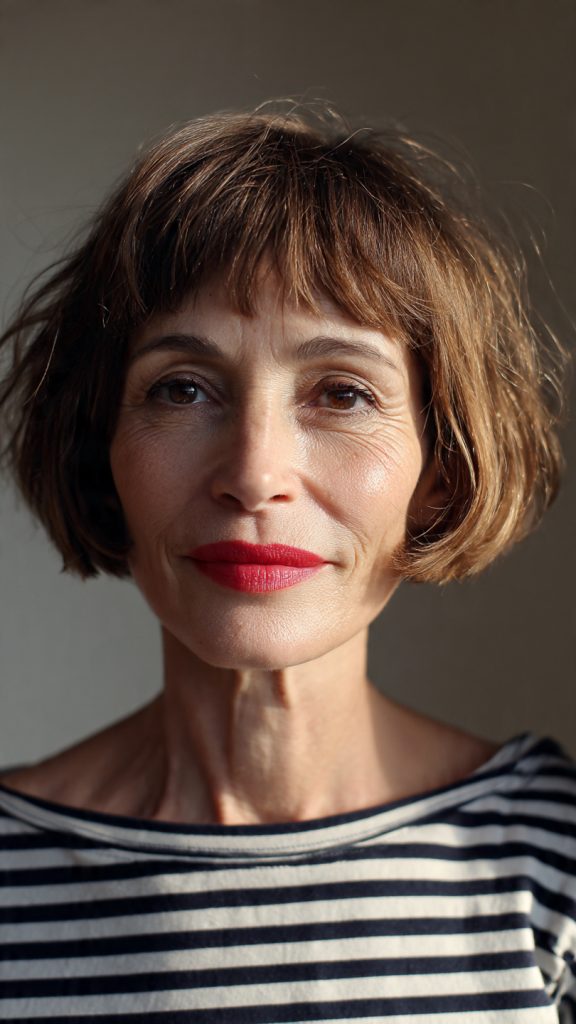
The French bob is shorter than a traditional bob—typically ending right at the earlobe or the corner of the jaw. It is often paired with a full, blunt fringe (bangs).
Why it works: For very fine, limp hair, length is the enemy. The cropped French bob removes almost all weight, allowing the hair’s natural texture (even if minimal) to express itself. The blunt fringe adds a solid block of density at the forehead, creating the visual anchor that makes the rest of the hair look fuller by comparison.
Styling tip: Embrace a little messiness. A French bob should never look “done.” Run a bit of texture cream through damp hair and let it air dry for that effortless Parisian look.
9. The Side-Parted Sweep with Volume
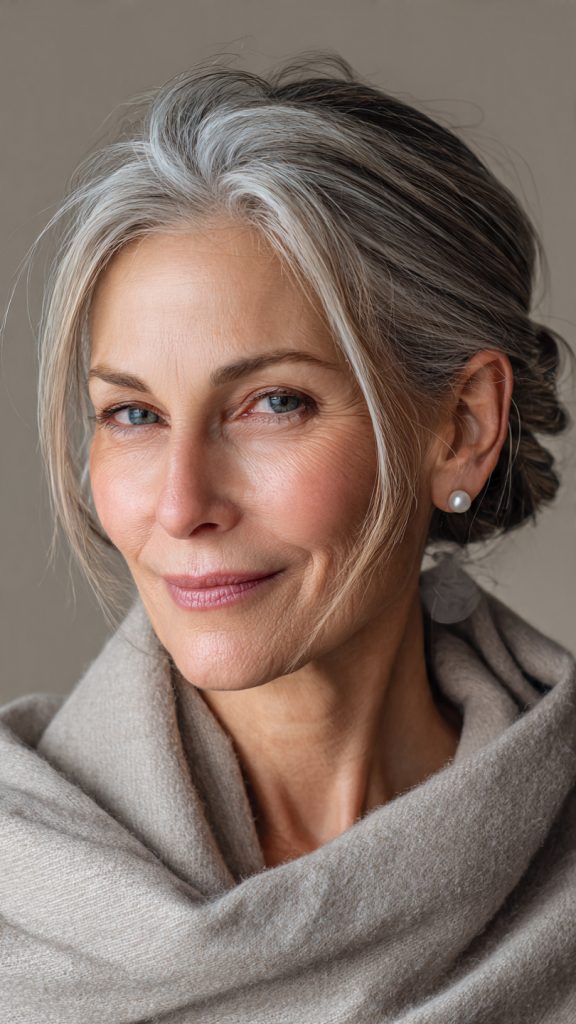
Polished portrait of a woman aged 53 with a sleek chin-length cut. Invisible internal layers creating a rounded C-shape silhouette. Straight, glossy, fine ash-blonde hair. Front view, professional ring light (catchlights in eyes). Wearing a tailored white blazer and a silk scarf. Confident, direct gaze. Light lavender background. Professional, smooth, thick-looking.
This is less a specific haircut and more a styling technique applied to a medium-length layered cut. The key is a deep side part (almost at the temple) and a “sweep” of hair across the crown.
Why it works: Fine hair parted in the middle falls flat and exposes the scalp. A deep side part immediately creates a “dome” of volume on the larger side. The sweep (pushing hair up and over) camouflages thinning at the part line. This works best on hair that is shoulder-length or shorter with long layers.
Styling tip: Blow-dry the hair on the larger side against its natural direction (if you part on the left, blow-dry everything to the right). Once dry, sweep it back to the left. The roots will stand straight up.
10. The Sleek Chin-Length Cut with Invisible Layers
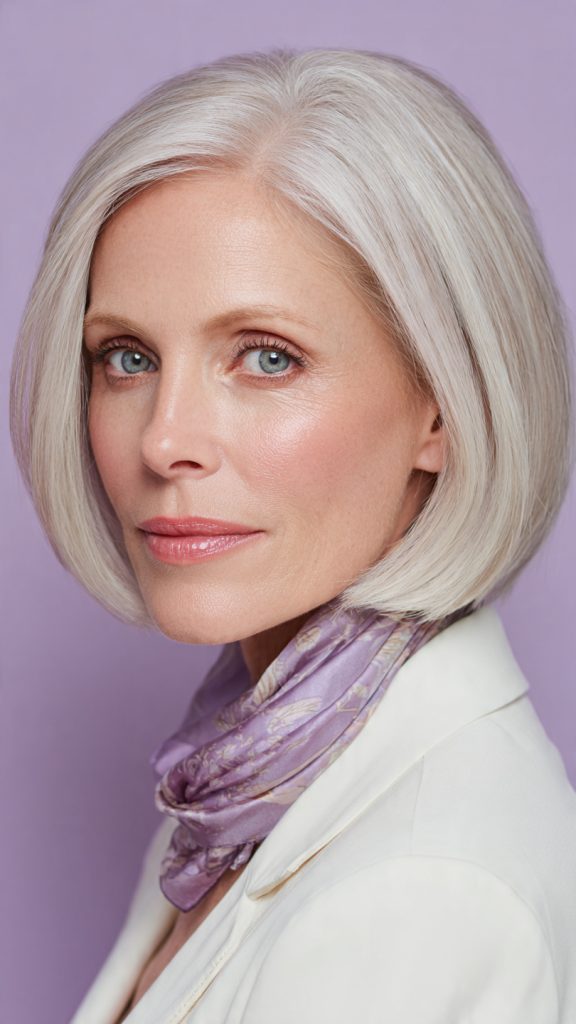
For women with straight, fine hair who prefer a polished, professional look, the sleek chin-length cut is perfection. The secret is “invisible layers”—internal layers so subtle you cannot see them, but you can feel the volume.
Why it works: Unlike choppy layers that can make fine hair look ragged, invisible layers are cut deep inside the hair shaft. They lift the hair from the inside out, creating a rounded, C-shape silhouette rather than a flat, A-shape one. The chin length draws the eye horizontally, adding width that mimics thickness.
Styling tip: Use a lightweight volumizing lotion and a small flat brush. Blow-dry sections straight down, then cool-shot each section to lock in smoothness. A drop of serum on the ends prevents frizz.
How to Care for Thin and Fine Hair Over 50
A great haircut is only half the battle. Your daily routine matters just as much.
- Shampoo correctly: Fine hair gets oily faster. Use a “volume” or “clarifying” shampoo every other day. Avoid “moisturizing” or “smoothing” shampoos—they weigh hair down.
- Condition strategically: Condition only the mid-lengths to ends. Never put conditioner on your roots or scalp.
- Ditch the heavy products: No butters, no oils, no heavy creams. Look for words like “mousse,” “spray,” “powder,” or “texture spray.”
- Use dry shampoo proactively: Spray dry shampoo on clean roots before they get oily. It gives grip and volume for days.
- Sleep on silk: A silk pillowcase reduces friction, preventing the breakage that makes fine hair look thinner.
Conclusion
Reaching 50 is not an expiration date for great hair. It is an invitation to get smarter about your cut, your products, and your technique. The 10 hairstyles for thin fine hair over 50 outlined above prove that volume, movement, and confidence are absolutely achievable—no matter how fine your strands or sparse your density.
Whether you choose the dramatic lift of a Stacked A-Line Bob, the effortless cool of a Soft Shag, or the polished precision of a Sleek Chin-Length Cut, the most important thing is this: do not settle. You deserve hair that makes you feel visible, vibrant, and undeniably yourself. Work with a stylist who understands fine hair, invest in the right lightweight products, and wear your new cut with the pride of a woman who knows exactly who she is.

Leave a Reply