Practical and guilt-free — addressing the reality that many moms feel they simply don’t have time for self-care.
You’ve heard it a thousand times: “You can’t pour from an empty cup.” “Take care of yourself so you can take care of others.” “Self-care isn’t selfish.”
And you’ve probably thought the same thing every single time: That’s great in theory, but when exactly am I supposed to do this?
Between school drop-offs, work deadlines, meal prep, homework help, laundry mountains, and the endless emotional labor of keeping tiny humans alive, “taking time for yourself” can feel like a cruel joke. You barely have time to pee alone, let alone meditate for an hour or take a long bath.
Here’s the truth that actually helps: Self-care for busy moms doesn’t require hours you don’t have. It doesn’t require a babysitter, a spa budget, or a partner who magically appears to take over. It requires a mindset shift and permission to care for yourself in the margins.
Let’s talk about what actually works when you have zero time—and zero guilt to spare.
Why Many Moms Feel They Have Zero Time for Self-Care
If you’ve ever thought, “Self-care sounds nice for someone with my own life,” you’re not alone. The average overwhelmed mom is juggling more than any human was designed to handle alone.
Here’s what your day probably looks like:
Waking up before everyone else just to have five minutes of quiet (or being woken up by little feet at 5:45 a.m.)
Moving constantly from the moment your eyes open until you collapse into bed
Managing not just tasks but everyone’s emotions, schedules, and needs
Falling asleep exhausted, only to do it all again tomorrow
When every minute is spoken for, adding “self-care” to the list feels impossible. It becomes one more thing you’re failing at—proof that you can’t even take care of yourself properly.
But here’s what I need you to hear: The problem isn’t you. It’s the definition of self-care we’ve been sold.
Why Self-Care Doesn’t Have to Be Long or Complicated
Somewhere along the way, we decided self-care requires:
At least 60 minutes of uninterrupted time
Candles, bath bombs, and ambient music
A dedicated space free from children
A significant financial investment
No wonder most moms feel like they’re failing at it.
Real quick self-care for moms looks different. It’s not a bubble bath—it’s three deep breaths before you lose your patience. It’s not a spa day—it’s drinking your coffee while it’s still hot. It’s not a weekend away—it’s five minutes of sitting in the car before going inside.
When you reframe self-care as small, intentional moments woven throughout your day, suddenly it becomes possible. Not because you magically find hours you don’t have, but because you start using the minutes already there.
📌
Finding this helpful?
Save this article to your Pinterest board so you can come back to it when you need it most.
Practical Self-Care Ideas for Busy Moms With No Time
Let’s get specific. Here are realistic busy mom self-care ideas that actually fit into your life—no extra time required.
In-Between Moments
The car pause. Arrive five minutes early to pickup. Turn off the engine. Sit in silence. Scroll mindlessly. Breathe. This five minutes is yours—no one can knock on the car window.
The shower ritual. Turn your three-minute shower into a sensory experience. Notice the water temperature. Breathe in the steam. Let this be the one place where no one can reach you.
The coffee break. Instead of gulping your coffee while doing three other things, take two minutes to actually taste it. Sit down. Hold the warm mug. Be present with this small pleasure.
The red light reset. Every time you’re stopped at a red light, take three deep breaths. By the end of the week, you’ve built a mini-meditation practice without adding anything to your schedule.
Physical Micro-Moments
One stretch. Reach overhead. Roll your shoulders. Touch your toes. One stretch, held for a few breaths, can release tension your body has been carrying all day.
Water with intention. Pour a glass of water and drink it slowly. Feel it hydrate you. Notice how your body responds. This isn’t just hydration—it’s honoring your physical self.
Stand in the sun. Step outside for sixty seconds. Face the sun. Close your eyes. Let warmth touch your skin. This tiny act connects you to something larger than your to-do list.
The two-minute dance break. Put on one song and move your body however it wants. No judgment. No choreography. Just shaking off the heaviness through movement.
Emotional Check-Ins
The feeling name. Set a random phone alarm. When it goes off, ask yourself: What am I feeling right now? Just naming it creates space between you and the emotion.
One honest sentence. Text a friend one honest sentence about your day. “I’m struggling.” “This is hard.” “Thinking of you.” Connection doesn’t require a long conversation.
The permission slip. Write yourself permission to do one thing differently today. “I give myself permission to order takeout.” “I give myself permission to let the laundry wait.” Read it out loud.
Look at one photo. Scroll to a picture of yourself before kids, or a happy memory. Let yourself feel connected to that person. She’s still here.
Mental Resets
Three things. While waiting for something to microwave, name three things you’re grateful for. They can be tiny. “This coffee. The way my kid laughed today. That the dishwasher is running.”
One page. Keep a book in the bathroom or your bag. Read one page whenever you have a moment. Over time, pages add up to books.
Listen to one song. Not kid music. Not background noise. One song that feels like you. Close your eyes and let it fill you up.
The brain dump. Grab any scrap of paper. Write down everything in your head for two minutes. Getting it out creates mental space.
How to Overcome Guilt Around Taking Time for Yourself
Even when you find the time, guilt often shows up uninvited. You hear that little voice: You should be doing something productive. Other moms handle more. You’re being selfish.
Let’s address this directly.
Guilt is not a moral compass. Just because you feel guilty doesn’t mean you’ve done something wrong. Guilt is often a conditioned response—especially for moms, who’ve been taught that our needs come last.
Taking care of yourself is taking care of your family. When you’re running on empty, everyone feels it. Your patience is thinner. Your presence is diminished. Your joy is harder to access. By filling your own cup, you show up differently for everyone you love.
Your children are watching. Every time you take two minutes for yourself, you teach your children something powerful: Mom is a person too. Everyone deserves care. Boundaries are healthy. You’re not neglecting them—you’re modeling what healthy self-regard looks like.
You don’t have to earn rest. This is the biggest one. You don’t need to finish everything, meet every need, or achieve some imaginary standard before you’re allowed to breathe. You deserve care simply because you exist.
Small Daily Habits That Protect Your Mental Health as a Mom
Beyond individual moments, certain small habits can support your mental health for moms day after day.
The five-minute morning. Before you get out of bed, take five conscious breaths. Place a hand on your heart. Set one small intention: “Today I’ll remember I’m human too.”
The transition ritual. Create a small ritual between work mode and mom mode, or between busy mode and rest mode. Sit in the car for two minutes. Change your clothes immediately. Wash your face. This signals to your brain that you’re shifting roles.
The nightly acknowledgment. Before sleep, name one thing you did well today. Not what you didn’t do. One thing you did well. “I was patient during the tantrum.” “I fed us all.” “I took three deep breaths when I wanted to scream.”
The weekly non-negotiable. Choose one tiny thing that’s yours every week. Maybe it’s a solo grocery run without kids. Maybe it’s fifteen minutes with a book before anyone wakes up. Maybe it’s a walk around the block alone. Protect it like you’d protect a doctor’s appointment.
The body check-in. Several times a day, pause and notice your body. Where are you holding tension? Can you drop your shoulders? Unclench your jaw? Soften your belly? These micro-adjustments signal safety to your nervous system.
You Deserve Care Exactly Where You Are
Mama, here’s what I need you to carry with you: You are not failing at self-care. You’re surviving an impossible workload with insufficient support, and you’re still showing up every single day.
Self-care isn’t one more thing to add to your list. It’s remembering that you’re on the list too—not at the bottom, crossed out, with a note that says “maybe someday.”
You deserve moments of peace in the middle of the chaos. You deserve to breathe deeply even when everything isn’t done. You deserve to feel like a person, not just a function.
Start where you are. Use what you have. Do what you can.
The car pause. The deep breath before answering. The coffee drunk slowly. The permission to let one thing go. These small moments add up. They remind you, over and over, that you exist outside of what you do for everyone else.
And that reminder? It’s not selfish. It’s survival. It’s love. It’s the most important thing you can give yourself and everyone who depends on you.
You’ve got this. One micro-moment at a time.
👩
Written by
Miss Mariott
Mom, writer, and recovering perfectionist. I created MissMariott because I couldn’t find the honest motherhood content I actually needed — so I built it myself.
Reframe self-care as micro-moments, not grand gestures.
Let’s be honest for a second. When you hear “self-care,” what comes to mind? Bubble baths? Solo vacations? Afternoon spa appointments? Hours of uninterrupted quiet?
Now let’s be honest about something else. When’s the last time you had an uninterrupted afternoon? When’s the last time you sat in a bath without little fingers sliding under the door or someone yelling “MOMMY” from the living room?
For most of us, traditional self-care advice feels like a cruel joke. “Just take time for yourself!” says the internet, while you’re standing in the kitchen holding a crying toddler, a ringing phone, and a grilled cheese that’s about to burn.
Here’s the truth that actually helps: Self-care for moms doesn’t have to be a grand gesture. It doesn’t require hours, money, or a babysitter. Real self-care—the kind that actually fits your life—happens in the margins. In the five minutes between things. In the small moments you claim as your own.
Welcome to self-care for real moms. No guilt. No perfection. Just 20 ideas that actually fit your life.
Why Traditional Self-Care Advice Doesn’t Work for Busy Moms
Have you ever read a self-care article and thought, “That’s nice for someone with a different life”?
You’re not wrong. Most self-care content assumes you have:
Hours of free time
Childcare on demand
Energy left at the end of the day
Zero guilt about prioritizing yourself
For the average overwhelmed mom, that’s not reality. Your reality looks more like:
Five minutes of quiet before someone needs you
Sneaking a hot cup of coffee while it’s still hot
Peeing alone (a revolutionary concept)
One deep breath before the next demand
The good news? Those small moments count. They actually count a lot.
Reframing Self-Care as Small Daily Micro-Moments
Think of self-care less like a bath and more like drinking water throughout the day. You don’t wait until you’re dehydrated to chug a gallon—you sip consistently to stay hydrated.
Micro-moments of simple self-care for moms work the same way. You’re not waiting until you’re running on empty to fill up. You’re taking small sips of nourishment all day long.
A micro-moment is:
Intentional
Under five minutes
Accessible right where you are
Focused on one small need
When you string these moments together throughout your day, something shifts. You start to feel like a person again—not just a collection of tasks and responsibilities.
Let’s get into the ideas.
20 Real Self-Care Ideas for Moms That Take 5 Minutes or Less
Mental Reset Ideas
1. The three-breath reset Stop wherever you are. Close your eyes. Inhale deeply through your nose, exhale slowly through your mouth. Three times. That’s it. Your nervous system just got a mini-vacation.
2. One-minute meditation app Try apps like Calm, Headspace, or Insight Timer. Most have one-minute meditations specifically for busy people. One minute. You can do this in the car before going inside.
3. Write down one win Grab a sticky note or your phone. Write one thing that went well today—even if it’s tiny. “Everyone ate breakfast.” “I brushed my teeth.” You showed up. That counts.
4. Listen to one song that fuels you Not kid music. Not background noise. One song that makes you feel like yourself. Close your eyes and let it wash over you.
5. Read one poem or quote Keep a book of poetry on your nightstand or follow accounts that post uplifting content. One poem takes two minutes and can shift your entire perspective.
6. Name three things you’re grateful for Gratitude rewires your brain over time. Do this while waiting for coffee to brew or water to warm up.
Emotional Self-Care Ideas
7. Text a friend something honest Not “we should catch up soon.” Real honesty. “I’m struggling today.” “This parenting thing is hard.” “Thinking of you.” Connection happens in small moments too.
8. The five-minute feeling check-in Set a timer for two minutes. Ask yourself: What am I feeling right now? No judgment. Just naming. Then spend three minutes asking what you need. “I feel overwhelmed. I need five minutes of quiet.”
9. Look at an old photo that makes you smile Scroll back to a happy memory. Let yourself feel the warmth of that moment for sixty seconds. You existed before motherhood, and parts of that person are still here.
10. Write down one worry, then let it go Get it out of your head and onto paper. Now decide: Can you do something about it today? If yes, make a tiny plan. If no, practice releasing it—even just for now.
11. Say one kind thing to yourself out loud Look in the mirror (or don’t) and say, “You’re doing a good job.” “I love you.” “You deserve rest.” It might feel weird. Do it anyway. Your brain believes what you tell it.
12. Allow yourself to feel without fixing Sometimes self-care is just letting yourself cry for two minutes without rushing to solve it. Feelings need space, not solutions.
Physical Reset Ideas
13. Drink a full glass of water slowly Not chugging. Slowly. Feel the water. Notice how your body responds. Dehydration mimics exhaustion—this tiny act is actual medicine.
14. Stretch for two minutes Reach your arms overhead. Roll your shoulders. Touch your toes. Child’s pose on the kitchen floor. Your body carries so much—give it two minutes of release.
15. Step outside and feel the sun No agenda. No phone. Just stand in the sunlight (or fresh air) for sixty seconds. Let your face feel the warmth. Breathe air that hasn’t been recycled through your HVAC system.
16. Wash your face or brush your teeth slowly Turn it into a ritual instead of a task. Feel the water. Notice the sensation. This two-minute act can signal to your brain that you matter.
17. Apply lotion or lip balm mindfully Choose one part of your body to care for. Your hands. Your feet. Your face. Pay attention as you do it. This is care, not just maintenance.
18. Do one yoga pose Downward dog. Child’s pose. Standing forward fold. One pose. Hold for five breaths. Your body will thank you.
Quick Home Reset Ideas
Sometimes self-care is clearing just enough mental clutter to breathe easier.
19. Clear one small surface The kitchen counter corner. Your nightstand. One shelf. Five minutes of tidying one visible spot can create a surprising sense of calm.
20. Light a candle or diffuse essential oils Scent affects mood instantly. Light something that smells good to you. Let that be your signal: this space is for you too.
Bonus: Put on clothes that feel good Not necessarily “nice” clothes—clothes that feel like you. Soft sweater. Favorite jeans. Anything that isn’t yoga pants covered in mystery stains. Five seconds to change, whole mood shift.
How to Make Micro Self-Care a Daily Habit
Knowing these ideas is one thing. Actually doing them is another. Here’s how to make micro-moments stick:
Anchor them to existing habits. After you pour your coffee, take three deep breaths before adding creamer. While the microwave runs, stretch. Before walking in the door after work, sit for sixty seconds. Attach self-care to things you already do.
Keep it visible. Put your lotion somewhere obvious. Leave a sticky note on the mirror. Set a phone alarm that says “Breathe” instead of something stressful.
Lower the bar. Two conscious breaths counts. One grateful thought counts. Thirty seconds of stretching counts. You’re not aiming for perfection—you’re aiming for presence.
Release the guilt. Here’s the truth that changes everything: When you take two minutes for yourself, your children learn that moms are people too. You’re not neglecting them—you’re modeling that everyone deserves care. Including you.
Start with one. Pick one micro-moment from this list. Just one. Try it today. Tomorrow, try it again. That’s it. That’s enough.
You Deserve Moments That Are Just Yours
Mama, here’s what I need you to hear: You don’t have to earn rest. You don’t have to finish everything before you’re allowed to breathe. You don’t have to wait until the house is clean, the kids are older, or life slows down.
You deserve moments of peace exactly where you are, exactly as you are.
These five-minute pockets of care aren’t selfish. They’re not indulgent. They’re survival. They’re how you keep showing up without disappearing completely.
Some days you’ll nail it. You’ll take those three breaths and drink that water and feel like a grounded human being. Other days you’ll realize at bedtime that you forgot to do a single thing for yourself. Both are okay. Both are motherhood.
The goal isn’t perfection. The goal is remembering, over and over, that you exist too.
So today, choose one. Just one five-minute moment that’s yours. The laundry can wait. The dishes will still be there. But you—you deserve to feel like a person again.
Start small. Start now. You’re worth five minutes. You’re worth so much more.
The quiet symptoms no one talks about — irritability, emotional numbness, resentment.
You’re functioning. The kids are fed, the laundry’s (mostly) done, and you’re showing up to work or playdates or school drop-off with a smile that feels automatic rather than genuine. From the outside, everything looks fine.
But inside? Something feels… off.
You can’t quite name it. You’re not sad exactly. You’re not sick. But you’re not yourself either. You snap at your partner over tiny things. You feel annoyed when your child wants to cuddle. You catch yourself scrolling your phone while your family watches a movie, feeling strangely disconnected from the warmth happening right next to you.
If this resonates, pause here for a moment. What you’re experiencing might not be a character flaw or a bad mood. It might be mom burnout wearing a disguise.
Let’s talk about the subtle signs—the ones that creep in quietly and convince you that nothing is really wrong, even when everything feels heavy.
What Mom Burnout Really Looks Like
When we hear “burnout,” we often picture someone collapsing in tears or unable to get out of bed. And yes, motherhood burnout can look like that. But more often, it looks like you on an ordinary Tuesday—going through the motions, meeting everyone’s needs, while slowly losing connection to yourself.
Burnout isn’t just exhaustion. It’s a state of physical, emotional, and mental depletion caused by prolonged stress without adequate support. For moms, this builds slowly—layered over months or even years of putting everyone else first.
The challenge? The early warning signs are easy to dismiss. They masquerade as personality quirks, temporary moods, or just “how motherhood feels.”
Let’s pull back the curtain on seven subtle signs that deserve your attention.
The Difference Between Normal Exhaustion and Burnout
Before we dive into the signs, let’s clarify one important distinction:
Normal exhaustion feels like tiredness after a long day. A good night’s sleep helps. A glass of wine with a friend helps. A partner taking over bedtime helps.
Mom burnout doesn’t respond to those bandaids. Sleep doesn’t fix it. Time alone doesn’t fix it. You carry a weight that rest doesn’t lift because the weight isn’t just physical—it’s emotional and psychological.
Burnout is what happens when you’ve been running on empty for so long that your tank is now cracked. Even when you try to refill, nothing quite sticks.
The 7 Subtle Signs of Mom Burnout
1. Irritability That Feels Out of Character
You used to be patient. Now every little thing gets under your skin. The way your partner chews. The sound of Paw Patrol for the thousandth time. A question asked while you’re mid-task.
What it looks like: You snap at your child for spilling milk—not because spilled milk is a big deal, but because it’s the 47th thing you’ve had to handle today and your nervous system is screaming.
Why it’s easy to miss: You tell yourself you’re just stressed or tired. Everyone gets cranky sometimes, right?
What helps: Notice the pattern. Irritability that’s chronic and disproportionate to the trigger is a signal, not a personality flaw. Your nervous system needs rest, not judgment.
2. Emotional Numbness or Detachment
This one’s scary because it feels like you’re becoming cold. You go through the motions of motherhood—hugs, bedtime stories, “I love you’s”—but you don’t feel the warmth you expect to feel.
What it looks like: Your child runs to you with arms open and you hug them automatically while thinking about the grocery list. You feel disconnected from the joy you know should be there.
Why it’s easy to miss: You’re still showing up. You’re still doing the tasks. You tell yourself the feelings will return when things calm down.
What helps: Emotional numbness is often your brain’s way of protecting you from overwhelm. It’s not who you are—it’s a symptom. Gentle self-compassion matters here. Your feelings aren’t broken; they’re buried.
3. Resentment Toward Your Partner or Kids
You love your family fiercely. So why do you feel a twinge of bitterness when your partner relaxes on the couch? Why do you feel annoyed when your kids need something else from you?
What it looks like: Keeping a mental scorecard of everything you do versus everyone else. Feeling angry that no one notices how much you’re carrying. Thinking, “Must be nice,” when someone else rests.
Why it’s easy to miss: Resentment feels ugly, so we push it down. We tell ourselves we’re being ungrateful or unreasonable. But resentment is actually useful information—it’s pointing to an imbalance that needs attention.
What helps: Instead of judging the resentment, get curious about it. What need isn’t being met? What boundary needs reinforcing? Resentment is your inner wisdom waving a red flag.
4. Forgetting Things More Often Than Usual
You’ve always been the one who remembers everything—birthdays, permission slips, when the toilet paper is running low. Lately, things slip through the cracks.
What it looks like: Walking into a room and forgetting why. Missing appointments you usually remember. Drawing a blank on common words mid-sentence.
Why it’s easy to miss: You blame lack of sleep or “mom brain” and assume it’s normal. But chronic stress actually changes brain function—it affects memory, focus, and cognitive processing.
What helps: This isn’t permanent. As your nervous system regulates, your cognitive function returns. For now, write everything down without shame. Your brain is protecting you, not failing you.
5. Feeling Like You’re Watching Yourself From Outside Your Body
Have you ever had moments where you feel almost robotic—going through motions, hearing yourself speak, but feeling strangely disconnected from your own life?
What it looks like: Driving home and realizing you don’t remember the last ten minutes. Sitting at the dinner table feeling like you’re observing your family from a distance rather than participating.
Why it’s easy to miss: We call this “being on autopilot” and treat it as normal. But chronic depersonalization is often your brain’s way of creating distance from overwhelming stress.
What helps: This is your nervous system saying, “This is too much.” Grounding techniques—five things you can see, four you can touch, three you can hear—can help gently return you to your body.
6. Losing Interest in Things You Used to Enjoy
Remember hobbies? Interests? Things you did before kids that lit you up inside? When was the last time you felt genuinely excited about something just for you?
What it looks like: Friends invite you out and you feel dread instead of anticipation. Your favorite book sits untouched. You scroll instead of creating, watching instead of doing.
Why it’s easy to miss: You tell yourself you’re just in a different season. There’s no time for hobbies anymore. This is just how motherhood is.
What helps: Loss of interest in things you once loved (anhedonia) is a hallmark of both burnout and depression. It matters. Start tiny—five minutes with a book, listening to music you used to love. Reconnect in small doses.
7. Feeling Like Nothing You Do Is Good Enough
Perfectionism often intensifies during burnout. You try harder, do more, push longer—hoping that if you can just get everything right, the overwhelm will lift.
What it looks like: Lying in bed mentally reviewing everything you “should have” done differently. Feeling like you’re failing no matter how hard you try. Comparing yourself to moms who seem to have it together.
Why it’s easy to miss: Society praises moms who push through exhaustion. We’re conditioned to believe that if we feel like we’re failing, we must need to try harder.
What helps: Here’s the truth: You’re not failing. You’re running a race with no finish line, carrying weights no one sees. The problem isn’t you—it’s the impossible expectations. Lower the bar. Seriously. Good enough is actually wonderful.
Why These Signs Are Often Ignored
We ignore these subtle signs for understandable reasons.
First, survival mode. When you’re in crisis mode just getting through each day, you don’t have the bandwidth to notice or name what’s happening internally. You just keep moving.
Second, comparison. You look around and see other moms functioning. If they’re okay, you must be okay too, right? But here’s what you don’t see—their exhaustion, their numbness, their hidden struggles. You’re not alone in this.
Third, guilt. Naming burnout feels like admitting failure. But naming it isn’t failure—it’s the first step toward recovery. You can’t heal what you won’t acknowledge.
Small First Steps Toward Recovery
If you recognized yourself in these signs, take a breath. You’re not broken. You’re not a bad mom. You’re a human being who has been running on empty for too long.
Here are three small, gentle steps to begin moving toward recovery:
1. Name it out loud. Tell someone you trust: “I think I might be experiencing burnout.” Saying it breaks the isolation and makes it real in a way that allows you to address it.
2. Remove one thing. Look at your plate and remove one non-essential responsibility—just for this week. Let something go and don’t replace it. Practice letting it be undone.
3. Ask for one specific thing. Identify one concrete need and ask someone to meet it. “Could you pick up milk?” “Would you handle bedtime tonight?” “I need 15 minutes alone.” Start small. You deserve support.
You Deserve to Feel Like Yourself Again
Mama, here’s what I want you to carry with you: These subtle signs aren’t character flaws. They’re not signs that you’re failing. They’re signals—your mind and body telling you that something needs to shift.
Mom burnout is real, and it’s treatable. You don’t have to live in this disconnected, irritable, exhausted fog forever. Small steps, consistent support, and permission to put yourself on the list too—these things add up.
You are still in there. The version of you who laughs easily, rests deeply, and feels connected to yourself and your family—she’s not gone. She’s just buried under too much weight.
And slowly, gently, you can begin to lighten the load.
You deserve that. Not because you’ve earned it. Not because you’ve done enough. Simply because you exist, and you matter—outside of everything you do for everyone else.
Start where you are. Use what you have. Do what you can. And remember: you’re not alone in this, not for one single moment.
You know that feeling. The one where you’re standing in the kitchen staring at an open fridge, having completely forgotten what you walked in for. Your coffee’s cold, your patience is thin, and there’s a tiny human calling “Mommy!” for the seventeenth time before 9 a.m.
If you’re reading this with exhaustion etched into your bones and guilt whispering that you should be doing more, pause right here. Take a breath. You haven’t failed. You’ve just been running on empty for so long that you forgot what full feels like.
Mom burnout isn’t a personal failing—it’s what happens when you pour from an empty cup day after day. The good news? Recovery is possible, and it doesn’t require a week-long spa retreat or a total life overhaul. It requires a realistic plan and thirty days of showing up for yourself in small, meaningful ways.
Welcome to your mom burnout recovery plan. Let’s find our way back to you.
Signs of Motherhood Burnout
Before we dive into the recovery plan, let’s name what you might be experiencing. Motherhood burnout often creeps in slowly, making it hard to recognize until you’re deep in it .
Physical Signs
Chronic fatigue that doesn’t improve with rest
Getting sick more often than usual
Sleep problems—either can’t sleep or can’t stay awake
Emotional Signs
Irritability and snapping at loved ones over small things
Feeling emotionally detached or like you’re on autopilot
Guilt and shame about not being the mom you thought you’d be
Behavioral Signs
“Mom rage”—intense anger that feels out of character
Withdrawing from friends and social connections
Mental fog and difficulty concentrating
Sound familiar? You’re in good company, mama. These signs aren’t a life sentence—they’re a signal that something needs to change.
Why Every Overwhelmed Mom Needs a Reset
Here’s something nobody tells you: motherhood was never meant to be a solo sport. Throughout history, mothers raised children within villages of support—grandmothers, sisters, neighbors, and friends all sharing the load .
Today’s reality looks different. You’re juggling school runs, meal planning, work deadlines, emotional labor, and the invisible mental load of managing an entire household. Recent research shows moms tackle 71% of household mental load tasks . That’s not just busy—that’s unsustainable.
When you’re an overwhelmed mom, your nervous system stays in survival mode. The stress doesn’t just affect you—it ripples through your relationships, your health, and your ability to find joy in the moments that matter .
But here’s the truth that changes everything: investing in your own well-being isn’t selfish. It’s the most loving thing you can do for your family . When you replenish your own cup, everyone drinks.
A Simple Self-Care Routine for the Next 30 Days
Let’s redefine self-care for moms. This isn’t about bubble baths and wine (though those are lovely). This is about small, consistent practices that remind you that you exist outside of everyone else’s needs .
The 5-Minute Rule
You don’t need hours. You need minutes used intentionally. Try these bite-sized practices:
Morning minute: Before your feet hit the floor, place a hand on your heart and take three deep breaths. Whisper, “I matter today, too” .
Hydration habit: Keep a large water bottle visible and sip throughout the day. Dehydration mimics exhaustion and amplifies stress .
One-song reset: When you feel the overwhelm rising, put in earbuds and play one song. Dance, cry, or just breathe—but claim that moment entirely for you.
The Permission Slip
Write this down and stick it somewhere visible: “Good enough is good enough.” . The laundry can wait. The floors can survive another day. You cannot.
Protecting Your Mental Health as a Mom
Mental health for moms isn’t a luxury—it’s the foundation everything else rests on. Here’s how to protect yours without adding more to your plate.
Build Your Support Network
Isolation fuels burnout. Connection heals it .
Find your mom crew: Even one text thread with moms who won’t judge your 9 p.m. grocery store run for goldfish crackers can be lifegiving .
Ask for help specifically: Instead of “I need help,” try “Could you grab milk while you’re out?” or “Would you take the kids for an hour so I can regroup?” .
Accept help when offered: This one’s hard. Say yes anyway. You deserve support. Period .
Lower the Bar (Seriously)
Perfectionism is burnout’s best friend . Ask yourself, “What’s the simplest version of this?” Then do that.
Dinner doesn’t need sides
Crafts don’t require Pinterest
The messy house means people live here and love here
Micro-Moments of Mindfulness
You don’t need a meditation cushion. Try these instead:
Sit with your eyes closed while the kids watch a show
Take three deep breaths before walking in the door after work
Feel the sun on your face for sixty seconds
Creating a Daily Routine for Busy Moms
Structure might sound like the opposite of freedom, but a simple daily routine for busy moms actually creates breathing room. When decisions are made ahead of time, your brain gets a break .
The Night Before Magic
Five minutes of evening prep transforms your morning :
Pack lunches
Lay out clothes (yours too!)
Check the calendar for tomorrow’s non-negotiables
Morning Sanity Savers
Before the chaos begins, claim ten minutes :
Drink something warm in peace
Do one grounding thing just for you
Breathe deeply before waking the kids
Evening Wind-Down
Create signals that help everyone transition :
Dim lights an hour before bed
Use calming background music
Protect connection time—even ten minutes of snuggles and soft conversation
A Simple Week-by-Week Outline of the 30-Day Reset
Here’s your realistic roadmap. No overwhelm. No guilt. Just small steps forward.
Week 1: Awareness and Permission
Your only job this week is to notice without judgment.
Days 1-3: Observe your exhaustion without fixing it. Notice when you feel most depleted. What’s happening? Who’s demanding? How’s your body responding?
Days 4-7: Practice saying “good enough.” Leave one thing undone intentionally. Let the toys stay out. Order takeout. Notice how the world doesn’t end .
Week 2: Micro-Habits
This week, add tiny anchors of self-care.
Morning anchor: Choose one five-minute morning ritual (lemon water, deep breaths, stretching) and protect it fiercely .
Hydration focus: Keep water visible. Sip all day. Notice how your mood shifts .
One nightly prep: Each evening, do one thing for tomorrow’s self (lay out workout clothes, prep coffee, set out your book) .
Week 3: Connection and Boundaries
Reach out and pull back—both matter.
Reach out: Text one mom friend. No agenda, just connection. “Thinking of you” counts .
Set one boundary: Say no to one thing that drains you. No explanation needed. “No” is a complete sentence .
Ask for one thing: Identify one specific need and ask someone to meet it .
Week 4: Integration and Celebration
Look back at how far you’ve come.
Review: What helped most? What felt good? What do you want to continue?
Celebrate: Acknowledge yourself. You showed up for thirty days. That matters.
Plan forward: Choose 2-3 practices to carry into next month. Sustainability beats intensity every time .
Conclusion: You Deserve to Feel Whole Again
Mama, here’s what I need you to hear: you are not broken. You’re not failing. You’re a human being doing an impossible job with insufficient support, and you’re still showing up every single day .
The mom burnout recovery isn’t about becoming a different person. It’s about remembering the person who’s been there all along—the one who laughs easily, rests deeply, and knows she deserves care simply because she exists .
These thirty days are your invitation back to yourself. Take what helps, leave what doesn’t, and remember: small steps, consistently taken, change everything.
You’ve got this. And you don’t have to do it alone.
FAQ: Common Questions About Mom Burnout Recovery
Q: How is mom burnout different from regular tiredness? A: Regular tiredness improves with rest. Burnout is deeper—a physical, emotional, and mental exhaustion that doesn’t resolve with a good night’s sleep . It affects how you feel about yourself, your children, and your life.
Q: I don’t have time for self-care. What can I really do? A: Start with two minutes. Seriously. Deep breathing while the coffee brews. One song in the car before pickup. Standing in the sunlight with your eyes closed. Micro-moments matter .
Q: When should I seek professional help? A: If burnout symptoms persist despite your efforts, if you’re experiencing thoughts of self-harm, or if you suspect postpartum depression or anxiety, reach out to a healthcare provider . You deserve support, not just survival.
Q: How can my partner or family support me? A: Be specific about what you need . “Can you handle baths tonight?” “I need 20 minutes alone after work.” “Could you take the kids Saturday morning?” Clear requests are easier for loved ones to meet.
Q: What’s the single most important thing I can do today? A: Give yourself permission to be exactly where you are. You’re not behind. You’re not failing. You’re a mother navigating one of the hardest jobs on earth, and you’re doing it with love. That’s enough .
The alarm hasn’t even gone off yet, but you’re already awake—mentally running through the day’s endless to-do list. Make lunches, find the matching sock, respond to that email, schedule the pediatrician appointment, figure out dinner, and somehow find time to be present for everyone who needs you. By mid-afternoon, you’re running on fumes. By bedtime, you’re too exhausted to do anything but collapse into bed, only to do it all over again tomorrow.
If this sounds familiar, you’re not alone—and you’re not failing. You may be experiencing mom burnout, a state of physical, emotional, and mental exhaustion that results from the relentless demands of caregiving .
The good news? Burnout doesn’t have to be a permanent state . With intentional habits and support, you can recover and reclaim your energy. Here are 10 effective habits to fight mom burnout, drawn from expert research and the lived experiences of mothers who’ve been there.
What Is Mom Burnout, Really?
Before diving into solutions, it helps to understand what you’re dealing with. Mom burnout is more than just being tired. It’s a persistent state of depletion that doesn’t improve with a good night’s sleep or a weekend off . It often develops gradually as mothers pour all their energy into caring for everyone else while neglecting their own needs .
Signs of burnout include chronic fatigue that rest doesn’t fix, increased irritability, feeling detached from your children or partner, brain fog, and losing interest in things you used to enjoy . If you’re nodding along, these habits are for you.
10 Habits to Help You Recover and Thrive
1. Prioritize Rest in Any Form You Can Get It
Yes, eight hours of uninterrupted sleep would be ideal. But for many moms, that’s not reality right now. Instead, focus on any kind of rest you can grab:
Lie down for 10 minutes while your child does a puzzle
Go to bed 30 minutes earlier instead of scrolling through your phone
Say no to plans when you’re genuinely wiped out
Let your child watch a show so you can sit in silence with a cup of tea
Rest matters more than you think. Even small pockets of rest help reset your nervous system and prevent the physical symptoms of burnout, like frequent headaches and getting sick more often .
2. Redefine Self-Care to Fit Your Actual Life
We often hear “self-care” and picture expensive spa days or weekend retreats. While those are lovely, real self-care for busy moms looks different . It’s about small, consistent actions that nourish you:
Drinking your coffee while it’s actually hot
Taking the longer route home from daycare for five extra minutes of quiet
Doing one thing a day that’s just for you—painting your toenails, reading a trashy novel, dancing to one loud song in the kitchen
Self-care isn’t frivolous—it’s essential to an incredible life . When you take care of yourself, you’re modeling healthy habits for your children and showing them that their mom’s well-being matters .
3. Ask for Help and Actually Accept It
Many moms fall into the trap of believing they have to do everything alone. Here’s the truth: you don’t . Asking for help isn’t a sign of weakness—it’s a sign of self-awareness and strength .
Be proactive about asking for what you need:
Ask your partner to handle bedtime consistently
Barter babysitting hours with another mom
When someone offers to drop off dinner or watch your kid for an hour, say yes
If you can afford it, consider hiring help—whether that’s a cleaning service, meal delivery, or a mother’s helper for a few hours a week . You deserve support.
4. Set Boundaries and Say No Without Guilt
Overcommitting is a fast track to burnout . You don’t have to volunteer for every school event, attend every social gathering, or take on extra work projects when you’re already stretched thin.
Learning to say no is a powerful tool for moms . When saying no:
Be brief and straightforward
Tell the truth—you don’t need elaborate excuses
Be kind and respectful
Remember: saying no to outside demands is saying yes to your own sanity and well-being.
5. Let Go of Perfectionism
Perfectionism and mom burnout go hand in hand . The pressure to have a spotless house, raise perfectly behaved children, and excel at work is unrealistic and exhausting .
Release the pressure to do everything flawlessly. “Good enough” really is good enough during this season of life . Your kids don’t need a perfect mom—they need a loving, present one who models balance and self-compassion .
As one expert advises, “Give yourself a little grace. There’s power in a pause” .
6. Reclaim Small Moments of “Me Time”
Motherhood has a way of stealing your time in tiny increments until you forget you’re allowed to exist independently . Reclaiming time might look like:
Telling your partner, “I’m off-duty for 20 minutes”
Putting headphones in during a walk to listen to music you love, not a parenting podcast
Staying in the car for a few extra minutes to hear the end of a song
Even five minutes of intentional “me time” can help reset your mood and remind you that you’re more than “just Mom.”
7. Fuel Your Body Intentionally
When you’re constantly on the go, eating well often falls by the wayside. But nutrition directly impacts your energy, mood, and ability to cope with stress .
You don’t need to overhaul your diet overnight. Start small:
Keep healthy snacks like bananas or nuts on hand
Drink more water—dehydration magnifies fatigue
Don’t skip meals; coffee alone does not count as breakfast
Eating mindfully—paying attention to what, how much, and how quickly you’re eating—can also help you feel more satisfied and energized .
8. Move Your Body in Ways You Enjoy
Exercise is a powerful form of self-care that benefits both body and mind . But if the word “exercise” makes you cringe, reframe it. Choose activities you genuinely enjoy:
Dancing in the kitchen with your kids
Walking while listening to a favorite podcast
Stretching for five minutes before bed
Doing a quick YouTube workout during naptime
Movement releases endorphins and helps combat the physical toll of burnout .
9. Connect with Other Moms Who Get It
Isolation makes burnout worse . Connecting with other mothers who understand your challenges can be incredibly healing .
You don’t need a huge crew—just one or two people who really get it. Try:
Joining a local mom’s group or online community
Starting a text group where venting is welcome
Following creators who speak honestly about the hard parts of motherhood
Being seen and understood is a powerful antidote to depletion .
10. Seek Professional Help When You Need It
If burnout lingers or overlaps with anxiety, depression, or feelings of hopelessness, it’s time to call in reinforcements . This isn’t a sign of failure—it’s smart, proactive care .
A therapist or counselor can:
Help you process emotions without judgment
Provide tools to manage stress more effectively
Offer support if you’re experiencing postpartum depression or anxiety
Online therapy options make it more accessible than ever, allowing you to talk to someone from the comfort of your home .
Screenshot
The Bottom Line: You Deserve Care Too
Leslie Forde, researcher and author of “Repair With Self-Care,” puts it this way: “Finding a way to put some type of regular self-care onto your schedule or into your life on a daily basis… may not look like hours to yourself. It’s going to be really iterative, depending on the season of life. But something, anything, even a little bit, matters” .
Mom burnout doesn’t have to be permanent. With consistent effort, support, and self-compassion, you can recover and rediscover joy in motherhood . Start where you are, do what you can, and remember: a happy, healthy mom is the foundation of a thriving family . You’re not just surviving—you deserve to thrive.
Motherhood is often portrayed as a journey of boundless joy and unconditional love. While those elements are undoubtedly present, the day-to-day reality for many moms involves a level of physical and mental exhaustion that can feel overwhelming. Often, this suffering is not caused by one big event, but by a collection of unhealthy habits—many of which are worn as badges of honor in our culture. From neglecting your own basic needs to carrying an invisible mental load, these patterns can lead to significant personal suffering, often manifesting as “mom burnout” or “depleted mother syndrome” .
The good news is that by identifying these habits, you can take the first step toward replacing them with practices that support your well-being. Here are some of the most common unhealthy habits that make moms suffer, and how to start breaking free.
1. The Habit of Total Self-Neglect
One of the most pervasive and damaging habits is consistently putting your own needs last. This goes beyond the occasional skipped meal; it’s a chronic pattern where your health, hunger, and rest are treated as afterthoughts. You might find yourself skipping breakfast to pack lunches, forgetting to drink water while managing everyone else’s schedules, or realizing at the end of the day that you haven’t eaten a single nourishing meal . This habit leads to low energy, poor concentration, and a weakened immune system, making you more susceptible to illness and burnout .
2. The “Leftover Cleanup” Crew
This is a deceptively simple habit with a big impact: eating whatever is left on your children’s plates. While it might feel efficient to finish the last few bites of a grilled cheese or the remnants of mac and cheese, this mindless eating adds unnecessary calories and often consists of low-nutrient, “kid-friendly” foods . It disconnects you from your own hunger cues and can lead to weight gain and feelings of frustration with your own body.
3. Being the “Default Parent” 24/7
Carrying the “mental load” is one of the most exhausting and invisible habits a mother can have. This is the endless, often unacknowledged work of remembering, anticipating, and coordinating everything for the household . It’s knowing when the pediatrician appointments are, that the soccer cleats are getting too small, that the teacher conference is next Tuesday, and that you’re almost out of toothpaste. This cognitive labor is constant and relentless, leaving your brain in a state of perpetual “on” and making it impossible to truly relax .
4. The Perfectionism Trap
In the age of social media, the pressure to be a “perfect parent” is immense. The habit of comparing your behind-the-scenes reality to everyone else’s highlight reel is a fast track to feeling inadequate and suffering from “mom guilt” . This perfectionism extends to having a spotless house, orchestrating Pinterest-worthy birthday parties, and raising children who excel in every activity . This pressure is a major driver of parental burnout, leading to increased stress, anxiety, and depression for both parents and their children .
5. Emotional Eating as a Coping Mechanism
When you’re at your wit’s end, it’s easy to reach for the stash of cookies or a bowl of ice cream. While occasional emotional eating is normal, making it a primary coping mechanism for stress is an unhealthy habit . It provides a temporary dopamine hit but often leads to feelings of guilt and shame afterward, without actually solving the underlying issue causing the stress. This cycle can negatively impact both physical and emotional health.
6. Refusing to Ask For or Accept Help
Many moms fall into the habit of believing they have to do it all alone. Whether it’s from a sense of pride, a belief that no one else can do it “right,” or simply not wanting to be a burden, not asking for help—or rejecting it when offered—leads to rapid exhaustion . This isolates you from your support system and ensures the weight of responsibility stays squarely on your shoulders.
7. Skimping on Sleep to Get Things Done
The habit of staying up late to “have some me time” or to finish the laundry is incredibly common. While the desire for quiet time is valid, consistently sacrificing sleep leads to a cascade of negative effects, including impaired judgment, mood swings, a weakened immune system, and an inability to cope with daily stress . A sleep-deprived mom is a mom who will suffer physically and emotionally.
How to Start Breaking These Habits and Ease Your Suffering
Acknowledging these habits is the first, most crucial step. Here are some evidence-based strategies to begin replacing them with healthier ones.
Make the Invisible, Visible: Start by acknowledging the mental load. Write down all the tasks, both physical and mental, that you handle. This exercise can be eye-opening for you and, if you share it, for your partner . The goal is to move toward a more equitable distribution of this cognitive labor.
Practice Mindful Eating: Pay attention to your own hunger and fullness. Sit down to eat a balanced meal without multitasking. When the kids are done, if you’re tempted to clean their plates, pause and ask yourself if you are actually hungry. If not, throw the leftovers away without guilt .
Embrace “Good Enough”: Challenge the perfectionist thoughts. Ask yourself if the task truly needs to be done perfectly, or if “good enough” will suffice. Let go of the comparison game on social media . As one expert notes, “I would much rather have a happy kid than a perfect kid” .
Prioritize Self-Care as Non-Negotiable: Just like the flight attendant says, you must secure your own oxygen mask before helping others . Schedule small, bite-sized blocks of self-care into your day—10 minutes for a cup of tea, a short walk, or a few minutes of deep breathing . This is not selfish; it’s essential for you to be the parent you want to be.
Learn to Say “No”: You don’t have to volunteer for every school event or attend every social gathering. Saying “no” to outside demands is saying “yes” to your own sanity and well-being .
Ask For and Accept Help: Start small. Ask your partner to take over bath time completely, or let a friend bring a meal. When someone offers help, give a specific task . Remember, accepting help is a sign of strength, not weakness .
If these feelings of exhaustion, guilt, and being overwhelmed persist and interfere with your daily life, it may be time to reach out for professional support. A therapist or counselor can provide you with the tools and strategies to recover from burnout and prioritize your mental health . You deserve to not just survive motherhood, but to thrive within it.
There’s a beautiful freedom that comes with being a woman over 50. You know what you like, what feels good on your body, and, most importantly, you’ve earned the right to dress for yourself. If you’re drawn to the free-spirited, artistic vibe of bohemian style, there’s no better time to embrace it. Boho is not just for the young—it’s for the free-spirited, and its emphasis on flow, comfort, and natural textures makes it a perfect match for this vibrant stage of life .
The key to mastering boho after 50 is all about intention. It’s about choosing relaxed silhouettes that skim the body, investing in breathable, quality fabrics, and using accessories to tell your unique story . Forget rigid fashion rules; boho style is about creating a look that feels authentic, confident, and wonderfully you .
Ready to infuse your wardrobe with some wanderlust? Here are 15 chic and wearable boho outfit ideas to inspire you.
1. The Everyday Artist: Embroidered Blouse + Wide-Leg Linen Pants
This is your go-to for a day of exploring a new town or meeting friends for lunch. A flowy, embroidered peasant blouse adds a hand-crafted feel and beautiful texture. Pair it with wide-leg linen pants in a neutral hue like sand, cream, or olive. The breathable linen keeps you cool, while the wide leg creates a lovely, elongated silhouette. Tuck in the blouse just slightly at the front for a relaxed, put-together finish .
2. The Urban Explorer: Relaxed Midi Dress + Kimono
Take your favorite solid-colored, relaxed-fit midi dress to the next level by layering a long, patterned kimono over it. The open-front layer adds instant movement, visual interest, and a pop of bohemian print without adding bulk. Finish the look with flat leather sandals or ankle boots and a stack of wooden bangles .
3. Modern Romantic: Soft Knit Top + Pleated Midi Skirt
For a look that’s both comfortable and elegant, pair a soft, drapey knit top with a flowy, pleated midi skirt. The skirt’s movement adds a feminine touch, while the soft knit top provides cozy sophistication. Choose a skirt in a rich jewel tone or a subtle metallic for an elevated feel. A simple belt can help define your waist if desired .
4. The Tailored Nomad: Crisp White Shirt + Printed Maxi Skirt
A classic, well-fitting white button-down shirt is a wardrobe powerhouse. Give it a boho twist by pairing it with a long, printed maxi skirt. The crispness of the shirt balances the skirt’s free-spirited pattern, creating a look that’s both polished and relaxed. Leave the shirt untucked or tie it loosely at the waist for a more casual vibe .
5. Effortless Cool: Printed Tunic + Cropped Pants
A relaxed tunic in a bold, earthy print is a boho staple. Its loose, flowing shape offers comfort and coverage, while the print adds personality. Pair it with solid-colored cropped pants or slim-fit capris to balance the volume on top. This creates a clean, modern proportion that’s incredibly easy to wear .
6. The Wanderer: Long Boho Dress + Textured Layer
A long, flowy boho dress in a soft, breathable fabric is a must-have. It’s an effortless one-piece outfit that feels like a dream. For days when you want a little more dimension, layer a crochet cardigan, a lightweight duster, or even a simple denim jacket over it. This adds texture and makes the outfit feel complete .
7. Weekend Casual: Batwing Top + Skinny Capris
Balance is key in boho style. A top with dramatic batwing or bell sleeves adds a fun, stylish element. Keep the rest of the outfit grounded by pairing it with skinny or straight-leg capris. This combination allows you to enjoy a trendy silhouette while maintaining a balanced and flattering shape .
8. The Luxe Layer: Embroidered Vest + Simple Base
An embroidered or suede vest is a fantastic layering piece that instantly adds bohemian flair. Throw it over a simple white tee and your favorite jeans, or layer it on top of a solid-colored sundress. It adds texture, visual interest, and a touch of southwestern charm without any effort .
Channel a relaxed, sophisticated vibe with this outfit. Choose a slightly oversized linen button-up shirt (sleeves casually rolled) and pair it with comfortable, straight-leg or slightly tapered trousers. This look is polished enough for a casual business meeting or a nice dinner, yet incredibly comfortable. Loafers or stylish sneakers complete the chic, modern feel .
10. The Beach Breeze: Off-Shoulder Tunic + Cropped Pants
An off-the-shoulder tunic is a beautiful way to add a hint of femininity. It feels fresh and summery without showing too much. Pair it with cropped pants or white jeans for a light, airy look that’s perfect for a seaside lunch or a backyard gathering .
The wrap dress is universally flattering, and in a soft, neutral tone like taupe, dusty rose, or olive, it embodies boho elegance. It defines the waist beautifully and creates a lovely V-neckline. Wear it alone with sandals for a simple, stunning look, or layer necklaces for added detail .
Mix a bit of edge with your flow. A worn-in, patchwork denim jacket adds a layer of personality and nostalgia to any outfit. Throw it over a floral maxi dress or a simple tunic and skirt combination. It grounds the softer pieces and adds a cool, collected feel to your look .
13. The Creative Spirit: Tie-Front Blouse + Palazzo Pants
A tie-front blouse is playful and allows for a custom fit. When paired with billowy palazzo pants, you create an outfit that moves beautifully with you. Choose a blouse in a fun print and keep the pants in a solid color to ground the look. This is a fantastic outfit for a gallery opening or a creative workshop .
14. Cozy at Home: Slouchy Knit Sweater + Maxi Skirt
Screenshot
Comfort is queen, especially on cooler days. An oversized, slouchy knit sweater feels wonderfully cozy. Balance its volume by pairing it with a long, flowy maxi skirt. The combination of chunky knit and soft, flowing fabric is texturally rich and effortlessly stylish for a casual day at home or a coffee date .
15. The Statement Piece: Fringe-Hem Dress
If you want to make a subtle statement, a dress with a fringe hem is a perfect choice. The fringe adds movement and a touch of fun without being overwhelming. Keep the rest of the look simple—let the dress shine on its own with minimal accessories and a pair of comfortable wedge sandals or ankle boots .
Final Thoughts: Style on Your Own Terms
Boho style for moms over 50 isn’t about following a strict set of rules; it’s about embracing a feeling of freedom and expressing your authentic self . Start by incorporating one or two of these ideas that resonate with you. Maybe it’s a flowy new top, a layered necklace, or simply the confidence to mix your favorite textures.
The most important accessory you can wear is your confidence. You’ve lived, you’ve loved, and you have a story to tell—let your clothes be a beautiful part of that narrative . Wear what makes you feel radiant, comfortable, and unapologetically you.
Save your sanity with these high-energy indoor activities that actually tire out active kids—no backyard required.
It’s raining. Again. The windows are streaked with water, the forecast shows no signs of stopping, and your children have officially reached that level of energy that makes furniture start to look like playground equipment.
You need solutions. Not complicated crafts that require specialty supplies. Not quiet activities that work for five minutes. You need movement—the kind that actually tires little bodies and resets everyone’s mood.
Welcome to your rainy day rescue guide. These indoor energy-burning activities for kids are specifically designed for times when outdoor play isn’t possible. They require minimal setup, use items you already have, and most importantly, they work.
Why Indoor Movement Matters
Before we dive into the activities, let’s acknowledge something important: children need to move. Their bodies are designed for it, their brains crave it, and their emotional regulation depends on it.
When kids can’t burn energy outdoors, that energy doesn’t disappear—it builds. It shows up as bouncing off walls, sibling conflict, or that particular brand of chaos that makes parents question every life choice that led to this moment.
The solution isn’t to suppress the energy. It’s to channel it.
These activities are designed to do exactly that: provide safe, structured ways for kids to move vigorously indoors, reset their nervous systems, and emerge ready for calm activities afterward.
Before You Begin: Setting Up for Success
A few simple strategies make indoor active play work for everyone:
Clear the space. Push furniture against walls, move breakables out of reach, and create a designated “active zone.” Knowing the boundaries helps kids feel secure in their movement.
Dress for movement. Remove shoes if that works for your space. Layers help since active play generates heat quickly.
Set clear rules. Before starting, establish non-negotiables: no throwing at faces, no jumping off furniture, stop when someone says “freeze.” Clear expectations prevent most conflicts.
Join in when you can. Your participation signals that movement is valued. Even five minutes of active play alongside your child builds connection and models healthy activity.
Plan a calm follow-up. Active play should be followed by a calming activity: water, a story, quiet drawing. This helps bodies transition back to restful states.
20 Indoor Energy-Burning Activities
Obstacle Course Adventures
1. Living Room Obstacle Course
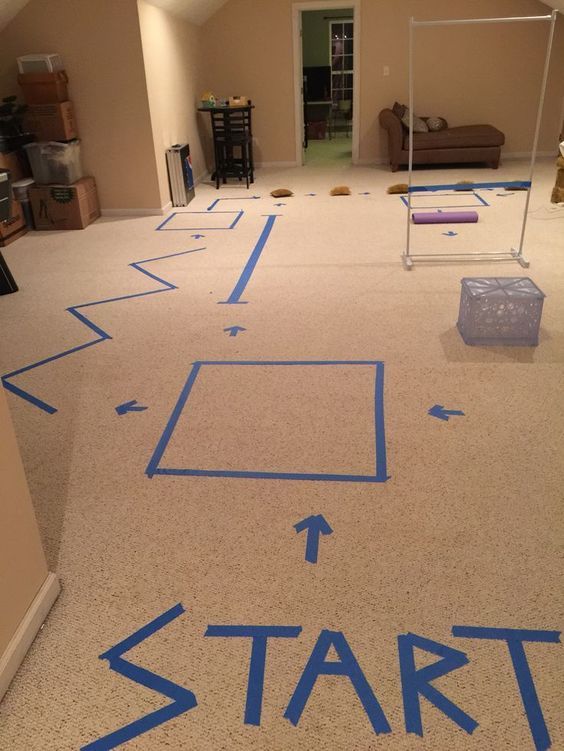
Transform your living room into an adventure course using everyday furniture and household items. Create stations that require different movements:
Crawl under the dining table
Walk along a line of painter’s tape on the floor (balance beam)
Jump over couch cushions placed in a row
Do three spins in the center of the room
Throw soft balls into a laundry basket
Crab walk from the couch to the door
Time each child through the course, or let them run it repeatedly for fun. The best part? You can change the course daily by rearranging stations.
Skills built: gross motor, planning, following directions Prep time: 10 minutes Space needed: medium to large room
2. Pillow Path Jump
Create a path using pillows, couch cushions, and folded blankets spread across the floor. Children must jump from one “safe spot” to another without touching the floor (the “lava”). Make it harder by spacing pillows further apart or requiring specific landing positions.
Skills built: balance, spatial awareness, risk assessment Prep time: 5 minutes Space needed: medium room
3. Tape Maze
Use painter’s tape to create a maze on the floor. Include straight paths, turns, and loops. Children must follow the tape path—walking, crawling, or moving however you specify. For extra challenge, add “obstacles” they must step over along the way.
Skills built: following pathways, body control, focus Prep time: 10 minutes Space needed: any floor space
4. Balloon Obstacle Course
Add inflated balloons to any obstacle course. Children must navigate the course while keeping a balloon in the air—they can hit it, blow it, or carry it on a paper plate. The unpredictability of balloons adds challenge and laughter.
Skills built: hand-eye coordination, multitasking, persistence Prep time: 5 minutes Space needed: medium room (clear breakables!)
Classic Games with Indoor Twists
5. Indoor Bowling
Set up empty plastic bottles as pins. Use a soft ball (or even a rolled-up sock ball) to bowl. For variation, assign point values to different bottles, or have children crawl to retrieve the ball between turns.
Skills built: aiming, turn-taking, counting Prep time: 2 minutes Space needed: hallway or cleared room
6. Balloon Volleyball
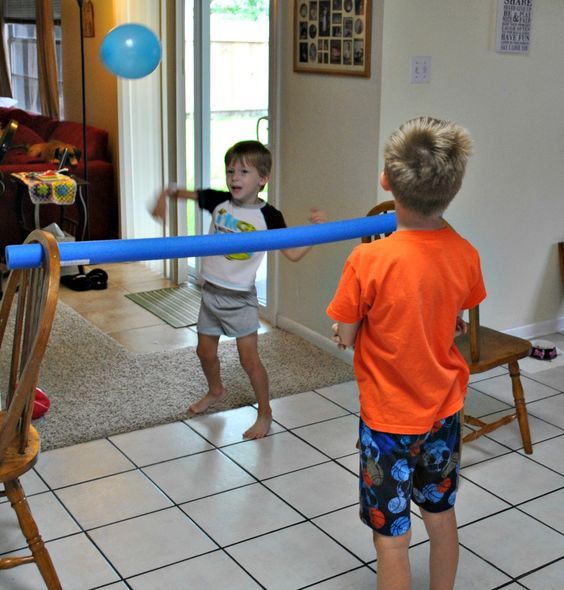
Tie a string or ribbon across the room at a reasonable height. Divide into teams and use a balloon as the ball. The slow speed of balloons makes this accessible for younger children while still providing active movement. No teams? Just keep the balloon off the floor together.
Skills built: hand-eye coordination, teamwork, gross motor Prep time: 3 minutes Space needed: medium room
7. Freeze Dance Marathon
Play high-energy music and dance wildly. When the music stops, everyone must freeze in position. Anyone who moves is out for that round—or not, depending on whether you want elimination. Add challenges: freeze like an animal, freeze in a silly pose, freeze with a partner.
Skills built: listening, body control, self-regulation Prep time: 1 minute Space needed: any cleared space
8. Sock Skating Rink
If you have hard floors, put on socks and go “ice skating.” Add music and challenge children to glide, spin, and move across the “rink.” For extra fun, push small boxes or stuffies across the floor while skating.
Skills built: balance, coordination, creative movement Prep time: 1 minute Space needed: hard floor space
9. Hide and Seek (Indoor Edition)
The classic game works perfectly indoors with clear boundaries. For variety, try “reverse hide and seek”—one person hides while everyone else seeks together. Or try hiding several small objects and timing how long it takes to find them all.
Skills built: patience, spatial awareness, cooperation Prep time: zero Space needed: whole house with boundaries
10. Animal Movements Game
Call out different animals and have children move like them across the room:
Bear crawl (hands and feet, same side movement)
Frog jump (squat and leap)
Crab walk (belly up, walking on hands and feet)
Snake slither (on belly, pulling with arms)
Kangaroo hop (feet together, jumping)
Penguin waddle (feet together, arms at sides)
This builds strength and coordination while burning serious energy.
Skills built: gross motor, strength, listening Prep time: zero Space needed: medium room
Movement Challenges
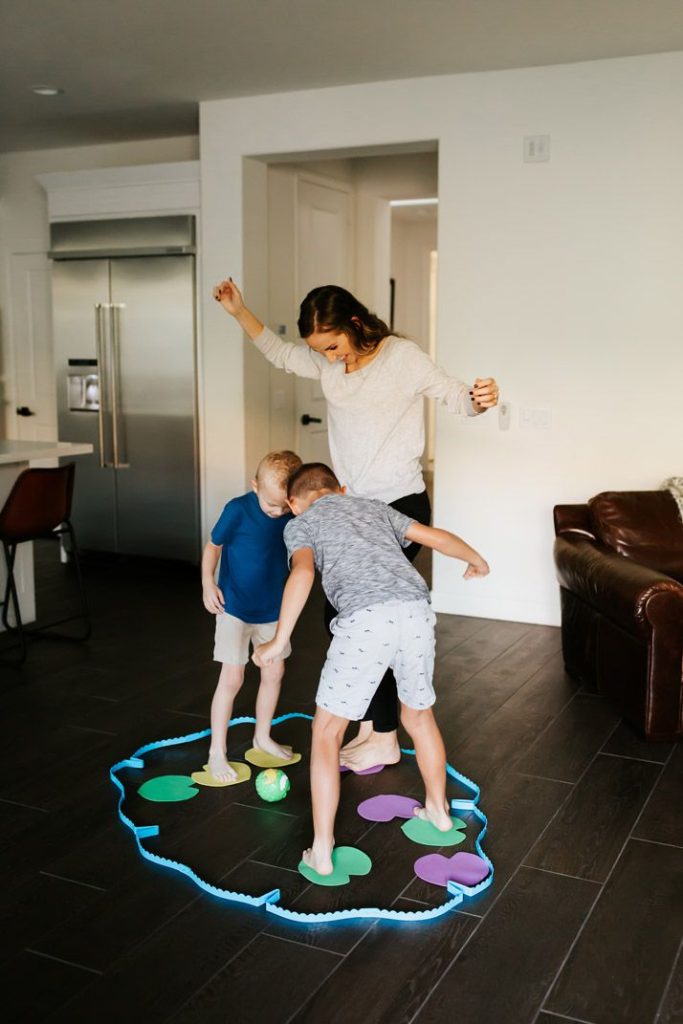
11. Floor Is Lava (The Classic)
The beloved game works brilliantly indoors. Furniture becomes safe zones. The floor is lava. Children must move from one safe spot to another without touching the floor. Add pillows, cushions, or paper plates as temporary safe islands. Time them, or just let them problem-solve their route.
Skills built: problem-solving, risk assessment, gross motor Prep time: 2 minutes Space needed: any room with furniture
12. Tape Lines
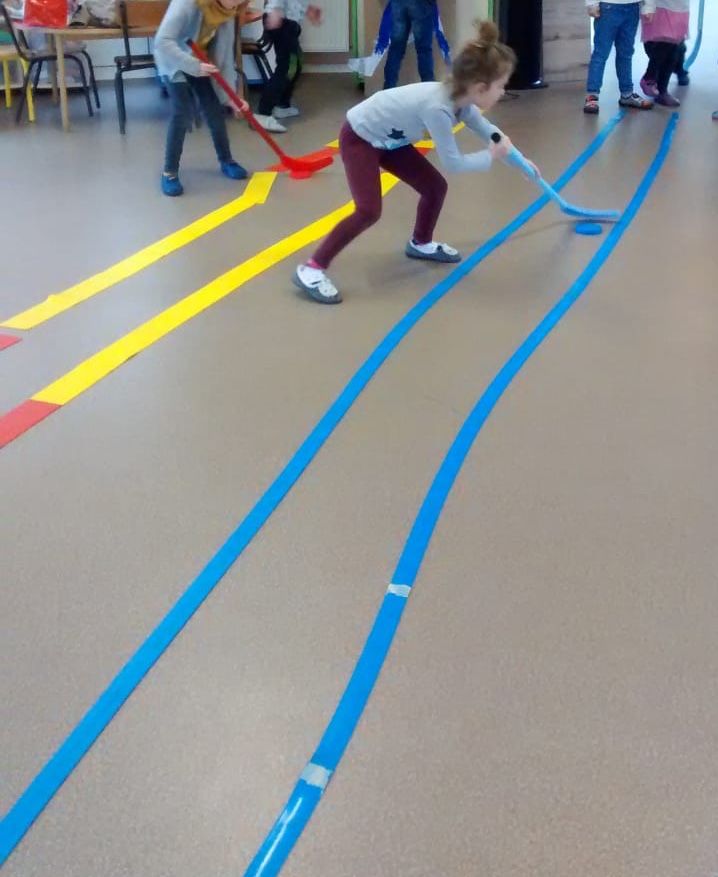
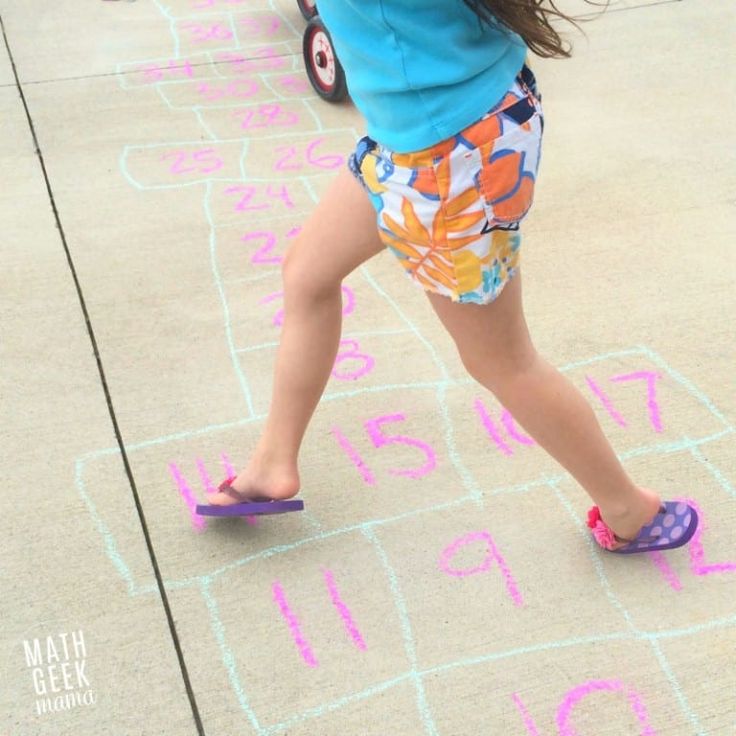
Use painter’s tape to create lines on the floor in different configurations: straight line, zigzag, spiral, hopscotch grid. Children must walk each line—heel-to-toe for balance, hopping on one foot, or jumping with feet together. Time them or have them race against their own best time.
Skills built: balance, coordination, following patterns Prep time: 5 minutes Space needed: any floor space
13. Laundry Basket Toss
Place a laundry basket at varying distances. Children roll or throw soft items into it: socks (rolled into balls), stuffed animals, soft balls. Keep score, or just enjoy the challenge. Move the basket closer or farther to adjust difficulty.
Skills built: aiming, force modulation, persistence Prep time: 2 minutes Space needed: medium room
14. Jump Counting
Mark a starting line with tape. Children jump as far as they can, then measure the distance in “baby steps” (their own feet placed heel-to-toe). Track their jumps on a chart—can they beat their own record? This adds math to movement.
Skills built: gross motor, measuring, number awareness Prep time: 2 minutes Space needed: hallway or cleared room
15. Simon Says… Move!
Play Simon Says with an active twist. Include commands that require big movements: “Simon says do five jumping jacks,” “Simon says crawl to the door,” “Simon says spin three times.” When Simon doesn’t say, children must freeze—even mid-motion.
Skills built: listening, body control, gross motor Prep time: zero Space needed: any cleared space
16. Stuffed Animal Toss and Catch
Children toss stuffed animals in the air and catch them. Progress through challenges: toss and catch with two hands, then one hand, then clap before catching, then spin before catching. For multiple children, toss animals back and forth.
Skills built: hand-eye coordination, progression of challenge Prep time: zero Space needed: medium room
Creative Active Play
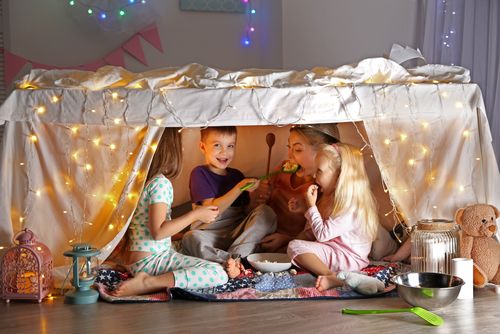
17. Blanket Fort Building
This classic activity is surprisingly active. Gather blankets, sheets, and pillows. Children lift, carry, drape, and arrange—all while problem-solving structural challenges. The result is a cozy reward for their physical effort.
Skills built: cooperation, problem-solving, gross motor Prep time: 5 minutes to gather supplies Space needed: medium room with furniture for anchoring
18. Indoor Scavenger Hunt
Create a list of items for children to find around the house. Make it active by requiring movement between finds: “Bring me something red, then do five jumps, then find something soft.” Time them or have them work together as a team.
Skills built: reading/listening, gross motor, problem-solving Prep time: 5 minutes Space needed: whole house
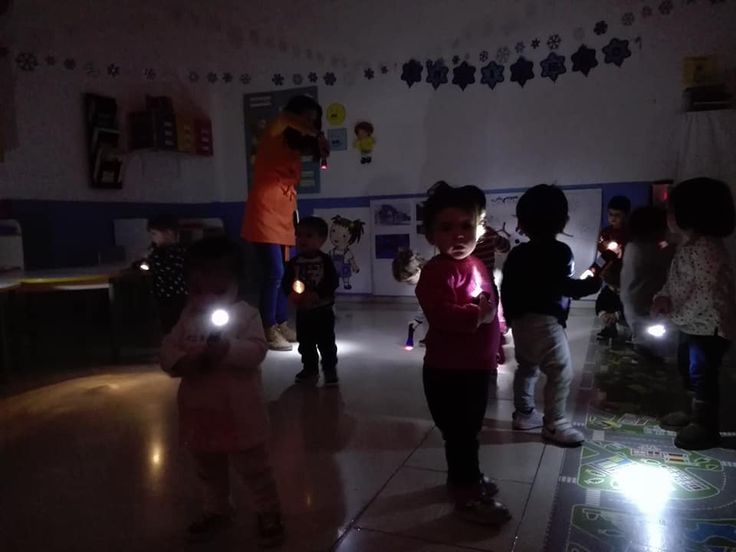
19. Dance Party with Flashlight
Turn off the lights (or dim them) and have a glow-in-the-dark dance party with flashlights. Children can dance, make shadow puppets, or play flashlight tag—shining light on each other without touching. The novelty of flashlights extends engagement.
Skills built: creative movement, spatial awareness Prep time: 1 minute Space needed: any cleared space
20. Balloon Keep-Up Challenge
How long can your child keep a balloon from touching the floor? They can use hands, feet, head, or even blow the balloon. Time each attempt and try to beat the record. Multiple children can work together or compete.
Skills built: hand-eye coordination, persistence, gross motor Prep time: 1 minute Space needed: medium room (clear breakables!)
Quick Reference: Activities by Energy Level
Not all active play is equal. Here’s how these activities stack up:
Highest Energy (Intense Movement)
Animal movements across the room
Balloon volleyball
Freeze dance marathon
Floor is Lava
Jump counting competition
Medium Energy (Sustained Activity)
Obstacle courses
Indoor bowling
Scavenger hunts
Tape maze following
Laundry basket toss
Lower Energy (Gentle Movement)
Blanket fort building
Hide and seek
Sock skating
Flashlight dance party
Simon Says
Mix and match based on your child’s energy level and the space available.
Adapting for Different Ages and Abilities
For Younger Children (Ages 2-4)
Focus on simple, repetitive movements. Keep games short—attention spans at this age are brief. Use lots of praise and participate alongside them. Safety is paramount; supervise closely and keep obstacles low.
Best bets: Animal movements, blanket forts, simple obstacle courses with pillows, balloon keep-up with adult help.
For Older Children (Ages 5-8)
Add rules, competition, and timing. Older children enjoy beating their own records and competing with siblings. They can handle more complex obstacle courses and games with multiple steps.
Best bets: Timed obstacle courses, scavenger hunts with lists, competitive balloon volleyball, jump distance tracking.
For Mixed Age Groups
Choose activities that can be scaled. Obstacle courses work well—younger children can complete simpler versions while older children add challenges. Cooperative games (keeping the balloon up together) prevent older kids from dominating.
When to Stop: Reading Your Child’s Signals
Active play should leave children feeling better, not worse. Watch for these signs that it’s time to transition to calm activities:
Overly rough behavior or loss of control
Frustration or tears
Claiming exhaustion (real or performative)
Loss of interest in the game
Have a calm follow-up activity ready. Water, a snack, and quiet reading or drawing help bodies transition back to restful states.
The Science of Active Indoor Play
When children move vigorously, their brains release neurotransmitters that support focus and emotional regulation. The proprioceptive input from pushing, pulling, and landing helps calm the nervous system. This is why active play isn’t just about burning energy—it’s about resetting the brain for better behavior and learning afterward.
The activities in this guide aren’t just time-fillers. They’re tools for regulation, connection, and development.
Creating Your Indoor Active Play Kit
Keep these items accessible for spontaneous active play:
Painter’s tape (for lines, mazes, markers)
Balloons (always have a pack)
Soft balls or beanbags
Empty plastic bottles (for bowling)
Laundry basket
Flashlights
Playlist of high-energy music
Store everything in one bin or drawer. When rain strikes, you’re ready in seconds.
The Bottom Line
Rainy days don’t have to mean chaos. With these indoor energy-burning activities for kids, you can channel that boundless energy into movement that strengthens bodies, regulates emotions, and saves your furniture.
The best part? These activities cost nothing, require no special skills, and actually work. Your children will sleep better. You’ll feel more peaceful. And when the sun finally returns, you’ll have a toolbox of indoor activities ready for the next inevitable rainy day.
Save this guide. Share it with other parents. And the next time someone says “I’m bored” while rain pounds the windows, you’ll know exactly what to do.
Discover 40+ engaging spring activities for preschoolers that build skills, spark curiosity, and celebrate the season—perfect for home or classroom.
The snow has melted. The sun is lingering just a little longer. And if you have a preschooler, you’ve probably noticed something else: they have energy. The kind of energy that bounces off walls and needs somewhere to go.
Spring is the perfect answer. This season offers a natural curriculum—blooming flowers, returning insects, puddles to jump in, and mud to squish between fingers. For preschoolers, spring isn’t just a change in weather; it’s a sensory invitation to explore, question, and create.
This comprehensive guide is packed with spring activities for preschoolers that are easy to set up, developmentally rich, and genuinely fun. Whether you’re a parent looking for afternoon inspiration or a teacher planning classroom centers, you’ll find ideas here that work with your life—not against it.
Why Spring Activities Matter for Preschoolers
Before we dive into the activities, let’s talk about why spring is such a powerful learning season.
Spring engages all the senses. The smell of wet soil, the sight of new colors, the sound of birds returning—these sensory experiences build neural connections and vocabulary in ways that indoor activities simply can’t match .
It connects learning to real life. When a child plants a seed and watches it grow, they’re not just learning about plants. They’re learning patience, responsibility, and cause-and-effect. These lessons stick because they’re experienced, not just explained .
It meets preschoolers where they are. Three- to five-year-olds are naturally curious, physically active, and eager to help. Spring activities tap into all of these developmental drives. The best part? You don’t need to be a teacher to facilitate them. You just need to be present and willing to get a little messy .
Before You Begin: Simple Tips for Spring Success
A little preparation makes everything smoother. Keep these principles in mind:
Follow their lead. Your child may spend twenty minutes staring at a worm instead of completing your planned craft. That’s not a problem—that’s learning. Let their curiosity guide the pace .
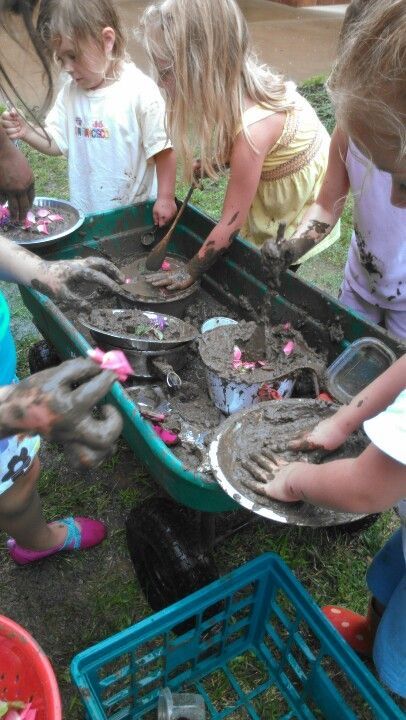
Embrace the mess. Spring is muddy. Clothes will get wet, hands will get dirty. Dress children in clothes that can handle it, and keep a towel by the door. The mess is temporary; the memories aren’t .
Layer for changing weather. Spring weather is famously unpredictable. Dress children in layers so you can add or remove as temperatures shift throughout the day.
Keep supplies simple. You don’t need special equipment. Most of these activities use items you already have: paper, paint, containers from the recycling bin, and natural materials from your yard .
Outdoor Exploration Activities
Spring is nature’s invitation to come outside. These activities help preschoolers observe, question, and connect with the natural world.
1. Nature Walk with Purpose
A simple walk becomes a learning adventure with a little intention. Before heading out, give your preschooler a specific mission: find something yellow, something soft, something that smells good, or something shaped like a heart .
Skills built: observation, vocabulary, color recognition Prep time: zero Mess level: low
Pro tip: Bring a magnifying glass and let your child examine discoveries up close. A leaf’s veins, a bug’s legs, the texture of bark—all become fascinating under magnification .
2. Bug Hunt Safari
Spring insects are emerging everywhere, and preschoolers find them utterly captivating. Go on a bug hunt in your yard, garden, or local park. Look under leaves, rocks, and logs for ants, ladybugs, worms, or beetles .
Skills built: scientific thinking, patience, respect for living things Prep time: zero Mess level: low
Make it educational: Ask simple questions: “How many legs does it have?” “What color is it?” “Where do you think it’s going?”
3. Rainbow Color Hunt
Create a simple chart with the colors of the rainbow. During your walk, help your child find one natural object for each color: a yellow dandelion, a green leaf, a blue flower, a brown stick. This sharpens observation skills while reinforcing color recognition .
When spring rain leaves puddles behind, don’t avoid them—embrace them! Assign point values to different puddles: small puddle = 1 point, medium puddle = 3 points, big puddle = 5 points .
Skills built: gross motor, counting, risk assessment Prep time: zero Mess level: high (boots recommended!)
5. Cloud Watching Charades
On a sunny spring day, lie on a blanket and watch clouds together. Take turns pointing out shapes you see—a dinosaur, a boat, a butterfly. Then act out what you saw in a game of charades .
Create a simple checklist of spring things to spot: a blooming flower, a buzzing bee, a bird building a nest, a butterfly, a fuzzy caterpillar. Let your child check off each discovery .
Give your child a collection jar and send them on a safari to find small creatures like beetles, snails, and worms. You might even let them temporarily keep discoveries in a terrarium—snails make surprisingly good short-term pets!
Sit quietly together and count how many spring sounds you can hear: birds singing, wind in trees, water dripping, bees buzzing. This builds auditory discrimination and mindfulness .
Nothing teaches patience and wonder like growing something from a tiny seed.
9. Seed Starting Station
Fill small containers with soil—egg cartons or paper cups work perfectly. Let your child press seeds into the soil, water gently, and place near a sunny window. Check growth daily and talk about changes they observe .
Skills built: fine motor, scientific thinking, responsibility Prep time: 10 minutes Mess level: medium
Best seeds for preschoolers: Sunflowers, beans, and peas sprout quickly and grow reliably, which helps maintain interest.
10. Egg Carton Garden
Use a cardboard egg carton as a mini greenhouse. Plant one seed in each cup. The carton can be planted directly in the ground later since it’s biodegradable .
Let your child decorate terracotta pots with acrylic paint or paint pens. Once dry, help them plant flowers or herbs inside. They’ll take extra pride in plants that live in pots they personally beautified.
Skills built: creativity, pride of ownership, following steps Prep time: 5 minutes + drying time Mess level: medium
12. Build a Bug Hotel
Gather sticks, pinecones, hollow stems, and small rocks. Arrange them in a corner of the yard or in a wooden frame to create shelter for beneficial insects. Watch together to see who moves in .
Layer pebbles, charcoal, and soil in a large glass jar. Plant small moisture-loving plants and mist with water. Close the lid and you’ve created a self-contained ecosystem .
Fill paper cups with soil and sprinkle grass seed on top. Keep moist. In about a week, the grass will be long enough for your child to give it a “haircut” with child-safe scissors .
Skills built: responsibility, fine motor (cutting), patience Prep time: 10 minutes Mess level: low
15. Sunflower House
Plant sunflower seeds in a square or circle pattern, leaving an opening for a door. As the sunflowers grow tall, they’ll create an enclosed “house” that preschoolers can play inside .
These creative projects celebrate spring colors and textures while building fine motor skills.
16. Tissue Paper Spring Blossoms
Paint tree branches on paper. While the paint dries, have your child cut or tear pink tissue paper into small pieces. Crinkle each piece and glue onto the branches to create blossoms. The result is a beautiful spring tree that builds fine motor control .
Skills built: fine motor, creativity, following multi-step directions Prep time: 10 minutes Mess level: low
17. Straw Flower Stamping
Cut the end of a plastic straw into fringe, fanning out the strips. Dip in paint and stamp onto paper to create flower shapes. Add a yellow dot in the center and draw stems. This simple technique produces surprisingly lovely results .
Skills built: cause and effect, color exploration, fine motor Prep time: 5 minutes Mess level: medium
18. Mud Painting on Rocks
Instead of paint that can harm the environment, use mud! Find a muddy puddle or mix soil with water until it reaches paint consistency. Let your child “paint” on rocks or sidewalk .
Collect petals, leaves, and small flowers during a nature walk. Arrange and glue them onto paper or cardboard to create natural art. This activity connects outdoor exploration with creative expression .
Skills built: collecting, arranging, fine motor Prep time: 5 minutes Mess level: low
20. Rain Art
On a lightly rainy day, let your child draw on white paper with washable markers. Place the paper outside in the rain for just a moment, or use a spray bottle to simulate rain. Watch the colors run and blend into beautiful patterns .
Skills built: cause and effect, creativity, scientific thinking Prep time: 5 minutes Mess level: low
21. Hanging Bee Paper Chain Craft
Using a free printable template, color and cut out bee pieces, chain strips, and a beehive. Assemble into a hanging decoration by connecting paper chains and attaching the hive. This craft is perfect for fine motor practice .
Print a free frog puppet template, color, cut, and assemble. The finished puppet becomes a toy for imaginative play—perfect for spring pond-themed adventures .
Using a simple paper lunch bag and a free template, create an adorable bunny puppet. Add a cotton ball tail for extra texture. Puppets inspire storytelling and dramatic play .
Skills built: creativity, storytelling, fine motor Prep time: 10 minutes Mess level: low
24. Flower Prints
Gather flowers with flat petals. Place them between two pieces of paper and gently hammer or press to transfer color and shape. The results are delicate, nature-made prints .
Skills built: understanding natural pigments, cause and effect Prep time: 5 minutes Mess level: medium
25. Nature Crowns
Collect flexible twigs, long grass, or vines. Weave flowers and leaves through to create a wearable nature crown. This activity connects to imaginative play and fine motor weaving .
Preschoolers need to move. These spring-themed games channel that energy productively.
26. Rainbow Relay
Scatter colored items around the yard: balls, plastic eggs, beanbags, cups. Set baskets labeled by color. Kids race to sort everything into matching baskets. The best part? The yard gets cleaned up as they play .
Draw lily pads with chalk or use paper plates spread around. Children must jump from pad to pad without touching the “water.” Make it cooperative by having them work together to cross the pond .
One child is the bee, carrying a cup of pom-poms (pollen). Other children are flowers, holding empty cups. The bee tries to drop one pom-pom into each flower’s cup. This active game teaches about pollination while burning energy .
Kids line up and race while wiggling like worms on the ground. No standing allowed! Add hula hoops as “tunnels” they must wiggle through .
Skills built: core strength, gross motor, following silly directions Prep time: zero Mess level: low
30. Butterfly Breeze Race
Give each child a lightweight “butterfly” made from tissue paper or a feather. They must blow it across a finish line without touching it. This game is surprisingly challenging and builds oral motor strength .
Create two cubes: one with spring movements (bunny hop, frog jump, butterfly flap, flower stretch, duck waddle, rain sprinkle) and one with numbers. Roll both and perform the movement the number of times shown .
Tuck a ribbon or fabric strip into each child’s waistband. Players try to collect others’ “tails” while protecting their own. This high-energy game builds agility and spatial awareness .
Kids roll plastic eggs (or ping pong balls) with spoons through a course marked by cones, chalk lines, or hula hoops. This challenges balance and coordination .
Draw a pretend town on the driveway: roads, ponds, hopscotch flowers, bridges. Add game elements like “deliver the mail” (carry an item to different houses) or “cross the river without stepping in water” .
Kids carry a small pot or plastic garden tool to a marker and back. Add silly tasks: plant a pretend seed (touch the ground), water the flower (mime with a watering can) .
Spring showers happen. These activities keep the spring theme going when you’re stuck inside.
36. Spring Sensory Bin
Fill a bin with rice, dried beans, or shredded paper. Add spring items: silk flowers, plastic bugs, smooth stones, small pots, scoops, and cups. Let your child explore, scoop, pour, and sort .
Skills built: sensory processing, imaginative play, fine motor Prep time: 10 minutes Mess level: medium (use a tablecloth!)
Learning extension: Hide foam letters or numbers in the bin. As children dig, encourage them to identify what they find .
37. Rainy Day Pond Toss
Tape paper lily pads to the floor at different distances. Toss soft “frogs” (rolled socks or beanbags) onto the pads. Assign higher points to smaller or farther pads .
Give your child a pile of mixed objects: pom-poms, buttons, LEGO bricks, or paper scraps. Let them sort by color into cups or bowls. This simple activity is surprisingly calming and builds categorization skills .
Set up a “flower shop” with paper, cups, tape, and artificial flowers or flowers made from craft supplies. Children can take orders, arrange bouquets, and make deliveries to stuffed animal customers .
Use seed packets or printed pictures of flowers and vegetables. Place them face down and play memory match. When a match is found, have your child name a silly “plant” like spaghetti tree or glitter grass .
Make spring sounds yourself or play recordings: rain tapping, birds chirping, bees buzzing, wind blowing, water dripping. Have children guess each sound. Let them take turns making sounds for you to guess .
Create a simple weather chart where your child places a sticker or draws a picture each day: sunny, rainy, cloudy, windy. Talk about what you observe and how the weather changes through spring .
Not sure which activities suit your child’s developmental stage? Here’s a quick guide:
Best for Younger Preschoolers (Ages 2-3)
Nature walks with simple observation
Puddle jumping
Flower petal collecting
Simple sensory bins
Bubble play
Sticker art with spring themes
Water play with cups and scoops
Best for Older Preschoolers (Ages 4-5)
Bug hunts with magnifying glasses
Seed planting and daily care
Craft projects with multiple steps
Simple games with rules (tag variations, relays)
Nature scavenger hunts with checklists
Building projects (bug hotels, fairy gardens)
Weather charting
Connecting Spring Activities to Early Learning
Every spring activity naturally builds skills. Here’s what your preschooler is really learning:
Language and Vocabulary When you talk about what you’re seeing and doing—”Look at the fuzzy caterpillar!” “This flower is magenta”—you’re building vocabulary in context. Words stick when they’re attached to real experiences .
Math Concepts Counting flower petals, comparing rock sizes, sorting leaves by color, and measuring plant growth all introduce math naturally .
Scientific Thinking Observing changes, making predictions (“What will happen to this seed?”), and testing ideas (“Will this stick float?”) are the foundations of scientific reasoning .
Fine Motor Development Pinching seeds, squeezing glue bottles, cutting with scissors, and arranging small items all strengthen the hand muscles needed for writing .
Social-Emotional Growth Caring for plants teaches responsibility. Playing games with others builds turn-taking and cooperation. Overcoming frustration when a craft doesn’t work builds resilience .
Making Spring Activities Part of Your Routine
You don’t need to do everything at once. Here’s how to weave spring activities naturally into your weeks:
Keep supplies visible. A basket by the door with magnifying glasses, collection jars, and a nature guide invites spontaneous exploration.
Follow their interests. If your child becomes obsessed with worms, lean into it. Find worm books, go on worm hunts, build worm habitats. Deep interest drives deep learning.
Take pictures. Document your spring adventures. Make a spring scrapbook together at the end of the season. This builds memory skills and creates a treasured keepsake.
Invite reflection. Ask open-ended questions: “What was the best part of our walk?” “What do you wonder about this caterpillar?” “What should we plant next?”
Lower your expectations. Some activities will flop. Some days, your child will spend five minutes on your carefully planned craft and thirty minutes staring at an ant. That’s not failure—that’s childhood. Follow their lead .
The Bottom Line
Spring with a preschooler is a season of wonder. Every sprouting seed, every returning bird, every muddy puddle is an invitation to learn together. You don’t need elaborate plans or expensive materials. You need curiosity, patience, and willingness to get a little dirty.
The activities in this guide are starting points—not prescriptions. Adapt them to your child, your setting, and your energy level. Some days you’ll do elaborate crafts. Some days you’ll just lie in the grass and watch clouds. Both count. Both matter.
So go outside. Turn over a rock. Plant a seed. Jump in a puddle. Watch your preschooler’s face light up as they discover the magic of spring—and know that you gave them that gift.
Discover 35+ simple, developmental water play ideas that require minimal setup—and deliver maximum fun.
There’s a moment every parent knows well. It’s 3:00 PM, nap time is over, and suddenly your toddler has more energy than a small nuclear reactor. You need something. Something engaging. Something that doesn’t require a trip to the store or an hour of setup.
Now imagine placing a plastic bin filled with water on the floor. Watch as your toddler’s eyes light up. They approach slowly, dip a hand in, and then—quiet. For the next thirty minutes, they are completely absorbed in the simple act of pouring, splashing, and exploring.
This is the magic of water play.
Water play isn’t just an activity; it’s a parenting lifeline. It’s naturally calming for the nervous system, endlessly engaging for curious minds, and requires almost nothing you don’t already have at home. Whether you’re looking for easy water play activities for toddlers to reset a difficult afternoon or searching for outdoor water activities for toddlers to beat the summer heat, this guide has you covered.
In this comprehensive resource, we’ll explore why water play matters developmentally, share over 35 specific activities organized by type and location, and give you all the tips you need to make water play work for your family—not the other way around.
Why Water Play Deserves a Permanent Spot in Your Parenting Toolkit
Before we dive into the activities, let’s talk about why water play is worth your time. Because when you understand what’s really happening during those splashing moments, you’ll feel even better about setting up the bin.
The Developmental Benefits You’re Actually Seeing
When your toddler is elbow-deep in a water bin, they aren’t just getting wet. They’re building essential skills:
Fine Motor Development Scooping with a cup, squeezing a sponge, and grasping slippery toys strengthen the small muscles in your child’s hands. These are the same muscles they’ll use for writing, buttoning shirts, and using utensils. Every pour and squeeze is preparation for independence.
Hand-Eye Coordination Aiming water from one container into another requires visual focus and physical control. When your toddler misses and tries again, they’re practicing persistence and precision simultaneously.
Cognitive Growth (STEM in Disguise) Water play is early science and math in action. Your child is learning:
Cause and effect: “When I tip this cup, water comes out.”
Volume and capacity: “This bucket holds more than this bottle.”
Sink vs. float: “Rocks go down, but the duck stays up.”
Temperature concepts: “The ice is cold, but the water from the tap is warm.”
Language Development When you play alongside your toddler and narrate their actions—”You’re pouring the blue cup into the big bowl!”—you’re building vocabulary in a natural, meaningful context. Words like full, empty, wet, dry, sink, float, cold, and warm become concepts they understand through experience, not just repetition.
Emotional Regulation Here’s something that surprises many parents: water play is calming. The repetitive motions of pouring and stirring can regulate an overwhelmed toddler. Water play often works better than time-outs for helping children reset because it engages the senses without demanding performance.
Sensory Integration Some children crave sensory input; others avoid it. Water play is a gentle, adjustable way to help all children process sensory information. They control how much water they touch, how fast it moves, and how long they engage.
Why Water Play Works When Nothing Else Does
Toddlers are driven by curiosity and control. Water play offers both. They can manipulate the water completely—pour it, stir it, stop it, start it—which gives them a sense of agency they rarely experience in a world where adults make most decisions.
Plus, water play requires no special skills. There’s no right or wrong way to do it. This open-ended nature means success is guaranteed, which builds confidence and encourages longer attention spans.
Before You Begin: Essential Tips for Stress-Free Water Play
The goal of water play is connection and calm, not stress and cleanup. Follow these tips to keep the experience positive for everyone.
Safety First: Non-Negotiable Rules
Never leave a toddler unattended near water. This includes bins, buckets, sinks, and wading pools. A child can drown in just inches of water in seconds. Stay within arm’s reach at all times.
Use clean, fresh water each time. Stagnant water breeds bacteria, and toddlers will inevitably drink the play water. If you’re playing outdoors, keep the bin in the shade to prevent the water from becoming too warm or developing algae.
Check the temperature. Toddler skin is sensitive. Water should feel neutral or slightly cool to your wrist—never hot.
Setup Strategies That Save Sanity
Contain the mess before it happens. Place your water bin on a large towel, a waterproof changing pad, or a plastic tablecloth. If weather permits, take everything outside where spills don’t matter.
Dress for success. Clothes will get wet. Accept this ahead of time. In warm weather, a swim diaper and nothing else works perfectly. In cooler weather, add a waterproof smock or simply plan to change clothes afterward.
Keep supplies accessible but out of reach. Store your water play materials in a specific bin or shelf where your toddler can’t access them independently. This prevents unsupervised water adventures and keeps the activity feeling special when you bring it out together.
The “Follow the Child” Philosophy
Here’s the secret to successful water play: let your child lead. You don’t need to direct, teach, or correct. Your job is to observe, narrate, and ensure safety.
If your toddler wants to pour water back and forth between the same two cups for twenty minutes, let them. That repetition is learning. If they suddenly become interested in a floating leaf, follow that interest. The best water play follows the child’s curiosity, not a predetermined plan.
35+ Easy Water Play Activities for Toddlers
Now, let’s get to what you came for: the activities. These are organized by type and location so you can find exactly what you need in any situation.
Classic Bin Activities: The Foundation of Water Play
These are the building blocks. Master these, and you’ll never run out of ideas.
1. The Pouring Station
Fill a large plastic bin with a few inches of water. Add an assortment of containers: measuring cups, plastic bottles, funnels, ladles, and small bowls. Show your toddler how to fill and pour, then step back and watch. This simple setup can occupy a toddler for an astonishingly long time.
Progression tip: Add color to the water with a drop of food coloring and provide clear containers so your toddler can see the liquid level change as they pour.
2. Scoop and Transfer
Place two bowls in the water bin—one empty, one filled. Give your toddler a spoon, small strainer, or scoop and challenge them to move the water from the full bowl to the empty one. This activity builds fine motor control and introduces early math concepts like more and less.
3. The Sponge Squeeze
This activity strengthens hand muscles for future writing. Provide several sponges cut into small, easy-to-grasp pieces. Show your toddler how to dip the sponge in water, then squeeze it out into a separate container. For extra fun, use colored water and watch the sponge release the color.
4. Kitchen Tool Exploration
Raid your kitchen drawers. Whisk, eggbeater, potato masher, slotted spoon, basting brush—all of these become fascinating water tools. Show your toddler how the whisk creates bubbles or how water flows through the slotted spoon differently than a solid ladle.
5. Ice Cube Adventure
Freeze ice cubes in advance. For extra engagement, add a tiny plastic animal or a drop of food coloring to each cube compartment. Place the ice in a shallow bin of warm water and let your toddler explore the temperature contrast. They’ll watch the ice melt and work to free the trapped treasures.
Outdoor Water Play: Letting Loose
When you can take water play outside, cleanup disappears and possibilities expand.
6. Water Painting
Give your toddler a bucket of water and a large paintbrush or household paint roller. Let them “paint” the fence, sidewalk, driveway, or even the side of the house. They’ll be fascinated by how the water changes the color of surfaces and how it slowly disappears in the sun.
Extension idea: On a hot day, let them “paint” each other’s arms and legs with the brush. The sensation is delightful and completely harmless.
7. The Outdoor Car Wash
Screenshot
Line up tricycles, ride-on toys, and plastic cars. Fill a bin with soapy water, provide sponges and old toothbrushes, and let your toddler give their vehicles a thorough cleaning. This activity combines water play with meaningful work—they’re helping, and they know it.
8. Slip and Slide Alternative
If you have a long strip of plastic sheeting or a dedicated kiddie slide, set it up on a gentle slope. Add a trickle of water from the hose and let your toddler slide down. This is pure joy in activity form.
9. Mud Kitchen with Water Station
If you have a dirt patch or sandbox, set up a mud kitchen nearby. Provide pots, pans, and bowls along with a water bin. Your toddler can mix “recipes,” creating mud pies and soups. This is messy, yes, but developmentally golden.
10. Sprinkler Freeze Dance
Turn on a sprinkler and play music. When the music stops, everyone must freeze—even if the water is still spraying. This combines gross motor movement, listening skills, and cooling fun.
11. Water Wall Construction
If you’re feeling ambitious, attach plastic bottles, funnels, and tubes to a fence or piece of plywood to create a water wall. Pour water at the top and watch it cascade through the system. This is physics in action, and toddlers find it mesmerizing.
12. Toy Wash Station
Set up two bins: one with soapy water, one with clean rinse water. Add a scrub brush and let your toddler wash all their plastic outdoor toys—balls, shovels, buckets. They’ll feel proud of their work, and your toys will actually get clean.
Science Experiments Disguised as Play
These activities feel like magic but teach real scientific concepts.
13. Float or Sink?
Gather a collection of household objects: cork, coin, plastic toy, stone, leaf, sponge, crayon. Before dropping each item in the water, ask your toddler, “Will it float or sink?” Let them test each item and sort into two piles. This builds prediction skills and introduces the scientific method.
14. Color Mixing Lab
Fill several cups with water. Add red food coloring to one, blue to another, yellow to a third. Provide empty cups, a dropper or spoon, and let your toddler experiment with mixing. Watch their amazement when blue and yellow become green.
Safety note: Use food coloring that washes out easily, or try liquid watercolors from craft stores for brighter results with less staining.
15. Absorption Race
Provide different materials: sponge, paper towel, fabric scrap, wax paper, plastic wrap. Using a dropper or spoon, drop water onto each material and observe what happens. Which one absorbs fastest? Which one repels water? This introduces material properties in a hands-on way.
16. Sink Spray Painting
Line a shallow bin or cookie sheet with paper. Add a few drops of liquid watercolor or food coloring to the bottom. Let your toddler spray water from a squirt bottle onto the paper, watching the colors spread and mix. The result is abstract art created entirely by water.
17. Melting Race
Freeze ice cubes in different sizes—some tiny, some large. Give your toddler various tools: warm water in a dropper, salt, their hands. Which ice melts fastest? Which tool works best? This exploration teaches heat transfer and problem-solving.
18. Water Xylophone
Fill several identical glass jars or cups with different water levels. Tap each with a metal spoon and listen to the different pitches. Show your toddler how more water creates a lower sound, less water creates a higher sound. This is music and science combined.
Fine Motor Water Play
These activities specifically target the small hand muscles needed for future writing and self-care.
19. Dropper Transfer
Fill one small bowl with colored water. Provide an empty bowl and a medicine dropper or pipette. Show your toddler how to squeeze, release to draw water, and squeeze again to transfer. This requires significant fine motor control and concentration.
20. Pom-Pom Water Rescue
Fill a bin with water and add colorful pom-poms. Provide a slotted spoon, small strainer, or tongs. Challenge your toddler to rescue the pom-poms from the water. The floating pom-poms are slippery and require careful scooping.
21. Squirt Bottle Target Practice
Fill squirt bottles with water. Draw simple targets on the sidewalk with chalk or tape paper targets to a fence. Let your toddler aim and squeeze to hit the targets. This strengthens hand muscles and builds visual motor skills.
22. Water Bead Sensory Bin
For older toddlers (3+ with no mouthing risk), water beads offer incredible sensory input. Hydrate the tiny beads overnight and watch them expand into squishy, bouncy orbs. Add scoops, cups, and strainers for hours of exploration.
Caution: Water beads are a choking hazard if swallowed. Supervise closely and store safely after play.
23. Bubble Wrap Stomp
Lay a sheet of bubble wrap on a towel. Pour a small amount of water on top. Let your toddler stomp, jump, and pop the bubbles. The combination of popping sensation and water is irresistible.
24. Squeeze Bottle Painting
Fill squirt bottles with diluted liquid watercolors. Tape large paper to an outdoor fence or lay it on the ground. Let your toddler squeeze to spray paint onto the paper. The result is a beautiful, abstract watercolor creation.
Imaginative Water Play Scenarios
Water play naturally invites pretend play. These setups encourage storytelling and imagination.
25. Animal Rescue Operation
Add plastic animals to the water bin. Provide tools like spoons, nets, and scoops. Announce that the animals need rescuing from the “flood” or “ocean.” Your toddler becomes the hero, saving each animal and returning them to “dry land.”
26. Dinosaur Swamp
Add plastic dinosaurs, small trees or plants (real or fake), and some rocks to your water bin. Create a prehistoric swamp where dinosaurs stomp and splash. Add a few drops of green food coloring for extra swamp effect.
27. Fishing Pond
Cut simple fish shapes from craft foam. Add a paperclip to each. Create a fishing pole by tying a string to a stick and attaching a small magnet to the string’s end. Your toddler can “fish” for the foam fish in the water bin.
28. Boat Races
Make simple boats from recycled materials: milk cartons, foam trays, or even leaves. Add a small sail using a toothpick and paper. Place them in the water and blow to race them across the bin. This introduces air power and competition.
29. Mermaid or Pirate Adventure
If your toddler has small dolls or figures, create an ocean adventure. Add shells, blue food coloring, and maybe some “treasure” (plastic jewels or coins) hidden at the bottom. Let the dolls explore the deep sea.
30. Soup Kitchen
Provide bowls, spoons, and “ingredients” like leaves, flower petals, grass clippings, and small stones. Your toddler can stir and serve “soup” to their stuffed animals. This combines water play with imaginative role-play and caregiving.
Quick Setup Indoor Water Play
When you need something fast, these activities require minimal supplies.
31. Sink Time
Place a step stool at the kitchen sink. Fill one side with a few inches of warm water and add plastic cups and toys. Stand nearby while your toddler plays. The sink contains the mess perfectly, and you can prep dinner while supervising.
32. Tub Before Bath
Before actual bath time, let your toddler play in the empty tub with a small amount of water and some containers. When they’re done, simply pull the plug and start the real bath. This buys you time and makes bath transition easier.
33. Water Table Indoors
If you have a water table, it can come indoors temporarily. Place it on a large plastic tablecloth or several towels. Add an inch of water and let your toddler play. This works especially well on days when outdoor play isn’t possible.
34. Ice Painting
Freeze water in ice cube trays. When frozen, sprinkle a little salt on each cube and offer them to your toddler on a tray with thick paper. As the ice melts, it leaves water marks. The salt creates interesting melting patterns.
35. Spray Bottle Window Fun
On a sunny day, fill a spray bottle with water and let your toddler spray the outside of windows. They’ll watch the water run down the glass and can “wash” the windows while you supervise from inside.
36. Kitchen Tool Wash
After cooking, fill one side of the sink with soapy water and let your toddler “wash” the unbreakable kitchen tools—plastic spatulas, measuring cups, mixing bowls. They feel helpful, and some pre-rinsing actually happens.
Seasonal Water Play: Adapting Through the Year
Water play isn’t just for summer. Here’s how to adapt throughout the year.
Summer Water Play
Focus on cooling: add ice, play in the shade, use spray bottles
Combine with sunscreen breaks
Offer water play before naps—the calm can help with sleep
Use the hose liberally; the novelty never wears off
Spring Water Play
Add rain boots and let puddle jumping be the activity
Collect rainwater in bins for play
Look for worms and bugs after rain; observe them in a temporary water habitat
Wash outdoor furniture and toys together as spring cleaning
Fall Water Play
Add autumn leaves to the water bin for sensory exploration
Use warm water for comfort on cooler days
Add pumpkin seeds or small gourds to the bin
Wash fall vegetables from the garden together
Winter Water Play
Yes, water play works in winter! Use warm water indoors
Add ice cubes made with natural materials (berries, pine needles) frozen inside
Fill spray bottles with warm water for window “painting”
Create a sink or tub station with extra-warm water and cozy towels ready
Troubleshooting Common Water Play Challenges
Even the best activities hit snags. Here’s how to handle common issues.
“My toddler just wants to dump the water on the ground.”
This is developmentally normal. Toddlers are learning about gravity and flow. If this happens:
Outdoors: Let it happen. The ground needs water anyway. Indoors: Set clear limits. “Water stays in the bin. If water goes on the floor, we’ll need to clean up and try again another time.” Follow through calmly if needed.
“They lose interest after five minutes.”
Start with five minutes. That’s actually a long time for some toddlers. Build up duration slowly. Also check:
Is the water the right temperature?
Are there enough interesting tools?
Are you hovering too closely? Sometimes stepping back increases engagement.
“It’s too messy.”
Embrace the prep that prevents stress:
Play outside whenever possible
Use waterproof mats or towels
Dress child in minimal clothing
Keep cleanup supplies ready nearby
Remember that mess is temporary, but development lasts
“They try to drink the water.”
This is common with younger toddlers. Respond by:
Using edible sensory bases occasionally (like yogurt or applesauce) for variety
Redirecting firmly: “Water is for pouring, not drinking. Let’s pour into this cup instead.”
Supervising closely and removing the bin if drinking persists
Knowing that most toddlers outgrow this phase
What Parents Are Asking: FAQs About Water Play
At what age can I start water play?
You can start water play as soon as your baby can sit independently with support. For infants, shallow water in a flat container with close supervision works. Always stay within arm’s reach.
How much supervision does water play need?
Constant, active supervision. This means being close enough to touch your child, not just in the same room. Water play is wonderful, but it requires your full attention.
What if my toddler is afraid of water?
Start smaller. Offer a wet washcloth to squeeze. Provide a shallow tray with barely any water. Let them control the pace completely. Never force. Fear usually passes with gentle, repeated exposure.
How do I store water play supplies?
Use a clear plastic bin with a lid. Store it somewhere accessible to you but not your child. Rotate tools occasionally to keep interest fresh. Wash and dry everything thoroughly between uses to prevent mold.
Can water play help with sensory processing issues?
Many occupational therapists recommend water play for children with sensory processing differences. The water provides consistent, predictable input that children can control. If your child has diagnosed sensory issues, consult with their therapist for specific recommendations.
How do I clean up after water play?
Have a system:
Remove child for changing
Drain water (use it to water plants if clean)
Wipe down toys and bin
Air dry everything before storing
Hang wet towels to dry Total time: about five minutes.
The Bottom Line: You’re Doing Enough
Here’s the truth that sometimes gets lost in parenting articles: you don’t need elaborate setups, expensive equipment, or Pinterest-perfect execution. Your toddler doesn’t care if the water is in a beautiful wooden table or an old plastic bin. They don’t care if the toys are educational or just random kitchen items.
They care about the water. They care about your presence. They care about the freedom to explore.
When you offer water play, you’re offering something deeper than entertainment. You’re offering autonomy—the chance to control their environment. You’re offering sensory input that organizes their nervous system. You’re offering connection through shared wonder.
And sometimes, you’re just offering yourself a moment of peace while your child happily pours water from cup to cup for the hundredth time.
That matters too.
Save this guide. Pin it to your parenting board, bookmark it on your phone, share it with your mom group. The next time you hear “I’m bored” or feel the afternoon drag, you’ll have 35+ ideas ready to go—and the confidence that water play is exactly what your toddler needs.