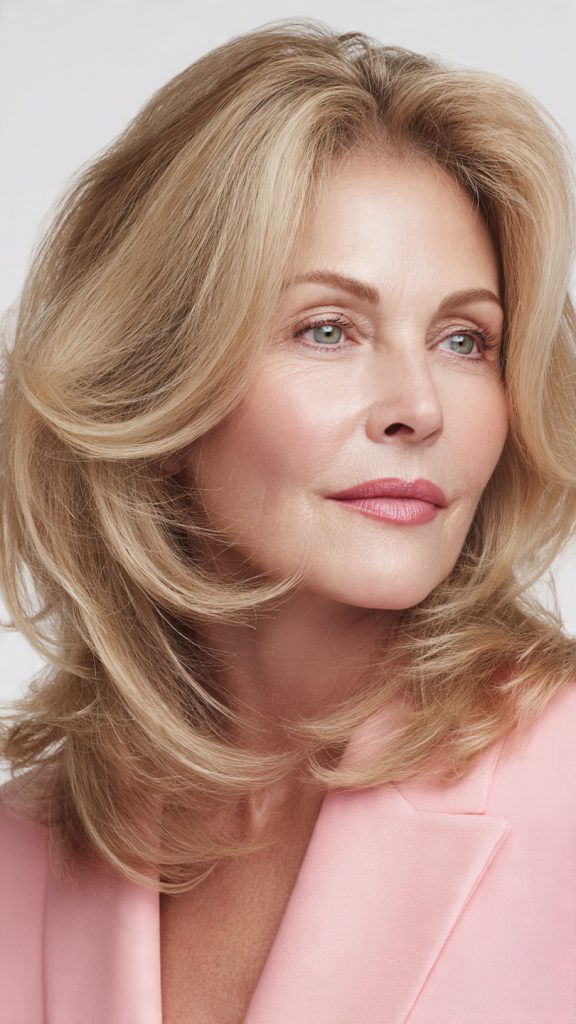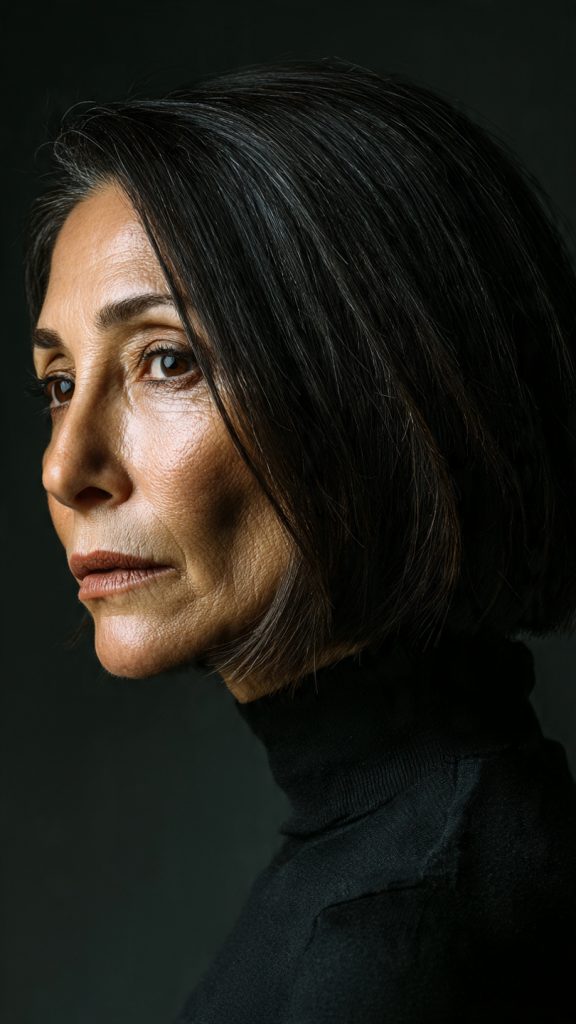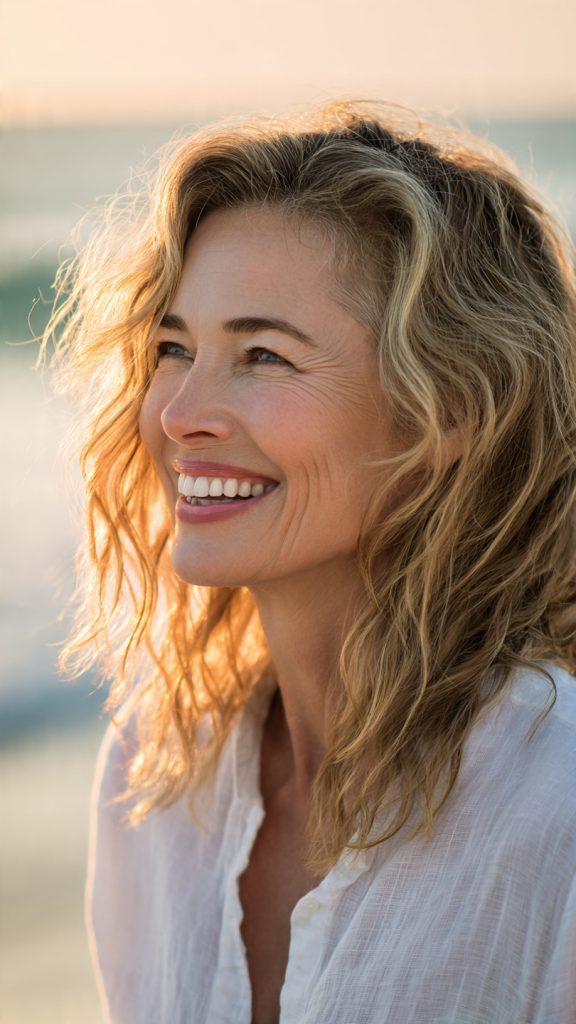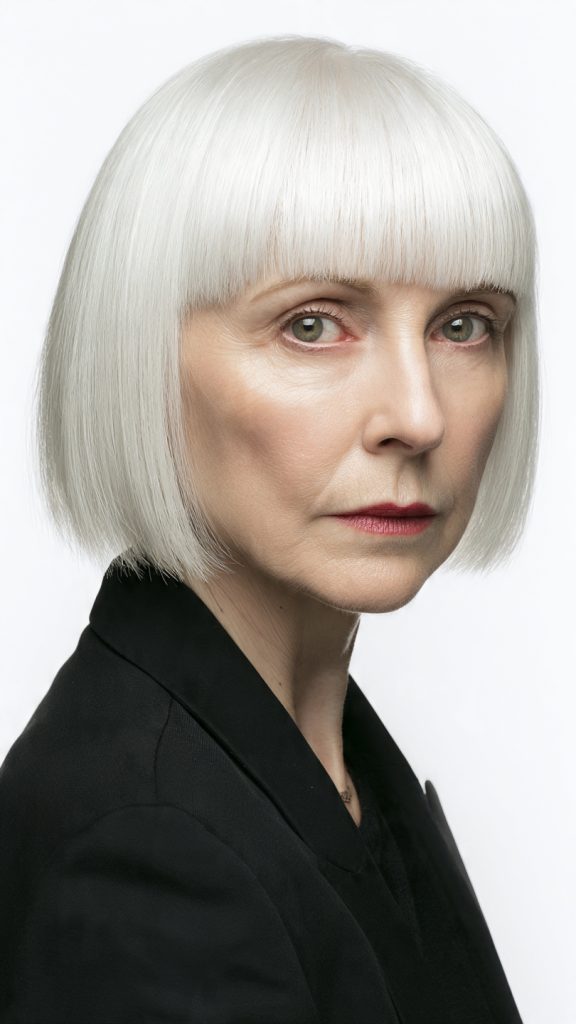
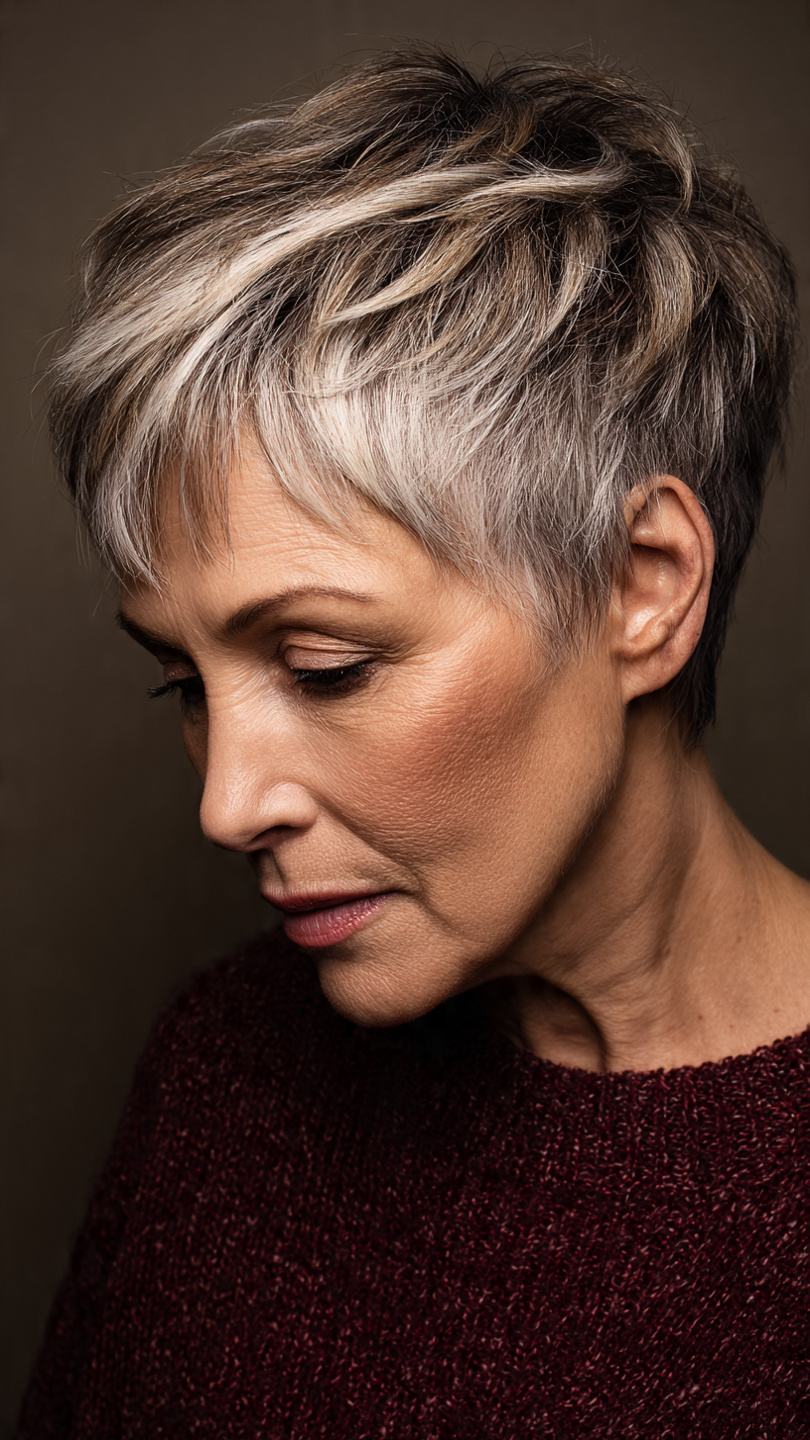
Category: Mom hairstyles

  • 13 Pixie Bob Haircuts for Older Women: The Perfect Blend of Short and Sophisticated

    13 Pixie Bob Haircuts for Older Women: The Perfect Blend of Short and Sophisticated

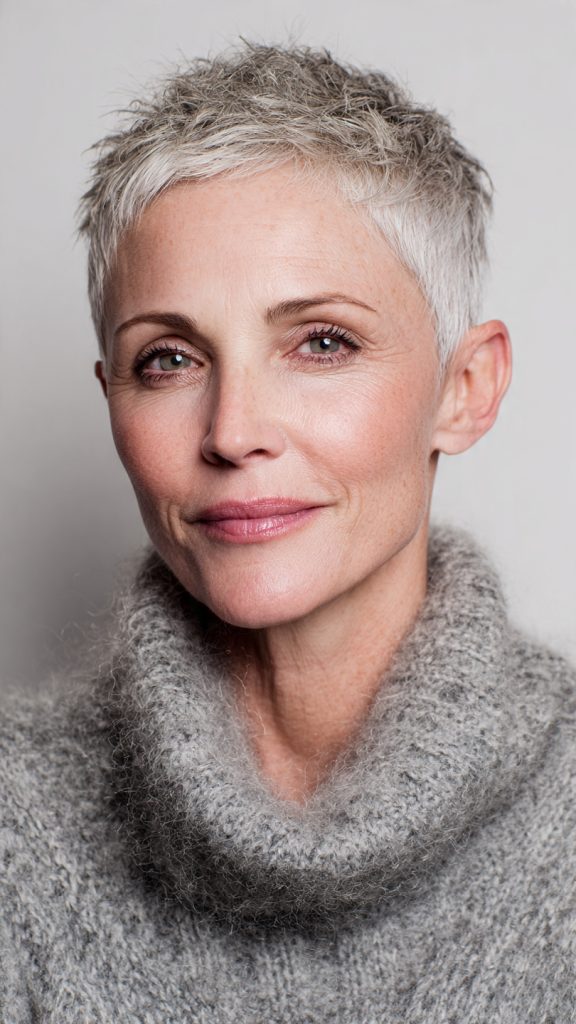
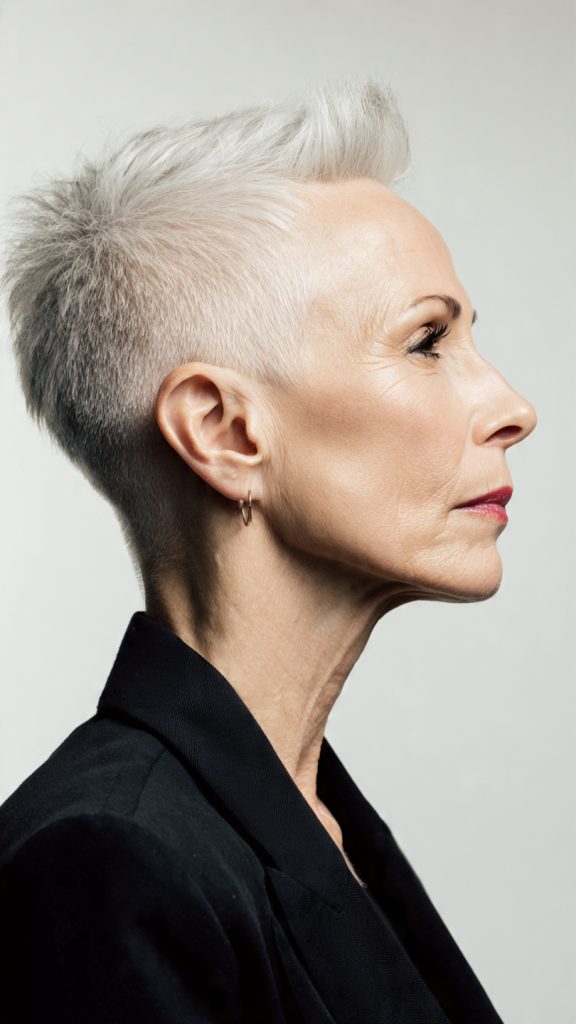
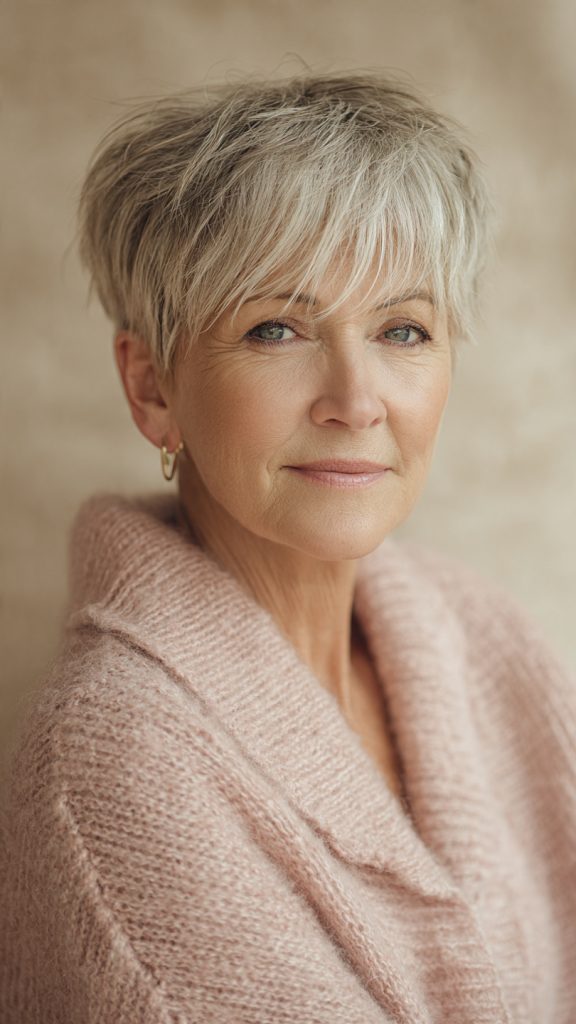
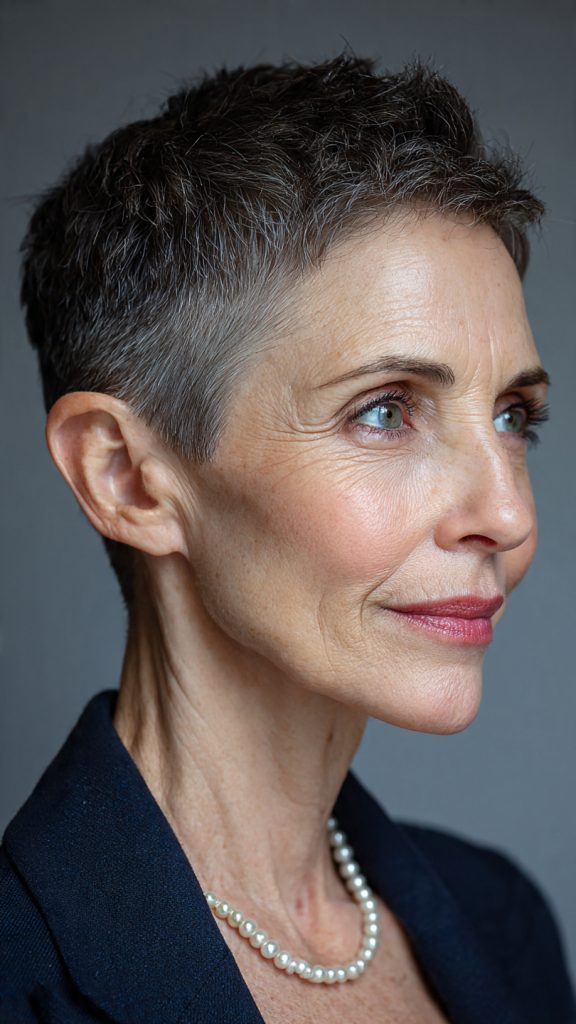
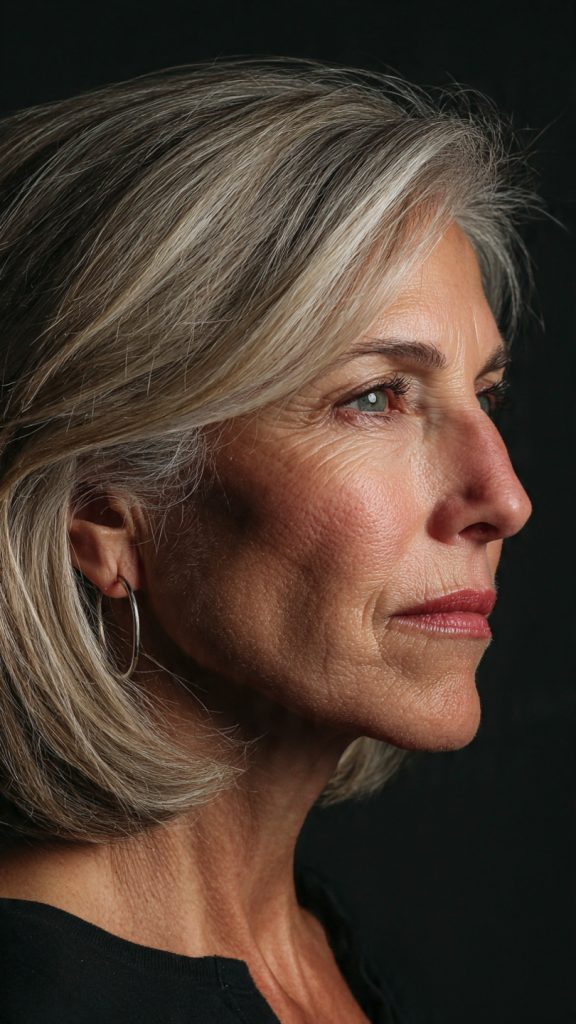
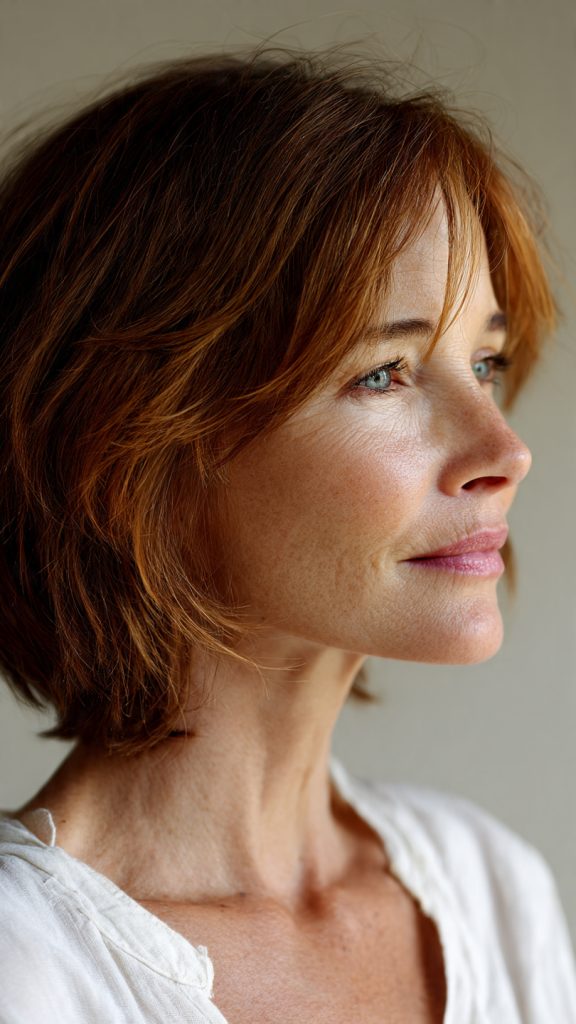
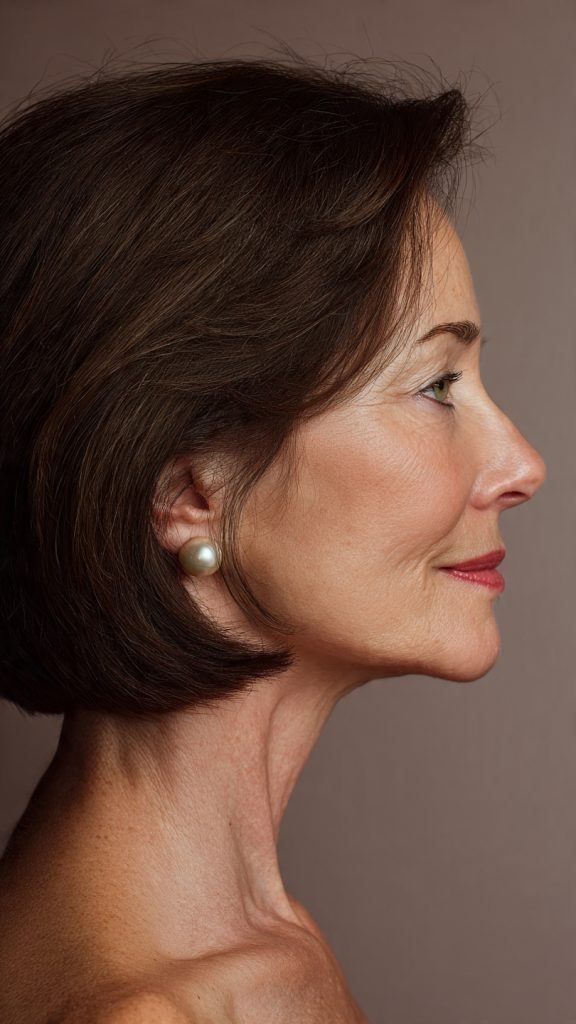
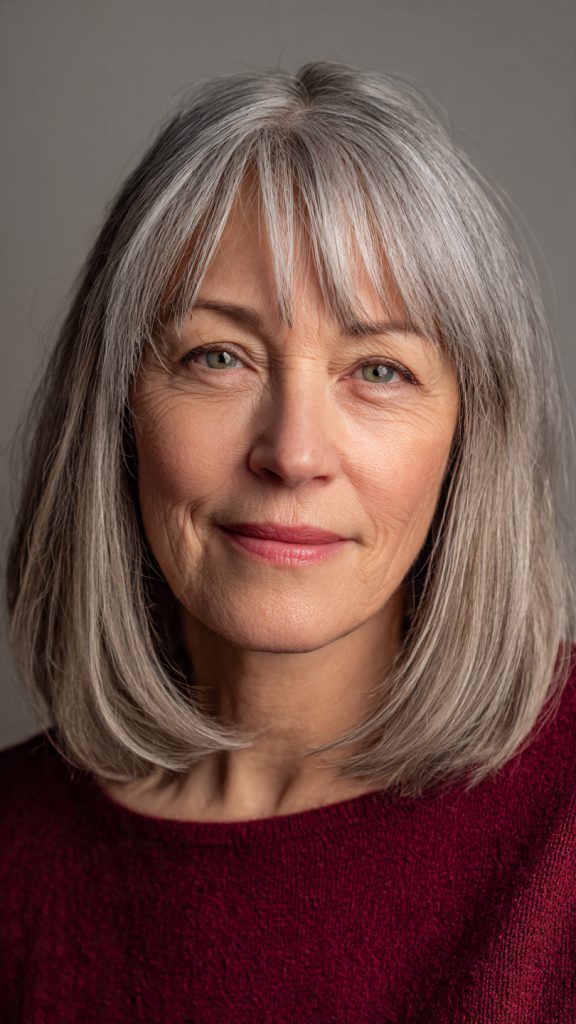
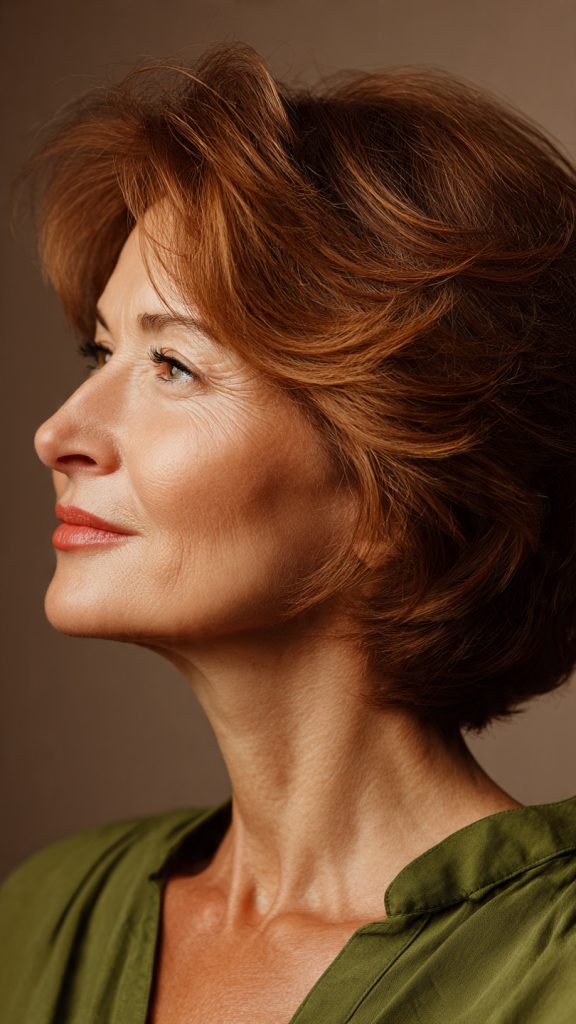
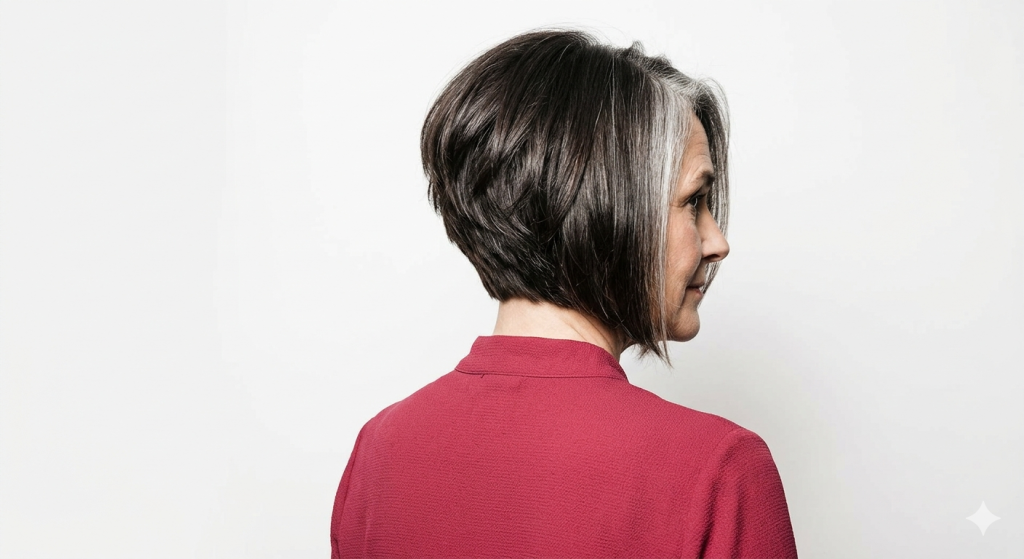
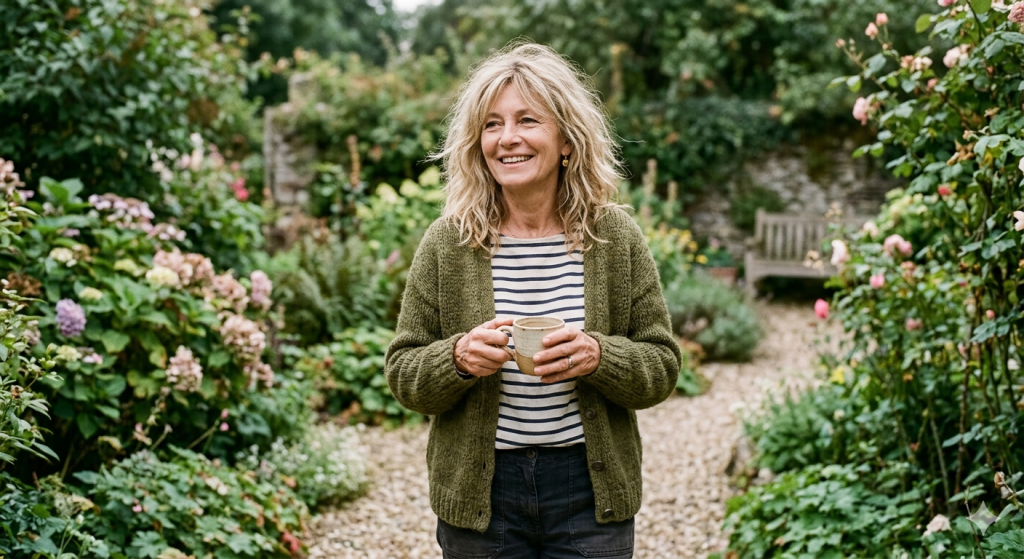
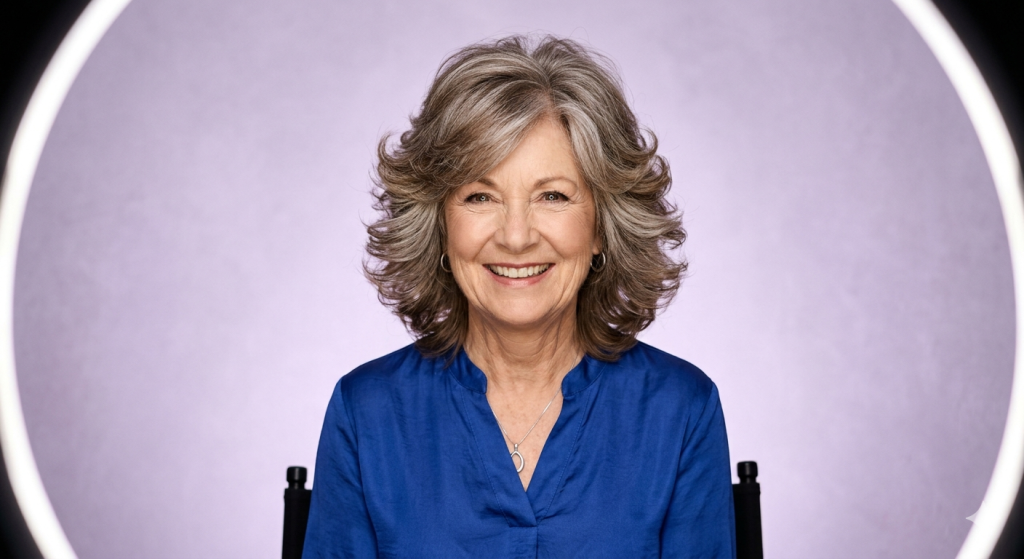
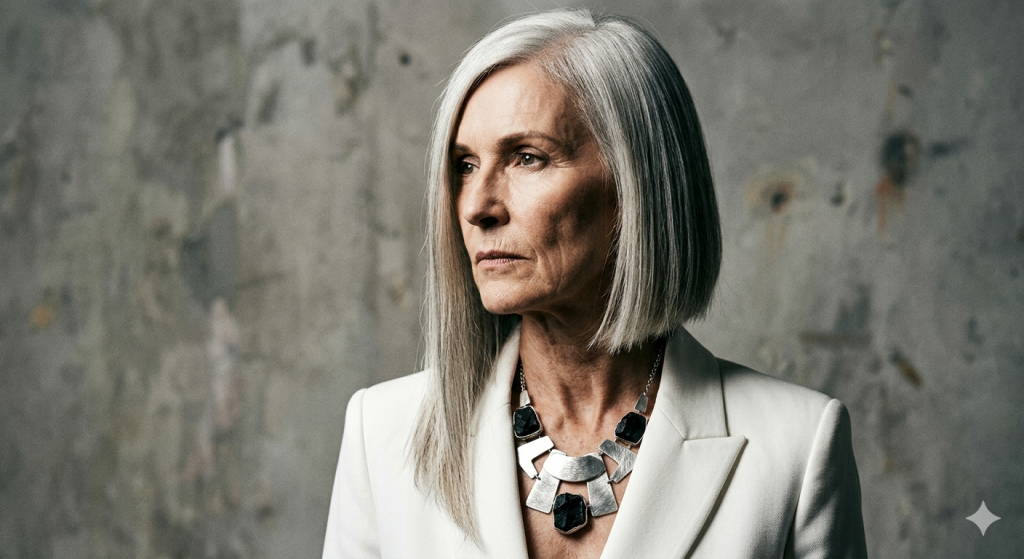
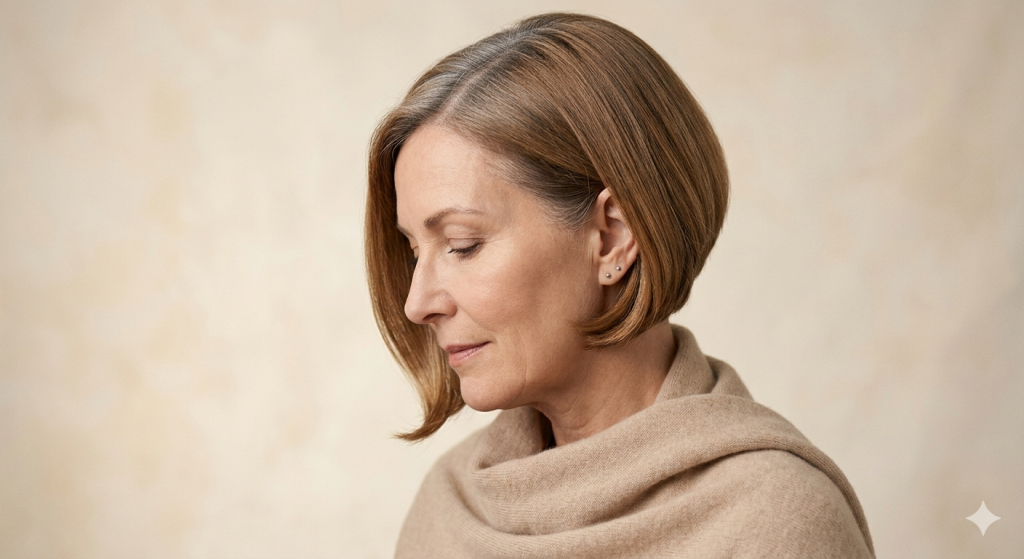
    There is a haircut that has quietly become the most requested style in salons serving women over 60 and 70. It is not quite a pixie. It is not quite a bob. It is the glorious hybrid known as the pixie bob—and it might just be the most flattering haircut for older women ever created. If you are an older woman looking for a cut that is stylish, age-appropriate without being boring, and incredibly low-maintenance, 13 pixie bob haircuts for older women will give you all the inspiration you need.

    The pixie bob takes the short, easy-to-manage back and sides of a classic pixie and combines them with the length, softness, and face-framing ability of a bob. The result is a cut that is shorter than a bob (so it does not drag the face down) but longer than a pixie (so it does not look severe or “old lady” harsh). It is the Goldilocks of short haircuts.

    If you are an older woman looking for a cut that is stylish, age-appropriate without being boring, and incredibly low-maintenance, 13 pixie bob haircuts for older women will give you all the inspiration you need. These cuts work beautifully on gray, silver, white, and colored hair—and they are especially forgiving for fine or thinning textures.


    Why the Pixie Bob Is Perfect for Older Women

    As we age, our priorities for hair change. We want:

    • Less time styling (but we still want to look polished)
    • Volume at the crown (to counteract flattening)
    • Softness around the face (to soften age-related angularity)
    • A cut that hides thinning (without looking like we are hiding)

    The pixie bob delivers on all four counts. Here is why:

    • The shorter back and sides remove weight, allowing the crown to lift naturally.
    • The longer top and front pieces can be styled to frame the face, softening jowls and wrinkles.
    • The length (usually between the ear and the chin) is short enough to be low-maintenance but long enough to pull forward or tuck behind an ear.
    • The versatility allows you to wear it sleek, messy, curly, or straight.

    Now, let us explore the 13 best variations.


    1. The Classic Pixie Bob
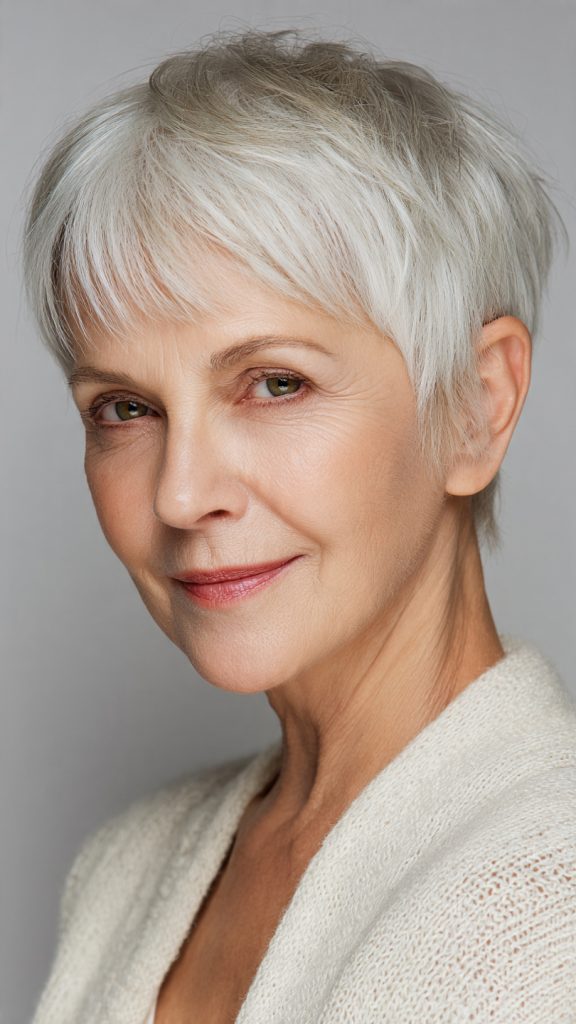
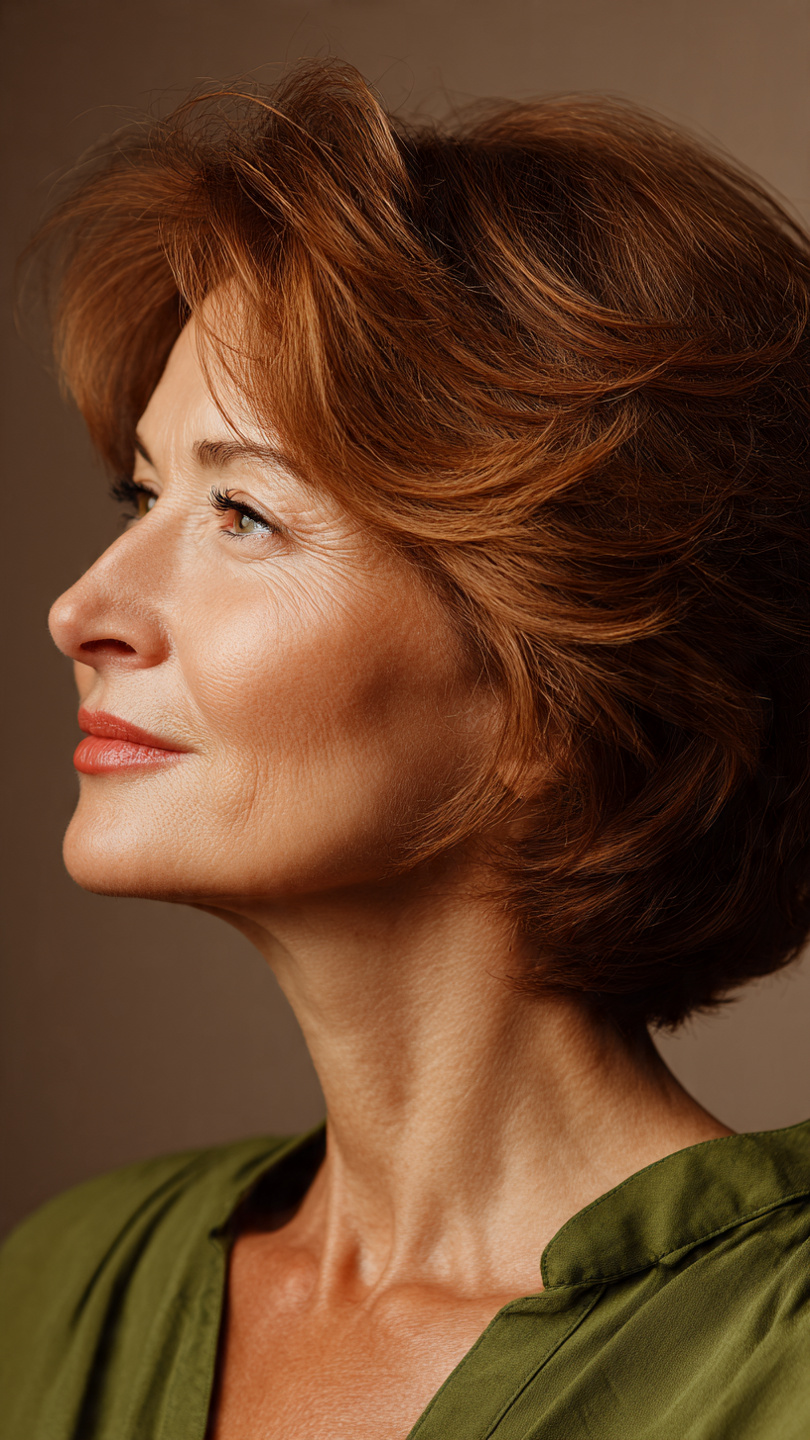
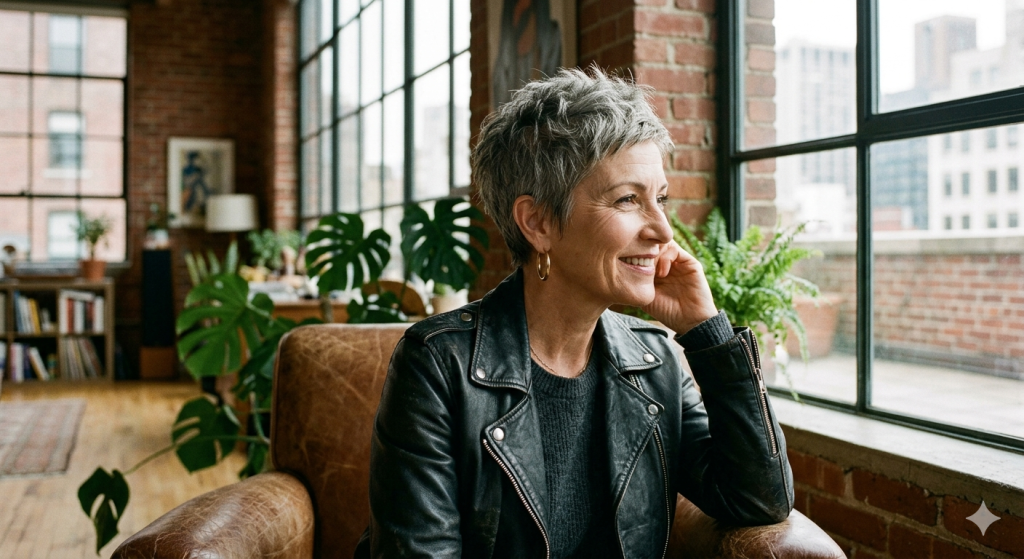
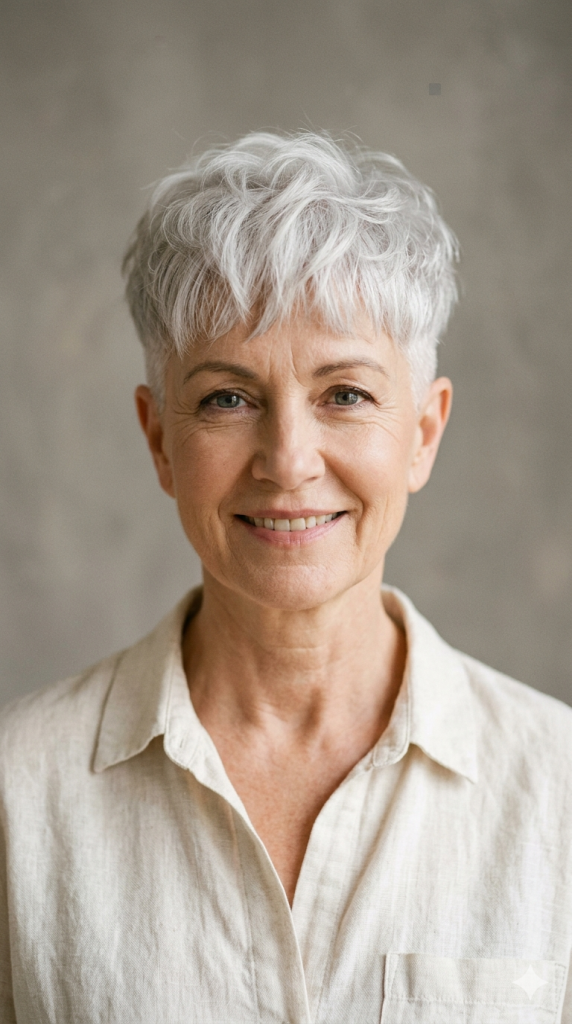
    This is the foundational cut from which all others derive. The back and sides are cut short (but not shaved—think finger-length, about 1 inch). The top and front gradually lengthen to the earlobe or the corner of the jaw.

    Why it works: It is universally flattering. The classic pixie bob works on every face shape, every hair texture, and every age from 50 to 90. The gradual transition from short back to longer front creates a beautiful, lifting silhouette.
    Styling tip: Blow-dry the crown forward using a small round brush. A light spritz of hairspray at the roots will hold the volume all day.

    2. The Textured Pixie Bob
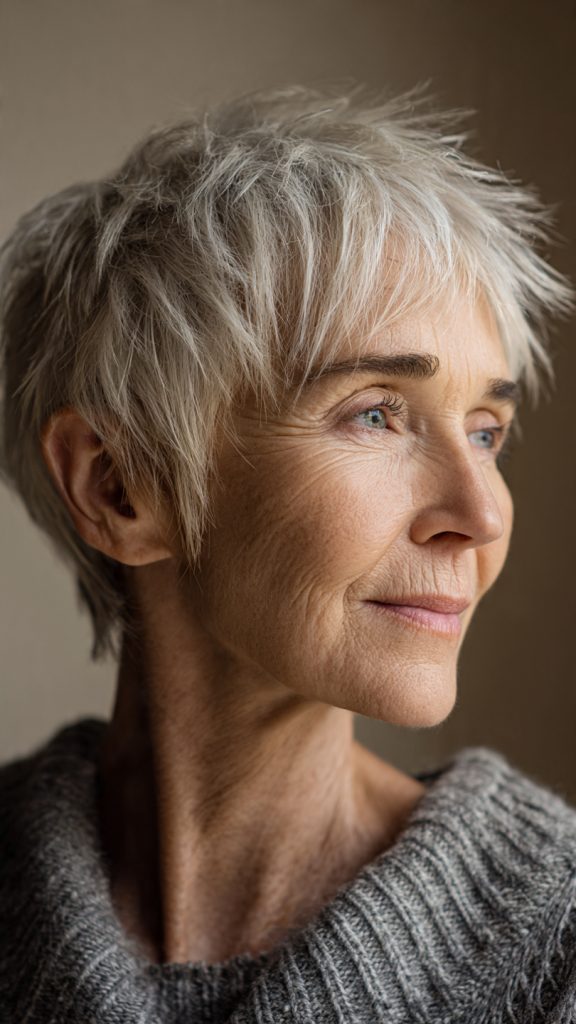
    Adding texture (choppy, piece-y layers) transforms the classic pixie bob into something more modern and edgy. The ends are point-cut or razor-cut to create soft, feathery tips.

    Why it works: Texture hides a multitude of sins—uneven density, fine strands, even a less-than-perfect haircut. The choppy ends reflect light in different directions, creating the illusion of thicker, more dynamic hair. Perfect for women with very fine hair.
    Styling tip: Use a texture paste or dry wax. Rub a pea-sized amount between your fingers and pull through the ends. Do not brush—use your fingers to create separation.

    3. The Curly Pixie Bob
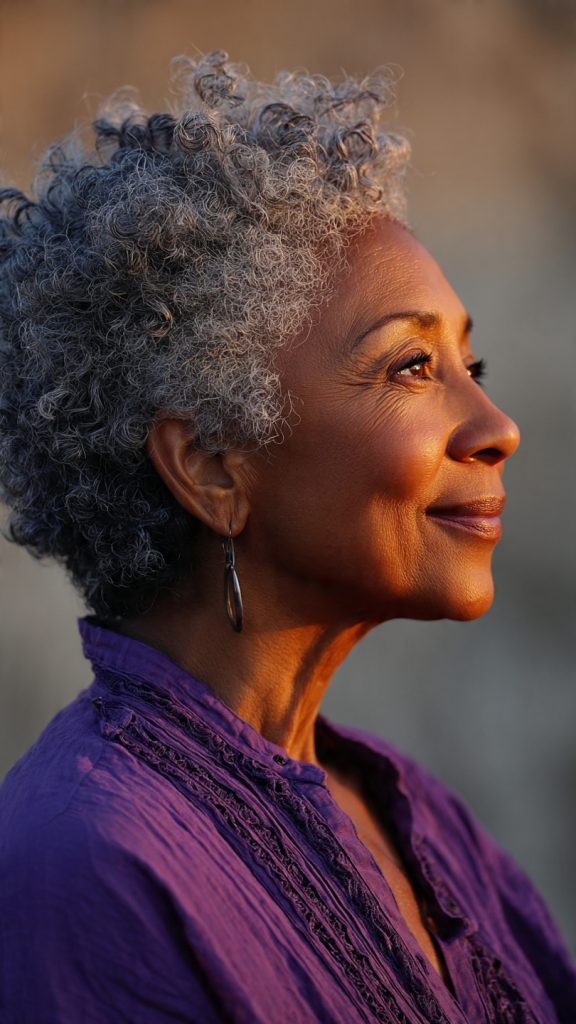
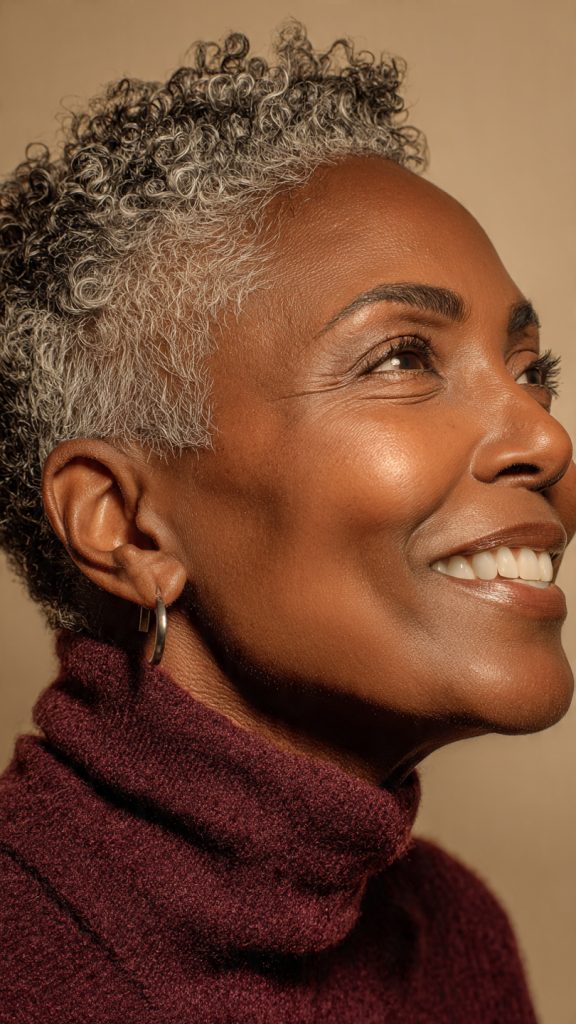
    Women with natural curls often shy away from short cuts, fearing the “poodle” effect. But a curly pixie bob is a revelation. The back and sides are cut short enough to prevent bulk, while the top and front are left longer to allow curls to form their natural shape.

    Why it works: Curls naturally shrink, so a pixie bob that looks chin-length when wet will spring to ear-length when dry. The result is a rounded, soft shape that frames the face beautifully without adding width at the sides.
    Styling tip: Apply a curl cream to soaking wet hair. Scrunch upward. Diffuse on low heat or air dry. Do not touch the curls while they dry—this prevents frizz.

    4. The Layered Pixie Bob
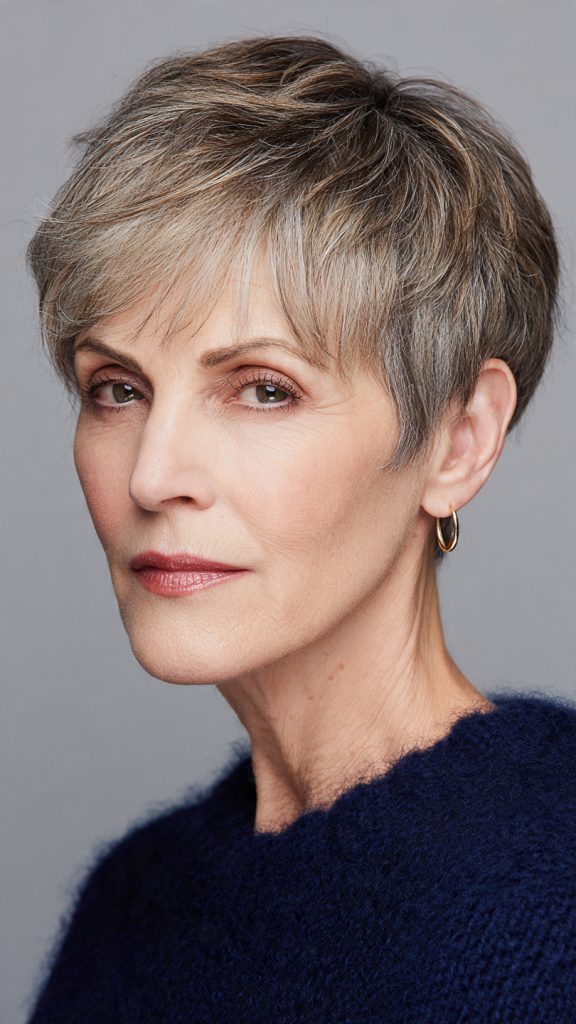
    Layers are the secret weapon of the pixie bob. Unlike a traditional bob that relies on a blunt line, the layered pixie bob uses internal and external layers to create movement, volume, and shape.

    Why it works: Layers remove weight from the densest parts of the hair (usually the crown and sides), allowing the hair to “stack” and lift. For older women with thinning hair, layers are essential for creating the illusion of density.
    Styling tip: Ask your stylist for “long layers” rather than short, choppy ones. Long layers maintain the shape of the bob while still providing lift. Blow-dry with a round brush, rolling the ends slightly under.

    5. The Side-Swept Pixie Bob
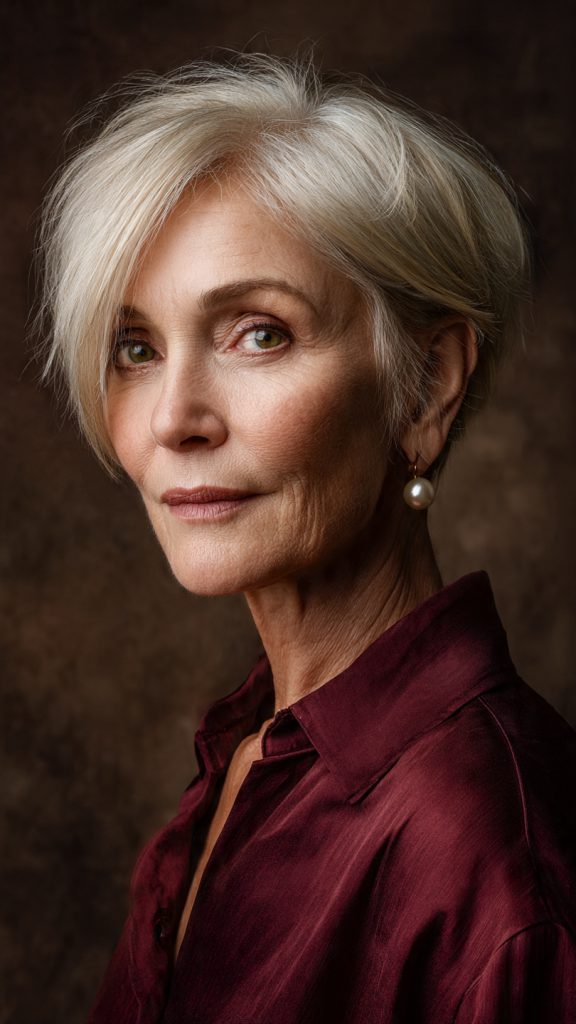
    In this version, the front pieces are cut longer on one side and swept dramatically across the forehead, creating a deep side part. The back and opposite side are cut shorter.

    Why it works: The side sweep covers forehead lines and draws the eye diagonally across the face, which is slimming. The asymmetry also adds visual interest, distracting from any facial asymmetry that comes with age.
    Styling tip: Blow-dry the long side-swept pieces using a flat brush, pulling them across your forehead. Lock the shape with a cool shot from your blow-dryer. A tiny drop of serum keeps the ends smooth.

    6. The Wispy Pixie Bob with Bangs
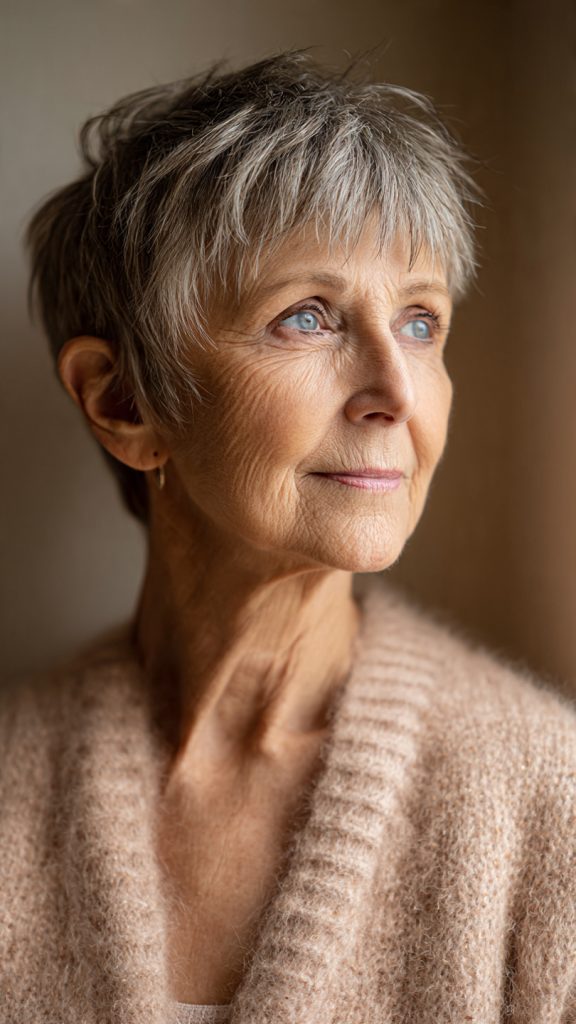
    Bangs are not just for young women. A wispy, feathery fringe (bangs) paired with a pixie bob is incredibly softening for older faces. The bangs are cut to graze the eyebrows, with soft, see-through ends.

    Why it works: Wispy bangs hide forehead lines and wrinkles without creating a heavy, opaque wall of hair. The “see-through” quality means they blend seamlessly with the rest of the cut. This is especially flattering for women with deep-set eyes or prominent brows.
    Styling tip: Blow-dry the bangs using a small round brush, directing the air downward. A light mist of dry shampoo on the bangs will keep them from looking oily between washes.

    7. The Stacked Pixie Bob
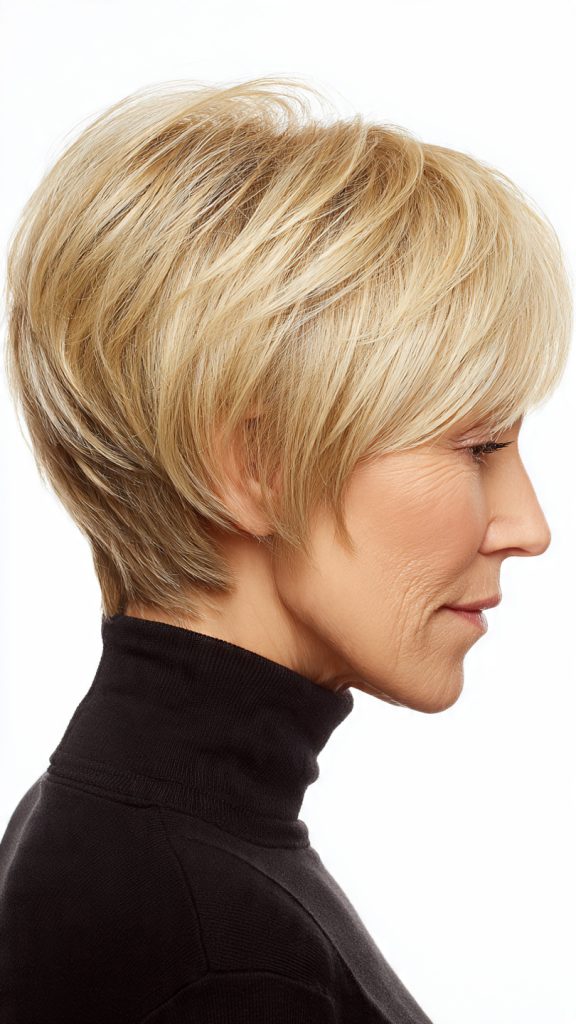
    The stacked pixie bob features tightly layered (stacked) sections at the back of the crown, creating a dramatic shelf of volume. The front remains longer, gradually lengthening to the chin.

    Why it works: Stacking is the most effective way to create crown volume for women with flat, fine, or thinning hair. The stacked layers literally push each other upward, creating lift that lasts all day. The longer front pieces balance the volume at the back.
    Styling tip: Blow-dry the stacked back section upside down. Use a flat brush to pull the hair away from the head. The stacking will do the rest of the work.

    8. The Asymmetrical Pixie Bob
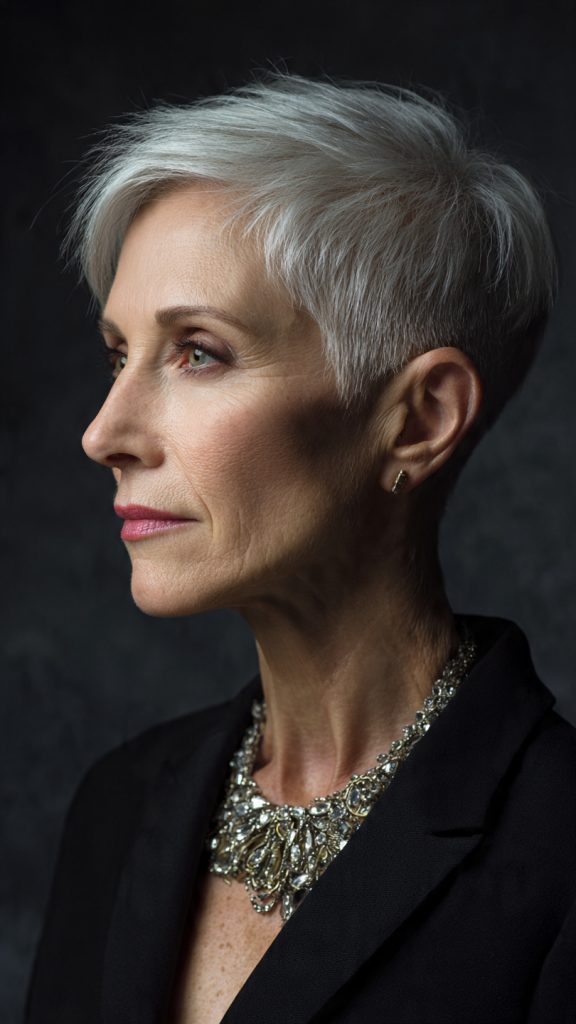
    One side of this cut is noticeably shorter than the other. The short side might be cropped to the ear, while the long side reaches the chin or jaw. The back is typically short on both sides.

    Why it works: Asymmetry is inherently modern and eye-catching. It distracts from age-related concerns (jowls, sagging neck) because the eye is busy following the dramatic line of the cut. It also allows you to “hide” a weaker side of your face behind the longer pieces.
    Styling tip: Keep the longer side smooth and sleek. The shorter side can be texturized for contrast. A deep side part enhances the asymmetry.

    9. The Sleek Pixie Bob
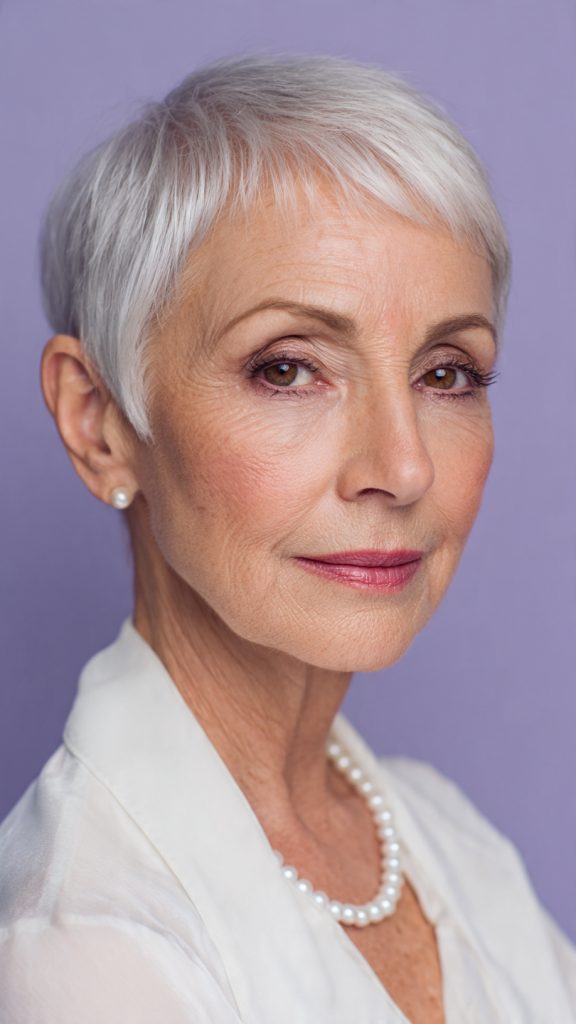
    For women who prefer a polished, professional look, the sleek pixie bob is cut with minimal layers and styled smooth using a flat iron or round brush. The perimeter is clean and defined.

    Why it works: Sleek hair reads as healthy and deliberate. The lack of visible layers makes fine hair look denser because the eye follows a solid line rather than getting lost in choppy ends. This is the pixie bob equivalent of a power suit.
    Styling tip: Use a heat protectant and a flat iron on low heat. Run the iron over small sections, turning the wrist slightly at the ends to create a soft bend. Finish with a lightweight shine spray.

    10. The Messy Pixie Bob
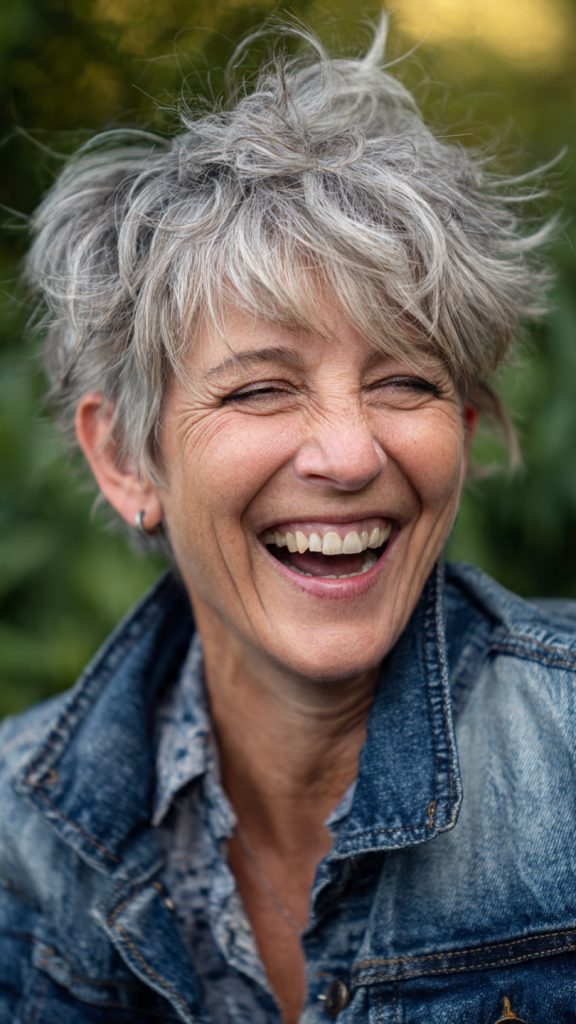
    The opposite of sleek. The messy pixie bob is cut with heavy texturizing and styled with fingers, not brushes. The goal is effortless, undone volume.

    Why it works: Perfection adds years. A slightly messy, tousled cut looks youthful, relaxed, and confident. It requires almost no daily effort—just a shake of the head and a bit of texture spray. Ideal for women with active lifestyles.
    Styling tip: Wash and condition at night. In the morning, spritz with water and scrunch in a sea salt spray (for fine hair) or a light gel (for thicker hair). Air dry or diffuse. Do not brush.

    11. The Long Pixie Bob (The “Pob”)
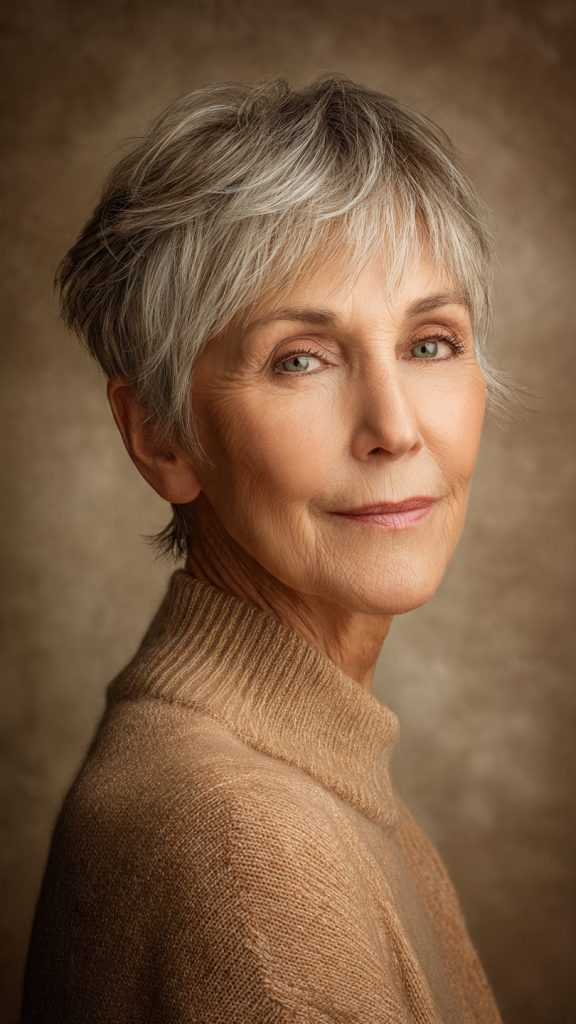
    The “pob” (pixie bob hybrid that leans longer) keeps the back short but allows the front to extend to the chin or even the collarbone. It is essentially a very short bob with a pixie-inspired back.

    Why it works: For women who love the idea of a pixie but are nervous about going too short, the pob is the perfect gateway. You get the volume and lift of a pixie at the back, with the face-framing length of a bob at the front.
    Styling tip: The length difference between front and back is significant (3-4 inches). Blow-dry the back forward and up. Blow-dry the front pieces downward and slightly inward.

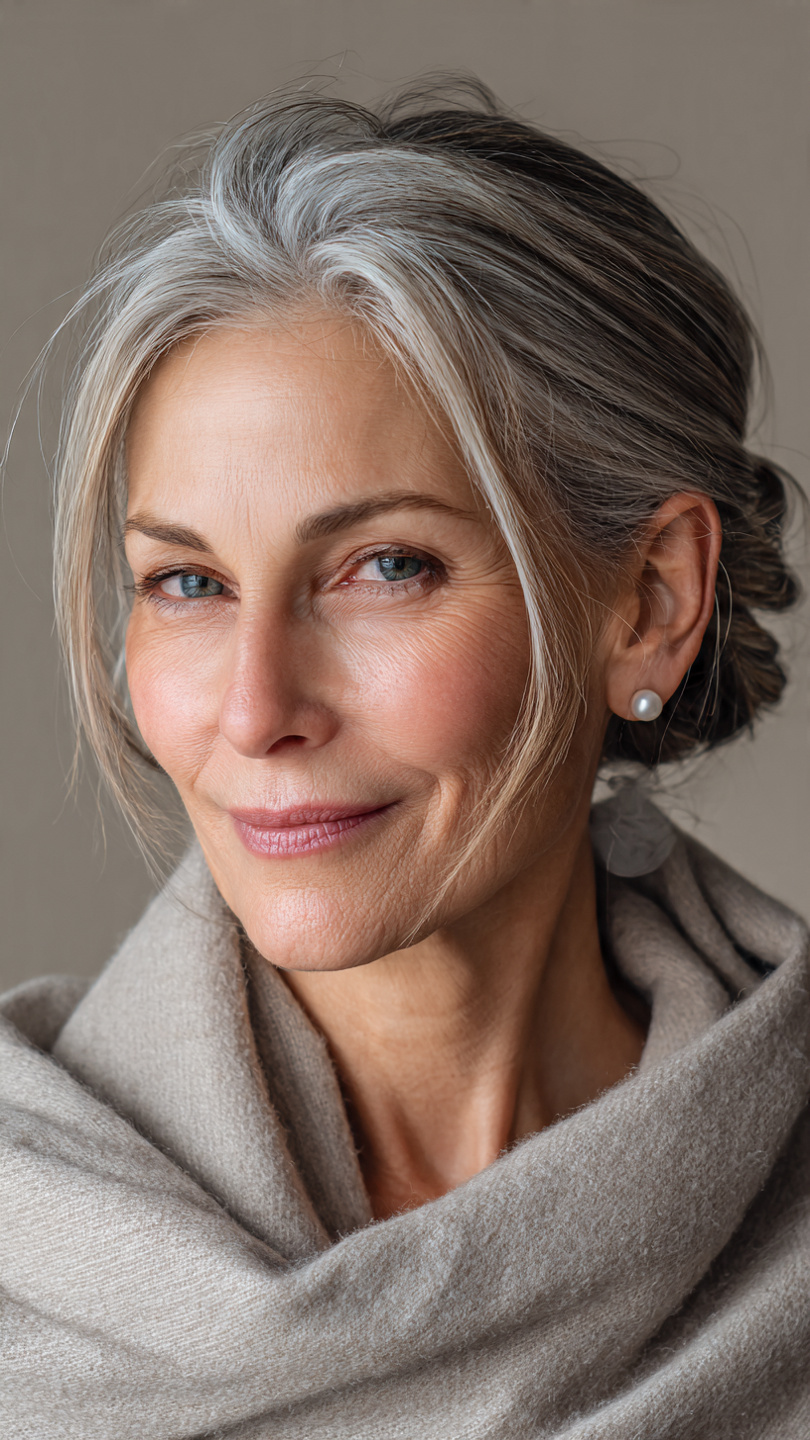
    12. The Gray-Friendly Pixie Bob
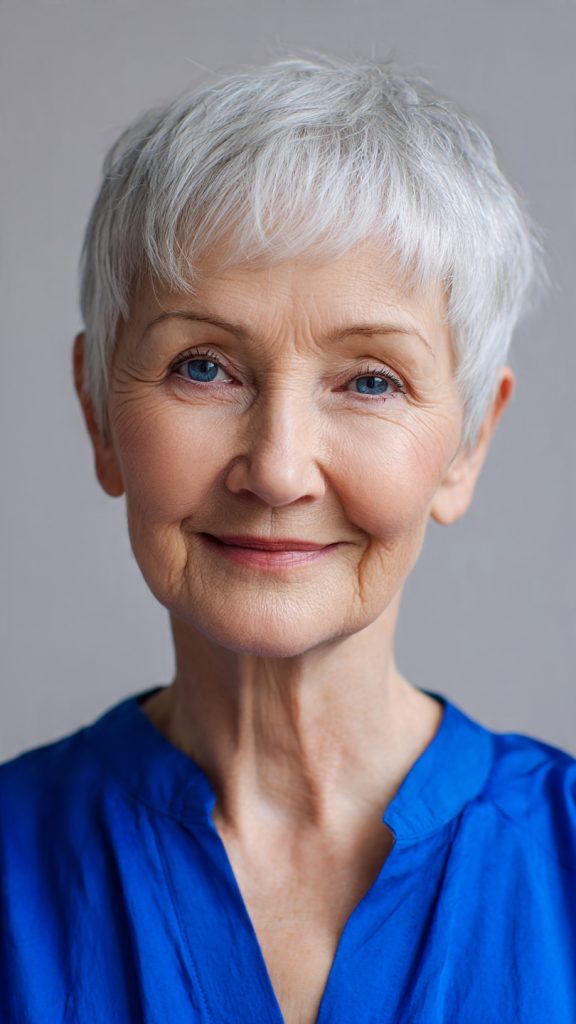
    This cut is designed specifically to celebrate silver, white, and gray hair. The pixie bob shape is kept relatively simple (minimal layers, clean perimeter) so that the natural color variations of gray hair become the star.

    Why it works: Gray hair is often coarser and more wiry than pigmented hair. A simpler cut with fewer layers allows the natural texture of gray hair to shine without fighting against choppy ends. The pixie bob length keeps the coarser gray strands manageable.
    Styling tip: Use a purple shampoo once a week to neutralize yellowing. A drop of argan oil on the ends will tame wiry gray strands without weighing them down.

    13. The Volume-Focused Pixie Bob
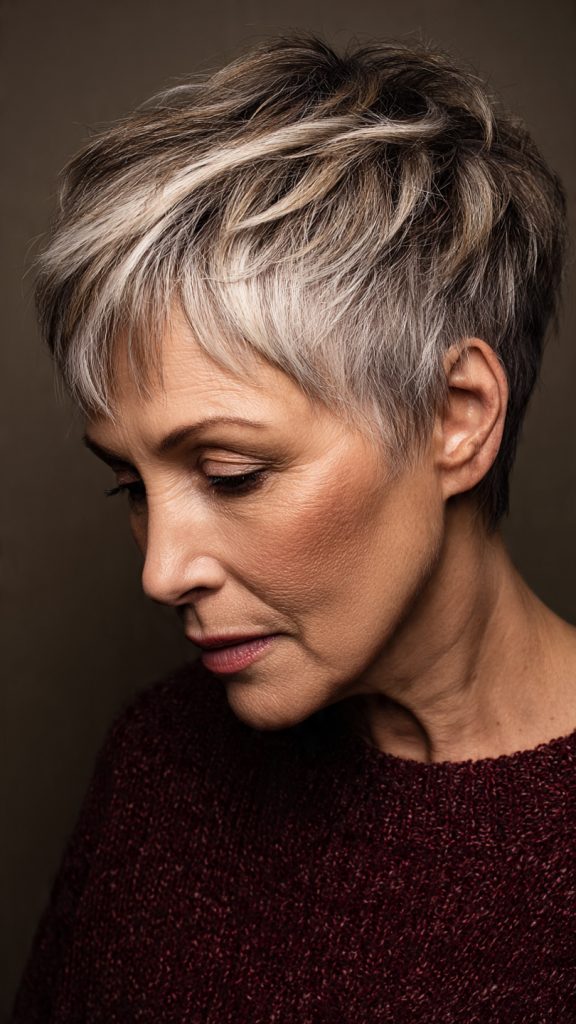
    This cut is engineered for maximum lift at the crown. The back is cut very short (almost cropped), while the top is layered aggressively to create height. The front pieces are kept longer to balance the volume.

    Why it works: For women with extremely fine or thinning hair, volume is the primary goal. This cut sacrifices length at the back to create a dramatic “pouf” at the crown. The longer front pieces provide enough length to sweep across the forehead or tuck behind an ear.
    Styling tip: Use a root-lifting spray on damp hair. Blow-dry the crown section straight up, using a small round brush. Pin the dried crown in a clip while you finish the rest. Release for maximum, long-lasting volume.


    How to Choose the Right Pixie Bob for Your Face Shape

    Face ShapeBest Pixie Bob Option
    RoundAsymmetrical, side-swept, or long pixie bob (pob)
    OvalAlmost anything—classic, textured, or sleek
    SquareWispy with bangs, soft layers, or curly pixie bob
    HeartSide-swept, stacked, or volume-focused
    Long/OblongClassic, sleek, or gray-friendly (adds width)

    Maintaining Your Pixie Bob Over 70

    • Trim every 4-6 weeks: The pixie bob loses its shape faster than longer cuts. Regular trims are non-negotiable.
    • Use lightweight products: Heavy creams and oils will flatten the crown. Stick to mousses, sprays, and powders.
    • Embrace dry shampoo: Spray it on clean roots to give them grip and texture. It prevents flatness before it starts.
    • Protect your scalp: The shorter cut exposes more scalp to the sun. Wear a hat or use SPF spray designed for hair parts.

    Conclusion

    The pixie bob is proof that older women do not have to choose between short and stylish. It offers the ease of a pixie with the softness of a bob, making it one of the most versatile and flattering haircuts for women over 60, 70, and beyond.

    Whether you choose the timeless elegance of the classic pixie bob, the modern edge of the textured version, the bold asymmetry of an asymmetrical cut, or the effortless cool of a messy pixie bob, you are choosing a haircut that respects your age while celebrating your spirit. The 13 pixie bob haircuts for older women above are waiting for you. Book that salon appointment. You have earned this.
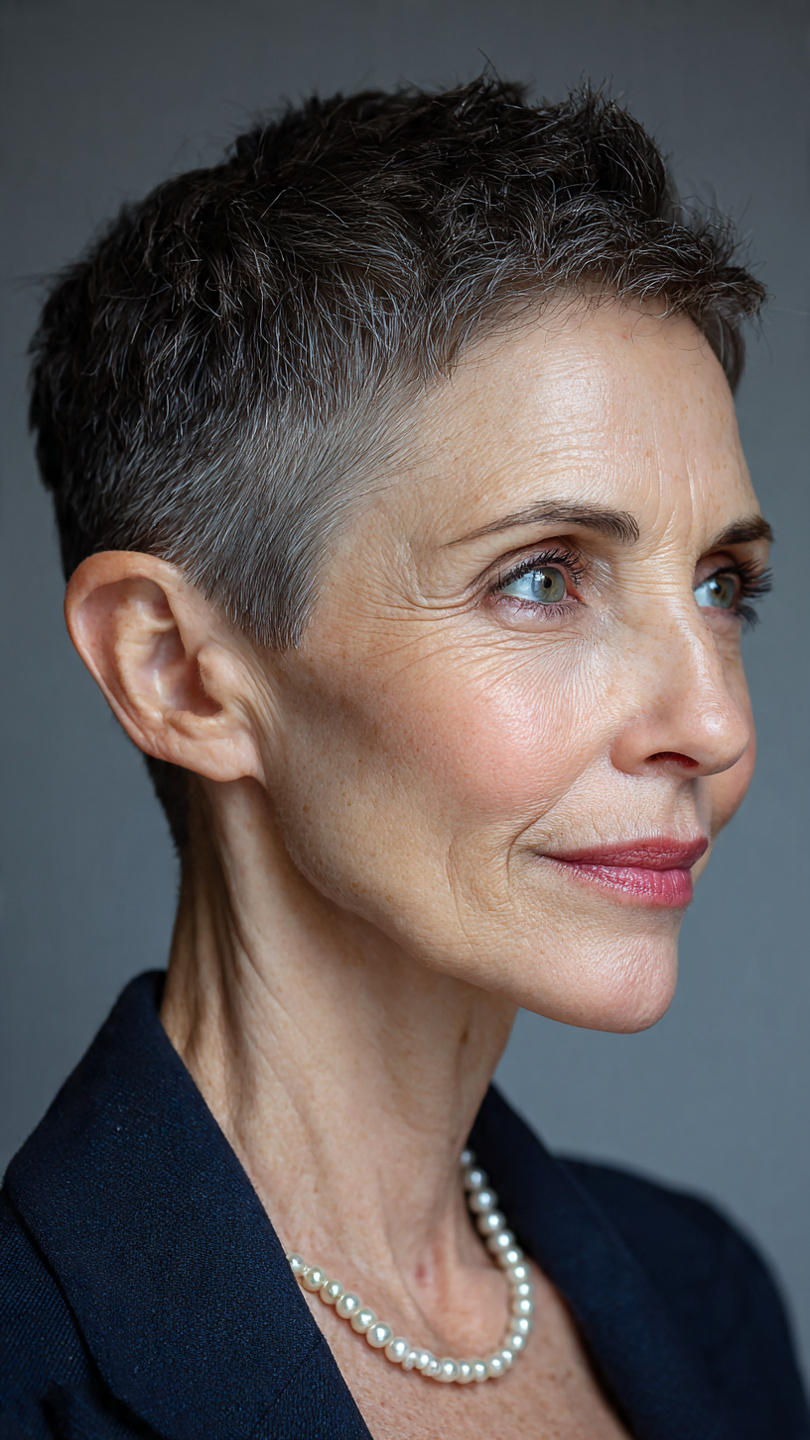
  • 10 Undercut Pixie Haircuts for Over 50: Edgy, Lightweight, and Age-Defying

    10 Undercut Pixie Haircuts for Over 50: Edgy, Lightweight, and Age-Defying

    The pixie cut has long been a favorite for women over 50. It is practical, low-maintenance, and instantly lifts the face. But the classic pixie can sometimes feel… predictable. Enter the undercut pixie—a modern, edgy, and surprisingly liberating variation that is taking the over-50 crowd by storm. If you are over 50 and tired of the same soft, conservative cuts, 10 undercut pixie haircuts for over 50 will show you how to embrace edge without looking like you are trying to be 25.

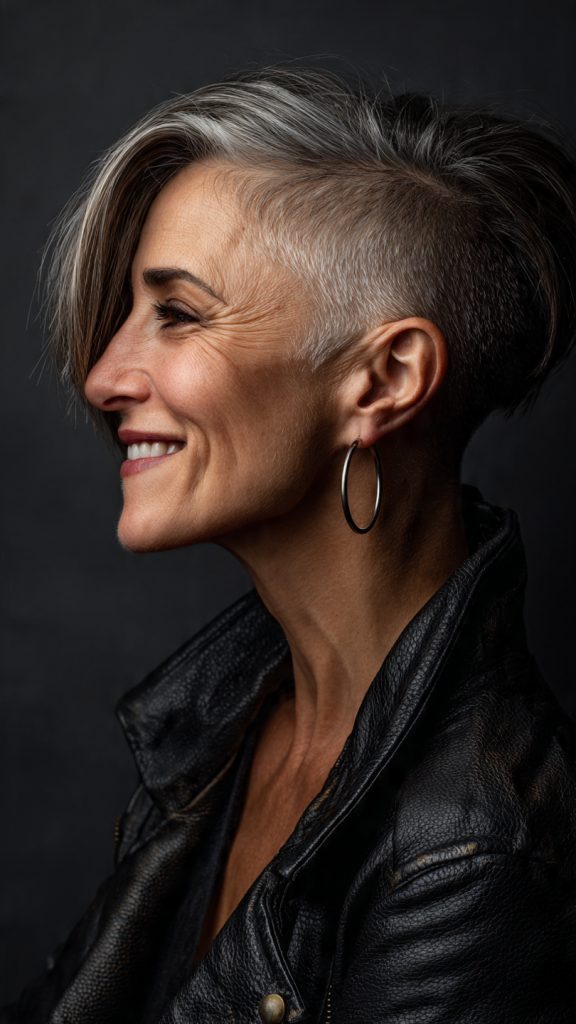
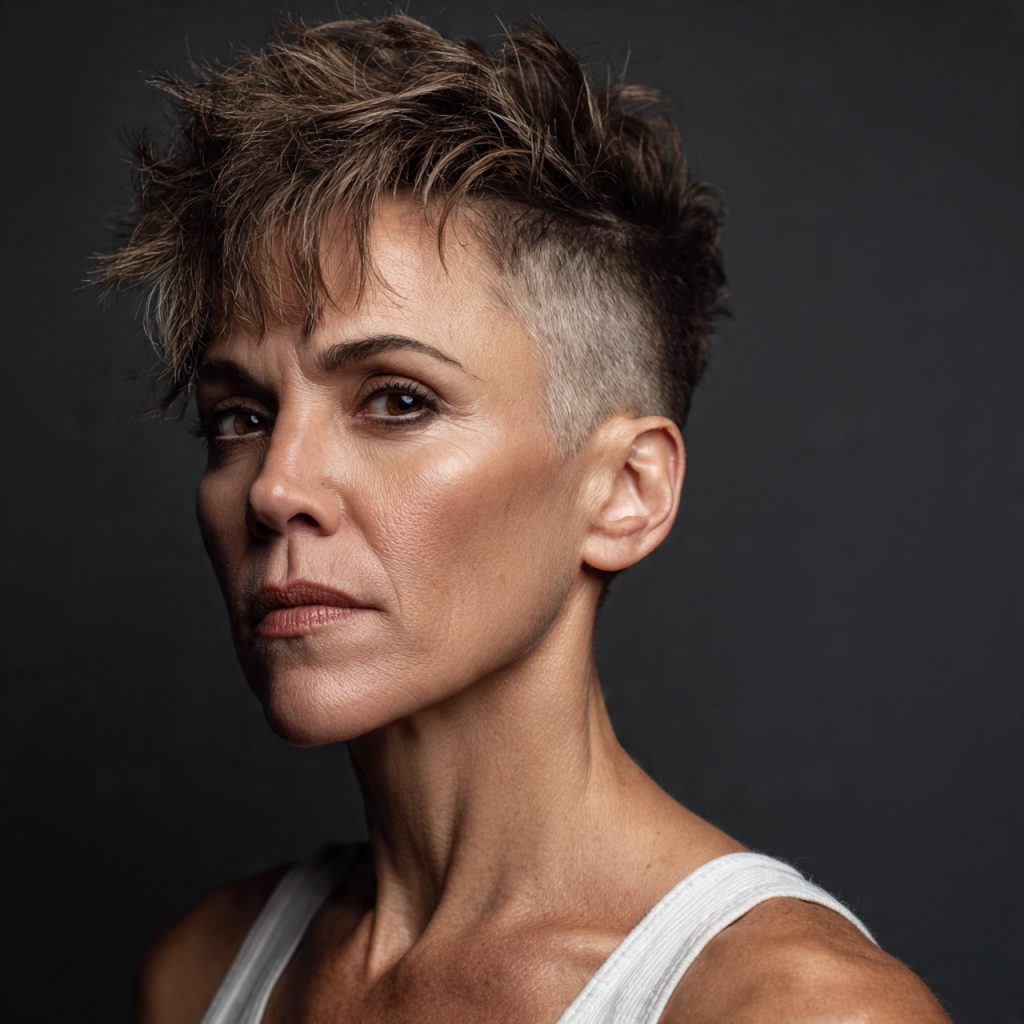
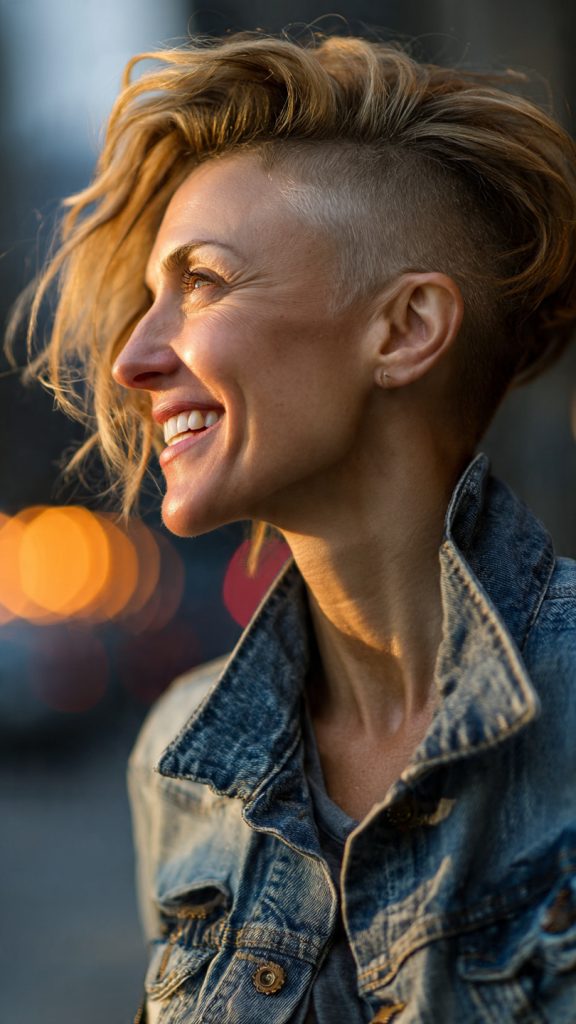
    An undercut pixie is exactly what it sounds like: a pixie cut where the hair at the nape of the neck and/or the sides is shaved or clipped very short (often with clippers), while the top remains longer and textured. The contrast between the shaved sections and the longer top creates drama, volume, and a youthful sense of rebellion.

    If you are over 50 and tired of the same soft, conservative cuts, 10 undercut pixie haircuts for over 50 will show you how to embrace edge without looking like you are trying to be 25. These cuts work brilliantly for fine hair (the undercut removes weight, allowing the top to lift), thick hair (the undercut reduces bulk), and everything in between. Let’s explore.

    Why an Undercut Pixie Works for Women Over 50

    The undercut pixie solves several problems that women over 50 face with their hair:

    • Weight removal: Fine or thinning hair is often weighed down by its own length. An undercut removes the heaviest part (the nape), allowing the top to float and lift.
    • Cooling effect: Hot flashes? The shaved nape keeps you significantly cooler.
    • Volume illusion: The contrast between the shaved sides and the longer top makes the top look twice as thick.
    • Low maintenance: The shaved sections require no styling—just a quick buzz every few weeks.
    • Face lift: The vertical line of the undercut draws the eye upward, creating a subtle lifting effect.

    The key is choosing the right undercut for your face shape, hair texture, and comfort level. Below are ten distinct variations.

    1. The Classic Nape Undercut Pixie

    This is the most subtle and beginner-friendly undercut. The top remains a classic, soft pixie (texturized, finger-length), while only the very nape of the neck (the bottom inch) is shaved or clipped to a #2 or #3 guard.

    Why it works: From the front, this looks like a normal pixie. The undercut is a secret—only visible when you turn around or pull your hair up. It removes the heavy, often frizzy hair at the nape that can make pixies look bulky.
    Styling tip: Style the top with a light mousse and finger-comb. The undercut requires no styling. Visit your barber or stylist every 3-4 weeks to maintain the shaved nape.

    2. The Side-Swept Undercut Pixie

    In this version, one side of the head (usually the side you part away from) is shaved or clipped very short, while the longer top is swept dramatically to the opposite side.

    Why it works: This cut creates maximum asymmetry, which is highly flattering for round or square faces. The deep side sweep covers the shaved side partially, creating mystery and movement. It is bold but not intimidating.
    Styling tip: Use a strong-hold but lightweight pomade to sweep the long top across the shaved side. The contrast between the shaved section and the swept hair is the focal point.

    3. The Curly Undercut Pixie

    Women with natural curls often avoid short cuts, fearing the “triangle head” effect. An undercut pixie is actually a curly girl’s best friend. The undercut removes the bulk at the sides and nape, allowing the curly top to sit in a defined, rounded shape.

    Why it works: Curls have volume naturally. By shaving the sides, you eliminate the wide, mushroom-like silhouette that curly hair can create. The result is a clean, defined shape where the curls sit precisely where you want them.
    Styling tip: Hydrate the curls with a leave-in conditioner, then diffuse upside down. The shaved sides will be visible, so keep them clean-shaven for a sharp contrast.

    4. The Textured Top Undercut Pixie

    This cut focuses all the attention on the top. The undercut (sides and nape) is shaved very short (often a #1 or #0 guard), while the top is left longer (1.5 to 3 inches) and heavily texturized with point-cutting or razor cutting.

    Why it works: The extreme contrast between the near-bald sides and the choppy, piece-y top creates high-fashion editorial energy. It is perfect for women with very fine hair because the top, freed from all surrounding weight, stands up like never before.
    Styling tip: Use a matte clay or texture powder on the top. Rub between your fingers and pull the top into spikes or soft peaks. The messier, the better.

    5. The Disconnected Undercut Pixie

    A “disconnected” cut means there is no gradual blending between the shaved sections and the longer top. The line is sharp, obvious, and intentional—like a line drawn in the sand.

    Why it works: The hard line creates graphic, architectural interest. This is for the confident woman who wants her hair to make a statement. The disconnect also allows the top to be significantly longer than in a traditional pixie (think 3 to 4 inches).
    Styling tip: Keep the top smooth and sleek to emphasize the sharp disconnect. Use a flat iron to keep the longer section perfectly straight. The shaved side should be freshly buzzed.

    6. The Fringed Undercut Pixie

    This version keeps a soft, wispy fringe (bangs) across the forehead, while the sides and nape are undercut. The top is medium-length and texturized, blending into the fringe.

    Why it works: The fringe softens the edginess of the undercut, making this style more approachable for women who love their bangs. It hides forehead lines while the undercut provides the modern edge. Best for oval or heart-shaped faces.
    Styling tip: Blow-dry the fringe forward with a small round brush. The rest of the top can be messily finger-styled. The contrast between the soft fringe and the shaved sides is stunning.

    7. The Long Top Undercut Pixie

    For women who are not ready to commit to a short top, this version keeps the top significantly longer—think 4 to 5 inches, almost a mini-mohawk length. The sides and nape are shaved or clipped very short.

    Why it works: The long top can be styled in multiple ways: swept to the side, pulled forward into a pseudo-fringe, or even gathered into a tiny ponytail (yes, with an undercut). It offers versatility that most pixies do not.
    Styling tip: Experiment with different partings. A middle part with long top pieces falling on both sides of a shaved undercut is very avant-garde. A deep side part is more classic.

    8. The Tapered Undercut Pixie

    Unlike the disconnected version, the tapered undercut gradually blends from the shaved sections into the longer top. There is no hard line—just a smooth, graduated transition.

    Why it works: This is the most elegant and professional undercut. It is subtle enough for corporate environments but still edgy. The taper creates a beautiful silhouette that follows the shape of your head. Ideal for fine or thinning hair.
    Styling tip: This cut requires a skilled barber. Ask for a “skin fade” or “taper fade” that starts at a #0 at the bottom and graduates to a #4 or #5 before blending into the top. Style the top with a light gel for a clean finish.

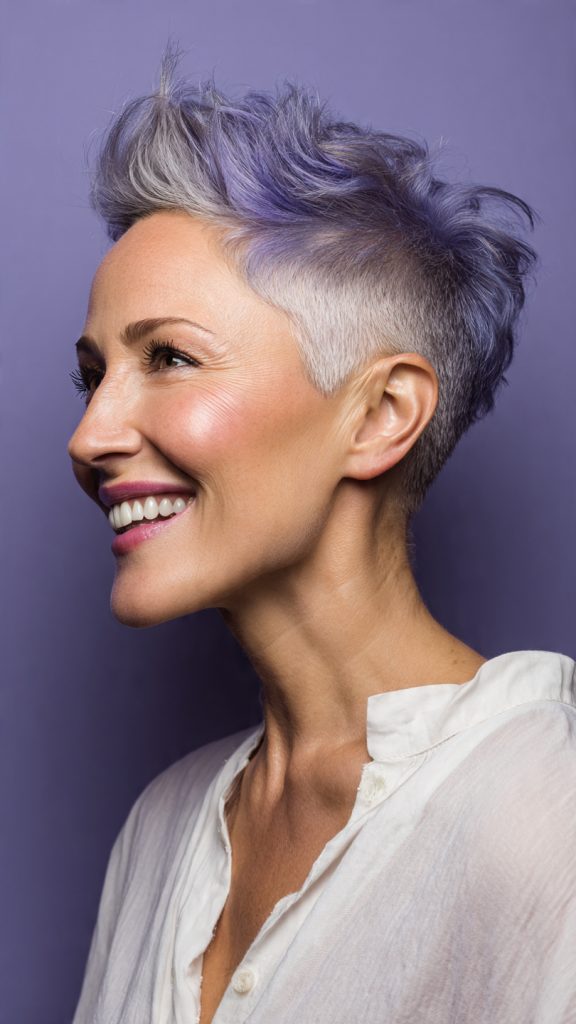
    9. The Colored Undercut Pixie

    The undercut itself is a design opportunity. Many women over 50 use the shaved sections as a canvas for a pop of color—pastel pink, lavender, silver blue, or even a bold copper. The top remains a natural color (or vice versa).

    Why it works: The shaved hair grows back quickly, so temporary or semi-permanent color on the undercut is low-risk. It adds a playful, youthful energy without committing to an all-over color change. The contrast between the natural top and the colored undercut is eye-catching.
    Styling tip: Use a semi-permanent color (washes out in 4-6 weeks) on the undercut. Keep the top natural. When you sweep your hair, the colored undercut peeks through.

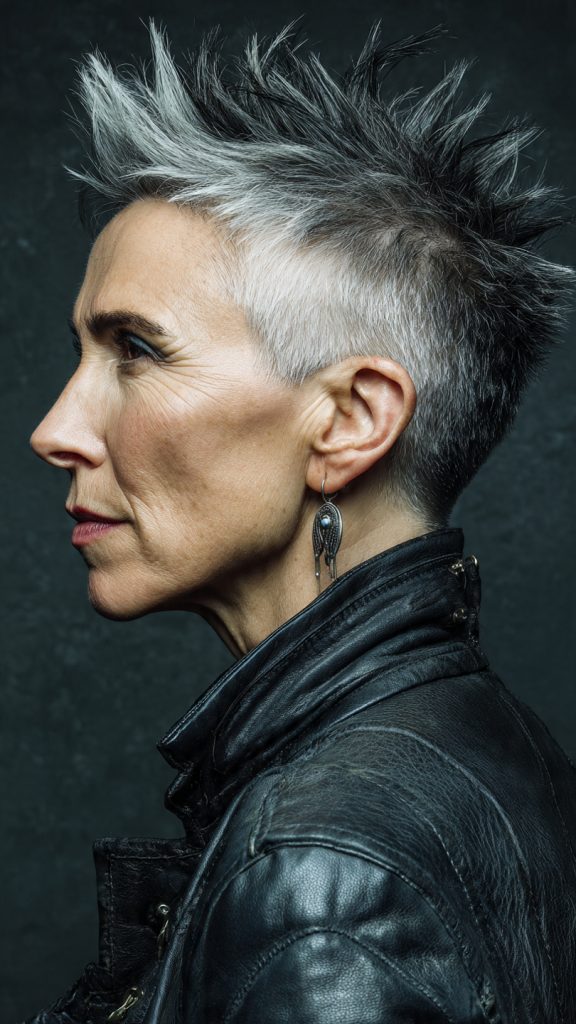
    10. The Spiky Undercut Pixie

    This is the most rebellious of the ten. The undercut (sides and nape) is shaved to the skin (a #0 or #000 guard), while the top is cut into short, aggressive spikes using texturizing shears or a razor.

    Why it works: Spikes create maximum height and volume. For women with very fine hair, spikes are the ultimate illusion of thickness because each spike stands independently. The shaved sides emphasize the height of the spikes, making them look even more dramatic.
    Styling tip: Use a strong-hold gel or wax. Rub a small amount between your palms, then grab sections of the top and pull straight up. Twist the ends slightly for definition. Reapply every few days.

    How to Maintain an Undercut Pixie Over 50

    An undercut pixie requires specific maintenance. Here is what you need to know:

    • Clipper maintenance every 2-4 weeks: The shaved sections grow back quickly. Invest in a good set of clippers or visit a barber (often cheaper than a salon) for touch-ups.
    • Sun protection: Your exposed scalp (especially on the shaved sides) can burn. Wear sunscreen or a hat when outdoors for long periods.
    • Product shift: You will use less product because there is less hair. Switch to lightweight clays, waxes, or texture powders. Avoid heavy gels or pomades.
    • Winter warmth: The shaved nape gets cold. Buy a soft, thin beanie or scarf for cold weather.
    • Growing it out: If you decide to grow out an undercut, expect an awkward phase. Plan to visit your stylist every 3 weeks during the grow-out to blend the layers.

    Is an Undercut Pixie Right for You?

    Ask yourself these three questions:

    1. Are you comfortable with visible scalp? The shaved sections will show skin. If that makes you uncomfortable, start with a subtle nape-only undercut.
    2. Do you have the time for maintenance? Every 2-4 weeks for clipper touch-ups is non-negotiable.
    3. Do you want to feel edgy? If you are tired of “safe” haircuts, the undercut pixie is liberation.

    If you answered yes to most of these, welcome to your new haircut.

    Conclusion

    Age is not an excuse to play it safe with your hair. The 10 undercut pixie haircuts for over 50 prove that women in their 50s, 60s, and beyond can wear edgy, modern, and bold styles with confidence. Whether you choose a subtle nape undercut, a dramatic disconnected cut, or a spiky statement style, the undercut pixie offers lightweight volume, effortless cool, and a undeniable sense of freedom.

    Take the leap. Find a stylist or barber who understands clipper work. And wear your undercut with the pride of a woman who knows that rules are made to be broken.

  • 14 Shoulder Length Hairstyles for Fine Hair: Volume, Body, and Bounce

    14 Shoulder Length Hairstyles for Fine Hair: Volume, Body, and Bounce

    There is a common misconception that women with fine hair cannot wear their hair shoulder length. The assumption is that fine hair, when grown past the chin, will go flat, limp, and lifeless—clinging to the scalp like wet silk. But that is only true if you choose the wrong shoulder length cut. The right cut, however, is transformative. Shoulder length is actually the perfect “testing ground” for fine hair. Enter 14 shoulder length hairstyles for fine hair—a collection designed to prove that fine-haired women can absolutely enjoy length, movement, and volume.

    The right cut, however, is transformative. Shoulder length is actually the perfect “testing ground” for fine hair. It is long enough to pull back into a ponytail or bun, short enough that the weight doesn’t pull the roots flat, and versatile enough to style in dozens of ways. Enter 14 shoulder length hairstyles for fine hair—a collection designed to prove that fine-haired women can absolutely enjoy length, movement, and volume.

    Whether your fine hair is stick-straight, slightly wavy, pin-straight, or has a hint of natural bend, these 14 cuts use strategic layering, texturizing techniques, blunt perimeters, and weight redistribution to create the illusion of thick, bouncy, healthy hair. No more hiding under a short crop. No more accepting flat, stringy strands. Let’s dive in.

    Why Shoulder Length Works for Fine Hair

    Before we get to the list, let’s address the science of fine hair. Fine hair has a smaller diameter than medium or coarse hair. This means it has less internal structural support. When fine hair grows long, the cumulative weight of the length pulls the roots flat against the scalp, exposing every gap and making thinning areas obvious.

    Shoulder length (generally defined as hair that falls between the collarbone and the armpit, resting on or just below the shoulders) is the maximum length most fine-haired women can maintain without losing volume. At this length, the weight is manageable, the roots can still lift, and strategic layering can remove just enough bulk to encourage movement while preserving density.

    The following 14 styles are specifically engineered for fine hair textures. They work whether you have a full head of fine hair or are dealing with age-related thinning.

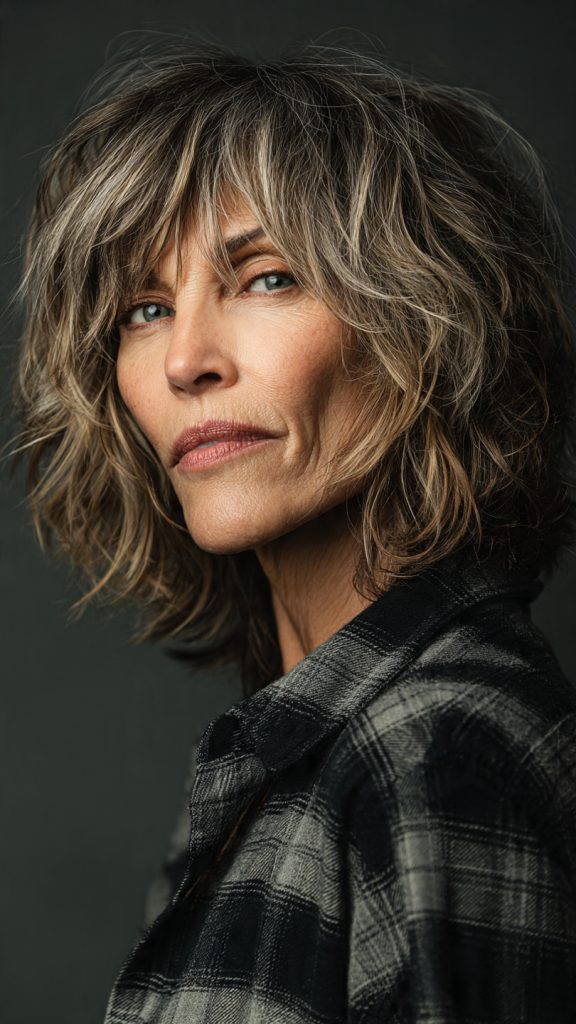
    1. The Long Layered Shag (Shoulder Length)

    The shag has appeared on our previous lists, but the shoulder length shag deserves its own spotlight. Unlike shorter shags, this version keeps the length while using heavy internal layering to remove weight.

    Why it works: The layers are cut deep into the hair, starting at the crown. This creates “gaps” that allow air and movement between strands, preventing fine hair from clumping together. The result is a messy, lived-in texture that looks intentionally piece-y rather than thin.
    Styling tip: Use a texture spray on dry hair and scrunch. Do not brush—use fingers to separate pieces. A diffuser on low heat enhances any natural wave.

    2. The Blunt Shoulder Length Cut (One-Length)

    Counter-intuitively, one of the best cuts for fine hair is a blunt, one-length cut with no layers. Why? Because a solid, heavy perimeter creates the visual illusion of thickness.

    Why it works: When fine hair is cut bluntly (straight across with no feathering or thinning at the ends), the light hits a solid line. That solid line reads as “dense” to the human eye. The key is keeping the length exactly at the shoulders—any longer and the weight becomes an issue.
    Styling tip: Blow-dry smooth with a flat brush. Add a tiny drop of lightweight serum to the ends to keep the blunt line sharp and polished.

    3. The Invisible Layered Cut

    “Invisible layers” are exactly what they sound like: layers so subtle you cannot see them, but you can feel the volume they create. These are internal layers cut deep inside the hair shaft, not visible on the surface.

    Why it works: Traditional layers on fine hair can look ragged and thin at the ends. Invisible layers lift the hair from the inside out, creating a rounded, C-shape silhouette without sacrificing the solid appearance of the perimeter. This is a technical cut best done by an experienced stylist.
    Styling tip: Ask your stylist for “invisible internal layers” or “weightless layering.” Style with a volumizing mousse and a round brush, focusing on turning the ends slightly under.

    4. The Shoulder Length Cut with Long Curtain Bangs

    Curtain bangs are the bangs for women who are afraid of bangs. They part in the middle or slightly off-center, framing the face like curtains. At shoulder length, they add dimension and softness.

    Why it works: Curtain bangs add width to the forehead area, which balances a narrow chin and draws attention upward and outward—away from thinning areas at the crown. The bangs blend seamlessly into the shoulder-length layers, creating a continuous frame around the face.
    Styling tip: Blow-dry the bangs using a round brush, rolling them away from your face. This creates the signature “S” shape. The rest of the hair can be air-dried for contrast.

    5. The Texturized Lob with Undercut (Hidden)

    This sounds extreme, but hear it out: a hidden undercut at the nape of the neck removes the heaviest, densest part of the hair (the underneath section that no one sees). The top layers fall over it, hiding the undercut completely.

    Why it works: Fine hair often looks thinner at the ends because the weight of the hair pulls it down. By removing a small triangle of hair at the very nape (the area that contributes the most weight), the remaining hair springs up. The top layers now have less weight to fight against, resulting in immediate lift.
    Styling tip: This cut requires a stylist who understands fine hair. The undercut should be small (no more than an inch high). Style as usual—the undercut is invisible but volumizing.

    6. The Side-Swept Deep Part with Volume

    This is a styling technique applied to a shoulder-length layered cut, but it is so effective it deserves its own spot. A deep side part (parting the hair at the far edge of the eyebrow or even at the temple) instantly creates a high dome of volume on the larger side.

    Why it works: Fine hair parted in the middle lies flat and exposes the scalp. A deep side part creates an asymmetrical shape that tricks the eye into seeing more hair. The “sweep” of hair across the crown camouflages thinning at the part line and adds height.
    Styling tip: Blow-dry the hair on the larger side against its natural direction. If you part on the left, blow-dry everything to the right. Once dry, sweep it back to the left. The roots will stand straight up.

    7. The Wispy Shoulder Length Cut with Choppy Ends

    For fine hair that is very straight and slippery, wispy, choppy ends can add the illusion of texture and density. This cut features ends that are point-cut (cut with scissors pointing vertically) to create soft, feathery tips.

    Why it works: A blunt cut on very straight fine hair can sometimes look severe. Choppy, wispy ends reflect light in multiple directions, creating visual “noise” that reads as thickness. The soft ends also move more freely, giving the hair a bouncier appearance.
    Styling tip: Use a lightweight sea salt spray (not the heavy kind) on damp hair. Scrunch and air dry. The choppy ends will naturally separate into soft, piece-y waves.

    8. The Rounded Bob (Shoulder Length Variation)

    A rounded bob is cut to create a spherical, helmet-like shape (in a good way). The hair is shorter at the nape, gradually lengthens to the shoulders, and is cut with a curved, rounded perimeter rather than a straight line.

    Why it works: The rounded shape mimics the look of naturally thick hair. Because the hair is shorter underneath and longer on top, the top layers have nothing to hold them down. They “float” above the shorter underlayers, creating the illusion of volume from every angle.
    Styling tip: Blow-dry with a large round brush, rolling the hair under as you go. The goal is a smooth, curved shape that tucks under at the shoulders.

    9. The Shoulder Length Cut with Bottleneck Bangs

    Bottleneck bangs are a hybrid between curtain bangs and traditional fringe. They are shorter in the very center (just above the eyebrows) and gradually lengthen toward the temples, creating a “bottleneck” shape.

    Why it works: Fine hair often looks sparse at the front hairline. Bottleneck bangs add density exactly where thinning is most noticeable. The graduated shape prevents the bangs from looking heavy or overwhelming, while the shoulder length keeps the overall look balanced.
    Styling tip: These bangs require a little heat styling. Use a small flat iron to create a slight bend at the ends. The rest of the hair can be left wavy or straight.

    10. The Voluminous Blowout Cut (Round Layers)

    Some haircuts are designed specifically for women who love to blow-dry their hair. The “blowout cut” features round, cascading layers that are cut to stack beautifully when wrapped around a round brush.

    Why it works: Fine hair takes a blowout exceptionally well because it is lightweight and malleable. This cut removes weight from the mid-lengths while keeping the ends substantial, allowing the hair to wrap around a brush without tangling. The result is a salon-worthy blowout that lasts for days.
    Styling tip: Invest in a good ceramic round brush (1.5 to 2 inches in diameter). Use a volumizing mousse and blow-dry each section twice—once forward, once backward—for maximum lift.

    11. The Asymmetrical Shoulder Length Cut

    Symmetry is overrated, especially for fine hair. An asymmetrical cut—shorter on one side (chin length) and longer on the other (shoulder length)—creates visual interest that distracts from any lack of volume.

    Why it works: The human eye is drawn to the unexpected. When your haircut has a dramatic diagonal line, no one is looking at your scalp or the thinness at your crown. Additionally, the shorter side always appears thicker because the strands are not weighed down by length.
    Styling tip: Flat iron the longer side smooth, and add a slight bend to the shorter side. This contrast in texture enhances the asymmetry.

    12. The Soft Beach Wave Cut (Long Layers)

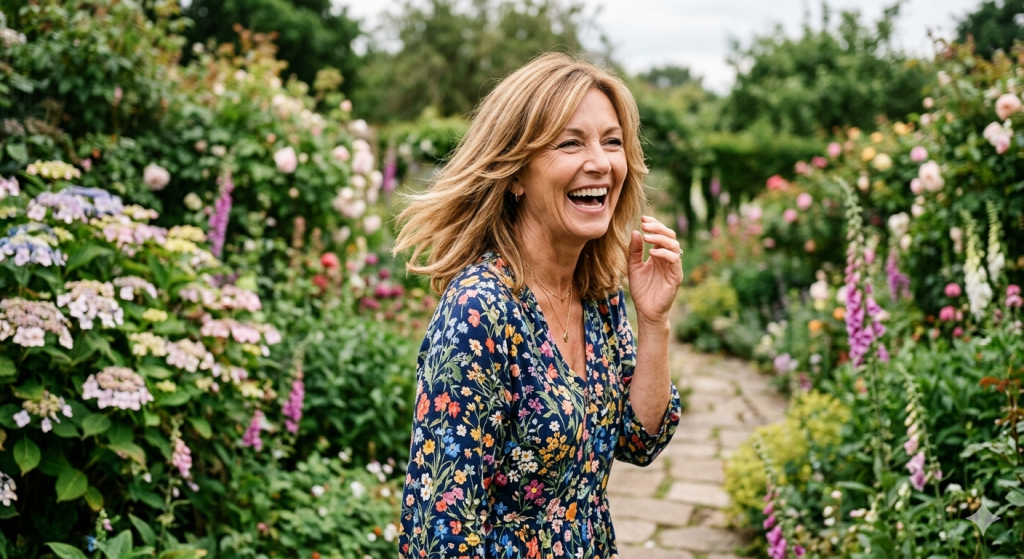
    Fine hair can absolutely wear beach waves—but the cut must support the style. Ask for long, soft layers that start at the cheekbones and continue to the ends. Avoid short layers, which can make fine hair look ragged.

    Why it works: Long layers remove just enough weight to allow fine hair to hold a wave. The key is keeping the layers subtle so the ends still look substantial. When waved with a wand or flat iron, the hair appears twice as thick because the waves create shadows and dimension.
    Styling tip: Use a 1-inch curling wand. Wrap 1-inch sections around the barrel, leaving the last inch of the ends out for a more natural look. Brush out gently with a wide-tooth comb.

    13. The Straight-Across Cut with Micro-Fringe

    For the bold woman with fine hair, a micro-fringe (very short bangs, cut well above the eyebrows) paired with a straight-across shoulder-length cut is a statement. This is a high-fashion look that works surprisingly well on fine textures.

    Why it works: Micro-fringe creates a solid block of density at the forehead, drawing the eye to the shortest part of the hair. The contrast between the very short bangs and the shoulder-length perimeter makes the longer hair look thicker by comparison. The straight-across bottom line adds additional visual weight.
    Styling tip: Micro-fringe requires frequent trims (every 2-3 weeks). Keep the rest of the hair sleek and smooth to emphasize the graphic quality of the cut.

    14. The Layered Shoulder Length Cut with Crown Volume

    This cut focuses all the layering at the crown (the top of the head) while keeping the sides and back relatively one-length. The result is maximum volume where fine hair needs it most—at the roots.

    Why it works: Fine hair is flattest at the crown. By cutting short, aggressive layers only in the crown area, the hair there is freed from the weight of the longer strands. The crown layers stand up and stack, creating a visible “lift” that lasts all day. The sides and back remain longer, preserving length.
    Styling tip: Blow-dry the crown section first, using a small round brush and lifting straight up. Pin the dried crown section in a “Mohawk” clip while you dry the rest. Release for instant, all-day volume.

    Daily Care for Fine, Shoulder Length Hair

    Maintaining shoulder length fine hair requires a specific routine. Here are five non-negotiable rules:

    1. Shampoo strategically: Fine hair gets oily fast. Use a volumizing shampoo daily or every other day. Avoid moisturizing or smoothing shampoos.
    2. Condition only the ends: Never put conditioner on your roots. Apply from the ears down only.
    3. Use root lifters: A lightweight root-lifting spray or mousse is essential. Apply to damp roots before blow-drying.
    4. Dry shampoo is your friend: Spray dry shampoo on clean roots to give them grip and texture. It prevents flatness before it starts.
    5. Avoid heavy oils: No coconut oil, no argan oil, no butters. Stick to lightweight serums or sprays specifically labeled for fine hair.

    Conclusion

    The myth that fine hair cannot be worn at shoulder length is exactly that—a myth. The 14 shoulder length hairstyles for fine hair outlined above prove that with the right cut, fine-haired women can enjoy length, movement, volume, and versatility.

    Whether you choose the edgy asymmetry of an asymmetrical cut, the soft romance of curtain bangs, the bold graphic quality of a micro-fringe, or the everyday reliability of invisible layers, the key is working with a stylist who understands fine hair. Bring photos, ask for weight removal, and never settle for a cut that leaves you flat.

    Your fine hair is not a limitation. It is an opportunity to be strategic, intentional, and stylish. Wear your shoulder length hair with pride—you have earned it.

  • 10 Hairstyles for Thin Fine Hair Over 50: Volume, Texture, and Youthful Fullness

    10 Hairstyles for Thin Fine Hair Over 50: Volume, Texture, and Youthful Fullness

    If you are over 50 and have been told to “just cut it all off” because your hair is thin or fine, stop listening. The myth that aging hair must be cropped into a severe, low-maintenance pixie is just that—a myth. The truth is, thin and fine hair requires strategy, not surrender. Check out our 10 hairstyles for thin fine hair over 50. This collection is designed specifically for hair that has lost its youthful density, changed texture due to hormonal shifts, or simply become more delicate with time.

    Enter 10 hairstyles for thin fine hair over 50. This collection is designed specifically for hair that has lost its youthful density, changed texture due to hormonal shifts, or simply become more delicate with time. These styles use clever cutting techniques—like internal layering, blunt ends, strategic disconnection, and volume-building shapes—to create the illusion of thick, bouncy, healthy hair.

    Whether you are dealing with genetic fine hair, post-menopausal thinning, or medication-related hair loss, these ten cuts will give you back your confidence. No helmets. No tight perms. Just modern, wearable, gorgeous hair.

    Why Thin and Fine Hair Needs a Different Approach

    First, let’s clarify the difference. Thin hair refers to the density (how many strands grow per square inch). Fine hair refers to the diameter of each individual strand. Many women over 50 experience both: fewer strands that are also smaller in circumference.

    The worst thing you can do? Grow it long and lanky, which drags the face down and emphasizes every gap. The second worst thing? A uniform, one-length short cut that lies flat against the scalp like a cap.

    The best thing? Strategic layering that lifts at the crown, texturizing that removes weight to create movement, and blunt lines at the perimeter that give the illusion of thickness. Below are the ten best cuts that do exactly that.

    1. The Blunt Bob with Micro-Layers

    The classic blunt bob is often avoided by women with fine hair because they fear it will look “boxy.” But a blunt perimeter (straight across, no feathering at the ends) actually makes fine hair look thicker because the light hits a solid line rather than dissipating through wispy ends.

    Why it works: Ask your stylist for a blunt bob ending at the chin or just below the jaw, with “micro-layers” (tiny internal layers no longer than half an inch) to prevent the dreaded flat-top look. The blunt line creates density; the micro-layers provide lift.
    Styling tip: Blow-dry roots upward using a small round brush. Finish with a lightweight dry texture spray at the roots only.

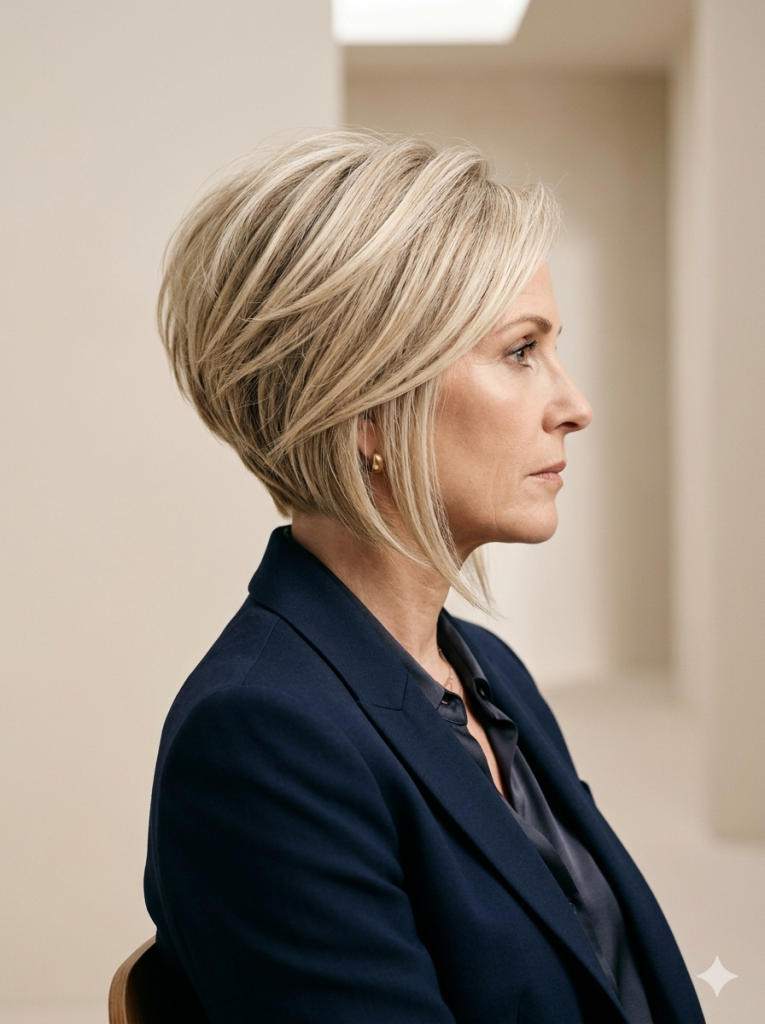
    2. The Stacked A-Line Bob

    If you want maximum volume at the crown, the stacked A-line bob is your holy grail. This cut is short and tightly layered (stacked) in the back, graduating to longer pieces in the front that hit the collarbone.

    Why it works: The stacking creates a shelf of volume that literally lifts hair off the scalp. Because the back is short, fine hair doesn’t have the weight to pull itself flat. The longer front pieces give you the elegance of length without sacrificing fullness.
    Styling tip: Use a volumizing mousse on damp hair, then blow-dry the back section upside down. A flat brush works better than a round brush for stacking.

    3. The Texturized Pixie (Not a Helmet Cut)

    Many women fear the pixie because they associate it with the “helmet head” of the 1980s. A modern texturized pixie is the opposite: choppy, piece-y, and full of movement. It is cropped at the nape but left longer (1.5 to 2 inches) on top.

    Why it works: Fine hair looks thickest when it is short enough that the strands support each other. On a pixie, each hair stands almost straight up from the scalp, maximizing volume. The texturizing (point-cutting or notching) removes bulk without reducing length, creating a soft, feathery appearance.
    Styling tip: Rub a pea-sized amount of matte paste or clay between your palms and scrunch into dry hair. Do not brush—use fingers only.

    4. The French Crop with Wispy Bangs

    The French crop is a shorter style (often confused with a pixie) that features a heavier top section and very short, sometimes faded, sides and back. The defining feature is the wispy, textured fringe that sits just above the eyebrows.

    Why it works: For women with a high forehead or significant thinning at the front hairline, the wispy bangs disguise sparse areas while looking intentionally artistic rather than concealing. The cropped sides remove the visual weight of thin side pieces that often look stringy.
    Styling tip: Keep the fringe slightly piece-y. Use a tiny amount of lightweight pomade on the tips of your fingers to separate the bangs.

    5. The Layered Lob (Long Bob) with Face-Framing

    Yes, a lob can work for fine hair—but only if it is layered correctly. The mistake women make is asking for a “long bob” without specifying layers. The result is a limp, triangular mess. Instead, ask for a lob with long, face-framing layers and a slight undercut at the nape.

    Why it works: The face-framing layers (shorter pieces around the cheekbones and jaw) remove weight from the front, allowing the hair to swing rather than stick to the face. The slight undercut at the nape removes the heaviest part of the hair, tricking the eye into thinking the remaining hair is thicker.
    Styling tip: Blow-dry with a large round brush, focusing on lifting the roots away from the face. A side part adds instant volume.

    6. The Soft Shag with Curtain Bangs

    The shag is back, and it is a godsend for fine hair. Unlike the aggressive 70s shag, the modern soft shag uses light, airy layers throughout the mid-lengths and ends, combined with curtain bangs that part in the middle.

    Why it works: Fine hair loves internal movement. The shag’s many layers create multiple “end points” that reflect light differently, giving the illusion of density. Curtain bangs add width to the forehead area, which balances a narrow chin and makes fine hair look more substantial.
    Styling tip: Air dry or diffuse on low heat. Use a salt-free texturizing spray (salt dries out fine hair). Twist small sections around your finger while damp to encourage wave.

    7. The Asymmetrical Bob

    Symmetry is overrated, especially for fine hair. An asymmetrical bob—shorter on one side (chin length) and longer on the other (shoulder length)—creates visual interest that distracts the eye from any lack of volume.

    Why it works: The human eye is drawn to the unexpected. When your haircut has a dramatic diagonal line, no one is looking at your scalp or the thinness at your crown. Additionally, the shorter side always appears thicker because the strands are not weighed down by length.
    Styling tip: Flat iron the longer side smooth, and add a slight bend to the shorter side. This contrast in texture enhances the asymmetry.

    8. The Cropped French Bob

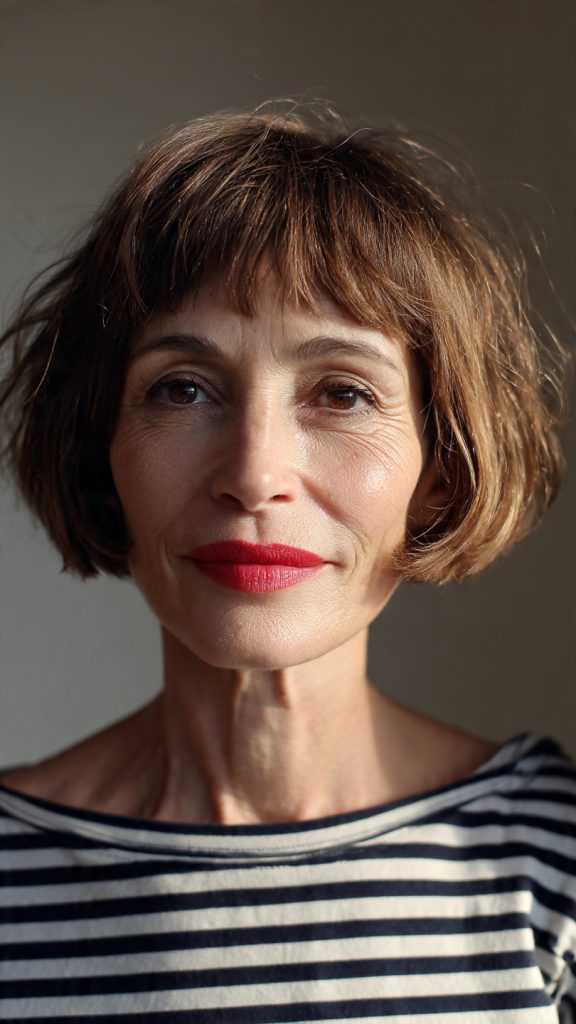
    The French bob is shorter than a traditional bob—typically ending right at the earlobe or the corner of the jaw. It is often paired with a full, blunt fringe (bangs).

    Why it works: For very fine, limp hair, length is the enemy. The cropped French bob removes almost all weight, allowing the hair’s natural texture (even if minimal) to express itself. The blunt fringe adds a solid block of density at the forehead, creating the visual anchor that makes the rest of the hair look fuller by comparison.
    Styling tip: Embrace a little messiness. A French bob should never look “done.” Run a bit of texture cream through damp hair and let it air dry for that effortless Parisian look.

    9. The Side-Parted Sweep with Volume

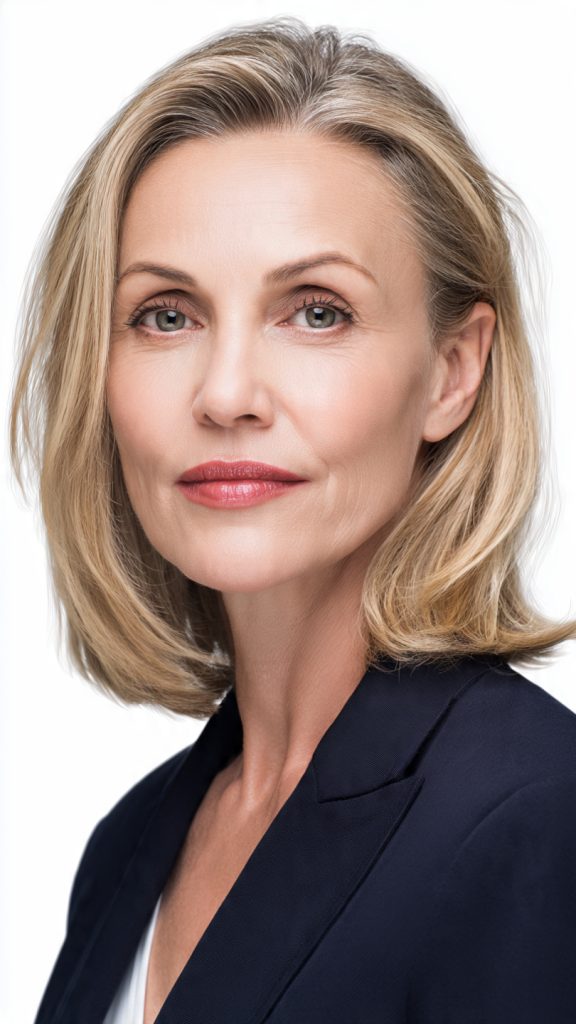
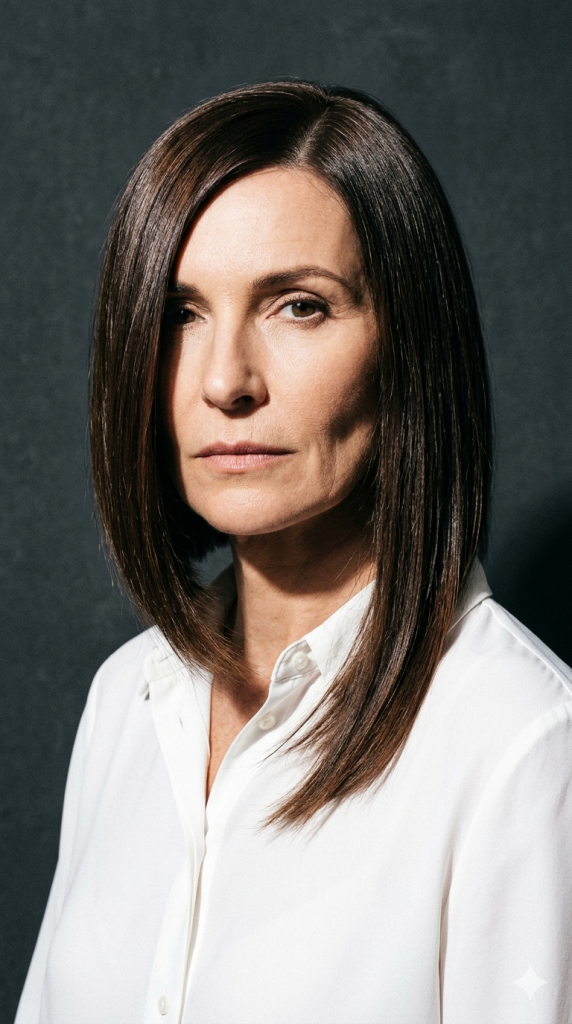
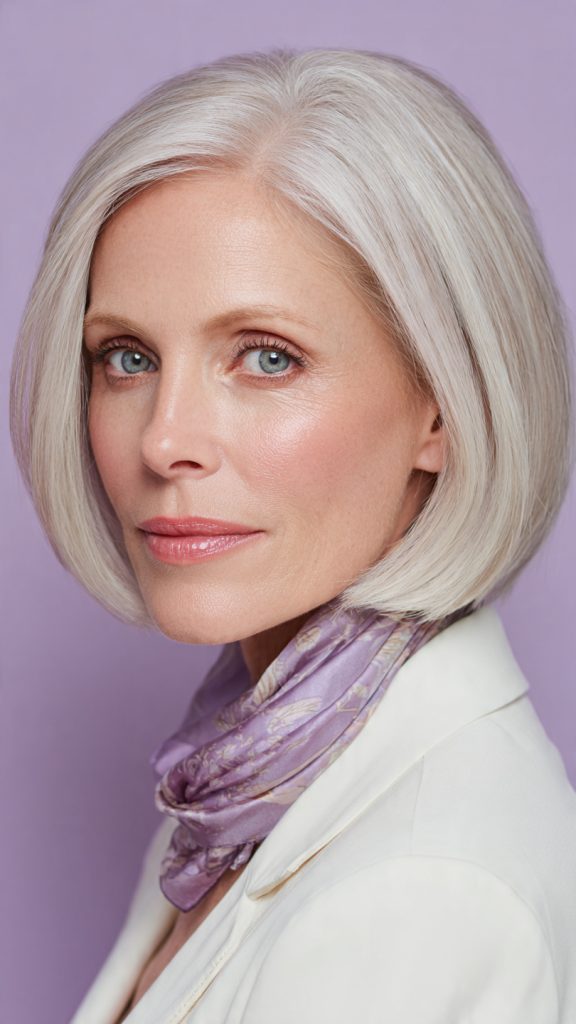
    Polished portrait of a woman aged 53 with a sleek chin-length cut. Invisible internal layers creating a rounded C-shape silhouette. Straight, glossy, fine ash-blonde hair. Front view, professional ring light (catchlights in eyes). Wearing a tailored white blazer and a silk scarf. Confident, direct gaze. Light lavender background. Professional, smooth, thick-looking.

    This is less a specific haircut and more a styling technique applied to a medium-length layered cut. The key is a deep side part (almost at the temple) and a “sweep” of hair across the crown.

    Why it works: Fine hair parted in the middle falls flat and exposes the scalp. A deep side part immediately creates a “dome” of volume on the larger side. The sweep (pushing hair up and over) camouflages thinning at the part line. This works best on hair that is shoulder-length or shorter with long layers.
    Styling tip: Blow-dry the hair on the larger side against its natural direction (if you part on the left, blow-dry everything to the right). Once dry, sweep it back to the left. The roots will stand straight up.

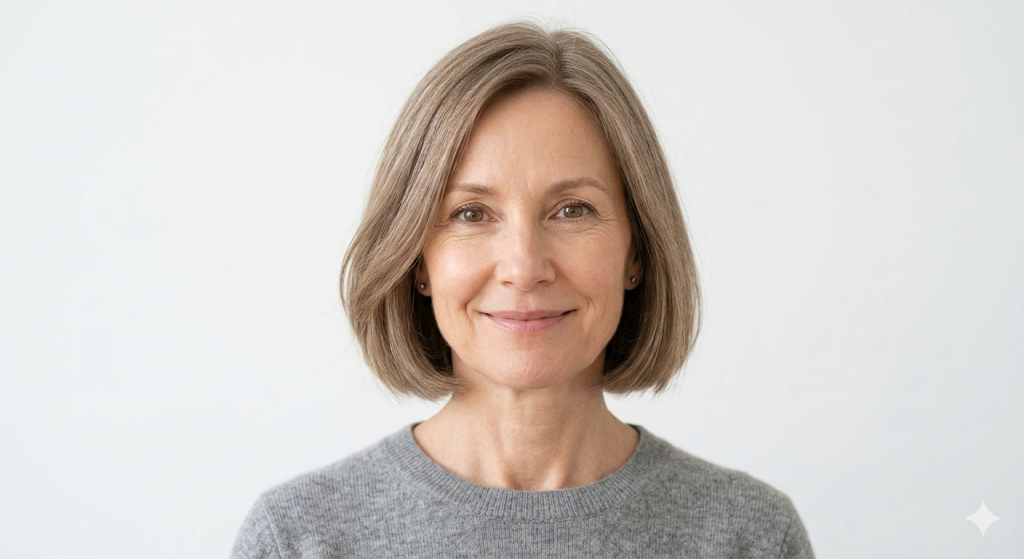
    10. The Sleek Chin-Length Cut with Invisible Layers

    For women with straight, fine hair who prefer a polished, professional look, the sleek chin-length cut is perfection. The secret is “invisible layers”—internal layers so subtle you cannot see them, but you can feel the volume.

    Why it works: Unlike choppy layers that can make fine hair look ragged, invisible layers are cut deep inside the hair shaft. They lift the hair from the inside out, creating a rounded, C-shape silhouette rather than a flat, A-shape one. The chin length draws the eye horizontally, adding width that mimics thickness.
    Styling tip: Use a lightweight volumizing lotion and a small flat brush. Blow-dry sections straight down, then cool-shot each section to lock in smoothness. A drop of serum on the ends prevents frizz.

    How to Care for Thin and Fine Hair Over 50

    A great haircut is only half the battle. Your daily routine matters just as much.

    • Shampoo correctly: Fine hair gets oily faster. Use a “volume” or “clarifying” shampoo every other day. Avoid “moisturizing” or “smoothing” shampoos—they weigh hair down.
    • Condition strategically: Condition only the mid-lengths to ends. Never put conditioner on your roots or scalp.
    • Ditch the heavy products: No butters, no oils, no heavy creams. Look for words like “mousse,” “spray,” “powder,” or “texture spray.”
    • Use dry shampoo proactively: Spray dry shampoo on clean roots before they get oily. It gives grip and volume for days.
    • Sleep on silk: A silk pillowcase reduces friction, preventing the breakage that makes fine hair look thinner.

    Conclusion

    Reaching 50 is not an expiration date for great hair. It is an invitation to get smarter about your cut, your products, and your technique. The 10 hairstyles for thin fine hair over 50 outlined above prove that volume, movement, and confidence are absolutely achievable—no matter how fine your strands or sparse your density.

    Whether you choose the dramatic lift of a Stacked A-Line Bob, the effortless cool of a Soft Shag, or the polished precision of a Sleek Chin-Length Cut, the most important thing is this: do not settle. You deserve hair that makes you feel visible, vibrant, and undeniably yourself. Work with a stylist who understands fine hair, invest in the right lightweight products, and wear your new cut with the pride of a woman who knows exactly who she is.
  • 14 Medium Hairstyles for Women Over 60: Chic, Voluminous, and Age-Defying

    14 Medium Hairstyles for Women Over 60: Chic, Voluminous, and Age-Defying

    Turning 60 is not about slowing down; it is about stepping into a season of confidence, wisdom, and freedom. If you are ready for a change that balances style and practicality, look no further than 14 medium hairstyles for women over 60. This collection proves that the “Goldilocks” zone of haircuts—long enough to pull back, short enough to hold volume—is the secret to chic, age-defying hair.

    Medium hairstyles for women over 60 offer the perfect balance. They are long enough to pull back for the gym or gardening, but short enough to hold volume and style easily. They soften facial features, frame the jawline, and can take years off your appearance without looking like you are trying too hard.

    Whether you have fine, thinning hair, thick curls, or straight silver strands, there is a medium cut for you. Below, we dive into 14 stunning, modern medium hairstyles that prove life (and style) truly begins at 60.

    Why Medium Length? The Sweet Spot for Mature Hair

    Before we get to the list, let’s talk about why medium cuts dominate the over-60 demographic. As we age, hair texture changes. Estrogen levels drop, leading to hair that is often drier, finer, or more brittle. A very short crop can sometimes look severe on softer face shapes, while very long hair can drag the face down, accentuating jowls or sagging skin.
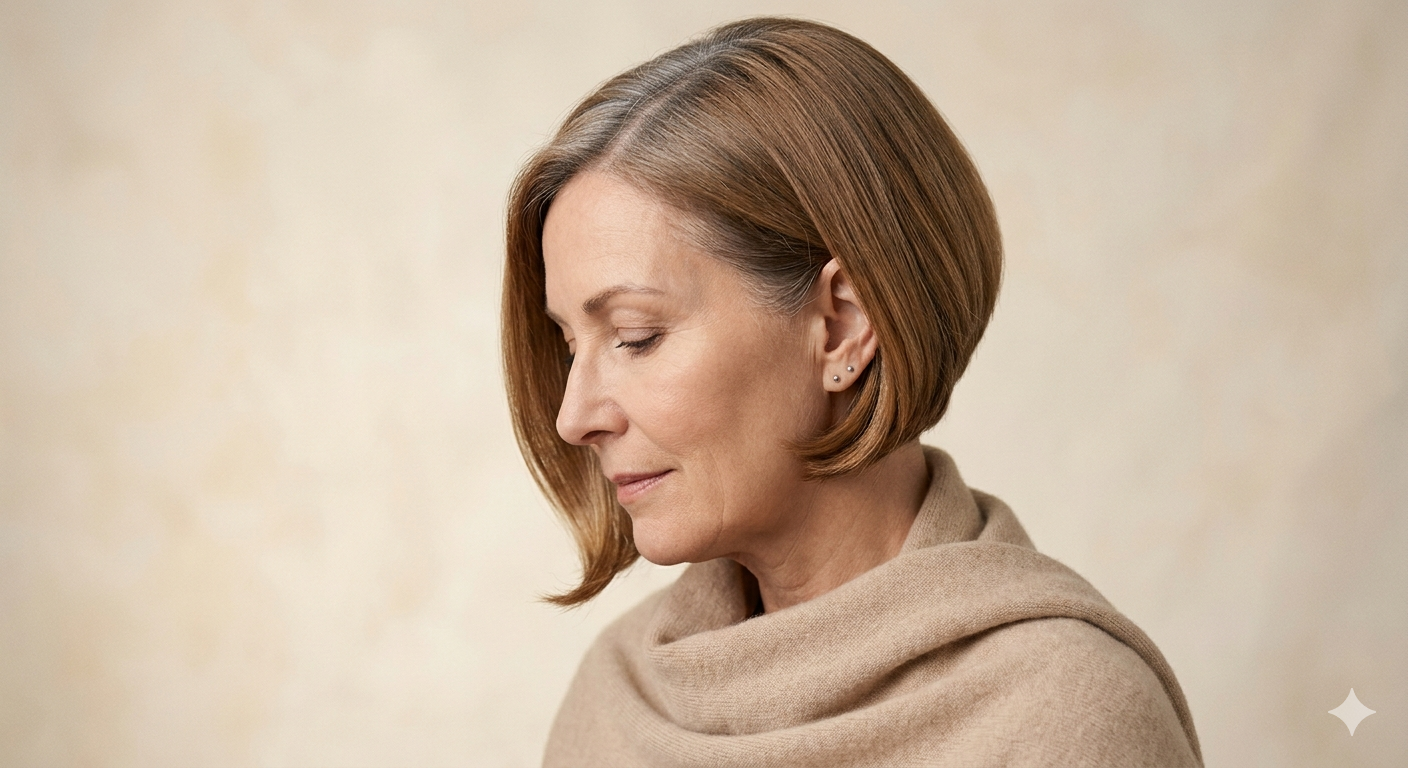
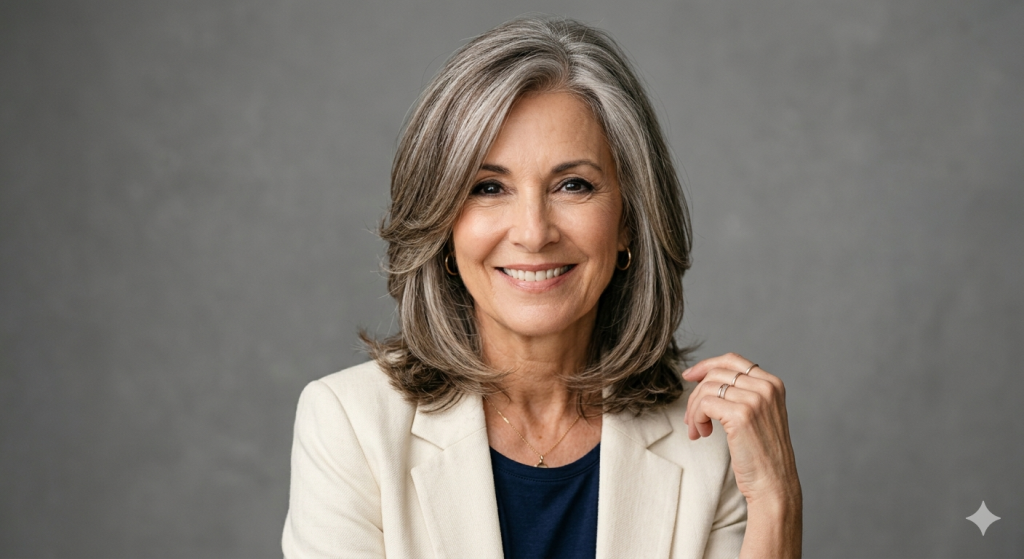
    Medium hairstyles (generally between the chin and the collarbone) solve these issues by:

    • Creating Lift: Shorter layers remove weight, allowing roots to stand up for volume.
    • Disguising Thinning: Strategic layering makes hair look dense and bouncy.
    • Highlighting Bone Structure: A cut that hits the jaw or shoulders draws the eye upward.
    • Embracing Gray: Medium lengths show off the beautiful variations of silver, white, and salt-and-pepper blends.

    Let’s explore the 14 best options.

    1. The Classic Layered Lob (Long Bob)

    The lob is the undisputed champion of medium hairstyles for women over 60. Typically ending right at the collarbone, the lob is versatile enough for every face shape. Adding layers throughout removes bulk if your hair is thick, or creates the illusion of volume if your hair is fine.

    Why it works: The layers can be customized. For round faces, keep the layers longer in front to elongate the face. For oval faces, choppy layers add texture. Style it with a round brush to flip the ends under or out for a retro touch.
    Styling tip: Use a volumizing mousse at the roots before blow-drying to prevent the “triangle” effect.

    2. The Texturized Shag

    The modern shag is having a major renaissance, and it is surprisingly perfect for women over 60. A medium shag features heavy internal layers, a bit of choppiness at the ends, and often, wispy bangs.

    Why it works: This cut is a godsend for women with fine hair. The texturizing shears remove weight, which encourages the hair to “stack” and lift. It also hides thinning areas at the crown. If you have naturally wavy or curly hair, the shag works with your texture, not against it.
    Styling tip: Rub a pea-sized amount of texture paste or sea salt spray through damp hair and air dry. The messier, the better.

    3. The Chin-Length Bob with Side-Swept Bangs

    Slightly shorter than the lob, the chin-length bob is a classic for a reason. When paired with long, side-swept bangs that graze the eyebrow, it becomes a masterpiece of anti-aging styling.

    Why it works: The side-swept bang covers forehead lines (without hiding your eyes) and draws a diagonal line across the face, which is very slimming. The blunt chin-length cut reinforces the jawline, making the neck look longer.
    Styling tip: Blow-dry the bangs using a flat paddle brush, pulling them to the opposite side of your natural part to create a high, voluminous sweep.

    4. The Curly Medium Cut

    Women with natural curls often feel pressured to cut their hair very short as they age, but medium curls are magnificent. Think of a rounded shape where the curls fall just below the ears and rest on the shoulders.

    Why it works: Curls naturally shrink up, so a medium cut when wet will spring to shoulder length when dry. This shape keeps curls away from the face but allows enough weight to prevent the dreaded “pyramid” shape (wide at the bottom, flat on top).
    Styling tip: Hydration is key. Use a leave-in conditioner and a curl cream. Diffuse upside down to maximize root volume.

    5. The Silver Blunt Cut

    If you have fully transitioned to gray or white hair, show it off with a blunt, one-length medium cut. This is a bold, sophisticated look that says “I am confident.”

    Why it works: Gray hair tends to be coarser and wirier. A blunt cut (no layers) uses that texture to create a heavy, healthy hemline. The blunt edge reflects light differently than layered ends, making silver hair look like molten metal rather than dull steel.
    Styling tip: Use a purple shampoo once a week to neutralize any yellowing in white hair. A drop of argan oil on the ends keeps the blunt line looking sharp and polished.

    6. The Wispy Layered Cut with Curtain Bangs

    Curtain bangs are the softer, more romantic cousin of the heavy fringe. They part in the middle or slightly off-center, framing the face like, well, curtains.

    Why it works: For women over 60 who wear glasses, curtain bangs are a game-changer. They don’t fight with the frames; they blend into them. The wispy layers throughout the medium length remove weight, making the hair look airy and youthful. This style softens a square jaw or prominent cheekbones.
    Styling tip: Wrap 1-inch sections of the bangs around a large round brush and blow-dry away from your face. This creates the signature “S” shape that opens up the eyes.

    7. The Inverted Bob (Graduated)

    The inverted bob is shorter in the back and longer in the front. The back is usually stacked or graduated (layered tightly) to create a dramatic shelf of volume at the crown.

    Why it works: If you suffer from flatness at the back of your head, this is your solution. The stacking creates instant, permanent lift. The longer front pieces (which can hit the chin or collarbone) are slimming and modern.
    Styling tip: This cut requires precision. Ask your stylist for a “soft graduation” rather than a harsh, sharp stack to keep it looking modern, not like a helmet.

    8. The Tousled, Messy Medium Cut

    Perfection is overrated. The tousled look—think “French girl” hair—is relaxed, sexy, and incredibly low-maintenance. This works best on cuts with long layers and a bit of face-framing.

    Why it works: As we age, rigid, helmet-like hair adds years. Movement implies youth. A messy cut doesn’t show imperfections; it celebrates them. A wave that goes the wrong way or a piece that sticks out looks intentional.
    Styling tip: Wash at night. In the morning, spritz with water and scrunch in a salt spray or light gel. Do not brush it—use your fingers.

    9. The Feathered Cut

    Yes, the feathered cut (popularized in the 70s) is back, but it is softer now. This involves layers that are rolled outward, creating a “feather” effect around the face and crown.

    Why it works: For women with very fine, limp hair, the feathered cut uses reverse tension to keep hair off the scalp. It mimics the volume of a perm without the chemical damage. It is excellent for heart-shaped faces, as it widens the forehead area slightly to balance a narrow chin.
    Styling tip: Use a vent brush and blow-dry sections up and out from the scalp, rolling the ends under or over depending on your preference.

    10. The Asymmetrical Medium Cut

    For the bold woman over 60, asymmetry adds edge. One side is cut slightly shorter (usually chin length) while the other side is longer (collarbone length).

    Why it works: The asymmetry distracts the eye from facial asymmetry (which is natural as we age). It creates an optical illusion of a lifted face. The dramatic difference in lengths adds high-fashion interest without being “punk.”
    Styling tip: Keep the rest of your makeup soft. This haircut is a statement piece; let it shine by keeping your clothing necklines simple (crewnecks or boatnecks work well).

    11. The One-Length Medium Cut with Fringe

    Sometimes, we overcomplicate things. A one-length cut (no layers) that falls between the chin and shoulders, paired with a full or side fringe, is classic elegance.

    Why it works: One-length cuts are the heaviest, meaning they work best for medium-to-thick hair. The weight of the hair pulls it down smoothly, which is excellent for taming frizz or unruly waves. The fringe hides a multitude of sins (forehead wrinkles, thin hairline).
    Styling tip: Because there are no layers to hide split ends, you must trim this every 6-8 weeks. A flat iron set to low heat will keep the ends sleek.

    12. The Medium-Length “Pixie Bob”

    Can’t decide between a short pixie and a medium bob? Get a “Pixie Bob.” It is cropped tight at the nape of the neck (like a pixie) but left longer on top and around the ears (like a bob).

    Why it works: This is the ultimate solution for very fine or thinning hair. By keeping the nape short, you remove the stringy, see-through look that fine hair gets when it grows long. The length on top allows you to sweep hair over thinning areas.
    Styling tip: Use a matte pomade to piece out the top sections. This gives the illusion of density and texture.

    13. The Soft A-Line Bob

    Similar to the inverted bob but less severe, the A-line bob is cut at an angle—short back, longer front. The difference is that the front is usually only slightly longer than the back (an inch or two), creating a gentle slope.

    Why it works: This cut lifts the profile of the neck. When you look in a mirror from the side, you see an ascending line from front to back, which naturally lifts the eye and makes the neck appear more taut.
    Styling tip: This cut is designed for smoothness. Blow-dry with a ceramic round brush and finish with a lightweight shine spray to emphasize the clean line.

    14. The Layered Medium Cut with Face-Framing Highlights

    Technically, this is a color technique applied to a cut, but it is transformative. Even if you keep your natural gray, adding a few brighter “face-framing” highlights (money pieces) around the front of a medium layered cut changes everything.

    Why it works: As we age, our skin tone can become washed out. Dark, mousy hair against pale skin looks draining. By lightening the hair around the face—just the front two inches—you reflect light onto the skin, brightening the eyes and reducing the appearance of shadows and wrinkles.
    Styling tip: Keep the rest of the hair your natural color. The contrast between the dark back and bright front pieces creates depth that makes the hair look thick.

    How to Choose the Right Medium Cut for You

    With 14 options, how do you pick? Consider three factors:

    1. Your Texture: Fine hair needs layers and texture (Shag, Pixie Bob). Thick hair needs weight removal or blunt cuts (Lob, Blunt Cut). Curly hair needs rounded shapes (Curly Medium Cut).
    2. Your Face Shape:
      • Round: Go longer (Lob, A-line) to elongate.
      • Square: Soften with wispy layers or curtain bangs.
      • Heart: Side-swept bangs or feathered cuts.
      • Oval: You can wear any of these 14 styles.
    3. Your Lifestyle: Do you wash and go? Tousled or curly cuts. Do you blow-dry every morning? The Blunt cut or One-Length.

    Maintaining Your Medium Hairstyle Over 60

    A great cut is only half the battle. Hair over 60 needs specific care.

    • Hydrate, Hydrate, Hydrate: Mature hair is thirsty. Use a moisturizing shampoo and a silicone-free conditioner. Leave-in conditioners are non-negotiable.
    • Volume at the Roots: Avoid heavy conditioners at the scalp. Use dry shampoo before your hair gets oily to give roots grip.
    • Heat Protection: Thinner hair burns faster. Never use a hot tool without a thermal protectant spray.
    • Regular Trims: To keep that medium shape perfect, visit your stylist every 8-10 weeks.

    Conclusion

    Turning 60 is a milestone worth celebrating, and your hair is the crown you wear every day. The era of “old lady hair”—the tight perms and helmet helmets—is over. Today, medium hairstyles for women over 60 are about texture, movement, and personal expression.

    Whether you choose the effortless elegance of a Classic Layered Lob, the rock-and-roll vibe of a Texturized Shag, or the bold geometry of a Silver Blunt Cut, the most important factor is your confidence. Pick a style that makes you feel like the vibrant, experienced, beautiful woman you are. After all, 60 isn’t old—it’s the new 40, and your hair should prove it.