
For decades, I followed a predictable morning ritual. I would reach for the bottle with the boldest lettering—the one promising “Mega Volume,” “Extreme Lift,” or “Thickening Power.” I believed that if I could just find the right formula, my fine, thinning hair would finally transform into the lush mane I saw in the commercials. However, I eventually had to face a harsh reality: the truth about “volumizing” shampoos – why they actually make thin hair worse is a secret the beauty industry isn’t eager to share. After years of struggling with increasing brittleness and a scalp that felt perpetually tight, I realized that the very products I was using to “save” my hair were actually the ones destroying its integrity.
The Mechanical Illusion of Volume
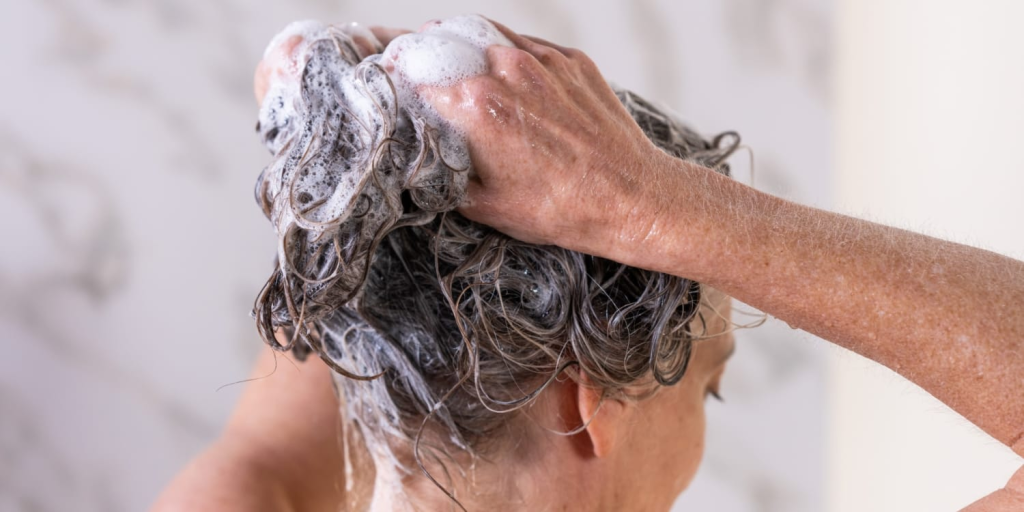
To understand why these products fail us, we have to look at the chemistry behind the “lift.” Most people assume that volumizing shampoo adds something beneficial to the hair to make it thicker. In reality, the process is often subtractive or abrasive.
The Over-Cleansing Trap
Most volumizing shampoos are formulated with harsh surfactants, such as Sodium Lauryl Sulfate (SLS). Their goal is to strip away every trace of oil. The logic is simple: oil weighs hair down, so no oil equals more “bounce.” While this works for about four hours, it creates a devastating long-term cycle. For those of us over 60, our scalps already produce less sebum. When you strip away those precious natural oils, the hair becomes “static-y” and flyaway. This isn’t volume; it’s dehydration masquerading as fullness.
The Cuticle “Roughing” Technique
Have you ever noticed that hair feels slightly “squeaky” or rough after using a thickening wash? That is intentional. Many volumizing formulas have a slightly higher pH level designed to swell the hair cuticle. When the cuticle—the outer protective shingles of the hair—is raised rather than lying flat, the strands don’t slide past each other. They snag and “prop” each other up. While this creates the temporary appearance of thickness, a raised cuticle allows moisture to escape and environmental pollutants to enter. Over time, this leads to chronic breakage, which makes thin hair look even thinner.
The Polymer Build-Up Paradox
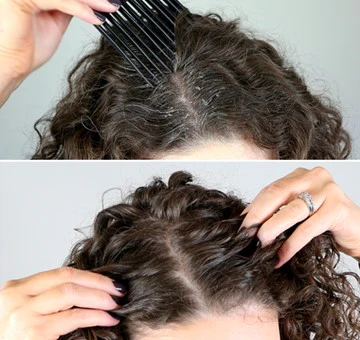
If a volumizing shampoo isn’t stripping your hair, it’s likely coating it. Many modern formulas use “film-forming” polymers or resins (essentially diluted versions of hairspray).
The Weight of “Weightless” Formulas
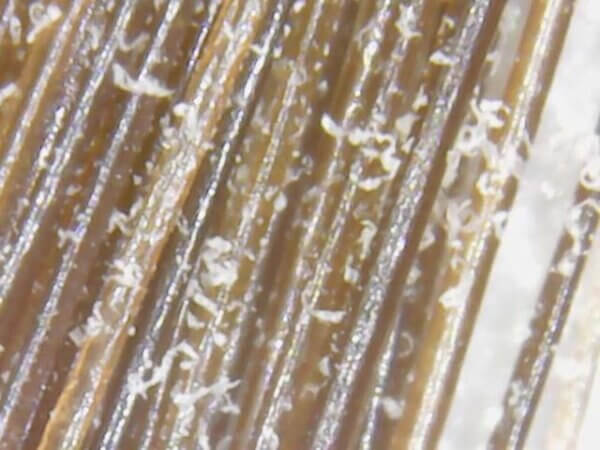
These polymers attach to the hair shaft to create a microscopic coating that makes each strand feel thicker to the touch. The problem is that these resins are difficult to wash out. After three or four washes, the “build-up” becomes significant. For someone with thick, coarse hair, this isn’t an issue. But for those of us with fine, thinning hair, that microscopic weight eventually pulls the hair flat at the root. You end up washing more frequently to get rid of the “limp” feeling, adding more polymers in the process, and eventually suffocating the hair follicle.
Scalp Suffocation and Follicle Health
The most dangerous aspect of these coating agents is what they do to the scalp. A healthy hair follicle needs to be clear of debris to produce a strong strand. When polymers and “thickening resins” settle into the follicle openings, they can cause inflammation or “follicle miniaturization.” This means the hair that grows back is thinner and weaker than the hair before it. By trying to make our hair look thicker today, we are often ensuring it grows in thinner tomorrow.
The Alcohol and Salt Secret
If you look at the ingredient list of a standard drugstore volumizing shampoo, you might find hidden culprits like magnesium sulfate (Epsom salts) or certain types of denatured alcohols.
- Salt: Salt is fantastic for creating that “beach wave” texture because it dehydrates the hair and causes it to shrink and crinkle. However, salt is a desiccant. It sucks the moisture out of the hair cortex. For aging hair that is already prone to brittleness, salt-based volumizing is a recipe for a “straw” texture.
- Alcohol: Used to make the shampoo dry faster and feel lighter, alcohol further parches the hair. When thin hair loses its internal moisture, it loses its elasticity. Instead of bending, it snaps.
Why “Moisturizing” Was the Real Volume All Along
The biggest breakthrough in my hair care journey was realizing that healthy hair has its own natural “heft.” When hair is properly hydrated from the inside out, the hair shaft is supple and resilient. It has “swing.”
When I stopped using harsh volumizing cleansers and switched to pH-balanced, moisture-focused formulas, my hair didn’t go flat. Instead, it stopped breaking. The “volume” I see now isn’t created by roughing up the cuticle or coating it in plastic; it’s the result of having more actual hair on my head because it isn’t snapping off mid-shaft.
The Role of Silicones in “Thickening” Products
We are often told to avoid silicones, but volumizing shampoos frequently use “heavy” silicones to add shine to the rough texture they’ve created. This is a “bandage” solution. The shampoo dries the hair out, and the silicone gives it a fake, plastic shine. For thin hair, silicone is the enemy of volume. It is heavy, it attracts dust and dirt, and it makes the hair look “greasy” by the end of the day, forcing you back into the over-washing cycle.
How to Actually Get Volume Without the Damage

If you’re ready to toss the “Volumizing” bottle, what should you use instead? The goal for thin, aging hair is Scalp Clarity + Internal Hydration.
- Use a Clarifying Wash (Sparsely): Once every two weeks, use a gentle clarifying shampoo to remove the build-up of past products. This “unweights” the hair naturally.
- Focus on the Roots: Apply shampoo only to the scalp. The suds that run down the length are enough to clean the ends. This prevents the tips from becoming brittle.
- Reverse Washing: Some women find success by conditioning before they shampoo. This ensures the hair is hydrated but leaves zero heavy residue behind to weigh down the roots.
- Massage for Blood Flow: Real volume comes from the root. Instead of chemicals, use a silicone scalp massager to stimulate blood flow to the follicles.
The Psychological Impact of the “Fullness” Chase
There is an emotional toll to using products that don’t work. Every time I washed my hair with a volumizing shampoo and saw more strands in the drain, I felt a sense of panic. I thought I was losing my hair because I was “old.” I didn’t realize I was losing my hair because I was treating it like a piece of heavy-duty fabric that needed “scrubbing” rather than a delicate fiber that needed “nourishing.”
Once I embraced the truth and stopped chasing the “big hair” dream with cheap chemical shortcuts, my stress levels dropped along with my breakage rates. There is a quiet confidence that comes with having soft, healthy, shiny hair, even if it isn’t “mega-voluminous” by 1980s standards.
Conclusion: Quality Over Quantity
Thin hair isn’t a problem that needs to be “fixed” with aggressive chemistry. It is a hair type that requires respect and gentle handling. The truth about “volumizing” shampoos is that they prioritize the way your hair looks for the three hours after a blow-dry over the way your hair will look three years from now.
By switching to a health-first approach, I’ve found that my hair has more natural life and “body” than it ever did when I was dousing it in salt, alcohol, and polymers. At 65, I’ve learned that the healthiest version of my hair is also the most beautiful version—no “extra lift” required.

Leave a Reply