
For years, I believed I was doing my hair a massive favor by tossing my blow-dryer in the back of the closet. I followed the common “expert” advice that heat is the enemy, especially for aging, fragile hair. I thought that by letting my silver strands dry naturally while I moved about my new apartment, I was preserving its integrity. However, recent trichological research has flipped this narrative on its head. I was shocked to discover that you should stop air drying your hair – yes, it’s actually damaging it. That is the new directive for anyone concerned with hair health. At 65, realizing that my “gentle” air-drying habit was actually causing internal structural damage was a wake-up call that changed my entire post-wash routine.
The Science of the “Hygral Fatigue”
To understand why air drying is problematic, we have to look at what happens inside the hair shaft when it stays wet for an extended period. Hair is incredibly porous, and when it is submerged in water, it can absorb up to 30% of its own weight.
The Swelling Mechanism
When hair is wet, the inner part of the hair (the cortex) swells. This swelling puts immense pressure on the outer layer (the cuticle). Think of it like a sponge inside a delicate silk sleeve; as the sponge expands, it stretches the silk to its absolute limit. When you air dry, your hair stays in this “swollen” and vulnerable state for hours. This repeated swelling and deswelling is known as “hygral fatigue.” For those of us with thinning hair, this constant internal pressure causes the cuticle to lift and eventually crack, leading to the very frizz and breakage we were trying to avoid.
The Weight of Water on Aging Follicles
At 65, our hair is often thinner at the root. When you let your hair air dry, the weight of the water pulls on the follicles for a much longer duration. This “heavy water” state can actually cause hair to snap at the base or contribute to a flat, lifeless look. The longer the hair stays wet, the longer the hydrogen bonds remain broken, making the hair significantly more susceptible to mechanical damage from simply brushing it or resting it against your shoulders.
Why Blow-Drying (Done Correcty) is Safer
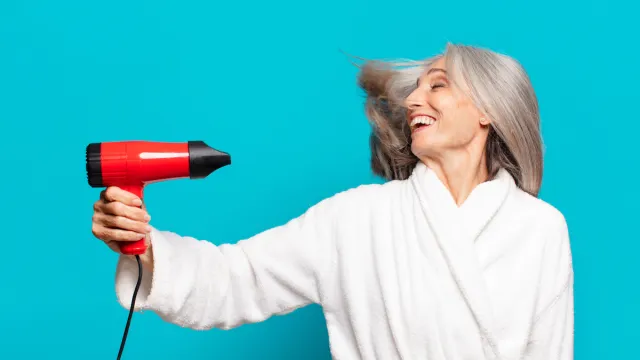
The landmark study that changed my perspective was published in the Annals of Dermatology. Researchers found that while high heat causes surface damage, the internal structure of the hair—the cell membrane complex—actually remains more intact when hair is dried quickly with a blow-dryer at a safe distance.
Protecting the Cell Membrane Complex
By using a blow-dryer on a low-to-medium setting, you remove the water quickly, allowing the hair cortex to return to its normal, “dry” size before the cuticle can be permanently overstretched. The key is the “safe distance.” The study noted that holding the dryer 15cm (about 6 inches) away from the hair and keeping it in constant motion prevents the surface from overheating while protecting the interior. For my silver hair, which is already naturally drier, this “quick dry” method has actually resulted in less mid-shaft breakage than my old air-drying method ever did.
The Scalp Health Factor: Dampness and Microbes
Beyond the hair shaft itself, air drying can wreak havoc on your scalp health. A damp scalp is a breeding ground for problems that can eventually lead to further hair thinning.
- Malassezia Growth: This is a fungus-like yeast that lives on everyone’s scalp. It thrives in warm, damp environments. When you air dry for four hours, you are essentially creating a greenhouse effect on your head. This can lead to dandruff, itching, and “seborrheic dermatitis,” all of which can interfere with healthy hair growth.
- The “Cold Scalp” Effect: For seniors, keeping the scalp damp for long periods can also be uncomfortable and contribute to a feeling of being chilled, which is reason enough to speed up the process.
How to Dry Your Hair Without the Heat Damage
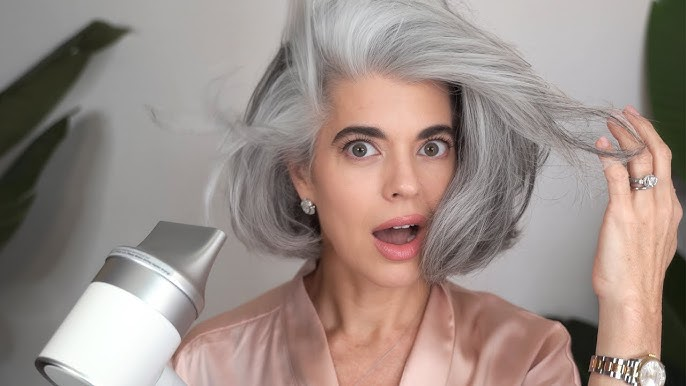
If we are going to stop air drying your hair, we have to do it in a way that doesn’t replace hygral fatigue with heat-induced “bubble hair.” Here is the 65-year-old’s guide to the perfect, healthy dry:
- Microfiber First: Never rub your hair with a traditional terry cloth towel. Instead, use a microfiber towel or an old cotton T-shirt to gently “squeeze” out 70% of the moisture. This reduces the time you’ll need to use the dryer.
- Heat Protectant is Non-Negotiable: Even on a low setting, aging hair needs a barrier. Use a lightweight spray that doesn’t contain heavy silicones to avoid weighing down thin strands.
- The “Cool” Start: Start your blow-dry on the cool or lowest heat setting. Focus on the roots first to “set” the volume and dry the scalp, then move to the lengths.
- Keep it Moving: Never hold the dryer in one spot. Keep it oscillating to ensure no single area of the cuticle reaches a damaging temperature.
The Aesthetic Benefit: Shine and Seal
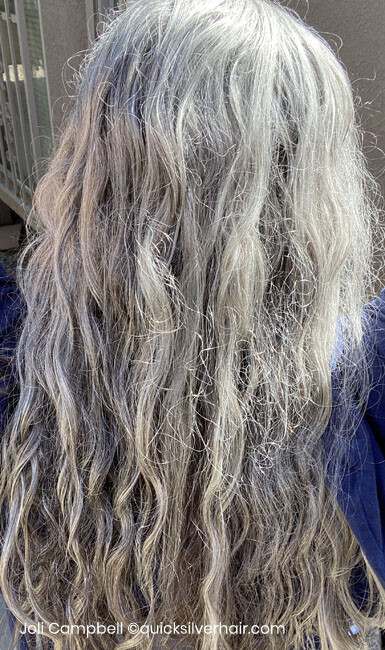
One of the most immediate things I noticed when I stopped air drying was the change in shine. When hair air dries, the cuticle often dries in a “raised” or ruffled position, which makes the hair look dull and feel rough. When you use a blow-dryer with the nozzle pointed down the hair shaft, you are mechanically sealing the cuticle shut. This smooth surface reflects light, giving silver hair that coveted “glass” finish that makes it look healthy and intentional rather than neglected.
Breaking the “Natural” Beauty Bias
There is a pervasive idea in the “clean beauty” world that anything “natural” (like air) is inherently better than anything “artificial” (like a machine). But at 65, I’ve learned that nature isn’t always kind to fragile structures. Just as we use moisturizer to protect our skin from “natural” wind and sun, we should use modern tools to protect our hair from the “natural” stress of water.
Changing my routine felt like a betrayal of my “low-maintenance” lifestyle at first. But once I saw the reduction in frizz and the increase in my hair’s overall strength, I realized that five minutes with a blow-dryer is a small price to pay for hair that actually stays on my head.
Conclusion: A New Philosophy for Aging Hair
The truth about air drying is a perfect example of why we must constantly update our beauty knowledge as we age. What worked for our thick, resilient hair at 20—when the cuticles were strong and the oils were plentiful—can be detrimental to our hair at 65.
By choosing to stop air drying your hair, you are choosing to respect the structural limits of your silver strands. You are preventing hygral fatigue, protecting your scalp microbiome, and ensuring that your hair is as strong as it is beautiful. It’s time to bring the blow-dryer back out of the closet—not for the sake of vanity, but for the sake of science.

Leave a Reply