
For years, I followed a specific kind of logic: if I wanted to look young, I should listen to someone who was young. I spent decades sitting in salon chairs across from stylists in their twenties and thirties—talented artists, certainly, but people who viewed my graying hair as a problem to be solved rather than a texture to be understood. The turning point in my life arrived when I stopped listening to hairstylists who didn’t have gray hair, everything changed, and the “problems” I thought I had suddenly vanished. By seeking out a professional peer who actually lived with silver strands, I moved away from a culture of concealment and toward a philosophy of authentic beauty. It wasn’t just a change in my haircut; it was a total reclamation of my identity at 65.
The Myth of the “Anti-Aging” Expert
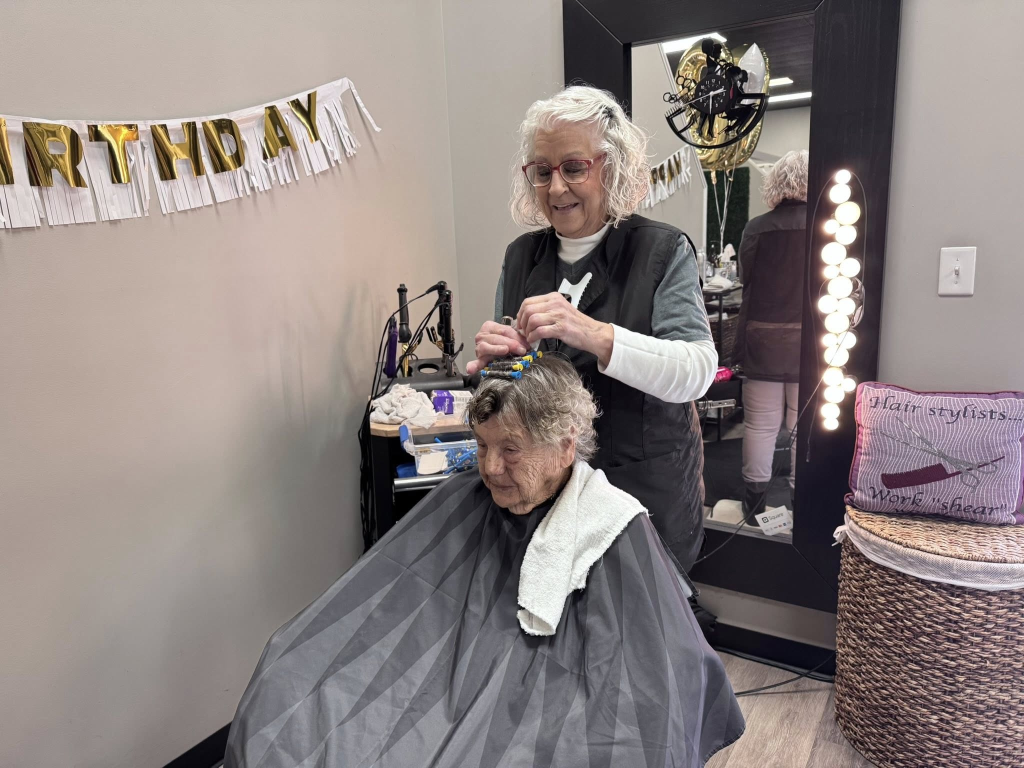
We are conditioned to believe that youth is the authority on beauty. When I entered my fifties and the silver started to win the battle against my brunette box dye, I naturally sought out the trendiest salons. I thought that by surrounding myself with young stylists who were up-to-date on the latest “anti-aging” techniques, I could somehow stay “current.”
However, I soon realized that there is a massive gap between academic knowledge of hair color and the lived experience of aging hair. A stylist in her late twenties can follow a color wheel perfectly, but she doesn’t know how it feels to see your skin tone change alongside your hair color. She doesn’t understand the psychological weight of the “skunk line” appearing every three weeks. Most importantly, she often views gray hair as a defect to be masked rather than a premium fiber to be polished.
The “Cover-Up” Agenda vs. Authentic Dimension
When you go to a stylist who doesn’t have gray hair, their immediate instinct is often one of concealment. In the salon industry, “gray coverage” is a billion-dollar revenue stream. For years, I was told that silver was “drab” or that it would “wash me out.” I was funneled into a cycle of high-maintenance base colors and aggressive highlights designed to camouflage my roots.
The Problem with Flat, Total Coverage
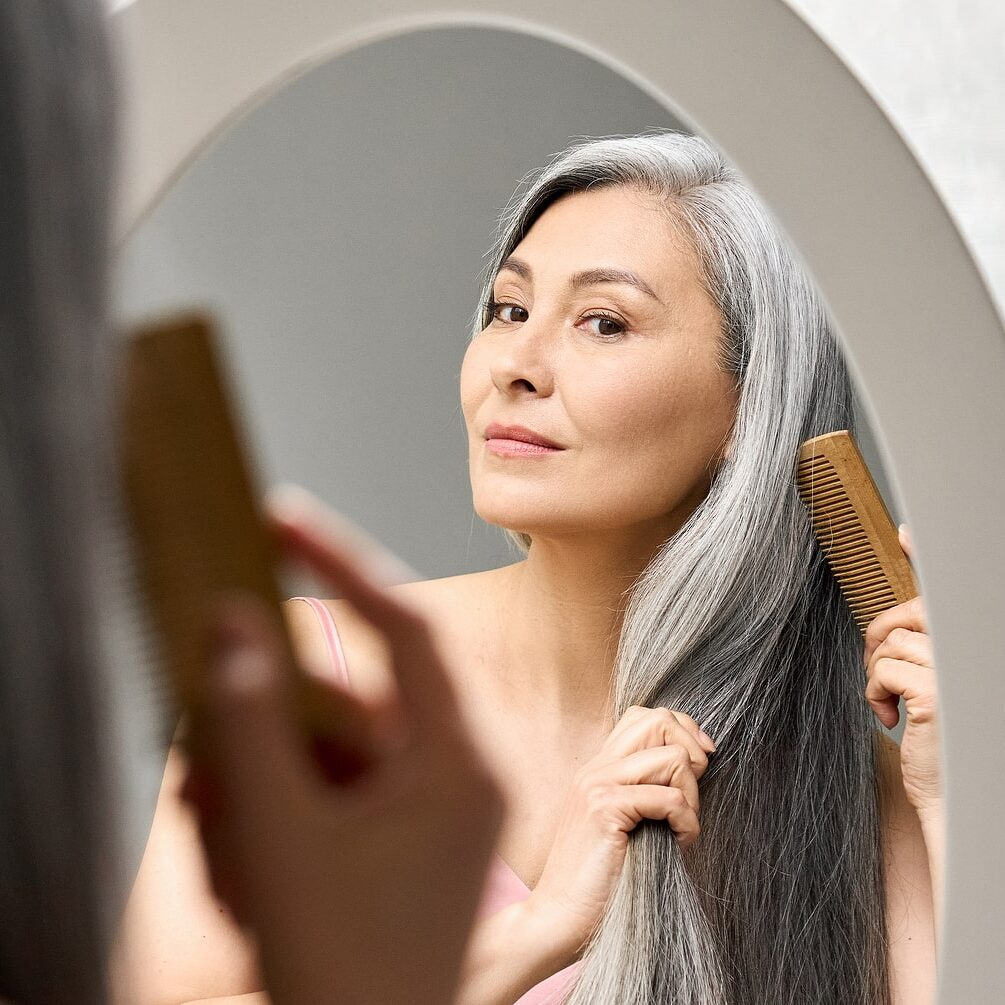
Younger stylists are often taught that the goal of gray coverage is 100% opacity. They want to see zero silver. The result is often what I call “Lego Hair”—a solid, flat block of color that looks artificial. Because this hair is all one tone, it lacks the light-reflectivity of natural hair.
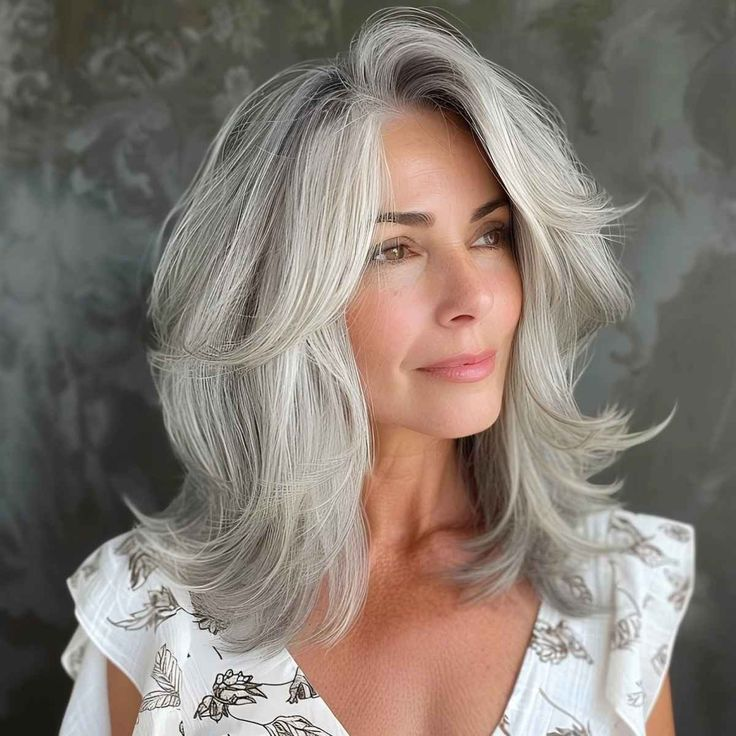
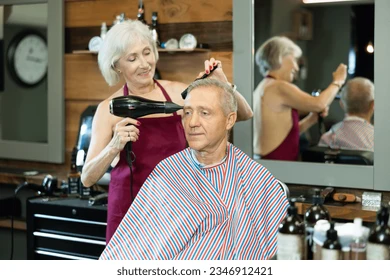
My new stylist, who sports a stunning steel-gray bob, looked at my roots and saw dimension. She explained that natural silver hair actually has a beautiful, translucent quality that acts as a built-in highlight. She didn’t see a “flaw” to be hidden under a layer of expensive pigment; she saw a new palette. By moving to “gray blending” instead of “gray coverage,” she used my natural silver to create a multi-tonal look that actually made me look more vibrant than the solid brown ever did.
Understanding the Physics of Silver Hair
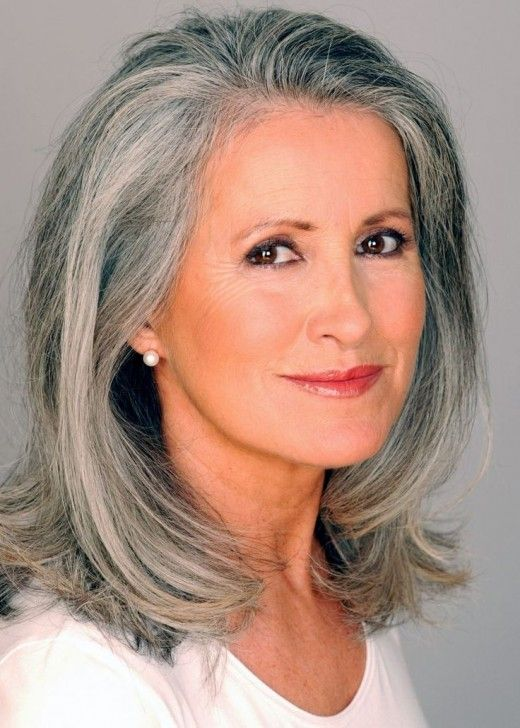
If you don’t have gray hair, you don’t truly understand the physics of it. It is a common misconception that gray hair is just hair that has lost its pigment. In reality, the follicle often undergoes a structural change. The sebaceous glands produce less oil as we age, and the cuticle of the gray hair is often tighter and less porous.
The “Wiry” Texture Myth
Gray hair is frequently described as “wiry” or “unruly.” My younger stylists always reached for heavy waxes, silicones, or high-heat tools to “tame” my hair into submission. They treated my hair as if it were simply “rebellious.”
My silver-haired stylist, however, reached for hydration and pH-balancing treatments. Because she lived with the same texture every day, she knew that silver hair requires moisture-rich, violet-toned emollients rather than the heavy, protein-packed products meant for younger, damaged hair. She taught me that my hair wasn’t “unruly”—it was thirsty. By changing the type of moisture I was providing, my wiry strands transformed into soft, silky waves.
Breaking the “Helmet” Habit

There is a specific “older woman” haircut that younger stylists default to: the short, heavily layered, sprayed-into-place look. It’s a safe bet that provides “lift,” but it often feels architectural and stiff. Younger stylists often use these styles to compensate for what they perceive as a lack of volume in aging hair.
Why Movement Equals Youth
A stylist with gray hair understands that stiffness actually makes us look older. Think about a child’s hair—it moves, it catches the wind, it is fluid. My new stylist encouraged me to grow my hair into a longer, softer silhouette. She showed me how to use the natural “crunch” of gray hair to create volume without the need for backcombing or sticky sprays. By embracing the natural weight of my hair, I ended up with a style that moves when I walk—a hallmark of vitality that I had inadvertently been perming and spraying away for decades.
The Power of Shared Experience and Empathy
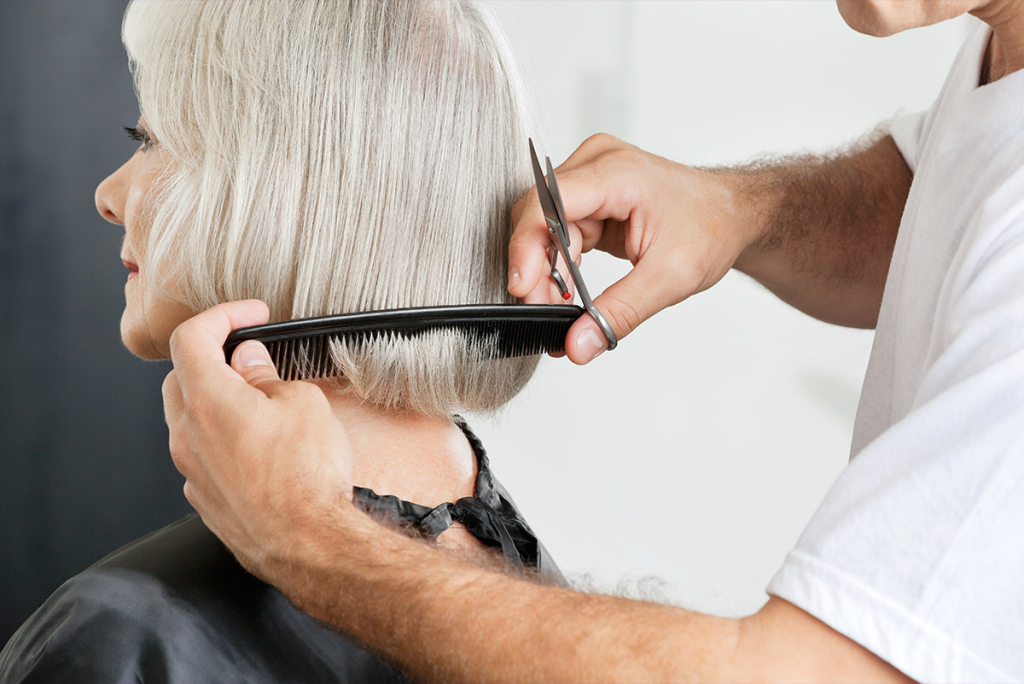
There is a profound psychological comfort in sitting with a peer. In my fifties and early sixties, when I expressed concerns about my hair thinning at the temples or my scalp feeling more sensitive, my younger stylists would offer a sympathetic but hollow “I’m sure it’s fine.” They couldn’t relate, so they couldn’t truly advise.
Professional Peer Advice
My current stylist offered strategy over platitudes. “I went through that three years ago,” she told me. “It’s a hormonal shift that changes the density. Here is the scalp serum that actually worked for me, and here is how we’re going to part your hair to give that area a break.” That lived experience is something you can’t learn in beauty school. It’s the difference between someone following a manual and someone who has lived the reality. She knew which products actually worked on “our” hair, and which ones were just clever marketing.
The Financial and Emotional Freedom
The most unexpected benefit of switching to a silver-haired stylist was the freedom. Younger stylists, perhaps unintentionally, keep you on a “dependency” loop. If you are doing total gray coverage, you must be back in that chair every 21 to 28 days. It becomes a second mortgage and a massive time commitment.
Once I stopped fighting my gray hair and stopped listening to those who wanted me to hide it, that “touch-up tax” vanished. I stopped seeing my hair as a project that needed constant fixing and started seeing it as a part of my body that needed care. This shift in perspective allowed me to invest that money into high-quality treatments and precision cuts that lasted longer.
Managing the “Yellowing” of Silver Hair
One thing my younger stylists never mentioned was environmental oxidation. Silver hair is prone to turning yellow from sun exposure, hard water, and even heat styling. Younger stylists often suggested more color to “fix” the yellow.
My silver-haired stylist knew better. She introduced me to the world of blue and purple toners—not to change my color, but to neutralize the yellow and make the silver pop. She taught me to use a “clear gloss” every few months to seal the cuticle and add a glass-like shine. These were simple, low-maintenance solutions that focused on health rather than hiding.
The Social Stigma of “Letting Yourself Go”
We live in a culture that often equates “youth” with “professionalism.” For a long time, I feared that if I let my hair go gray, I would be seen as “expired” in my career as a digital creator. Younger stylists often reinforced this fear by suggesting “youthful” tones.
My silver-haired stylist challenged this stigma head-on. She pointed out that “letting yourself go” and “letting yourself be” are two very different things. A sharp, well-maintained silver cut is actually more professional and modern than a faded, over-processed dye job that doesn’t match your skin’s changing undertones. She helped me realize that authenticity is the ultimate form of power. When you stop hiding, you stop being afraid.
Redefining Beauty for the Modern Senior
At 65, I am more active than I was at 45. I am running websites, moving into new apartments, and exploring new hobbies. My hair should reflect that energy. Younger stylists often have a “retirement” mindset for their older clients—they want to give you a style that is easy for them to maintain, not a style that makes you feel bold.
My silver-haired stylist sees me as a contemporary. She gives me cuts that are edgy and sophisticated. She understands that I want to look like a woman of the world, not a woman who is fading into the background. By choosing a stylist who understands the beauty of aging, I’ve finally stopped apologizing for the passage of time.
Conclusion: The Best Version of Me
Since I stopped listening to stylists who were afraid of gray, my hair has never looked better. It’s no longer a battlefield of chemicals and heat; it’s soft, it’s bright, and it’s finally healthy. I’ve traded the anxiety of the salon chair for the joy of natural movement.
At 65, I’ve learned that the best beauty advice doesn’t always come from the person with the trendiest “current” look or the most followers on social media. Sometimes, it comes from the person who has the confidence to show you exactly where you’re headed—and proves that the destination is beautiful. My hair isn’t just a color anymore; it’s a statement of freedom.

Leave a Reply