
For most of my adult life, I followed the “Golden Rule” of hair care as if it were carved in stone: visit the salon every six weeks for a trim. My stylists always insisted that this was the only way to prevent split ends and keep my hair growing strong. I was a loyal soldier to the schedule, even as I watched my hair get shorter and thinner with each passing year. However, once I reached my mid-sixties, I began to notice a frustrating trend. I wasn’t just maintaining my length; I was losing it. I finally realized that the truth about “trim every 6 weeks” – why that’s bad advice for older women is rooted in a fundamental misunderstanding of how aging hair actually grows. By blindly following an arbitrary calendar, I was essentially cutting away my hair faster than my body could replace it.
The Math of Aging Hair: Why the 6-Week Rule Fails
The advice to trim every six weeks is based on the average hair growth rate of a young adult—roughly half an inch per month. In that scenario, a quarter-inch trim every six weeks leaves you with a net gain of length. But for those of us over 60, the math changes significantly.
Slower Growth Cycles
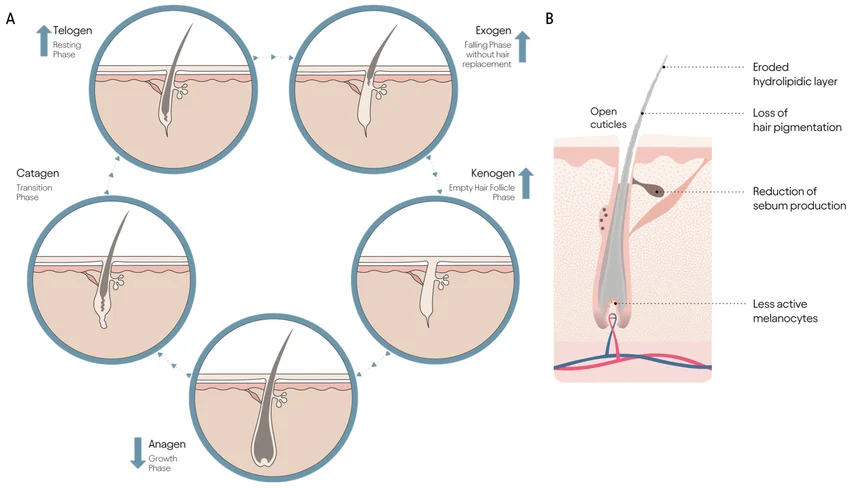
As we age, the “anagen” (growth) phase of our hair cycle shortens. Not only does the hair grow more slowly—often far less than the standard half-inch—but it also stays on our head for a shorter duration before shedding. If your hair only grows a quarter-inch in six weeks, and your stylist trims a quarter-inch “just to keep it fresh,” you are effectively stuck in a zero-growth loop. For many older women, this results in a style that slowly recedes over time, leading to the “accidental pixie” look that many of us never actually wanted.
The Density Dilemma
It’s not just about length; it’s about volume. When you trim frequently, you are constantly removing the oldest, most “tapered” ends of the hair. While this sounds good in theory, in practice, it can make thinning hair look even more sparse. Frequent trimming creates blunt edges that can look stiff and “choppy” on silver hair, which lacks the natural elasticity of younger strands.
The Fragility Factor: Silver Hair is Different
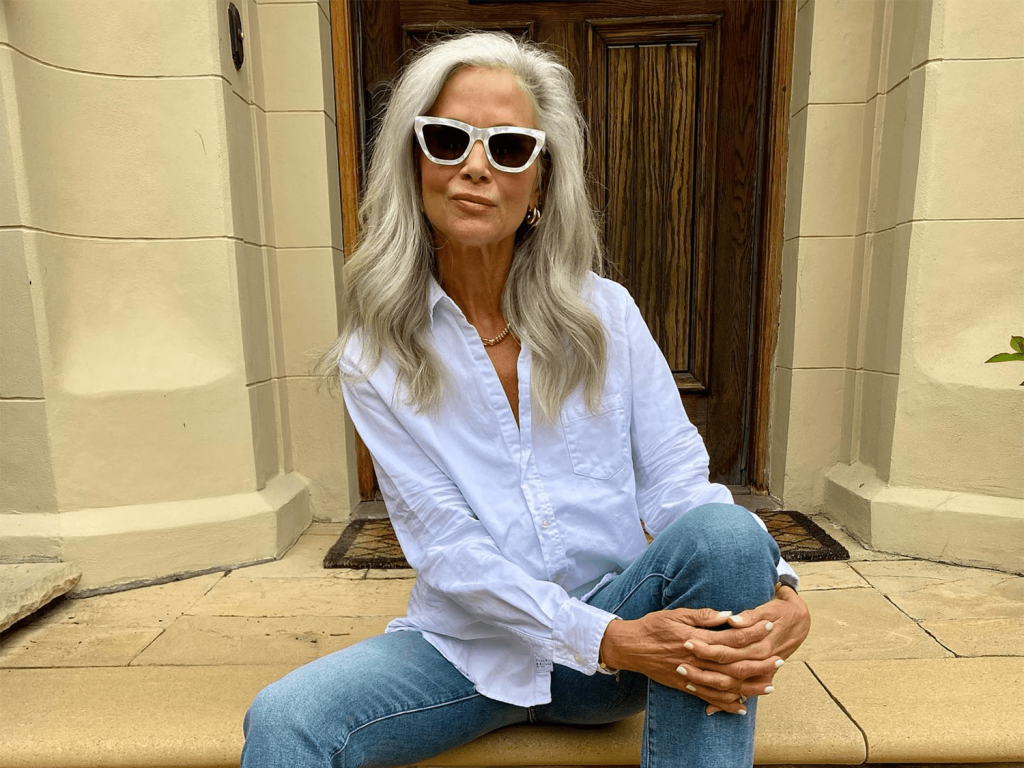
The six-week rule was designed for hair with a robust, oily cuticle that can withstand frequent handling and mechanical stress. Silver and gray hair is structurally different and requires a different strategy.
Cuticle Sensitivity
Aging hair follicles produce less sebum, the natural oil that coats the hair shaft and protects it from splitting. This means that by the time our hair is six weeks old, it isn’t necessarily “damaged”—it’s just dry. Younger stylists often mistake this natural dryness for split ends that need to be cut. In reality, what that hair needs is a deep moisture treatment, not a pair of scissors. By cutting, you are removing hair that could have been “saved” with the right hydration.
The “Mechanical Stress” of the Salon Visit
We often forget that the trim itself involves high-tension combing, shampooing with harsh salon surfactants, and usually a high-heat blow-dry to “show off” the cut. For fragile, thinning hair, the physical stress of the salon ritual every six weeks can actually cause more breakage than the trim prevents. When I moved my appointments to every twelve weeks, I noticed significantly less shedding simply because I was “disturbing” the hair less often.
Why “Dusting” is Better Than “Trimming”
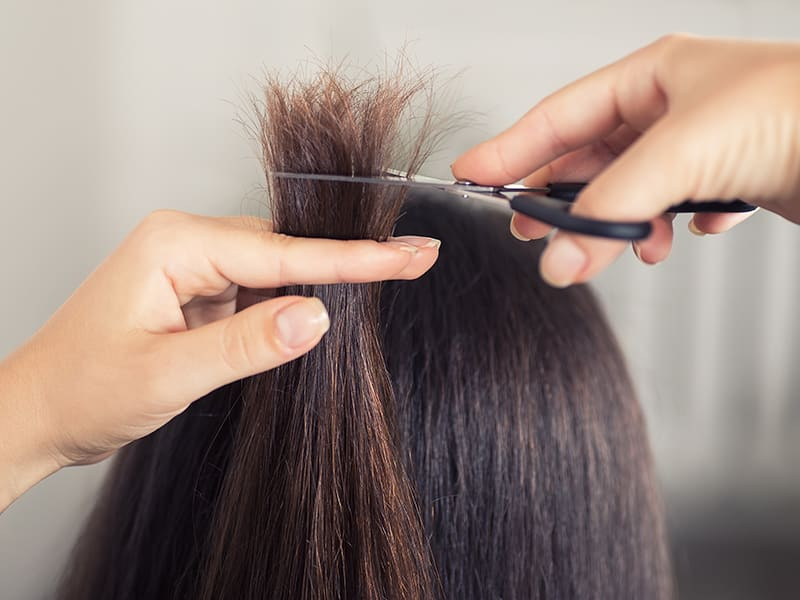
If the six-week rule is the enemy of length for older women, what is the alternative? The answer lies in a technique called “dusting.”
- What is Dusting? Dusting is the practice of cutting only the literal tips of the hair—less than an eighth of an inch—only where visible split ends exist.
- The Benefit: It preserves the maximum amount of length while removing the friction that causes tangles.
- The Schedule: Instead of a calendar-based appointment, I now only seek a trim when my hair begins to tangle easily at the ends or when the shape of the cut has visibly collapsed. For me, this is usually every 10 to 14 weeks.
The Industry Bias: Why Stylists Still Push the 6-Week Rule
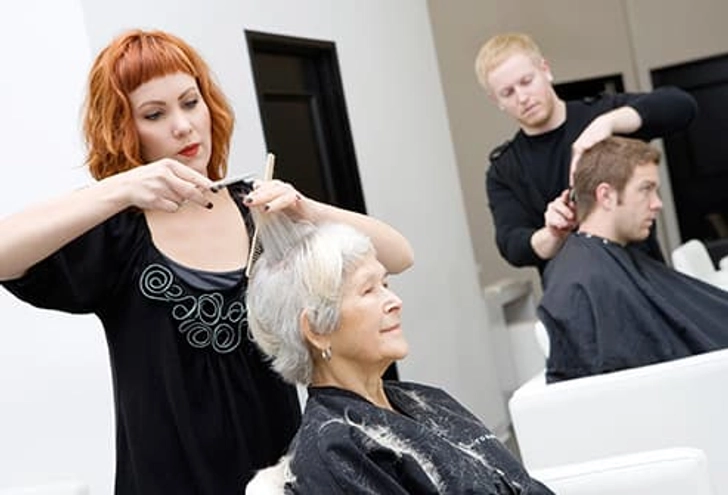
It is important to address the “elephant in the salon”: the six-week rule is a business model. Salons rely on “pre-booking” to ensure a steady stream of revenue. While most stylists have good intentions, their training is often focused on a “one size fits all” approach that prioritizes the maintenance of a specific shape over the long-term health and length of the client’s hair.
When you are a woman of a certain age, you have to be your own advocate. You have to be willing to say, “I don’t need a trim today; I just want a deep condition and a gentle style.” Many women fear that skipping a trim will lead to “hair traveling up the shaft,” but as long as you are nourishing your ends with oils and avoiding high heat, your hair can easily go three months without a cut.
Strategies for Extending the Life of Your Cut
Once I broke the six-week habit, I had to learn how to manage my hair at home so it didn’t look “neglected” during the longer intervals.
- Seal the Ends: I use a light jojoba or marula oil on the last inch of my hair every single night. This prevents the ends from becoming brittle and splitting in the first place.
- Low-Heat Styling: I traded my round brush and blow-dryer for air-drying and silk rollers. This preserved the integrity of my ends, making the frequent “corrective” trims unnecessary.
- The “Search and Destroy” Method: Occasionally, under a bright light, I will use professional hair shears to snip a single split end if I see one. This keeps the hair healthy without sacrificing the overall length of the style.
The Psychological Shift: Reclaiming Your Length
There is a subtle, ageist narrative that suggests women over 60 should have “short, manageable” hair. The six-week trim rule often facilitates this by slowly whittling away a woman’s hair until she feels she has no choice but to go short.
By reclaiming the right to wait, I reclaimed my right to have long, flowing, silver hair. It gave me a sense of agency that I didn’t realize I had lost. My hair is now the longest it has been since my thirties, and ironically, it looks thicker because the “bulk” of the hair hasn’t been thinned out by constant “layering” and “texturizing” at the salon.
Conclusion: Listen to Your Hair, Not Your Calendar
The truth about “trim every 6 weeks” is that it is a guideline, not a law—and for the older woman with slower-growing, more fragile hair, it is a guideline that often does more harm than good. Our hair has a different rhythm now. It requires more patience, more moisture, and significantly fewer “interventions.”
When I stopped listening to the six-week rule, my hair finally had the chance to reach its full potential. It became healthy, it became long, and it became a reflection of my actual life—not a salon’s schedule. If you want to see your hair truly thrive in your sixties and beyond, put down the scissors and pick up the conditioner. Your hair knows when it needs a cut; you just have to learn to listen to it.

Leave a Reply