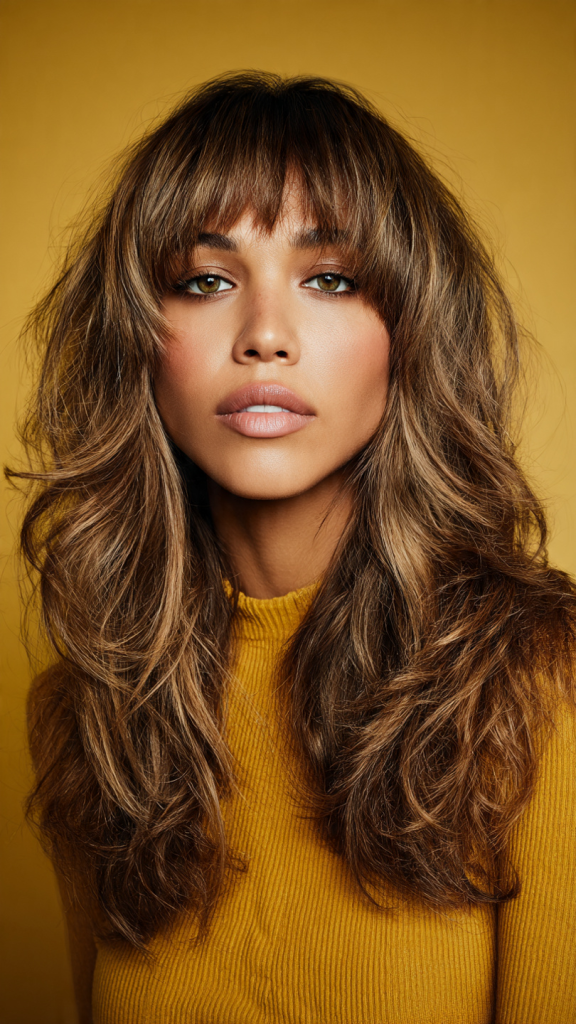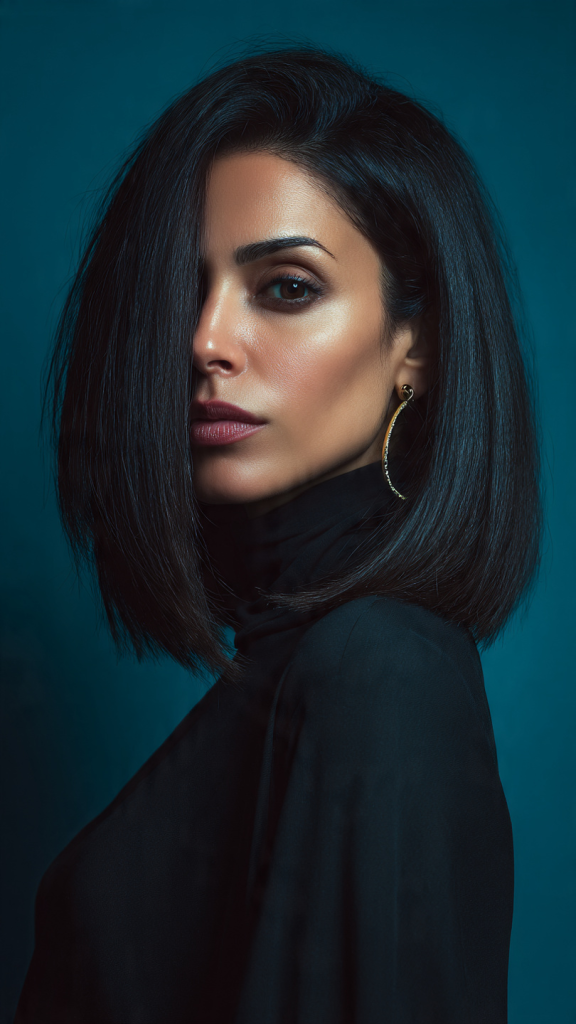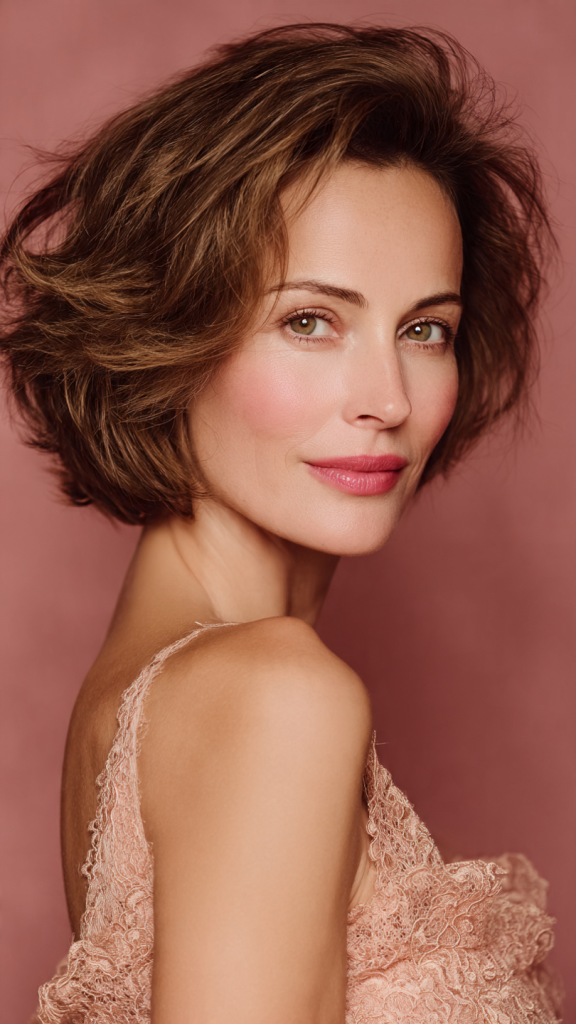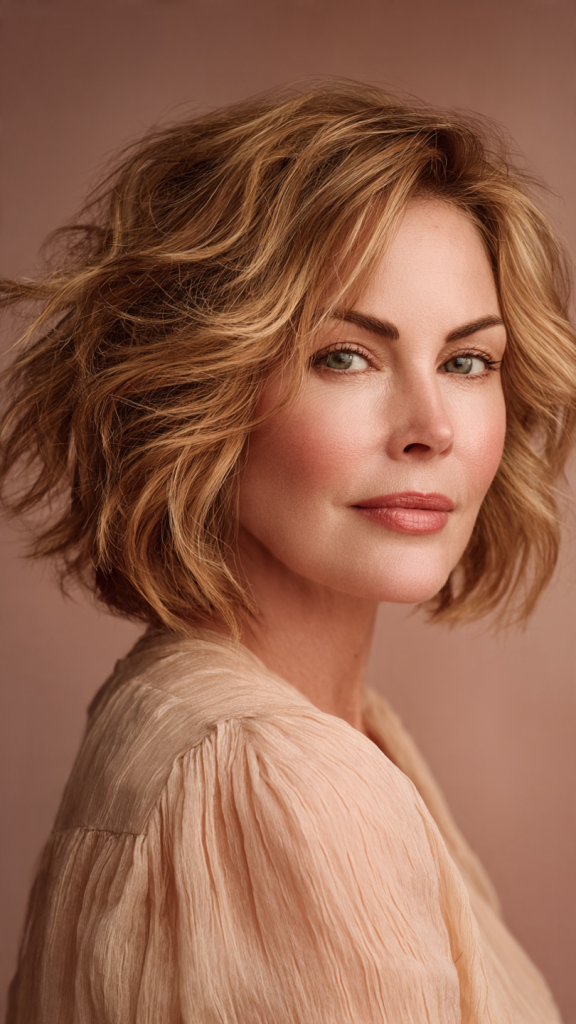
Author: admin

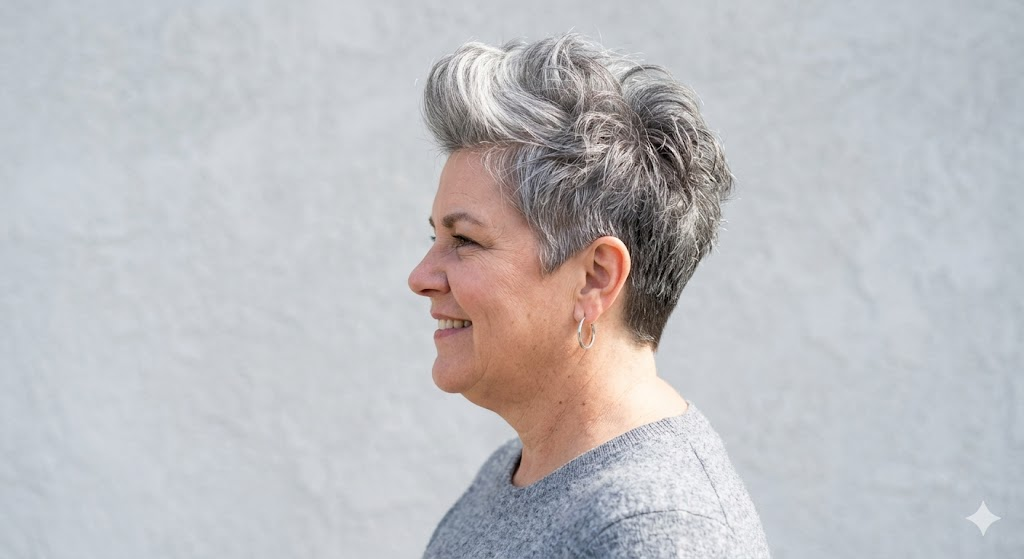
  • 9 Gray Hair Highlights That Enhance Your Natural Silver Strands

    9 Gray Hair Highlights That Enhance Your Natural Silver Strands

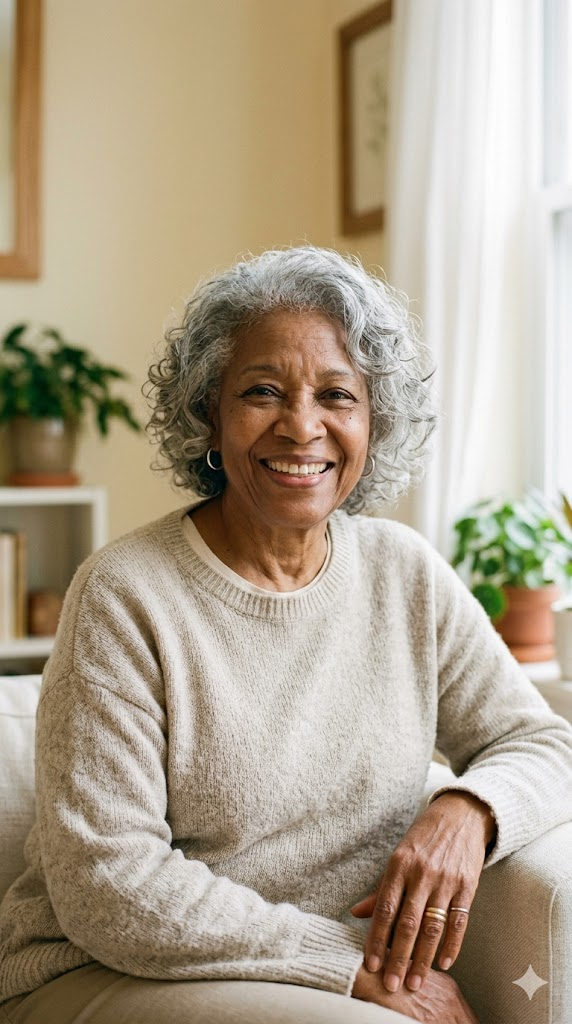
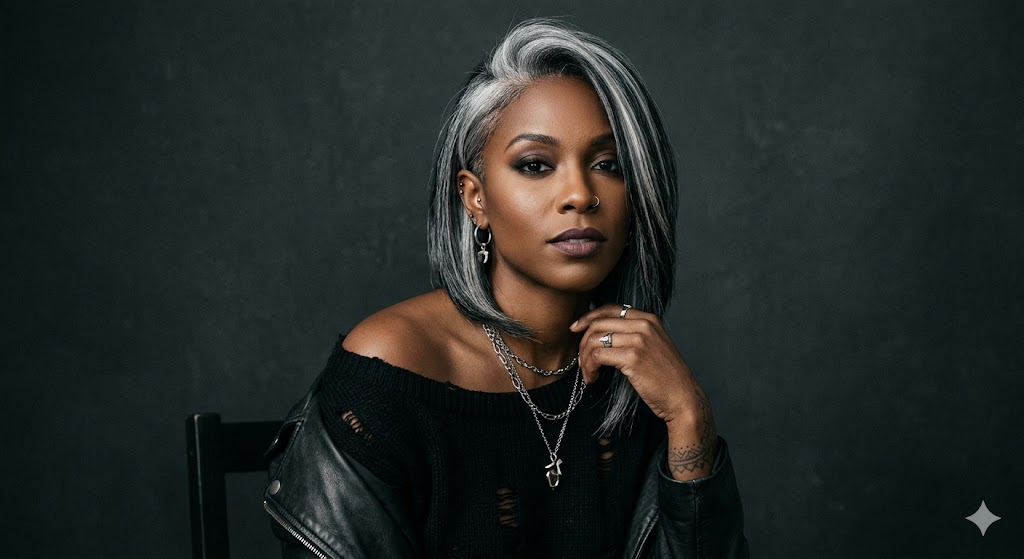
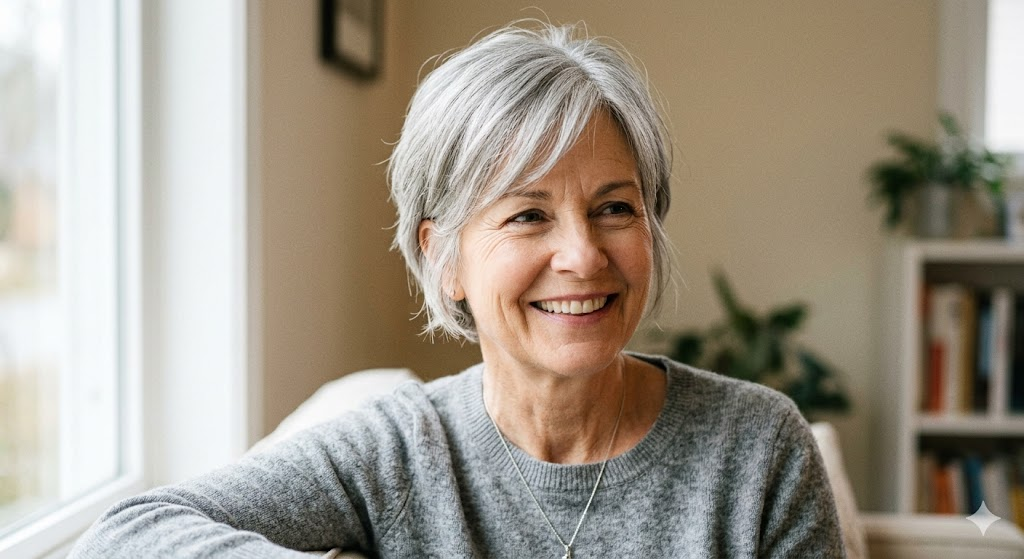
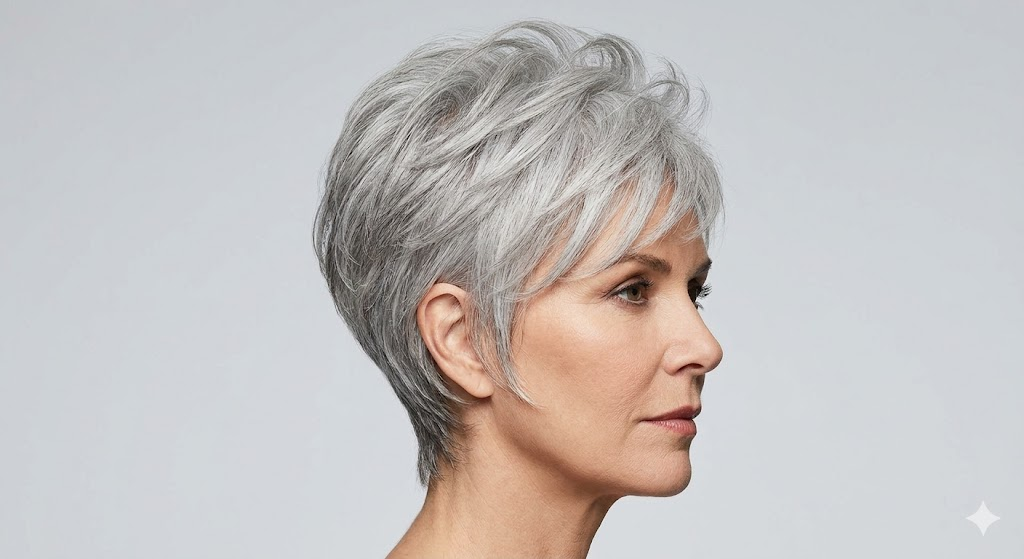
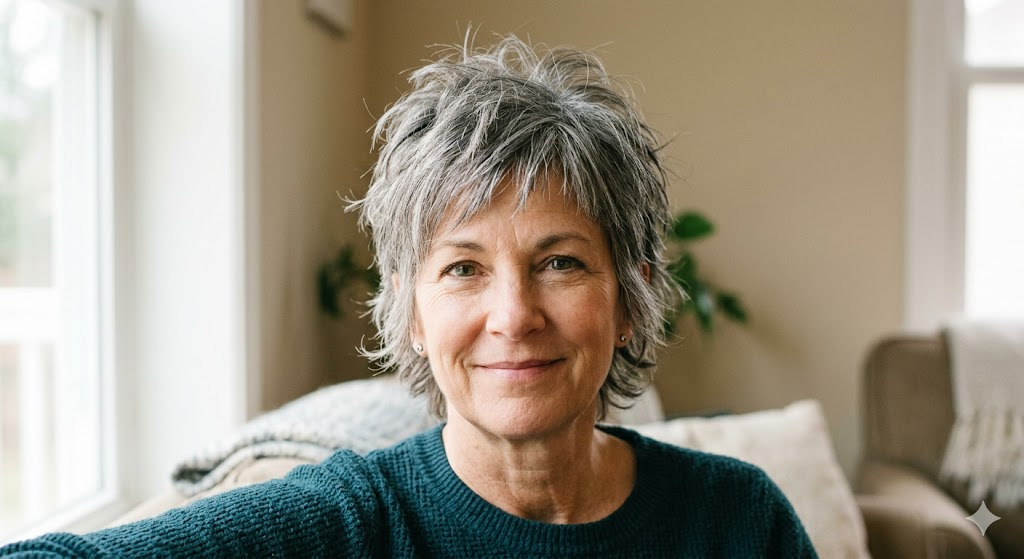
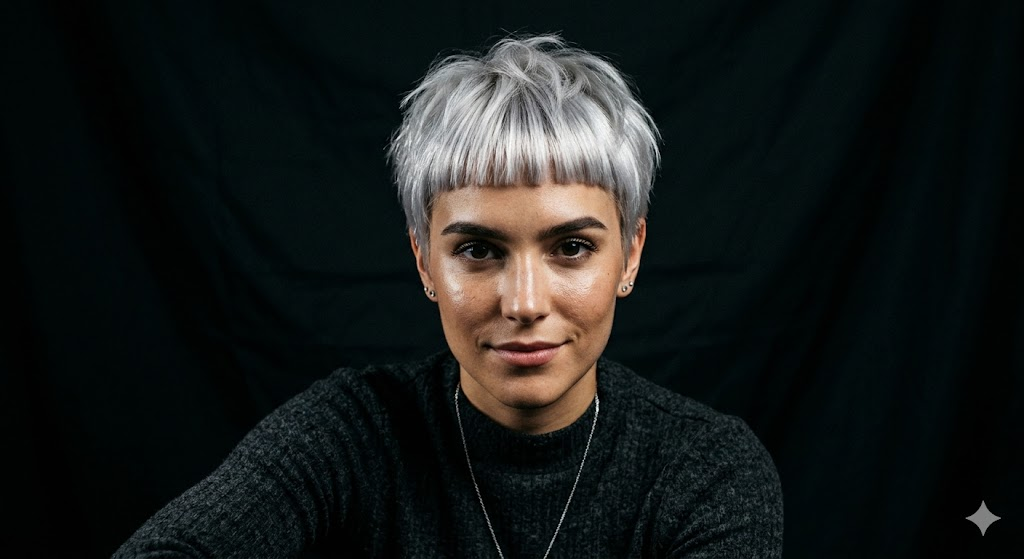
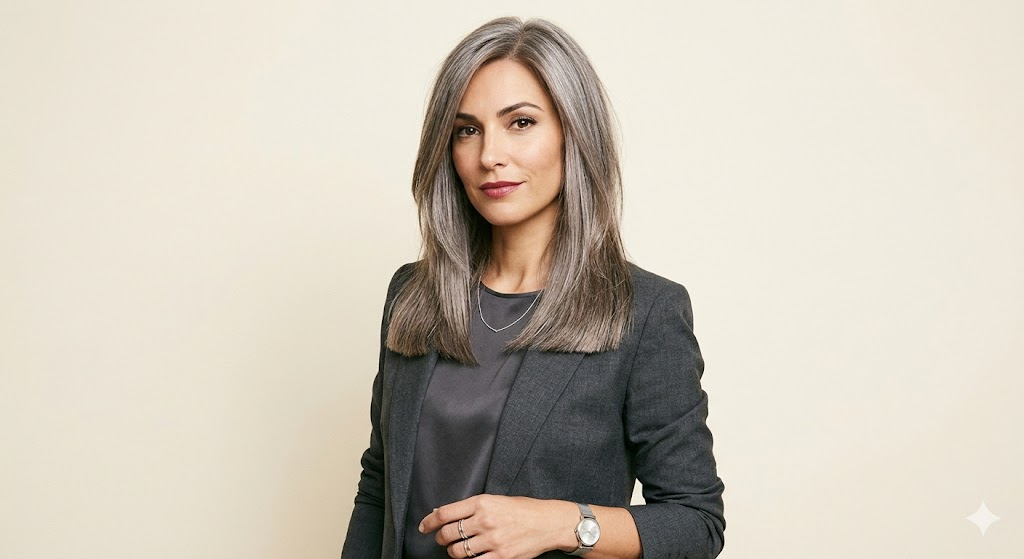
    Gray hair is not something to hide. It is something to celebrate. And one of the best ways to celebrate it is with gray hair highlights. Whether you are fully silver, partially gray, or just starting to see those first few white strands, the right highlights can add dimension, brightness, and a modern edge to your look. Gray hair highlights blend your natural silver with lighter tones, creating a multi-dimensional effect that looks intentional and stunning. This guide walks you through nine gray hair highlights techniques, from subtle to bold, plus how to maintain them and what to tell your colorist.

    Why Gray Hair Highlights Are a Game-Changer for Silver Strands

    Solid gray hair can sometimes look flat or one-dimensional. Adding gray hair highlights solves that problem. Highlights create contrast, depth, and movement. They can brighten your face, soften your features, and make your gray hair look expensive rather than accidental. Gray hair highlights also make the transition from dyed hair to natural gray much easier. Instead of a harsh line between your colored ends and your silver roots, highlights blend everything together. The nine gray hair highlights techniques below range from icy silver to soft champagne. Each includes why it works, who it is best for, and maintenance needs.

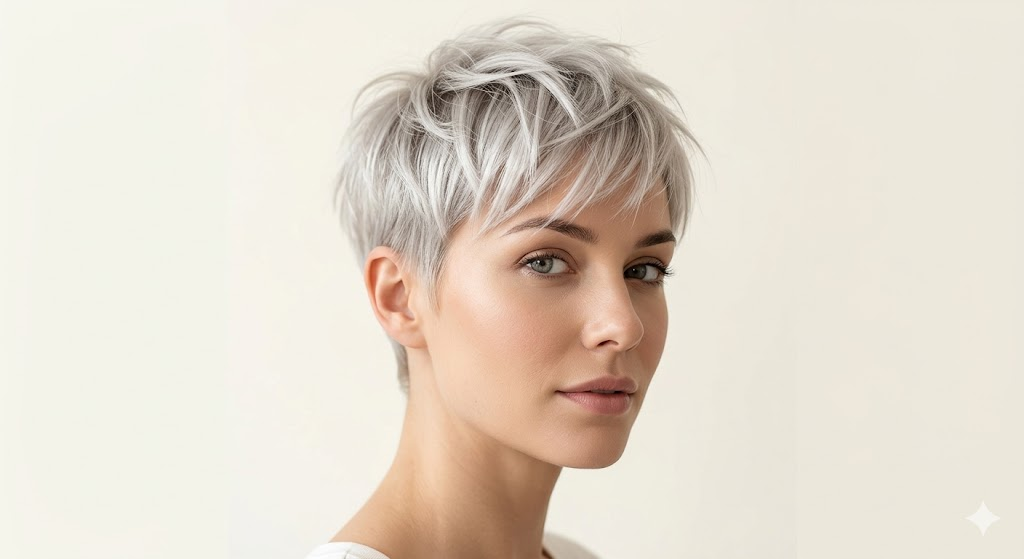
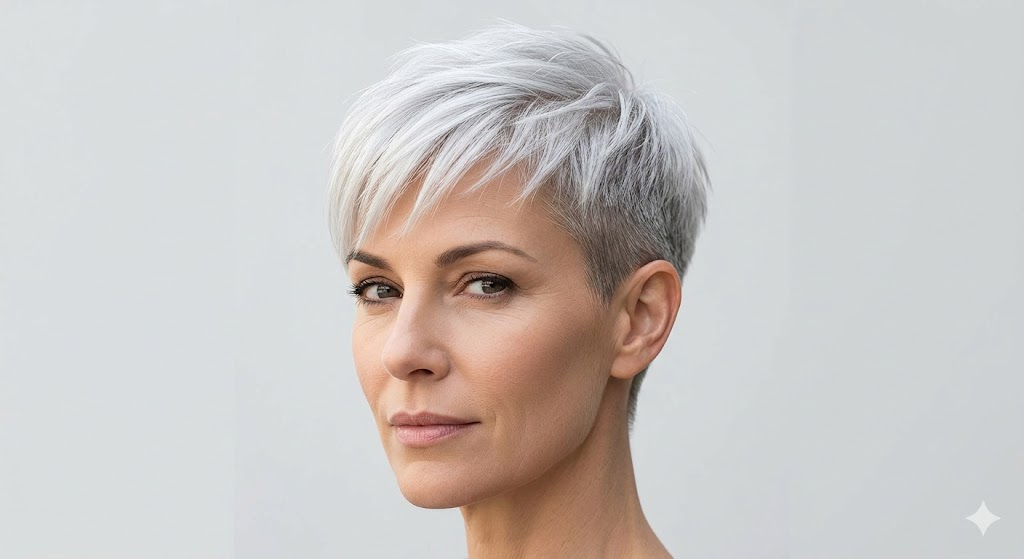
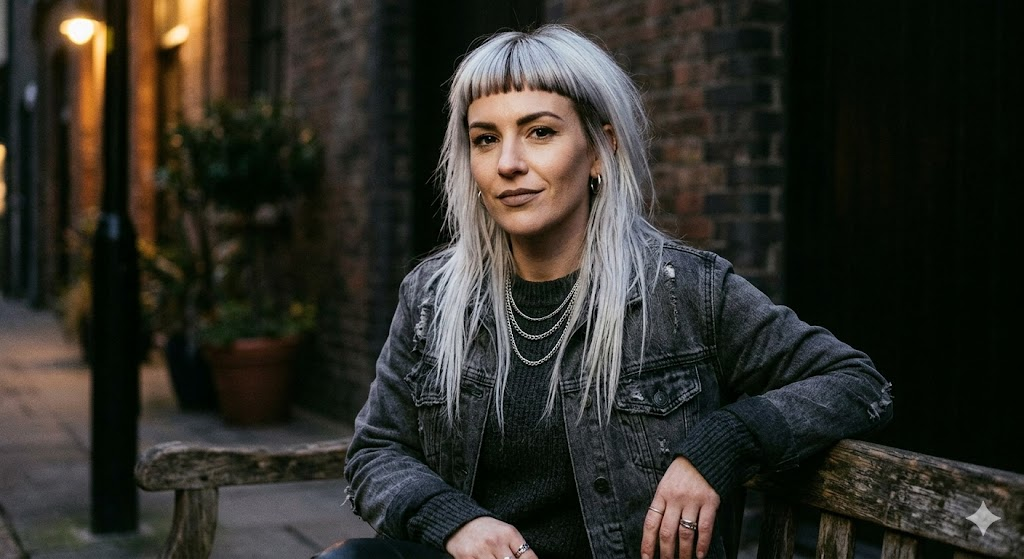
    1. Icy Silver Highlights

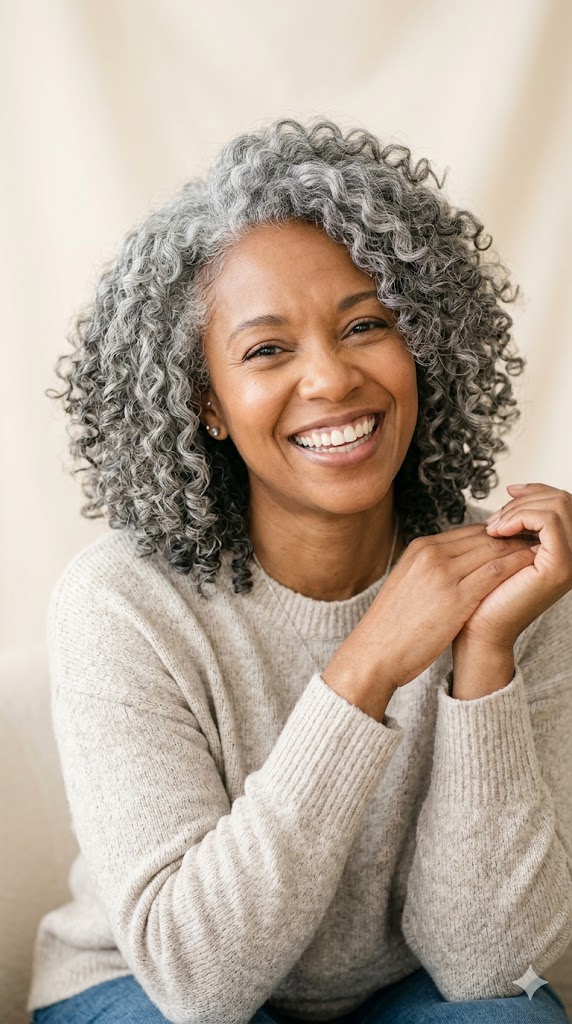
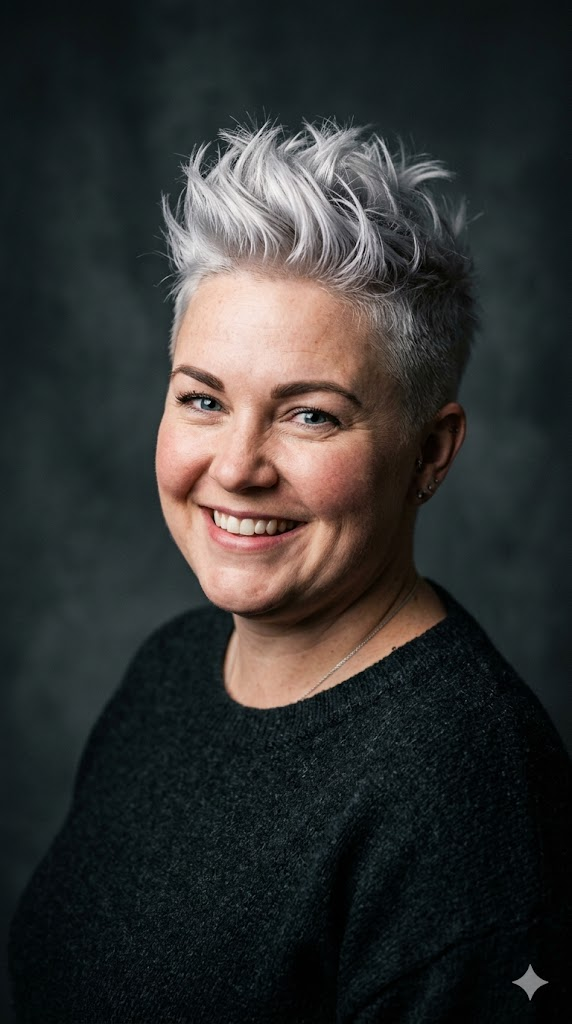
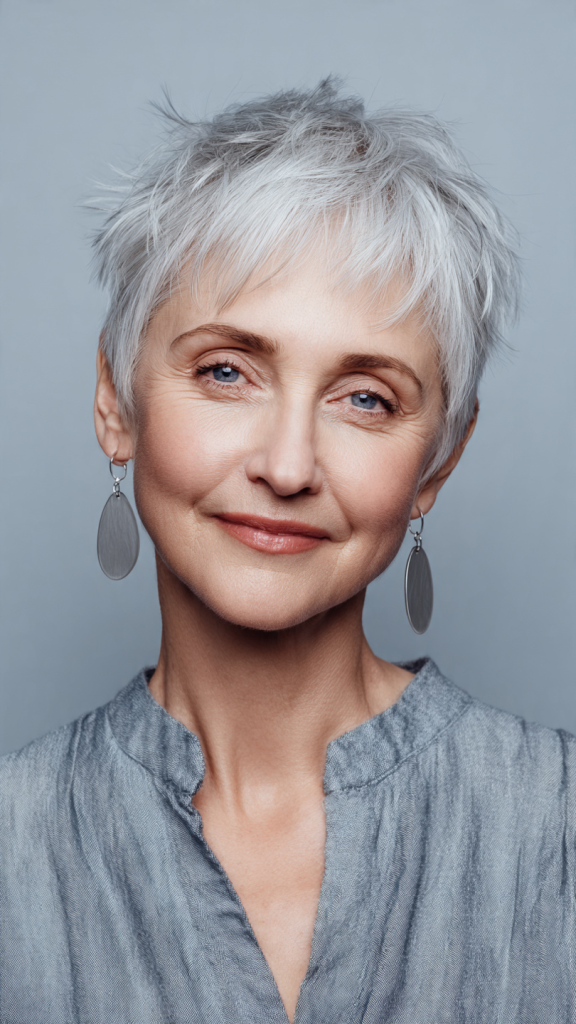
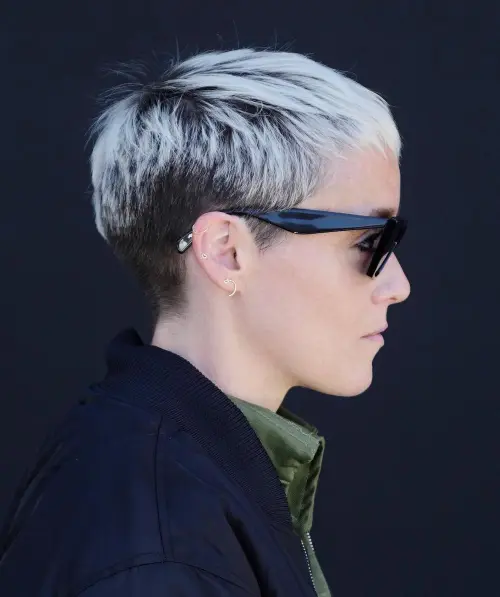
    Why it works: Icy silver highlights are cool-toned, almost blue-white in appearance. They add brightness and drama to naturally gray or white hair. This gray hair highlight technique is perfect for women who want their silver hair to look striking and intentional.

    How it is done: Your colorist will paint ultra-light, cool-toned pieces throughout your hair. The contrast between your natural gray and the icy highlights creates a multi-dimensional, shimmery effect.

    Best for: Naturally gray or white hair. Women with warm-toned skin should proceed with caution — icy tones can wash you out.

    Maintenance: Touch-ups every 8 to 12 weeks. Use purple shampoo weekly to prevent brassiness.
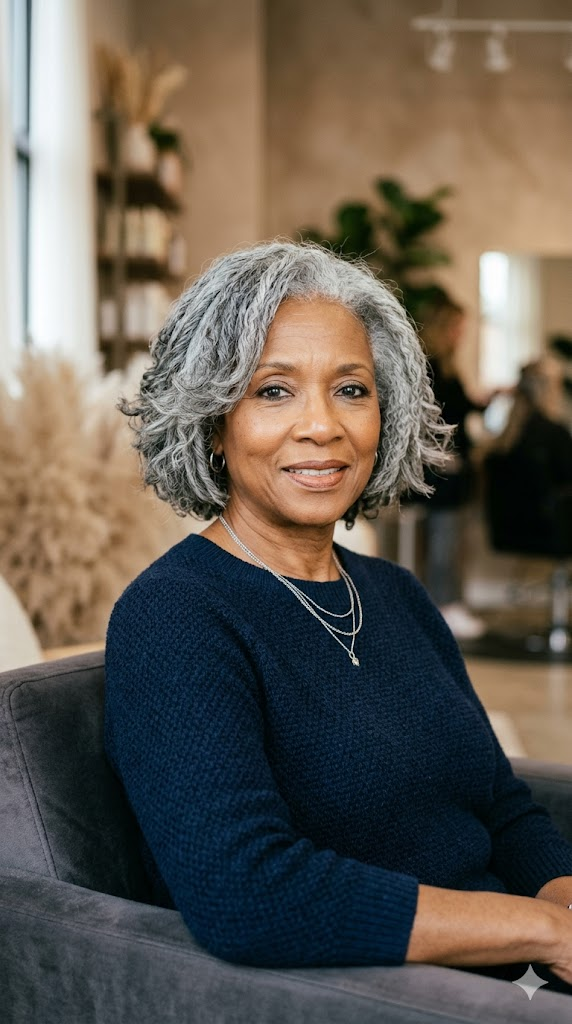
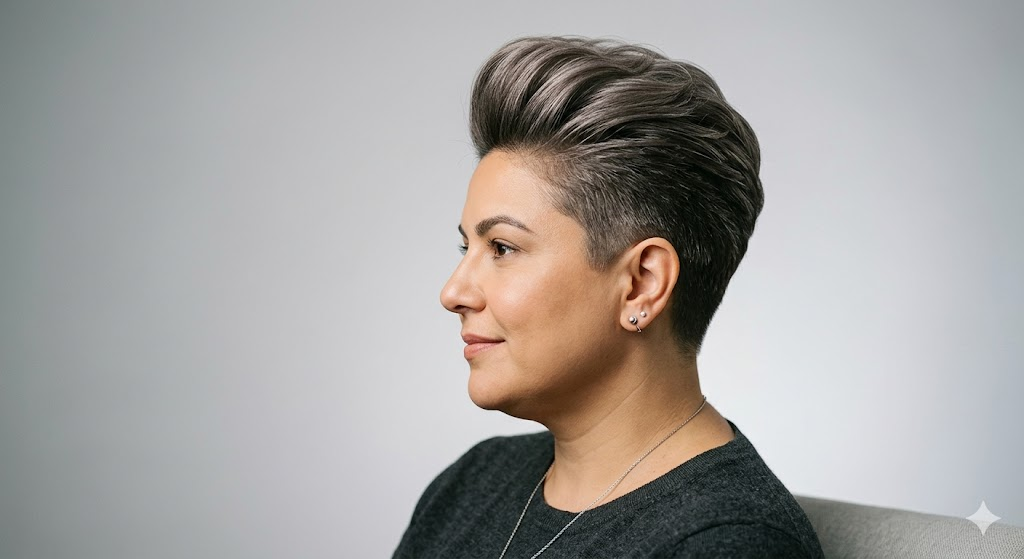
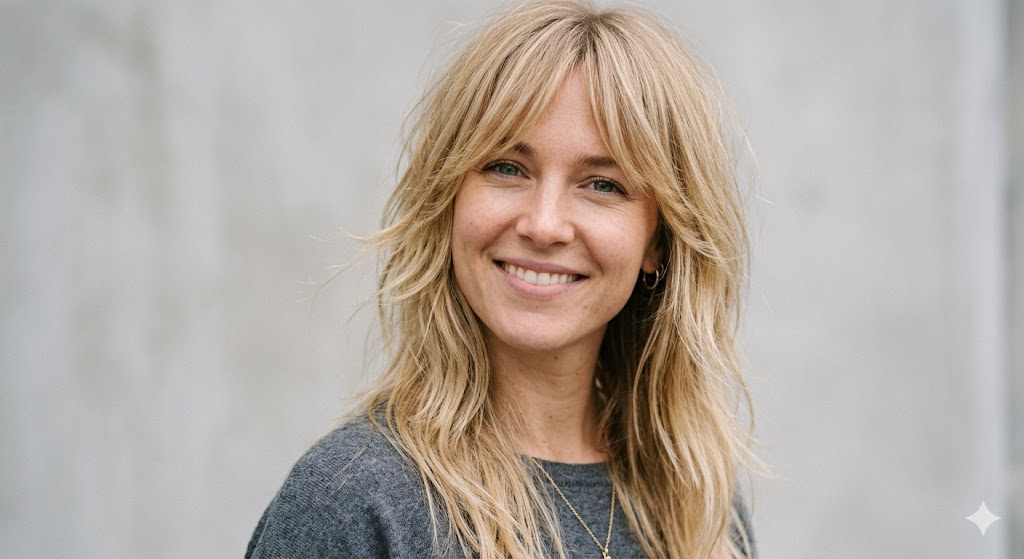
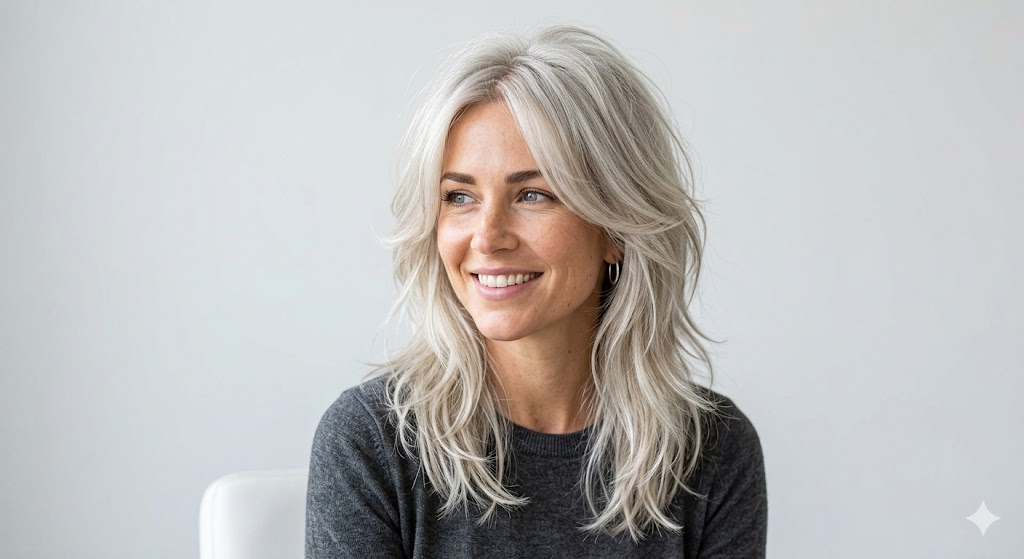
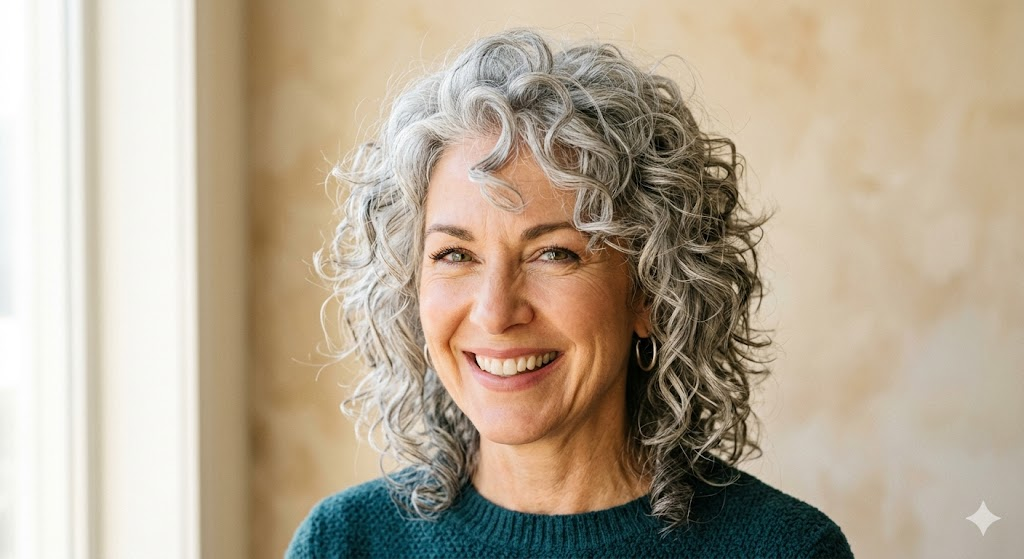
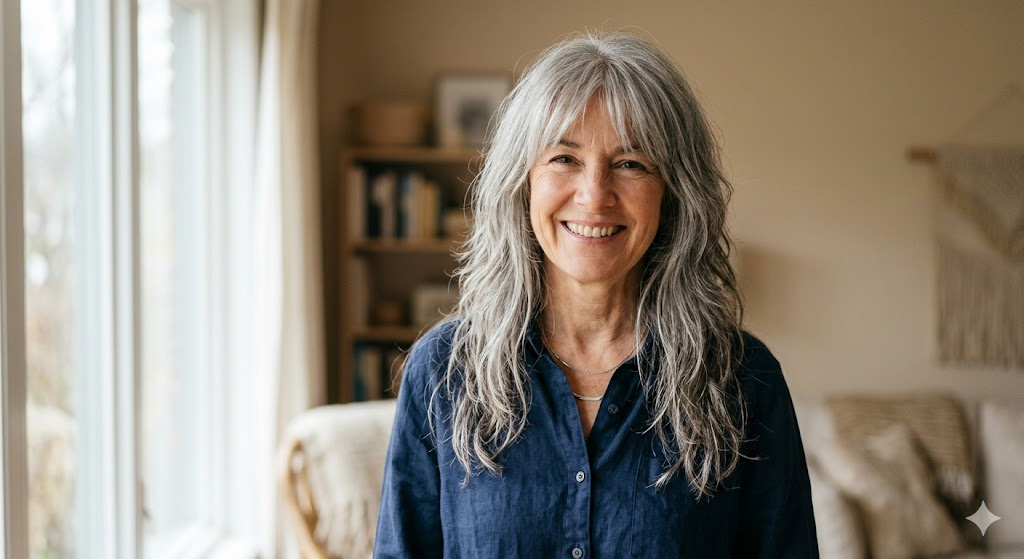
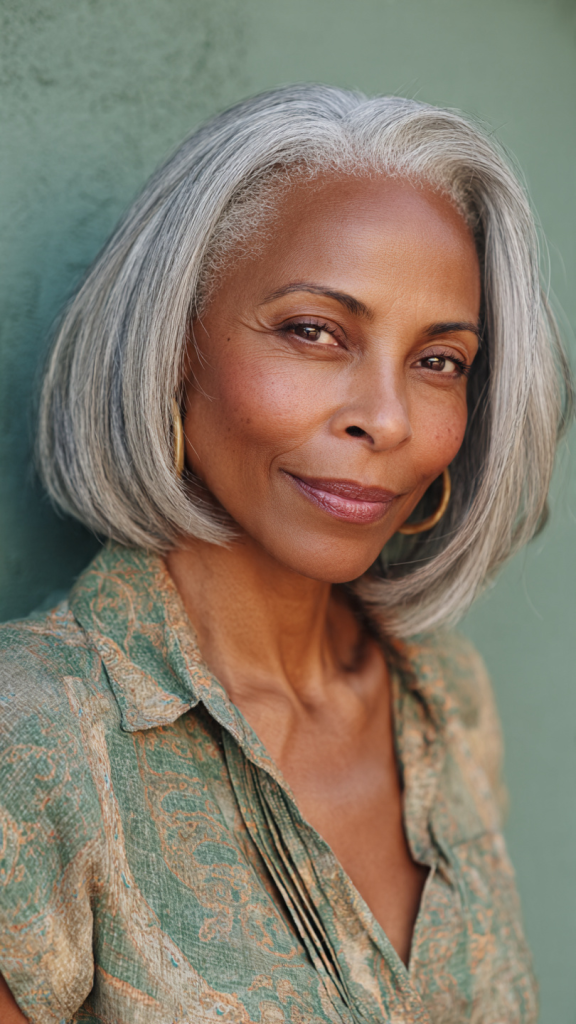
    Image Alt Text: Icy silver gray hair highlights on naturally white hair creating cool-toned dimension and brightness

    2. Champagne Beige Highlights

    Why it works: Champagne beige highlights are warm, soft, and golden. Unlike icy silver, champagne tones add warmth to gray hair. This gray hair highlight technique is perfect for women with warm skin tones or those whose gray hair has yellowish undertones.

    How it is done: Your colorist will add soft, beige-toned highlights throughout your hair. The warmth complements the natural gray without fighting it.

    Best for: Women with warm or olive skin tones. Also great for those transitioning from blonde to gray.

    Maintenance: Touch-ups every 8 to 12 weeks. Use a purple shampoo once a week if you see brassiness.
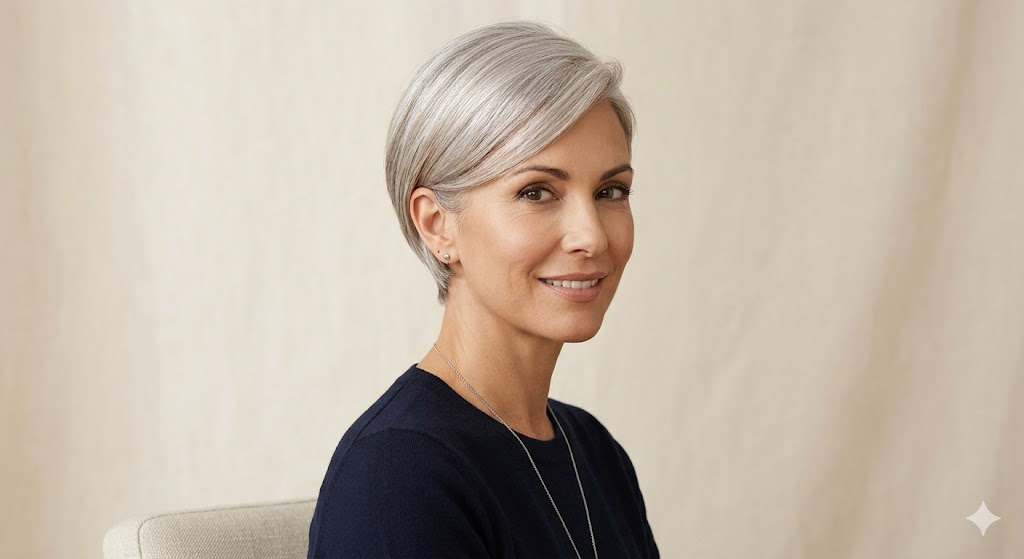
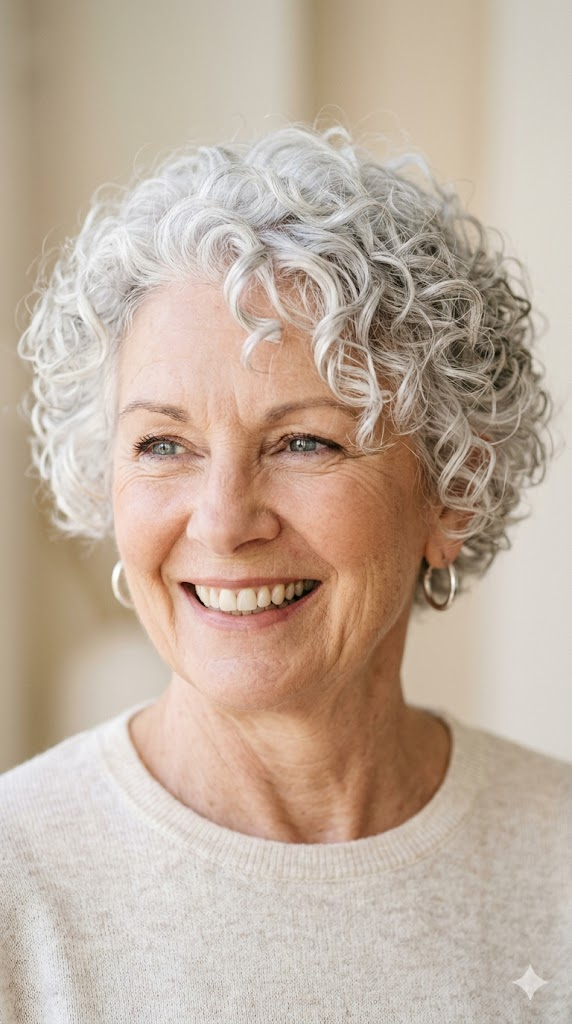
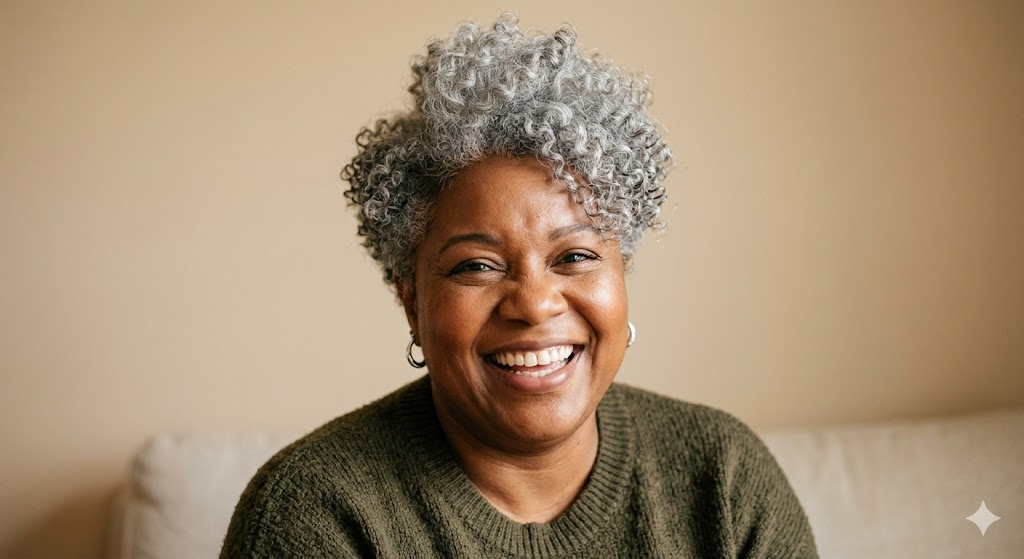
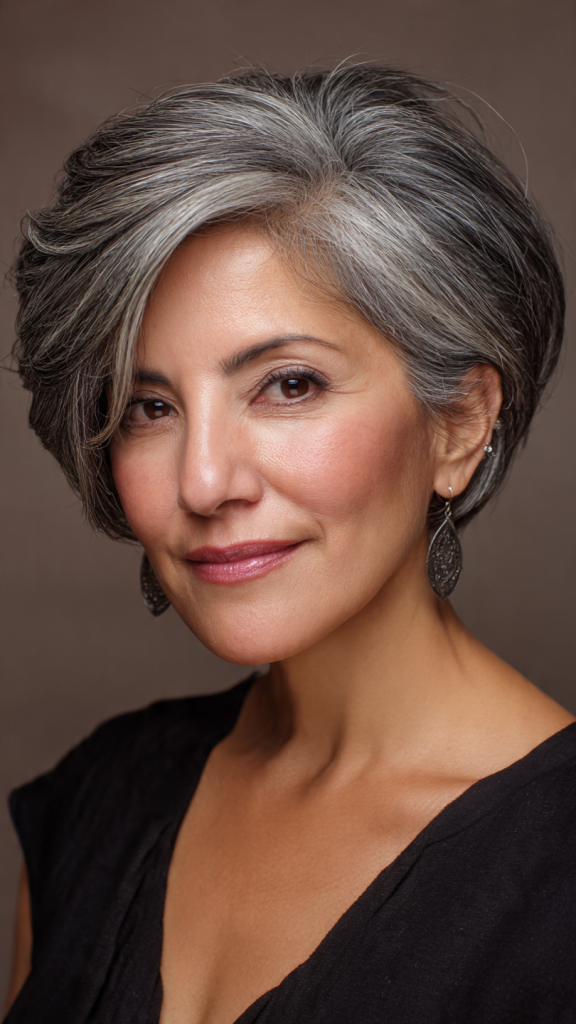
    Image Alt Text: Champagne beige gray hair highlights adding warmth and softness to natural silver strands

    3. Silver Babylights

    Why it works: Babylights are ultra-fine, delicate highlights that mimic the natural variation in children’s hair. On gray hair, silver babylights add subtle dimension without looking stripey or harsh. This gray hair highlight technique is perfect for women who want a natural, low-contrast look.

    How it is done: Your colorist will paint very fine, thin pieces of silver or white throughout your hair. The effect is soft, blended, and natural-looking.

    Best for: All gray hair types. Especially good for women with fine hair who want dimension without damage.
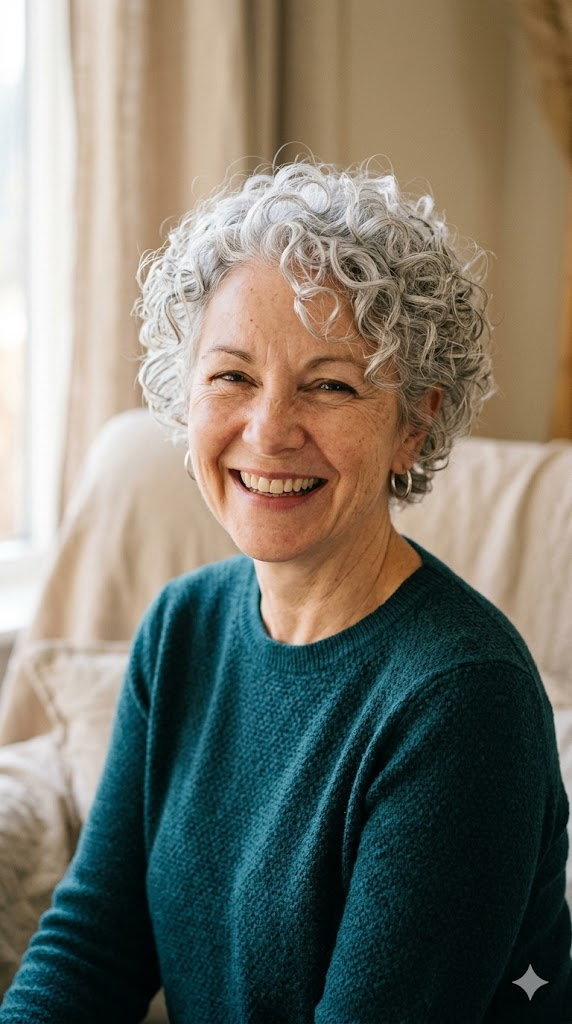
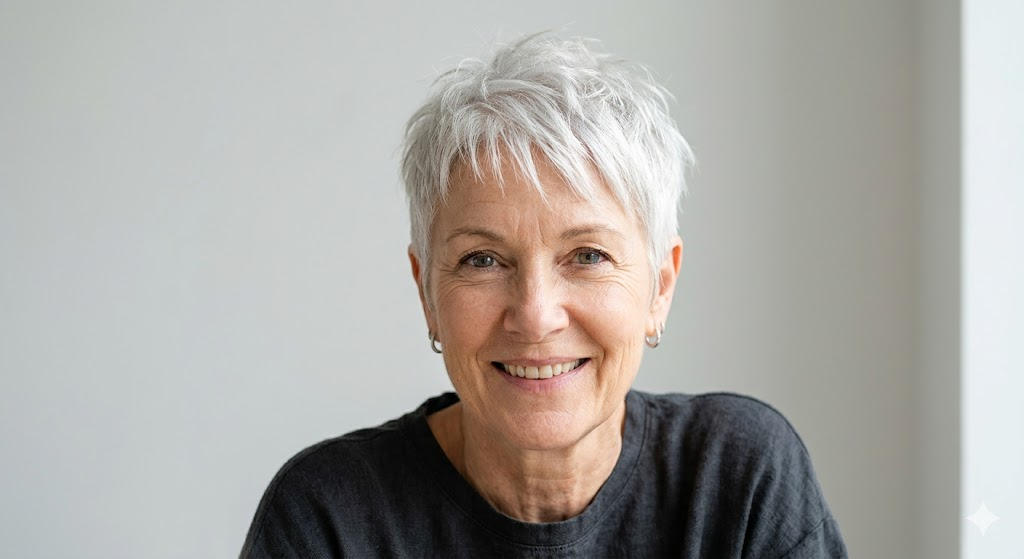
    Maintenance: Touch-ups every 10 to 14 weeks. The subtle nature of babylights means they grow out gracefully.

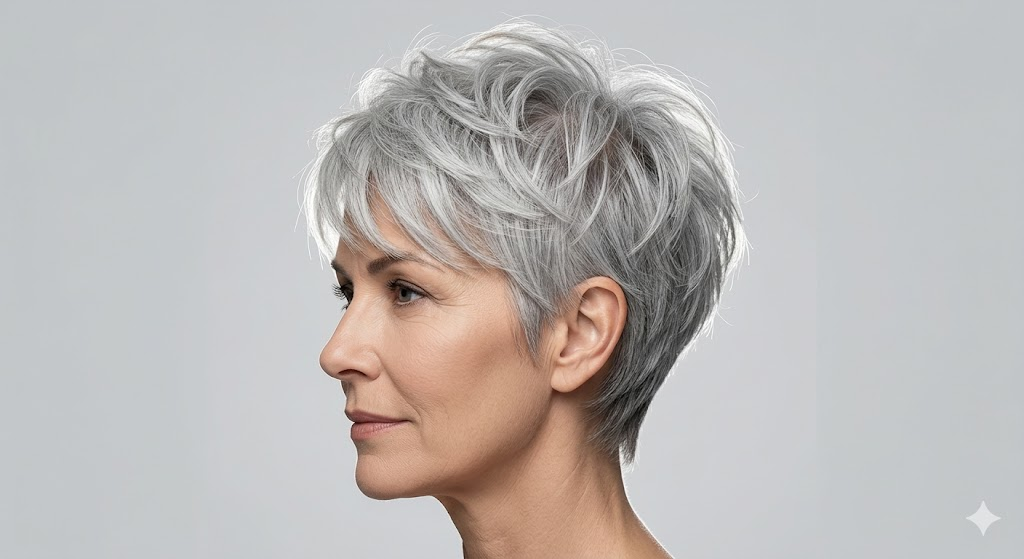
    4. Silver and Charcoal Lowlights

    Why it works: Lowlights are darker than your base color. Adding charcoal or dark silver lowlights to gray hair creates contrast and depth. This gray hair highlight technique is perfect for women whose gray hair is very light or white and needs some shadow to look dimensional.

    How it is done: Your colorist will add darker silver or charcoal pieces throughout your hair. The contrast between light and dark creates a rich, multi-tonal effect.

    Best for: Very light gray or white hair that looks flat. Women with cool skin tones.

    Maintenance: Touch-ups every 10 to 14 weeks. Lowlights fade more slowly than highlights.

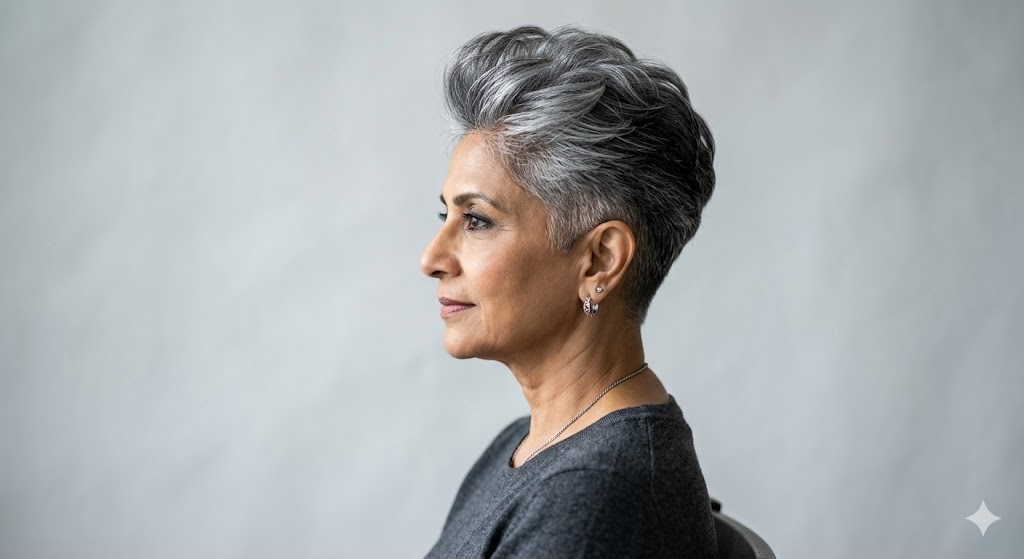
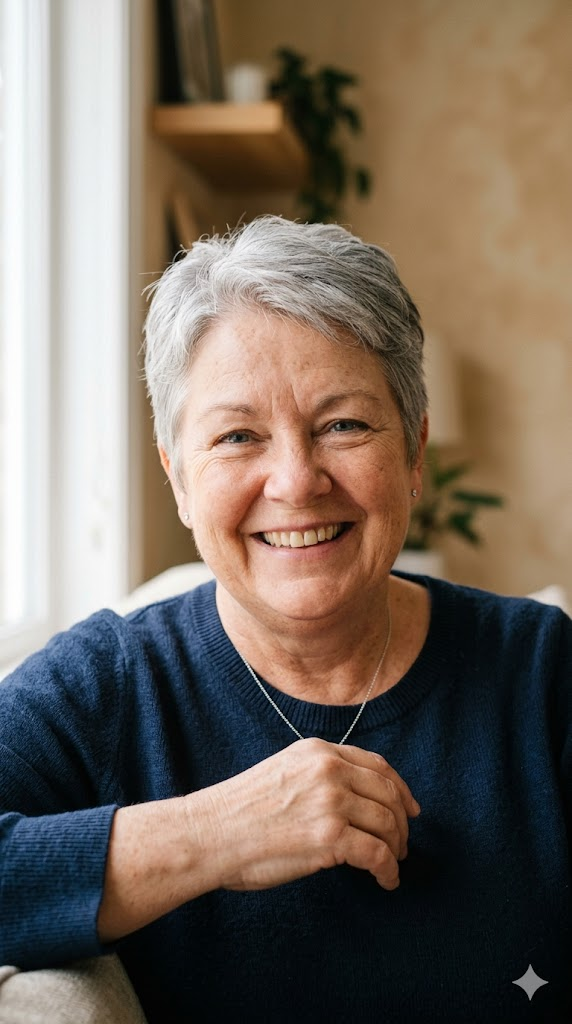
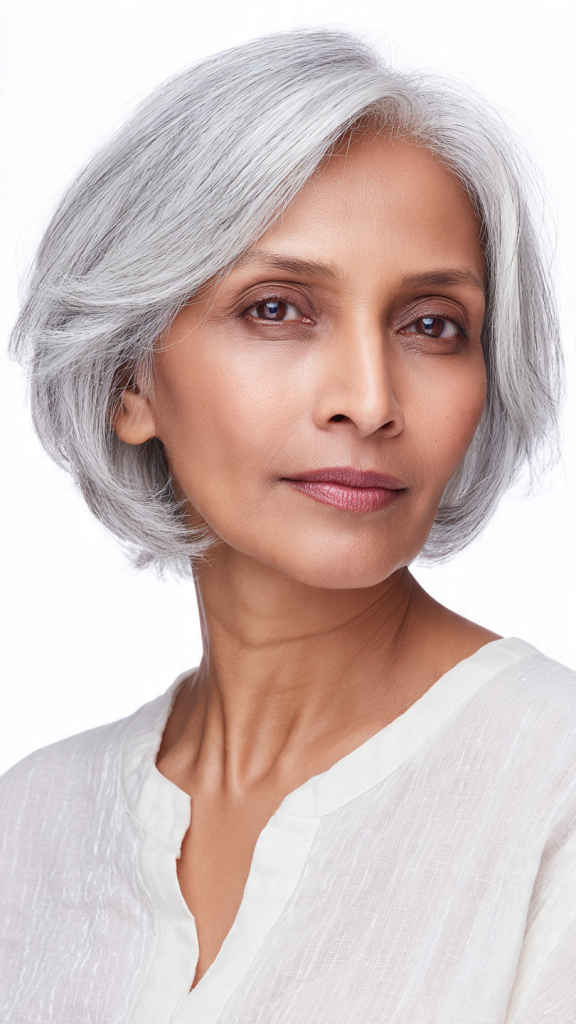
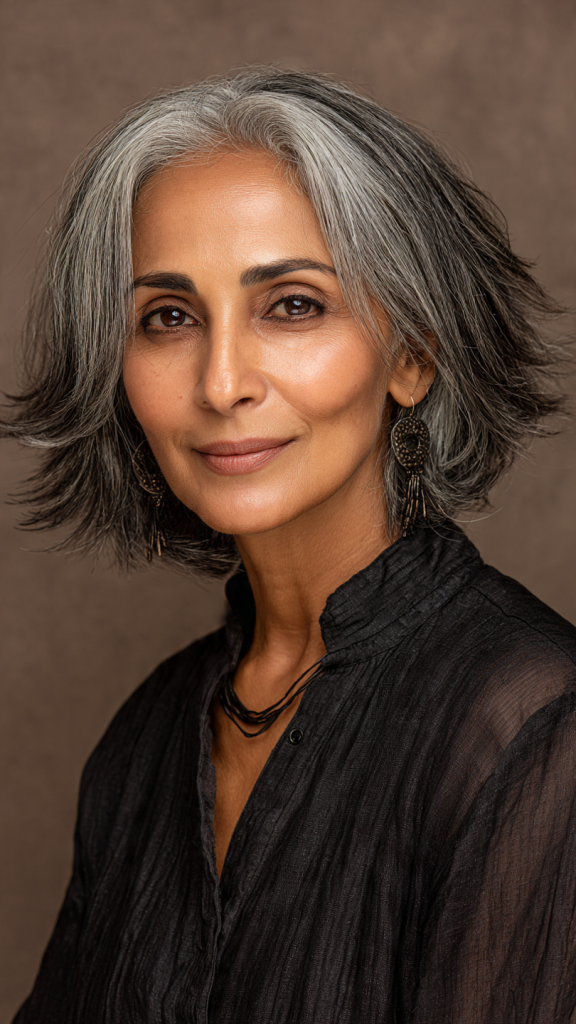
    Image Alt Text: Silver and charcoal lowlights on gray hair creating depth and contrast in natural silver strands

    5. Lavender or Silver Lilac Highlights

    Why it works: Lavender highlights add a subtle purple or lilac tint to gray hair. The purple neutralizes yellow and brassiness while adding a soft, ethereal tone. This gray hair highlight technique is for women who want a hint of color without going fully pastel.

    How it is done: Your colorist will add pale lavender or lilac tones to select pieces of your hair. The color is subtle — more of a tint than a statement.

    Best for: Gray hair with yellow or brassy undertones. Women with cool or neutral skin tones.

    Maintenance: Touch-ups every 6 to 8 weeks. Use purple shampoo to maintain the lavender tone.

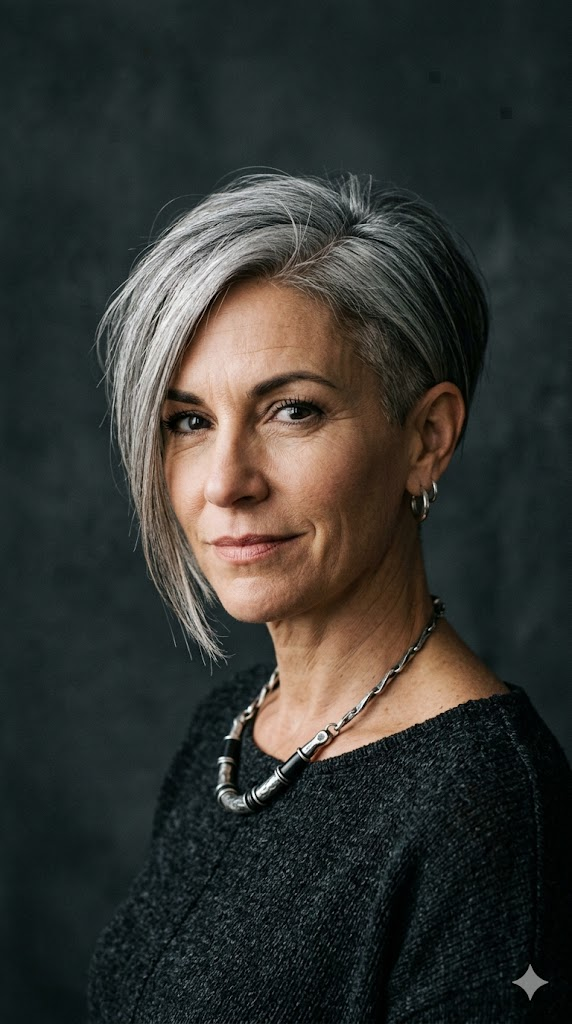
    6. Face-Framing Silver Highlights

    Why it works: Face-framing highlights are concentrated around your hairline and the front sections of your hair. They brighten your face, draw attention to your eyes, and create a lifted effect. This gray hair highlight technique is perfect for women who want maximum impact with minimal maintenance.

    How it is done: Your colorist will paint bright silver or white highlights only around your face — not throughout your whole head. The rest of your hair remains your natural gray.

    Best for: All gray hair types. Especially good for women who want a brightening effect without committing to full highlights.

    Maintenance: Touch-ups every 8 to 10 weeks. The rest of your hair does not need maintenance.

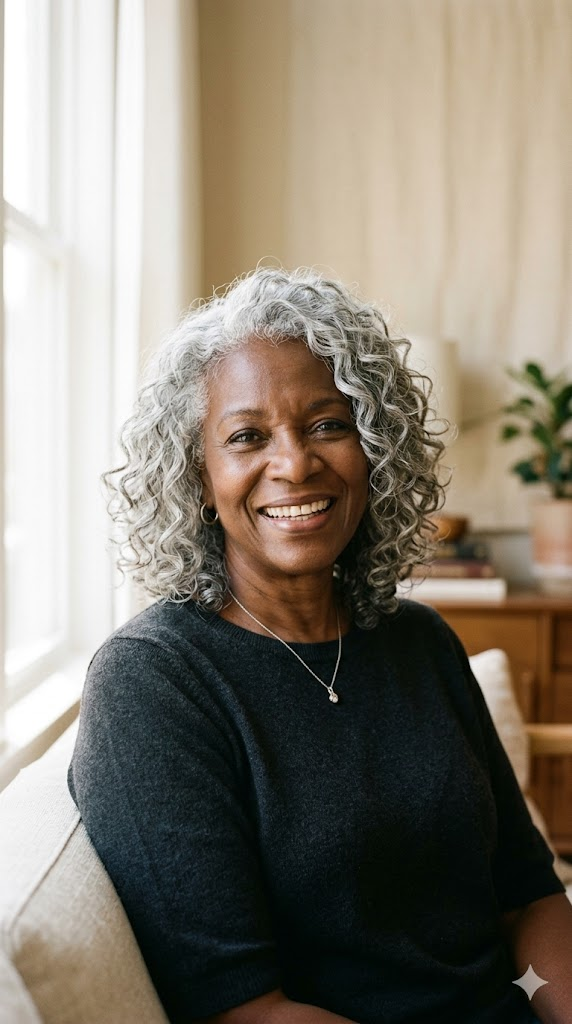
    Image Alt Text: Face-framing silver gray hair highlights brightening the hairline and creating a lifted effect around the face

    7. Pearl White Highlights

    Why it works: Pearl white highlights are luminous, creamy, and slightly iridescent. They add a soft, elegant shine to gray hair. This gray hair highlight technique is perfect for women who want their gray hair to look glossy and expensive.

    How it is done: Your colorist will add creamy white highlights throughout your hair. The effect is soft and luminous rather than stark or icy.

    Best for: Warm or neutral gray hair. Women with cool skin tones will prefer icy silver instead.

    Maintenance: Touch-ups every 8 to 12 weeks. Use a purple shampoo weekly to maintain brightness.
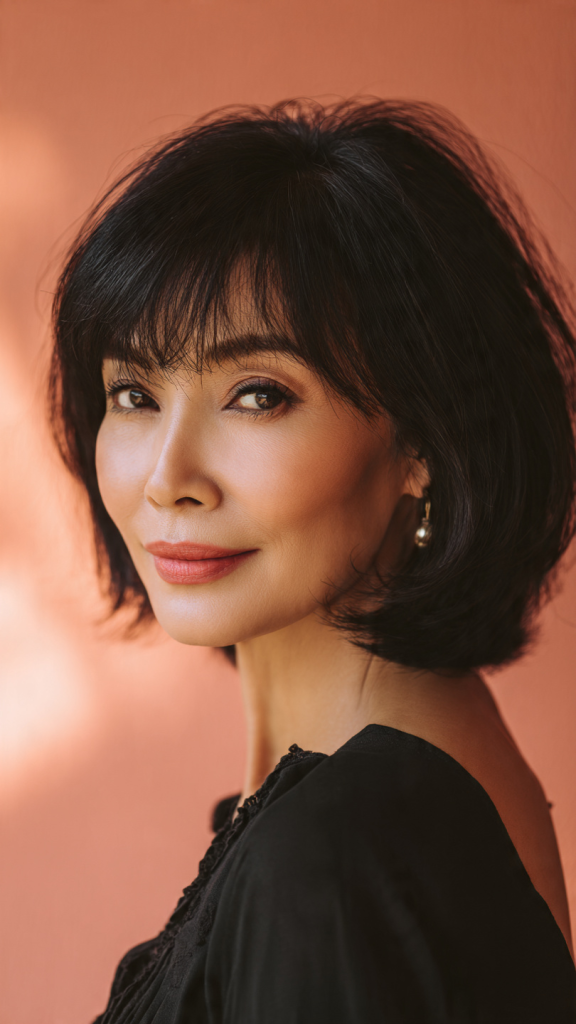
    8. Root Melt with Gray Highlights

    Why it works: A root melt keeps your roots darker — usually a charcoal or dark silver — and blends into lighter gray highlights through the mid-lengths and ends. This gray hair highlight technique is perfect for women who want lower maintenance because the darker roots are intentional.

    How it is done: Your colorist will leave your roots dark and add lighter gray highlights starting an inch or two from your scalp. The transition is soft and blended.

    Best for: Women with naturally darker roots or those transitioning from dyed hair to gray.

    Maintenance: Touch-ups every 12 to 16 weeks. The darker roots hide grow-out beautifully.

    Image Alt Text: Root melt with gray hair highlights showing darker roots blending into lighter silver strands through the lengths

    9. All-Over Silver Highlighting

    Why it works: All-over silver highlighting means your entire head is highlighted. The result is a uniform, multi-dimensional silver that looks completely intentional. This gray hair highlight technique is for women who want to fully commit to glamorous, head-turning gray hair.

    How it is done: Your colorist will paint highlights throughout your entire head. The density of highlights can range from subtle (every other strand) to dense (most strands highlighted).

    Best for: Women who want a complete transformation. Also great for those whose natural gray is uneven or patchy.

    Maintenance: Touch-ups every 6 to 8 weeks. The all-over nature means regrowth is visible more quickly.

    How to Choose the Right Gray Hair Highlights for You

    Ask yourself these three questions before booking your color appointment:

    1. What is your natural gray percentage?

    • Less than 25% gray: Babylights, face-framing highlights, root melt
    • 25-50% gray: Champagne beige highlights, silver babylights, root melt
    • 50-75% gray: Icy silver highlights, silver and charcoal lowlights, all-over silver
    • 75-100% gray: Any of the nine techniques works beautifully

    2. What is your skin tone?

    • Cool skin tone: Icy silver, lavender, silver and charcoal, pearl white
    • Warm skin tone: Champagne beige, pearl white, root melt
    • Neutral skin tone: Any of the nine techniques

    3. How much maintenance are you willing to do?

    • Low maintenance (touch-ups every 12-16 weeks): Root melt, face-framing highlights
    • Medium maintenance (touch-ups every 8-12 weeks): Babylights, champagne beige, silver and charcoal
    • Higher maintenance (touch-ups every 6-8 weeks): Icy silver, all-over silver, lavender

    What to Tell Your Colorist

    Bring photos of two or three techniques from this guide. Then say this exactly:

    *”I want gray hair highlights that enhance my natural silver. My hair is currently [fully gray / partially gray / transitioning from dyed hair]. My skin tone is [cool / warm / neutral]. I want my highlights to be [icy / warm / subtle / bold]. I want the highlights concentrated [all over / around my face / throughout]. I am willing to come in for touch-ups every [8 / 10 / 12] weeks.”*

    If you are transitioning from dyed hair, add: “Please help me blend my colored ends with my gray roots using highlights.”

    Maintaining Your Gray Hair Highlights

    Use purple shampoo: Purple shampoo neutralizes yellow and brassy tones. Use it once a week. Leave it on for 3-5 minutes before rinsing.

    Use a purple conditioner: For extra brass-fighting power, follow purple shampoo with purple conditioner.

    Avoid hot water: Hot water opens the hair cuticle and allows brassiness to set in. Rinse with cool water.

    Protect from heat: If you use hot tools, always apply a heat protectant. Heat can turn silver hair yellow.

    Deep condition weekly: Highlighted hair can be drier than uncolored hair. Use a deep conditioning mask once a week.

    Products for gray highlights:

    • Purple shampoo and conditioner
    • Color-safe shampoo and conditioner
    • Deep conditioning mask
    • Heat protectant
    • Shine spray or serum

    Products to avoid:

    • Yellow or gold-toned products
    • Heavy oils that can yellow silver hair
    • Clarifying shampoos (use sparingly)

    Common Mistakes to Avoid

    Mistake 1: Skipping the consultation. Gray hair highlights require a skilled colorist. Ask to see photos of their previous gray hair work.

    Mistake 2: Going too icy on warm skin. Icy silver highlights can make warm skin tones look washed out or sallow. Champagne beige is a better choice.

    Mistake 3: Overlapping bleach. If you already have highlights, make sure your colorist avoids overlapping. Overlapping can cause breakage.

    Mistake 4: Neglecting purple shampoo. Without purple shampoo, silver highlights will gradually turn yellow or brassy.

    The Confidence of Silver Hair

    Here is the truth: gray hair is beautiful. It is honest. It is striking. And adding gray hair highlights only makes it better. The women who embrace their silver and enhance it with highlights look confident, modern, and unforgettable. They are not hiding. They are not apologizing. They are showing up as themselves. That is the real power of gray hair highlights — not just the color, but what the color represents. So go ahead. Book that appointment. Let your silver shine. And watch how good it feels to stop fighting your hair and start celebrating it.

    Final Thoughts

    Gray hair highlights offer nine different ways to enhance your natural silver. Icy silver highlights add cool-toned drama. Champagne beige highlights bring warmth. Silver babylights create subtle, natural dimension. Silver and charcoal lowlights add depth. Lavender highlights neutralize brass with a soft tint. Face-framing silver highlights brighten your features. Pearl white highlights add luminous shine. Root melt with gray highlights offers low-maintenance grow-out. And all-over silver highlighting makes a bold, glamorous statement. Pick the gray hair highlight technique that matches your gray percentage, your skin tone, and your maintenance preferences. Bring photos to your colorist. And get ready to see your silver hair in a whole new light.

    Which of these nine gray hair highlights will you try at your next color appointment? Drop a comment below and let us know. And if this guide helped you, share it with a friend who is embracing her silver.

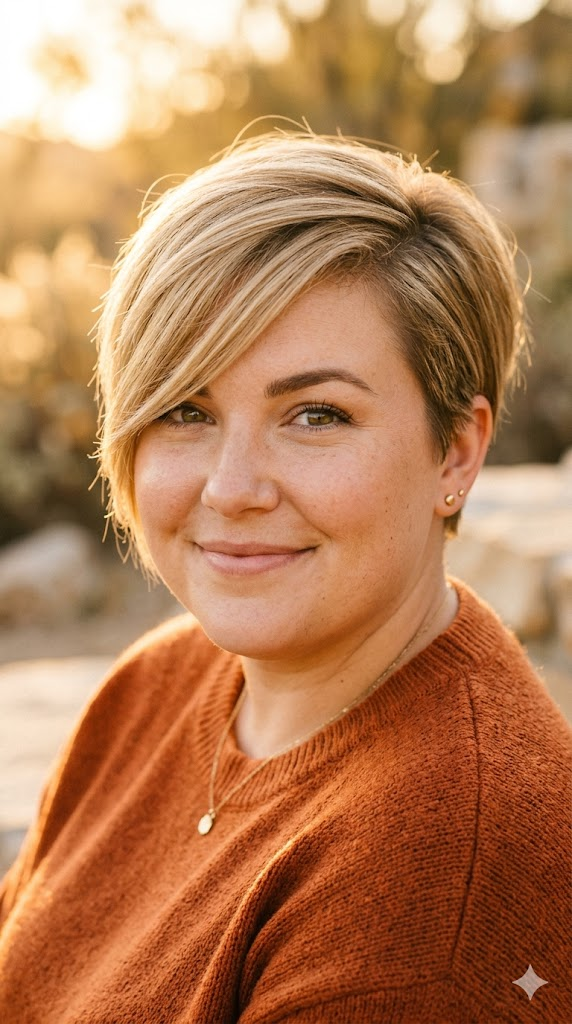
  • 9 Medium Length Hairstyles for Older Women That Balance Volume and Softness

    9 Medium Length Hairstyles for Older Women That Balance Volume and Softness

    Finding the perfect haircut after a certain age should not feel like a compromise. You do not have to choose between long and short. Medium length hairstyles for older women offer the best of both worlds — enough length to style and pull back, but short enough to maintain volume and prevent weighing down thinning hair. Whether you have fine hair that needs lift, thick hair that needs shaping, or curly hair that needs definition, there is a medium cut waiting for you. This guide walks you through nine gorgeous medium length hairstyles for older women that add bounce, frame your face, and make mornings easier.

    Why Medium Length Hairstyles for Older Women Are So Popular

    Hair changes with age. It can become finer, drier, or more brittle. It may lose density at the crown. Medium length hairstyles for older women address these changes beautifully. Shoulder-length cuts remove enough weight to prevent flatness but keep enough length to create movement. They are long enough to pull into a ponytail or bun, yet short enough to dry quickly and hold volume. The nine medium length hairstyles for older women below range from soft and layered to sleek and polished. Each includes why it works, how to style it, best face shapes, and maintenance needs.

    1. The Shoulder-Length Layered Cut

    Why it works: Layers throughout remove weight from the ends, allowing your hair to bounce up instead of hanging flat. The layers also create the illusion of density, which is especially helpful for women with fine or thinning hair. This is the most versatile medium length hairstyle for older women because it works on straight, wavy, and slightly curly hair.

    How to style: Apply a volumizing mousse to damp hair. Blow-dry using a round brush, lifting at the roots. The layers will naturally create movement. For a softer look, let it air-dry and use your fingers to separate the layers.

    Best face shapes: Oval, round, and heart. The layers soften all face shapes.

    Maintenance: Trim every 6 to 8 weeks.

    2. The Textured Lob (Long Bob)

    Why it works: A lob hits between the chin and the collarbone. Adding texture — choppy ends, point-cutting, or razor layers — removes weight and adds movement. This medium length hairstyle for older women is especially flattering for those with fine hair because the texture creates the illusion of density.

    How to style: Apply a texturizing spray or sea salt spray to damp hair. Blow-dry using your fingers to lift and separate. Do not over-brush. The textured ends should look piece-y and intentional.

    Best face shapes: Oval, round, and square. The length at the collarbone elongates the face.

    Maintenance: Trim every 6 to 8 weeks.

    Image Alt Text: Textured lob medium length hairstyle for older women with piece-y ends and soft volume

    3. The Curly Medium Length Cut with Layers

    Why it works: Curly hair needs layers to prevent the dreaded triangle shape. A medium length cut with layers removes weight from the ends, allowing your curls to spring up and maintain their shape. This medium length hairstyle for older women celebrates natural texture rather than fighting it.

    How to style: Apply a curl cream to soaking wet hair. Use your fingers to define individual curls. Let air-dry or diffuse on low heat. Do not brush. The layers will naturally create bounce and definition.

    Best face shapes: Oval, heart, and round. The softness of curls flatters all face shapes.

    Maintenance: Trim every 8 to 10 weeks. Deep condition weekly.

    Image Alt Text: Curly medium length hairstyle for older women with defined layers and natural volume

    4. The Medium Length Shag

    Why it works: The shag cut features choppy layers throughout, with the shortest layers at the crown and longer pieces around the face. This medium length hairstyle for older women creates incredible volume at the top, which is exactly where thinning hair needs it most. The choppiness also hides grow-out, so you can go longer between trims.

    How to style: Apply a texturizing spray to damp hair. Blow-dry using your fingers to lift at the roots. Do not over-brush. The choppy ends should look piece-y and separated. A dry texture spray adds instant grit and volume.

    Best face shapes: Oval, square, and heart. The choppiness softens strong jawlines.

    Maintenance: Trim every 6 to 8 weeks. The lived-in look means it grows out gracefully.

    5. The Medium Length Cut with Face-Framing Layers

    Why it works: Face-framing layers are shorter pieces around your face that start at the cheekbones or chin. They soften your features and draw attention to your eyes. The rest of your hair remains longer, usually hitting at the shoulders. This medium length hairstyle for older women is perfect for those who want a change without losing overall length.

    How to style: Apply a volumizing mousse to damp hair. Blow-dry using a round brush, directing the face-framing pieces away from your face. The layers will naturally fall into place. A light hairspray keeps everything in position.

    Best face shapes: Oval, round, and square. The layers soften jawlines and add length.

    Maintenance: Trim every 6 to 8 weeks.

    6. The Sleek Medium Length Bob

    Why it works: For women who prefer a polished, professional look, a sleek medium bob delivers. The hair is cut blunt or with very subtle layers and styled smooth against the head. This medium length hairstyle for older women works best on straight or heat-styled hair and creates a sophisticated silhouette.

    How to style: Apply a heat protectant and a smoothing serum. Blow-dry using a round brush, then flat-iron for maximum sleekness. Tuck the ends under slightly. Finish with a shine spray.
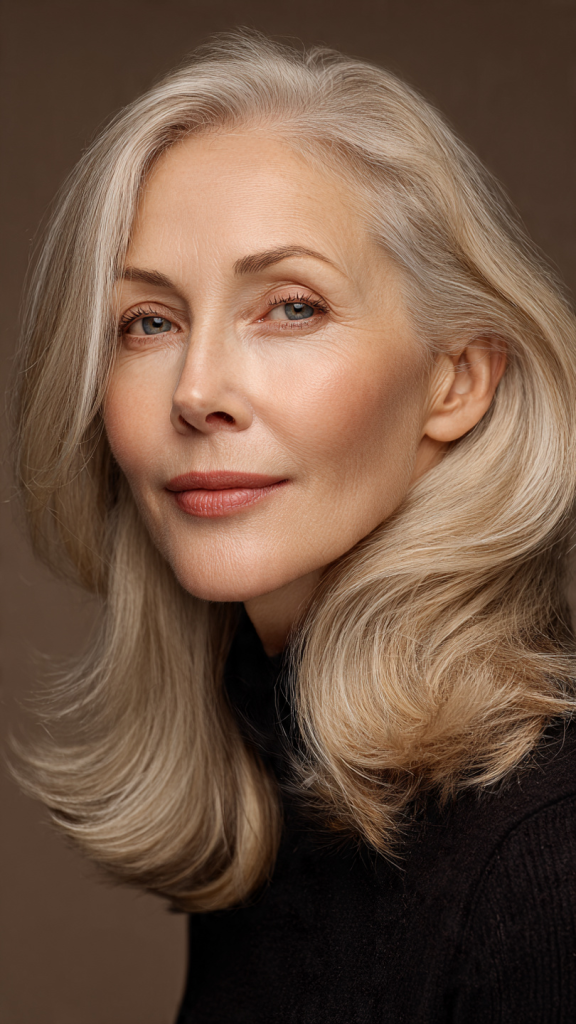
    Best face shapes: Oval, heart, and diamond. The sleekness highlights bone structure.

    Maintenance: Trim every 5 to 6 weeks. Use a satin scarf at night to preserve straightness.
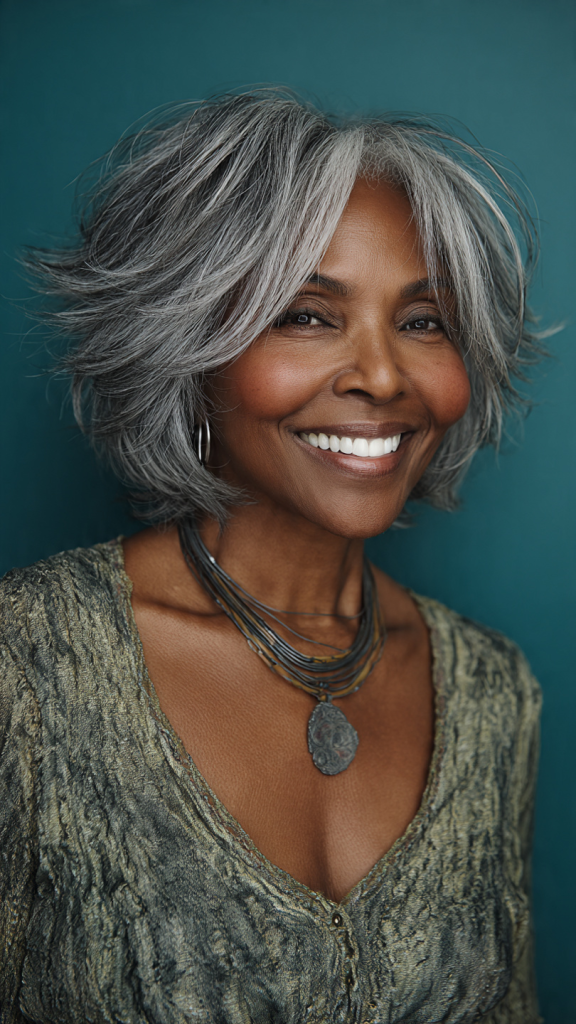
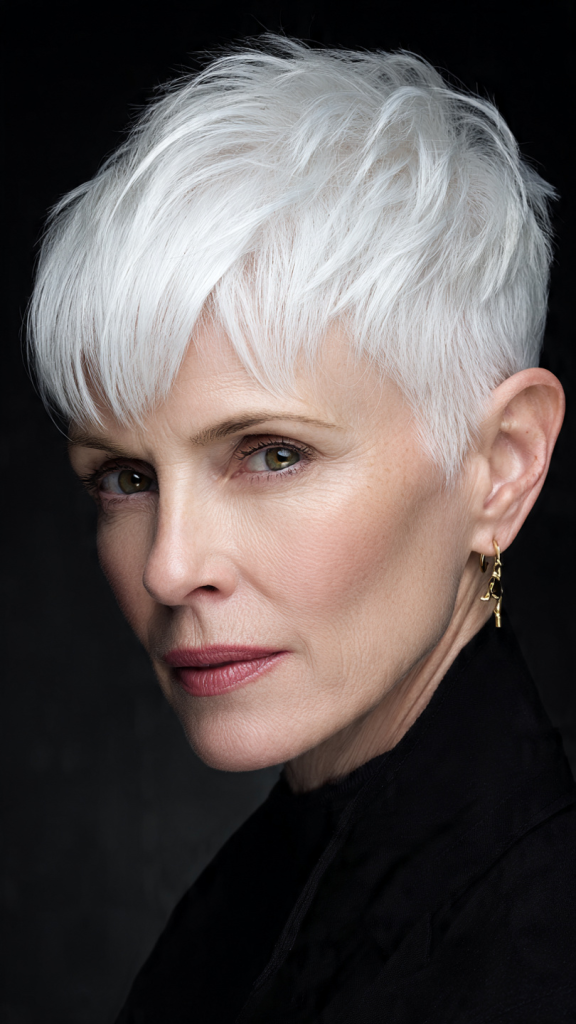
    Image Alt Text: Sleek medium length bob hairstyle for older women with smooth, polished finish

    7. The Medium Length Cut with Side-Swept Bangs

    Why it works: Adding side-swept bangs to a medium length cut softens the forehead and draws attention upward. The bangs create a diagonal line across your face, which is slimming and flattering. This medium length hairstyle for older women works on straight, wavy, or curly hair and can be customized to suit your face shape.

    How to style: Apply a lightweight mousse to damp hair. Blow-dry using a round brush, sweeping the bangs to one side. The rest of the hair can be styled smooth or textured. A light hairspray keeps the bangs in place.

    Best face shapes: Oval, round, and square. The diagonal line breaks up width.

    Maintenance: Bangs need trimming every 3 to 4 weeks. The rest of the cut every 6 to 8 weeks.

    8. The Medium Length Cut with Curtain Bangs

    Why it works: Curtain bangs are parted down the middle and curve to each side. The openness in the middle softens forehead lines without hiding them. When paired with a medium length cut, the bangs blend seamlessly into face-framing layers. This medium length hairstyle for older women is romantic, modern, and surprisingly low-maintenance.

    How to style: Apply a styling cream to damp hair. Blow-dry using a round brush, directing the bangs to each side. For the left side, brush to the left. For the right side, brush to the right. The rest of the hair can be air-dried or blown out.

    Best face shapes: Oval, round, and heart. The open center softens all face shapes.

    Maintenance: Bangs need trimming every 5 to 6 weeks. The rest of the cut every 6 to 8 weeks.

    9. The Low-Maintenance Medium Length Cut

    Why it works: Not every woman wants to spend time blow-drying. A low-maintenance medium cut is shaped so that air-drying looks intentional. The layers are subtle. The ends are textured. This medium length hairstyle for older women is for those who want style without effort.

    How to style: Wash and condition. Towel-dry gently. Apply a leave-in conditioner and a light gel or mousse. Use your fingers to push the hair in the direction you want it to dry. Let it air-dry completely. That is it.

    Best face shapes: Oval, round, and heart. The softness flatters all.

    Maintenance: Trim every 8 to 10 weeks.

    How to Choose the Right Medium Length Hairstyle for You

    Ask yourself these three questions before booking your appointment:

    1. How much volume do you want at the crown?

    • Maximum volume: Medium length shag, layered cut, curly cut with layers
    • Moderate volume: Textured lob, face-framing layers, side-swept bangs
    • Natural volume: Sleek bob, low-maintenance cut, curtain bangs

    2. What is your hair texture?

    • Fine or thinning: Layered cut, textured lob, low-maintenance cut
    • Medium: Face-framing layers, side-swept bangs, curtain bangs
    • Thick: Medium length shag, curly cut with layers
    • Curly: Curly medium length cut with layers
    • Straight: Sleek bob, low-maintenance cut

    3. Do you want bangs?

    • Yes: Side-swept bangs or curtain bangs
    • No: Any of the other options

    What to Tell Your Stylist

    Bring a photo of one or two styles from this guide. Then say this exactly:

    *”I am looking for medium length hairstyles for older women that add volume and suit my face shape. My hair is [fine / medium / thick / curly / straight]. I want the length to hit [at my shoulders / at my collarbone]. I want [layers / texture / bangs / face-framing pieces]. I am willing to spend [5 / 10 / 15] minutes styling it daily. I can come in for trims every [6 / 8] weeks.”*

    If you have thinning hair, add: “Please use layers to create the illusion of volume without removing too much density.”

    Styling Tips for Medium Length Hair

    Products to embrace:

    • Volumizing mousse
    • Root-lifting spray
    • Texturizing spray
    • Dry shampoo
    • Lightweight styling cream

    Products to avoid:

    • Heavy oils and butters (weigh hair down)
    • Thick waxes and pomades (make fine hair look greasy)

    Tools to own:

    • Round brush (1-2 inches)
    • Hairdryer with concentrator nozzle
    • Wide-tooth comb (for detangling wet hair)
    • Satin pillowcase (prevents flattening)

    Quick styling routine for volume:

    1. Apply mousse to damp roots
    2. Flip head upside down and blow-dry for 30 seconds
    3. Flip back and style with round brush
    4. Finish with dry shampoo at the roots for lift

    Final Thoughts

    Medium length hairstyles for older women prove that you do not have to sacrifice length for volume or ease. The nine styles above offer something for everyone. The shoulder-length layered cut is versatile and reliable. The textured lob adds movement and edge. The curly medium cut celebrates natural texture. The shag creates crown volume where thinning hair needs it most. Face-framing layers soften your features. The sleek bob is polished and professional. Side-swept and curtain bangs add softness. And the low-maintenance cut respects your time. Pick the medium length hairstyle for older women that matches your hair type, your face shape, and your lifestyle. Bring the photo to your stylist. And enjoy a cut that balances volume, softness, and everyday ease.

    Which of these nine medium length hairstyles for older women will you try at your next appointment? Drop a comment below and let us know. And if this guide helped you, share it with a friend who has been stuck between short and long.

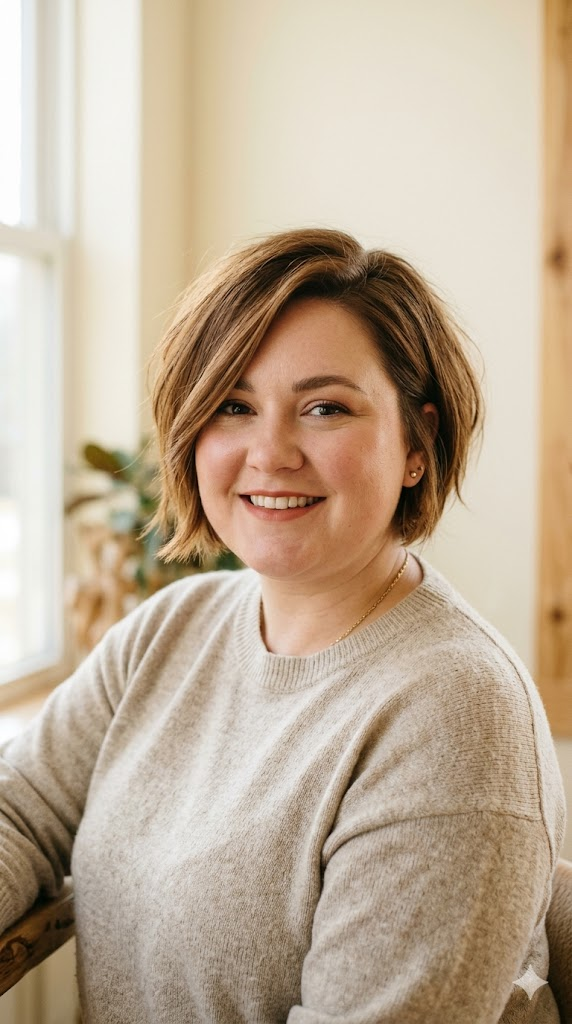
  • 13 Funky Short Hair for Young Women That Turn Heads and Break Rules

    13 Funky Short Hair for Young Women That Turn Heads and Break Rules

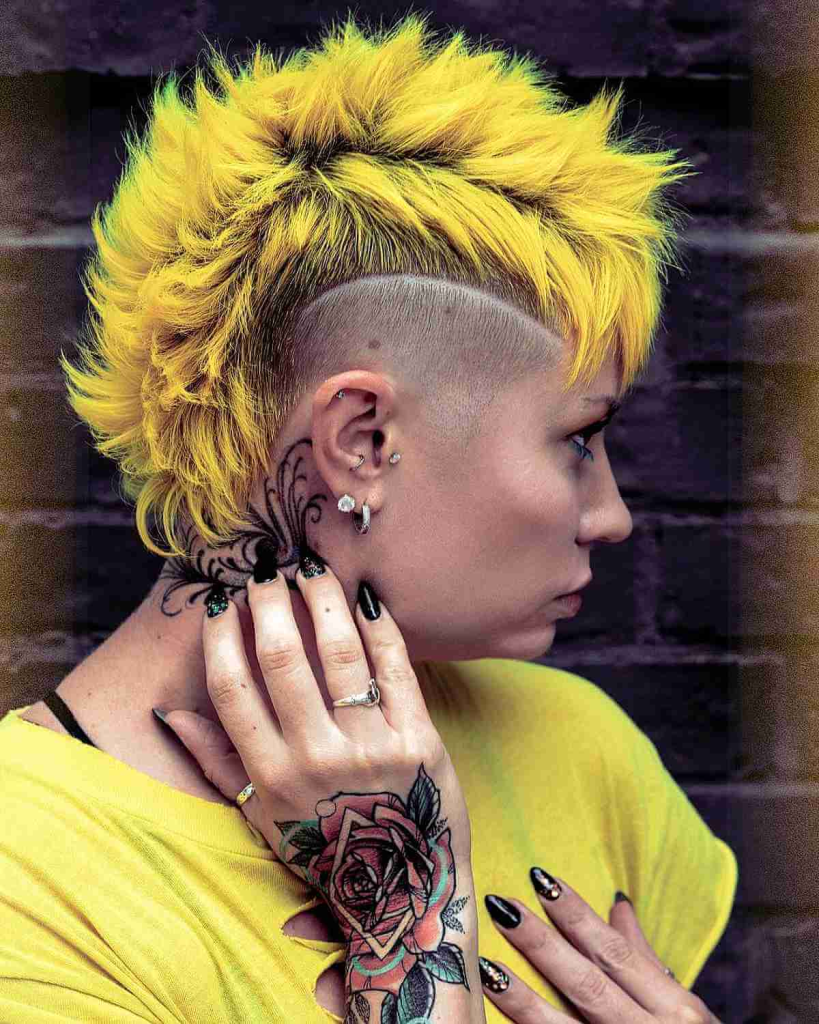
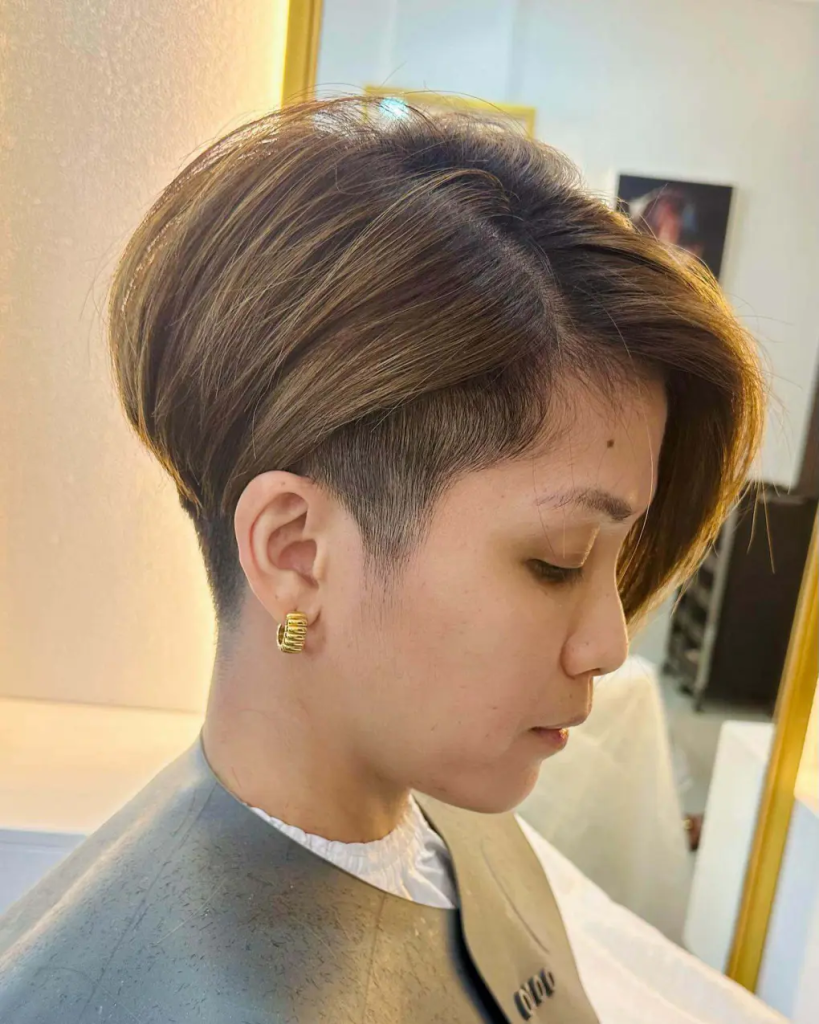
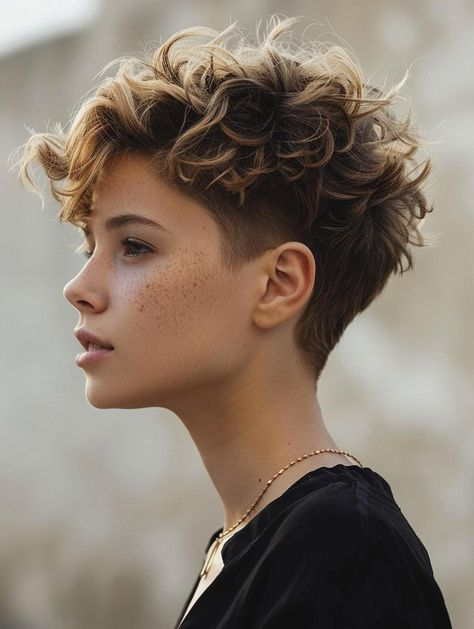
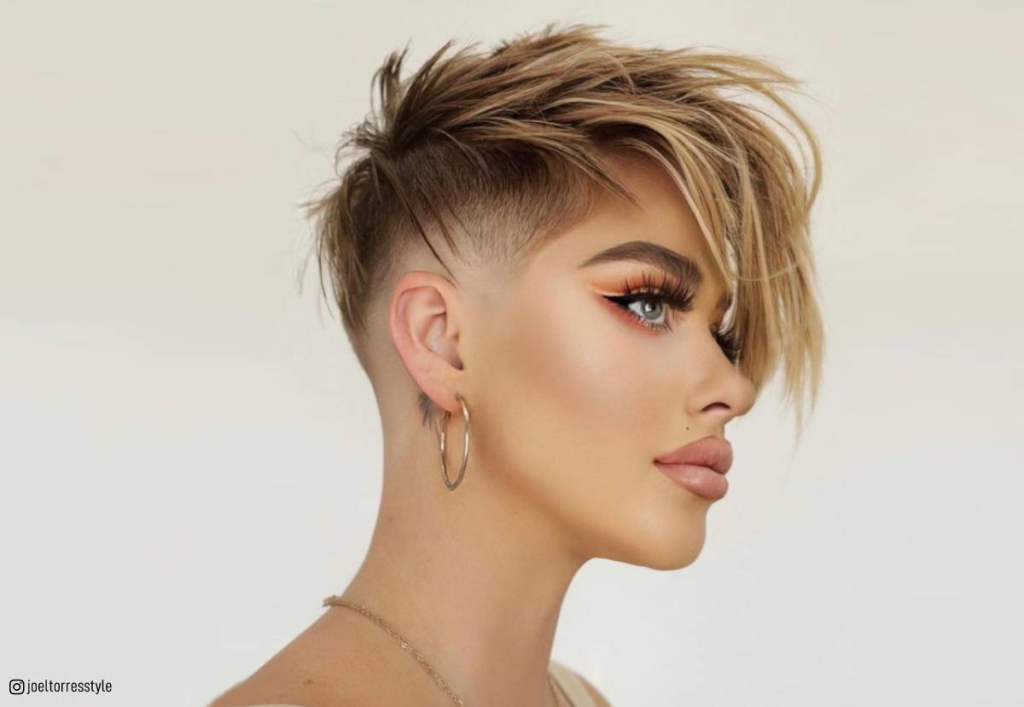
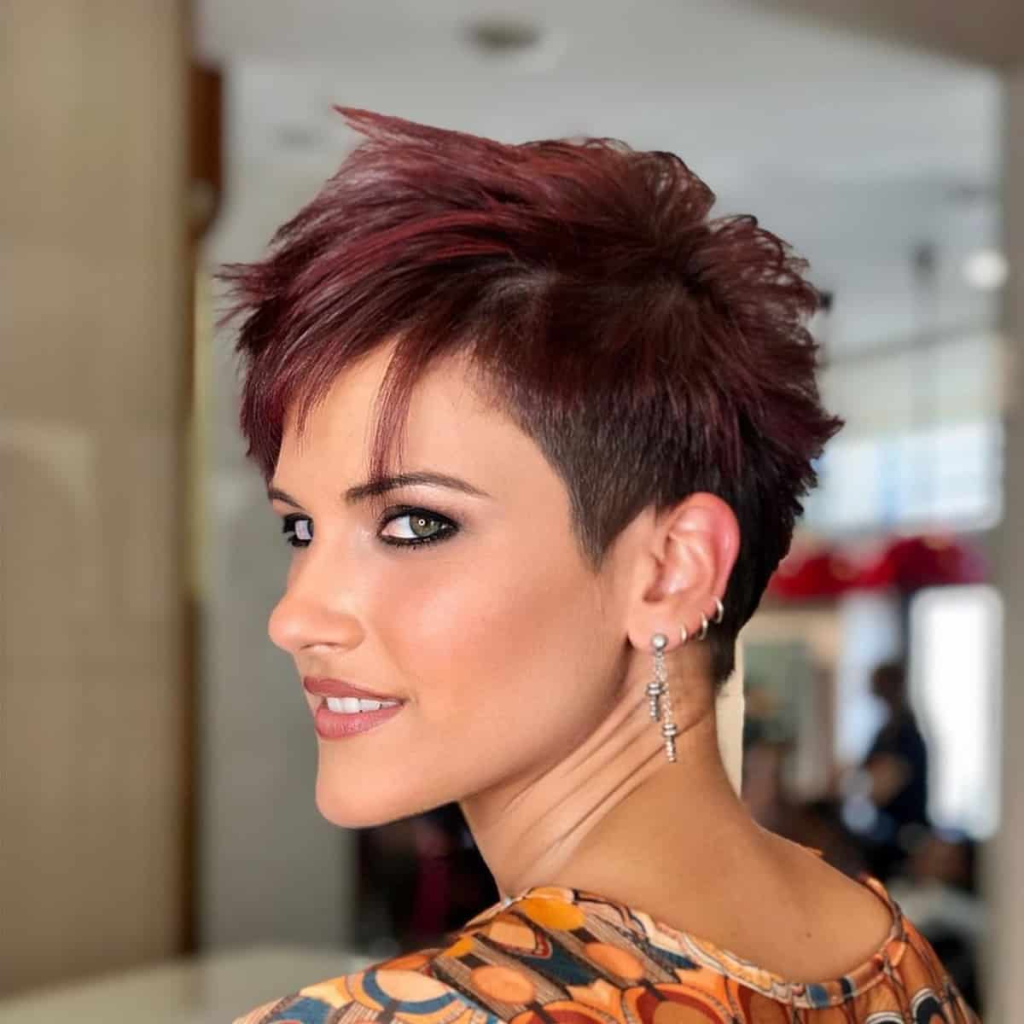
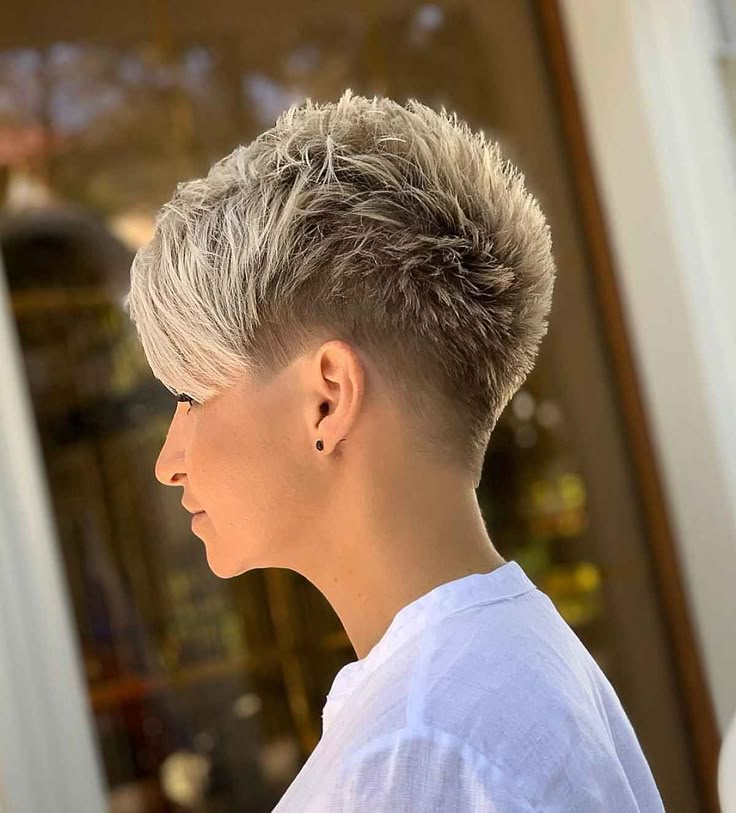
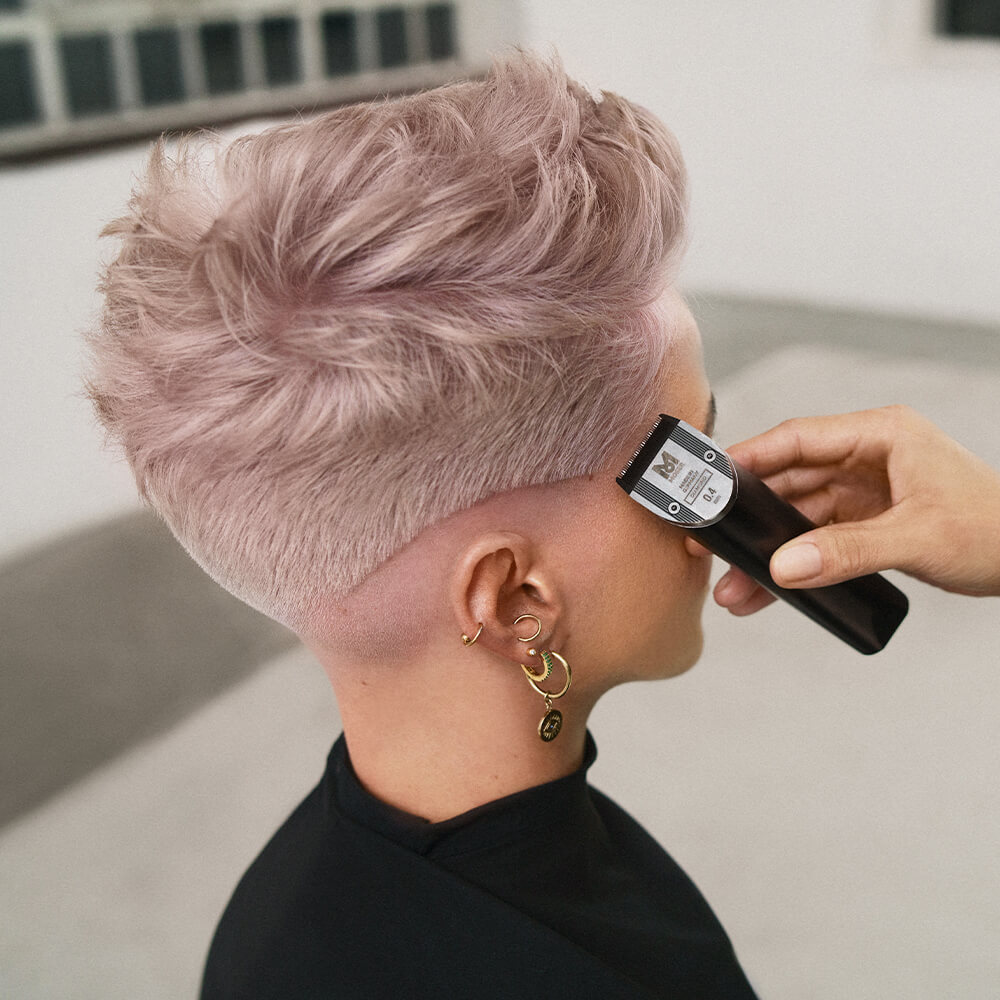
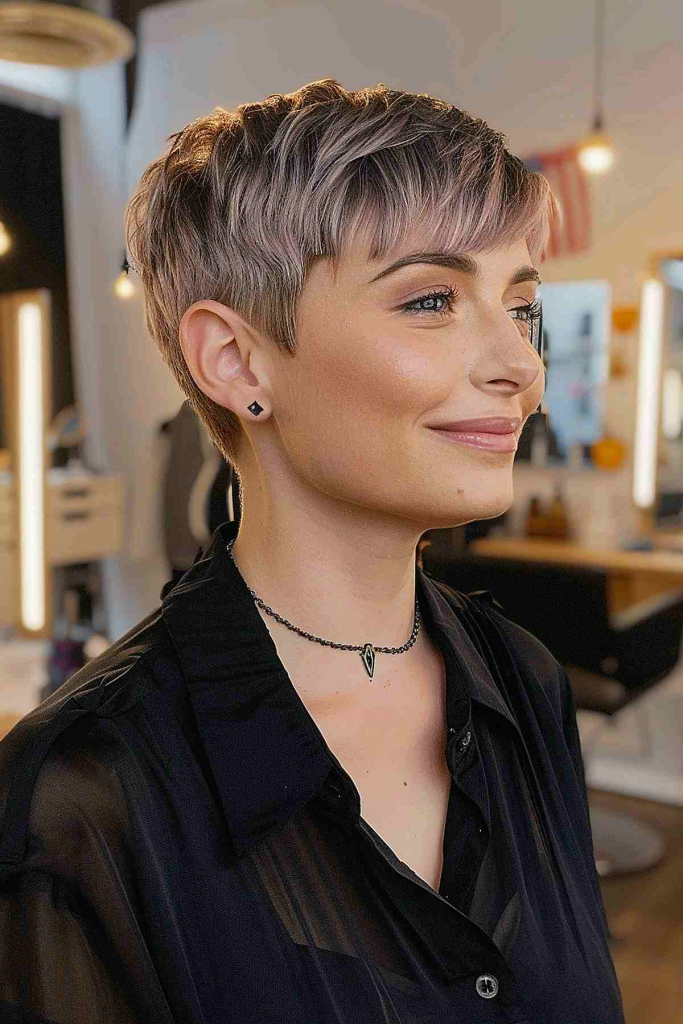
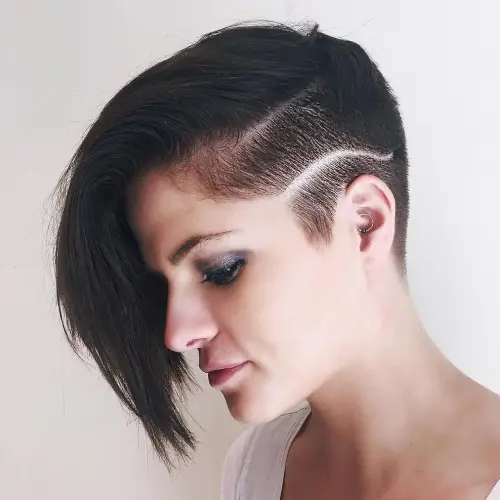
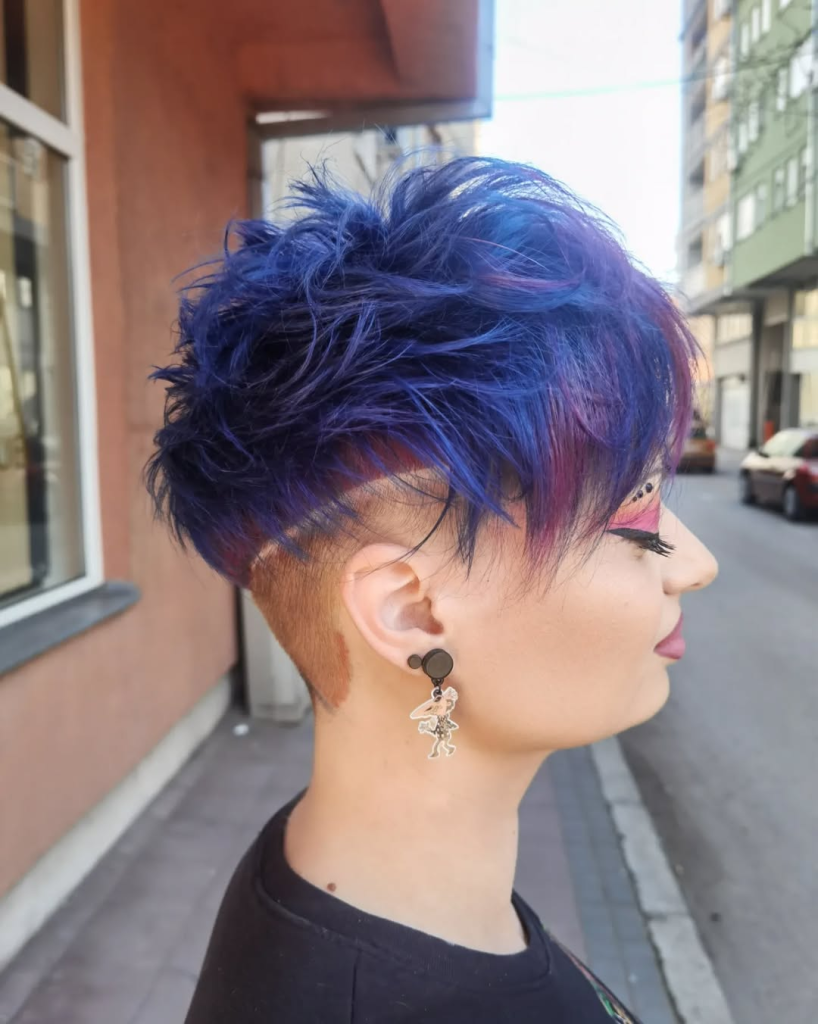
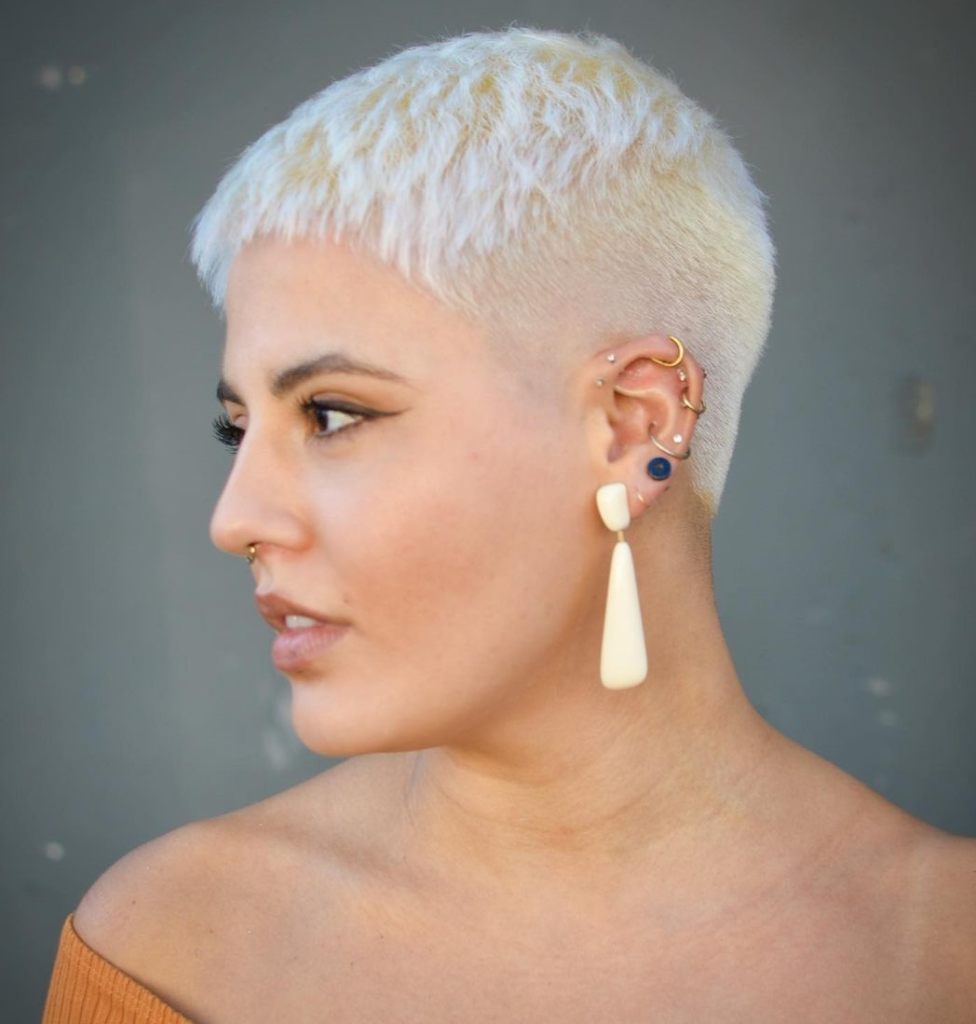
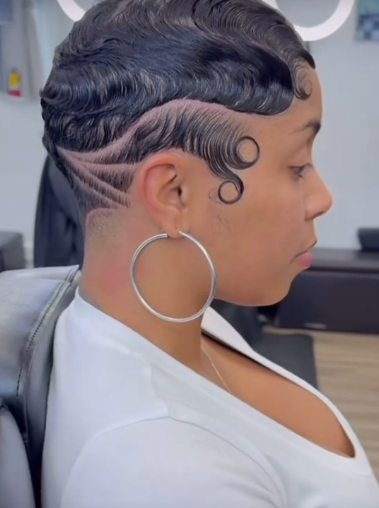
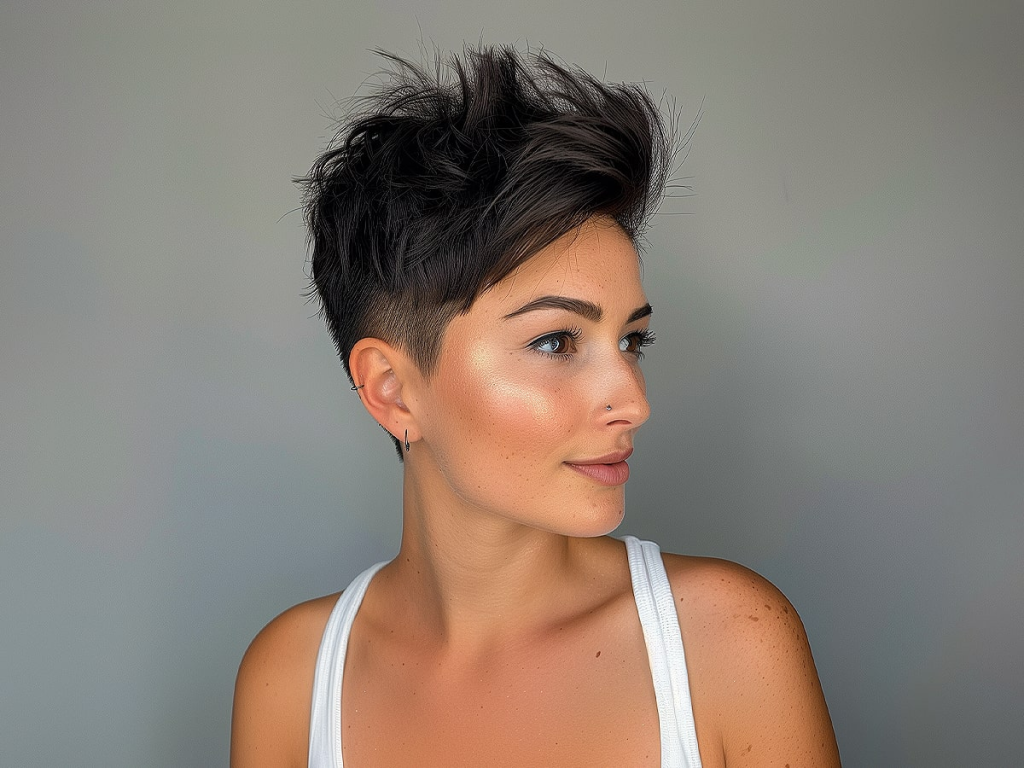
    You are young, you are bold, and you are done with boring hair. Good. Funky short hair for young women is your chance to express exactly who you are — or who you want to be. Whether you are in high school, college, or just starting your career, a funky short cut says you are creative, confident, and not afraid to stand out. Think shaved designs, bold colors, asymmetrical shapes, and textures that demand attention. This guide walks you through thirteen of the edgiest, most fun short hairstyles out there. Each includes why it works, how to style it, best face shapes, and maintenance needs. funky short hair for young women

    Why Funky Short Hair Is a Power Move

    Long hair is safe. Funky short hair is a statement. It tells the world that you make your own rules. It frees up your mornings — less washing, less drying, less styling. It puts the focus on your face, your makeup, your earrings, your attitude. And honestly? It is just more fun. You can dye it pink one month and blue the next. You can shave one side and grow out the other. You can spike it, smooth it, or mess it up on purpose. The thirteen styles below range from subtly edgy to full-on rebellious. Pick the one that matches your energy.

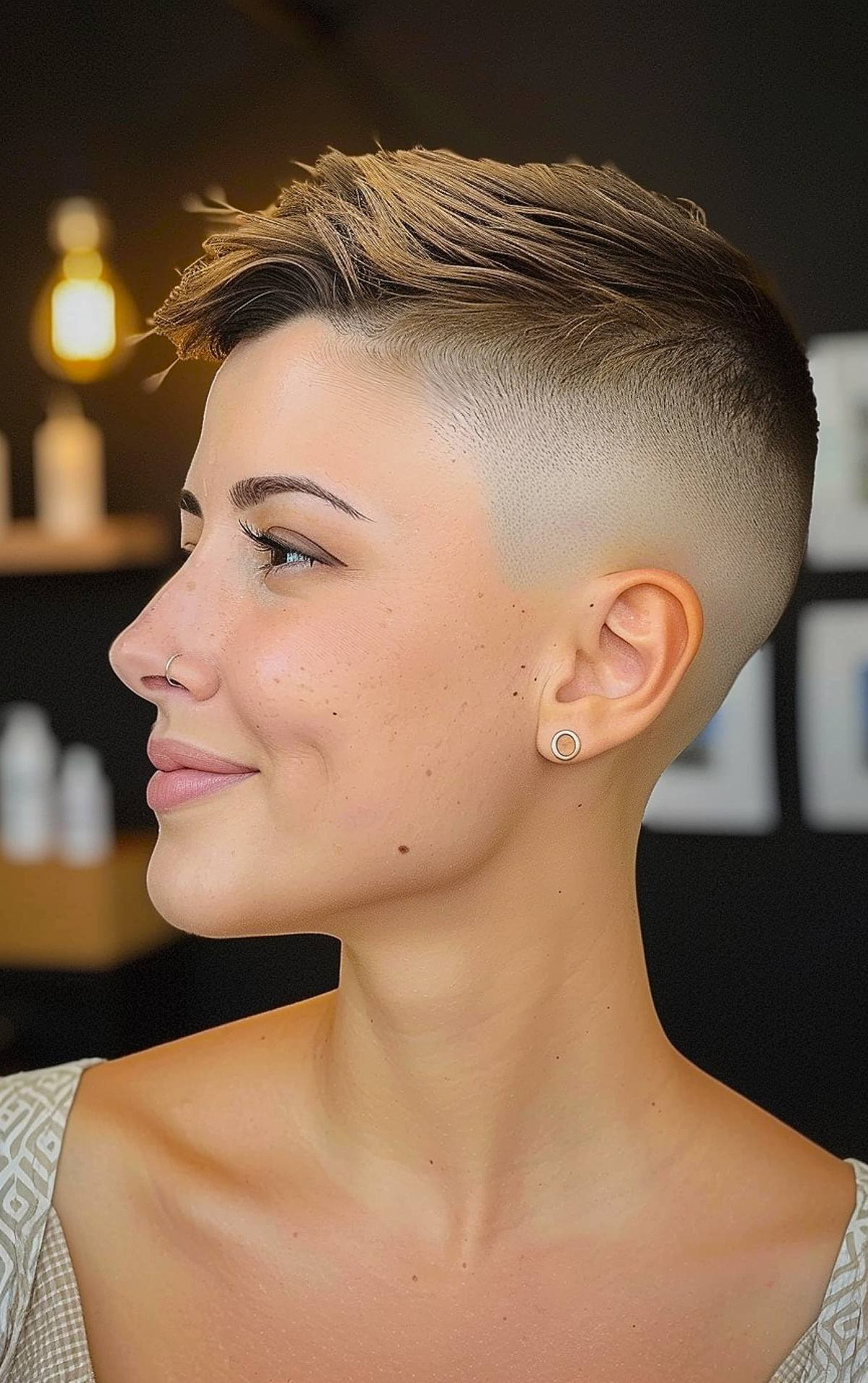
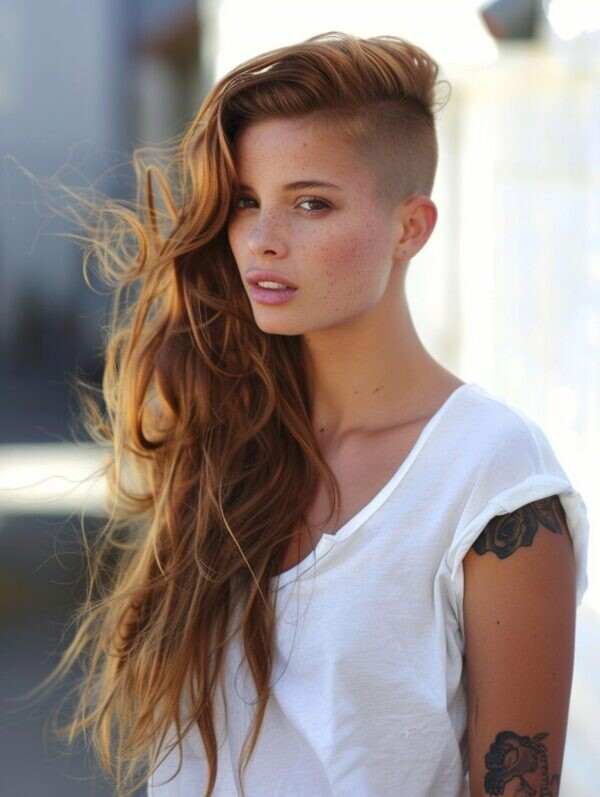
    1. The Shaved Side Pixie

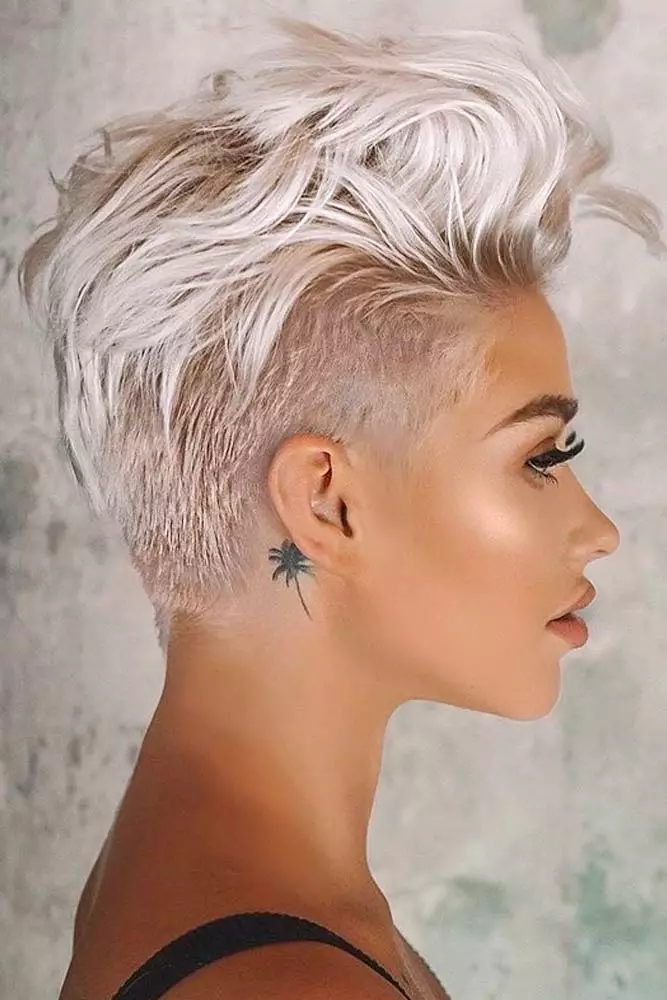
    Why it works: One side of your head is shaved or buzzed very short. The other side is left longer — sometimes significantly longer. The contrast is dramatic and instantly cool. You can style the longer side smooth, textured, or curly.

    How to style: Apply a styling cream or texturizing paste to the longer side. Use your fingers to create the look you want — sleek, piece-y, or spiky. The shaved side needs nothing. For extra drama, push the longer side to the opposite side of the shave.

    Best face shapes: Oval, heart, and square. The asymmetry draws attention upward.

    Maintenance: The shaved side needs refreshing every 1 to 2 weeks. The longer side every 4 to 5 weeks.

    2. The Bold Color Crop

    Why it works: Funky short hair is the perfect canvas for bold color. Think neon pink, electric blue, lavender, platinum blonde, or even rainbow. Short hair uses less dye, makes the color more intense, and shows off the shade better than long hair ever could.

    How to style: Style your crop as usual — textured, smooth, spiky, or curly. The color does the heavy lifting. Use color-safe shampoo and conditioner. Wash in cold water. Purple shampoo for blondes.

    Best face shapes: All face shapes. Color is independent of face shape.

    Maintenance: Color needs refreshing every 4 to 8 weeks. The cut every 4 to 5 weeks.

    3. The Asymmetrical Pixie

    Why it works: One side of the pixie is significantly longer than the other. The asymmetry creates visual interest and a modern, architectural feel. You can sweep the longer side across your forehead or tuck it behind your ear.

    How to style: Apply a styling cream to damp hair. Blow-dry using a round brush, directing the longer side where you want it to fall. The shorter side needs little to no styling.

    Best face shapes: Oval, round, and heart. The asymmetry balances roundness.

    Maintenance: Trim every 4 to 5 weeks.

    4. The Spiky Pixie

    Why it works: Spikes add height, attitude, and edge. The top is cut long enough to stand up, while the sides are kept short. You can go for soft, subtle spikes or dramatic, gravity-defying ones. Either way, you will look like you mean business.

    How to style: Apply a texturizing paste or styling glue to dry hair. Rub between your fingers to warm it up. Work through the top section, lifting and pinching to create spikes. The sides need nothing. A light hairspray holds the spikes all day.

    Best face shapes: Oval, heart, and round. The height elongates rounder faces.

    Maintenance: Trim every 4 to 5 weeks.

    5. The Undercut Pixie with Design

    Why it works: The undercut removes the hair from the bottom layer. On top of that undercut, your stylist can shave a design — lines, dots, zigzags, geometric shapes, or even words. The design is hidden when your hair is down and revealed when you push it to the side.

    How to style: Style the top layer as usual — textured, smooth, or spiky. The undercut design requires no daily styling but should be moisturized to prevent dryness. For a dramatic reveal, push the top hair to the opposite side of the design.

    Best face shapes: Oval, heart, and square. The design draws attention upward.

    Maintenance: The undercut design needs refreshing every 1 to 2 weeks. The top every 4 to 5 weeks.

    6. The Bowl Cut (Modern Version)

    Why it works: Before you laugh, hear us out. The modern bowl cut is not the mushroom nightmare of the 1990s. Today’s version is soft, rounded, and deliberately textured. It works best on fine or straight hair and looks unexpectedly cool.

    How to style: Apply a smoothing cream or lightweight gel to damp hair. Blow-dry using a round brush to create a soft, rounded shape. The ends should curve slightly under. For an edgier take, add texture with a texturizing spray.

    Best face shapes: Oval and heart. Proceed with caution on round or square faces.

    Maintenance: Trim every 5 to 6 weeks.

    7. The Mohawk (or Frohawk)

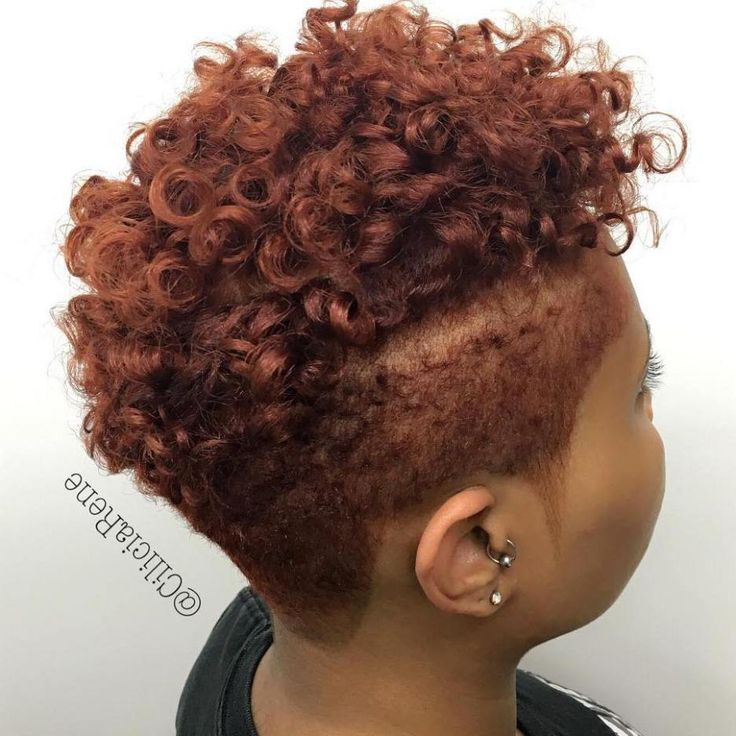
    Why it works: A mohawk leaves a strip of longer hair down the center of your head while the sides are shaved or cut very short. On straight hair, it is edgy and punk. On curly or coily hair, it becomes a frohawk — softer but still undeniably bold.

    How to style: Apply a styling cream or gel to the center strip. Lift and shape it upward. For curly hair, use a curl cream and define the curls. The shaved sides need nothing. For extra drama, use a pick to fluff the center section.

    Best face shapes: Oval, heart, and oblong. The height elongates rounder faces.

    Maintenance: The shaved sides need refreshing every 2 to 3 weeks. The center every 6 to 8 weeks.

    8. The Disconnected Bob

    Why it works: A disconnected bob has a visible line where the top layer does not blend into the bottom layer. The effect is striking and modern. The top might be long and choppy while the underneath is short and sharp.

    How to style: Apply a texturizing spray or styling cream to damp hair. Blow-dry using your fingers to lift the top layer. The disconnected line should remain visible. Do not try to blend it.

    Best face shapes: Oval and heart. The drama works best on balanced face shapes.

    Maintenance: Trim every 5 to 6 weeks.

    9. The Curly Short Crop with Color

    Why it works: Natural curls are already full of texture and personality. Add a bold color — think burgundy, honey blonde, or even pastel pink — and you have a look that stops traffic. The short crop keeps your curls bouncy and defined.

    How to style: Apply a curl cream to soaking wet hair. Use your fingers to define individual curls. Let air-dry or diffuse. The color will look different on every curl, creating incredible dimension.

    Best curl types: Type 3A to 4C.

    Maintenance: Color needs refreshing every 6 to 8 weeks. The cut every 6 to 8 weeks.

    10. The Finger Wave Crop

    Why it works: Finger waves are a vintage style from the 1920s and 1930s. On a short crop, they are unexpected, glamorous, and deeply cool. The waves are molded into the hair using gel and your fingers, creating an S-shaped pattern.

    How to style: Apply a strong-hold gel to damp hair. Use your fingers and a fine-tooth comb to create the wave pattern. Pin each wave in place. Sit under a hooded dryer or use a blow-dryer with a concentrator nozzle. Remove pins when completely dry.

    Best face shapes: Oval, diamond, and heart. The horizontal lines can make round faces appear wider.

    Maintenance: Finger waves are a styled look, not a permanent cut. The cut itself needs trimming every 4 to 5 weeks.

    11. The Textured Pixie with Long Bangs

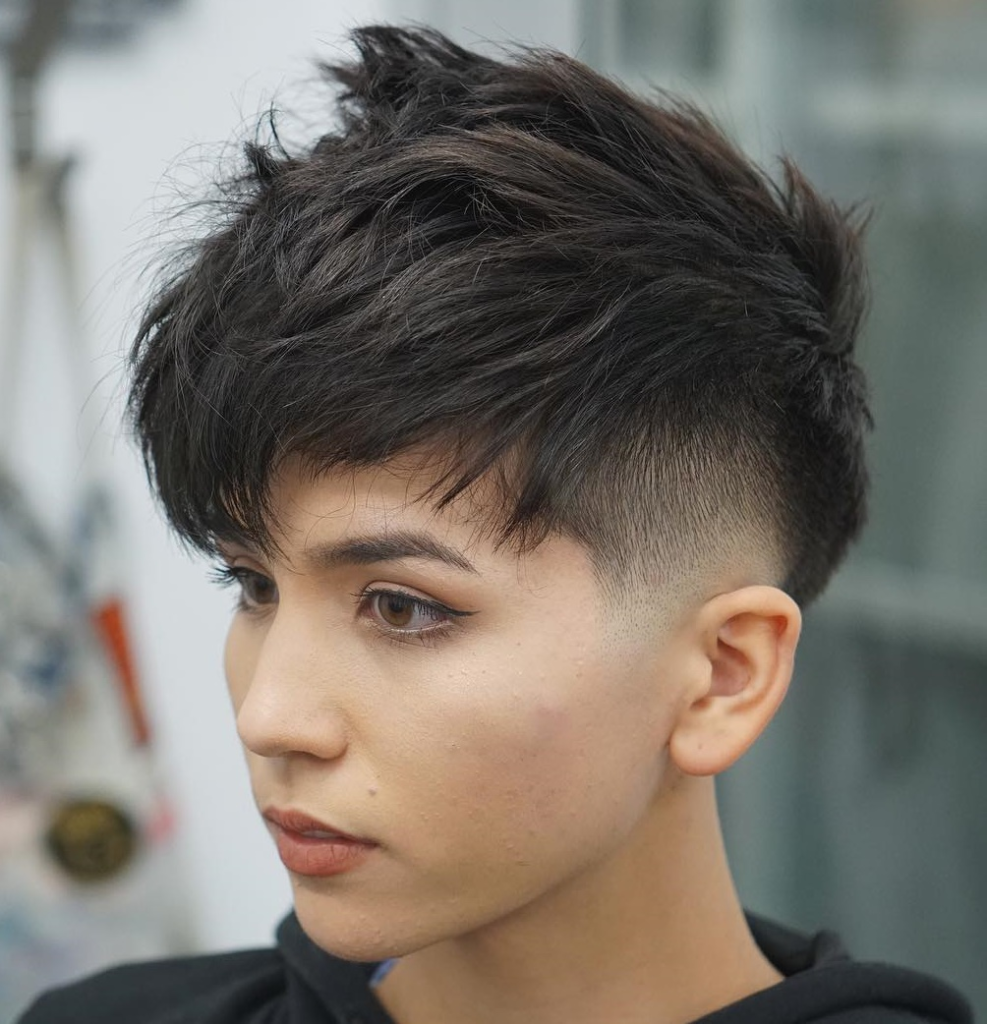
    Why it works: This pixie keeps the back and sides short while leaving the top and front longer. The long bangs can be swept to one side, worn piece-y, or even braided. The texture throughout adds volume and movement.

    How to style: Apply a texturizing spray to damp hair. Blow-dry using your fingers to lift at the roots. Sweep the long bangs where you want them to fall. A tiny amount of styling wax defines the ends.

    Best face shapes: Oval, round, and heart. The long bangs soften roundness.

    Maintenance: Trim every 5 to 6 weeks. Bangs may need more frequent trims.

    12. The Buzz Cut

    Why it works: The buzz cut is the ultimate minimalist statement. All of your hair is cut to the same short length — usually between ¼ inch and ½ inch. There is no styling required. No products. No bad hair days. Just you, your face, and your confidence.

    How to style: Wash with a gentle cleanser. Towel-dry. Apply a lightweight oil or balm to your scalp to keep it moisturized. That is it. No combing, no heat, no products beyond moisturizer.

    Best face shapes: Oval, heart, and diamond. Women with round or square faces can wear a buzz cut if they keep a bit more length on top.

    Maintenance: Trim every 2 to 3 weeks. Many women learn to maintain the buzz cut at home with clippers.

    13. The Shaggy Pixie with Micro Bangs

    Why it works: This is the coolest girl in the room cut. The pixie is cut with choppy, shaggy layers throughout. The micro bangs sit high on the forehead, often above the eyebrows. The combination is edgy, modern, and full of attitude.

    How to style: Apply a texturizing paste to dry hair. Use your fingers to separate and define the choppy pieces. The micro bangs can be left natural or styled straight down. Do not over-brush. The messier, the better.

    Best face shapes: Oval and heart. Micro bangs can overwhelm round or square faces.

    Maintenance: Trim every 4 to 5 weeks. Micro bangs need refreshing every 2 to 3 weeks.

    How to Choose the Right Funky Short Cut for You

    Ask yourself these three questions before booking your appointment:

    1. How funky do you want to go?

    • Subtly funky: Asymmetrical pixie, textured pixie with long bangs
    • Moderately funky: Shaved side pixie, spiky pixie, disconnected bob
    • Very funky: Mohawk, undercut with design, bold color crop
    • Extremely funky: Buzz cut, shaggy pixie with micro bangs

    2. What is your hair texture?

    • Straight or fine: Shaved side pixie, asymmetrical pixie, bowl cut, buzz cut
    • Wavy: Spiky pixie, textured pixie, disconnected bob
    • Curly or coily: Curly short crop with color, frohawk, undercut pixie

    3. How much maintenance are you willing to do?

    • Very low (trims every 2-3 weeks at home): Buzz cut
    • Low (trims every 4-5 weeks at salon): Asymmetrical pixie, spiky pixie, bowl cut
    • Medium (trims every 2-3 weeks for shaved areas): Shaved side, undercut, mohawk
    • High (trims every 1-2 weeks): Undercut with design, micro bangs

    What to Tell Your Stylist

    Bring a photo of two or three styles from this guide. Then say this exactly:

    *”I want funky short hair for young women that is edgy and expressive. My hair is [straight / wavy / curly / fine / thick]. I am interested in [a shaved side / an undercut / bold color / asymmetry / spikes]. I am willing to come in for maintenance every [2 / 4 / 6] weeks. What do you recommend for my face shape?”*

    If you want a shaved design or undercut, add: “Please show me where the shaved line will fall before you start cutting.”

    Styling Products for Funky Short Hair

    For texture and definition:

    • Texturizing paste or wax
    • Styling clay (stronger hold)
    • Sea salt spray
    • Dry texture spray

    For spikes:

    • Styling glue (maximum hold)
    • Strong-hold hairspray

    For color maintenance:

    • Color-safe shampoo and conditioner
    • Purple shampoo (for blondes)
    • Cold water rinses

    Tools to own:

    • Hairdryer with concentrator nozzle
    • Small round brush
    • Your fingers (the best tool for funky styles)

    Confidence Is the Real Statement

    Here is the truth about funky short hair: it looks good on anyone who wears it with confidence. The girl with the shaved side who laughs easily? Stunning. The woman with the neon pink crop who owns the room? Unforgettable. The person with the buzz cut who does not care what anyone thinks? Iconic. Funky hair is not about fitting in. It is about standing out. If you want the cut, get the cut. If you want the color, get the color. Your hair grows back. Your youth does not last forever. Have fun with it.

    Final Thoughts

    Thirteen funky short hair for young women. Shaved sides and undercuts. Bold colors and buzz cuts. Asymmetrical pixies and spiky crops. Mohawks and finger waves. Shaggy pixies with micro bangs. Each one says something different, but they all say the same thing underneath: I am bold. I am creative. I am not afraid to be seen. Pick the one that makes your heart beat a little faster. Bring the photo to your stylist. And walk out of that salon feeling like the coolest version of yourself.

    Which of these thirteen funky short styles will you try first? Drop a comment below and let us know. And if this guide inspired you, share it with a friend who needs a little edge in her life.

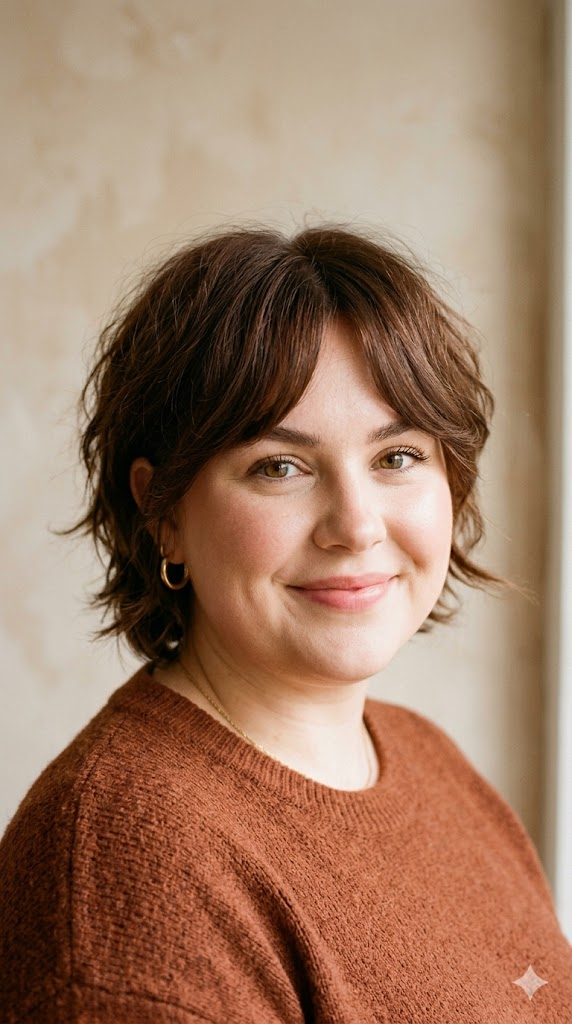
  • 11 Short Layered Bob with Bangs Styles That Frame Your Face Perfectly

    11 Short Layered Bob with Bangs Styles That Frame Your Face Perfectly

    There is a reason the short layered bob with bangs never goes out of style. It is versatile, flattering, and surprisingly low-maintenance. Whether you have fine hair that needs volume, thick hair that needs shaping, or straight hair that needs movement, the short layered bob with bangs delivers every single time. The layers add bounce and texture. The bangs frame your face and draw attention to your eyes. And the short length keeps things easy and modern. This guide walks you through eleven stunning variations of this classic cut, plus exactly how to style them and what to tell your stylist.

    Why the Short Layered Bob with Bangs Works for Almost Everyone

    This haircut is popular for good reason. The layers remove weight from the interior, which prevents the dreaded triangle shape that can happen with blunt bobs. The bangs soften your forehead and can be customized to suit your face shape. And the short length — usually hitting between the ear and the chin — keeps your hair off your neck while still giving you enough length to style. Whether you are in your twenties or your seventies, have straight hair or curly hair, want something edgy or something soft, there is a version of this cut that will make you look and feel amazing. The eleven styles below cover the full spectrum.

    1. The Classic Short Layered Bob with Side-Swept Bangs

    Why it works: This is the entry-level version of the cut. The bob hits at the chin, with soft layers throughout. The side-swept bangs create a diagonal line across your forehead, which is universally flattering. This style works on straight, wavy, or slightly curly hair.

    How to style: Apply a lightweight mousse to damp hair. Blow-dry using a round brush, turning the ends under slightly. Sweep the bangs to one side. A light hairspray keeps everything in place.

    Best face shapes: Oval, round, and heart. The diagonal bangs soften roundness.

    Maintenance: Trim every 5 to 6 weeks.

    2. The Textured Short Layered Bob with Wispy Bangs

    Why it works: Wispy bangs are light, airy, and barely there. They are cut with point-cutting or razor techniques to create soft, feathery ends. The textured bob has choppy layers throughout. Together, they create a soft, romantic look that is perfect for fine or thinning hair.

    How to style: Apply a texturizing spray to damp hair. Blow-dry using your fingers to lift and separate. The wispy bangs should look soft and piece-y. Do not over-brush.

    Best face shapes: Oval, heart, and oblong. The wispiness softens angular features.

    Maintenance: Trim every 5 to 6 weeks.

    3. The Stacked Short Layered Bob with Blunt Bangs

    Why it works: A stacked bob has visible layers in the back that create interior volume. The back is shorter than the front. Adding blunt bangs — cut straight across — creates a bold, graphic look. This version works best on straight or slightly wavy hair.

    How to style: Apply a smoothing serum and heat protectant. Blow-dry using a round brush, lifting the stacked back for extra volume. The blunt bangs should be dried straight down. Finish with a shine spray.

    Best face shapes: Oval and heart. Blunt bangs can overwhelm round or square faces.

    Maintenance: The stacked back needs trimming every 4 to 5 weeks. The bangs every 3 to 4 weeks.

    4. The Curly Short Layered Bob with Curtain Bangs

    Why it works: Curly hair and layers are a match made in heaven. The layers remove weight, allowing your curls to bounce up. Curtain bangs — parted down the middle and curving to each side — blend seamlessly into the face-framing layers. The result is soft, romantic, and full of volume.

    How to style: Apply a curl cream to soaking wet hair. Define the curtain bangs separately, directing them to each side. Let air-dry or diffuse. Do not brush.

    Best curl types: Type 3A to 4A.

    Maintenance: Trim every 6 to 8 weeks. Bangs every 5 to 6 weeks.

    5. The Asymmetrical Short Layered Bob with Long Bangs

    Why it works: One side of the bob is longer than the other. The asymmetry creates visual interest and draws the eye across your face. The long bangs — hitting at or below the eyebrows — sweep to the shorter side, emphasizing the asymmetry.

    How to style: Apply a styling cream to damp hair. Blow-dry using a round brush, directing the longer side where you want it to fall. Sweep the long bangs to the shorter side.

    Best face shapes: Oval, round, and square. The asymmetry breaks up width.

    Maintenance: Trim every 5 to 6 weeks.

    6. The Choppy Short Layered Bob with Micro Bangs

    Why it works: This is the edgy version. The bob is cut with choppy, uneven layers throughout. The micro bangs sit high on the forehead, often above the eyebrows. This look is bold, modern, and not for the timid. It works best on straight or fine hair.

    How to style: Apply a texturizing paste to dry hair. Use your fingers to separate and define the choppy pieces. The micro bangs can be left natural or styled straight down.

    Best face shapes: Oval and heart. Micro bangs can overwhelm round or square faces.

    Maintenance: Trim every 4 to 5 weeks. Micro bangs need refreshing every 2 to 3 weeks.

    7. The Angled Short Layered Bob with Side-Swept Bangs

    Why it works: An angled bob is shorter in the back and gradually longer toward the front. The angle creates a slimming diagonal line along your jaw. Adding side-swept bangs doubles the diagonal effect, which is extremely flattering on round or square faces.

    How to style: Apply a smoothing cream to damp hair. Blow-dry using a round brush, turning the ends under slightly. Sweep the bangs to one side.

    Best face shapes: Oval, round, and square. The angles slim and elongate.

    Maintenance: Trim every 5 to 6 weeks.

    8. The Short Layered Bob with Curly Bangs

    Why it works: Curly bangs are having a major moment. On a short layered bob, curly bangs add volume and interest at the front of your hair. The bangs should be cut dry so your stylist can see exactly where each curl falls. The result is playful, modern, and full of personality.

    How to style: Apply a curl cream to wet hair. Define the curly bangs separately from the rest of your curls. Let air-dry or diffuse. Do not brush the bangs forward — let them fall naturally.

    Best curl types: Type 3A to 4A.

    Maintenance: Bangs need trimming every 4 to 5 weeks. The bob every 6 to 8 weeks.

    9. The Sleek Short Layered Bob with Blunt Bangs

    Why it works: This is the polished, professional version. The bob is cut with subtle layers that add movement without looking choppy. The blunt bangs are cut straight across at the eyebrows. The entire look is smooth, shiny, and sophisticated. This works best on straight hair.

    How to style: Apply a smoothing serum and heat protectant. Blow-dry using a round brush, then flat-iron for maximum sleekness. The blunt bangs should be dried straight down. Finish with a shine spray.

    Best face shapes: Oval and heart. Blunt bangs can be harsh on round or square faces.

    Maintenance: Trim every 4 to 5 weeks. Blunt bangs need refreshing every 3 weeks.

    10. The Messy Short Layered Bob with Piece-Y Bangs

    Why it works: This is the cool-girl version. The bob is cut with lots of texture, and the bangs are cut into separate, piece-y sections. The entire look is deliberately messy and unstructured. It says “I woke up like this” in the best possible way.

    How to style: Apply a texturizing spray or dry shampoo to dry hair. Use your fingers to tousle and lift. Separate the piece-y bangs with your fingers. Do not use a brush. A tiny amount of styling wax on the ends adds definition.

    Best face shapes: Oval, round, and heart. The messiness softens all face shapes.

    Maintenance: Trim every 6 to 7 weeks. The lived-in look means it grows out beautifully.

    11. The Low-Maintenance Short Layered Bob with Long Bangs

    Why it works: Not every woman wants to spend ten minutes blow-drying her hair. This version is cut so that air-drying looks intentional. The layers are subtle. The long bangs can be swept to the side or tucked behind your ears. This is the bob for women who want style without effort.

    How to style: Wash and condition. Towel-dry gently. Apply a leave-in conditioner and a light gel or mousse. Use your fingers to push the hair in the direction you want it to dry. Let it air-dry completely. That is it.

    Best face shapes: Oval, round, and heart. The softness flatters all.

    Maintenance: Trim every 6 to 8 weeks.

    How to Choose the Right Short Layered Bob with Bangs for You

    Ask yourself these three questions before booking your appointment:

    1. What kind of bangs do you want?

    • Soft and romantic: Wispy bangs, curtain bangs, long bangs
    • Bold and graphic: Blunt bangs, micro bangs
    • Effortless: Side-swept bangs, piece-y bangs

    2. What is your hair texture?

    • Straight or fine: Classic, textured, asymmetrical, sleek, low-maintenance
    • Wavy: Classic, choppy, angled, messy
    • Curly: Curly bob with curtain bangs, curly bob with curly bangs
    • Thick: Stacked, choppy, angled, messy

    3. What is your face shape?

    • Round: Angled, asymmetrical, side-swept bangs
    • Oval: Any of the eleven styles
    • Square: Angled, side-swept bangs, wispy bangs
    • Heart: Side-swept bangs, curtain bangs, wispy bangs
    • Long/oblong: Blunt bangs, micro bangs, long bangs

    What to Tell Your Stylist

    Bring a photo of two or three styles from this guide. Then say this exactly:

    *”I want a short layered bob with bangs that flatters my face shape. I want the bob to hit [at my chin / above my chin / below my chin]. I want the layers to be [soft / choppy / stacked]. I want my bangs to be [side-swept / blunt / wispy / curtain / micro]. My hair is [straight / wavy / curly / fine / thick]. I am willing to spend [5 / 10] minutes styling it daily.”*

    If you have a cowlick or strong natural part, add: “Please cut my bangs to work with my cowlick, not against it.”

    How to Style a Short Layered Bob with Bangs

    You will need:

    • A small round brush (1 to 2 inches in diameter)
    • A hairdryer with a concentrator nozzle
    • Lightweight mousse or styling cream

    Step-by-step:

    1. Start with damp, towel-dried hair.
    2. Apply a pea-sized amount of mousse or styling cream throughout.
    3. Blow-dry the bangs first using the round brush.
      • For side-swept: brush to one side.
      • For curtain: brush left side to the left, right side to the right.
      • For blunt: brush straight down.
    4. Blow-dry the rest of the bob using the round brush, turning the ends under slightly.
    5. Once dry, let the hair cool for 30 seconds.
    6. Use your fingers to separate and adjust. A tiny amount of wax defines the ends.

    For second-day hair:
    Spritz with a water bottle until slightly damp. Re-blow-dry the bangs only. Dry shampoo at the roots absorbs oil and adds volume.

    Common Mistakes to Avoid

    Mistake 1: Cutting the bob too short. A bob that hits above the chin can look severe on some face shapes. Start at chin length. You can always go shorter next time.

    Mistake 2: Cutting bangs too thick. Thick bangs on fine or thinning hair can look heavy. Start with wispy bangs. You can always add more density later.

    Mistake 3: Skipping the blow-dry. Most bobs and bangs look flat and sad air-dried. The blow-dry with a round brush takes five minutes and makes all the difference.

    Mistake 4: Forgetting to blend. The bangs should blend into the layers around your face. If there is a visible line where the bangs end, your stylist cut them too bluntly.

    Products for a Short Layered Bob with Bangs

    For volume:

    • Volumizing mousse
    • Root-lifting spray

    For texture:

    • Texturizing spray
    • Styling wax or paste

    For smoothness:

    • Smoothing cream
    • Shine spray

    For hold:

    • Flexible hold hairspray

    Tools to own:

    • Small round brush
    • Hairdryer with concentrator nozzle
    • Flat iron (for sleek styles only)

    Final Thoughts

    Eleven versions of the short layered bob with bangs. Classic and side-swept. Textured with wispy bangs. Stacked with blunt bangs. Curly with curtain bangs. Asymmetrical with long bangs. Choppy with micro bangs. Angled with side-swept bangs. Curly bangs. Sleek with blunt bangs. Messy with piece-y bangs. Low-maintenance with long bangs. Each one starts with the same foundation — a short bob, layered for movement, with bangs to frame your face — but each one feels completely different. The right version for you depends on your hair texture, your face shape, and your personality. Pick the one that makes you excited to book that appointment. Bring the photo. Talk to your stylist. And enjoy a haircut that frames your face perfectly every single day.

    Which of these eleven short layered bob with bangs styles will you try at your next appointment? Drop a comment below and let us know. And if this guide helped you, share it with a friend who has been thinking about taking the plunge.

  • 10 Short Hairstyles for Older Women That Bring Fresh Energy and Easy Elegance

    10 Short Hairstyles for Older Women That Bring Fresh Energy and Easy Elegance

    There is a beautiful freedom that comes with age. You know yourself better. You care less about what others think. And you finally stop apologizing for taking up space. That freedom should extend to your hair. Short hairstyles for older women are not about giving up or settling down. They are about waking up, looking in the mirror, and seeing a woman who is still very much alive, engaged, and beautiful. The right short cut can lift your features, add volume where hair has thinned, and shave minutes or even hours off your morning routine. This guide walks you through ten gorgeous options that real older women are wearing right now.

    Why Short Hair Works So Beautifully After a Certain Age

    Hair naturally changes as we get older. It can become finer, drier, or more brittle. It may lose some of its former density. The texture might shift from straight to wavy or from curly to coarser. Short hairstyles address these changes head-on. Shorter cuts remove weight that can flatten thinning hair. They make washing and drying faster. They allow you to maintain a polished look without constant salon visits. And perhaps most importantly, a great short cut frames your face beautifully, drawing attention to your eyes, your smile, and your confidence. The ten styles below range from wash-and-wear pixies to soft bobs. Each includes why it works, how to style it, which face shapes it flatters, and what maintenance looks like.

    1. The Classic Pixie Cut

    Why it works: The classic pixie is short on the sides and back with slightly longer layers on top. It is timeless, elegant, and incredibly forgiving. For older women, this cut removes bulk while keeping enough length on top to add volume exactly where you need it.

    How to style: Apply a lightweight mousse to damp hair, focusing on the crown. Blow-dry using a small round brush to lift the roots. Or let it air-dry and use your fingers to tousle the top. A pea-sized amount of styling paste adds texture without stiffness.

    Best face shapes: Oval, heart, and oblong. The height on top balances rounder faces beautifully.

    Maintenance: Trim every 4 to 6 weeks to keep the shape crisp.

    2. The Textured Pixie with Side-Swept Bangs

    Why it works: Adding side-swept bangs to a pixie softens the forehead and draws attention upward. The texture throughout the top creates the illusion of thicker hair. This is an excellent choice if you have fine hair that tends to lie flat against your head.

    How to style: Apply a volumizing spray to damp hair. Blow-dry the bangs to one side using a flat brush. Use your fingers to lift the rest of the hair while drying. Finish with a light hold hairspray. No round brush required.

    Best face shapes: Round, square, and heart. The diagonal line of the bangs breaks up width.

    Maintenance: Bangs may need trimming every 3 to 4 weeks. The rest of the cut every 5 to 6 weeks.

    3. The Short Layered Bob

    Why it works: A bob that hits between the ear and the chin offers more coverage than a pixie while still being short. Layers throughout remove weight and add movement. For older women who are not ready for a very short cut, this is the perfect bridge.

    How to style: Apply a leave-in conditioner and a light mousse. Blow-dry using a round brush, turning the ends under slightly. Or let it air-dry for a softer, more casual look. The layers do most of the work for you.

    Best face shapes: Oval, round, and square. The length at the chin softens jawlines.

    Maintenance: Trim every 6 to 8 weeks.

    4. The Curly Short Crop

    Why it works: If you have natural curls or waves, a short crop lets them shine without the weight that pulls them down. The hair is cut to follow your natural curl pattern, creating a soft, rounded shape. This cut celebrates texture rather than fighting against it.

    How to style: Wash with a sulfate-free shampoo. Apply a curl cream to soaking wet hair. Use your fingers to scrunch upward. Let air-dry or diffuse on low heat. Do not brush. Do not comb. Just scrunch and go.

    Best face shapes: Oval, heart, and diamond. The softness of the curls balances angular features.

    Maintenance: Trim every 6 to 8 weeks. Deep condition weekly to keep curls hydrated.

    5. The Soft Pixie with Wispy Layers

    Why it works: Wispy layers on top create feathery movement that looks soft and feminine. This version of the pixie avoids harsh lines. The edges around the ears and nape are kept natural rather than shaved. It is a gentler, more romantic take on short hair.

    How to style: Apply a volumizing mousse. Blow-dry using a flat brush, lifting at the roots. Use your fingers to separate the wispy pieces. A tiny amount of light hairspray keeps everything in place without any crunch.

    Best face shapes: Oval, heart, and oblong. The softness flatters thinner faces.

    Maintenance: Trim every 5 to 6 weeks.

    6. The Modern Shag for Short Hair

    Why it works: The shag cut features choppy layers throughout, creating volume and texture. On short hair, a shag looks edgy but not extreme. The layers give fine hair the illusion of density. The piece-y ends add movement and interest.

    How to style: Apply a texturizing spray or sea salt spray to damp hair. Blow-dry using your fingers to lift and separate. Do not over-brush. The goal is piece-y, not puffy. Finish with a flexible hold paste.

    Best face shapes: Oval, square, and heart. The choppiness softens strong jawlines.

    Maintenance: Trim every 5 to 7 weeks. The lived-in look of a shag means it grows out gracefully.

    7. The Tapered Cut with Volume at the Crown

    Why it works: This cut keeps the sides and back very short while concentrating length and volume right at the crown. The contrast between the close sides and the lifted top creates a flattering silhouette that draws the eye upward. It is excellent for women with very fine or thinning hair.

    How to style: Apply a root-lifting spray to the crown area. Blow-dry using a small round brush, lifting straight up. The sides need no styling. Finish with a light mist of hairspray.

    Best face shapes: Oval, round, and heart. The height elongates round faces.

    Maintenance: The sides need refreshing every 3 to 4 weeks. The crown every 5 to 6 weeks.

    8. The Chin-Length Bob with Soft Layers

    Why it works: Longer than a traditional short cut but still short enough to be easy, the chin-length bob offers versatility. Soft layers throughout prevent the dreaded triangle shape that can happen with blunt cuts. This style works on straight, wavy, or slightly curly hair.

    How to style: Apply a smoothing cream and blow-dry using a round brush. Tuck the ends under slightly. For a more casual look, let it air-dry and use a flat iron to add a slight bend to the ends.

    Best face shapes: Oval, round, and square. The chin length balances wider jawlines.

    Maintenance: Trim every 6 to 8 weeks.

    9. The Short Feathery Cut

    Why it works: Feathering refers to the way the ends are cut — light, airy, and almost fringed. A feathery short cut has no heavy lines. The hair seems to float around your face. This is an especially flattering choice for women with fine or thin hair because it creates the illusion of fullness without adding weight.

    How to style: Apply a lightweight mousse. Blow-dry using a flat brush, lifting at the roots. Do not over-brush. The feathered ends should look soft and separated, not flat. A dry texture spray adds instant volume.

    Best face shapes: All face shapes. The softness of the feathering is universally flattering.

    Maintenance: Trim every 5 to 6 weeks.

    10. The Wash-and-Wear Pixie

    Why it works: Some days you do not want to pick up a blow-dryer. The wash-and-wear pixie is designed for exactly those days. The cut is shaped so that air-drying looks intentional. Layers are placed to fall naturally without any styling needed.

    How to style: Wash and condition. Towel-dry gently. Apply a leave-in conditioner and a light gel or mousse. Use your fingers to push the hair in the direction you want it to dry. Let it air-dry completely. That is it.

    Best face shapes: Oval, round, and heart. The natural fall of the hair softens features.

    Maintenance: Trim every 4 to 5 weeks. A good cut is essential for wash-and-wear success.

    How to Choose the Right Short Cut for You

    Ask yourself these three questions before your salon visit:

    1. How much time do you want to spend on your hair each day?

    • Under 5 minutes: Wash-and-wear pixie, tapered cut, curly short crop
    • 5 to 10 minutes: Classic pixie, textured pixie, short layered bob
    • 10 to 15 minutes: Chin-length bob, soft pixie with wispy layers

    2. What is your natural hair texture?

    • Fine or thinning: Textured pixie, modern shag, short feathery cut, tapered cut
    • Curly or wavy: Curly short crop, wash-and-wear pixie
    • Straight or heat-styled: Classic pixie, chin-length bob, short layered bob

    3. How often can you visit the salon?

    • Every 3 to 4 weeks: Tapered cut, textured pixie with side-swept bangs
    • Every 5 to 6 weeks: Classic pixie, soft pixie with wispy layers, feathery cut
    • Every 6 to 8 weeks: Short layered bob, chin-length bob, curly crop

    What to Tell Your Stylist

    Bring a photo of one or two styles from this guide. Then say this:

    *”I am looking for short hairstyles for older women that are easy to maintain and flatter my features. My hair is [fine / curly / straight / thinning]. I want [a pixie / a bob / a tapered cut]. I am willing to spend [5 / 10] minutes styling it daily. I can come in for trims every [4 / 6 / 8] weeks. What do you recommend for my face shape and hair type?”*

    If you have thinning hair, add: “Please use layering to create the illusion of volume without removing too much density.”

    Maintenance Tips for Older Women with Short Hair

    Washing: Short hair does not need daily washing. Wash every 2 to 3 days with a moisturizing shampoo. Use dry shampoo in between to absorb oil at the roots.

    Conditioning: Use a conditioner every time you wash. For very fine hair, apply conditioner only from the mid-lengths to ends, avoiding the roots.

    Volume tips: Blow-dry your hair upside down for 30 seconds before styling. Use root-lifting sprays or powders. Avoid heavy products like butters and thick creams — they weigh short hair down.

    Nighttime care: Sleep on a satin pillowcase to reduce friction and prevent flattening. For pixies and crops, no wrapping is needed. For short bobs, a loose satin bonnet works well.

    Products to embrace: Lightweight mousse, root-lifting spray, dry shampoo, texturizing spray, flexible hold hairspray.

    Products to avoid: Heavy oils, thick butters, waxes, pomades. These make fine hair look greasy and flat.

    The Confidence Factor

    Here is something no stylist will tell you but every older woman should know: the most beautiful thing about short hair is the woman wearing it. A woman who has lived, who has loved, who has survived, and who still shows up every day with curiosity and courage — that woman looks stunning in any haircut. Short hair just makes her look like she knows it. So do not let anyone tell you that you are too old for a pixie or that short hair is only for young women. That is nonsense. You have earned the right to wear your hair exactly how you want. Short, long, curly, straight, gray, or purple. It is your head. It is your life. Wear it with joy.

    Final Thoughts

    Turning a certain age is not an ending. It is a new chapter. And your hair should reflect the energy, wisdom, and confidence that come with that chapter. The ten short hairstyles above range from wash-and-wear simple to elegantly polished. The classic pixie never goes out of style. The textured pixie with side-swept bangs softens and frames. The short layered bob offers coverage with movement. The curly crop celebrates natural texture. The modern shag adds edge. The tapered cut creates volume exactly where you need it. Pick the style that makes you feel like yourself — maybe a younger version of yourself, or maybe an entirely new version. Bring your photo. Talk to your stylist. And enjoy the freedom that comes with a great short haircut.

    Which of these ten styles caught your eye? Drop a comment below and let us know. And if you found this guide helpful, share it with a friend who has been thinking about going short.

  • 22 Long Curly Haircuts with Layers for Women That Bring Bounce, Shape, and Definition

    22 Long Curly Haircuts with Layers for Women That Bring Bounce, Shape, and Definition

    Long curly hair is a gift. But without the right cut, those beautiful curls can turn into a heavy, triangular mess that lacks shape and movement. That is where long curly haircuts with layers for women come in. The right layers remove weight, add bounce, and give your curls the definition they have been craving. No more flat roots and pyramid-shaped ends. No more curls that lose their shape by lunchtime. This guide walks you through twenty-two layered options specifically designed for long curly hair, plus exactly how to style them and what to tell your stylist.

    Why Layers Are Essential for Long Curly Hair

    Curly hair behaves differently than straight hair. It shrinks when dry. It expands outward. It gets heavier as it grows longer. Without layers, long curly hair often turns into a triangle — wide at the bottom and flat at the crown. Layers solve all of these problems. They remove weight from the ends, allowing your curls to spring up. They add volume at the crown where curls tend to flatten. And they create shape and movement throughout. The twenty-two layered cuts below range from subtle internal layers to dramatic face-framing ones. Each includes why it works, how to style it, best curl types, and maintenance needs.

    1. The Long Layered Curly Cut

    Why it works: This is the classic layered cut for long curly hair. Layers are cut throughout, removing weight from the ends while keeping length. The result is a rounded shape that follows your natural curl pattern. This cut works on all curl types.

    How to style: Apply a curl cream to soaking wet hair. Use your fingers or a wide-tooth comb to distribute. Scrunch upward. Let air-dry or diffuse. The layers will naturally create bounce and definition.

    Best curl types: Type 3A to 4A.

    Maintenance: Trim every 8 to 10 weeks.

    2. The Face-Framing Layers

    Why it works: Face-framing layers are shorter pieces around your face that start at the cheekbones or chin. They soften your features and draw attention to your eyes. The rest of your hair remains long and layered throughout.

    How to style: Apply a curl cream to wet hair. Define the face-framing pieces separately from the rest of your curls. Let everything air-dry or diffuse. The face-framing layers will naturally fall forward.

    Best curl types: Type 3A to 4C.

    Maintenance: Trim every 8 to 10 weeks.

    3. The Curly Shag with Long Layers

    Why it works: The shag cut features choppy layers throughout, with the shortest layers at the crown and longer pieces around the face. On long curly hair, a shag creates incredible volume and texture. The choppiness removes weight and adds movement.

    How to style: Apply a texturizing spray or curl cream to damp hair. Blow-dry using a diffuser, lifting at the roots. Do not over-brush. The choppy ends should look piece-y and intentional.

    Best curl types: Type 3A to 4A.

    Maintenance: Trim every 8 to 10 weeks. The lived-in shag grows out gracefully.

    4. The Long Layers with Curtain Bangs

    Why it works: Curtain bangs are parted down the middle and curve to each side. When paired with long layers, the bangs blend seamlessly into the face-framing pieces. The open center softens your forehead and draws attention to your eyes.

    How to style: Apply a curl cream to wet hair. Define the curtain bangs separately, directing them to each side. Let everything air-dry or diffuse. Do not brush.

    Best curl types: Type 3A to 4A.

    Maintenance: Bangs need trimming every 5 to 6 weeks. The rest every 8 to 10 weeks.

    5. The Invisible Layers (Internal Layers)

    Why it works: Invisible layers — also called internal layers — are cut into the interior of your hair without changing the outer length. They remove weight from the inside, allowing your curls to bounce up without looking like you have obvious layers.

    How to style: Style as you normally would with your favorite curl products. You will not see the layers, but you will feel the difference. Your curls will be lighter and bouncier.

    Best curl types: Type 3B to 4C. Especially good for thick curls.

    Maintenance: Trim every 8 to 10 weeks.

    6. The Long Layers with Side-Swept Bangs

    Why it works: Side-swept bangs create a diagonal line across your forehead. When combined with long layers, the bangs blend into the face-framing pieces. The diagonal line is slimming and softens your features.

    How to style: Apply a curl cream to wet hair. Define the side-swept bangs, directing them to one side. Let everything air-dry or diffuse. A tiny amount of gel keeps the bangs in place.

    Best curl types: Type 3A to 4A.

    Maintenance: Bangs need trimming every 4 to 5 weeks.

    7. The V-Shaped Layered Cut

    Why it works: A V-shaped cut has layers that are shorter at the crown and gradually longer toward the ends, creating a V shape in the back. This shape removes significant weight from the ends, allowing your curls to bounce up dramatically.

    How to style: Apply a curl cream to wet hair. Scrunch upward. Diffuse upside down for maximum volume. The V-shape will appear naturally as your curls dry.

    Best curl types: Type 3A to 4A.

    Maintenance: Trim every 8 to 10 weeks.

    8. The Long Layers with a Middle Part

    Why it works: A middle part creates symmetry and allows your curls to fall evenly on both sides. Long layers throughout prevent the hair from looking too heavy. This is a simple, elegant look that works on most curl types.

    How to style: Create a precise middle part while your hair is wet. Apply curl cream and style as usual. The middle part will stay in place as your curls dry.

    Best curl types: Type 3A to 4A.

    Maintenance: Trim every 8 to 10 weeks.

    9. The Disconnected Layers

    Why it works: Disconnected layers do not blend into each other. There are visible jumps in length between layers. This is an edgy, modern take on layered curls. The disconnection creates maximum texture and volume.

    How to style: Apply a curl cream and a texturizing spray to wet hair. Diffuse upside down. The disconnected layers will create piece-y, separated curls. Embrace the imperfection.

    Best curl types: Type 3A to 4A.

    Maintenance: Trim every 8 to 10 weeks.

    10. The Long Layers with a Deep Side Part

    Why it works: A deep side part creates immediate volume at the crown. The hair on the larger side of the part falls across your forehead, creating a diagonal line. Long layers throughout keep the weight off your curls.

    How to style: Create a deep side part — think 70/30 or 80/20. Apply curl cream and style as usual. Diffuse with your head tilted to the deeper side for extra volume.

    Best curl types: Type 3A to 4C.

    Maintenance: Trim every 8 to 10 weeks.

    11. The Long Layers for Tight Curls (4B-4C)

    Why it works: Tight curls need a different approach. Layers should be more subtle to prevent your hair from looking choppy or uneven. Long, internal layers remove weight without changing the outer shape too dramatically.

    How to style: Apply a rich curl cream or butter to wet hair. Use your fingers to define individual curls. Let air-dry or sit under a hooded dryer. The subtle layers will add bounce without disrupting your curl pattern.

    Best curl types: Type 4B to 4C.

    Maintenance: Trim every 10 to 12 weeks.

    For more tight curl guidance, explore these [INTERNAL LINK: short hairstyles for black women] — many of the product recommendations apply.

    12. The Long Layers with Bottleneck Bangs

    Why it works: Bottleneck bangs are shorter in the center and longer at the sides, creating a bottleneck shape. When paired with long layers, the bangs blend into the face-framing pieces. The open center softens your forehead.

    How to style: Apply a curl cream to wet hair. Define the bottleneck bangs, directing the center pieces forward and the side pieces outward. Let air-dry or diffuse.

    Best curl types: Type 3A to 4A.

    Maintenance: Bangs need trimming every 5 to 6 weeks.

    13. The Long Layers with Curly Fringe

    Why it works: A curly fringe — also called curly bangs — adds volume and interest at the front of your hair. The fringe should be cut dry so your stylist can see exactly where each curl falls. Long layers throughout keep the rest of your hair light and bouncy.

    How to style: Apply a curl cream to wet hair. Define the fringe separately from the rest of your curls. Let everything air-dry or diffuse. Do not brush the fringe forward — let it fall naturally.

    Best curl types: Type 3A to 4A.

    Maintenance: Fringe needs trimming every 4 to 5 weeks.

    14. The Long Layers for Fine Curly Hair

    Why it works: Fine curly hair needs layers that add volume without removing too much density. Long, subtle layers are the answer. They remove just enough weight to allow your curls to bounce up without making the ends look see-through.

    How to style: Apply a lightweight mousse or curl foam to wet hair. Diffuse upside down for maximum volume. Avoid heavy creams and butters — they will weigh fine curls down.

    Best curl types: Type 3A to 3C with fine texture.

    Maintenance: Trim every 8 to 10 weeks.

    15. The Long Layers for Thick Curly Hair

    Why it works: Thick curly hair needs layers that remove significant weight. Heavy layers or a shag cut are excellent choices. The goal is to take out enough bulk so your curls can move freely without losing their natural volume.

    How to style: Apply a curl cream and a gel to wet hair. Diffuse until mostly dry. The layers will prevent your hair from looking too wide or triangular.

    Best curl types: Type 3A to 4A with thick texture.

    Maintenance: Trim every 8 to 10 weeks.

    16. The Long Layers with a U-Shaped Back

    Why it works: A U-shaped cut has layers that are shorter at the sides and longer in the middle, creating a U shape in the back. This shape removes weight from the sides while keeping length in the center. It is softer than a V-shape.

    How to style: Apply a curl cream to wet hair. Scrunch upward. Diffuse. The U-shape will appear naturally as your curls dry.

    Best curl types: Type 3A to 4A.

    Maintenance: Trim every 8 to 10 weeks.

    17. The Long Layers with Wispy Ends

    Why it works: Wispy ends are cut with point-cutting or razor techniques to create soft, feathery tips. The wispiness removes weight from the very ends of your hair, allowing your curls to bounce up instead of hanging heavy.

    How to style: Apply a lightweight curl cream to wet hair. Let air-dry or diffuse. The wispy ends will look soft and separated.

    Best curl types: Type 3A to 4A, especially fine curls.

    Maintenance: Trim every 8 to 10 weeks.

    18. The Long Layers for Curly Hair with Heat Damage

    Why it works: If you have heat-damaged curls — straight pieces mixed with curly pieces — long layers can help blend the textures. The layers remove the most damaged ends while keeping length. Over time, as you trim away the damage, your healthy curls will emerge.

    How to style: Apply a bond-building treatment or protein treatment to strengthen damaged areas. Use a curl cream to define the healthy curls. Diffuse on low heat.

    Best curl types: All curl types with heat damage.

    Maintenance: Trim every 6 to 8 weeks until damage is gone.

    19. The Long Layers with Caramel or Balayage Highlights

    Why it works: Color adds dimension to layered curly hair. Caramel, honey, or balayage highlights catch the light differently on each layer, creating depth and movement. The color enhances the layers, and the layers enhance the color.

    How to style: Style as usual with curl cream and gel. Use color-safe shampoo and conditioner to preserve the highlights. Purple shampoo for blondes.

    Best curl types: Type 3A to 4A.

    Maintenance: Color needs refreshing every 3 to 6 months. Cut every 8 to 10 weeks.

    20. The Long Layers with a Curly Mullet

    Why it works: The curly mullet is having a major comeback. It features shorter layers at the crown and sides, with long layers in the back. The result is edgy, modern, and full of volume. This is not for the timid.

    How to style: Apply a curl cream and a texturizing spray to wet hair. Diffuse, lifting the crown pieces for maximum height. The long back pieces should hang loose.

    Best curl types: Type 3A to 4A.

    Maintenance: Trim every 6 to 8 weeks.

    21. The Long Layers for Curly Hair with an Undercut

    Why it works: An undercut removes the hair from the nape or sides. When you wear your hair down, the undercut is hidden, but it removes significant weight. When you wear your hair up, the undercut is revealed. This is for women who want hidden edge.

    How to style: Style the long layered curls as usual. The undercut requires no daily styling. For a dramatic reveal, pull your hair into a high ponytail or bun.

    Best curl types: Type 3A to 4C with thick hair.

    Maintenance: The undercut needs refreshing every 2 to 3 weeks. The layers every 8 to 10 weeks.

    22. The Low-Maintenance Long Layers

    Why it works: Not every woman wants to spend an hour on her curls. Low-maintenance long layers are cut so that air-drying looks intentional. The layers are subtle. The shape is forgiving. This is the layered cut for women who want bounce without effort.

    How to style: Wash and condition. Towel-dry gently. Apply a leave-in conditioner and a light gel. Use your fingers to arrange your curls. Let it air-dry completely. That is it.

    Best curl types: Type 3A to 4A.

    Maintenance: Trim every 10 to 12 weeks.

    How to Choose the Right Layered Cut for Your Curls

    Ask yourself these three questions before booking your appointment:

    1. How much volume do you want?

    • Maximum volume: Curly shag, disconnected layers, V-shaped cut, curly mullet
    • Moderate volume: Long layered cut, face-framing layers, U-shaped cut
    • Subtle volume: Invisible layers, long layers for tight curls, low-maintenance layers

    2. What is your curl type?

    • Loose curls (3A-3B): Long layered cut, face-framing layers, curtain bangs, V-shaped cut
    • Tight curls (3C-4A): Curly shag, invisible layers, U-shaped cut, long layers with undercut
    • Coily (4B-4C): Long layers for tight curls, invisible layers, low-maintenance layers

    3. Do you want bangs?

    • Yes, soft: Curtain bangs, side-swept bangs, bottleneck bangs
    • Yes, bold: Curly fringe, micro bangs (on a stylist’s recommendation)
    • No bangs: Any of the other options

    What to Tell Your Stylist

    Bring a photo of two or three styles from this guide. Then say this exactly:

    *”I want long curly haircuts with layers for women that add bounce and remove weight. My curl type is [3A / 3B / 3C / 4A / 4B / 4C]. Please cut my hair dry so you can see where each curl falls. Use layers to remove weight from the ends, but do not take too much length off. I want [face-framing layers / a shag / invisible layers / curtain bangs]. I am willing to spend [5 / 10 / 15] minutes styling it daily.”*

    If you have thin or fine curls, add: “Please use subtle layers so my ends do not look see-through.”

    If you have thick curls, add: “Please remove significant weight from the interior. My curls feel heavy.”

    Styling Products for Long Layered Curls

    For definition:

    • Curl cream (medium hold)
    • Curl gel (stronger hold)
    • Leave-in conditioner

    For volume:

    • Root-lifting spray
    • Volumizing mousse
    • Diffuser attachment for your hairdryer

    For texture:

    • Texturizing spray
    • Sea salt spray (use sparingly)

    Tools to own:

    • Wide-tooth comb (for detangling wet hair only)
    • Microfiber towel or cotton t-shirt (for drying)
    • Diffuser
    • Satin bonnet or pillowcase (for sleeping)

    How to Style Long Layered Curls

    Step-by-step:

    1. Wash with sulfate-free shampoo. Condition generously.
    2. Detangle with a wide-tooth comb while conditioner is in.
    3. Rinse with cool water to seal the cuticle.
    4. Apply leave-in conditioner to soaking wet hair.
    5. Apply curl cream or gel using the “praying hands” method.
    6. Scrunch upward to encourage curl formation.
    7. Plop in a microfiber towel for 10-15 minutes.
    8. Diffuse upside down or let air-dry.
    9. Once completely dry, scrunch out the crunch with a drop of oil.

    Final Thoughts

    Twenty-two long curly haircuts with layers for women. Classic long layers that add bounce. Face-framing layers that soften your features. Curly shags that create volume and edge. Invisible layers that remove weight without changing your length. V-shaped and U-shaped cuts that shape your silhouette. Layers for tight curls and loose curls. Layers for fine curls and thick curls. Layers with bangs and without. Each one designed to do the same thing: give your long curls the shape, definition, and movement they deserve. Pick the cut that matches your curl type and your personality. Find a stylist who knows curly hair — ideally one who cuts it dry. And watch your curls transform from heavy and triangular to light, bouncy, and beautiful.

    Which of these twenty-two long curly haircuts with layers for women will you try at your next appointment? Drop a comment below and let us know. And if this guide helped you, share it with a curly-haired friend who needs more bounce in her life.

  • 19 Bangs for Women Over 60 That Soften, Refresh, and Take Years Off Your Look

    19 Bangs for Women Over 60 That Soften, Refresh, and Take Years Off Your Look

    There is something magical about bangs. They can hide forehead lines, draw attention to your eyes, and make you look instantly more awake. And yes, bangs for women over 60 are not only allowed — they are downright transformative. The right fringe softens your features, conceals thinning at the temples, and adds a modern touch to any haircut. Whether you have fine hair, curly hair, a pixie, or a bob, there is a bang style waiting for you. This guide walks you through nineteen options specifically chosen for women over 60, plus exactly how to style them and what to tell your stylist.

    Why Bangs Are a Game-Changer After 60

    As we age, our faces change. Forehead lines become more pronounced. The temples may thin. The skin around the eyes loses some of its former elasticity. Bangs address all of these changes beautifully. They soften the appearance of forehead lines without trying to hide them completely. They conceal thinning at the hairline. They frame your eyes and draw attention upward. And perhaps most importantly, bangs make you look like you made an effort — even on days when you barely brushed your hair. The nineteen styles below range from soft and wispy to bold and full. Each includes why it works, how to style it, best face shapes, and maintenance needs.

    1. The Soft Wispy Bangs

    Why it works: Wispy bangs are light, airy, and barely there. They are cut with point-cutting or razor techniques to create soft, feathery ends. For women over 60, wispy bangs are the most forgiving option because they blend easily into the rest of your hair and require almost no maintenance.

    How to style: Apply a lightweight mousse or styling cream to damp hair. Blow-dry the bangs using a small round brush, directing them to one side or letting them fall naturally. The wispy ends should look soft and separated.

    Best face shapes: Oval, heart, and oblong. The softness flatters thinner faces.

    Maintenance: Trim every 5 to 6 weeks. Wispy bangs hide grow-out better than blunt bangs.

    2. The Side-Swept Bangs

    Why it works: Side-swept bangs are the classic choice for women over 60. They create a diagonal line across your forehead, which softens lines and draws attention to your eyes. The diagonal line is also slimming, making your face appear longer and leaner.

    How to style: Apply a lightweight mousse to damp hair. Blow-dry using a round brush, sweeping the bangs to one side. A light hairspray keeps them in place all day.

    Best face shapes: Oval, round, and square. The diagonal line breaks up width.

    Maintenance: Trim every 4 to 5 weeks.

    For more bang styles that work beautifully on shorter cuts, explore these: hairstyles for women over 60 with fine hair — many of the same principles apply.

    3. The Curtain Bangs

    Why it works: Curtain bangs are parted down the middle or slightly off-center, with the lengths curving to each side like curtains. The openness in the middle softens forehead lines without hiding them. Curtain bangs blend seamlessly into longer layers and grow out beautifully.

    How to style: Apply a styling cream to damp hair. Blow-dry using a round brush, directing the bangs to each side. For the left side, brush to the left. For the right side, brush to the right.

    Best face shapes: Oval, round, and heart. The open center softens all face shapes.

    Maintenance: Trim every 5 to 6 weeks.

    4. The Long Layered Bangs

    Why it works: Long layered bangs hit at or below the eyebrows. They blend into the layers around your face, so there is no visible line where the bangs end. This is an excellent choice for women who want bangs but are nervous about a dramatic change.

    How to style: Apply a volumizing mousse to damp hair. Blow-dry using a round brush, directing the bangs to one side or letting them fall naturally. The length means you can also tuck them behind your ears.

    Best face shapes: Oval, round, and heart. The length balances rounder faces.

    Maintenance: Trim every 5 to 6 weeks.

    5. The Wispy Curtain Bangs

    Why it works: Wispy curtain bangs combine the openness of curtain bangs with the softness of wispy ends. The result is extremely lightweight and forgiving. This is one of the best options for women with fine or thinning hair.

    How to style: Apply a lightweight mousse to damp hair. Blow-dry using a round brush, directing the bangs to each side. The wispy ends should look soft and separated. A dry texture spray adds volume without weight.

    Best face shapes: Oval, heart, and oblong. The wispiness softens angular features.

    Maintenance: Trim every 5 to 6 weeks.

    For more wispy options that work on fine hair, check out these [INTERNAL LINK: medium-length hairstyles for thin hair] — the same principles apply to bangs.

    6. The Feathered Bangs

    Why it works: Feathered bangs have ends that are cut to angle away from your face, creating a soft, feathery effect. The feathers add movement and lightness. This style is especially flattering for women with fine hair because the feathers create the illusion of density.

    How to style: Apply a lightweight mousse to damp hair. Blow-dry using a round brush, directing the bangs upward and away from your face. The feathered ends should lift slightly.

    Best face shapes: Oval, heart, and diamond. The feathering softens angular features.

    Maintenance: Trim every 5 to 6 weeks.

    7. The Blunt Bangs (Softened Version)

    Why it works: Blunt bangs are cut straight across. On their own, they can be harsh on older faces. But a softened blunt bang — with slightly textured ends and a bit of length — works beautifully. The key is keeping them long enough to graze the eyebrows.

    How to style: Apply a smoothing cream to damp hair. Blow-dry using a round brush, pulling the bangs straight down. The ends should be soft, not sharp. A light hairspray keeps them in place.

    Best face shapes: Oval and heart. Blunt bangs can overwhelm round or square faces.

    Maintenance: Trim every 3 to 4 weeks. Blunt bangs show grow-out quickly.

    8. The Side-Swept Bangs with Layers

    Why it works: Adding layers to side-swept bangs creates movement and reduces weight. The layers prevent the bangs from looking too heavy or solid. This version is ideal for women with thick hair that needs lightening.

    How to style: Apply a volumizing mousse to damp hair. Blow-dry using a round brush, sweeping the bangs to one side. The layers will naturally create separation and movement.

    Best face shapes: Oval, round, and square. The layers soften the diagonal line.

    Maintenance: Trim every 4 to 5 weeks.

    9. The Curly Bangs

    Why it works: Curly bangs are having a major moment. Your natural curl pattern gives the bangs volume and texture that straight bangs cannot match. The key is cutting them dry so your stylist can see exactly where each curl falls.

    How to style: Apply a curl cream to soaking wet hair. Use your fingers to define the bangs separately from the rest of your curls. Let air-dry or diffuse. Do not brush. Embrace the imperfection.

    Best face shapes: Oval, heart, and round. The volume of curly bangs softens all face shapes.

    Maintenance: Trim every 6 to 8 weeks. Curly bangs hide grow-out very well.

    10. The Wispy Side Bangs

    Why it works: Wispy side bangs combine the diagonal line of side-swept bangs with the lightness of wispy ends. The result is soft, romantic, and deeply flattering. This is one of the most popular bang styles for women over 60.

    How to style: Apply a lightweight mousse to damp hair. Blow-dry using a round brush, sweeping the bangs to one side. The wispy ends should look soft and separated. Do not over-brush.

    Best face shapes: Oval, round, and heart. The wispiness softens all face shapes.

    Maintenance: Trim every 5 to 6 weeks.

    11. The Micro Bangs (Short Bangs)

    Why it works: Micro bangs sit high on the forehead, often above the eyebrows. This is a bold, edgy choice. Micro bangs work best on women with strong bone structure and confidence to match. They are not for everyone, but on the right woman, they are stunning.

    How to style: Apply a styling cream to damp hair. Blow-dry using a small round brush, pulling the bangs straight down. The short length means they will stay in place naturally.

    Best face shapes: Oval and heart. Micro bangs can overwhelm round or square faces.

    Maintenance: Trim every 2 to 3 weeks. Micro bangs show every bit of grow-out.

    12. The Curtain Bangs for Gray Hair

    Why it works: Gray and silver hair have a different texture than pigmented hair — often coarser, sometimes drier, but always beautiful. Curtain bangs on gray hair catch the light differently than the rest of your hair, creating natural highlights and dimension.

    How to style: Apply a purple shampoo once a week to keep silver bright. Use a moisturizing conditioner. Style the curtain bangs as usual with a round brush. A shine spray enhances the silver tones.

    Best face shapes: All face shapes. The brightness of silver hair draws attention upward.

    Maintenance: Trim every 5 to 6 weeks. Use products designed for gray hair.

    13. The Asymmetrical Bangs

    Why it works: Asymmetrical bangs are longer on one side than the other. The unevenness creates visual interest and draws the eye across your face. The diagonal line is slimming and modern.

    How to style: Apply a styling cream to damp hair. Blow-dry using a round brush, directing the longer side where you want it to fall. The shorter side can be left natural or tucked behind your ear.

    Best face shapes: Oval, round, and square. The asymmetry breaks up width.

    Maintenance: Trim every 4 to 5 weeks.

    14. The Bottleneck Bangs

    Why it works: Bottleneck bangs are a hybrid of curtain bangs and side-swept bangs. They are shorter in the center and longer at the sides, creating a bottleneck shape. The open center softens forehead lines, while the longer sides frame your cheekbones.

    How to style: Apply a lightweight mousse to damp hair. Blow-dry using a round brush, directing the center pieces forward and the side pieces outward. The bottleneck shape will appear naturally.

    Best face shapes: Oval, heart, and round. The open center softens roundness.

    Maintenance: Trim every 5 to 6 weeks.

    15. The Piece-Y Bangs

    Why it works: Piece-y bangs are cut with point-cutting or razor techniques to create separation between individual strands. The pieces stand slightly apart from each other, creating texture and movement. This style works beautifully on fine hair.

    How to style: Apply a texturizing spray to damp hair. Blow-dry using your fingers, separating the pieces as you dry. A tiny amount of styling wax on the ends defines each piece.

    Best face shapes: Oval, heart, and oblong. The separation softens angular features.

    Maintenance: Trim every 5 to 6 weeks.

    16. The Bangs with a Pixie Cut

    Why it works: Bangs on a pixie cut soften the overall look considerably. The bangs can be side-swept, wispy, or curtain-style. The contrast between the short back and the longer bangs is modern and fresh.

    How to style: Apply a styling cream or wax to dry hair. Use your fingers to sweep the bangs where you want them to fall. The rest of the pixie can be styled smooth or textured.

    Best face shapes: Oval, heart, and diamond. The softness of the bangs balances angular features.

    Maintenance: The pixie needs trimming every 4 to 5 weeks. The bangs can go slightly longer between trims.

    17. The Long Side-Swept Bangs

    Why it works: Long side-swept bangs hit at or below the cheekbones. They blend into the layers around your face, creating a continuous line from forehead to chin. The length adds drama and sophistication.

    How to style: Apply a smoothing cream to damp hair. Blow-dry using a round brush, sweeping the bangs to one side. The length means you can also tuck them behind your ears for a different look.

    Best face shapes: Oval, round, and square. The length balances wider faces.

    Maintenance: Trim every 5 to 6 weeks.

    18. The Textured Bangs

    Why it works: Textured bangs are cut with point-cutting or razor techniques to create movement and separation. Unlike smooth bangs that lie flat against the forehead, textured bangs have piece-y ends that stand slightly apart. The texture creates the illusion of density.

    How to style: Apply a texturizing spray or sea salt spray to damp bangs. Blow-dry using your fingers or a small round brush, but do not over-smooth. The texture should remain visible. A dry texture spray adds instant grit and volume.

    Best face shapes: Oval, heart, and oblong. The texture softens angular features.

    Maintenance: Trim every 5 to 6 weeks.

    19. The No-Maintenance Bangs (Grow-Out Friendly)

    Why it works: Some women want the look of bangs without the commitment of frequent trims. No-maintenance bangs are cut to grow out gracefully. They start as curtain bangs or wispy side bangs and gradually become face-framing layers.

    How to style: Style as you would any bangs. The key is the cut — your stylist should cut them with grow-out in mind. Wispy ends and longer lengths are your friends.

    Best face shapes: All face shapes. The low commitment works for everyone.

    Maintenance: Trim every 8 to 10 weeks, or not at all if you are willing to let them grow into layers.

    How to Choose the Right Bangs for You

    Ask yourself these three questions before booking your appointment:

    1. How much forehead do you want to cover?

    • Minimal coverage (open forehead): Curtain bangs, wispy curtain bangs, bottleneck bangs
    • Moderate coverage (partial forehead): Side-swept bangs, wispy side bangs, long layered bangs
    • Maximum coverage (most of forehead): Blunt bangs (softened), micro bangs

    2. What is your hair texture?

    • Fine or thinning: Wispy bangs, wispy curtain bangs, feathered bangs, piece-y bangs
    • Medium: Side-swept bangs, curtain bangs, long layered bangs
    • Thick: Side-swept bangs with layers, textured bangs, curtain bangs
    • Curly: Curly bangs, curtain bangs (cut dry)
    • Gray: Curtain bangs for gray hair, side-swept bangs

    3. How much maintenance are you willing to do?

    • Very low (trims every 8-10 weeks): No-maintenance bangs, wispy bangs
    • Low (trims every 5-6 weeks): Curtain bangs, wispy curtain bangs, long layered bangs
    • Medium (trims every 4-5 weeks): Side-swept bangs, feathered bangs, textured bangs
    • High (trims every 2-4 weeks): Blunt bangs, micro bangs

    What to Tell Your Stylist

    Bring a photo of two or three styles from this guide. Then say this exactly:

    *”I am over 60 and I want bangs for women over 60 that soften my forehead and frame my eyes. My hair is [fine / medium / thick / curly / straight / gray]. I want my bangs to be [wispy / side-swept / curtain / blunt / textured]. I want them to hit [at my eyebrows / below my eyebrows / at my cheekbones]. I am willing to come in for trims every [4 / 5 / 6 / 8] weeks.”*

    If you have a cowlick or strong natural part, add: “Please cut my bangs to work with my cowlick, not against it.”

    How to Style Bangs Daily

    You will need:

    • A small round brush (1 to 2 inches in diameter)
    • A hairdryer with a concentrator nozzle
    • Lightweight mousse or styling cream

    Step-by-step for side-swept or curtain bangs:

    1. Start with damp, towel-dried hair.
    2. Apply a pea-sized amount of mousse or styling cream to the bangs only.
    3. Using the round brush, lift the bangs at the roots and blow-dry.
    4. For side-swept: brush to one side.
    5. For curtain: brush left side to the left, right side to the right.
    6. Once dry, let the bangs cool for 30 seconds before touching them.
    7. Use your fingers to separate and adjust.

    For second-day bangs:
    Spritz with a water bottle until slightly damp. Blow-dry using the same technique. Dry shampoo at the roots absorbs oil and adds volume.

    Common Mistakes to Avoid

    Mistake 1: Cutting bangs too short. Bangs that hit above the eyebrows can look harsh on older faces. Keep them at or below the eyebrows.

    Mistake 2: Cutting bangs too thick. Thick bangs on fine or thinning hair can look heavy and overwhelm your face. Start with wispy bangs. You can always add more density later.

    Mistake 3: Skipping the blow-dry. Most bangs look flat and sad air-dried. The blow-dry with a round brush takes two minutes and makes all the difference.

    Mistake 4: Forgetting to blend. Bangs should blend into the layers around your face. If there is a visible line where the bangs end, your stylist cut them too bluntly.

    The Truth About Forehead Lines and Bangs

    Many women over 60 worry that bangs will draw attention to forehead lines. Here is the truth: the right bangs do the opposite. Wispy bangs and curtain bangs soften the appearance of lines without trying to hide them. Blunt bangs that sit directly on forehead lines can actually accentuate them because the straight line creates contrast. Wispy, side-swept, and curtain bangs avoid this entirely. No hiding. No contrast. Just softness.

    Final Thoughts

    Nineteen bangs for women over 60. Soft wispy bangs. Side-swept classics. Curtain bangs that open up your face. Long layered bangs that blend seamlessly. Feathered, textured, piece-y, and curly. Bangs for fine hair and thick hair. Bangs for straight hair and gray hair. Each one chosen because it softens, refreshes, and takes years off your look. The fear that bangs are only for young women is false. The women in this guide are proof. Pick the fringe that makes your heart beat a little faster. Bring the photo to your stylist. And enjoy the way your new bangs make you feel — lighter, fresher, and just a little bit younger.

    Which of these nineteen bangs for women over 60 will you try at your next appointment? Drop a comment below and let us know. And if this guide helped you, share it with a friend who has been thinking about bangs but needed a little push.

  • 17 Bob Haircuts for Round Faces That Add Length, Balance, and Attitude

    17 Bob Haircuts for Round Faces That Add Length, Balance, and Attitude

    If you have a round face, you have probably heard the same advice a hundred times: avoid short hair, keep it long, never cut bobs. That advice is outdated and wrong. The truth is, bob haircuts for round faces are not only possible — they are incredibly flattering when done right. The key is choosing a bob that adds length, creates angles, and avoids adding width at the cheeks. The right bob can slim your face, highlight your cheekbones, and make you feel like a million bucks. This guide walks you through seventeen bob styles specifically chosen for round faces, plus exactly how to style them and what to tell your stylist.

    Why Bobs Work on Round Faces (When Done Correctly)

    Round faces have equal width and length, with full cheeks and a softer jawline. The goal of any haircut for a round face is to create the illusion of length and add angles. Bobs do this beautifully when cut correctly. The secret is length. A bob that hits below the chin elongates the face. Angles and asymmetry break up the roundness. Layers remove bulk from the cheeks. And height at the crown adds vertical line. The seventeen bobs below follow these principles. Each includes why it works, how to style it, and maintenance needs.

    1. The Angled Bob (A-Line)

    Why it works: The angled bob is shorter in the back and gradually longer toward the front. The longest pieces usually hit below the chin. The diagonal line created by the angle is extremely slimming on round faces. It draws the eye downward and elongates your silhouette.

    How to style: Apply a smoothing cream or heat protectant. Blow-dry using a round brush, turning the ends under slightly. The angled shape does the heavy lifting. Keep styling simple.

    Best for: All round faces, especially those with straight or wavy hair.

    Maintenance: Trim every 5 to 6 weeks.

    2. The Long Bob (Lob)

    Why it works: A lob hits between the collarbone and the shoulders. This length is ideal for round faces because it falls well below the chin, creating maximum elongation. The weight of the longer length also helps pull the face downward visually.

    How to style: Apply a volumizing mousse to roots and a smoothing cream to ends. Blow-dry using a round brush, adding a slight bend to the ends. Or let it air-dry for a beachy, relaxed look.

    Best for: Round faces with fine or medium hair.

    Maintenance: Trim every 6 to 8 weeks.

    For more long bob inspiration that flatters round faces, explore these [INTERNAL LINK: medium-length hairstyles for women over 50] — many of the same principles apply.

    3. The Asymmetrical Bob

    Why it works: One side is longer than the other. The asymmetry creates a diagonal line across your face, which breaks up the roundness and adds visual interest. The longer side can be swept across your forehead or tucked behind your ear for variety.

    How to style: Apply a styling cream to damp hair. Blow-dry using a round brush, directing the longer side where you want it to fall. The shorter side needs little to no styling.

    Best for: Round faces with straight or wavy hair.

    Maintenance: Trim every 5 to 6 weeks.

    4. The Stacked Bob

    Why it works: A stacked bob is shorter in the back with visible layers that create interior volume. The stacked back lifts the hair away from your neck, which elongates your profile. The front is longer, usually hitting at or below the chin.

    How to style: Apply a volumizing mousse to the back section. Blow-dry using a round brush, lifting each layer as you dry. The front can be dried smooth or with a slight bend.

    Best for: Round faces with fine or thin hair that needs volume.

    Maintenance: The stacked back needs trimming every 4 to 5 weeks. The front every 6 to 8 weeks.

    5. The Textured Bob

    Why it works: Texture throughout removes weight and adds movement. The choppy ends prevent the bob from looking too heavy or blunt. Texture also creates angles where there were none, breaking up the roundness of your face.

    How to style: Apply a texturizing spray or sea salt spray to damp hair. Blow-dry using your fingers to lift and separate. Do not over-brush. The textured ends should look piece-y and intentional.

    Best for: Round faces with straight, wavy, or thick hair.

    Maintenance: Trim every 6 to 7 weeks.

    6. The Chin-Length Bob with Deep Side Part

    Why it works: A deep side part creates immediate volume at the crown. The hair on the larger side of the part is swept across your forehead, creating a diagonal line. The combination of height and diagonal line is extremely slimming on round faces.

    How to style: Create a deep side part — think 70/30 or 80/20. Apply a volumizing mousse to the larger side. Blow-dry using a round brush, lifting at the roots and sweeping the hair across your forehead.

    Best for: Round faces with straight or wavy hair.

    Maintenance: Trim every 5 to 6 weeks.

    For more styling techniques that create volume at the crown, check out these [INTERNAL LINK: short hairstyles for thin fine hair] — the principles are the same.

    7. The Curly Bob

    Why it works: Curly hair adds volume and texture that straight hair cannot match. On round faces, a curly bob should hit below the chin when dry. The curls create vertical lines that elongate the face. The key is keeping the length long enough to avoid adding width at the cheeks.

    How to style: Apply a curl cream to soaking wet hair. Use your fingers to define individual curls. Let air-dry or diffuse. Do not brush. The curls will naturally create a rounded shape that flatters your face.

    Best for: Round faces with naturally curly or wavy hair.

    Maintenance: Trim every 6 to 8 weeks. Deep condition weekly.

    8. The Blunt Bob with Long Layers

    Why it works: A blunt bob has a straight, even line at the bottom. On its own, a blunt bob can add width to a round face. But when you add long layers that start below the chin, the layers create movement and prevent the blunt line from looking too harsh.

    How to style: Apply a smoothing serum and heat protectant. Blow-dry using a round brush, keeping the ends blunt and straight. The long layers will add movement without changing the blunt line.

    Best for: Round faces with straight, fine, or medium hair.

    Maintenance: Trim every 5 to 6 weeks. Blunt cuts show every uneven end.

    9. The Inverted Bob

    Why it works: An inverted bob is similar to an angled bob but with a steeper angle. The back is very short, and the front is significantly longer — often hitting at the collarbone. The dramatic angle is one of the most slimming options for round faces.

    How to style: Apply a volumizing mousse. Blow-dry using a round brush, lifting the back for extra height. Keep the front smooth or add a slight bend. The dramatic shape does not need much else.

    Best for: Round faces with straight or wavy hair.

    Maintenance: The back needs trimming every 4 to 5 weeks.

    10. The Wavy Bob

    Why it works: Waves add texture and movement, which draws the eye in different directions. The waves should be soft and loose rather than tight. The length should hit below the chin to maintain elongation.

    How to style: Apply a wave-enhancing cream or mousse to damp hair. Scrunch upward. Let air-dry or diffuse. Use a large-barrel curling iron to enhance a few pieces if needed. Run your fingers through to break up the waves.

    Best for: Round faces with straight or slightly wavy hair.

    Maintenance: Trim every 6 to 8 weeks.

    11. The Bob with Side-Swept Bangs

    Why it works: Side-swept bangs create a diagonal line across your forehead. This line breaks up the roundness of your face and draws attention to your eyes. The bangs should hit at or below your eyebrows and sweep to one side.

    How to style: Apply a lightweight mousse to damp hair. Blow-dry using a round brush, sweeping the bangs to one side. The rest of the bob can be styled smooth or textured. A light hairspray keeps the bangs in place.

    Best for: Round faces with straight or wavy hair.

    Maintenance: Bangs need trimming every 3 to 4 weeks. The rest of the cut every 5 to 6 weeks.

    For more bang styles that flatter round faces, explore these [INTERNAL LINK: curtain bangs for women over 50] — the same face-shaping principles apply.

    12. The Layered Bob with Face-Framing Pieces

    Why it works: Face-framing pieces are slightly longer sections around your face. On a bob, these pieces should hit at or below the chin. They soften the transition between your hair and your face and create vertical lines that elongate.

    How to style: Apply a volumizing mousse to damp hair. Blow-dry using a round brush, directing the face-framing pieces away from your face. The rest of the bob can be dried smooth or textured.

    Best for: Round faces with fine or medium hair.

    Maintenance: Trim every 5 to 6 weeks.

    13. The A-Line Bob with Undercut

    Why it works: An undercut removes bulk from the back and sides. When combined with an A-line bob, the undercut prevents the hair from looking too wide. The contrast between the longer front and the shorter, undercut back is striking and slimming.

    How to style: Style the front and top as usual. The undercut requires no daily styling. For a more dramatic reveal, push the top hair to one side.

    Best for: Round faces with thick hair that needs weight removal.

    Maintenance: The undercut needs refreshing every 2 to 3 weeks. The front every 5 to 6 weeks.

    14. The Graduated Bob

    Why it works: A graduated bob has layers that get progressively longer toward the front. The graduation creates a smooth, sloping line from the back to the front. This line elongates the face and adds sophistication.

    How to style: Apply a smoothing cream to damp hair. Blow-dry using a round brush, following the natural graduation of the cut. The graduated shape does the work.

    Best for: Round faces with straight or slightly wavy hair.

    Maintenance: Trim every 5 to 6 weeks.

    15. The Messy Textured Bob

    Why it works: A messy textured bob is deliberately unstructured. The choppy ends and piece-y layers create angles and movement. The messiness distracts from the roundness of your face and adds an edgy, cool-girl vibe.

    How to style: Apply a texturizing spray or dry shampoo to dry hair. Use your fingers to tousle and lift. Do not use a brush. The messier, the better. A tiny amount of styling wax on the ends adds definition.

    Best for: Round faces with straight or wavy hair.

    Maintenance: Trim every 6 to 8 weeks. The lived-in look means it grows out beautifully.

    16. The Bob with Crown Volume

    Why it works: Height at the crown is your best friend if you have a round face. Volume at the top of your head adds vertical length, which makes your face appear longer and leaner. A bob with crown volume keeps the sides relatively flat while lifting the top.

    How to style: Apply a root-lifting spray or volumizing mousse to the crown area. Blow-dry using a small round brush, lifting straight up. Keep the sides smooth and close to your head.

    Best for: Round faces with fine or thin hair.

    Maintenance: Trim every 5 to 6 weeks.

    17. The Asymmetrical Lob

    Why it works: The asymmetrical lob combines the elongation of a long bob with the face-slimming power of asymmetry. One side is longer than the other, creating a diagonal line across your face. The length ensures the bob falls well below the chin.

    How to style: Apply a styling cream to damp hair. Blow-dry using a round brush, directing the longer side where you want it to fall. Add a slight bend to the ends for movement.

    Best for: Round faces with straight or wavy hair.

    Maintenance: Trim every 5 to 6 weeks.

    How to Choose the Right Bob for Your Round Face

    Ask yourself these three questions before booking your appointment:

    1. How long do you want your bob to be?

    • Short (chin-length): Chin-length bob with deep side part, graduated bob, bob with crown volume
    • Medium (jaw to shoulder): Angled bob, stacked bob, textured bob, bob with side-swept bangs
    • Long (collarbone or longer): Long bob, asymmetrical lob, wavy bob, curly bob

    2. What is your hair texture?

    • Straight or fine: Angled bob, long bob, blunt bob with long layers, graduated bob
    • Wavy: Textured bob, wavy bob, messy textured bob, asymmetrical bob
    • Curly: Curly bob, layered bob with face-framing pieces
    • Thick: A-line bob with undercut, stacked bob, inverted bob

    3. How much daily styling time do you want?

    • Under 5 minutes: Long bob, wavy bob, curly bob, messy textured bob
    • 5 to 10 minutes: Angled bob, asymmetrical bob, chin-length bob with deep side part
    • 10 to 15 minutes: Stacked bob, blunt bob, inverted bob, bob with crown volume

    What to Tell Your Stylist

    Bring a photo of two or three styles from this guide. Then say this exactly:

    “I have a round face and I want bob haircuts for round faces that add length and balance. Please do not cut my bob above my chin — it needs to hit at or below my chin to elongate my face. Add height at the crown. Keep the sides from adding width. I want [an angled shape / asymmetry / layers / texture] to break up the roundness. My hair is [straight / wavy / curly / fine / thick].”

    If you are worried about your cheeks looking fuller, add: “Please add face-framing pieces that hit below my cheekbones.”

    Styling Tips for Round Faces with Bobs

    Create height at the crown: This is your most powerful tool. Use volumizing mousse, root-lifting spray, or a small round brush to lift the hair at your crown.

    Keep length below the chin: A bob that hits above the chin will make your face look rounder. Always keep the longest pieces at or below your chin.

    Use deep side parts: A deep side part creates a diagonal line across your forehead. Avoid center parts, which can emphasize roundness.

    Avoid blunt lines at the chin: A blunt line that hits exactly at your chin can add width. Choose angles, layers, or asymmetry instead.

    Products for round faces:

    • Volumizing mousse (for crown height)
    • Root-lifting spray
    • Texturizing spray (for movement)
    • Dry shampoo (for volume at the roots)

    Products to avoid:

    • Heavy oils and butters (they weigh hair down)
    • Center parts (they emphasize roundness)
    • Blunt chin-length cuts without layers

    Common Mistakes to Avoid

    Mistake 1: Cutting the bob above your chin. This is the most common mistake. A chin-length or shorter bob adds width to round faces. Always keep length below the chin.

    Mistake 2: Center parts. A center part divides your face in half, emphasizing its roundness. A deep side part creates a slimming diagonal line.

    Mistake 3: No height at the crown. Flat hair at the crown makes round faces look rounder. Always add volume at the top.

    Mistake 4: Blunt, one-length bobs. Without layers or angles, a blunt bob can look like a helmet on round faces. Add texture or asymmetry.

    Final Thoughts

    Seventeen bob haircuts for round faces. Angled and asymmetrical. Stacked and textured. Curly and wavy. Long bobs and chin-length bobs with deep side parts. Each one follows the same principles: length below the chin, height at the crown, and angles that break up roundness. The old rule that round faces cannot wear bobs is dead. The women in this guide are proof. Pick the bob that speaks to you. Bring the photo to your stylist. And enjoy a cut that adds length, balance, and attitude to your everyday look.

    Which of these seventeen bob haircuts for round faces will you try at your next appointment? Drop a comment below and let us know. And if this guide helped you, share it with a friend who has been told she cannot wear a bob.

  • 15 Short Hairstyles for Thin Fine Hair That Actually Look Full

    15 Short Hairstyles for Thin Fine Hair That Actually Look Full

    Finding the right short hairstyles for thin fine hair can feel like a losing battle. You wash, you dry, you style — and within an hour, it is flat again. The ends look see-through. The crown has no lift. I have been there, and I know how frustrating it is. Here is what I have learned: the right short cut changes everything. It removes the weight that pulls you flat and creates shape that lasts all day.

    I have heard it a hundred times from women just like you. “My hair is so thin. Nothing gives it volume. I look at old pictures and barely recognize myself.”

    Here is what I want you to know. Your hair is not the enemy. It has just changed. And the right short haircut works with those changes instead of fighting them. Short hair is actually a gift for thin fine hair. It removes the weight that pulls you flat. It creates shape that lasts all day. And it takes half the time to style.

    I have seen these fifteen cuts change how women feel about their hair. Not because of miracle products or expensive treatments. Just smart cutting.

    Let us find you something great.


    1. The Classic Short Pixie

    The classic short pixie is where many women start — and for good reason. It keeps the back and sides close to the head, with about an inch of length on top. The perimeter is clean and deliberate.

    This cut works because it removes every bit of weight that could pull your hair flat. What remains is light, manageable, and easy to style. The short top can be worn sleek or textured depending on your mood.

    I recommend this cut for women who want the lowest possible maintenance. Wash it, towel it, rub in a little product, and go.

    Who it flatters most: Oval and heart-shaped faces. The short length balances longer features.

    Styling time: Three minutes.


    2. The Textured Short Pixie

    The textured short pixie takes the classic version and adds visible texture throughout the top. Your stylist uses point cutting — snipping vertically into the ends — to create soft separation between each piece.

    That texture is not just for looks. It creates the illusion of density. When light hits those uneven ends, it scatters, making your hair appear fuller than it actually is. No product required for that trick.

    This is my most-recommended cut for women with very fine hair. The texture does the work that volume products promise but rarely deliver.

    Who it flatters most: Women with very fine hair. The texture creates visual density.

    Styling time: Three minutes. Rub texture paste between your palms and rake through.


    3. The Cropped Pixie with Longer Top

    Some women want very short hair but still want something to style. The cropped pixie with a longer top gives you both. The back and sides are cropped close, but the top stays longer — two to three inches.

    That longer top gives you options. You can wear it swept to the side, spiked up, or smoothed down. The short back keeps the nape neat and prevents the cut from looking heavy.

    I love this cut for women who are not ready for a super-short pixie but want the ease of short hair. It is a gentle step in the right direction.

    Who it flatters most: Women who want short hair but are nervous about going very short.

    Styling time: Five minutes.


    4. The Short Spiky Pixie

    Spikes sound scary. I get it. But the modern spiky pixie is soft, piece-y, and surprisingly feminine. The top is cut into short, uneven sections — about one to two inches long — and styled upward with a lightweight pomade.

    The spikes should be soft and rounded, not sharp or crunchy. Think “morning texture” rather than “competition hair.” The height at the crown lifts your whole face and draws the eye upward.

    I have recommended this cut to countless women with thinning hair. The lift at the crown is honest — it does not pretend you have more hair than you do. It just works with what you have.

    Who it flatters most: Women with strong bone structure. The spikes add height and attitude.

    Styling time: Four minutes. Rub pomade between palms, rake upward.


    5. The Short Choppy Pixie

    The short choppy pixie is all about texture. The back and sides are kept very short, while the top is cut into visible, separated pieces that range from half an inch to two inches long.

    The choppiness comes from the cutting technique, not from extreme length differences. Your stylist will cut at different angles, creating pieces that catch light differently across your head. That irregularity tricks the eye into seeing more density.

    This cut is ideal for women who want their hair to look styled even when they do nothing to it. The choppy texture provides built-in interest.

    Who it flatters most: Women with angular face shapes. The choppy texture echoes sharp bone structure.

    Styling time: Four minutes. A little texture paste, raked through dry hair.


    6. The Short Pixie with Side Swept Bangs

    Adding side swept bangs to a short pixie softens the whole cut. The bangs sweep across your forehead from a deep side part, ending around your eyebrow or cheekbone.

    The side swept bangs blend into the longer top sections, creating a continuous, flowing line. This cut is particularly flattering if you have a high forehead or thinning at the hairline. The bangs provide coverage while drawing attention to your eyes.

    I recommend this cut often for women who want short hair but worry it will look severe. The side sweep adds softness without sacrificing the ease of a pixie.

    Who it flatters most: Women with high foreheads or who want to soften facial lines.

    Styling time: Six minutes, including bang styling.


    7. The Short Pixie with Micro Bangs

    Micro bangs — cut well above your eyebrows — transform a simple short pixie into something striking. The contrast between the ultra-short bangs and the textured top creates a modern, confident look.

    I know micro bangs sound intimidating. Here is what I have learned: on women with fine hair, they draw the eye upward, away from any thinning at the hairline or along the part. They also showcase your eyes. If you have good brows or nice eyes, micro bangs are a game-changer.

    The bangs need a trim every two to three weeks, but they dry in seconds.

    Who it flatters most: Women with strong brows or good eye definition.

    Styling time: Three minutes for the bangs, three for the rest.


    8. The Short Asymmetrical Pixie

    Asymmetry is one of my favorite tricks for fine hair. When one side of your cut is longer than the other, your eye stops looking for uniform density and starts appreciating the shape instead.

    In the short asymmetrical pixie, the shorter side tucks behind your ear. The longer side sweeps forward toward your jaw. The difference is usually one to two inches.

    This cut works best on straight or slightly wavy hair. Styling is minimal — flat iron the ends to define the difference, tuck the shorter side, and go.

    Who it flatters most: Women with round or square faces. The diagonal line breaks up facial symmetry.

    Styling time: Seven minutes.


    9. The Short Pixie with Undercut

    The undercut takes weight removal to the next level. The back and sides are shaved or clipped very short — typically to a #2 or #3 guard — while the top stays longer.

    The contrast is intentional and striking. The undercut removes so much weight that the top pieces stand up with very little product. This cut is ideal if you have thick or heavy hair that always falls flat.

    I will be honest: this cut is not for everyone. It is bold. But for the women who try it, most never go back. There is something liberating about a shaved nape.

    Who it flatters most: Women who want a bold look and have the confidence to wear it.

    Styling time: Three minutes for the top. The undercut needs no styling.


    10. The Short Tapered Pixie

    The tapered pixie takes a softer approach than the undercut. Instead of a sharp disconnect, your hair tapers gradually from very short at the nape to longer at the crown.

    This cut is ideal if you like the idea of short hair but find the undercut too severe. The tapered version gives you the same benefits — less bulk, easier styling, natural lift — with a softer, more traditional silhouette.

    I recommend this cut often for first-time short-hair wearers. It is approachable. It works on almost all hair types. And it still gives you that modern look.

    Who it flatters most: Women who want short hair without dramatic contrast.

    Styling time: Five minutes. Blow-dry the top upward with a small round brush.


    11. The Short Curly Pixie

    If you have natural curls or waves, you already have a head start on volume. The short curly pixie is cut dry, not wet, so your stylist can see exactly where each curl falls and how much weight to remove.

    The back and sides stay short to prevent triangle head. The top stays long enough for your curls to form properly. The result is soft, voluminous, and surprisingly easy to maintain.

    For women with curly hair, this cut is liberating. Curls hold volume better than straight hair. The short length removes the weight that often pulls curls flat.

    Who it flatters most: Women with naturally curly or wavy hair.

    Styling time: Five minutes of product application, then air dry.


    12. The Short Sleek Pixie

    Sometimes the most powerful statement is simplicity. The short sleek pixie requires no texture, no pieces, no mess — just mirror-smooth, glass-like hair with a clean, precise shape.

    This style works because it embraces fine hair’s natural tendency toward sleekness. Fine hair can achieve a level of smoothness that thick, coarse hair never can. That glassy finish looks expensive, polished, and modern.

    To achieve the sleek short pixie, you will need a high-quality flat iron and a heat protectant. Flat iron the top sections in small subsections, working from root to tip. Finish with a drop of lightweight serum on the ends.

    Who it flatters most: Women with strong bone structure. The sleek shape highlights facial features.

    Styling time: Ten minutes for flat ironing.


    13. The Short Messy Pixie

    The short messy pixie celebrates imperfection. The cut itself is intentionally uneven and textured, with pieces ranging from half an inch to two inches long. The goal is to look like you just rolled out of bed — in the most stylish way possible.

    This cut is ideal if you want to eliminate heat styling entirely. No blow dryer. No flat iron. No round brush. Just wash, towel-dry, apply a little sea salt spray or texture paste, scrunch, and walk away.

    I recommend this cut often for busy women. It is the ultimate wash-and-go. The messy texture forms naturally as your hair dries.

    Who it flatters most: Women who want the shortest possible styling time.

    Styling time: Two minutes of scrunching, then air dry.


    14. The Short Pixie with Long Sideburns

    Long sideburns on a short pixie add softness and frame your face beautifully. The sideburns stay longer than the rest of the cut — reaching your earlobe or even your jawline — while the back and top stay short.

    The long sideburns soften the transition between your short hair and your face. They also give you something to tuck behind your ears or leave out to frame your cheeks.

    I love this cut for women with oval or heart-shaped faces. The long sideburns add width at the cheekbones, which balances longer features.

    Who it flatters most: Women with oval or heart-shaped faces.

    Styling time: Four minutes. Product through the top and sideburns.


    15. The Short Pixie with Wispy Nape

    Most short haircuts ignore the nape of the neck. This one makes it a feature. Instead of a clean, blunt line at your hairline, the nape is cut into soft, feathery wisps that graze your neck.

    The wispy nape softens the whole silhouette. It also disguises any thinning or unevenness at the hairline — something many women deal with but rarely talk about. The soft wisps blend together naturally.

    This cut is romantic and feminine while still giving you that short, easy length. It is one of my personal favorites.

    Who it flatters most: Women with longer necks.

    Styling time: Four minutes. Product on top only — the nape needs nothing.


    Final Thoughts

    Here is what I want you to take away from this. Your thin fine hair is not a problem to be solved. It is just different than it used to be. And the right short cut works with that difference instead of fighting it.

    Short hair is not giving up. It is not settling. It is a choice — a confident, practical, beautiful choice that makes your mornings easier and your reflection happier.

    Bring pictures to your stylist. Tell them exactly what you want. And if you have been hiding your fine hair under longer lengths, try something short. You might be surprised how much you love it.

  • 13 Edgy Choppy Pixie Haircut Over 50 That Feel Like You

    13 Edgy Choppy Pixie Haircut Over 50 That Feel Like You

    Girl, just because you are over fifty does not mean your haircut has to be soft, round, and safe. I have seen too many women settle for a cut that does nothing for them because someone told them “at your age” they should tone it down. Here is the truth: an edgy choppy pixie haircut over 50 can be one of the most flattering things you will ever do. It adds texture where you need it. It creates volume that lasts. And it says something about you — that you still know what works, that you are not afraid of a little personality, that you are exactly as modern and fresh as you feel.

    I have been doing this long enough to know what works on mature hair. These thirteen choppy pixies are not about looking young. They are about looking like you. Just a little more interesting.

    Let us get you a great haircut.


    1. The Classic Choppy Pixie

    This is the foundation cut. The back and sides are short and neat. The top is cut with point shears — your stylist snips vertically into the ends — to create soft, visible texture throughout.

    The choppiness comes from the cutting technique, not from extreme length differences. The pieces range from half an inch to two inches long. Those uneven lengths catch light differently across your head, which tricks the eye into seeing more density. No products required for that trick. It is built right into the cut.

    I love this cut for women who want to dip their toes into texture without going too bold. It is edgy enough to feel modern but soft enough to wear anywhere.

    Who it flatters most: Oval and heart-shaped faces. The texture softens angular features.

    Styling time: Four minutes. A little lightweight pomade rubbed between your palms and raked through the top.


    2. The Piece-Y Pixie with Micro Bangs

    Adding micro bangs to a choppy pixie changes everything. Micro bangs — cut well above the eyebrows — create a graphic, deliberate element that makes the rest of the texture look intentional.

    The top should be soft and separated, with each piece having its own direction. The micro bangs provide a clean contrast. Together, they look modern, confident, and put-together.

    I know micro bangs sound intimidating. Here is what I have learned: on women over fifty, they draw the eye upward, away from any thinning at the hairline. They also showcase your eyes. If you have good brows or nice eyes, micro bangs are your new best friend.

    Who it flatters most: Women with strong brows or good eye definition.

    Styling time: Three minutes for the bangs, three for the rest.


    3. The Asymmetrical Choppy Pixie

    Asymmetry is one of my secret weapons for mature hair. When one side of your cut is longer than the other, the eye stops looking for uniform density and starts appreciating the shape instead.

    In this cut, the shorter side tucks behind your ear. The longer side sweeps forward toward your jaw or cheekbone. The difference is usually one to two inches. Both sides have the same choppy texture, but the length difference adds visual interest.

    I recommend this cut often for women with round or square faces. That diagonal line breaks up the symmetry in a way that is very flattering.

    Who it flatters most: Women with round or square faces.

    Styling time: Seven minutes. Flat iron the ends to define the difference, tuck the shorter side, and go.


    4. The Spiky Choppy Pixie

    Spikes are not just for punk rockers. I promise. The modern spiky pixie features soft, piece-y spikes that add height and movement without looking harsh.

    The top is cut into short, uneven sections — about one to two inches long. You style them upward with a small amount of lightweight pomade or wax. The spikes should be soft and rounded, not sharp or crunchy. Think “morning texture” rather than “competition hair.”

    This cut is excellent for fine or thinning hair because the lifted top creates the illusion of density. The shorter back and sides remove weight, which lets the crown stand up naturally.

    Who it flatters most: Women with strong bone structure. The spikes add height and attitude.

    Styling time: Four minutes. Rub pomade between your palms, rake upward.


    5. The Undercut Choppy Pixie

    The undercut takes weight removal seriously. The back and sides are shaved or clipped very short — typically to a #2 or #3 guard — while the top stays longer and cut into choppy pieces.

    The contrast is intentional and striking. The undercut removes so much weight that the top pieces stand up with very little product. This cut is ideal if you have thick or heavy hair that always falls flat no matter what you do.

    I will be honest: this cut is not for everyone. It is bold. But for the women who try it, most never go back. There is something liberating about a shaved nape on a hot day.

    Who it flatters most: Women who want a bold look and have the confidence to wear it.

    Styling time: Three minutes for the top. The undercut needs no styling.


    6. The Tapered Choppy Pixie

    The tapered choppy pixie takes a softer approach than the undercut. Instead of a sharp disconnect, your hair tapers gradually from very short at the nape to longer at the crown. The choppy texture stays on top.

    This cut is ideal if you like the idea of a choppy pixie but find the undercut too severe. The tapered version gives you the same benefits — less bulk, easier styling, natural lift — with a softer, more traditional silhouette.

    I recommend this cut often for first-time choppy pixie wearers. It is approachable. It works on almost all hair types. And it still gives you that modern texture you are looking for.

    Who it flatters most: Women who want choppy texture without dramatic contrast.

    Styling time: Five minutes. Blow-dry the top upward with a small round brush.


    7. The Side-Swept Choppy Pixie

    The side-swept choppy pixie combines the texture you want with the softness you love. The top is cut into choppy, piece-y sections, then swept deeply to one side.

    That deep side sweep does two things. First, it lifts the roots on the lighter side — genuine volume without any product. Second, when the choppy pieces sweep to one side, they stack on top of each other, creating even more visual density.

    This cut is particularly flattering for round or square faces. That diagonal line breaks up facial symmetry and adds length.

    Who it flatters most: Women with round or square faces.

    Styling time: Six minutes. Blow-dry in the sweep direction, add a little texture.


    8. The Choppy Pixie with Long Sideburns

    Long sideburns on a choppy pixie add softness and frame your face beautifully. The sideburns stay longer than the rest of the cut — reaching your earlobe or even your jawline — while the back and top stay short and textured.

    The long sideburns soften the transition between your short hair and your face. They also give you something to tuck behind your ears or leave out to frame your cheeks.

    I love this cut for women with oval or heart-shaped faces. The long sideburns add width at the cheekbones, which balances longer features.

    Who it flatters most: Women with oval or heart-shaped faces.

    Styling time: Four minutes. Product through the top and sideburns.


    9. The Choppy Pixie with Wispy Nape

    Most pixie cuts ignore the nape of the neck. This one makes it a feature. Instead of a clean, blunt line at your hairline, the nape is cut into soft, feathery wisps that graze your neck.

    The wispy nape softens the whole silhouette. It also disguises any thinning or unevenness at the hairline — something many women deal with after fifty but rarely talk about. The soft wisps blend together naturally.

    This cut is romantic and feminine while still giving you that choppy texture on top. It is one of my personal favorites.

    Who it flatters most: Women with longer necks.

    Styling time: Four minutes. Product on top only — the nape needs nothing.


    10. The Choppy Pixie with Curly Texture

    If you have natural curls or waves, you already have a head start on choppy texture. The curly choppy pixie is cut dry, not wet, so your stylist can see exactly where each curl falls and how much weight to remove.

    The back and sides stay short to prevent triangle head. The top stays longer so your curls have room to form. The choppiness comes from your natural curl pattern.

    For women with curly hair, this cut is liberating. Curls hold volume better than straight hair. The choppy texture disguises any thinning at the roots. Use a lightweight leave-in conditioner and air dry or diffuse on low heat.

    Who it flatters most: Women with naturally curly or wavy hair.

    Styling time: Five minutes of product application, then air dry.


    11. The Choppy Pixie with Hidden Undercut

    The hidden undercut gives you the benefits of an undercut without the bold visible contrast. The back and sides are shaved short, but the longer top pieces fall over the undercut and hide it from view.

    From the front, this looks like a standard choppy pixie. From the back or side, you see the shaved underlayer. It is a subtle surprise.

    I recommend this cut for first-time undercut wearers. You get the weight removal and the ease of styling, but you can ease into the look.

    Who it flatters most: Women who want undercut benefits without the visible contrast.

    Styling time: Four minutes. Product on top, let the pieces fall naturally.


    12. The Choppy Pixie with Blunt Fringe

    A blunt fringe — bangs cut straight across at eyebrow level — paired with a choppy pixie creates a beautiful contrast. The fringe is precise and clean. The rest of the cut is soft and piece-y.

    The blunt fringe draws attention to your eyes. It also covers a high forehead or thinning hairline beautifully. The choppy texture on top adds movement that balances the weight of the fringe.

    This cut works best on straight or slightly wavy hair. The fringe needs a trim every two to three weeks, but styling takes only a minute — just blow-dry it forward with a small round brush.

    Who it flatters most: Women with high foreheads or strong eyes.

    Styling time: Six minutes (one minute for the fringe, five for the rest).


    13. The Messy Choppy Pixie

    The messy choppy pixie celebrates imperfection. The cut itself is intentionally uneven and textured, with pieces ranging from half an inch to three inches long. The goal is to look like you just rolled out of bed — in the most stylish way possible.

    This cut is ideal if you want to eliminate heat styling entirely. No blow dryer. No flat iron. No round brush. Just wash, towel-dry, apply a little sea salt spray or texture paste, scrunch, and walk away.

    I recommend this cut often for busy women. It is the ultimate wash-and-go. The messy texture forms naturally as your hair dries.

    Who it flatters most: Women who want the shortest possible styling time.

    Styling time: Two minutes of scrunching, then air dry.


    Final Thoughts

    Here is what I want you to take away from this. Your haircut should make you feel good. Not because someone told you it looks nice. Because when you catch your reflection, you think “there she is.”

    Edgy does not mean extreme. Choppy does not mean messy. A good choppy pixie is architecture. It is shape. It is texture that works with what you have, not against it.

    Bring pictures to your stylist. Tell them exactly what you want. And if you have been wearing the same safe cut for years, try something with a little edge. You might be surprised how much you love it.