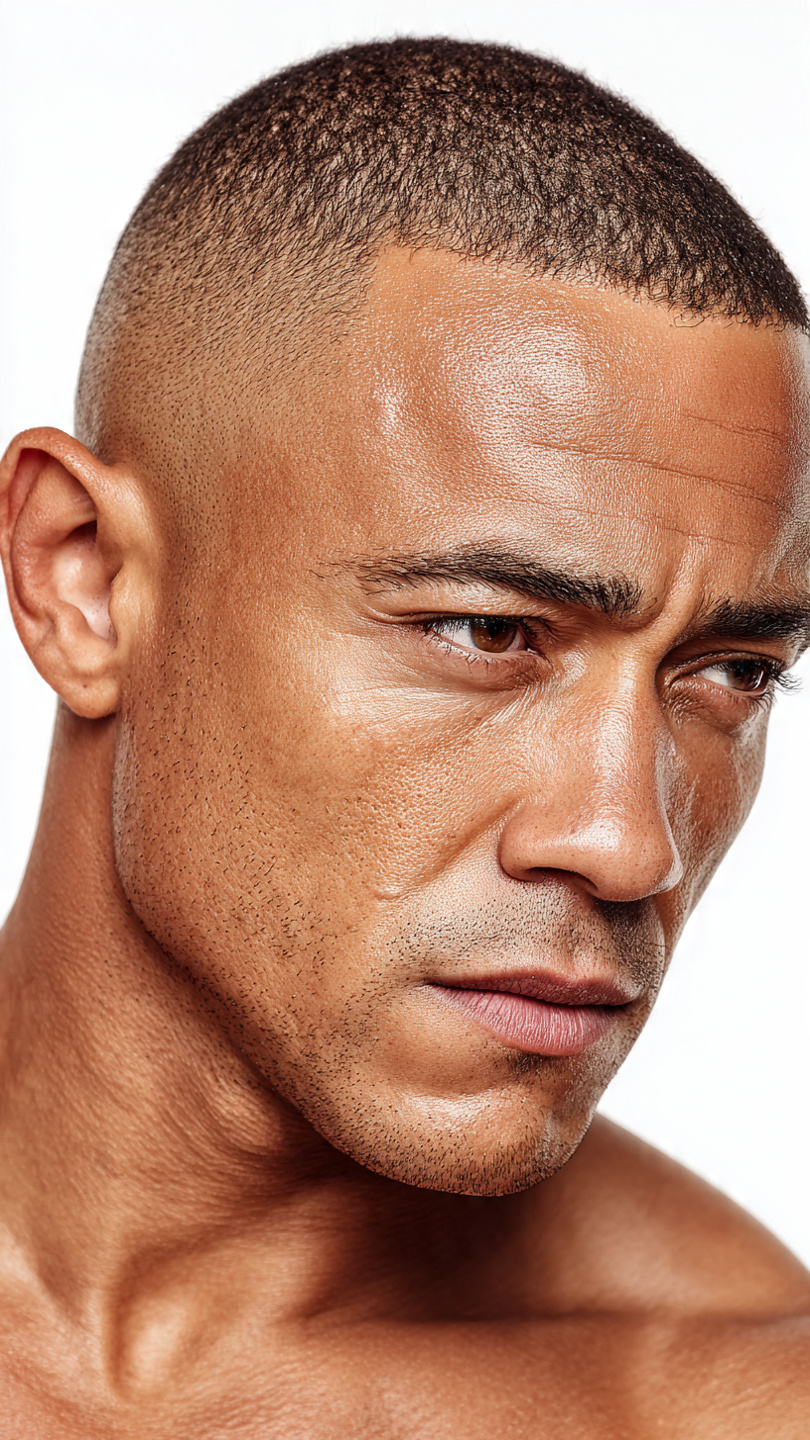
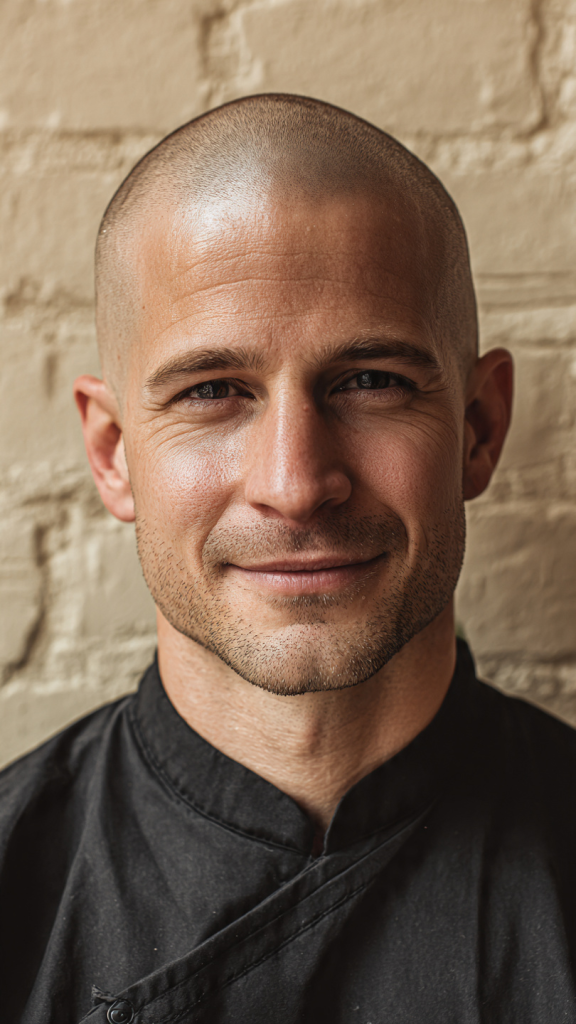
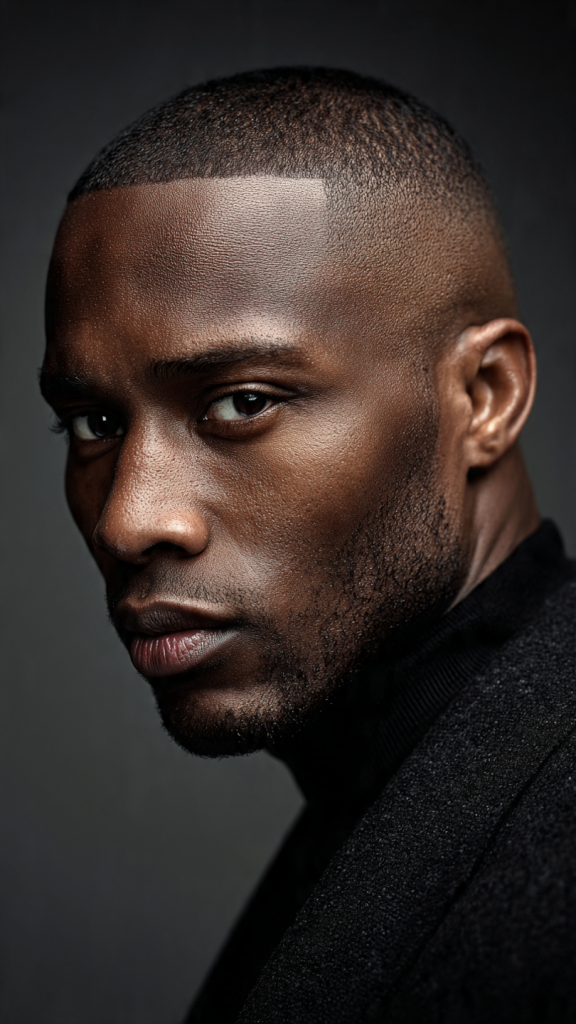
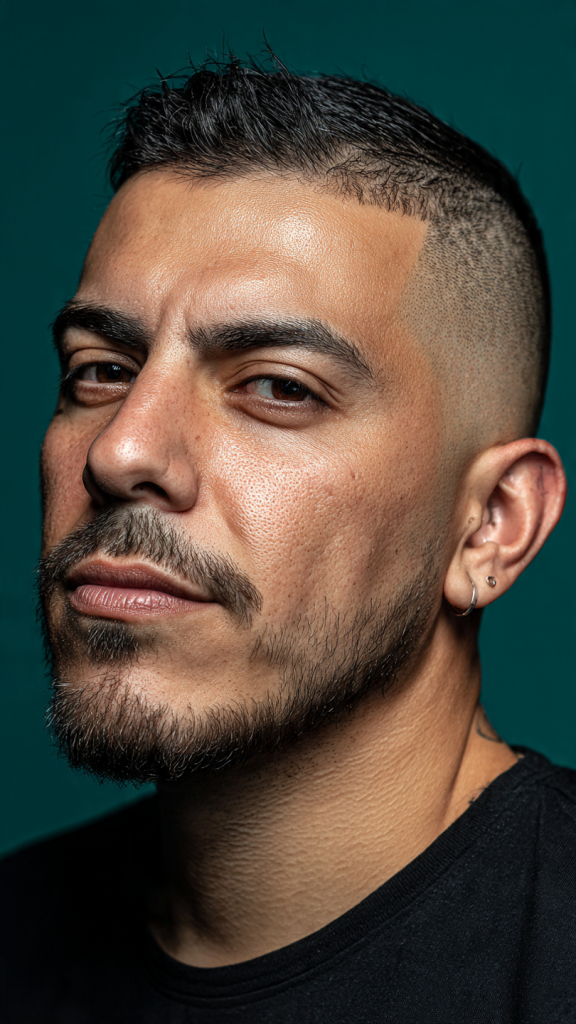
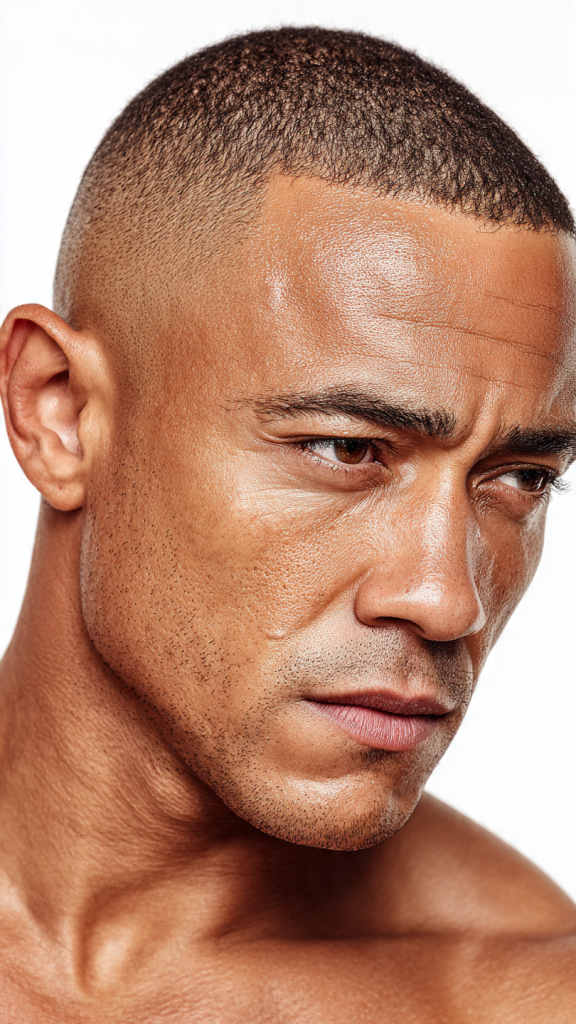
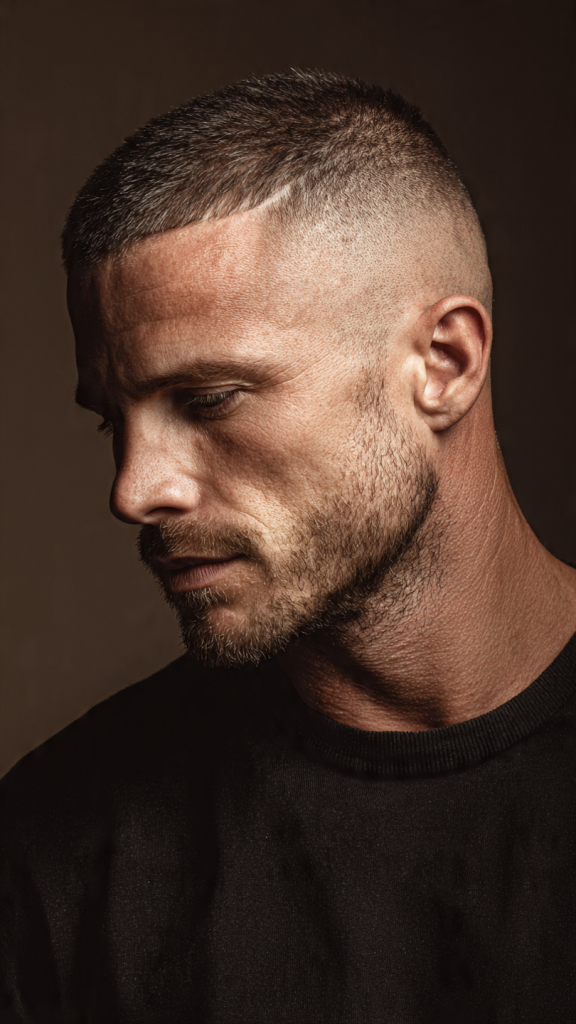
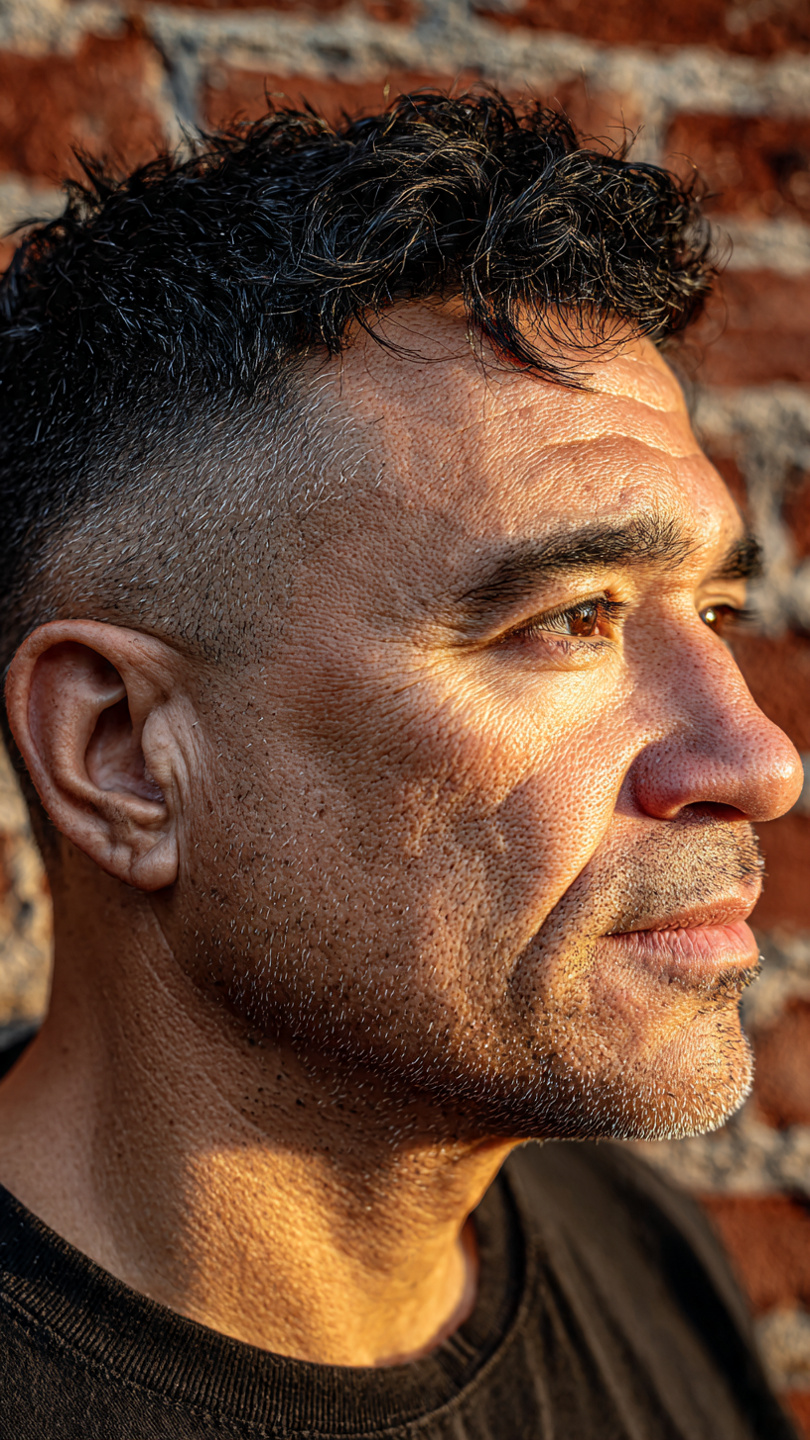
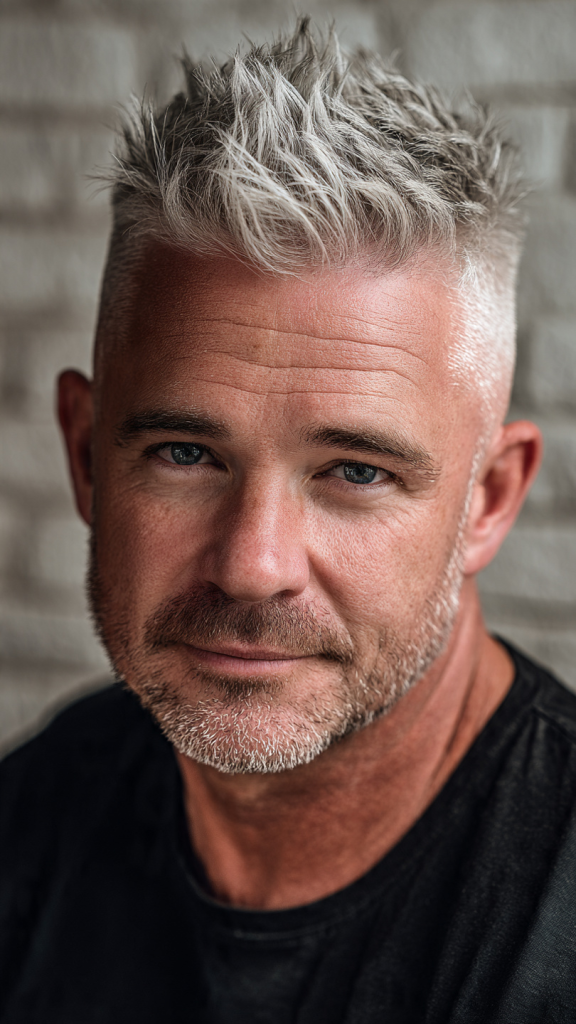
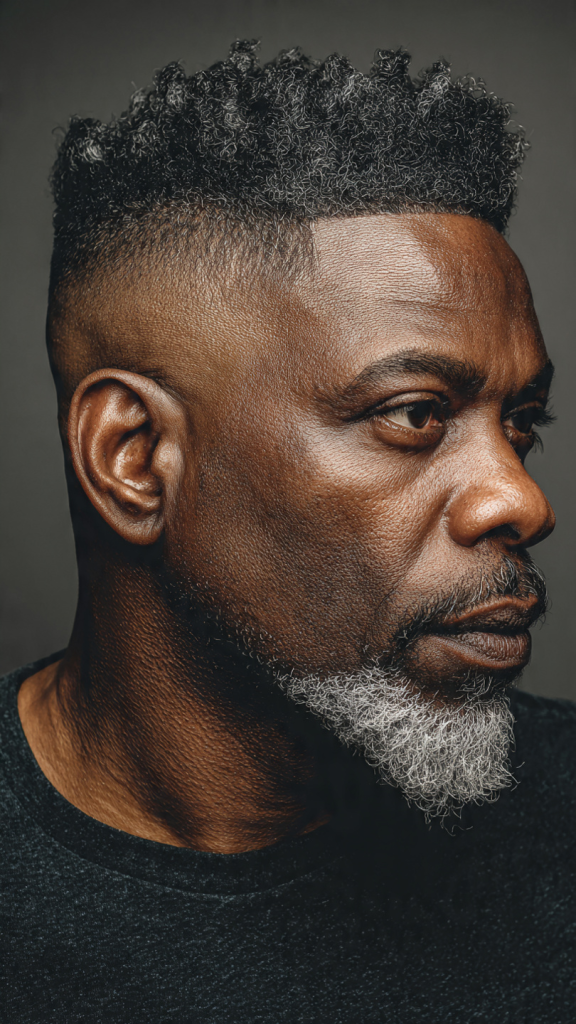
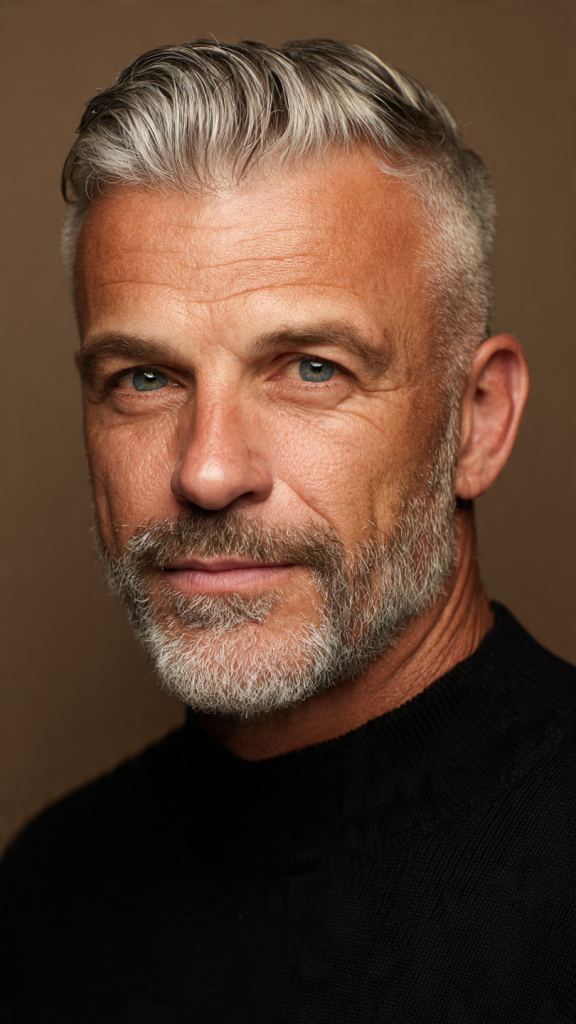
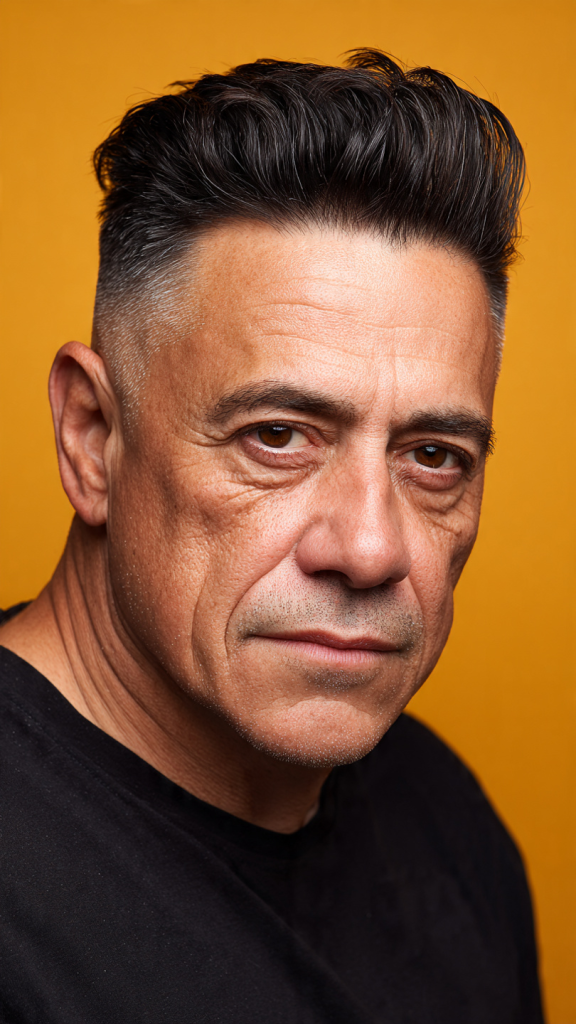
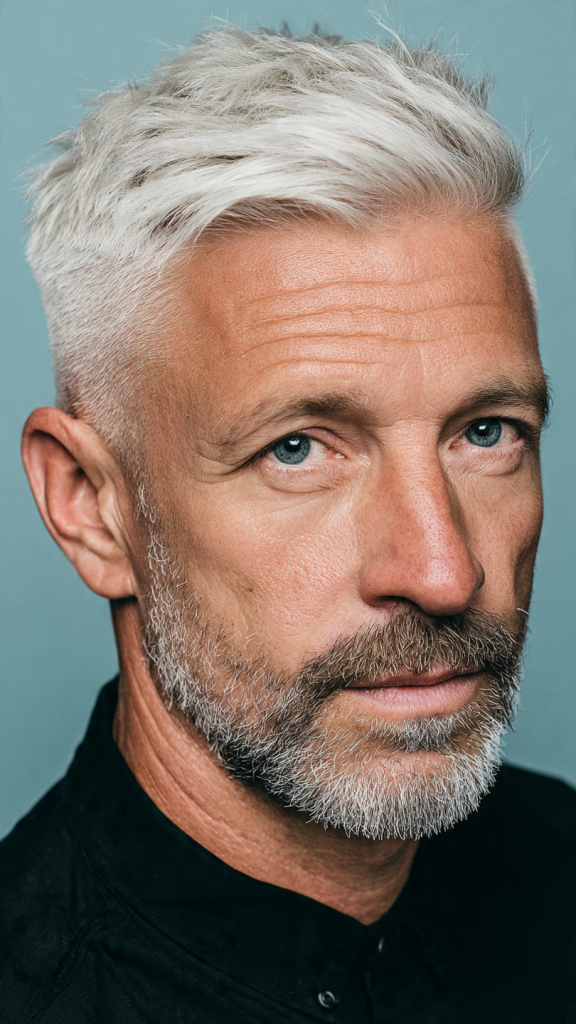
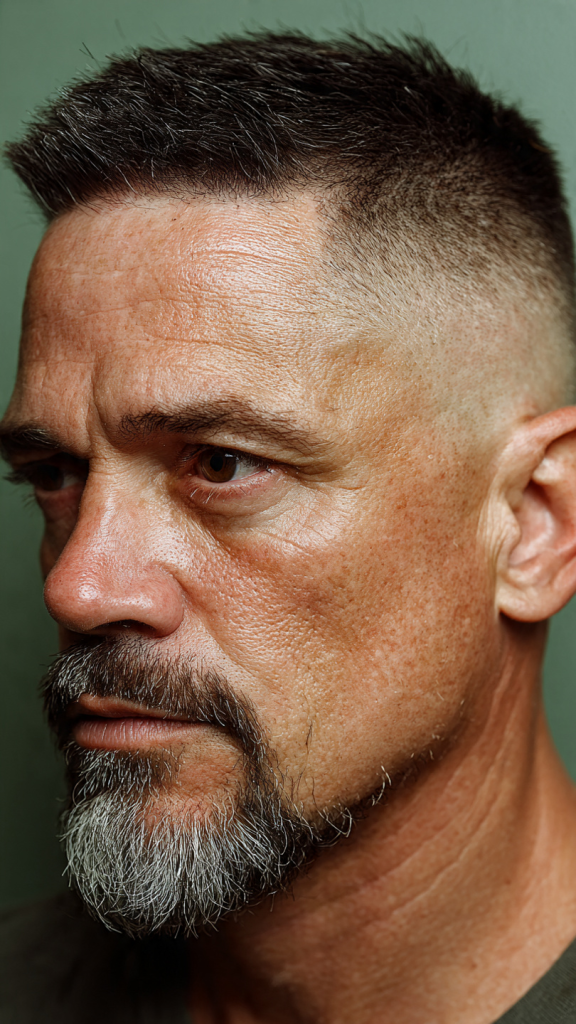
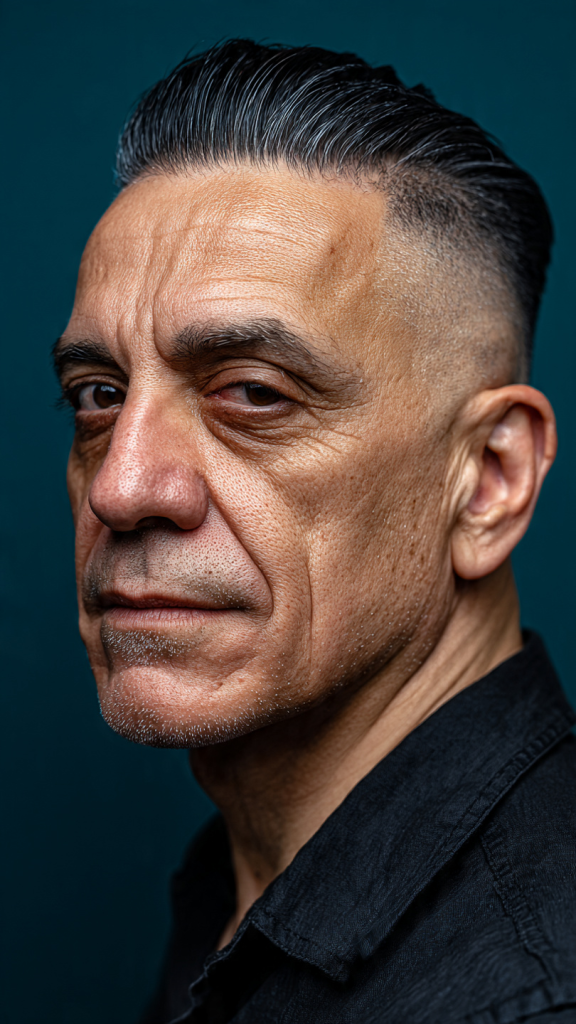
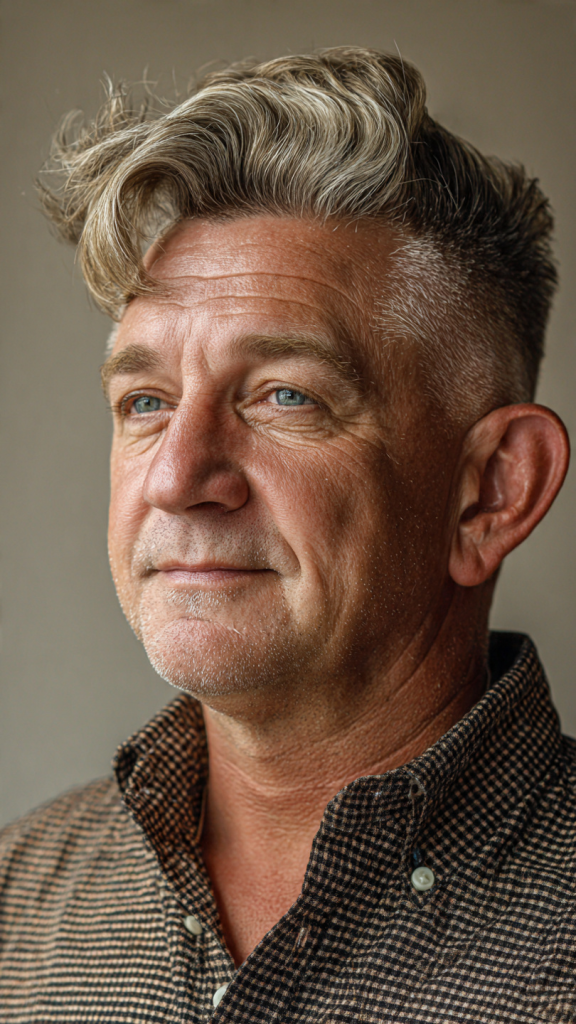
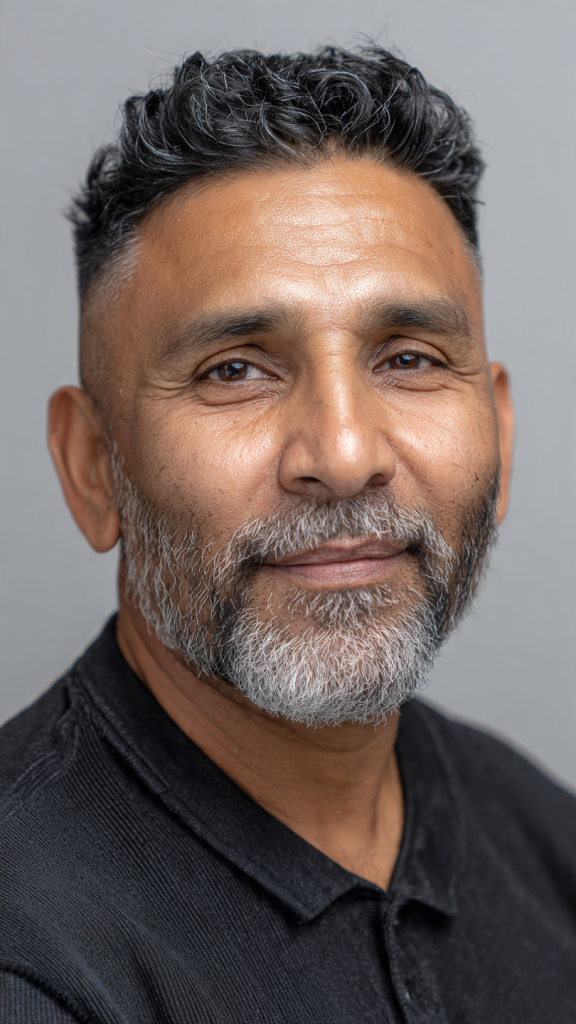
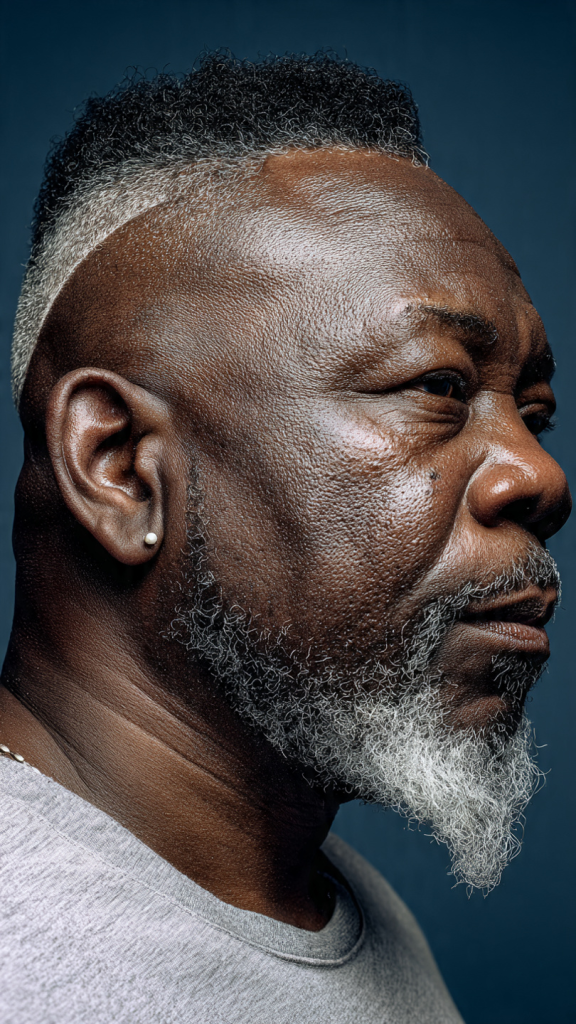
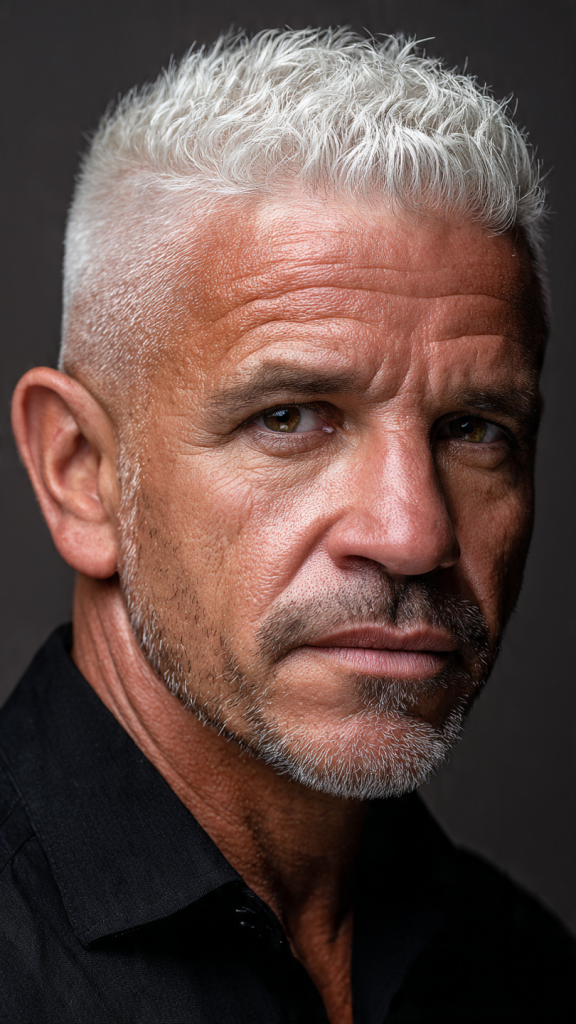
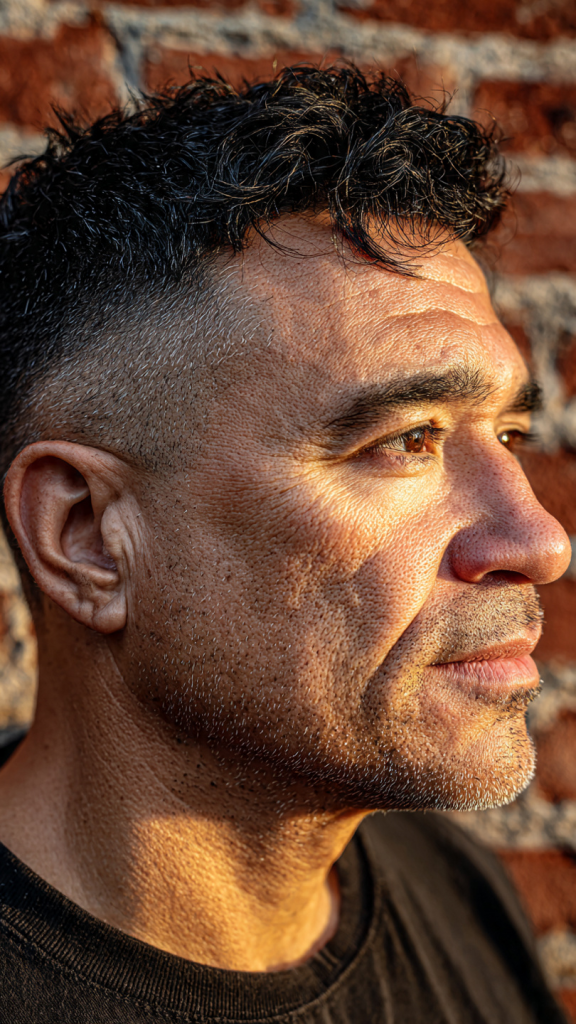
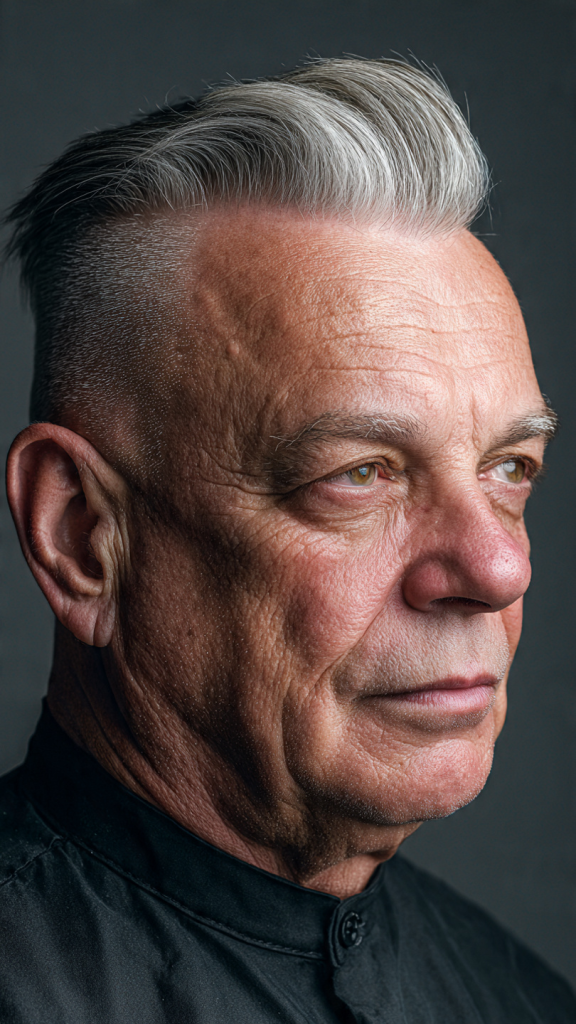
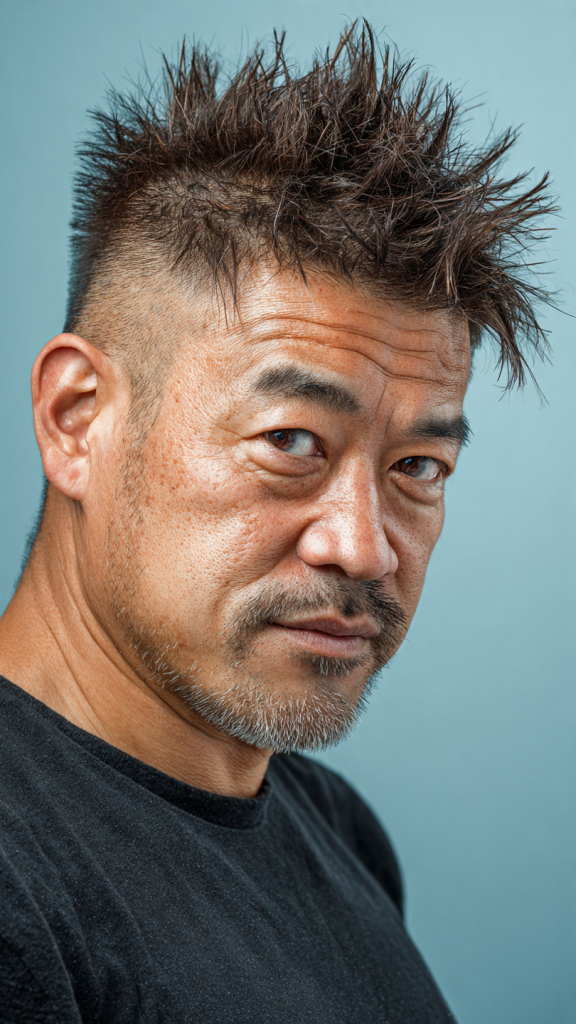
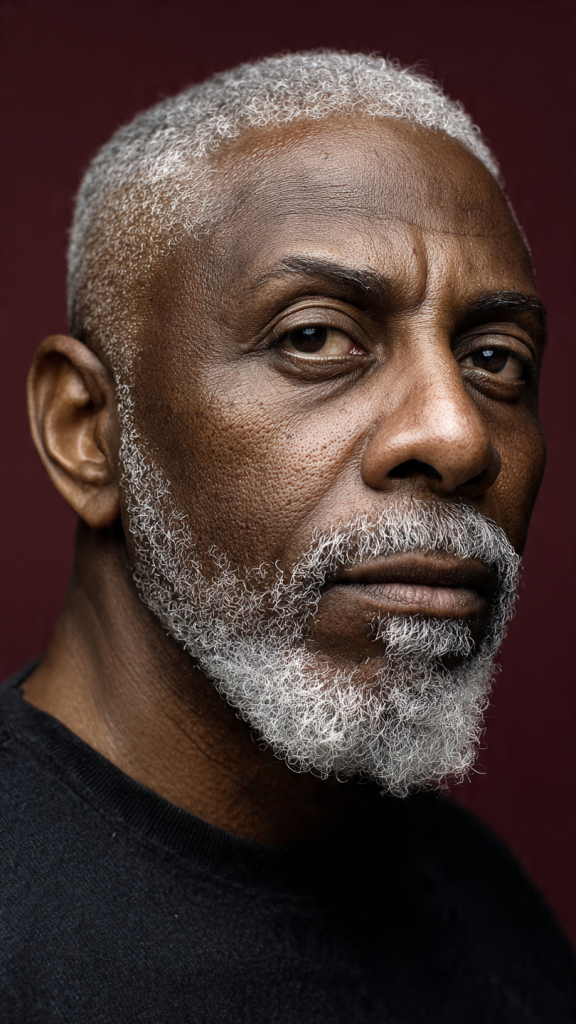
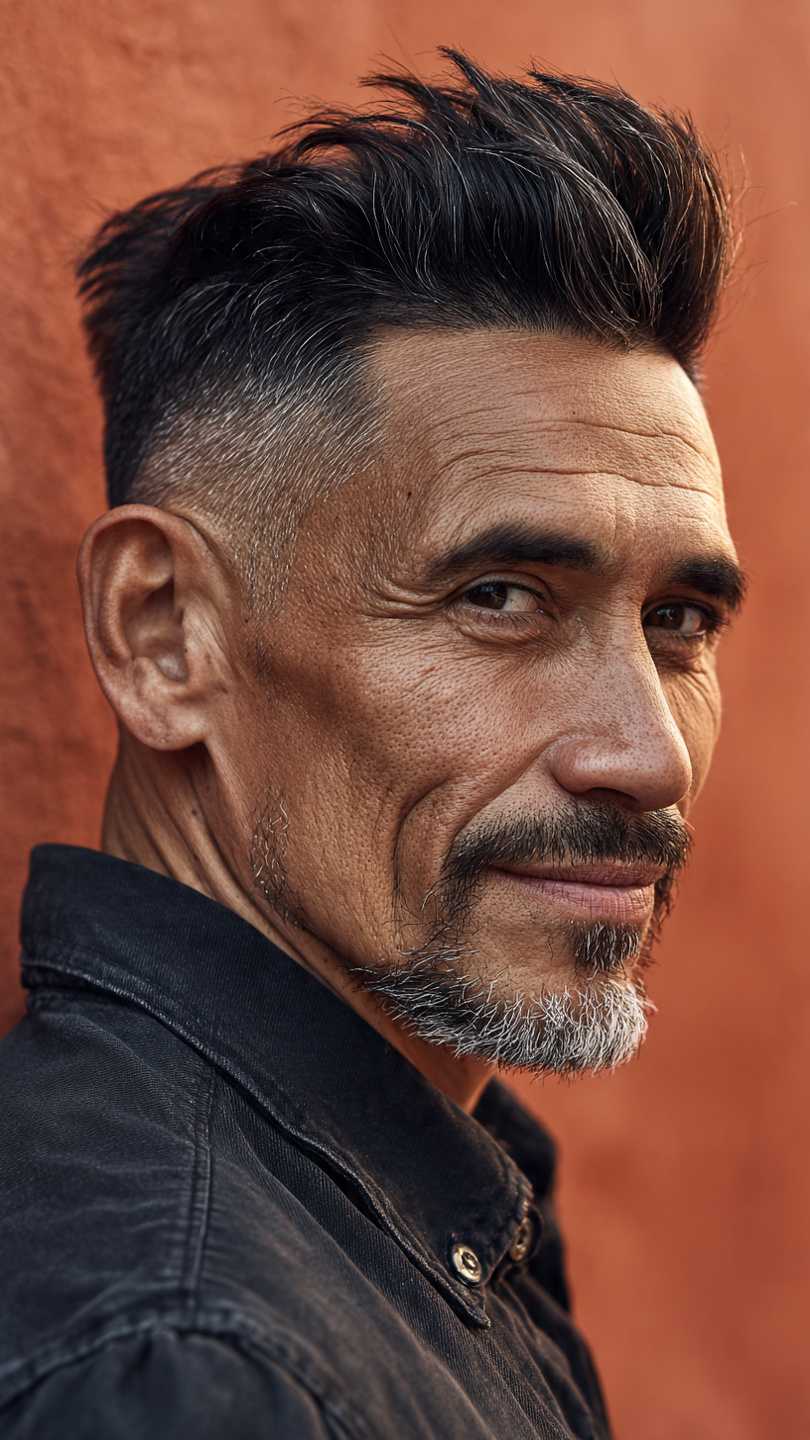
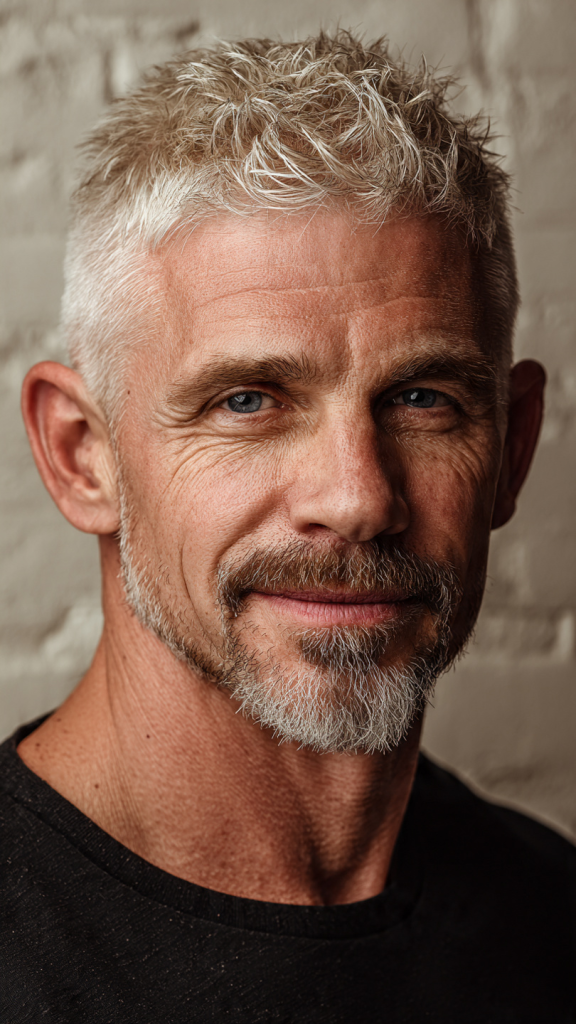
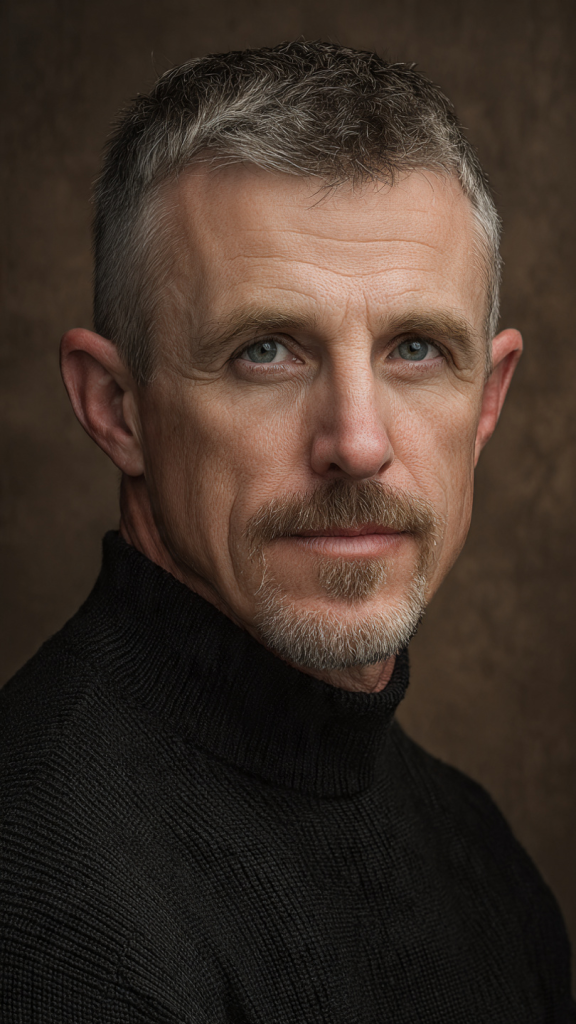
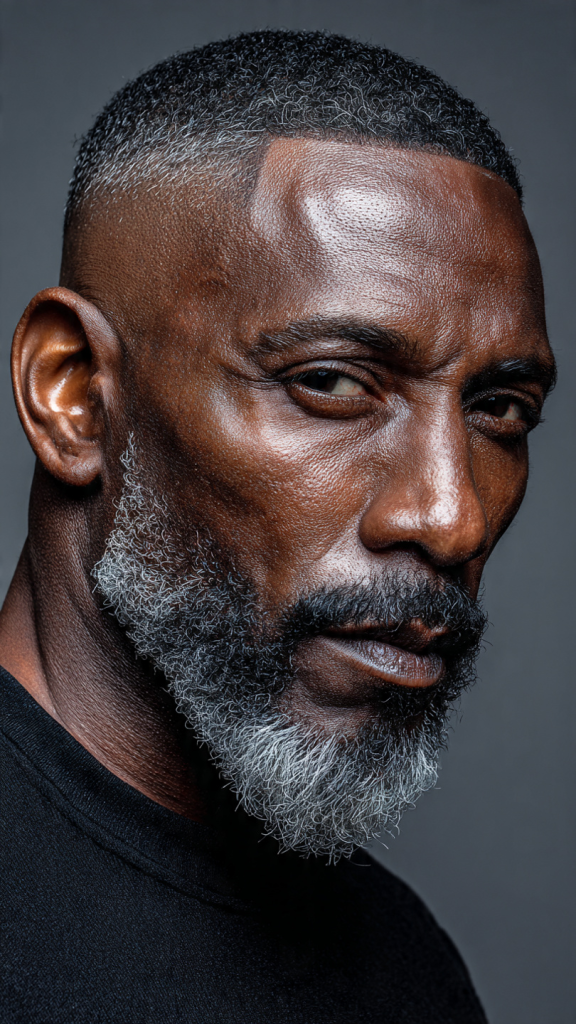
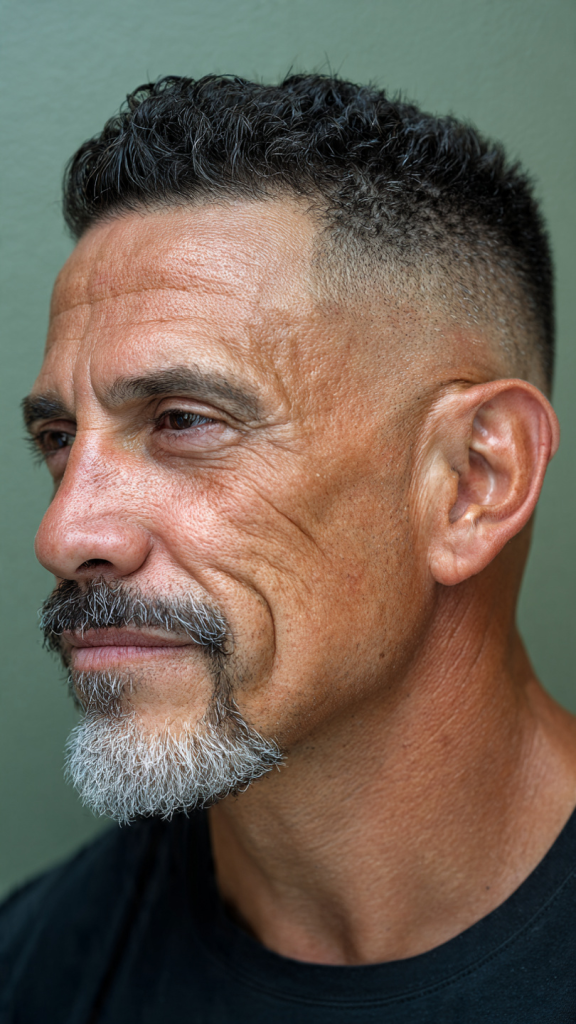
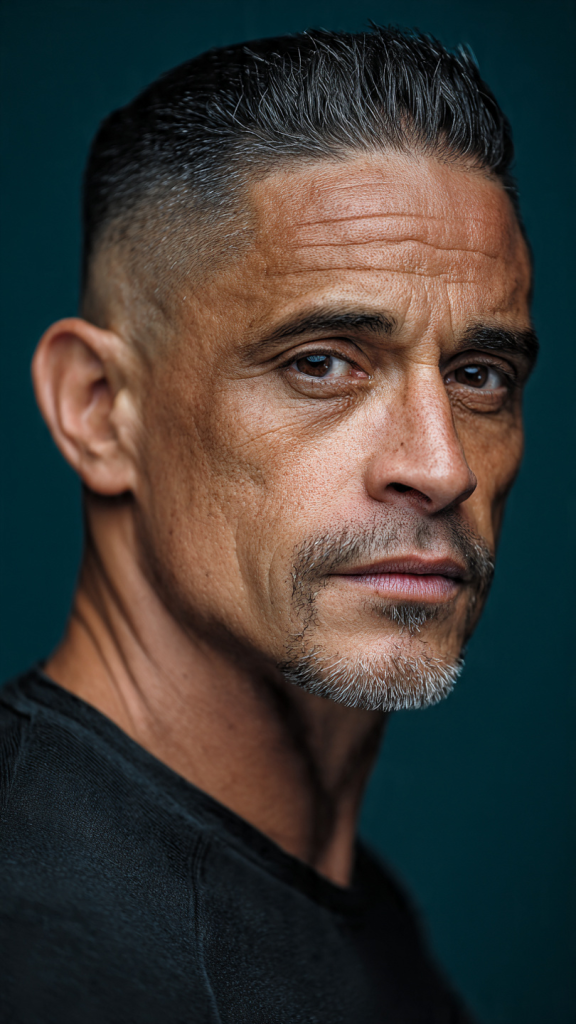
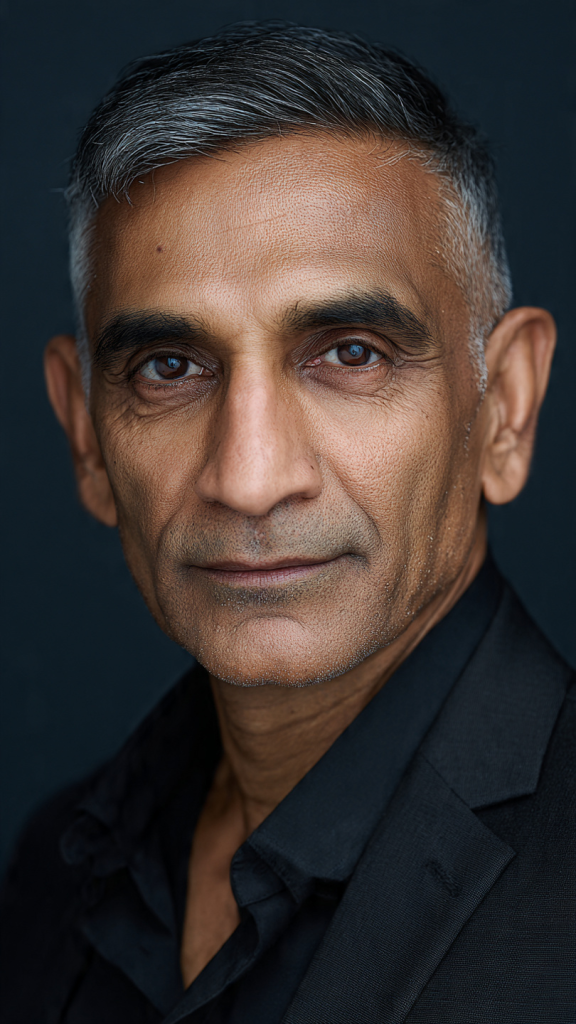
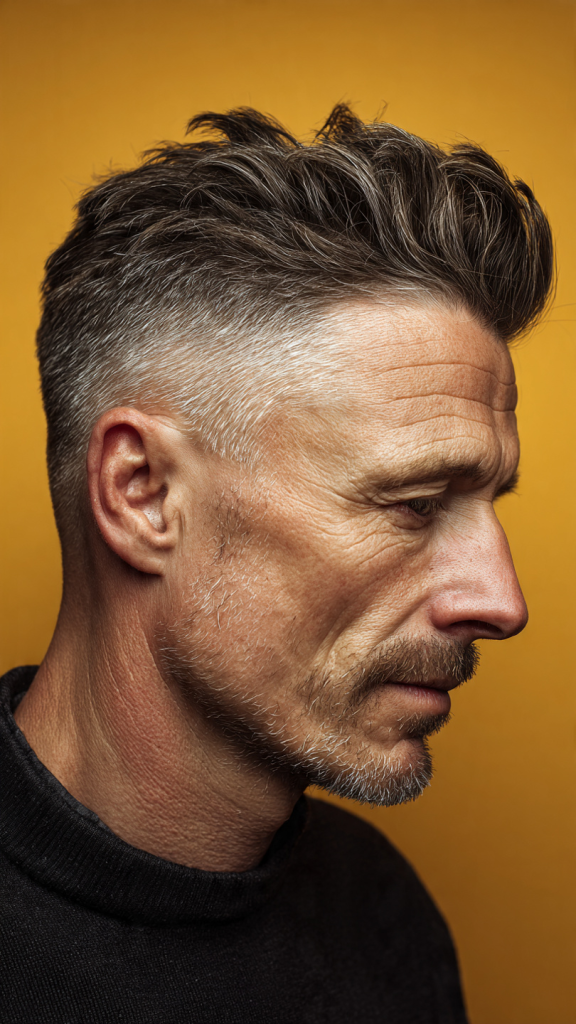
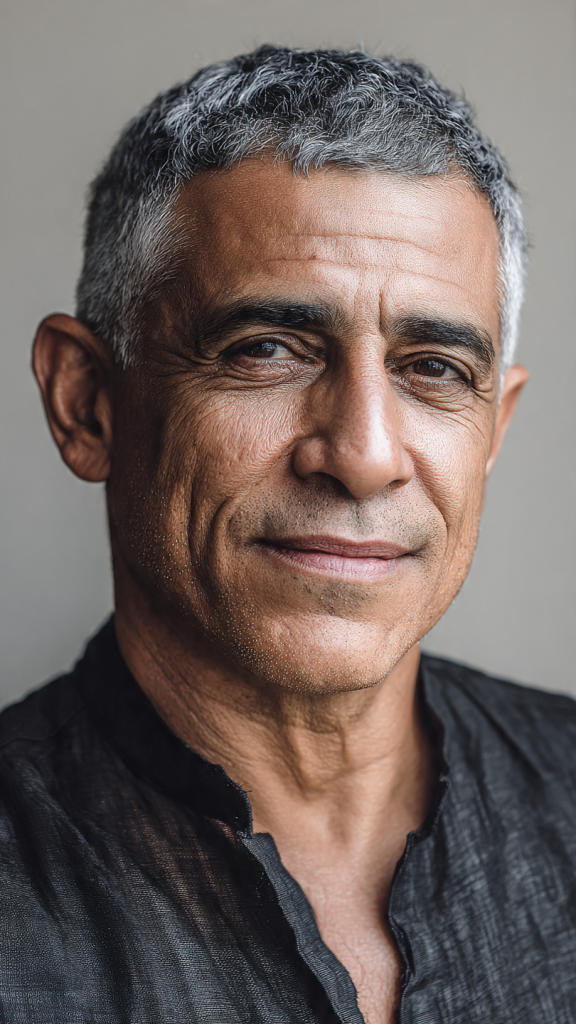
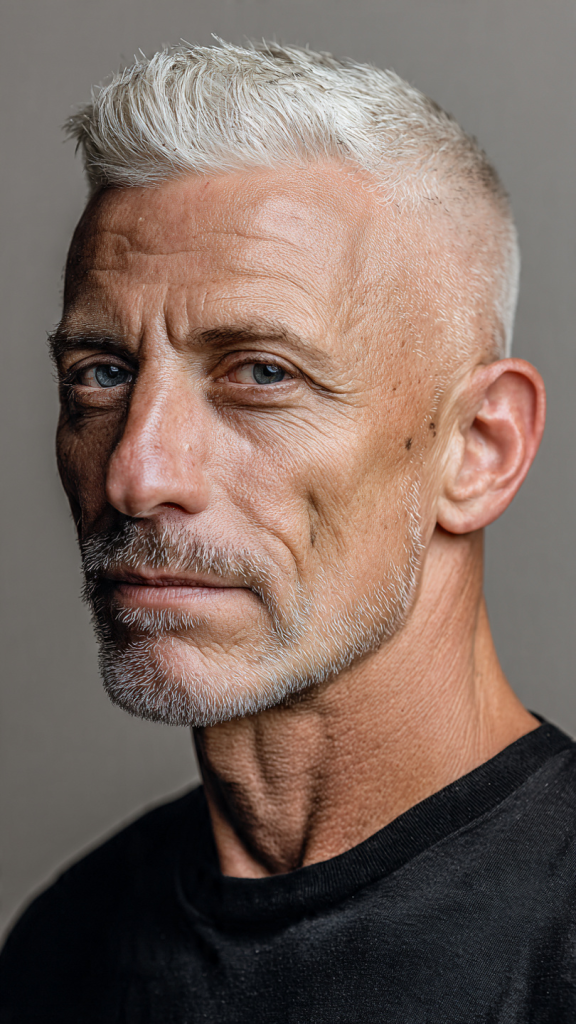
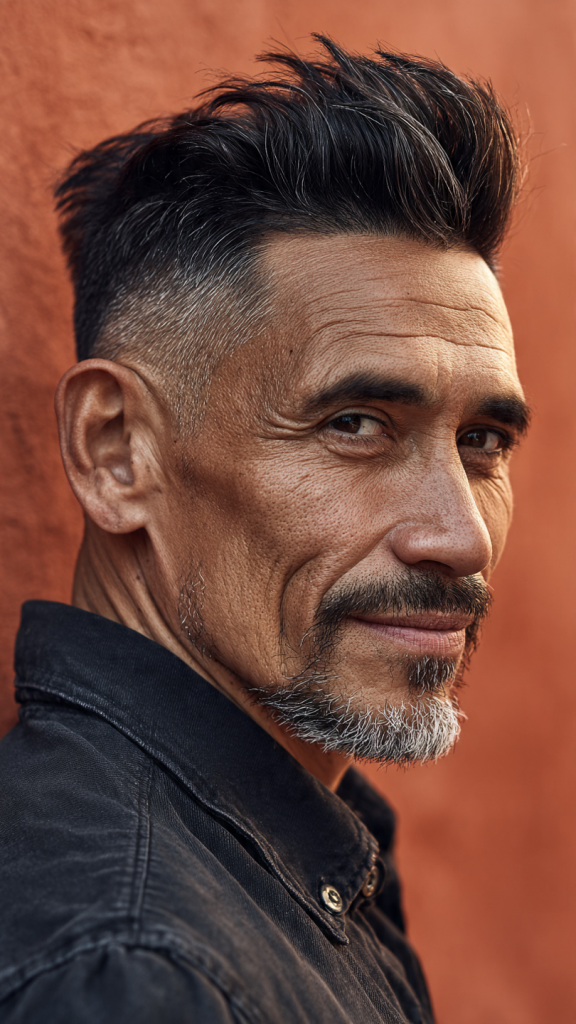
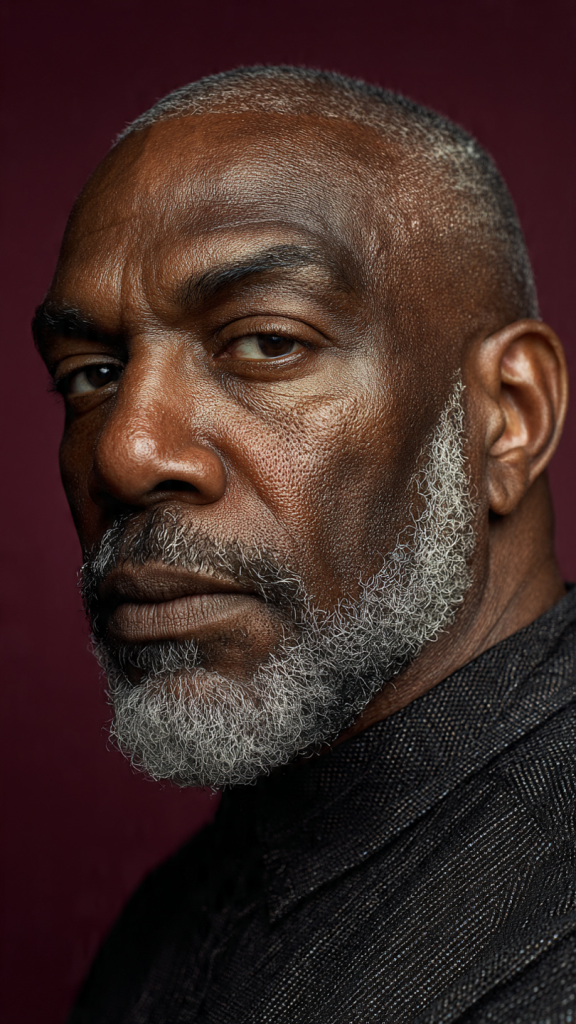
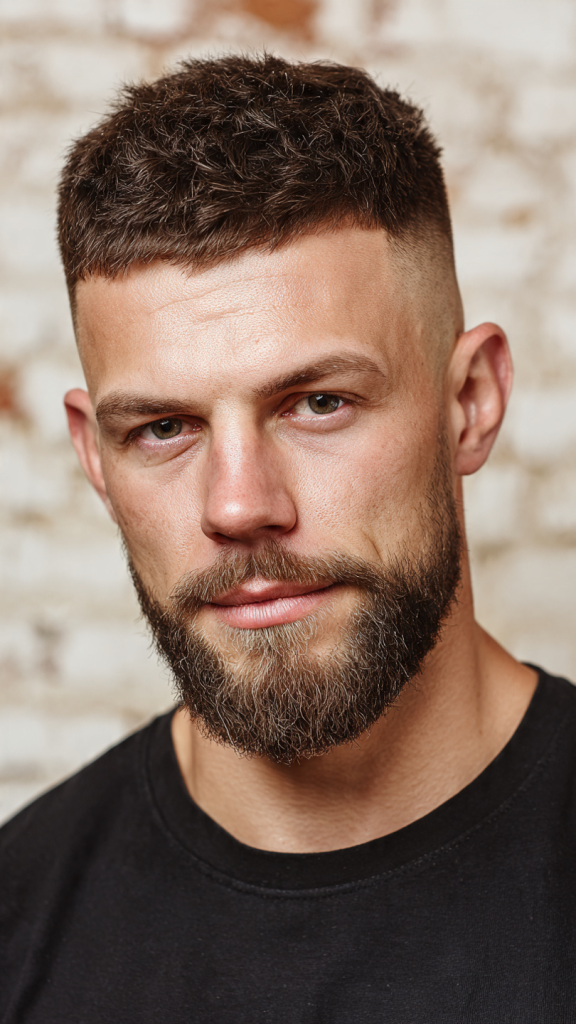
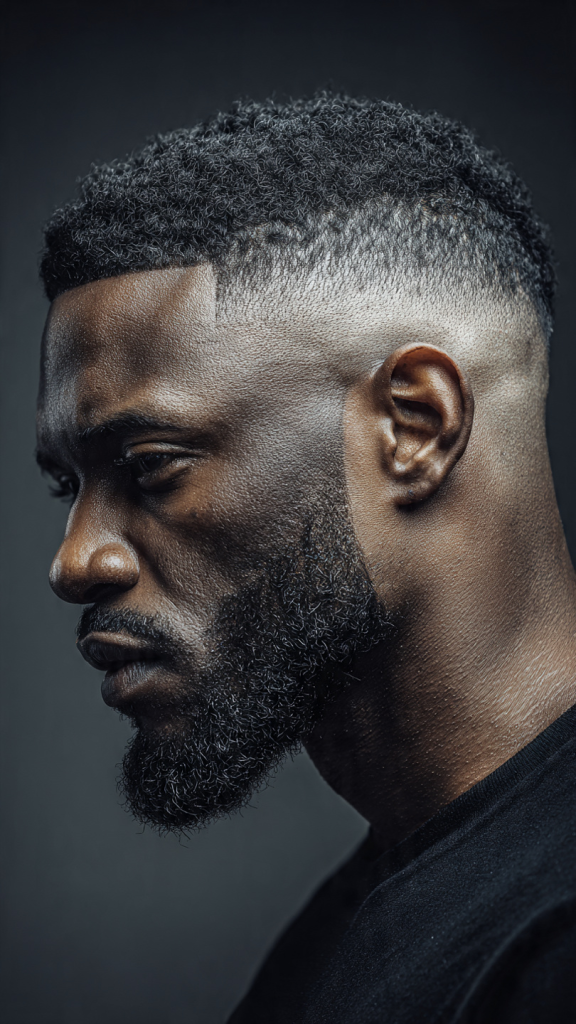
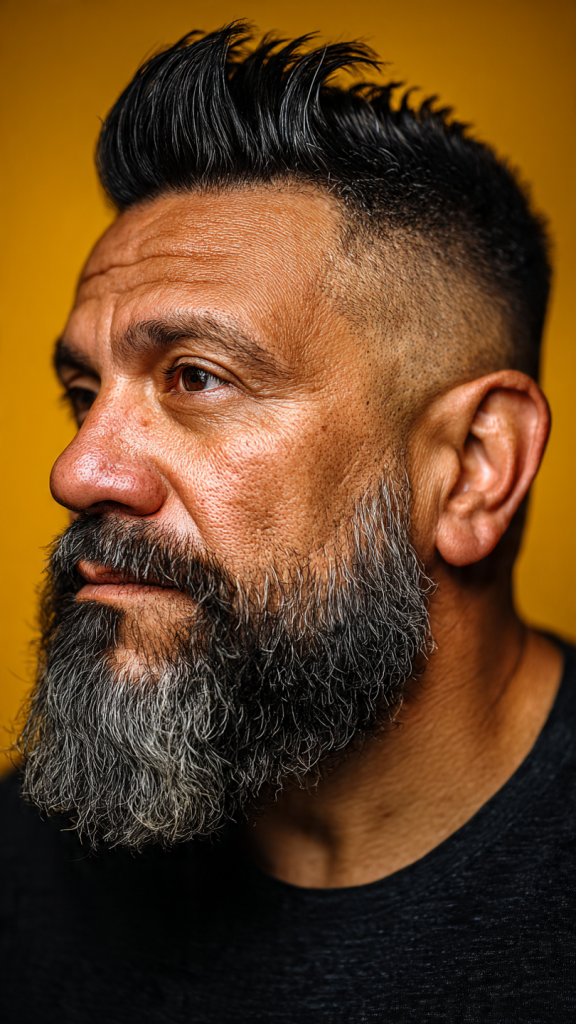
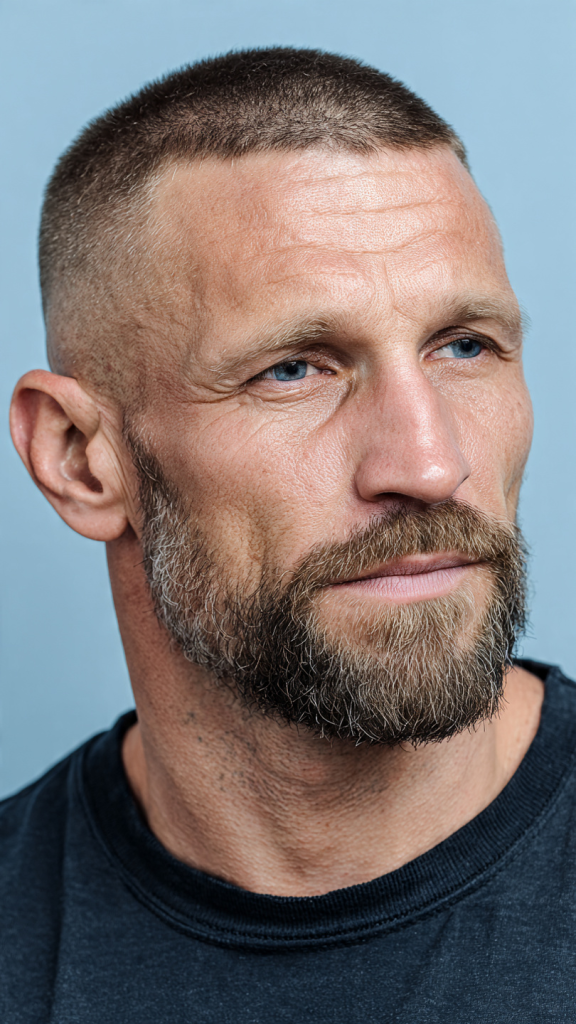
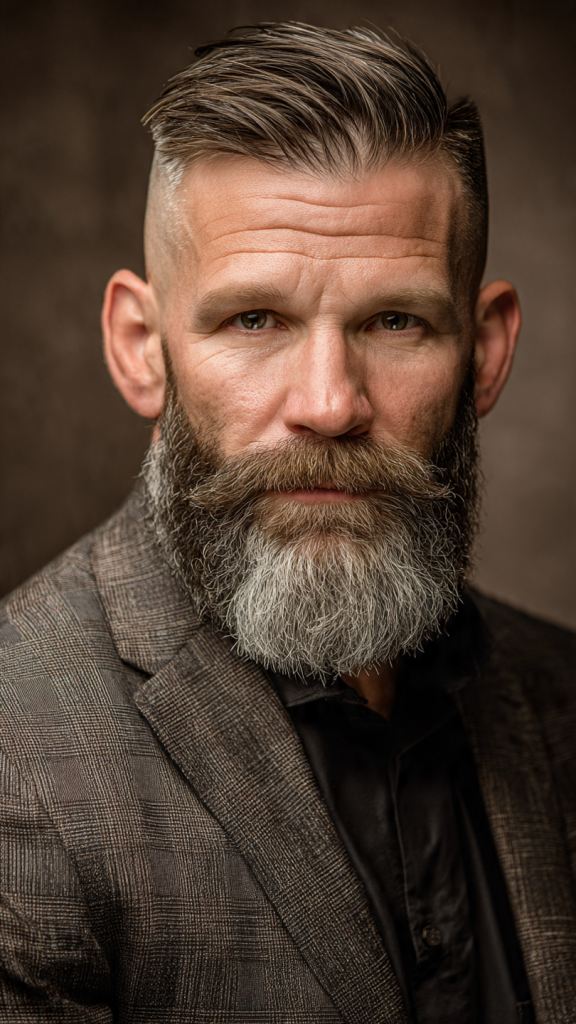
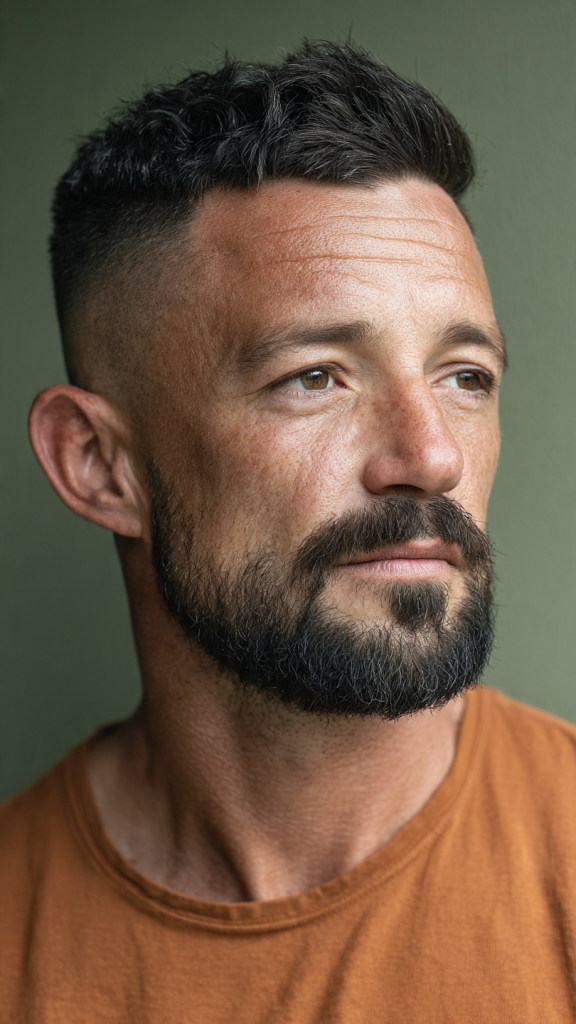
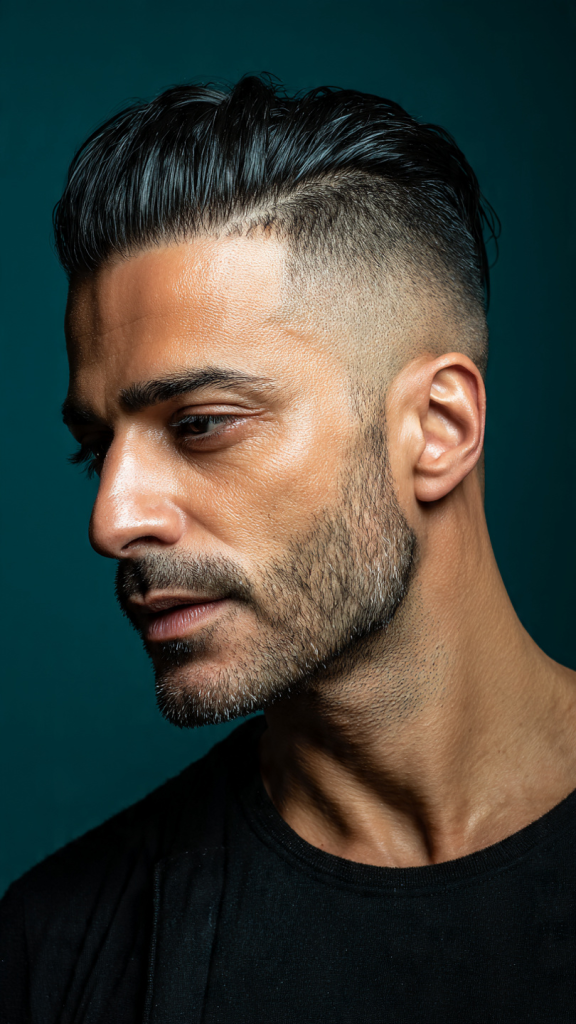
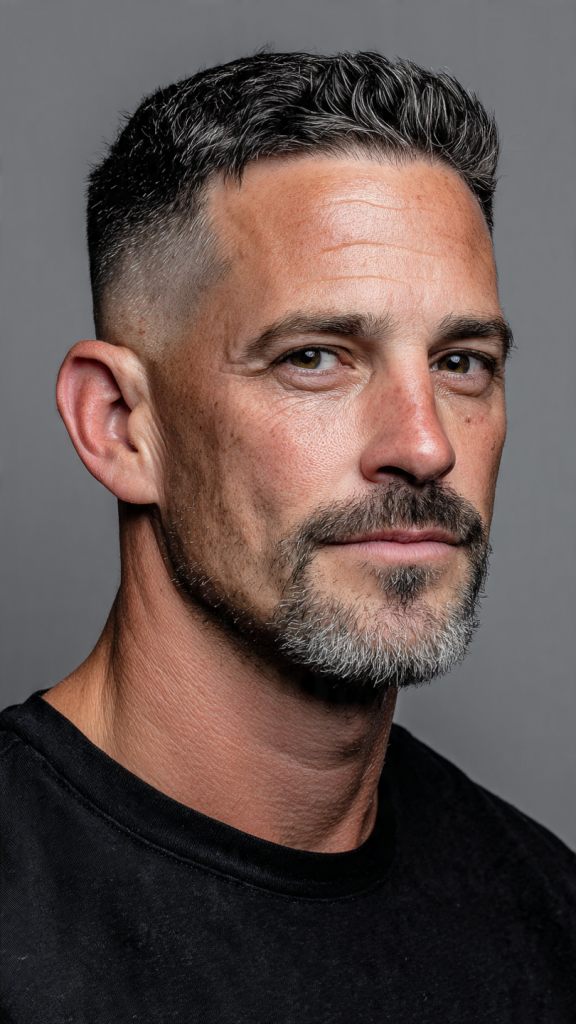
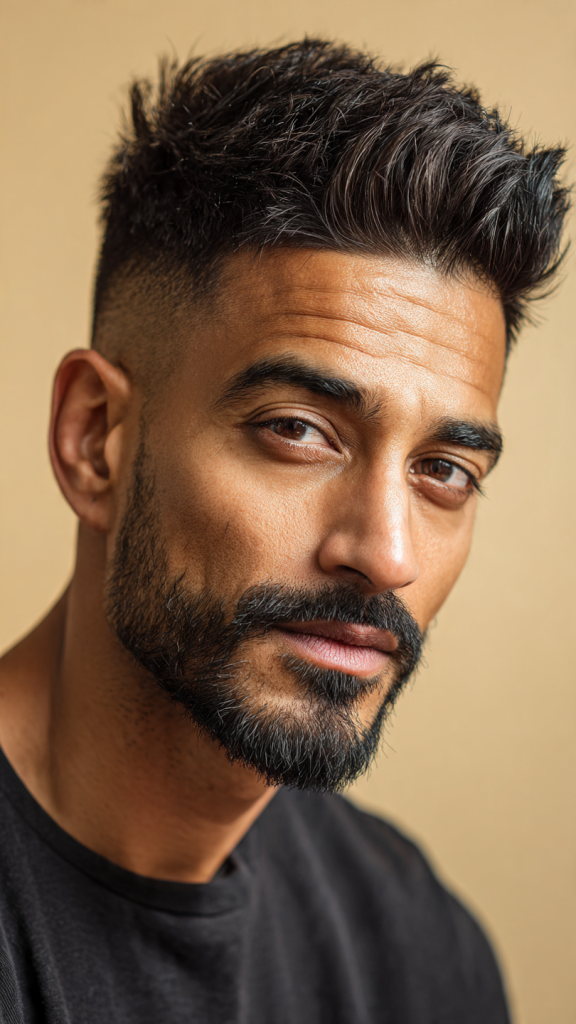
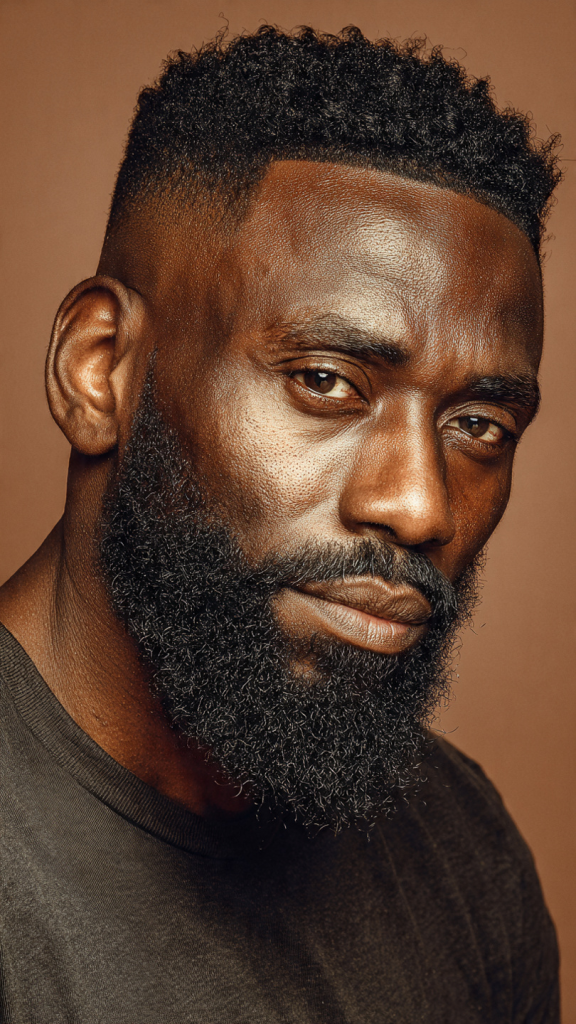
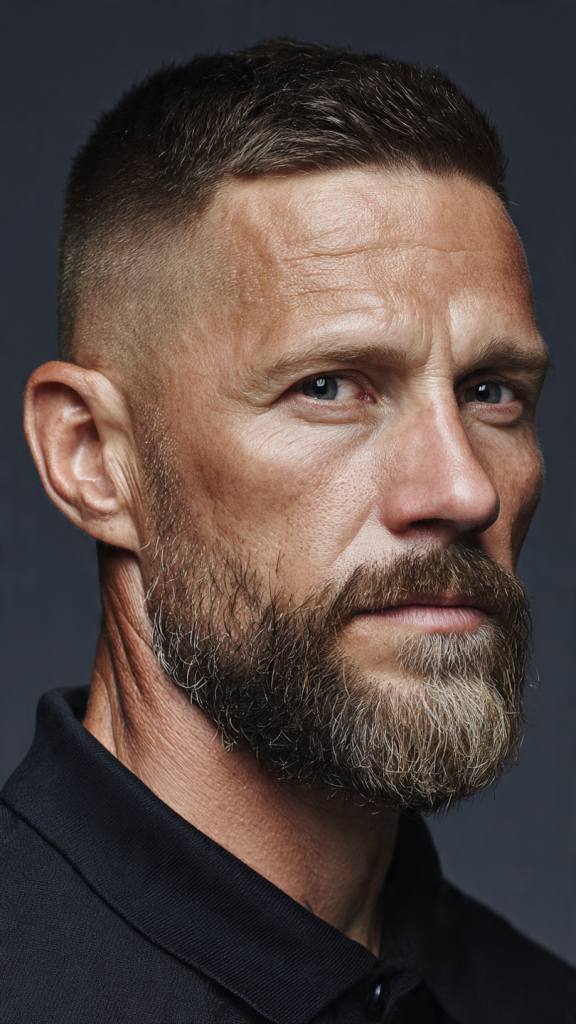
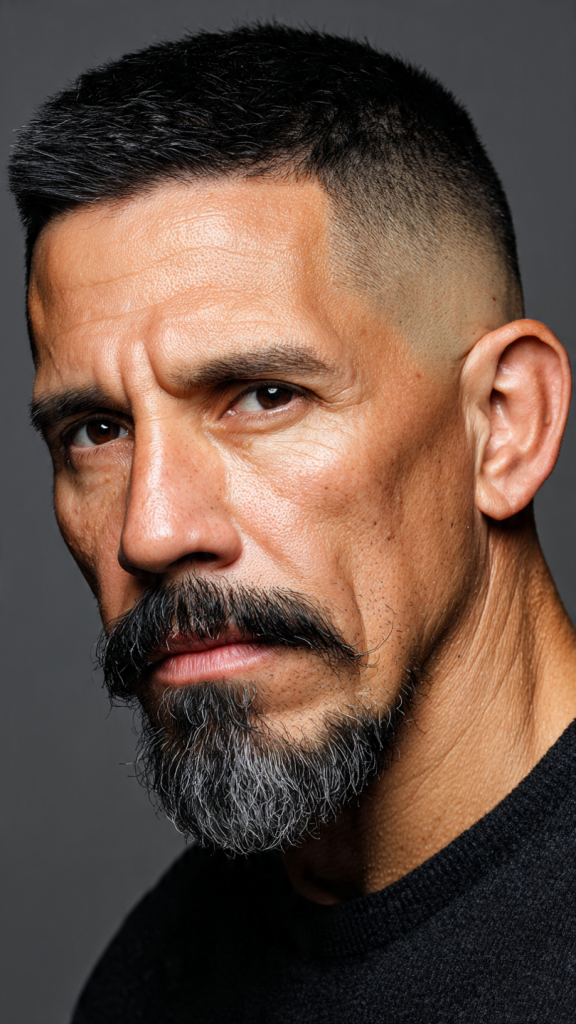
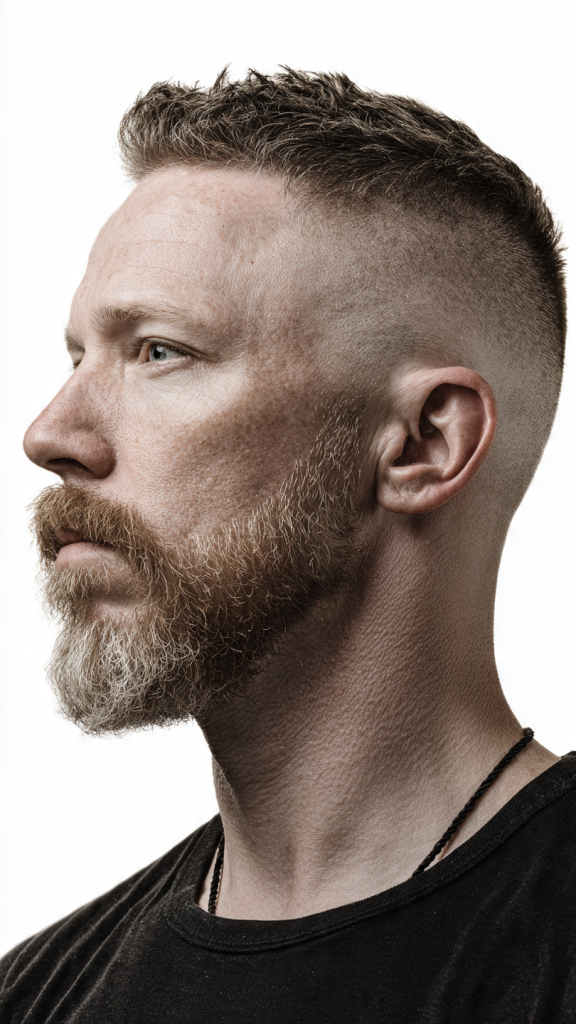
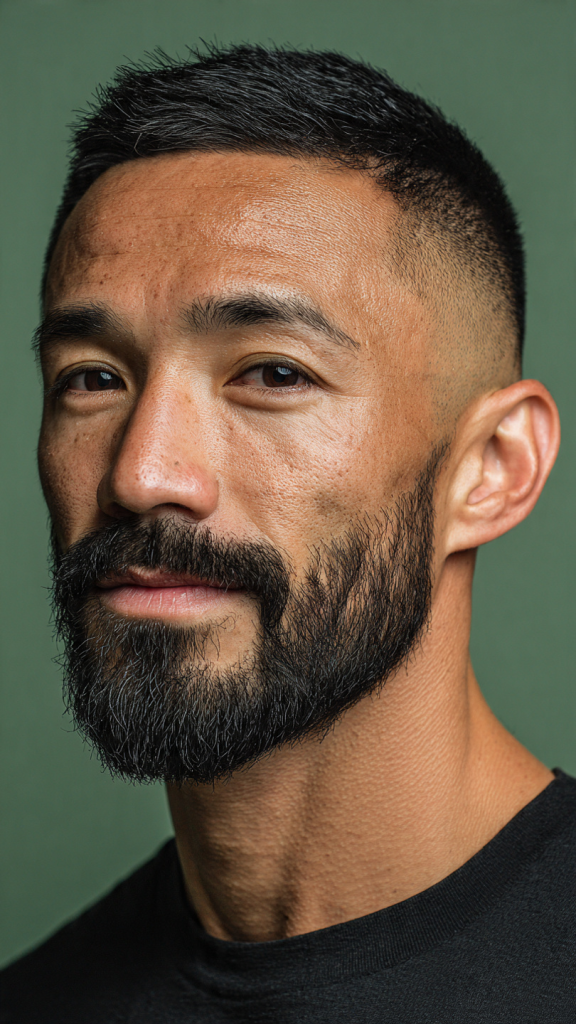
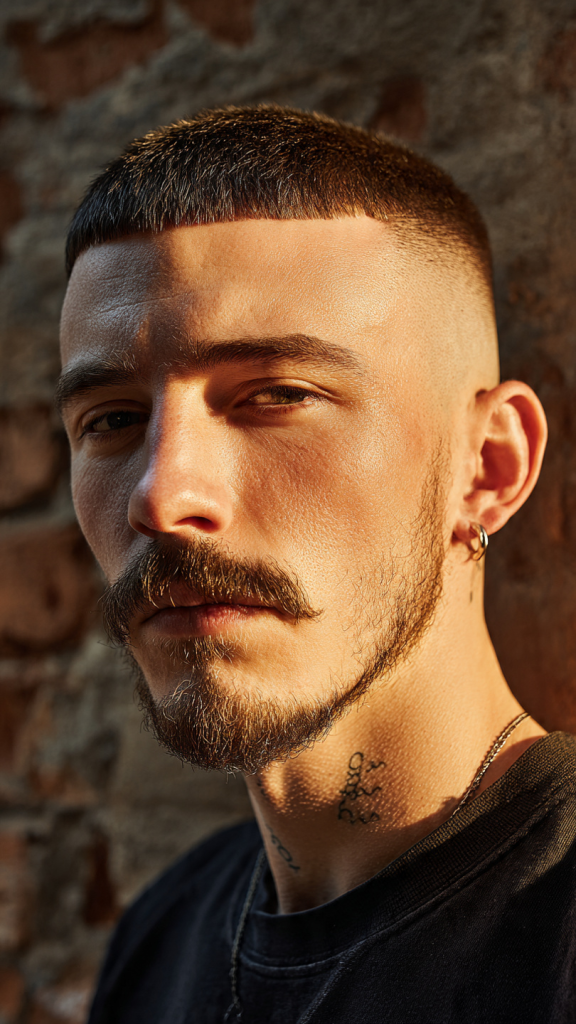
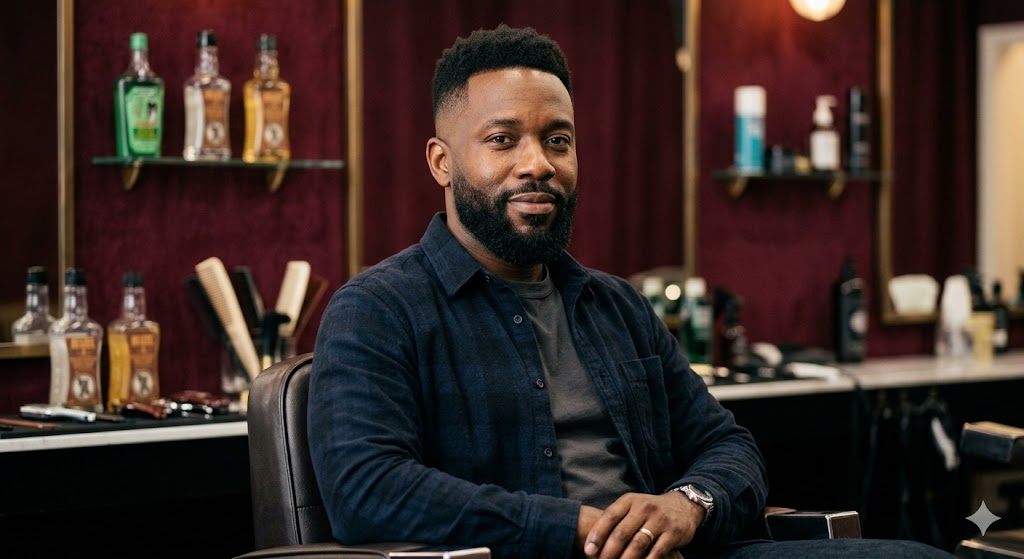
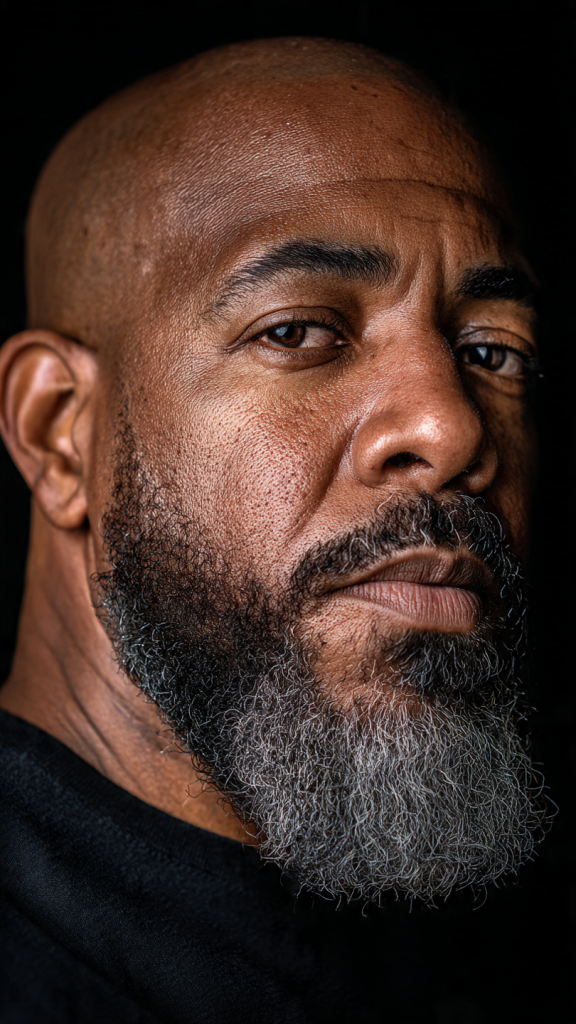
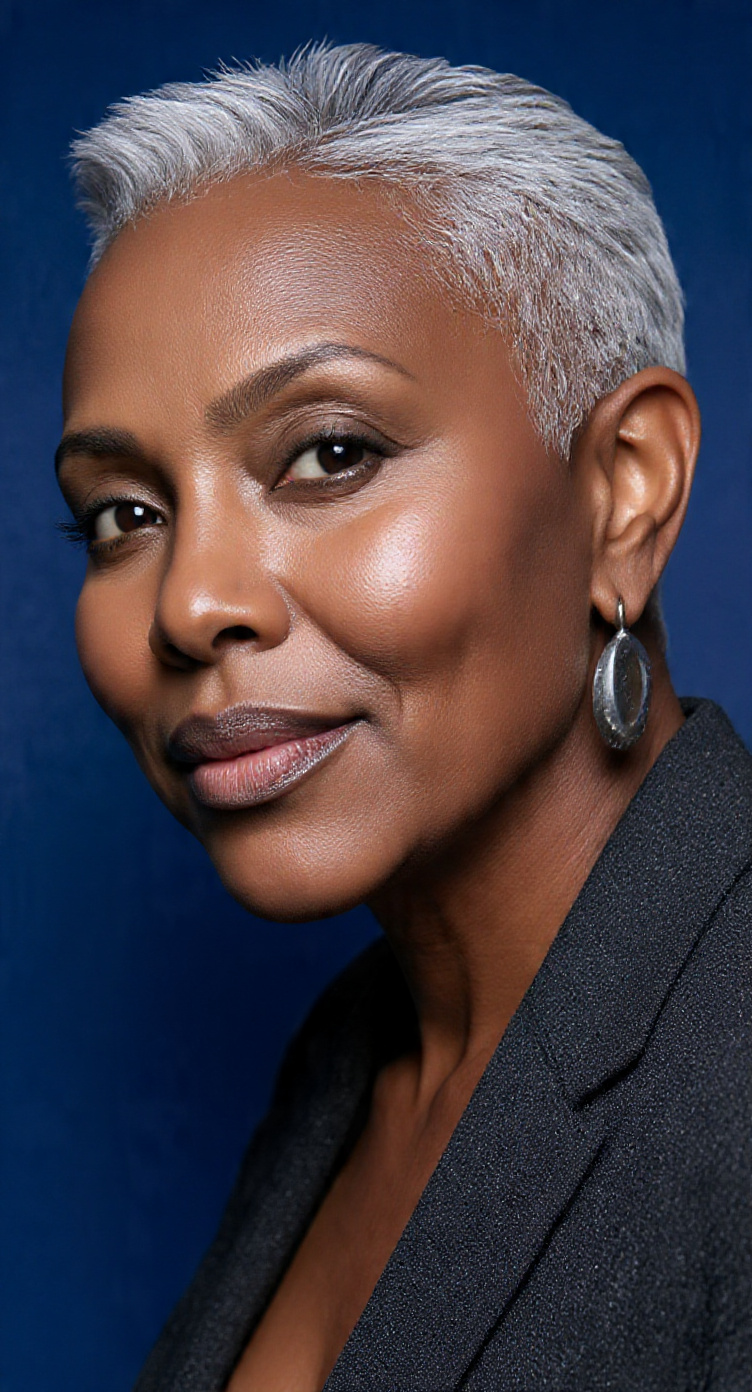
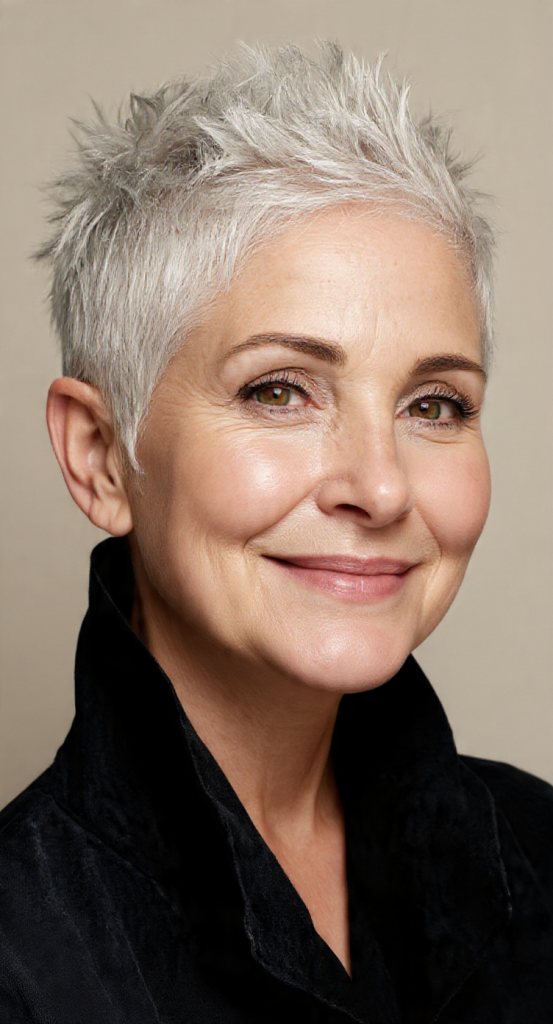
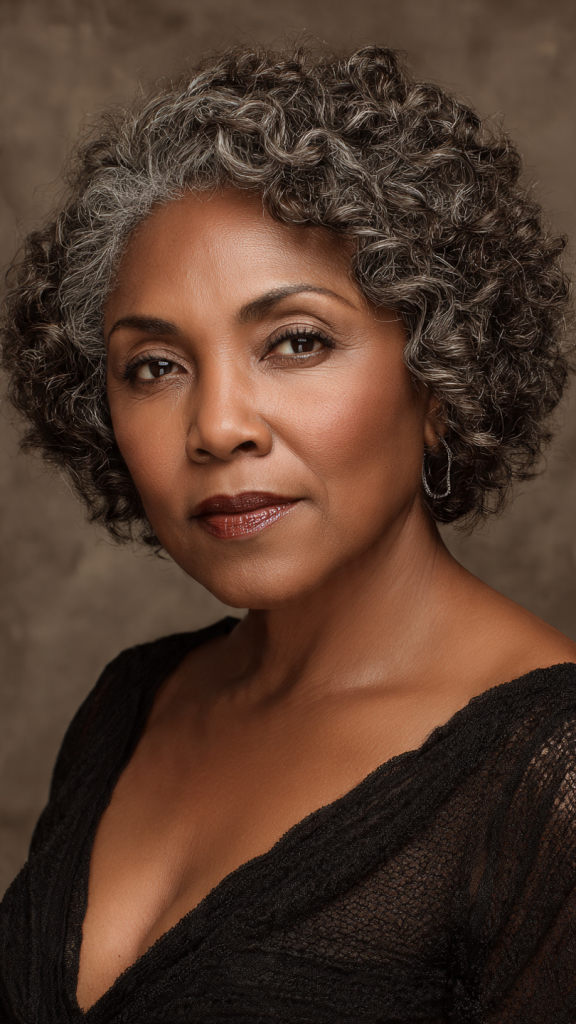
For men seeking a haircut that’s sharp, low-maintenance, and universally flattering, the grade 2 buzzcut hits the sweet spot. Using a #2 guard (which leaves ¼ inch or 6.5mm of hair), this cut is shorter than a traditional crew cut but longer than a skin fade—making it the perfect middle ground between clean and casual. The grade 2 buzzcut is short enough to look intentional and tidy, but long enough to hide scalp irregularities and soften facial features. In this guide, you’ll discover everything you need to know about the grade 2 buzzcut for men, including styling tips, maintenance schedules, face shape advice, and how to achieve the perfect results at home or at the barber. If you’re interested in other short styles, these haircuts for thinning hair men over 50 offer additional low-maintenance options.
What Is a Grade 2 Buzzcut?
A grade 2 buzzcut refers to hair cut with clippers using a #2 guard. The guard sizes correspond to the length of hair left after cutting:
Guard Size
Length (inches)
Length (mm)
Appearance
#0 (no guard)
1/16 inch
1.5mm
Very short, scalp visible
#1
⅛ inch
3mm
Short stubble, scalp visible
#2
¼ inch
6.5mm
Soft stubble, scalp slightly visible
#3
⅜ inch
9.5mm
Velvet texture, scalp mostly hidden
#4
½ inch
12.5mm
Short crop, no scalp visible
A #2 guard leaves approximately ¼ inch of hair. This length is short enough to require no styling products or blow-drying, but long enough to have a soft, velvety texture that feels pleasant to touch. The scalp is slightly visible but not glaringly obvious, making it an excellent choice for men with thinning hair who want to embrace short lengths.
Why Choose a Grade 2 Buzzcut?
The grade 2 buzzcut has become increasingly popular for several compelling reasons:
No styling required – Wash, towel-dry, and go. Zero product needed
Hides thinning hair – The ¼ inch length creates a uniform shadow effect that camouflages sparse areas
Low maintenance – Can go 1–2 weeks between trims before looking shaggy
Cool and comfortable – Perfect for hot climates, workouts, and active lifestyles
Universally flattering – Works on all face shapes when executed correctly
Versatile – Can be worn uniform all over or with a fade on the sides
No bedhead – Wake up looking the same as when you went to sleep
Cost-effective – Easy to maintain at home with clippers
For men experiencing hair loss, the grade 2 buzzcut is often the most confident and stylish choice. These haircuts for men over 50 offer additional age-appropriate options.
Grade 2 Buzzcut Variations
1. Uniform Grade 2 (All Over)
Why it works: The uniform grade 2 uses the #2 guard over the entire head, creating consistent ¼ inch length everywhere. This is the purest version of the buzzcut and the easiest to maintain at home. The uniform length creates a soft, velvety texture that’s subtle and clean. It’s perfect for men who want the most low-maintenance option possible.
How to style it: There is zero styling required. Wash, towel-dry, and go. For a slightly neater look, run your fingers through your hair in one direction. No products needed. Maintain by buzzing your entire head every 1–2 weeks with clippers and a #2 guard.
Best face shapes: Oval, square, heart (most universally wearable)
Maintenance needs: Buzz every 10–14 days
2. Grade 2 with Tapered Sides
Why it works: This variation keeps the #2 length on top while using a #1 or #0 guard on the sides and back to create a tapered fade. The taper adds definition and structure, making the cut look more intentional. The contrast between the slightly longer top and shorter sides also elongates round faces.
How to style it: No styling needed on top. The tapered sides should be blended seamlessly. Maintain by buzzing the top with a #2 guard every 1–2 weeks, and tapering the sides with lower guards every 5–7 days.
Best face shapes: Round, oval, square (the taper slims round faces)
Maintenance needs: Top: 10–14 days; Taper: 5–7 days
3. Grade 2 with Skin Fade
Why it works: The grade 2 with skin fade takes the sides and back down to bare skin, creating a dramatic, modern contrast. The top remains at ¼ inch, while the sides are faded from skin at the bottom up to the #2 length. This is the edgiest version of the grade 2 buzzcut and looks especially sharp on men with strong bone structure.
How to style it: The top needs no styling. The skin fade requires regular maintenance every 3–5 days to keep the contrast sharp. Use home clippers or visit a barber weekly.
Best face shapes: Oval, square, diamond (the high contrast suits strong features)
Maintenance needs: Top: 10–14 days; Skin fade: 3–5 days
For men with round faces who want to maximize slimming effects, these men’s haircuts for round face over 50 offer additional strategies.
4. Grade 2 with Line Up
Why it works: A line up (also called an edge-up or shape-up) uses a trimmer to create sharp, clean lines around the hairline and temples. When combined with a grade 2 buzzcut, the line up adds crisp definition that elevates the entire look. This is especially popular among men with straight hairlines who want a barbered finish.
How to style it: Apply beard oil or moisturizer to the hairline after buzzing. The line up should be refreshed every 5–7 days to maintain the sharp edges. Use a trimmer with a zero guard for the line up.
Best face shapes: Oval, square, heart (the sharp lines add structure)
Maintenance needs: Buzz: 10–14 days; Line up: 5–7 days
5. Grade 2 with Hard Part
Why it works: Adding a hard part—a shaved line on one side of the head—to a grade 2 buzzcut creates a defined parting that adds visual interest and structure. The hard part can be placed on the left or right depending on your preference and natural hair growth pattern. This variation is perfect for men who want a distinctive, barbered look.
How to style it: The hard part is shaved in with a trimmer or razor. Maintain by refreshing the part line every 3–5 days. The rest of the buzzcut needs no styling.
Best face shapes: Oval, square, diamond (the hard part adds angularity)
Maintenance needs: Buzz: 10–14 days; Hard part: 3–5 days
How to Achieve the Perfect Grade 2 Buzzcut at Home
With the right tools and technique, you can maintain a grade 2 buzzcut at home.
Tools You’ll Need:
Adjustable hair clippers (Wahl, Andis, or Oster)
#2 guard (typically included with most clippers)
#1 guard and #0 guard (for tapered or faded versions)
Trimmer for line ups and hard parts (optional)
Handheld mirror to check the back of your head
Barber cape or old towel to catch hair
Step-by-Step Instructions:
Step 1: Start with clean, dry hair. Damp hair can clog clippers and result in uneven cutting.
Step 2: Attach the #2 guard to your clippers. Ensure it’s securely locked in place.
Step 3: Begin at the nape of your neck. Hold the clippers flat against your head and move upward against the direction of hair growth. Overlap each pass by about half the width of the clipper blade.
Step 4: Work from bottom to top. Cover the entire head in sections: back, sides, then top. Go over each section from different directions (front to back, side to side, against the grain) to ensure even length.
Step 5: Check for missed spots. Use a handheld mirror to check the back of your head. Touch up any uneven areas.
Step 6: Optional: taper the sides. Switch to a #1 guard and fade the lower part of the sides and back. Blend by overlapping the #2 and #1 lengths.
Step 7: Clean up the hairline. Use a trimmer (no guard) to clean up the natural hairline. Do not push the hairline back—just remove stray hairs.
Step 8: Rinse and moisturize. Rinse off loose hairs. Apply a lightweight moisturizer or beard oil to your scalp to keep it healthy.
Grade 2 Buzzcut by Face Shape
Face Shape
Best Variation
Why
Oval
Any variation
Most versatile face shape
Round
Grade 2 with tapered sides
Taper adds length and slims
Square
Grade 2 with skin fade
Fade softens strong jawline
Heart
Uniform grade 2
Simple, balanced, non-distracting
Oblong
Grade 2 with fuller sides
Avoid high fades that add length
Diamond
Grade 2 with line up
Sharp lines complement angular features
Grade 2 Buzzcut for Thinning Hair
The grade 2 buzzcut is one of the best haircuts for thinning hair. At ¼ inch, the hair is long enough to create a “shadow” effect that mimics density, but short enough that thinning areas are not emphasized. The uniform length removes contrast between dense and sparse areas, creating a cohesive look.
For receding hairline: The grade 2 is short enough that a receding hairline looks intentional rather than hidden. Avoid line ups that push the hairline back further.
For crown thinning: The #2 length is ideal because it’s short enough to minimize the appearance of scalp but long enough to provide coverage.
For general thinning: A uniform grade 2 is the most flattering option. Avoid fades that expose the sides if those areas are thinning as well.
For more options, these haircuts for thinning hair men over 50 offer additional styles for various thinning patterns.
Pros and Cons of the Grade 2 Buzzcut
Pros:
Pro
Explanation
Zero styling time
No products, no blow-drying, no combs
Hides thinning
Creates uniform shadow that camouflages sparse areas
Cost-effective
Can maintain at home with basic clippers
Cool and comfortable
Perfect for hot weather and workouts
No bedhead
Hair looks the same every morning
Masculine and clean
Projects confidence and no-nonsense attitude
Versatile
Can be worn with or without beards, fades, or line ups
Cons:
Con
Explanation
Requires frequent trims
Needs refreshing every 1–2 weeks
No styling versatility
Can’t change the look; it’s always the same
Scalp visibility
Skin may be slightly visible, especially on lighter scalps
Sun exposure
Scalp can sunburn; wear sunscreen or a hat
No hiding imperfections
Scars, bumps, or uneven scalp are visible
How to Maintain Your Grade 2 Buzzcut
Trim every 10–14 days – Hair grows approximately ¼ inch per week. Stretch to 2 weeks for a softer look, or trim at 1 week for a sharper look.
Invest in good clippers – A quality pair of clippers ($40–100) pays for itself quickly. Wahl, Andis, and Oster are trusted brands.
Clean your clippers – Remove hair clippings after each use. Oil the blades monthly to keep them sharp.
Moisturize your scalp – Short hair exposes the scalp. Apply a lightweight moisturizer or aloe vera gel daily to prevent dryness and irritation.
Use sunscreen on your scalp – The skin on your head is now exposed to the sun. Apply SPF 30+ or wear a hat when outdoors for extended periods.
Embrace the grow-out – If you decide to grow your hair out, the grade 2 will transition into a #3, #4, and eventually a short crop. The grow-out is forgiving.
Grade 2 Buzzcut with a Beard
The grade 2 buzzcut pairs exceptionally well with almost any beard style. Here are the best combinations:
Beard Style
Why It Works
Stubble (1–3mm)
Creates uniform, rugged masculine look
Short boxed beard
Adds definition to the jawline without overwhelming
Full beard (½–1 inch)
Balances the short top with fullness below
Goatee
Adds focus to the chin area
Clean shaven
Minimalist, clean, and polished
For men who want to coordinate their buzzcut with facial hair, these beard and haircut combos for men offer additional pairing ideas.
Frequently Asked Questions
Is a grade 2 buzzcut too short?
No. A grade 2 leaves ¼ inch of hair, which is long enough to hide scalp imperfections and feel soft to the touch. It’s a very approachable short length.
Will a grade 2 make me look bald?
No. At ¼ inch, there is clearly hair on your head. It looks like a deliberate short haircut, not a shaved head.
How often do I need to buzz it?
Every 10–14 days for a consistent #2 length. You can stretch to 3 weeks if you prefer a slightly longer “lived-in” look.
Can I do a grade 2 buzzcut at home?
Yes! With a good pair of clippers and a #2 guard, you can easily maintain this cut at home. Use a handheld mirror to check the back.
Does a grade 2 work on curly hair?
Yes. On curly or coily hair, a #2 guard will leave approximately ¼ inch of stretched length, but curls will spring up shorter. This creates a tight, textured crop.
Is a grade 2 good for thinning hair?
Yes. The #2 length is ideal for thinning hair because it creates a uniform shadow that minimizes the appearance of sparse areas.
Quick Reference: Grade 2 Buzzcut Variations
Variation
Length Top
Length Sides
Maintenance
Best For
Uniform Grade 2
#2 (¼ inch)
#2 (¼ inch)
Buzz every 10–14 days
Low-maintenance lovers
Grade 2 with Tapered Sides
#2 (¼ inch)
Tapered #2 to #0
Top: 10–14 days; Taper: 5–7 days
Round faces
Grade 2 with Skin Fade
#2 (¼ inch)
Faded to skin
Top: 10–14 days; Fade: 3–5 days
Edgy, modern look
Grade 2 with Line Up
#2 (¼ inch)
#2 with sharp hairline
Top: 10–14 days; Line up: 5–7 days
Clean, barbered finish
Grade 2 with Hard Part
#2 (¼ inch)
#2 with shaved part
Top: 10–14 days; Part: 3–5 days
Distinctive style
Final Thoughts
The grade 2 buzzcut for men is the perfect intersection of clean, casual, and confident. Whether you choose a uniform cut, a tapered version, or a bold skin fade, the #2 length offers the ideal balance—short enough to be no-fuss, long enough to be soft and forgiving. It’s especially well-suited for men with thinning hair, active lifestyles, or anyone who values simplicity and style. Take this guide to your barber or your bathroom mirror, and get ready to discover how liberating and sharp a grade 2 buzzcut can be.
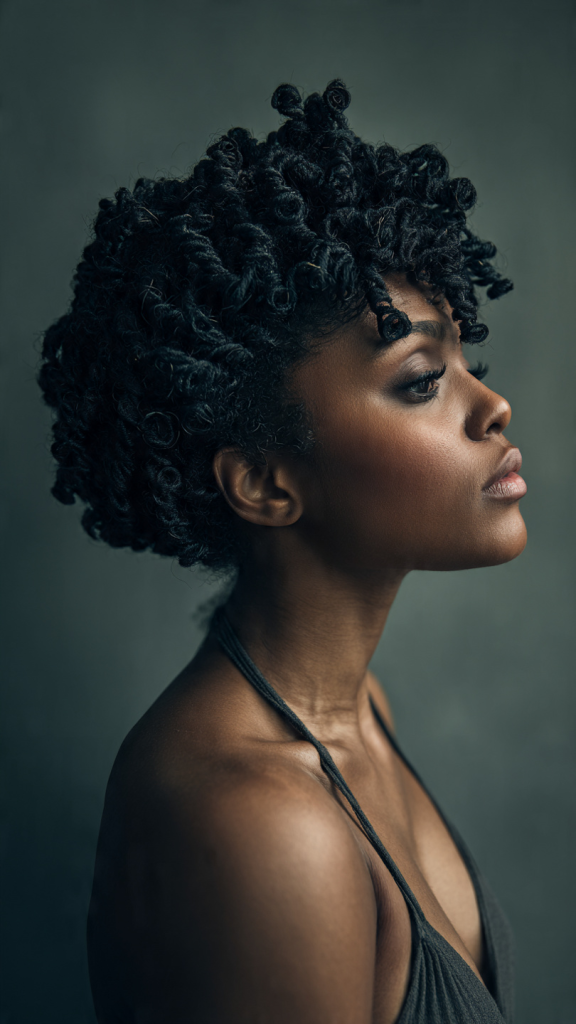
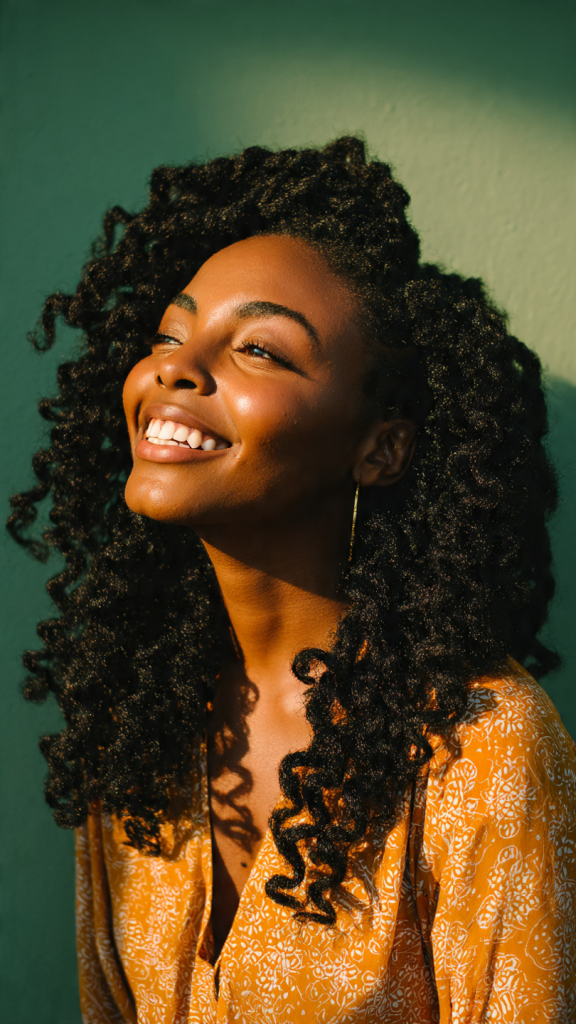
For women with 4C hair, the right hairstyle is about celebrating your natural texture, protecting your strands, and expressing your unique style. 4C hair is characterized by tight, dense coils with a defined zig-zag pattern that doesn’t have a visible curl definition unless stretched or styled. This beautiful texture is incredibly versatile—it can be worn in its natural state, stretched, twisted, braided, or shaped into stunning updos. In this guide, you’ll discover 18 4C hairstyles ideas, from protective styles to everyday looks, each designed to keep your hair healthy, moisturized, and stylish. If you love working with natural texture, these 2026 trending kinky coily hairstyles offer additional inspiration.
Understanding 4C Hair
4C hair has unique characteristics that make it both beautiful and specific in its needs:
Tightly coiled pattern – The curls are very dense with a defined zig-zag pattern
High shrinkage – 4C hair can shrink 70–80% when dry, appearing much shorter than its actual length
Fragile strands – The tight coils make it prone to dryness and breakage without proper moisture
Versatile styling – Can be worn in twist-outs, braid-outs, wash-and-gos (with definition), and protective styles
Requires moisture – Regular hydration is essential for healthy 4C hair
Low manipulation – Protective styles help retain length and prevent breakage
The 18 4C Hairstyles Ideas
1. Classic Twists (Two-Strand Twists)
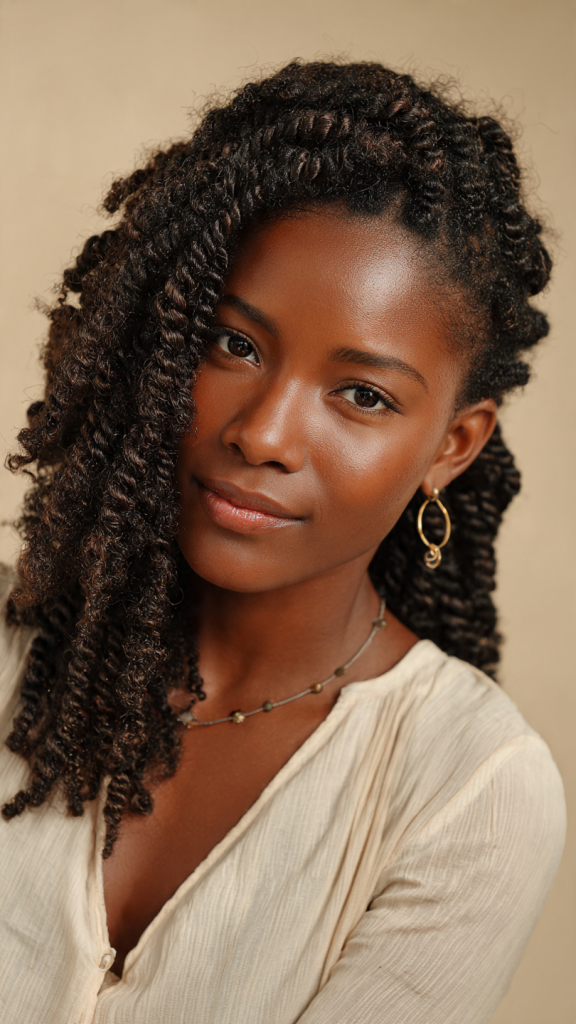
Why it works:Classic two-strand twists are the foundation of 4C hairstyling. Sections of hair are divided into two strands and twisted around each other, creating rope-like coils. This style is protective, low-manipulation, and can be worn for weeks. Twists can be styled in various sizes—from chunky to mini—depending on your preference.
How to style it: Start with damp, detangled hair. Apply leave-in conditioner, curl cream, and shea butter or twisting butter to seal in moisture. Part your hair into sections using a rat-tail comb. Take a small section, divide into two even strands, and twist them around each other from root to tip. Continue until all hair is twisted. For a stretched look, allow twists to air-dry completely or sit under a hooded dryer. For twist-out definition, wear twists for 2–7 days, then unravel.
Best face shapes: All face shapes (most versatile protective style)
Maintenance needs: Retwist edges every 3–5 days; full retwist every 2–4 weeks
For those with thinning edges, these short hairstyles for thin fine hair offer additional density ideas.
2. Flat Twists
Why it works:Flat twists are two-strand twists that lie flat against the scalp, similar to cornrows but created with twisting instead of braiding. This style is excellent for stretched styles, protective styling, and creating intricate patterns on the scalp. Flat twists can be worn alone or as a base for other styles like updos.
How to style it: Start with damp, detangled hair. Apply leave-in conditioner, curl cream, and edge control for hold. Part your hair into sections using a rat-tail comb. Take a small section at the front, divide into two strands, and begin twisting while picking up small amounts of hair from the scalp as you move back (like cornrowing but with twisting). Continue until you reach the end, then twist the remaining length. Repeat across the scalp.
Best face shapes: Oval, heart, round (flat twists create slimming lines)
Maintenance needs: Edges need refreshing every 3–5 days; full style lasts 1–2 weeks
For women over 50 seeking natural styles, these curtain bangs for women over 50 offer face-framing ideas.
3. Mini Twists
Why it works:Mini twists are smaller, more defined versions of classic two-strand twists. The smaller size creates more definition, lasts longer, and allows for more versatile styling (updos, ponytails, buns). Mini twists are one of the most popular protective styles for 4C hair because they retain length and minimize manipulation.
How to style it: Start with damp, detangled hair stretched via blow-drying or banding. Apply leave-in conditioner and twisting gel or butter. Part your hair into small sections (¼ to ½ inch). Take each section and divide into two strands, twisting from root to tip. Ensure twists are uniform in size. Allow to air-dry completely or sit under a hooded dryer for 2–3 hours. Mini twists can last 4–6 weeks with proper care.
Best face shapes: All face shapes (most long-lasting protective style)
Maintenance needs: Retwist edges every 5–7 days; full retwist every 4–6 weeks
4. Braid-Out
Why it works: A braid-out uses braids instead of twists to stretch and define 4C hair. After wearing braids for several hours or days, unraveling them creates a beautiful, crimped wave pattern. Braid-outs provide more stretch than twist-outs and work beautifully on 4C hair that needs elongation.
How to style it: Start with damp, detangled hair. Apply leave-in conditioner, curl cream, and oil to seal. Part hair into sections and create three-strand braids from root to tip. The number of braids determines the final look—more braids = tighter pattern, fewer braids = looser waves. Allow braids to dry completely (air-dry or under a hooded dryer for 2–3 hours). Gently unravel each braid from tip to root. Separate with your fingers—do not comb.
Best face shapes: All face shapes (most versatile stretch style)
Maintenance needs: Braided hair can be worn for 1–3 days before unraveling
5. Twist-Out
Why it works: The twist-out is a classic styling technique for 4C hair. After wearing two-strand twists, unraveling them creates a defined, fluffy, stretched curl pattern. Twist-outs allow you to see the full length of your hair while maintaining definition. This is one of the most popular ways to wear 4C hair “out.”
How to style it: Start with damp, detangled hair (twist-out works best on freshly washed hair). Apply leave-in conditioner, curl defining cream, and oil in that order. Create two-strand twists throughout your hair—size depends on desired definition (smaller twists = more definition). Allow twists to dry completely (overnight or under a hooded dryer for 3–4 hours). Apply a small amount of oil to your fingers. Gently unravel each twist from tip to root. Separate curls with your fingers for volume—do not comb or brush.
Best face shapes: All face shapes (most popular way to wear 4C hair out)
Maintenance needs: Twist-out lasts 3–7 days with nightly pineappling
6. Wash-and-Go (Defined)
Why it works: A defined wash-and-go on 4C hair is possible with the right technique and products. While 4C hair doesn’t have visible curls without manipulation, you can achieve a defined, moisturized, shrunken look that celebrates your natural texture. The key is using a gel with strong hold to create curl clumps.
How to style it: Start with freshly washed, soaking wet hair in the shower. Apply leave-in conditioner and rake through. Apply curl defining gel (like Eco Styler, Wetline Xtreme, or Uncle Funky’s Daughter) in sections, using the “praying hands” method. Scrunch each section to encourage curl clumping. Do not touch while drying—air-dry completely or use a diffuser on low heat for 30–45 minutes. Once 100% dry, gently fluff at the roots with a pick. Do not separate the clumps.
Best face shapes: All face shapes (most authentic to natural texture)
Maintenance needs: Wash-and-go lasts 3–5 days with nightly refresh
For those with thin 4C hair, these curly haircuts for thin hair offer additional volume-building ideas.
7. Bantu Knots
Why it works:Bantu knots are a traditional African hairstyle where sections of hair are twisted and wrapped around themselves to form small, coiled knots. After being worn for several hours or days, unraveling Bantu knots creates a beautiful, defined curly Afro. Worn as a style themselves, Bantu knots are striking and sculptural.
How to style it: Start with damp, detangled hair. Apply leave-in conditioner and curl cream. Part your hair into small square sections (1–2 inches). Take a section, twist it tightly from root to tip. Wrap the twisted hair around itself to form a small knot, tucking the end underneath. Secure with a small elastic or bobby pin if needed. Repeat until all hair is knotted. Allow to dry completely (overnight or under a hooded dryer). For a knot-out, gently unravel each knot and separate with fingers.
Best face shapes: Oval, heart, diamond (knots add height and visual interest)
Maintenance needs: Bantu knots last 1–2 weeks; knot-out lasts 3–5 days
8. High Puff
Why it works: The high puff is a simple, elegant, and iconic style for 4C hair. All hair is gathered into a high ponytail at the crown, with the ends fluffing out into a round, voluminous puff. This style shows off your natural texture and length while keeping hair off your face and neck.
How to style it: Start with stretched hair (twist-out, braid-out, or blown out). Gather all hair at the very top of your head and secure with a satin scrunchie or elastic band—do not pull too tight. Smooth edges with edge control and a boar bristle brush. Gently pull on the puff to create roundness and volume. For a sleeker look, wear a headband or scarf around the hairline. The puff should be full and rounded, not flat.
Best face shapes: Oval, heart, round (the height elongates round faces)
Maintenance needs: Refresh puff daily; wash and restretch every 5–7 days
For plus size women who love short styles, these short haircuts for plus size women over 50 offer additional slimming ideas.
9. Low Puff
Why it works: The low puff is gathered at the nape of the neck rather than the crown. This style is sleeker, more professional, and perfect for days when you want a polished look. The low puff works beautifully on stretched or shrunken 4C hair.
How to style it: Start with stretched hair (twist-out, braid-out, or blown out). Gather all hair at the nape of your neck and secure with a satin scrunchie or elastic band. Smooth edges with edge control. For a sleeker finish, wrap a scarf around your edges while your hair dries. The puff should sit at the base of your head, not on your neck.
Best face shapes: All face shapes (most versatile puff placement)
Maintenance needs: Refresh puff daily; wash and restretch every 5–7 days
10. Pineapple
Why it works: The pineapple is a nighttime preservation technique that has become a daytime style itself. Hair is gathered very high on the head (like a high puff) with the ends folding over. The pineapple keeps your stretched style intact and creates a playful, voluminous silhouette.
How to style it: Start with stretched hair (twist-out, braid-out, or blown out). Flip your head upside down. Gather all hair at the very top of your head and secure with a satin scrunchie. Do not pull the hair all the way through—leave the ends folded over to create a “pineapple” shape. Smooth edges with edge control if desired. The pineapple can be worn as a style or used to preserve your hair overnight.
Best face shapes: Oval, heart, round (the height elongates round faces)
Maintenance needs: Refresh pineapple daily; restretch every 5–7 days
11. Cornrows
Why it works:Cornrows are a classic protective style where hair is braided close to the scalp in straight lines or intricate patterns. Cornrows are excellent for 4C hair because they keep hair stretched and protected for weeks. They can be worn alone or as a base for wigs, weaves, or extensions.
How to style it: Start with freshly washed, detangled hair. Apply leave-in conditioner and edge control. Part your hair into sections using a rat-tail comb. Take a small section at the front, divide into three strands, and begin braiding while picking up small amounts of hair from the scalp as you move back. Continue until you reach the end, then braid the remaining length. Repeat across the scalp in your desired pattern (straight back, curved, or geometric).
Best face shapes: All face shapes (most versatile protective style for 4C hair)
Maintenance needs: Cornrows last 2–6 weeks with proper edge maintenance
12. Fulani Braids
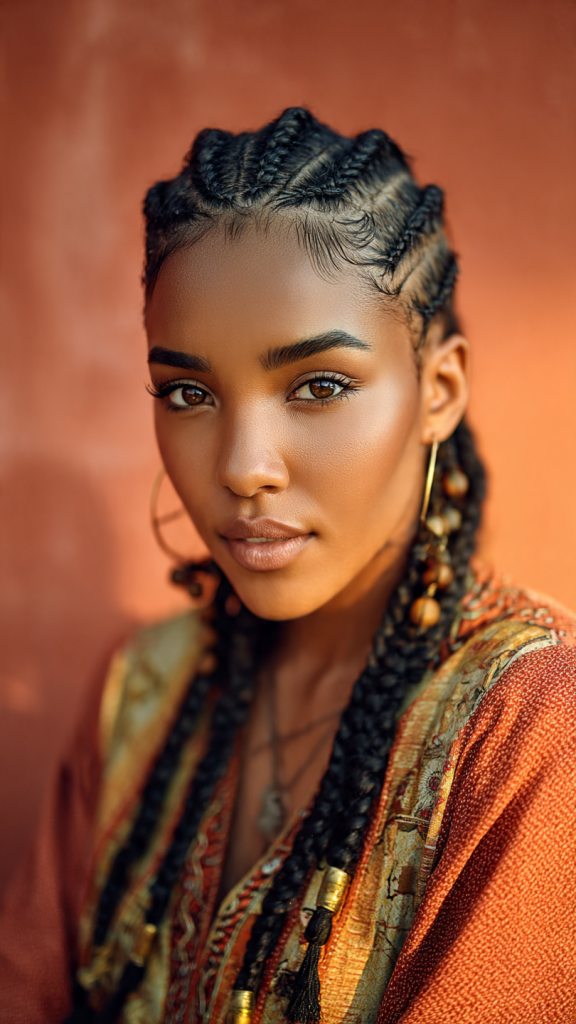
Why it works:Fulani braids (also called tribal braids) feature cornrows braided close to the scalp with a central braid down the middle, side braids sweeping back, and often a braided fringe or bead accents. This style is beautiful, cultural, and perfect for 4C hair. The braids keep hair stretched and protected while making a style statement.
How to style it: Start with freshly washed, detangled hair stretched via blow-drying. Apply leave-in conditioner and braiding gel. Create a center part. Braid a cornrow down the center from forehead to nape. Create cornrows on each side, angling them toward the center. Leave the ends out and braid them into three-strand braids. Add beads or thread for decoration. Secure edges with edge control.
Best face shapes: Oval, heart, diamond (the central line elongates the face)
Maintenance needs: Fulani braids last 4–6 weeks with proper care
13. Afro (Pick Out)
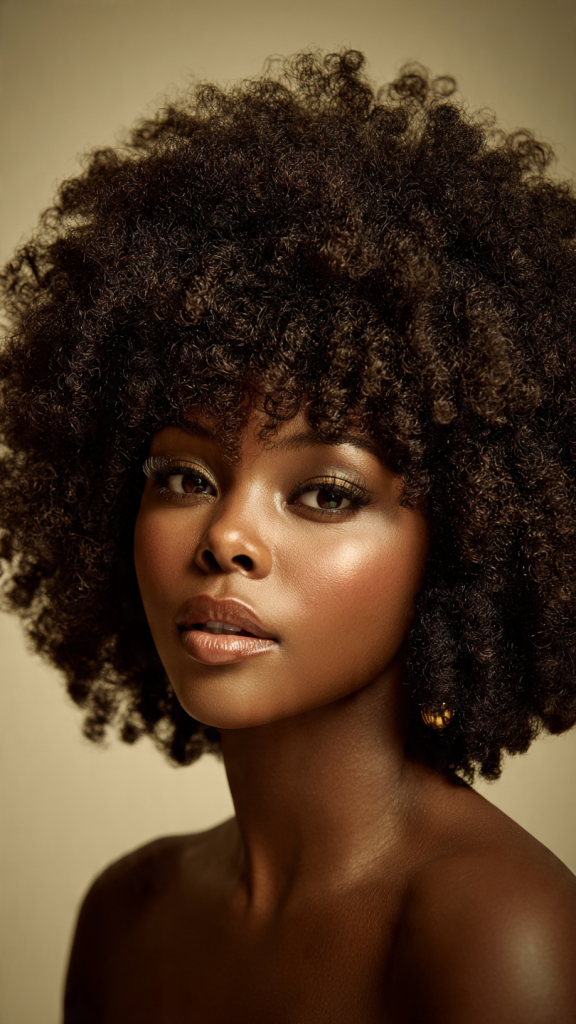
Why it works: The Afro is the most iconic natural hairstyle for 4C hair. Using a wide-tooth pick or afro pick, the hair is lifted and shaped into a rounded, voluminous sphere. The Afro celebrates 4C texture in its most authentic, unmanipulated state. It’s bold, beautiful, and powerful.
How to style it: Start with moisturized, detangled hair (freshly washed with leave-in conditioner). Flip your head upside down. Use a wide-tooth pick or Afro pick to lift the hair from the roots, picking outward in all directions. Shape the Afro into a rounded silhouette. For a defined Afro, use a curl defining gel before picking. For a softer Afro, use a curl cream. Finish with shine spray for a glossy finish.
Best face shapes: Oval, heart, square (the round shape softens angular features)
Maintenance needs: Pick out daily; wash and deep condition weekly
14. Finger Coils
Why it works:Finger coils are created by winding small sections of hair around your finger to form individual coils. This style defines 4C hair beautifully and can be worn as a style itself or as a base for a coil-out. Finger coils are time-consuming but deliver stunning, sculptural results.
How to style it: Start with damp, detangled hair. Apply leave-in conditioner and curl defining gel. Take a small section (½ inch) and apply product. Wrap the hair around your finger from root to tip, forming a tight coil. Secure with a small clip if needed or let the coil sit on its own. Repeat until all hair is coiled. Allow to dry completely (air-dry overnight or sit under a hooded dryer for 3–4 hours). For a coil-out, gently unravel each coil with oiled fingers.
Best face shapes: All face shapes (most defined look for 4C hair)
Maintenance needs: Finger coils last 1–2 weeks; coil-out lasts 3–5 days
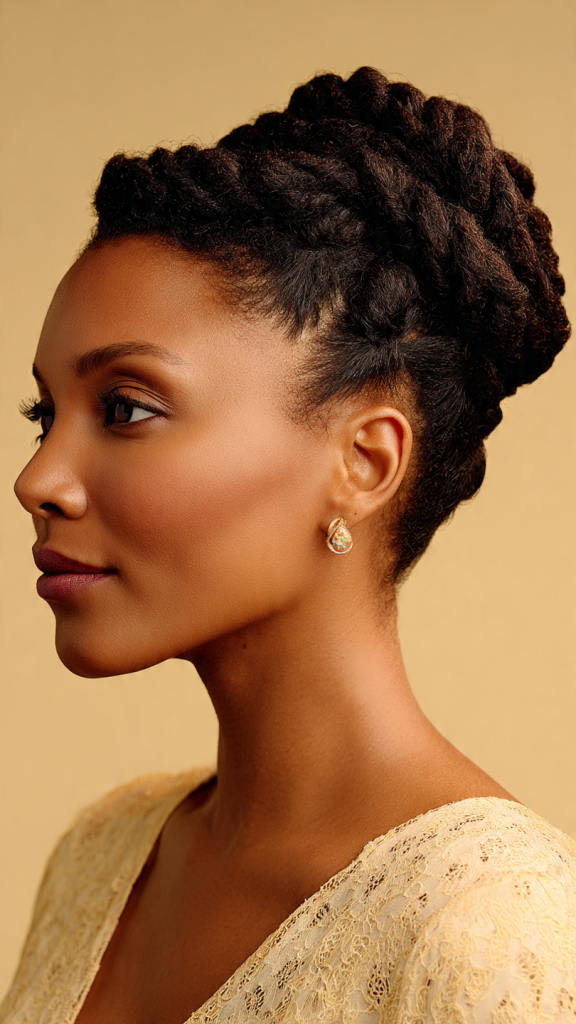
15. Protective Updo with Twists
Why it works: A protective updo using twists keeps your hair completely off your neck and shoulders while looking elegant and polished. Twists are gathered, pinned, and shaped into buns, twists, or sculptural shapes. This is perfect for special occasions or simply getting hair out of the way.
How to style it: Start with dry, stretched twists (existing two-strand twists). Gather the twists into a high bun, low bun, or twisted updo. Secure with bobby pins or hair pins (use 10–15 for thick 4C hair). Tuck the ends under. Smooth edges with edge control. For a more sculptural look, arrange the twists in a spiral or figure-eight pattern. The updo should be secure but not tight.
Best face shapes: All face shapes (most elegant protective style)
Maintenance needs: Updo lasts 1–2 weeks with nightly pinning
16. Crochet Braids
Why it works:Crochet braids use a crochet hook to pull pre-stretched synthetic or human hair through cornrowed natural hair. This style is fast to install (2–4 hours compared to 6–8 hours for traditional box braids) and provides excellent protection for 4C hair. The cornrows underneath keep your natural hair stretched and moisturized.
How to style it: First, cornrow your natural hair in a straight-back or grid pattern. Apply leave-in conditioner and seal with oil. Use a crochet hook to pull pre-stretched curly, wavy, or straight hair through each cornrow. The hook goes under the cornrow, grabs the pre-stretched hair, and pulls the ends through to form a loop. The style can be worn for 4–8 weeks with proper care.
Best face shapes: All face shapes (most time-efficient long-term protective style)
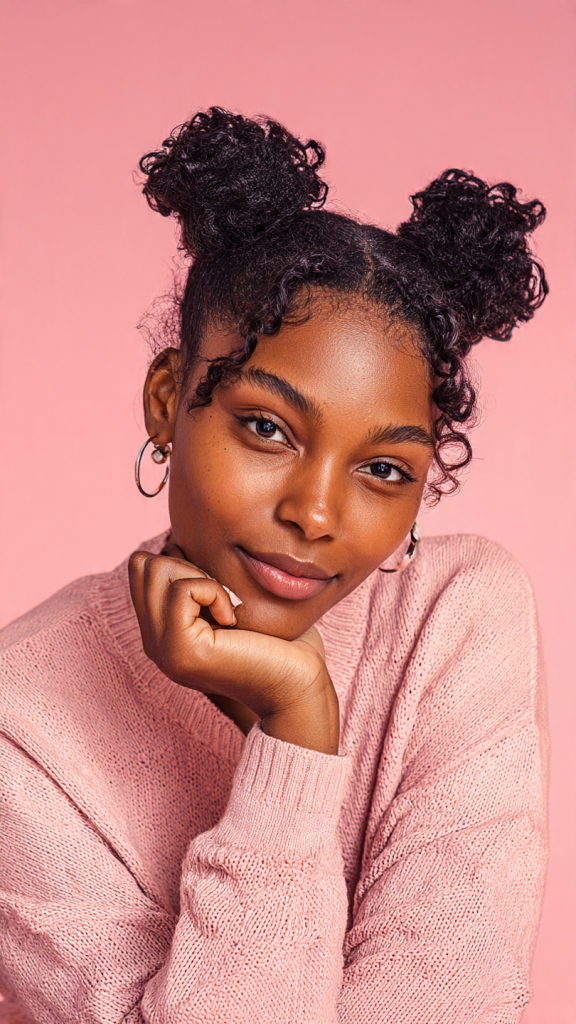
Why it works:Space buns are a playful, youthful style where the hair is divided into two sections and each is styled into a high bun. On 4C hair, space buns are voluminous, soft, and fun. This style works beautifully on stretched hair (twist-out or braid-out) and can be dressed up or down.
How to style it: Start with stretched hair (twist-out, braid-out, or blown out). Create a center part from forehead to nape. Gather the left section into a high ponytail at the left side of your crown. Secure with an elastic. Twist the ponytail and wrap it into a bun; secure with bobby pins. Repeat on the right side. The buns should sit symmetrically. Pull out a few face-framing pieces for softness. Finish with edge control on your hairline.
Best face shapes: Oval, heart, round (the height elongates round faces)
Maintenance needs: Space buns last 1–2 days; refresh edges daily
18. Silk Press
Why it works: A silk press is a temporary straightening technique that uses heat to stretch 4C hair without the damage of a chemical relaxer. The result is silky, straight hair that shows your true length. A silk press is not a permanent style but a way to enjoy straight hair for special occasions while maintaining the health of your natural texture.
How to style it: Start with deeply conditioned, clean hair. Apply heat protectant generously throughout. Blow-dry hair in sections until 90% dry. Use a flat iron on low heat (300–350°F) on small sections, passing the iron slowly from root to tip (1–2 passes per section). Do not over-iron. Wrap your hair at night to maintain straightness. A silk press lasts 1–3 weeks depending on humidity and maintenance.
Best face shapes: All face shapes (shows true length of 4C hair)
Maintaining healthy 4C hair requires consistent moisture and gentle handling. Here’s your daily roadmap:
Moisturize daily – 4C hair needs daily moisture. Use a water-based leave-in conditioner or refresher spray every morning.
Seal with oil – After moisturizing, seal with a natural oil (jojoba, coconut, or castor oil) to lock in moisture.
Sleep on satin – A satin bonnet or satin pillowcase is non-negotiable for preventing breakage and preserving styles.
Protect your edges – Avoid tight styles that pull at the hairline. Use edge control gently and never sleep with tight styles.
Deep condition weekly – A deep conditioner with heat restores moisture and strengthens 4C hair.
Detangle gently – Always detangle on wet hair with slippery conditioner and a wide-tooth comb or your fingers. Never detangle dry 4C hair.
Avoid over-manipulation – Low manipulation styles (twists, braids, buns) help retain length and prevent breakage.
Trim regularly – Trim split ends every 8–12 weeks to maintain healthy growth.
Quick Maintenance Cheat Sheet
Style
Longevity
Daily Maintenance
Special Notes
Classic Twists
2–4 weeks
Retwist edges every 3–5 days
Most versatile protective style
Flat Twists
1–2 weeks
Refresh edges daily
Best for updos
Mini Twists
4–6 weeks
Retwist edges weekly
Longest-lasting twist style
Braid-Out
1–3 days (braided)
N/A for braided wear
Unravel for defined waves
Twist-Out
3–7 days
Pineapple at night
Most popular “out” style
Wash-and-Go (Defined)
3–5 days
Refresh with water and gel
Most authentic to texture
Bantu Knots
1–2 weeks
Retwist edges every 3–5 days
Also worn for knot-out
High Puff
5–7 days
Refresh puff daily
Best for stretched hair
Low Puff
5–7 days
Refresh puff daily
More professional option
Pineapple
5–7 days
Refresh daily
Also for nighttime preservation
Cornrows
2–6 weeks
Refresh edges weekly
Most classic protective style
Fulani Braids
4–6 weeks
Refresh edges weekly
Most decorative braids
Afro (Pick Out)
1–7 days
Pick out daily
Most iconic natural style
Finger Coils
1–2 weeks
Refresh with water
Most defined 4C look
Protective Updo with Twists
1–2 weeks
Nightly pinning
Most elegant style
Crochet Braids
4–8 weeks
Moisturize underneath weekly
Most time-efficient extension style
Space Buns
1–2 days
Refresh edges daily
Most playful style
Silk Press
1–3 weeks
Wrap at night
Temporary straight style
Final Thoughts
4C hairstyles ideas prove that tightly coiled hair is one of the most versatile textures in the world. From protective styles like twists and cornrows to “out” styles like twist-outs and wash-and-gos, there’s a 4C hairstyle for every mood, occasion, and lifestyle. The key is keeping your hair moisturized, handling it gently, and protecting it at night. Take this guide to your stylist or your mirror, experiment with different techniques, and get ready to discover how beautiful and versatile your 4C hair truly is.
If you’re looking for a fresh start this year, women’s haircuts 2026 are all about versatility, softness, and styles that work with your natural texture rather than against it. Gone are the rigid, overly polished looks of seasons past. This year, the biggest trends celebrate effortless movement, lived-in texture, and cuts that can be styled in minutes—not hours. From the resurgence of the choppy pixie to the continued dominance of the bob, 2026 offers a wide spectrum of flattering options for every hair type, face shape, and lifestyle. In this comprehensive guide, we’ll explore the most sought-after hairstyles of the year, including short crops, medium-length must-haves, long layered looks, and the fringe styles that are transforming faces everywhere. If you love the idea of effortless, modern cuts, these low maintenance hairstyles for women over 50 offer additional timeless inspiration.
The Biggest Haircut Trends of 2026
This year, three major themes define women’s haircuts: seventies-inspired texture, soft minimalism, and strategic volume. Whether you prefer a bold chop or subtle refresh, these trends are designed to be wearable and low-maintenance.
1. The Soft Pixie: Effortless and Undone
The classic pixie has evolved. In 2026, the soft pixie is taking center stage—a relaxed, lived-in version with longer layers on top and soft edges around the ears and nape. Unlike the sharp, structured pixies of the past, this cut embraces a slightly messy, piecey finish that feels modern and youthful. It’s an excellent option for women who want the ease of short hair without sacrificing femininity. For those considering a shorter style, these short pixie haircuts for fine flat hair offer additional volume-building ideas.
Why it works: The soft pixie adds volume at the crown, which elongates the face, making it particularly flattering for round or heart-shaped faces. It also works beautifully on fine hair, as the layers create the illusion of density.
How to style it: For straight hair, scrunch in a lightweight mousse and air-dry for a tousled effect. For wavy or curly textures, apply a curl cream and let the natural pattern shine. A root-boosting spray can add extra lift at the crown.
Best face shapes: Oval, heart, round (with added height on top)
Maintenance needs: Trim every 5–7 weeks to maintain the shape.
2. The Trixie Cut: The Best of Both Worlds
The trixie—a hybrid of a pixie and a bob—is one of the most requested cuts of 2026. Longer on top and tapered at the edges, this cut offers the structure of a bob with the airy feel of a pixie. It’s ideal for those transitioning from a shorter style or anyone who wants a low-maintenance cut that still feels polished.
Why it works: The trixie frames the face without harshness, and its internal layering provides natural volume. It’s particularly recommended for fine or flat hair.
How to style it: Blow-dry on low heat to encourage natural texture. A small amount of texturizing paste can define the ends.
Best face shapes: Oval, square, diamond
Maintenance needs: Trim every 4–6 weeks.
3. The Mini Shag: Texture and Movement
Updated for 2026, the mini shag brings 70’s rock-and-roll vibes into the modern era. Featuring light layers on top and tapered ends, this short shag is incredibly dynamic. It’s a favorite among women over 50 because it instantly adds volume and visually lifts the face. For plus size women seeking flattering options, these short haircuts for plus size women over 50 offer additional slimming choices.
Why it works: The choppy layers and textured ends create movement, making fine or thin hair appear fuller.
How to style it: Apply texturizing spray or light mousse to damp hair and scrunch as it air-dries. Avoid over-brushing to maintain the piecey effect.
Best face shapes: Oval, heart, round
Maintenance needs: Trim every 6–8 weeks.
Bobs and Lobs: The Enduring Favorites
The bob remains the dominant haircut of 2026, but this year it’s all about specific, fresh variations.
4. The Kicktail Bob: A 90’s Revival
The kicktail bob features subtly up-turned ends, reminiscent of the flippy bobs of the 90’s but rendered with a softer, more refined cut. Seen on celebrities like Carey Mulligan, this style adds a playful bounce to any look.
How to style it: Air-dry for a natural bend or use a large round brush to flick the ends outward.
Best face shapes: Oval, square
Maintenance needs: Trim every 6–8 weeks.
5. The Sleek Asymmetrical Lob
For those who prefer a more polished look, the sleek asymmetrical lob (long bob) is having a moment. This cut features a sharp, blunt line that grazes the collarbone, often with a dramatic side part. It projects confidence and quiet luxury.
How to style it: Blow-dry with a paddle brush to eliminate volume and create a mirror-like finish. Finish with a lightweight shine serum.
Best face shapes: Oval, oblong
Maintenance needs: Trim every 6–8 weeks.
6. The Tousled Lob (Textured Lob)
Reigning as one of the most versatile trends, the tousled lob is ideal for those who want a “wash-and-go” lifestyle. Slightly unstructured with soft waves, this cut is a savior for fine or flat hair.
How to style it: Apply sea salt spray to damp hair, scrunch, and air-dry. For curly textures, this cut removes bulk to prevent the dreaded pyramid shape.
Best face shapes: All face shapes
Maintenance needs: Trim every 8–10 weeks.
For more inspiration on medium-length styles, explore these medium length hairstyles for thick hair that tame bulk and create shape.
Medium-Length & Long Hair Trends
If you’re keeping your length, 2026 is all about strategic layering and face-framing shapes.
7. The Butterfly Cut
The Butterfly Cut remains a top request for long hair in 2026. This style uses short layers around the face (opening like wings) while keeping the back length intact. It creates instant root lift and dynamic movement.
Why it works: It refines round faces, softens square jaws, and adds dimension to fine hair without losing overall length. It’s also an ideal transitional cut for growing out a bob.
How to style it: Use a round brush when blow-drying to accentuate the “winged” layers.
Best face shapes: Oval, heart, round
Maintenance needs: Trim every 8–10 weeks.
8. Mid-Length Soft Shag & Clavicut
The Soft Shag for medium hair is described as the big star of the moment. It offers subtle layers that create an airy, dense texture perfect for normal or wavy hair.
Alternatively, the Clavicut (grazing the collarbone) offers a minimalist, chic aesthetic. Its straight line adds instant density to fine hair and visually lengthens the neck.
How to style it: Apply texturizing spray and air-dry for the shag. For the clavicut, blow-dry smooth with a paddle brush.
Best face shapes: All face shapes
Maintenance needs: Trim every 8–10 weeks.
9. The Long, Lived-In Fringe
In 2026, bangs are less about a blunt chop and more about effortless framing. The “lived-in fringe” is longer, softer, and deliberately undone. It’s the holy grail of fringe styles because it’s low-commitment and forgiving as it grows out.
Why it works: It softens foreheads, balances long faces, and introduces movement where needed.
How to style it: A quick round-brush blow-dry or simply air-drying with texture spray is all it needs.
Best face shapes: Oval, heart, oblong
Maintenance needs: Bangs trim every 3–4 weeks.
For those with long layers, check out these long hairstyles with curtain bangs for a complementary style.
The Color Connection: Enhancing the Cut
A great haircut in 2026 is being paired with strategic color to enhance the shape.
Strategic Highlights/Babylights: Rather than uniform color, stylists are placing babylights or ribbon highlights around the face to create a lifting effect. This technique is particularly rejuvenating for women over 50. For those blending grays, these grey blending highlights in ash blonde offer cool, sophisticated options.
Contrast Roots: Visible roots (whether natural or colored) are being embraced to create a modern, low-maintenance aesthetic. This “rooted” look adds depth and dimension to layered cuts like the butterfly cut.
High-Shine Finishes: For blunt cuts and sleek bobs, high-shine, “quiet luxury” hair colors (like deep espresso or vanilla blonde) are trending to emphasize the precision of the cut.
How to Choose Your 2026 Haircut
With so many options, selecting the right cut depends on your lifestyle and natural texture:
For Fine or Flat Hair: Opt for the Tousled Lob, Mini Shag, or Butterfly Cut. The key is removing weight to allow the roots to lift. Avoid heavy, one-length cuts that will pull hair down.
For Thick or Coarse Hair: The Trixie or Soft Shag is ideal to remove bulk and prevent the “pyramid” shape. Internal layering is essential. For more options, these medium length hairstyles for thick hair offer excellent bulk-taming solutions.
For Curly Hair: A Layered Bob with curtain bangs works beautifully in 2026. The trick is subtle layering to avoid frizz while defining the curl pattern. These curly haircuts for men offer universal techniques that apply to all curl types.
For Women Over 50: Prioritize cuts with volume at the crown. The Dynamic Bob, Elongated Pixie, and Butterfly Cut offer excellent lifting effects. Steer clear of uniform, dark colors which can harden features; opt for luminous highlights instead. For more age-defying advice, these best haircuts for round faces over 50 provide specific slimming strategies.
Quick Reference: 2026 Haircut Trends
Trend
Best For
Key Styling Product
Vibe
Soft Pixie
Fine hair, round faces
Root-boosting spray
Effortless, Gamine
Trixie Cut
Transitioning from short to long
Texturizing paste
Edgy, Versatile
Mini Shag
Fine or thin hair
Texturizing spray
Rock-and-roll, Lived-in
Kicktail Bob
Straight hair, 90’s lovers
Round brush
Playful, Retro
Tousled Lob
Wash-and-go lifestyles
Sea salt spray
Beachy, Relaxed
Butterfly Cut
Long hair, fine hair
Volumizing mousse
Glamorous, Dynamic
Lived-in Fringe
High foreheads, oval faces
Texture spray
Parisian, Chic
Sleek Asymmetrical Lob
Professional settings, thick hair
Shine serum
Polished, Powerful
Final Thoughts
Women’s haircuts 2026 are defined by a shift toward authenticity, ease, and personal expression. This year’s trends prove that you don’t need a complicated routine to look chic; you just need the right cut for your texture and face shape. Whether you’re drawn to the rock-and-roll energy of the mini shag or the polished confidence of a sleek asymmetrical lob, the most important element is that your style works for you. Take these trends to your stylist, discuss a version tailored to your unique features, and step into the rest of the year with fresh, effortless hair.
For plus size women over 50, short haircuts can be incredibly empowering, flattering, and slimming when chosen correctly. The right cut creates balance, adds height, and draws the eye upward—elongating your silhouette and highlighting your best features. As we age and our bodies change, our hair should work with us, not against us. Short hair removes visual weight from the neck and shoulders, creates angles that slim the face, and projects confidence. In this guide, you’ll discover 25 short haircuts for plus size women over 50, each designed to flatter fuller figures, slim rounder faces, and give you a look that’s stylish, age-appropriate, and undeniably confident. If you’re looking for more volume-boosting techniques, these layered hairstyles for women over 50 with thin hair offer additional density-building ideas.
Why Short Hair Works for Plus Size Women Over 50
A well-chosen short haircut creates proportion, balance, and visual length. Short haircuts for plus size women over 50 achieve this through specific strategies:
Removes visual weight – Long hair can add heaviness to the neck and shoulders. Short hair lightens your overall silhouette
Adds height at the crown – Volume on top elongates the face and creates a taller, more balanced proportion with a fuller body
Draws attention upward – Short cuts highlight your eyes, cheekbones, and smile—your best features
Creates angles – Strategic layering, asymmetry, and texture add definition that counteracts roundness
Exposes the neck – A visible neck creates length; hair that covers the neck shortens the visual line
Projects confidence – A bold short cut says you’re comfortable in your skin and ready to take on the world
The 25 Short Haircuts for Plus Size Women Over 50
1. High-Volume Pixie
Why it works: The high-volume pixie focuses all the length and height at the crown, with the top cut to 2–3 inches and styled upward. The sides and back are kept short and close to the head. This creates a tall, narrow silhouette that directly counteracts the width of a fuller face and body. The vertical height draws the eye up and down, not side to side.
How to style it: Apply volumizing mousse to damp roots at the crown. Blow-dry using a small round brush, lifting each section straight up at a 90-degree angle. Hit with cool air for 10 seconds before releasing. The sides need only a quick towel-dry. Finish with texturizing powder at the crown for extra height that lasts all day.
Best face shapes: Round, oval, heart (the height elongates round faces dramatically)
Maintenance needs: Trim every 4–5 weeks. The crown height needs regular upkeep.
For plus size women with thinning hair who want even more volume-building options, these short hairstyles for thin fine hair offer additional cuts designed specifically for density concerns.
2. Stacked Bob with Angled Front
Why it works: A stacked bob has graduated layers in the back that create volume at the crown, while the front is cut at an angle—shorter in the back, longer in the front. The angled front pieces hit below the chin (often at the collarbone), creating a long, slimming line that draws the eye downward. The stacked back adds necessary crown height. For plus size women, the stacked volume balances fuller hips and shoulders.
How to style it: Apply root-lifting spray to the crown area. Blow-dry the stacked back using a round brush, lifting aggressively. For the angled front pieces, use a flat iron to create a slight bend away from the face. The longer front should frame your jaw without adding width—never curl toward your face. Finish with light hairspray to hold the angle.
Best face shapes: Round, oval, square (the angle elongates round faces)
Maintenance needs: Trim every 5–6 weeks. The stacked back needs regular upkeep.
For plus size women over 50 who want soft, face-framing options, these curtain bangs for women over 50 offer age-defying styling tips that pair perfectly with a stacked bob.
3. Asymmetric Pixie
Why it works: An asymmetric pixie is shorter on one side than the other—often with one side shaved or closely tapered and the other side left longer (2–3 inches). The diagonal line created by asymmetry breaks the symmetry of a fuller face, which is instantly slimming. The eye follows the diagonal, creating the illusion of length. For plus size women, asymmetry also adds a modern, edgy feel that reads as confident and youthful.
How to style it: Apply texturizing cream to damp hair. Blow-dry using your fingers, directing the longer side forward and across your forehead. The shorter side can be tucked behind your ear or left exposed. The key is to embrace the unevenness—don’t try to make both sides match. Finish with dry wax on the longer side for definition.
Best face shapes: Round, oval, diamond (asymmetry balances fullness)
Maintenance needs: Trim every 4–5 weeks. The angle needs regular refreshing.
4. Deep Side Part Pixie
Why it works: This isn’t a different cut—it’s a styling technique that transforms any pixie. A deep side part (the part aligned with the arch of your eyebrow) immediately creates asymmetrical volume because all the hair is swept to one side, lifting off the scalp on the deeper side. For a plus size woman with a rounder face, this one styling change can add 50% more visible length instantly.
How to style it: On damp hair, create a deep side part (the part should align with the arch of your eyebrow). Blow-dry using a round brush, lifting the hair on the deeper side straight up and directing it across your head. The shorter side can be tucked behind your ear. Lock the part in place with strong hold spray on the roots.
Best face shapes: Round, oval, heart (the diagonal line slims the face)
Maintenance needs: No additional maintenance beyond your underlying cut schedule
5. Textured Crop with Height
Why it works: The textured crop keeps the top at 1.5–2 inches with heavy point-cutting, while the sides and back are tapered close. The key to making this work for plus size women is keeping the height on top and the sides very short. The vertical height counteracts horizontal width, while the short sides prevent any added bulk at the widest part of your face.
How to style it: Apply volumizing mousse to damp roots on top. Blow-dry using your fingers, lifting sections straight up. Once dry, run a small amount of matte paste through the top, pinching ends for piecey separation. The sides need nothing—they should stay clean and close. Finish with texturizing powder at the crown.
Best face shapes: Round, heart, oval (the crop adds length to round faces)
Maintenance needs: Trim every 4–5 weeks. The texture hides grow-out well.
6. Angled Bob (Longer in Front)
Why it works: An angled bob is cut with a distinct slope—very short in the back (often above the nape) and significantly longer in the front (chin-length or below). For plus size women, the long, face-framing front pieces create vertical lines that slim the face, while the short back prevents any bulk at the neck and shoulders. This is one of the most universally flattering cuts for fuller figures.
How to style it: Apply smoothing cream to damp hair. Blow-dry the back using a round brush for smoothness. For the longer front pieces, use a flat iron to create a slight bend away from the face—this opens up your features. The front pieces should never be curled toward your face, as that adds width. Finish with shine spray for a polished look.
Best face shapes: Round, oval, square (the angle is universally slimming)
Maintenance needs: Trim every 5–6 weeks. The angle must be maintained.
7. Pixie with Long, Side-Swept Bangs
Why it works: This pixie keeps the top longer (2–3 inches) with heavy side-swept bangs that sweep diagonally across the forehead. The bangs create a strong diagonal line that draws the eye across the face rather than around it, which has a lengthening effect. The sides and back are kept short and close to prevent added width at the cheeks. For plus size women, side-swept bangs also soften forehead lines and draw attention to the eyes.
How to style it: Apply lightweight mousse to damp hair. Blow-dry the side-swept bangs using a small round brush, directing them across your forehead and pinning them in place as they cool (this sets the sweep). The rest of the top can be tousled with fingers. Once dry, remove the pin and mist the bangs with light hairspray.
Best face shapes: Round, heart, oval (the diagonal line slims fullness)
Maintenance needs: Bangs trim every 3–4 weeks; overall cut every 5–6 weeks
8. Tapered Pixie with Extra Crown Length
Why it works: A tapered pixie keeps the sides and back closely tapered (fading from skin to longer lengths), while the top is left 3–4 inches long—longer than a traditional pixie. The extra length on top allows you to create significant height at the crown, which is the most effective slimming technique for fuller faces and figures. The tapered sides keep the silhouette narrow.
How to style it: Apply volumizing mousse to damp roots on top. Blow-dry using a small round brush, lifting each section straight up at a 90-degree angle. For even more height, backcomb the roots gently at the crown before smoothing the top layer over. The tapered sides need only a quick towel-dry. Lock the height in place with strong hold spray.
Best face shapes: Round, oval, heart (maximum crown height = maximum slimming)
Maintenance needs: Top trim every 5–6 weeks; tapered sides need professional refreshing every 4 weeks
9. Choppy Lob with Face-Framing Layers (Below Chin)
Why it works: A choppy lob (long bob) hits between the chin and collarbone. For plus size women, the key is face-framing layers that start below the chin—never at cheek level. The choppy texture throughout adds movement and prevents the hair from lying flat against your cheeks, which can add width. The longer length also creates a vertical line that slims the entire silhouette.
How to style it: Apply sea salt spray to damp hair throughout. Scrunch vigorously, then air-dry completely—do not touch while drying. Once dry, shake out with fingers. The face-framing layers should fall naturally below your jawline. For a polished version, use a 1.5-inch curling iron to create loose bends, then brush through with a wide-tooth comb, pulling the face-framing pieces away from your face.
Best face shapes: Round, oval, square (the longer length adds vertical line)
Maintenance needs: Trim every 6–8 weeks. The longest interval on this list.
If you’re looking for even more options that add density and shape while slimming, these short hairstyles for thin fine hair offer additional cuts designed to create fullness without adding width.
10. Sleek Pixie with Deep Side Sweep
Why it works: A sleek pixie is cut close on the sides and back, with the top left long enough (2–3 inches) to sweep dramatically to one side. The deep side sweep creates a strong diagonal line across your forehead, while the sleek, polished finish keeps the silhouette clean and narrow. This is an excellent option for professional settings where you want a sophisticated, slimming look.
How to style it: Apply strong hold gel to damp hair throughout the top section. Using a fine-tooth comb, comb all the top length diagonally across your forehead to the opposite side. Smooth down any flyaways with a boar bristle brush. Lock in place with maximum hold hairspray. The sides and back should be freshly trimmed for maximum contrast.
Best face shapes: Round, oval, heart (the diagonal sweep is universally flattering)
Maintenance needs: Top trim every 4–5 weeks; sides need refreshing every 3–4 weeks
11. The Classic Pixie
Why it works: The classic pixie is the ultimate short cut for plus size women because it removes all visual weight from the neck and shoulders. The top is soft and textured (1.5–2 inches), while the sides and back are tapered close. This timeless cut draws attention to your eyes and smile, and the clean lines create a polished, confident silhouette.
How to style it: Apply lightweight styling cream or mousse to damp hair. Use your fingers to tousle the top forward while pushing the sides down. For extra lift, flip your head upside down and shake at the roots. Air-dry or blow-dry briefly on low heat. No complex styling needed.
Best face shapes: Oval, heart, square (softens strong jawlines)
Maintenance needs: Trim every 4–6 weeks
12. Wispy Pixie
Why it works: A wispy pixie takes the classic pixie to its most delicate extreme. The ends are texturized until they are almost feathery, with very fine, barely-there points at every edge. For plus size women with very fine or thinning hair, this is the most flattering option because the wispy ends eliminate any blunt line that could emphasize roundness.
How to style it: Apply lightweight mousse to damp hair. Towel-dry aggressively, then use your fingers to push the top forward. Air-dry completely—about 10 minutes. Avoid heavy products like wax or pomade, which will clump the fine ends together. Finish with a micro-mist of shine spray from 12 inches away.
Best face shapes: Oval, heart, oblong (wispiness softens longer faces)
Maintenance needs: Trim every 5–6 weeks
13. Curly Pixie
Why it works: Natural curls or permed textures in a cropped pixie shape create instant volume and definition with zero heat styling. This cut removes weight so curls spring up tighter and bouncier, adding height that slims the face. For plus size women with naturally curly hair, this cut celebrates your texture while creating a flattering silhouette.
How to style it: Apply leave-in conditioner and curl gel to very wet hair. Use fingers to define individual curl clumps. Air-dry completely—do not touch while drying. Once dry, scrunch out any crunch with a drop of oil on your palms. Never brush dry curls.
Best face shapes: Oval, heart, square (adds width to narrow faces)
Maintenance needs: Trim every 6–8 weeks (dry cut only)
For plus size women over 60 who want effortless styles that embrace natural texture, these wash and wear haircuts for women over 60 offer additional low-maintenance ideas.
14. The Shag Cut (Short)
Why it works: The short shag features heavy layering throughout, texture, and often curtain bangs. For plus size women, the shag is a revelation because the layers remove bulk and create an intentional, lived-in shape. The cut is designed to look slightly messy, so perfection is not the goal—and the texture draws the eye vertically.
How to style it: Apply texturizing spray to damp hair. Blow-dry using your fingers, lifting at the roots. Once dry, use a 1-inch curling iron to create random bends in different directions throughout. Brush through with a wide-tooth comb to create connected texture. The overall effect should be lived-in and disheveled.
Best face shapes: Oval, heart, round (texture softens angular features)
Maintenance needs: Trim every 8–10 weeks. Shags improve with grow-out.
15. Blunt Bob with Soft Ends (Chin-Length)
Why it works: A blunt bob at chin-length creates the appearance of maximum density while still being short enough to avoid weighing down your silhouette. Softening the very ends (micro-point cutting) prevents the “helmet head” look while keeping the weight line intact. For plus size women, this cut creates a strong, confident line at the jaw.
How to style it: Apply lightweight mousse to damp hair. Comb through with a wide-tooth comb. Air-dry completely, using your fingers to gently separate any clumps. For a more polished look, blow-dry with a flat paddle brush on low heat for 5 minutes, directing all hair straight down.
Best face shapes: Oval, oblong, square (adds width to very narrow faces)
Maintenance needs: Trim every 5–6 weeks. The blunt line shows every uneven hair.
16. French Bob
Why it works: The French bob is cropped between the earlobe and chin, often with a subtle undercurl at the ends. It’s effortlessly chic and requires almost no daily effort. For plus size women, this style draws attention upward to the eyes and smile while minimizing the neck and shoulder area.
How to style it: Apply smoothing cream to damp hair. Tuck hair behind your ears while it air-dries to encourage that signature curved-under shape. If you have natural wave or curl, use a diffuser on low heat and let the ends curl freely. Never use a straightener—the French bob celebrates imperfect, lived-in texture.
Best face shapes: Oval, heart, square (avoid if you have a very long face)
Maintenance needs: Trim every 6 weeks. The blunt edge is key.
17. Micro Bob (Ear-Length)
Why it works: The micro bob is cropped right at or slightly below the earlobe, making it shorter than a traditional bob but longer than a pixie. This length requires almost no styling—perfect for plus size women with busy lives. The exposed neck creates length, and the clean line draws the eye upward.
How to style it: Apply smoothing balm to damp hair. Comb straight back away from your face, then let hair fall naturally. The shortness means it will dry in whatever direction it wants—and that’s the charm. If you have cowlicks, a small round brush on just that section for 30 seconds solves everything.
Best face shapes: Oval, heart, square (very short lengths require strong bone structure)
Maintenance needs: Trim every 4–5 weeks
18. Layered Pixie with Crown Volume
Why it works: This cut focuses all the layering at the crown—the area where volume matters most. The crown layers are cut shorter and stacked, creating a built-in bump of volume that requires no teasing or backcombing. The sides and nape are tapered close to keep the focus on the crown. For plus size women, this built-in height creates the most dramatic slimming effect.
How to style it: Apply root-lifting spray directly to the crown area. Blow-dry using a small round brush, lifting the crown section straight up at a 90-degree angle. Hit with cool air for 10 seconds before releasing. The rest of the hair can be quickly smoothed. Do not put product near the crown—let the cut do the work.
Best face shapes: Oval, oblong, heart (crown volume lengthens round faces)
Maintenance needs: Trim every 5–6 weeks
19. Textured Crop with Undercut
Why it works: An undercut removes hair from the nape and sometimes behind the ears, leaving only the top and crown. For plus size women, removing hair from the nape eliminates visual weight at the neck and creates a cleaner, more lifted silhouette. The top is left with 2–3 inches of textured length.
How to style it: Apply molding paste to dry hair. Rub between palms, then pull and twist sections of the top hair into piecey texture. The undercut requires nothing—it’s shaved and air-dries instantly. For a more polished look, smooth the top over to one side with a fine-tooth comb.
Best face shapes: Oval, heart, diamond (best for confident, edgy style)
Maintenance needs: Top trim every 6–8 weeks; undercut needs refreshing every 3–4 weeks
20. Inverted Bob
Why it works: An inverted bob is shorter in the back and longer in the front, creating an angled line that draws the eye forward. For plus size women, the inversion removes weight from the nape (where bulk can add visual heaviness) while keeping length in the front for slimming face-framing. The angle also prevents the heavy “mushroom” shape.
How to style it: Apply volumizing foam to damp hair. Blow-dry the back section first using a round brush, directing hair downward. For the longer front pieces, use a flat iron to create a slight bend away from the face. The angle should be visible—the front should be noticeably longer than the back.
Best face shapes: Oval, heart, oblong (the angle elongates rounder faces)
Maintenance needs: Trim every 6–7 weeks
21. Graduated Bob
Why it works: A graduated bob features layers that increase in length from back to front, creating a soft, sloping line. Unlike a stacked bob (which has distinct tiers), a graduated bob is smoother and more subtle. For plus size women, this cut offers lift in the back and length in the front without harsh lines, creating a balanced, elongated silhouette.
How to style it: Apply root booster to damp hair, focusing on the back crown. Blow-dry using a round brush, lifting each section at a 90-degree angle. The front pieces can be blown smooth or left with a slight bend. The graduation creates natural volume without teasing.
Best face shapes: Oval, round, square (the graduation adds length)
Maintenance needs: Trim every 6–8 weeks
22. Piecey Pixie
Why it works: A piecey pixie takes texture to its most visible extreme. Individual strands are cut and styled to stand apart from each other, creating a separated, almost architectural effect. For plus size women, piecey separation creates vertical lines and draws the eye through the hair rather than around the face.
How to style it: Apply dry wax or paste to completely dry hair. Rub between palms to warm the product, then pinch and pull small sections to create individual pieces. Focus on the ends and the crown. Do not brush or comb. For extra piecey-ness, use a texturizing powder at the roots before applying wax.
Best face shapes: Oval, heart, square (piecey texture softens strong jawlines)
Maintenance needs: Trim every 6–8 weeks
23. Short Shag with Curtain Bangs
Why it works: The short shag with curtain bangs combines the texture of a shag with the face-framing softness of curtain bangs. The bangs part in the middle and sweep to each side, creating a diagonal line that slims the face. The shag layers add height and movement. This is a romantic, youthful cut that works beautifully for plus size women over 50.
How to style it: Apply lightweight mousse to damp hair. Blow-dry the curtain bangs using a small round brush, rolling them away from your face. The rest of the shag can be air-dried or tousled with fingers. To refresh bangs on day two, mist with water and re-roll around a round brush with heat for 10 seconds.
Best face shapes: Oval, heart, round (curtain bangs slim wider foreheads)
Maintenance needs: Bangs trim every 3–4 weeks; shag trim every 8–10 weeks
For plus size women over 50 who love face-framing softness, these curtain bangs for women over 50 offer age-defying styling tips.
24. Tapered Nape Pixie
Why it works: A tapered nape pixie keeps length on top while the back and sides are clipper-tapered very short, blending seamlessly. This creates a clean, polished silhouette that looks intentional even when bedhead strikes. For plus size women, the tapered nape removes visual weight from the neck area, creating a longer, leaner line.
How to style it: Apply styling cream to damp hair on top only. Use a small round brush to lift the crown while blow-drying for 2 minutes—or simply air-dry and use your fingers to push the top forward. The tapered sections dry instantly with a towel. Run wax through the top length for separation.
Best face shapes: Oval, square, oblong (the clean lines suit sharper features)
Maintenance needs: Trim every 5–6 weeks
25. Messy Bedhead Pixie
Why it works: The messy bedhead pixie is deliberately disheveled—think “just rolled out of bed but in a cool way.” The cut features uneven, jagged layers throughout, with some sections shorter than others. For plus size women, this intentional messiness is a blessing because perfection is not the goal. The texture creates vertical lines, and the casual vibe projects confidence.
How to style it: On dry hair (clean or second-day), apply dry shampoo generously at the roots. Flip head upside down and scrunch vigorously for 30 seconds. Flip back and use your fingers to texturize random sections. Add texturizing powder at the crown for piecey separation. Do not use a brush or comb.
Best face shapes: Oval, heart, square (messiness softens angular features)
Maintenance needs: Trim every 5–6 weeks. The lived-in look means grow-out adds to the charm.
How to Style Short Haircuts for Plus Size Women Over 50 (Daily Routine)
Styling short hair to flatter a fuller figure requires specific techniques that create height, angles, and vertical lines. Here’s your daily roadmap:
Always create height at the crown – This is your most powerful slimming tool. Use volumizing mousse at the roots, blow-dry sections straight up, and finish with texturizing powder or dry shampoo at the crown for lift that lasts.
Use a deep side part – Never center-part your hair if you have a rounder face. A deep side part (aligned with your eyebrow arch) creates asymmetry and adds length. Re-part your hair when it’s damp and blow-dry the part in place.
Keep sides short or tucked – Hair that falls at cheek level adds width to the face. Either keep the sides very short (pixie styles) or tuck longer front pieces behind your ears to expose your face.
Avoid chin-length blunt cuts – A blunt bob that ends exactly at your chin creates a horizontal line that emphasizes roundness. If you want a bob, keep it angled (shorter in back, longer in front) or add heavy layers.
Blow-dry away from your face – When using a round brush or flat iron, always curl or blow-dry hair away from your face. Curling toward your face adds volume at cheek level, which is the opposite of what you want.
Use vertical styling products – Products that add height (texturizing powder, dry shampoo, root-lifting spray) are your best friends. Avoid heavy creams, oils, or butters that weigh hair down and make it fall flat.
Consider adding bangs – Side-swept or curtain bangs create diagonal lines that slim the face. Avoid blunt, straight-across bangs, which add horizontal width.
Refresh with dry shampoo at the roots – On second-day hair, apply dry shampoo directly to your roots and crown, then flip your head upside down and massage. This revives height and removes oil.
For gray or silver hair – Use purple-tinged dry shampoo to add volume while preventing yellowing. Avoid heavy products that can make silver hair look dull.
Quick Maintenance Cheat Sheet
Cut Style
Trim Frequency
Special Notes
High-Volume Pixie
4–5 weeks
Crown height needs regular upkeep
Stacked Bob with Angled Front
5–6 weeks
Stacked back needs regular refreshing
Asymmetric Pixie
4–5 weeks
Angle must be maintained
Deep Side Part Pixie
Same as underlying cut
Styling change, not cut change
Textured Crop with Height
4–5 weeks
Most versatile volume builder
Angled Bob (Longer in Front)
5–6 weeks
The angle is essential for slimming
Pixie with Long Side-Swept Bangs
Bangs: 3–4 weeks; Cut: 5–6 weeks
Bangs grow fastest
Tapered Pixie with Extra Crown Length
Top: 5–6 weeks; Sides: 4 weeks
Maximum crown height option
Choppy Lob with Face-Framing Layers
6–8 weeks
Longest interval on this list
Sleek Pixie with Deep Side Sweep
Top: 4–5 weeks; Sides: 3–4 weeks
Best for professional settings
Classic Pixie
4–6 weeks
Most versatile
Wispy Pixie
5–6 weeks
Most forgiving ends
Curly Pixie
6–8 weeks (dry)
Always cut dry
Short Shag
8–10 weeks
Improves with grow-out
Blunt Bob with Soft Ends
5–6 weeks
Blunt line requires upkeep
French Bob
6 weeks
Blunt edge is key
Micro Bob
4–5 weeks
Shortest bob interval
Layered Pixie with Crown Volume
5–6 weeks
Crown focus requires upkeep
Textured Crop with Undercut
Top: 6–8 weeks; Undercut: 3–4 weeks
Best for weight reduction
Inverted Bob
6–7 weeks
Angle must be maintained
Graduated Bob
6–8 weeks
Most forgiving graduation
Piecey Pixie
6–8 weeks
Keep ends sharp
Short Shag with Curtain Bangs
Bangs: 3–4 weeks; Shag: 8–10 weeks
Most face-framing
Tapered Nape Pixie
5–6 weeks
Taper requires precision
Messy Bedhead Pixie
5–6 weeks
Looks better with grow-out
Final Thoughts
Short haircuts for plus size women over 50 prove that confidence, style, and flattery go hand in hand. Whether you prefer a high-volume pixie, an angled bob, or a textured crop, the key is creating height at the crown, keeping sides short, and embracing asymmetry. These 25 cuts are designed to work with age-related hair changes—finer texture, graying patterns, and natural wave—while creating a slimming, elongated silhouette that makes you look and feel fabulous. Take this guide to your stylist, discuss which option aligns with your face shape, hair density, and lifestyle, and get ready to discover how empowering a great short cut can be at 50 and beyond.
For men over 50 with round faces, the right haircut can transform a soft, full silhouette into a sharp, defined, and confident look. A round face is characterized by equal width and height, with fullness in the cheeks and a softer jawline. The goal of a flattering haircut is to add height, angles, and structure—creating the illusion of length and a more oval shape. As we age, hair naturally thins and changes texture, but the right cut works with those changes rather than against them. In this guide, you’ll discover 15 men’s haircuts for round face over 50, each designed to elongate your features, add definition, and keep you looking sharp and age-appropriate. If you’re also exploring facial hair options to complement your new cut, check out these beard styles for round faces that work harmoniously with the styles below.
Why These Cuts Work for Round Faces Over 50
A round face needs vertical lines and asymmetry. Men’s haircuts for round face over 50 achieve this through specific techniques:
Adds height at the crown – Volume on top elongates the face, making it appear less round
Keeps sides short and tight – Short sides eliminate width at the cheeks, the widest part of a round face
Creates angular lines – Fades, tapers, and hard parts add structure and definition
Draws attention upward – Height and texture direct the eye vertically, not horizontally
Works with graying and thinning – These cuts embrace age-related hair changes while flattering your face shape
The 15 Men’s Haircuts for Round Face Over 50
1. The High-Volume Textured Crop
Why it works: The high-volume textured crop keeps the top at 2–3 inches with heavy point-cutting, while the sides and back are faded or tapered very short. The height on top creates a tall, narrow silhouette that directly counteracts the width of a round face. The short sides eliminate bulk at the cheeks. For men over 50, the texture also disguises any thinning at the crown.
How to style it: Apply matte styling paste or texturizing clay to dry hair. Use your fingers to lift the top sections upward and slightly forward. The sides need nothing—they should stay clean and faded. For extra height, apply texturizing powder to the roots before the paste. Blow-dry briefly on low heat while lifting with your fingers for maximum volume.
Best face shapes: Round, oval, square (the height elongates round faces dramatically)
Maintenance needs: Top trim every 4–5 weeks; fade needs refreshing every 1–2 weeks
For men with thinning hair who want even more volume-building options, these haircuts for men with thin hair offer additional cuts designed specifically for density concerns.
2. The High Fade with Long Top
Why it works: The high fade starts very high on the head—often above the temples—removing bulk from the sides entirely. The top is left long (3–4 inches) and styled with height and texture. The contrast between the shaved sides and the long top creates a vertical line that slims the face. This is one of the most effective slimming cuts for round faces.
How to style it: Apply volumizing mousse to damp roots on top. Blow-dry using a round brush, lifting sections straight up. For even more height, use a diffuser on low heat while lifting with a comb. Once dry, use matte clay to define individual sections. The high fade requires no styling—keep it freshly shaved. For a more casual look, air-dry the top and tousle with fingers.
Best face shapes: Round, square, diamond (the high fade adds sharpness)
Maintenance needs: Top trim every 4–5 weeks; high fade needs refreshing every 1–2 weeks
3. The Side-Parted Ivy League
Why it works: The Ivy League cut is a longer version of the crew cut (1.5–2 inches on top) with a defined side part and tapered sides. The deep side part creates asymmetry, which breaks the symmetry of a round face and is instantly slimming. The height at the part also adds vertical length. This classic cut is perfect for professional settings.
How to style it: Apply light pomade to damp hair. Create a deep side part (aligned with the arch of your eyebrow). Comb the longer side across your head, creating a slight wave or keeping it flat. The shorter side can be combed down. Blow-dry briefly on low heat to set the part. Finish with light hold hairspray. The sides should be tapered cleanly.
Best face shapes: Round, oval, square (the part adds structure and length)
Maintenance needs: Trim every 3–4 weeks; sides need refreshing every 2–3 weeks
4. The Textured Pompadour
Why it works: The textured pompadour keeps significant length on top (3–4 inches) with volume at the front and height at the crown. The sides are faded short. The dramatic vertical height of the pompadour is the most effective slimming technique for round faces—it draws the eye straight up. The texture prevents the style from looking too polished or dated.
How to style it: Apply volumizing mousse to damp roots. Blow-dry using a round brush, lifting the front sections upward and back. For maximum height, use a diffuser on low heat while lifting with a comb. Once dry, use a small amount of matte clay to define individual sections while maintaining the shape. The sides should be faded to skin. Finish with medium hold hairspray.
Best face shapes: Round, oval, square (maximum height = maximum slimming)
Maintenance needs: Top trim every 4–5 weeks; fade needs refreshing every 1–2 weeks
5. The Classic Crew Cut
Why it works: The crew cut is a timeless short cut with the top cut uniformly (1–1.5 inches) and the sides tapered. For round faces, the key is keeping the top slightly longer than the sides and styling it with a bit of height at the front. The short length eliminates bulk, while the subtle height adds vertical line. This is a low-maintenance option that still slims.
How to style it: Apply styling cream or light pomade to damp hair. Use your fingers to lift the front section slightly—just enough to create a small wave, not a pompadour. The sides should be tapered to blend with the top. For a cleaner look, blow-dry forward while brushing gently. The key is keeping it simple—over-styling adds width.
Best face shapes: Round, oval, heart (the crew cut elongates round faces)
Maintenance needs: Trim every 3–4 weeks; sides need refreshing every 2–3 weeks
6. The Angular Fringe (French Crop with Height)
Why it works: The angular fringe (a variation of the French crop) keeps the top at 2–3 inches with a forward-falling fringe, but with added height at the crown and very short, faded sides. The fringe covers part of the forehead (shortening the visual distance from hairline to chin), while the height at the crown adds length. The combination is powerfully slimming.
How to style it: Apply matte clay to dry hair. Use your fingers to lift the crown section upward while pulling the fringe forward. The fringe should sit just above your eyebrows. The sides should be faded to skin. Use texturizing powder at the crown for extra height. Do not comb—fingers only. The contrast between the high crown and short sides is the whole point.
Best face shapes: Round, heart, oblong (the fringe shortens longer faces while height adds length)
Maintenance needs: Top trim every 4–5 weeks; fade needs refreshing every 1–2 weeks
7. The Slicked-Back Undercut
Why it works: The slicked-back undercut keeps length on top (3–4 inches) with the sides and back faded or shaved. The top is combed straight back, creating a strong vertical line from forehead to crown. The contrast between the long top and bare sides is striking and extremely slimming. This cut works best for men with minimal thinning—it requires enough density on top to cover the scalp.
How to style it: Apply strong hold gel or pomade to damp hair. Use a fine-tooth comb to comb all hair straight back from your forehead. For a modern look, leave the front slightly piecey rather than perfectly smooth. Lock in place with medium hold hairspray. The sides should be faded to skin. This cut requires more maintenance but delivers a sharp, confident look.
Best face shapes: Round, oval, square (slicked-back elongates round faces)
Maintenance needs: Top trim every 4–5 weeks; fade needs refreshing every 1–2 weeks
8. The Tapered Quiff
Why it works: The tapered quiff features volume at the front (2–3 inches) styled upward and to one side, with the sides and back tapered short. The quiff creates asymmetry and height simultaneously—two of the most effective slimming techniques. The side taper removes width at the cheeks. This cut works well for men with straight or wavy hair.
How to style it: Apply volumizing foam to damp hair. Blow-dry using a round brush, lifting the front section upward and to one side. For a no-heat option, apply curl cream and use your fingers to lift the front. Finish with light hold hairspray or texturizing powder at the roots for lift. The sides should be tapered or faded short.
Best face shapes: Round, oval, heart (the quiff adds height and asymmetry)
Maintenance needs: Top trim every 4–5 weeks; sides need refreshing every 2–3 weeks
9. The Short Textured Crop
Why it works: The short textured crop keeps the top at 1–1.5 inches with heavy point-cutting, while the sides are faded very short. This is the shortest version of the crop—ideal for men with significant thinning or those who want ultra-low maintenance. The height comes from the texture itself, not from length. The short sides prevent any width at the cheeks.
How to style it: Apply matte paste to dry hair. Rub between palms, then rake through the top pushing everything forward. The texture will create natural lift and separation. No blow-dryer needed. For extra volume, apply a small amount of texturizing powder to the roots before the paste. The sides should be faded to skin.
Best face shapes: Round, square, heart (the crop adds structure to round faces)
Maintenance needs: Top trim every 4–5 weeks; fade needs refreshing every 1–2 weeks
10. The Hard Part Side Part
Why it works: The hard part is a shaved line that creates a defined, angular parting. When combined with a side-parted short cut (1.5–2 inches on top), the hard part adds dramatic structure and angles to a round face. The sharp line breaks the softness of a round face, while the side part adds asymmetry. This is a modern, edgy take on a classic cut.
How to style it: Apply light pomade to damp hair. Create a deep side part aligned with the hard part line (your barber will shave this in). Comb the longer side across your head. The shorter side can be combed down or faded. The hard part line should be visible—don’t try to hide it. Finish with light hold hairspray.
Best face shapes: Round, oval, square (the hard part adds definition)
Maintenance needs: Trim every 3–4 weeks; hard part needs refreshing every 1–2 weeks
11. The Mid Fade with Textured Top
Why it works: The mid fade starts halfway up the head, removing bulk from the sides while leaving more length than a high fade. The top is kept at 2–3 inches with heavy texture. The mid fade creates a balanced silhouette—not as dramatic as a high fade, but still effective at slimming a round face. This is a great option for conservative settings.
How to style it: Apply texturizing clay to dry hair. Use your fingers to lift the top sections upward and slightly forward. The mid fade requires no styling—keep it freshly faded. For extra texture, use texturizing powder at the roots before the clay. The result should be piecey and lived-in, not polished.
Best face shapes: Round, oval, heart (the mid fade adds definition without being too dramatic)
Maintenance needs: Top trim every 4–5 weeks; mid fade needs refreshing every 1–2 weeks
12. The Messy Bedhead Crop
Why it works: The messy bedhead crop is deliberately disheveled—think “I just rolled out of bed but in a cool way.” The top is 2–3 inches with uneven, choppy layers, and the sides are faded short. For round faces, the intentional messiness breaks up the softness of the face shape. The height and texture add vertical line, while the short sides eliminate width.
How to style it: Apply texturizing spray to dry hair. Scrunch vigorously with your fingers. Use dry wax to piece out random sections. Do not use a comb or brush—fingers only. The sides should be freshly faded. The goal is effortless texture—the messier, the better. For second-day hair, mist with water and re-scrunch.
Best face shapes: Round, oval, heart (messiness softens while slimming)
Maintenance needs: Top trim every 4–5 weeks; fade needs refreshing every 1–2 weeks
13. The Comb-Over Fade
Why it works: The comb-over fade is a modern update to the classic comb-over. The top is kept at 2–3 inches and combed to one side, while the sides are faded to skin. The deep side part and the fade create asymmetry and vertical lines. Unlike old-fashioned comb-overs that try to hide balding, this version is intentional and stylish—perfect for men with receding hairlines.
How to style it: Apply light pomade to damp hair. Create a deep side part (aligned with your eyebrow arch). Comb the longer side across your head, keeping it flat rather than voluminous. The shorter side should be faded to skin. The key is clean lines—this cut looks best when precise. Finish with light hold hairspray.
Best face shapes: Round, oval, square (the comb-over adds structure)
Maintenance needs: Top trim every 3–4 weeks; fade needs refreshing every 1–2 weeks
14. The Spiky Textured Crop
Why it works: The spiky textured crop keeps the top at 1.5–2 inches styled upward into short, piecey spikes, with faded sides. The spikes create vertical lines that elongate a round face. The texture adds density (great for thinning hair), and the short sides eliminate width. This is an energetic, youthful cut that works well for active men over 50.
How to style it: Apply spiking glue or matte wax to damp hair. Blow-dry while lifting sections straight up with your fingers. Once dry, add more product and pinch ends between your thumb and forefinger to create individual spikes. The spikes should stand upright or lean slightly forward. The sides should be faded to skin.
Best face shapes: Round, square, diamond (spikes add height to round faces)
Maintenance needs: Top trim every 3–4 weeks; fade needs refreshing every 1–2 weeks
15. The Bald Fade (for Advanced Thinning)
Why it works: The bald fade takes the sides and back down to the skin, while the top is kept very short (¼ to ½ inch). This cut is ideal for men with significant thinning or balding who also have round faces. The extremely short top minimizes contrast between thinning and dense areas, while the bald fade creates sharp, angular lines that counter the softness of a round face. For older men looking for age-appropriate options, these best haircuts for older men offer additional confident choices.
How to style it: There is no styling. Wash, towel-dry, and go. The key is maintaining the bald fade every 1–2 weeks with home clippers or barber visits. The top should be kept at a #1 or #2 guard—short enough that thinning isn’t visible, but long enough to cast a shadow that mimics density. The bald fade should be clean and precise.
Best face shapes: Round, oval, square (the bald fade sharpens all face shapes)
Maintenance needs: Top trim every 1–2 weeks; bald fade needs refreshing every 1–2 weeks
How to Style Men’s Haircuts for Round Faces Over 50 (Daily Routine)
Styling to flatter a round face requires specific techniques that create height, angles, and vertical lines. Here’s your daily roadmap:
Always create height at the crown – This is your most powerful slimming tool. Use volumizing mousse or powder at the roots, blow-dry sections straight up, and finish with texturizing powder for lift that lasts.
Keep sides short and faded – Hair that falls at cheek level adds width. A high or mid fade eliminates this entirely. Commit to weekly or bi-weekly fade touch-ups.
Use matte products – Shiny products (gels, high-shine pomades) reflect light and can make a round face appear fuller. Matte clays, pastes, and powders absorb light and create definition.
Create asymmetry – A deep side part or asymmetric style breaks the symmetry of a round face, which is inherently slimming. Never center-part your hair.
Avoid round shapes – Rounded haircuts (like bowl cuts, round bobs, or styles with equal length all around) emphasize roundness. Your cut should be shorter on the sides and longer on top.
Blow-dry away from your face – When using a round brush or blow-dryer, always lift hair upward and back, never toward your face. Curling toward your face adds width at cheek level.
Use dry shampoo for volume – Even on clean hair, dry shampoo adds grip and texture that creates height. Apply to roots, massage, and watch your hair lift.
Consider a hard part – A shaved hard part adds a sharp, angular line that breaks up the softness of a round face. It’s a small detail with big impact.
For gray or silver hair – Use purple-tinged products to prevent yellowing, which can make hair look dull. Matte products work especially well on gray hair.
Quick Maintenance Cheat Sheet
Cut Style
Trim Frequency
Special Notes
High-Volume Textured Crop
Top: 4–5 weeks; Fade: 1–2 weeks
Most effective slimming crop
High Fade with Long Top
Top: 4–5 weeks; Fade: 1–2 weeks
Most dramatic slimming effect
Side-Parted Ivy League
Top: 3–4 weeks; Sides: 2–3 weeks
Best for professional settings
Textured Pompadour
Top: 4–5 weeks; Fade: 1–2 weeks
Maximum height option
Classic Crew Cut
Top: 3–4 weeks; Sides: 2–3 weeks
Lowest maintenance
Angular Fringe (French Crop)
Top: 4–5 weeks; Fade: 1–2 weeks
Best for high forehead
Slicked-Back Undercut
Top: 4–5 weeks; Fade: 1–2 weeks
For minimal thinning only
Tapered Quiff
Top: 4–5 weeks; Sides: 2–3 weeks
Best for straight or wavy hair
Short Textured Crop
Top: 4–5 weeks; Fade: 1–2 weeks
Best for thinning hair
Hard Part Side Part
Top: 3–4 weeks; Hard part: 1–2 weeks
Most angular option
Mid Fade with Textured Top
Top: 4–5 weeks; Fade: 1–2 weeks
Most conservative fade
Messy Bedhead Crop
Top: 4–5 weeks; Fade: 1–2 weeks
Most casual option
Comb-Over Fade
Top: 3–4 weeks; Fade: 1–2 weeks
Best for receding hairline
Spiky Textured Crop
Top: 3–4 weeks; Fade: 1–2 weeks
Most youthful option
Bald Fade
Top: 1–2 weeks; Fade: 1–2 weeks
For advanced thinning
Final Thoughts
Men’s haircuts for round face over 50 prove that a fuller face shape is not a limitation—it’s an opportunity to choose cuts that create sharp, defined, elongated silhouettes. Whether you prefer a high-volume textured crop, a classic Ivy League, or a bold slicked-back undercut, the key is adding height at the crown, keeping sides short and faded, and creating asymmetry. These 15 cuts are designed to work with age-related hair changes—graying, thinning, and changing texture—while making you look confident and distinguished. Take this guide to your barber, discuss which option aligns with your face shape, hair density, and lifestyle, and get ready to discover how sharp you can look at 50 and beyond.
For men over 50 experiencing thinning hair, the right haircut can make the difference between looking older than your years and looking distinguished, confident, and stylish. Thinning hair—whether at the crown, hairline, or overall—is a natural part of aging for many men. But the wrong cut can emphasize sparseness, while the right cut can create the illusion of density, fullness, and intentional style. The key is choosing a cut that works with your thinning pattern rather than against it, using texture, length, and strategic placement to maximize what you have. In this guide, you’ll discover 12 haircuts for thinning hair men over 50, each designed to add volume, minimize the appearance of thinning, and keep you looking sharp and self-assured.
Why the Right Haircut Matters for Thinning Hair
Thinning hair requires a completely different approach than thick, dense hair. Haircuts for thinning hair men over 50 address specific challenges that standard cuts cannot. Here’s why a specialized approach is essential:
Creates the illusion of density – Strategic layering and texturing add multiple endpoints that reflect light, making hair look thicker
Minimizes scalp visibility – Certain lengths and textures can cover thinning areas without looking like a comb-over
Works with your natural pattern – The right cut embraces where you still have density rather than fighting where you’ve lost it
Reduces the need for products – A well-cut thinning hairstyle requires minimal gels, fibers, or concealers
Looks intentional, not like you’re hiding – The goal is a confident style that happens to accommodate thinning, not a desperate attempt to cover it
Adapts as thinning progresses – These cuts transition gracefully as hair continues to change over time
The 12 Haircuts for Thinning Hair Men Over 50
1. The Textured Crop
Why it works: The textured crop keeps the top at 1–2 inches with heavy point-cutting throughout, while the sides and back are tapered close. The texture creates multiple endpoints that reflect light, making hair look denser. The short sides prevent the dreaded “horseshoe” effect that longer sides can create around a thinning crown. This is the most universally flattering cut for men with general thinning across the top.
How to style it: Apply matte styling paste or texturizing clay to completely dry hair. Rub between palms, then rake through the top pushing everything forward. The texture will create natural lift and separation. No blow-dryer needed. For extra volume, apply a small amount of volumizing powder to the roots before the paste. Keep the sides clean—they should be tapered weekly.
Best face shapes: Oval, square, heart (the crop adds structure to rounder faces)
Maintenance needs: Top trim every 4–5 weeks; sides need refreshing every 2–3 weeks
For men with thinning hair who want even more volume-building options, these short hairstyles for thin fine hair offer additional cuts designed specifically for density concerns.
2. The Short Ivy League
Why it works: The Ivy League cut is a longer version of the crew cut, with the top kept at 1–1.5 inches and styled slightly to the side. The sides are tapered short but not shaved. This classic cut works beautifully for men with a receding hairline because it draws attention upward and creates a clean, distinguished silhouette. The short length also makes thinning less noticeable.
How to style it: Apply lightweight pomade or styling cream to damp hair. Comb the top to one side (not straight back—that emphasizes recession). Blow-dry briefly on low heat while combing into place, or air-dry for a softer look. The sides should be freshly tapered every 2–3 weeks. This cut looks best with a natural finish—not too shiny, not too matte.
Best face shapes: Oval, round, oblong (the side part adds length)
Maintenance needs: Trim every 3–4 weeks; sides need refreshing every 2–3 weeks
3. The Buzz Cut with Fade
Why it works: The buzz cut is the ultimate solution for men with significant thinning or balding. By taking the hair very short (typically #2 to #4 guard on top, faded to skin on the sides), the difference between thinning areas and denser areas becomes invisible. A buzz cut with a skin fade is modern, clean, and reads as intentional—not like you’re hiding anything. This is the lowest maintenance option on this list.
How to style it: There is no styling. Wash, towel-dry, and go. The key is maintaining the fade every 1–2 weeks with home clippers or barber visits. For the top, a #2 or #3 guard leaves just enough length to shadow the scalp without emphasizing thinning. Avoid going to a #1 or skin on top unless you’re fully bald—the shadow of stubble actually creates the illusion of density.
Best face shapes: Oval, square, heart (the fade adds sharpness to rounder faces)
Maintenance needs: Top trim every 2–3 weeks; fade needs refreshing every 1–2 weeks
For men over 50 who want effortless, no-fuss styles that embrace natural changes, these wash and wear haircuts for women over 60 offer universal low-maintenance ideas.
4. The French Crop
Why it works: The French crop features short, textured sides and back with a slightly longer, choppy top (1–2 inches) that is swept forward. The forward sweep covers a receding hairline while creating a modern, intentional look. This cut is ideal for men with frontal thinning or a high hairline because the fringe disguises the recession line.
How to style it: Apply matte clay or texturizing paste to dry hair. Rub between palms, then pull the top forward toward your forehead. The fringe should sit just above your eyebrows. Use your fingers to create piecey separation. Do not comb—fingers only. The sides should be tapered or faded short. For extra texture, apply texturizing powder to the roots before the clay.
Best face shapes: Oval, heart, oblong (the fringe shortens longer faces)
Maintenance needs: Top trim every 4–5 weeks; sides need refreshing every 2–3 weeks
5. The Crew Cut
Why it works: The crew cut is a classic short cut where the top is cut uniformly short (¾ to 1¼ inches) with the sides and back tapered. Unlike a buzz cut, the crew cut has slightly more length on top, which can be styled with a bit of height. This cut works well for men with uniform thinning (not just patchy areas) because the short length minimizes contrast between thick and thin spots.
How to style it: Apply styling cream or light pomade to damp hair. Use your fingers to lift the front slightly—just enough to create a small wave, not a pompadour. The sides should be tapered to blend with the top. For a cleaner look, blow-dry forward while brushing gently. The key is keeping it simple—over-styling draws attention to thinning.
Best face shapes: Oval, round, square (the crew cut elongates round faces)
Maintenance needs: Trim every 3–4 weeks; sides need refreshing every 2–3 weeks
6. The Slicked-Back Undercut (For Minimal Thinning)
Why it works: The slicked-back undercut keeps length on top (2–3 inches) while the sides and back are faded or shaved. The top is combed straight back. This cut works only for men with minimal thinning—it requires enough density on top to cover the scalp when slicked back. The contrast between the long top and short sides draws attention away from any sparse areas.
How to style it: Apply strong hold gel or pomade to damp hair. Use a fine-tooth comb to comb all hair straight back from your forehead. For a modern look, leave the front slightly piecey rather than perfectly smooth. Lock in place with medium hold hairspray. The sides should be faded to skin or close to it. This cut requires more maintenance but delivers a sharp, confident look.
Best face shapes: Oval, square, diamond (slicked-back elongates rounder faces)
Maintenance needs: Top trim every 4–5 weeks; sides need refreshing every 1–2 weeks
7. The Side-Parted Short Cut
Why it works: A side-parted short cut keeps the top at 1.5–2 inches, with a defined side part and tapered sides. The deep side part creates asymmetry, which draws the eye diagonally across the face rather than focusing on thinning areas. This classic, conservative cut works well for professional settings and for men who want a traditional look that accommodates thinning.
How to style it: Apply light pomade to damp hair. Create a deep side part (aligned with the arch of your eyebrow). Comb the longer side across your head, keeping the top flat rather than voluminous. The shorter side can be combed down or back. Blow-dry briefly on low heat to set the part. Finish with light hold hairspray. The key is clean lines—this cut looks best when precise.
Best face shapes: Oval, round, square (the part adds structure)
Maintenance needs: Trim every 3–4 weeks; sides need refreshing every 2–3 weeks
For men who want soft, face-framing elements with their shorter cuts, these curtain bangs for women over 50 offer universal styling techniques that work for longer styles.
8. The Textured Pompadour (For Crown Thinning)
Why it works: The textured pompadour keeps length on top (3–4 inches) with heavy texture, while the sides are faded short. The height at the front and crown draws attention upward and away from thinning areas at the crown. This cut works best for men with thinning concentrated at the crown rather than the hairline. The texture creates volume that masks sparse spots.
How to style it: Apply volumizing mousse to damp roots on top. Blow-dry using a round brush, lifting the front sections upward and back. For maximum height, use a diffuser on low heat while lifting with a comb. Once dry, use a small amount of matte clay to define individual sections. The sides should be faded to skin. This cut requires commitment to styling but delivers dramatic results.
Best face shapes: Oval, square, heart (the height adds balance to rounder faces)
Maintenance needs: Top trim every 4–5 weeks; fade needs refreshing every 1–2 weeks
9. The Short Caesar Cut
Why it works: The Caesar cut features short, horizontally cut bangs (1–1.5 inches) with the rest of the top cut to a similar length. The bangs are pushed forward, creating a blunt line that disguises a receding hairline. This cut works well for men with frontal thinning or a high forehead because the forward-falling fringe covers the recession line without looking like a comb-over.
How to style it: Apply matte paste to damp hair. Use your fingers to push the bangs forward toward your forehead. The bangs should sit just above your eyebrows. The rest of the top should have a uniform, textured finish. Do not comb—fingers only. The sides should be tapered short. For extra texture, use texturizing powder at the roots before the paste.
Best face shapes: Oval, heart, oblong (the fringe shortens longer faces)
Maintenance needs: Trim every 3–4 weeks; sides need refreshing every 2–3 weeks
10. The High and Tight
Why it works: The high and tight is a military-inspired cut where the sides and back are shaved very high (often to the crown), leaving a short layer of hair (¼ to ½ inch) on top. This cut is ideal for men with significant thinning or balding because the extremely short top minimizes contrast between thinning and dense areas. The high shave creates a sharp, masculine silhouette.
How to style it: There is no styling. Wash, towel-dry, and go. The key is maintaining the high shave every 1–2 weeks with home clippers. The top should be kept at a #2 or #3 guard. Avoid going shorter on top unless you’re fully bald—the stubble creates a shadow that mimics density.
Best face shapes: Oval, square, heart (the high shave adds sharpness)
Maintenance needs: Top trim every 2–3 weeks; high shave needs refreshing every 1–2 weeks
11. The Modern Quiff (For Minimal Thinning)
Why it works: The modern quiff keeps length on top (2–3 inches) with volume at the front, while the sides are faded or tapered. The quiff creates height at the hairline, drawing attention upward and away from thinning areas. This cut works only for men with minimal thinning—it requires enough density to create volume. The texture and height make thinning less noticeable.
How to style it: Apply volumizing foam to damp hair. Blow-dry using a round brush, lifting the front section upward and slightly to one side. For a no-heat option, apply curl cream and use your fingers to lift the front. Finish with light hold hairspray or texturizing powder at the roots for lift. The sides should be faded or tapered short.
Best face shapes: Oval, heart, oblong (the quiff adds height to rounder faces)
Maintenance needs: Top trim every 4–5 weeks; sides need refreshing every 2–3 weeks
12. The Balding Fade (Horseshoe Coverage)
Why it works: The balding fade is specifically designed for men with advanced thinning or the classic “horseshoe” pattern (hair on the sides, thinning or bald on top). The top is kept very short (¼ to ½ inch) or shaved, while the sides are faded from skin to the top length. This cut eliminates the contrast between the dense sides and sparse top, creating a unified, intentional look.
How to style it: There is no styling. Wash, towel-dry, and go. The key is maintaining the fade every 1–2 weeks. The top should be kept at a #1 or #2 guard—short enough that thinning isn’t visible, but long enough to cast a shadow. Avoid growing the top longer; that only emphasizes the contrast with the sides.
Best face shapes: Oval, square, heart (the fade sharpens all face shapes)
Maintenance needs: Top trim every 1–2 weeks; fade needs refreshing every 1–2 weeks
How to Style Thinning Hair for Men Over 50 (Daily Routine)
Styling thinning hair requires techniques that add volume and minimize contrast. Here’s your daily roadmap:
Use matte products – Shiny products (gels, high-shine pomades) reflect light and emphasize thinning. Matte clays, pastes, and powders absorb light and create the illusion of density.
Apply products to dry hair – Thinning hair absorbs product differently. Apply texturizing powder or matte paste to completely dry hair for maximum volume and grip.
Blow-dry for volume – If you have enough length (1 inch or more), blow-dry upside down or with a round brush to lift roots. Even 30 seconds of heat can double perceived density.
Avoid heavy oils and butters – Products with coconut oil, shea butter, or argan oil weigh thinning hair down and make it look greasy and sparse.
Use tinted dry shampoo – A brown or black tinted dry shampoo (depending on your hair color) adds grip while camouflaging the scalp. Apply to roots and massage.
Keep sides short – The contrast between dense sides and a thinning top emphasizes the thinning. Keep sides closely tapered or faded to minimize this contrast.
Embrace shorter lengths – For many men, going shorter (buzz cut or #2 guard) actually looks fuller than keeping length. The shadow of short stubble creates the illusion of density.
Consider hair fibers for special occasions – Products like Toppik or Caboki can add instant density. Apply to dry hair before styling, then lock in with light hairspray. Use sparingly—a little goes a long way.
Wash less frequently – Thinning hair gets oilier faster, but overwashing strips natural oils that add grip. Wash every 2–3 days, using dry shampoo in between.
Quick Maintenance Cheat Sheet
Cut Style
Trim Frequency
Special Notes
The Textured Crop
Top: 4–5 weeks; Sides: 2–3 weeks
Most versatile for thinning
The Short Ivy League
Top: 3–4 weeks; Sides: 2–3 weeks
Best for receding hairlines
The Buzz Cut with Fade
Top: 2–3 weeks; Fade: 1–2 weeks
Lowest maintenance
The French Crop
Top: 4–5 weeks; Sides: 2–3 weeks
Best for frontal thinning
The Crew Cut
Top: 3–4 weeks; Sides: 2–3 weeks
Classic, conservative
The Slicked-Back Undercut
Top: 4–5 weeks; Sides: 1–2 weeks
For minimal thinning only
The Side-Parted Short Cut
Top: 3–4 weeks; Sides: 2–3 weeks
Best for professional settings
The Textured Pompadour
Top: 4–5 weeks; Fade: 1–2 weeks
For crown thinning
The Short Caesar Cut
Top: 3–4 weeks; Sides: 2–3 weeks
Best for high hairline
The High and Tight
Top: 2–3 weeks; Shave: 1–2 weeks
Military-inspired
The Modern Quiff
Top: 4–5 weeks; Sides: 2–3 weeks
For minimal thinning only
The Balding Fade
Top: 1–2 weeks; Fade: 1–2 weeks
For advanced thinning
Final Thoughts
Haircuts for thinning hair men over 50 prove that losing density doesn’t mean losing style. The right cut—whether a textured crop, a buzz fade, or a French crop—can create the illusion of fullness while looking intentional and confident. The key is working with a barber who understands thinning hair (specifically, the importance of texture, short sides, and matte finishes) and committing to regular trims to maintain the shape. Take this guide to your next appointment, discuss which of these 12 options aligns with your thinning pattern and lifestyle, and get ready to discover how great you can look with the right cut.
For men who want a truly put-together look, beard and haircut combos are the ultimate expression of style and grooming. A great haircut paired with the wrong beard—or vice versa—can throw off your entire silhouette. But when the two work in harmony, they create balance, definition, and a cohesive look that elevates your appearance instantly. The key is matching the length, texture, and shape of your beard to your haircut, creating a seamless transition from the top of your head to your jawline. In this guide, you’ll discover 18 beard and haircut combos for men, each designed to work with different face shapes, hair types, and style preferences. If you’re also looking for the perfect haircut to pair with your beard, these haircuts for men with round faces offer excellent complementary styles.
Why the Right Beard and Haircut Combo Matters
Your hair and beard are not separate entities—they’re two parts of one whole. Beard and haircut combos create visual harmony. Here’s why matching them matters:
Creates a balanced silhouette – The right combo elongates or widens your face as needed, correcting proportions
Provides visual continuity – A seamless transition from hair to beard looks intentional and polished
Highlights your best features – Strategic pairing draws attention to eyes, jawline, and cheekbones
Works with your growth patterns – Different beards complement different haircuts based on density and texture
Adapts to thinning or graying – The right combo can minimize the appearance of thinning hair or embrace gray gracefully
Simplifies your routine – When hair and beard work together, you need fewer products and less daily maintenance
The 18 Beard and Haircut Combos for Men
1. The Textured Crop with Short Boxed Beard
Why it works: The textured crop (1.5–2 inches of choppy length on top, faded sides) paired with a short boxed beard (¼ to ½ inch, neatly outlined) creates a modern, low-maintenance look. The crop adds height and texture, while the beard defines the jawline. This combo works for almost every face shape and is ideal for men who want to look polished without spending hours grooming. If you’re over 50 and want to ensure your cut works with your age, these haircuts for men over 50 offer additional timeless options.
How to style it (hair): Apply matte paste to dry hair. Rake through the top pushing forward. No blow-dryer needed. Get a fade refresh every 1–2 weeks.
How to style it (beard): Keep the beard short with a trimmer every 2–3 days. Use beard oil to soften. Outline the cheeks and neckline with a razor for a clean boxed shape.
Best face shapes: Oval, round, square (the combo adds structure to all)
Maintenance needs: Hair: 4–5 weeks; Fade: 1–2 weeks; Beard: trim every 2–3 days
2. The High Fade with Stubble Beard
Why it works: The high fade (sides shaved high, longer on top) paired with a stubble beard (1–3mm of uniform growth) is a classic, masculine combo. The high fade creates sharp angles, while the stubble adds texture without competing for attention. This is the ultimate low-maintenance but high-impact look.
How to style it (hair): Apply matte clay to dry hair on top. Tousle with fingers for texture. The faded sides need nothing—keep them freshly shaved.
How to style it (beard): Use a trimmer with a guard (#1 or #2) every 2–3 days to maintain uniform stubble. No need to outline—stubble looks best natural. Apply beard oil to soften.
Best face shapes: Oval, square, diamond (the high fade sharpens rounder faces)
Maintenance needs: Hair fade: 1–2 weeks; Top: 4–5 weeks; Beard: trim every 2–3 days
3. The Pompadour with Full Beard
Why it works: The pompadour (3–4 inches of height at the front, faded sides) paired with a full beard (1–2 inches of length, natural shape) creates a bold, vintage-inspired silhouette. The height of the pompadour elongates the face, while the full beard adds weight to the jawline—perfect for balancing a longer face or adding definition to a round face.
How to style it (hair): Apply volumizing mousse to damp roots. Blow-dry using a round brush, lifting the front upward and back. Finish with matte clay for texture and hold.
How to style it (beard): Let the beard grow for 4–6 weeks, then shape with scissors and a trimmer. Use beard balm to control flyaways and beard oil to keep it soft. Outline the cheeks and neckline weekly.
Best face shapes: Oval, round, heart (the height and fullness balance proportions)
Why it works: The buzz cut (uniform #2 to #4 guard all over) paired with a short beard (¼ to ½ inch, outlined) is the ultimate no-fuss combo. The buzz cut eliminates styling entirely, while the short beard adds definition to the jawline. This combo works exceptionally well for men with thinning hair or those who want a rugged, masculine look.
How to style it (hair): There is no styling. Wash, towel-dry, and go. Refresh the buzz every 1–2 weeks with home clippers.
How to style it (beard): Keep the beard short with a trimmer every 2–3 days. Use beard oil to soften. Outline the cheeks and neckline with a razor for a clean finish.
Best face shapes: Oval, square, heart (the combo adds structure to rounder faces)
Maintenance needs: Hair: 1–2 weeks; Beard: trim every 2–3 days
5. The Ivy League with Long Beard
Why it works: The Ivy League cut (1.5–2 inches on top, side-parted, tapered sides) paired with a long beard (2–3 inches, natural shape) creates a sophisticated, distinguished look. The clean, classic haircut contrasts beautifully with the fullness of a long beard. This combo is perfect for professional settings where you want to project wisdom and confidence.
How to style it (hair): Apply light pomade to damp hair. Create a deep side part. Comb the longer side across. Blow-dry briefly to set the part.
How to style it (beard): Let the beard grow for 8–12 weeks, then shape with scissors. Use beard balm daily to control shape. Apply beard oil to keep the skin underneath healthy. Comb with a boar bristle brush to distribute oils.
Best face shapes: Oval, oblong, diamond (the length of the beard balances longer faces)
Why it works: The French crop (short textured top, forward-falling fringe, faded sides) paired with a circle beard (a goatee connected to a mustache, without cheek hair) creates a modern, intentional look. The forward fringe covers a high forehead, while the circle beard defines the mouth and chin area. This combo works well for men with round or heart-shaped faces.
How to style it (hair): Apply matte clay to dry hair. Pull the top forward toward your forehead. Use fingers to create piecey texture. The fringe should sit just above your eyebrows.
How to style it (beard): Let the goatee and mustache grow for 2–3 weeks. Use a trimmer to keep the length at ¼ to ½ inch. Shave the cheeks clean daily. Outline the goatee shape with a razor.
Best face shapes: Round, heart, oblong (the fringe shortens the face; the beard defines the chin)
Maintenance needs: Hair: 4–5 weeks; Fade: 1–2 weeks; Beard: trim every 2–3 days, shave cheeks daily
7. The Slicked-Back Undercut with Stubble
Why it works: The slicked-back undercut (3–4 inches on top combed back, sides shaved) paired with stubble (1–3mm) creates a sharp, edgy, modern look. The contrast between the long, polished top and the bare sides is striking, and the stubble adds just enough texture to balance the sleekness. This combo requires confidence but delivers major impact.
How to style it (hair): Apply strong hold gel or pomade to damp hair. Use a fine-tooth comb to comb all hair straight back. For a modern look, leave the front slightly piecey.
How to style it (beard): Use a trimmer with a #1 or #2 guard every 2–3 days to maintain uniform stubble. No outlining needed. Apply beard oil to soften.
Best face shapes: Oval, square, diamond (the slicked-back elongates rounder faces)
Maintenance needs: Hair: 4–5 weeks; Fade: 1–2 weeks; Beard: trim every 2–3 days
8. The Crew Cut with Goatee
Why it works: The crew cut (1–1.5 inches uniform on top, tapered sides) paired with a goatee (hair on the chin only, no mustache or cheeks) creates a clean, athletic look. The crew cut is low-maintenance and classic, while the goatee adds definition to the chin—perfect for men with weak chins or round faces.
How to style it (hair): Apply light pomade to damp hair. Use your fingers to lift the front slightly. The sides should be tapered cleanly.
How to style it (beard): Let the chin hair grow for 2–3 weeks. Use a trimmer to keep the length at ¼ to ½ inch. Shave the cheeks and mustache area clean daily. Outline the goatee shape with a razor.
Best face shapes: Round, oval, heart (the goatee adds length to the chin)
Maintenance needs: Hair: 3–4 weeks; Sides: 2–3 weeks; Beard: trim every 2–3 days, shave daily
9. The Textured Quiff with Short Boxed Beard
Why it works: The textured quiff (2–3 inches of volume at the front, faded sides) paired with a short boxed beard (¼ to ½ inch, neatly outlined) creates a stylish, modern look. The quiff adds height (great for round faces), while the boxed beard defines the jawline. This combo works well for men with straight or wavy hair.
How to style it (hair): Apply volumizing foam to damp roots. Blow-dry using a round brush, lifting the front upward and to one side. Finish with matte clay for texture.
How to style it (beard): Keep the beard short with a trimmer every 2–3 days. Use beard oil to soften. Outline the cheeks and neckline with a razor for a clean boxed shape.
Best face shapes: Round, oval, heart (height and definition work together)
Maintenance needs: Hair: 4–5 weeks; Fade: 1–2 weeks; Beard: trim every 2–3 days
For men with curly or wavy hair who want to rock this combo, these curly hairstyles for men offer additional styling techniques.
10. The Mid Fade with Full Beard
Why it works: The mid fade (fade starting halfway up the head, longer on top) paired with a full beard (1–2 inches, natural shape) creates a balanced, approachable look. The mid fade is less dramatic than a high fade, making it suitable for conservative settings, while the full beard adds masculinity and definition.
How to style it (hair): Apply texturizing clay to dry hair. Tousle with fingers for a lived-in look. The mid fade needs refreshing every 1–2 weeks.
How to style it (beard): Let the beard grow for 4–6 weeks, then shape with scissors and a trimmer. Use beard balm to control flyaways and beard oil to keep it soft. Outline the cheeks and neckline weekly.
Best face shapes: Oval, square, round (the mid fade and full beard balance each other)
Why it works: The flat top (hair cut flat across the top, tapered sides) paired with a short beard (¼ to ½ inch) creates a bold, architectural look. The flat top adds significant height (great for round faces) and creates strong horizontal lines, while the short beard softens the overall effect. This combo is perfect for men who want to stand out.
How to style it (hair): Apply strong hold gel to damp hair. Use a comb to lift the top straight up, creating a flat, even surface. Blow-dry while combing upward. The sides should be tapered cleanly.
How to style it (beard): Keep the beard short with a trimmer every 2–3 days. Use beard oil to soften. Outline the cheeks and neckline with a razor for a clean finish.
Best face shapes: Oval, square, round (the height elongates, the beard grounds)
Maintenance needs: Hair: 3–4 weeks; Taper: 1–2 weeks; Beard: trim every 2–3 days
12. The Caesar Cut with Van Dyke Beard
Why it works: The Caesar cut (short, horizontally cut bangs pushed forward) paired with a Van Dyke beard (pointed goatee with a mustache, disconnected from cheeks) creates a sophisticated, artistic look. The Caesar cut covers a high forehead, while the Van Dyke adds length to the chin and visual interest. This combo is perfect for men with longer faces or high hairlines.
How to style it (hair): Apply matte paste to damp hair. Push the bangs forward toward your forehead. The bangs should sit just above your eyebrows. The sides should be tapered.
How to style it (beard): Let the goatee and mustache grow for 3–4 weeks. Shape the goatee into a point at the chin. Keep the mustache trimmed so it doesn’t cover your lip. Shave the cheeks clean daily.
Best face shapes: Oval, oblong, heart (the fringe shortens; the point elongates)
13. The Long Textured Top with Short Sides and Balbo Beard
Why it works: The long textured top with short sides (4–5 inches on top, faded sides) paired with a Balbo beard (a mustache connected to a chin beard, with shaved cheeks) creates a dramatic, fashion-forward look. The long top adds height and movement, while the Balbo beard defines the jawline without adding bulk to the cheeks.
How to style it (hair): Apply sea salt spray to damp hair. Blow-dry using your fingers, lifting at the roots. Once dry, use texturizing powder at the roots for lift. The sides should be faded to skin.
How to style it (beard): Let the mustache and chin beard grow for 4–6 weeks. Keep the cheeks shaved clean. Shape the chin beard so it follows your jawline. The mustache should be trimmed but full.
Best face shapes: Oval, square, diamond (the combo adds length and definition)
Why it works: The tapered cut (gradual fade from top to bottom, longer on top, shorter at the nape) paired with a chinstrap beard (hair that follows the jawline from ear to ear, no mustache) creates a clean, defined look. The taper keeps the silhouette narrow, while the chinstrap emphasizes the jawline. This combo works well for men with round faces.
How to style it (hair): Apply light pomade to damp hair. Comb to one side. The taper should be clean—no harsh lines.
How to style it (beard): Let the jawline hair grow for 2–3 weeks. Shave the cheeks and mustache area clean. Keep the chinstrap at ¼ to ½ inch. Use a trimmer to maintain a sharp line along the jaw.
Best face shapes: Round, oval, square (the chinstrap defines the jaw)
Maintenance needs: Hair: 3–4 weeks; Beard: trim every 2–3 days, shave daily
15. The Modern Mullet with Mutton Chops
Why it works: The modern mullet (shorter on top and sides, longer in the back) paired with mutton chops (sideburns that extend down to the jawline, connecting to a mustache, with a shaved chin) creates a bold, rock-and-roll look. This combo is not for everyone, but for men with the confidence to pull it off, it’s unforgettable.
How to style it (hair): Apply texturizing spray to damp hair. Blow-dry using your fingers, creating a messy, lived-in texture. The back should be noticeably longer than the front.
How to style it (beard): Let the sideburns and mustache grow for 4–6 weeks. Keep the chin shaved clean. Shape the mutton chops so they follow your jawline. The mustache should be trimmed but full.
Best face shapes: Oval, square, diamond (the boldness suits strong features)
Why it works: The low fade (fade starts just above the ear, leaving more length on the sides) paired with a natural beard (1–2 inches, minimally shaped) creates an understated, masculine look. The low fade is subtle, making it suitable for conservative workplaces, while the natural beard adds texture and definition. For older men seeking age-appropriate grooming, these haircuts for men over 60 offer additional refined options.
How to style it (hair): Apply matte clay to dry hair. Tousle with fingers. The low fade should be clean but not dramatic.
How to style it (beard): Let the beard grow for 4–6 weeks, then shape minimally with scissors. Use beard balm to control flyaways. Don’t over-trim—the goal is natural.
Best face shapes: Oval, square, heart (the combo is universally flattering)
Why it works: The spiky crop (1.5–2 inches on top styled into spikes, faded sides) paired with an anchor beard (a pointed goatee with a mustache, shaped like an anchor, with shaved cheeks) creates an edgy, modern look. The spikes add height and texture, while the anchor beard defines the chin and adds visual interest.
How to style it (hair): Apply spiking glue to damp hair. Blow-dry while lifting sections straight up. Pinch ends to create individual spikes.
How to style it (beard): Let the goatee and mustache grow for 3–4 weeks. Shape the goatee into a point at the chin. Shave the cheeks clean daily. Keep the mustache trimmed.
Best face shapes: Oval, square, diamond (the spikes and point work together)
Why it works: The bald head (fully shaved) paired with a full beard (2–3 inches, natural or shaped) is a timeless, powerful combo. The contrast between the smooth scalp and the full beard is striking and masculine. This combo works exceptionally well for men with significant thinning or balding who want to embrace it confidently.
How to style it (hair): Shave your head daily or every 2 days with a razor or electric shaver. Use moisturizer or balm to keep the scalp healthy.
How to style it (beard): Let the beard grow for 8–12 weeks, then shape with scissors and a trimmer. Use beard balm daily to control shape. Apply beard oil to keep the skin underneath healthy. Comb with a boar bristle brush to distribute oils.
Best face shapes: Oval, square, heart (the full beard balances the bare scalp)
Maintenance needs: Scalp: shave daily or every 2 days; Beard: shape weekly, oil daily
How to Choose the Right Beard and Haircut Combo
Selecting the perfect combo depends on several factors:
Face shape – Round faces need height and short sides; long faces need width and fullness; square faces can pull off almost anything
Hair density – Thinning hair pairs best with shorter cuts and fuller beards to balance proportions
Beard growth pattern – Not every man can grow a full beard. Work with what you have—patchy beards can be styled into shorter, more defined shapes
Lifestyle – How much time do you want to spend grooming? High-fades and full beards require more maintenance than buzz cuts and stubble
Professional environment – Conservative workplaces may prefer Ivy League cuts with short boxed beards over pompadours with long beards
Age – Bolder combos (spiky crops, modern mullets) may suit younger men; classic combos (Ivy League with short beard) suit any age
Quick Maintenance Cheat Sheet
Combo
Hair Trim
Fade Refresh
Beard Trim
Beard Special Notes
Textured Crop + Short Boxed Beard
4–5 weeks
1–2 weeks
Every 2–3 days
Outline cheeks/neckline
High Fade + Stubble
4–5 weeks
1–2 weeks
Every 2–3 days
#1 or #2 guard only
Pompadour + Full Beard
4–5 weeks
1–2 weeks
Shape weekly
Balm and oil daily
Buzz Cut + Short Beard
1–2 weeks
N/A
Every 2–3 days
Most low-maintenance
Ivy League + Long Beard
3–4 weeks
N/A
Shape weekly
Balm, oil, brush daily
French Crop + Circle Beard
4–5 weeks
1–2 weeks
Every 2–3 days
Shave cheeks daily
Slicked-Back Undercut + Stubble
4–5 weeks
1–2 weeks
Every 2–3 days
Most edgy
Crew Cut + Goatee
3–4 weeks
2–3 weeks
Every 2–3 days
Shave mustache area daily
Textured Quiff + Short Boxed
4–5 weeks
1–2 weeks
Every 2–3 days
Best for round faces
Mid Fade + Full Beard
4–5 weeks
1–2 weeks
Shape weekly
Most balanced
Flat Top + Short Beard
3–4 weeks
1–2 weeks
Every 2–3 days
Most architectural
Caesar Cut + Van Dyke
3–4 weeks
N/A
Shape weekly
Shave cheeks daily
Long Textured Top + Balbo
6–8 weeks
1–2 weeks
Shape weekly
Most fashion-forward
Tapered Cut + Chinstrap
3–4 weeks
N/A
Every 2–3 days
Shave cheeks/mustache daily
Modern Mullet + Mutton Chops
6–8 weeks
N/A
Shape weekly
Most bold
Low Fade + Natural Beard
4–5 weeks
1–2 weeks
Every 1–2 weeks
Most conservative
Spiky Crop + Anchor Beard
3–4 weeks
1–2 weeks
Shape weekly
Most edgy
Bald Head + Full Beard
Shave daily
N/A
Shape weekly
Most powerful
Final Thoughts
Beard and haircut combos for men prove that the whole is greater than the sum of its parts. Whether you prefer a textured crop with a short boxed beard, a slicked-back undercut with stubble, or a bald head with a full beard, the key is creating harmony between your hair and facial hair. Take this guide to your barber, discuss which combo aligns with your face shape, hair density, beard growth pattern, and lifestyle, and get ready to discover how powerful a coordinated look can be.
For women over 50 with round faces, the best haircuts are those that create the illusion of length, add height at the crown, and break up the fullness of the cheeks. The common misconception is that short hair makes a round face look rounder—but the truth is exactly the opposite when you choose the right cut. The key is avoiding cuts that add width at the cheeks (like blunt chin-length bobs without height) and instead choosing styles with volume at the crown, asymmetry, or strategic face-framing layers. As we age, our faces naturally lose some volume, but a round face shape remains beautifully youthful—and the right haircut enhances that while creating a more oval, elongated silhouette. In this guide, you’ll discover 10 haircuts for round faces over 50 that actually slim, each designed to elongate your features, highlight your best assets, and give you a confident, age-defying look.
Why These Cuts Actually Slim a Round Face After 50
As we age, our hair texture and density change—and the strategies for slimming a round face evolve too. The best haircuts for round faces over 50 work by creating contrast and vertical lines. Here’s why these cuts are effective:
Adds height at the crown – Volume on top creates a longer vertical line, making the face appear more oval and less round
Removes width at the cheeks – Hair that falls at cheek level adds horizontal bulk. These cuts eliminate that entirely
Creates asymmetry – Deep side parts, angled bobs, and asymmetric cuts break the symmetry of a round face, which is inherently slimming
Highlights bone structure – When hair is styled with height and angles, the eye focuses on your eyes, cheekbones, and jawline
Allows for visible neck – Exposing the neck creates length; hair that covers the neck shortens the visual line
Works with age-related texture changes – These cuts embrace finer, grayer, or more textured hair rather than fighting it
The 10 Best Haircuts for Round Faces Over 50
1. High-Volume Pixie
Why it works: The high-volume pixie focuses all the length and height at the crown, with the top cut to 2–3 inches and styled upward. The sides and back are kept short and close to the head. This creates a tall, narrow silhouette that directly counteracts the width of a round face. The vertical height draws the eye up and down, not side to side. For women over 50, this cut also disguises thinning at the crown and works beautifully with gray or silver hair.
How to style it: Apply volumizing mousse to damp roots at the crown. Blow-dry using a small round brush, lifting each section straight up at a 90-degree angle. Hit with cool air for 10 seconds before releasing. The sides need only a quick towel-dry. Finish with texturizing powder at the crown for extra height that lasts all day. For gray hair, use a purple-tinged dry shampoo to prevent yellowing while adding lift.
Best face shapes: Round, oval, heart (the height elongates round faces dramatically)
Maintenance needs: Trim every 4–5 weeks. The crown height needs regular upkeep.
For women over 50 with round faces who want even more volume-building options, these short hairstyles for thin fine hair that create instant density and volume offer additional cuts designed specifically for your hair type.
2. Stacked Bob with Angled Front
Why it works: A stacked bob has graduated layers in the back that create volume at the crown, while the front is cut at an angle—shorter in the back, longer in the front. The angled front pieces hit below the chin (often at the collarbone), creating a long, slimming line that draws the eye downward. The stacked back adds the necessary crown height. For women over 50, the stacked volume also camouflages any thinning at the crown.
How to style it: Apply root-lifting spray to the crown area. Blow-dry the stacked back using a round brush, lifting aggressively. For the angled front pieces, use a flat iron to create a slight bend away from the face. The longer front should frame your jaw without adding width—never curl toward your face. Finish with light hairspray to hold the angle. For a softer look, air-dry the front pieces and let them wave naturally.
Best face shapes: Round, oval, square (the angle elongates round faces)
Maintenance needs: Trim every 5–6 weeks. The stacked back needs regular upkeep.
For women over 50 who want soft, face-framing options that work beautifully with round faces, these 10 curtain bangs for women over 50 offer age-defying styling tips that pair perfectly with a stacked bob.
3. Asymmetric Pixie
Why it works: An asymmetric pixie is shorter on one side than the other—often with one side shaved or closely tapered and the other side left longer (2–3 inches). The diagonal line created by asymmetry breaks the symmetry of a round face, which is instantly slimming. The eye follows the diagonal, creating the illusion of length. For women over 50, asymmetry also adds a modern, edgy feel that reads as confident and youthful.
How to style it: Apply texturizing cream to damp hair. Blow-dry using your fingers, directing the longer side forward and across your forehead. The shorter side can be tucked behind your ear or left exposed. The key is to embrace the unevenness—don’t try to make both sides match. Finish with dry wax on the longer side for definition. For gray or silver hair, use a matte product to avoid a greasy look that can make fine hair appear thinner.
Best face shapes: Round, oval, diamond (asymmetry balances fullness)
Maintenance needs: Trim every 4–5 weeks. The angle needs regular refreshing.
4. Deep Side Part Pixie
Why it works: This isn’t a different cut—it’s a styling technique that transforms any pixie. A deep side part (the part aligned with the arch of your eyebrow) immediately creates asymmetrical volume because all the hair is swept to one side, lifting off the scalp on the deeper side. For a round face, this one styling change can add 50% more visible length instantly. For women over 50, this technique works on pixies, bobs, and even longer cuts without changing the underlying haircut.
How to style it: On damp hair, create a deep side part (the part should align with the arch of your eyebrow). Blow-dry using a round brush, lifting the hair on the deeper side straight up and directing it across your head. The shorter side can be tucked behind your ear. Lock the part in place with strong hold spray on the roots. For second-day hair, refresh by misting the roots with water and re-setting the part.
Best face shapes: Round, oval, heart (the diagonal line slims the face)
Maintenance needs: No additional maintenance beyond your underlying cut schedule
5. Textured Crop with Height
Why it works: The textured crop keeps the top at 1.5–2 inches with heavy point-cutting, while the sides and back are tapered close. The key to making this work for round faces is keeping the height on top and the sides very short. The vertical height counteracts the horizontal width of full cheeks, while the short sides prevent any added bulk at the widest part of your face. For women over 50, the textured crop works beautifully with natural gray patterns and requires minimal daily styling.
How to style it: Apply volumizing mousse to damp roots on top. Blow-dry using your fingers, lifting sections straight up. Once dry, run a small amount of matte paste through the top, pinching ends for piecey separation. The sides need nothing—they should stay clean and close. Finish with texturizing powder at the crown. For silver hair, avoid heavy products that can make gray strands look dull.
Best face shapes: Round, heart, oval (the crop adds length to round faces)
Maintenance needs: Trim every 4–5 weeks. The texture hides grow-out well.
6. Angled Bob (Longer in Front)
Why it works: An angled bob is cut with a distinct slope—very short in the back (often above the nape) and significantly longer in the front (chin-length or below). For round faces, the long, face-framing front pieces create vertical lines that slim the face, while the short back prevents any bulk at the cheeks. This is one of the most universally flattering cuts for round faces. For women over 50, the angled bob also removes weight from the nape, making it cooler and more comfortable.
How to style it: Apply smoothing cream to damp hair. Blow-dry the back using a round brush for smoothness. For the longer front pieces, use a flat iron to create a slight bend away from the face—this opens up your features. The front pieces should never be curled toward your face, as that adds width. Finish with shine spray for a polished look. For a more casual version, air-dry with wave spray and let the front pieces wave naturally.
Best face shapes: Round, oval, square (the angle is universally slimming)
Maintenance needs: Trim every 5–6 weeks. The angle must be maintained.
7. Pixie with Long, Side-Swept Bangs
Why it works: This pixie keeps the top longer (2–3 inches) with heavy side-swept bangs that sweep diagonally across the forehead. The bangs create a strong diagonal line that draws the eye across the face rather than around it, which has a lengthening effect. The sides and back are kept short and close to prevent added width at the cheeks. For women over 50, side-swept bangs also soften forehead lines and draw attention to the eyes.
How to style it: Apply lightweight mousse to damp hair. Blow-dry the side-swept bangs using a small round brush, directing them across your forehead and pinning them in place as they cool (this sets the sweep). The rest of the top can be tousled with fingers. Once dry, remove the pin and mist the bangs with light hairspray. The sweep should cover part of your forehead, shortening the visual distance from hairline to chin.
Best face shapes: Round, heart, oval (the diagonal line slims fullness)
Maintenance needs: Bangs trim every 3–4 weeks; overall cut every 5–6 weeks
8. Tapered Pixie with Extra Crown Length
Why it works: A tapered pixie keeps the sides and back closely tapered (fading from skin to longer lengths), while the top is left 3–4 inches long—longer than a traditional pixie. The extra length on top allows you to create significant height at the crown, which is the most effective slimming technique for round faces. The tapered sides keep the silhouette narrow. For women over 50, this cut works beautifully with all-gray or salt-and-pepper hair because the taper keeps the look modern and sharp.
How to style it: Apply volumizing mousse to damp roots on top. Blow-dry using a small round brush, lifting each section straight up at a 90-degree angle. For even more height, backcomb the roots gently at the crown before smoothing the top layer over. The tapered sides need only a quick towel-dry. Lock the height in place with strong hold spray. For a softer look, use your fingers to tousle the crown height into a more relaxed shape.
Best face shapes: Round, oval, heart (maximum crown height = maximum slimming)
Maintenance needs: Top trim every 5–6 weeks; tapered sides need professional refreshing every 4 weeks
9. Choppy Lob with Face-Framing Layers (Below Chin)
Why it works: A choppy lob (long bob) hits between the chin and collarbone. For round faces, the key is face-framing layers that start below the chin—never at cheek level. The choppy texture throughout adds movement and prevents the hair from lying flat against your cheeks, which can add width. The longer length also creates a vertical line that slims. For women over 50, the choppy lob is especially flattering because it hides thinning areas and works with natural wave patterns.
How to style it: Apply sea salt spray to damp hair throughout. Scrunch vigorously, then air-dry completely—do not touch while drying. Once dry, shake out with fingers. The face-framing layers should fall naturally below your jawline. For a polished version, use a 1.5-inch curling iron to create loose bends, then brush through with a wide-tooth comb, pulling the face-framing pieces away from your face. Avoid curling toward your cheeks.
Best face shapes: Round, oval, square (the longer length adds vertical line)
Maintenance needs: Trim every 6–8 weeks. The longest interval on this list.
If you’re looking for even more options that add density and shape while slimming a round face, these short hairstyles for thin fine hair that create instant density and volume offer additional cuts designed to create fullness without adding width.
10. Sleek Pixie with Deep Side Sweep
Why it works: A sleek pixie is cut close on the sides and back, with the top left long enough (2–3 inches) to sweep dramatically to one side. The deep side sweep creates a strong diagonal line across your forehead, while the sleek, polished finish keeps the silhouette clean and narrow. This is an excellent option for professional settings where you want a sophisticated, slimming look. For women over 50, the sleek pixie reads as powerful, confident, and age-defying.
How to style it: Apply strong hold gel to damp hair throughout the top section. Using a fine-tooth comb, comb all the top length diagonally across your forehead to the opposite side. Smooth down any flyaways with a boar bristle brush. Lock in place with maximum hold hairspray. The sides and back should be freshly trimmed for maximum contrast. The result is sleek, dramatic, and incredibly slimming. For gray hair, use a clear gel to avoid any purple or blue tint.
Best face shapes: Round, oval, heart (the diagonal sweep is universally flattering)
Maintenance needs: Top trim every 4–5 weeks; sides need refreshing every 3–4 weeks
For women over 60 who want effortless styles that embrace natural texture while slimming a round face, these wash and wear haircuts for women over 60 offer additional low-maintenance ideas.
How to Style Haircuts for Round Faces Over 50 (Daily Routine)
Styling short hair to flatter a round face requires specific techniques that create height, asymmetry, and vertical lines. Here’s your daily roadmap:
Always create height at the crown – This is your most powerful slimming tool. Use volumizing mousse at the roots, blow-dry sections straight up, and finish with texturizing powder or dry shampoo at the crown for lift that lasts.
Use a deep side part – Never center-part your hair if you have a round face. A deep side part (aligned with your eyebrow arch) creates asymmetry and adds length. Re-part your hair when it’s damp and blow-dry the part in place.
Keep sides short or tucked – Hair that falls at cheek level adds width. Either keep the sides very short (pixie styles) or tuck longer front pieces behind your ears to expose your face.
Avoid chin-length blunt cuts – A blunt bob that ends exactly at your chin creates a horizontal line that emphasizes roundness. If you want a bob, keep it angled (shorter in back, longer in front) or add heavy layers.
Blow-dry away from your face – When using a round brush or flat iron, always curl or blow-dry hair away from your face. Curling toward your face adds volume at cheek level, which is the opposite of what you want.
Use vertical styling products – Products that add height (texturizing powder, dry shampoo, root-lifting spray) are your best friends. Avoid heavy creams, oils, or butters that weigh hair down and make it fall flat against your face.
Consider adding bangs – Side-swept or curtain bangs create diagonal lines that slim the face. Avoid blunt, straight-across bangs, which add horizontal width.
Refresh with dry shampoo at the roots – On second-day hair, apply dry shampoo directly to your roots and crown, then flip your head upside down and massage. This revives height and removes oil that can make hair fall flat.
For gray or silver hair – Use purple-tinged dry shampoo to add volume while preventing yellowing. Avoid heavy products that can make silver hair look dull or dingy.
Quick Maintenance Cheat Sheet
Cut Style
Trim Frequency
Special Notes
High-Volume Pixie
4–5 weeks
Crown height needs regular upkeep
Stacked Bob with Angled Front
5–6 weeks
Stacked back needs regular refreshing
Asymmetric Pixie
4–5 weeks
Angle must be maintained
Deep Side Part Pixie
Same as underlying cut
Styling change, not cut change
Textured Crop with Height
4–5 weeks
Most versatile volume builder
Angled Bob (Longer in Front)
5–6 weeks
The angle is essential for slimming
Pixie with Long Side-Swept Bangs
Bangs: 3–4 weeks; Cut: 5–6 weeks
Bangs grow fastest
Tapered Pixie with Extra Crown Length
Top: 5–6 weeks; Sides: 4 weeks
Maximum crown height option
Choppy Lob with Face-Framing Layers
6–8 weeks
Longest interval on this list
Sleek Pixie with Deep Side Sweep
Top: 4–5 weeks; Sides: 3–4 weeks
Best for professional settings
Final Thoughts
The best haircuts for round faces over 50 prove that a fuller face shape is not a limitation—it’s an opportunity to choose cuts that create stunning, elongated silhouettes. Whether you prefer a high-volume pixie, an angled bob, or a sleek asymmetrical cut, the key is avoiding width at the cheeks and focusing on crown height and diagonal lines. These 10 cuts are designed to work with age-related hair changes—finer texture, graying patterns, and natural wave—while making you look and feel confident. Take this guide to your stylist, discuss which option aligns with your face shape and lifestyle, and get ready to discover how flattering short hair can truly be at 50 and beyond.
The 16 gray blending hair highlights in ash blonde for women in this guide offer the perfect solution for brunettes who want to embrace their natural grays without going fully silver overnight. Ash blonde is the ideal bridge color—cool enough to blend seamlessly with gray and white strands, but light enough to add brightness and dimension. Unlike warm blondes that can clash with cool-toned grays, ash blonde highlights create a harmonious, expensive-looking blend that grows out softly. Whether you are just starting to see your first grays or are already significantly silver, there is an ash blonde gray blending technique here for you. In this guide, we will explore sixteen gray blending highlight techniques using ash blonde tones, complete with why each works, how to style it, best face shapes, and maintenance needs.
Why Ash Blonde Is Perfect for Gray Blending
Gray and white hair have cool undertones. Ash blonde shares those cool undertones, making it the perfect companion. Here is why ash blonde works:
Cool tones match cool grays without brassiness
Creates a seamless blend between colored and natural gray hair
Adds brightness without harsh contrast
Neutralizes unwanted warmth from previous color
Grows out softly with no harsh root line
Flatters both cool and warm skin tones when customized
The 16 Gray Blending Hair Highlights in Ash Blonde
1. Ash Blonde Babylights
Babylights are ultra-fine, delicate highlights woven throughout your hair. When done in ash blonde, they create a soft, shimmering effect.
Why it works: Because babylights are so fine, they do not create harsh stripes. They melt into your existing gray and brunette base, making the transition to silver look intentional and expensive.
How to style it: Style your hair as usual. The babylights will catch the light naturally. Use a purple shampoo weekly to maintain cool ash tones.
Best face shapes: All face shapes. Babylights are universally flattering.
Maintenance needs: Every 12–16 weeks. Babylights grow out incredibly softly.
2. Ash Blonde Money Pieces
Money pieces are face-framing highlights concentrated around the hairline and temples. Ash blonde on these strategic pieces brightens your complexion instantly.
Why it works: The cool brightness around your face lights up your complexion and makes you look more awake. The rest of your hair stays darker, keeping maintenance low.
How to style it: Style your hair so the face-framing pieces fall naturally forward. Curl them slightly away from your face to emphasize the brightness.
Best face shapes: Oval, heart, round. The brightness draws attention to your best features.
Maintenance needs: Every 8–10 weeks. Money pieces grow out visibly.
3. Ash Blonde Balayage on Brunette
Balayage is a hand-painted highlighting technique that creates a soft, graduated effect. Ash blonde balayage is painted through the mid-lengths and ends.
Why it works: The hand-painted application looks natural and sun-kissed—but with cool, ash tones instead of warm. The dark roots mean zero harsh grow-out lines.
How to style it: Air-dry or blow-dry with a round brush. The balayage is designed to look beautiful with minimal styling. Loose waves enhance the graduated effect.
Best face shapes: All face shapes.
Maintenance needs: Every 12–16 weeks. Balayage is famously low maintenance.
4. Ash Blonde Foilyage
Foilyage is a hybrid between balayage and foil highlights. Ash blonde tones are painted onto the hair and then wrapped in foil for a brighter result.
Why it works: Foilyage gives you the brightness of foil highlights with the soft, lived-in look of balayage. It is the best of both worlds for gray blending.
How to style it: Style as you normally would. The foilyage will look dimensional whether your hair is straight, wavy, or curly.
Best face shapes: All face shapes.
Maintenance needs: Every 10–12 weeks.
5. Ash Blonde Root Smudge with Gray Ends
This technique leaves your roots dark (your natural brunette) and focuses ash blonde highlights on the mid-lengths and ends. A root smudge softly blurs the transition.
Why it works: Dark roots are low maintenance—you can go months without a touch-up. The ash blonde ends add brightness and dimension exactly where you want it.
How to style it: Loose waves or beachy texture work beautifully to blend the root smudge with the lighter ends. Air-drying enhances the lived-in feel.
Best face shapes: All face shapes. Dark roots create a slimming effect around the face.
Maintenance needs: Every 12–16 weeks. One of the lowest-maintenance options.
6. Ash Blonde Quarter Highlights
Quarter highlights are placed strategically on just 25% of your hair—usually around the face and on top. Ash blonde tones mimic the look of natural grays in these concentrated areas.
Why it works: You get the brightness of gray blending with half the work and cost of full highlights. Strategic placement means maximum impact with minimum maintenance.
How to style it: Style your hair so the highlighted pieces sit on top or around your face. A side part can help distribute the brightness evenly.
Best face shapes: Oval, heart, round. The brightness around the face lifts your complexion.
Maintenance needs: Every 10–12 weeks.
7. Silver Ash Blonde Ombré
Ombré is a graduated transition from darker roots to lighter ends. In this version, you transition from dark brunette roots to ash blonde or silver ends.
Why it works: The grow-out is virtually invisible because the roots are already dark. The ash blonde ends add brightness and dimension exactly where you want it.
How to style it: Loose waves or beachy texture enhance the ombré effect. Sleek, straight styles make the transition more obvious—choose based on your preference.
Best face shapes: All face shapes. Dark roots create a slimming effect.
Maintenance needs: Every 12–16 weeks. One of the longest-lasting options.
8. Mushroom Ash Blonde Base with Silver Highlights
Mushroom brown is a cool, ashy brown with gray undertones. Adding ash blonde and silver highlights to this base creates a monochromatic, sophisticated gray blend.
Why it works: Because the base already has gray undertones, the ash blonde highlights blend seamlessly. There is no harsh contrast—just soft, dimensional coolness.
How to style it: A smooth, glossy blowout emphasizes the sophisticated color. Texture spray adds modern edge.
Best face shapes: All face shapes. Mushroom brown is universally flattering.
Maintenance needs: Every 10–12 weeks. Cool tones need purple shampoo maintenance.
9. Pearl Ash Blonde Highlights
Pearl ash blonde has subtle violet undertones that create a soft, luminous finish. This shade works beautifully on both warm and cool skin tones.
Why it works: The violet in pearl ash blonde neutralizes any yellow or gold tones that can appear in natural gray hair, keeping your silver clean and bright.
How to style it: Use a purple shampoo weekly to maintain the pearl tone. A glossing treatment adds shine.
Best face shapes: All face shapes.
Maintenance needs: Every 8–10 weeks. Pearl tones require more maintenance.
10. Ash Blonde Chunky Highlights
For a bolder look, chunky ash blonde highlights create deliberate stripes of cool blonde through your brunette hair.
Why it works: The high contrast between dark brown and ash blonde is striking and modern. It works best for women who are already significantly gray and want to lean into it.
How to style it: Loose waves or curls help blend the chunky highlights so they do not look like stripes.
Best face shapes: Oval, heart, diamond. Avoid if you have a very round face.
Maintenance needs: Every 8–10 weeks. Chunky sections grow out more visibly.
11. Ash Blonde Face-Framing Foils
This technique places foils only around the hairline and temples, creating brightness exactly where you want it.
Why it works: The brightness around your face lifts your complexion. The rest of your hair stays natural, keeping maintenance low.
How to style it: Style your hair so the face-framing pieces fall naturally forward. Curl them slightly away from your face.
Best face shapes: Oval, heart, round. The brightness flatters all.
Maintenance needs: Every 8–10 weeks.
12. Cool Ash Blonde Full Highlights
Full highlights mean highlighting every section of your hair. When done in cool ash blonde, the result is an all-over dimensional gray blend.
Why it works: This is for women who are ready to embrace their gray fully but are not ready to go completely silver. The dark base or lowlights keep some depth.
How to style it: Sleek, straight styles emphasize the dimensional contrast. Waves and curls soften the look.
Best face shapes: All face shapes.
Maintenance needs: Every 8–10 weeks. Full highlights need more frequent upkeep.
13. Ash Blonde and Silver Weaving
Weaving alternates ash blonde and silver highlights throughout your hair, creating a multidimensional, textured look.
Why it works: The alternating tones mimic natural gray variation. The result is incredibly natural-looking and lived-in.
How to style it: Style as usual. The woven highlights will catch the light and create movement.
Best face shapes: All face shapes.
Maintenance needs: Every 10–12 weeks.
14. Ash Blonde Shadow Root
The roots are left dark (your natural color or slightly darkened), while ash blonde highlights are placed throughout the mid-lengths and ends.
Why it works: The shadow root means zero harsh grow-out lines. You can go months between salon visits without visible regrowth.
How to style it: Loose waves or beachy texture work beautifully. The shadow root creates a slimming effect around the face.
Best face shapes: All face shapes.
Maintenance needs: Every 12–16 weeks. Very low maintenance.
15. Ash Blonde Lowlights on Gray Hair
For women who are already fully gray or silver, ash blonde lowlights add depth and dimension back into the color.
Why it works: All-over gray can look flat. Ash blonde lowlights create contrast and movement without adding warmth.
How to style it: Style as usual. The lowlights will add dimension and depth.
Best face shapes: All face shapes.
Maintenance needs: Every 10–12 weeks.
16. Subtle Ash Blonde Toning Gloss
Not a traditional highlight, but a toning gloss in ash blonde can refresh existing highlights and blend grays without full highlighting.
Why it works: A gloss is fast, affordable, and low-commitment. It adds shine, neutralizes brassiness, and helps gray hairs blend with your colored hair.
How to style it: Apply the gloss at the salon or with an at-home glaze. Style as usual. The effect lasts 4–6 weeks.
Best face shapes: All face shapes.
Maintenance needs: Every 4–6 weeks for gloss refresh. No trim needed.
How to Maintain Ash Blonde Gray Blending Highlights
Maintenance Task
Frequency
Purple or blue shampoo
1–2 times per week
Deep conditioning mask
Once per week
Glossing or toning treatment
Every 4–6 weeks
Salon touch-up
Every 8–16 weeks
Trim
Every 8–10 weeks
Products to use:
Purple shampoo (neutralizes yellow and brass)
Blue shampoo (neutralizes orange)
Color-safe conditioner
Heat protectant
Glossing treatment
Products to avoid:
Sulfate shampoos (strip color)
Hot water (opens cuticle, fades color faster)
Heavy oils (can cause brassiness)
Ash Blonde Gray Blending by Base Color
Base Color
Best Ash Blonde Technique
Light brown to dark blonde
Babylights, balayage, money pieces
Medium brown
Full highlights, foilyage, ombré
Dark brown
Balayage, root smudge, quarter highlights
Already gray/low silver
Ash blonde lowlights, toning gloss
Warm brunette (red/gold undertones)
Ash blonde foilyage + purple shampoo
Quick Maintenance Cheat Sheet
Technique
Salon Visit Frequency
Special Notes
Ash blonde babylights
12–16 weeks
Grows out very softly
Ash blonde money pieces
8–10 weeks
Face-framing only
Ash blonde balayage
12–16 weeks
Very low maintenance
Ash blonde foilyage
10–12 weeks
Brighter than balayage
Root smudge with ash ends
12–16 weeks
One of the lowest maintenance
Quarter highlights
10–12 weeks
Strategic placement
Silver ash ombré
12–16 weeks
No root grow-out
Mushroom ash base
10–12 weeks
Needs purple shampoo
Pearl ash highlights
8–10 weeks
Higher maintenance
Chunky ash highlights
8–10 weeks
Visible grow-out
Face-framing foils
8–10 weeks
Only around face
Full ash highlights
8–10 weeks
Most maintenance
Ash and silver weaving
10–12 weeks
Natural variation
Ash shadow root
12–16 weeks
Very low maintenance
Ash lowlights on gray
10–12 weeks
Adds depth
Ash toning gloss
4–6 weeks
Low commitment
Final Thoughts
Ash blonde gray blending highlights offer a beautiful, low-maintenance way to transition to silver or enhance your natural gray. The cool tones of ash blonde complement gray and white strands perfectly, creating a seamless, expensive-looking blend that grows out softly. Whether you choose delicate babylights, bold chunky highlights, or a low-commitment toning gloss, the key is working with a colorist who understands cool tones and gray blending. Bring photos from this guide. Invest in purple shampoo. And enjoy a cool, dimensional look that celebrates your natural silver.
The 13 long hairstyles with curtain bangs in this guide prove that you do not have to sacrifice length to get a fresh, face-framing update. Curtain bangs—soft, center-parted fringe that curves to each side like a curtain opening—are one of the most versatile and flattering bang styles for long hair. They soften forehead lines, highlight cheekbones, and blend seamlessly into face-framing layers. Whether you have straight, wavy, curly, fine, or thick hair, there is a long curtain bang style here for you. In this guide, we will explore thirteen long hairstyles with curtain bangs, complete with why each works, how to style it, best face shapes, and maintenance needs.
Why Curtain Bangs Work So Well with Long Hair
Curtain bangs offer unique benefits when paired with long hair:
Softens the face without hiding it completely
Creates vertical length through the open center part
Blends seamlessly into face-framing layers
Hides forehead lines while still showing your features
Grows out gracefully—no awkward in-between phase
Works with all textures from pin-straight to tight curls
The 13 Long Hairstyles with Curtain Bangs
1. Long Layered Hair with Curtain Bangs
This is the classic combination. Long, soft layers throughout the length with curtain bangs that blend into face-framing pieces.
Why it works: The layers add movement and volume without sacrificing length. The curtain bangs soften the face and draw attention to your eyes.
How to style it: Apply a volumizing mousse to damp hair. Blow-dry the curtain bangs using a round brush, directing left to left and right to right. The rest can be air-dried or blown out smooth.
Best face shapes: Oval, round, heart. The curtain bangs elongate round faces.
Maintenance needs: Bangs every 5–6 weeks. Length every 8–12 weeks.
2. Long Straight Hair with Curtain Bangs
Pin-straight long hair gets a soft update with curtain bangs. The bangs add movement and frame the face without disrupting the sleek length.
Why it works: The contrast between the sleek, straight length and the soft, curved bangs is beautiful. The bangs prevent straight hair from looking too severe.
How to style it: Blow-dry the bangs using a round brush, creating a soft C-shape to each side. Flat-iron the length for maximum sleekness. A drop of shine serum finishes the look.
Best face shapes: Oval, heart, oblong. The sleekness flatters angular faces.
Maintenance needs: Bangs every 5–6 weeks. Trim every 8–10 weeks.
3. Long Wavy Hair with Curtain Bangs
Beachy, effortless waves paired with curtain bangs create a romantic, bohemian look.
Why it works: The waves and bangs work together to create softness and movement. The curtain bangs blend naturally into the wave pattern.
How to style it: Apply sea salt spray to damp hair. Scrunch to encourage waves. Air-dry or diffuse. The curtain bangs can be blow-dried separately or left to air-dry with the rest.
Best face shapes: Oval, round, heart. The softness flatters all face shapes.
Maintenance needs: Bangs every 5–6 weeks. Length every 8–12 weeks.
4. Long Curly Hair with Curtain Bangs
Curly hair and curtain bangs are a match made in heaven. The bangs are cut to blend with your curl pattern.
Why it works: The open center of curtain bangs reveals your forehead, adding vertical length. The curved sides frame your cheekbones without adding width.
How to style it: On soaking wet hair, apply leave-in conditioner and curl cream. Define the curtain bangs separately, directing left to left and right to right. Diffuse or air-dry. Never brush.
Best face shapes: Oval, round, heart. Curtain bangs are ideal for round faces.
Maintenance needs: Bangs every 5–6 weeks. Length every 8–10 weeks. Deep condition weekly.
5. Long Shag with Curtain Bangs
The long shag features choppy, disconnected layers throughout with curtain bangs blending into face-framing pieces.
Why it works: The shag adds volume at the crown and texture throughout. The curtain bangs soften the edgy shag layers.
How to style it: Apply texturizing spray to damp hair. Scrunch as you blow-dry with a diffuser. Define the curtain bangs to each side.
Best face shapes: Oval, round, heart. The crown volume balances round faces.
Maintenance needs: Bangs every 5–6 weeks. Length every 8–10 weeks.
6. Long Hair with Bottleneck Curtain Bangs
Bottleneck bangs are narrow at the center (like a bottle neck) and widen toward the cheekbones—a more dramatic version of curtain bangs.
Why it works: The widening effect at the cheekbones balances a pointed chin. This is ideal for heart-shaped faces.
How to style it: Blow-dry the bangs using a round brush, creating a narrow opening at the center that widens at the cheeks.
Best face shapes: Heart, oval, round. Ideal for heart-shaped faces.
Maintenance needs: Bangs every 4–5 weeks. Length every 8–12 weeks.
7. Long Blunt Cut with Curtain Bangs
A blunt, one-length cut gets softness and movement from curtain bangs. The length stays heavy and full.
Why it works: The blunt perimeter gives the illusion of thick, healthy ends. The curtain bangs add face-framing softness without sacrificing the blunt shape.
How to style it: Blow-dry the length smooth using a paddle brush. Use a round brush on the curtain bangs only, directing them to each side.
Best face shapes: Oval, square, oblong. The blunt line adds width to longer faces.
Maintenance needs: Bangs every 5–6 weeks. Length every 8–10 weeks.
8. Long Face-Framing Layers with Curtain Bangs
This cut features longer face-framing layers that start at the chin or collarbone, with curtain bangs blending into them.
Why it works: The face-framing layers create vertical lines that elongate the face. The curtain bangs soften the forehead and complete the framing.
How to style it: Blow-dry using a round brush, directing the face-framing pieces away from your face. The curtain bangs go left and right.
Best face shapes: Oval, round, square. The vertical lines flatter round faces.
Maintenance needs: Bangs every 5–6 weeks. Length every 8–10 weeks.
9. Long Fine Hair with Wispy Curtain Bangs
For fine hair, the curtain bangs are cut wispy and thin rather than heavy. The length has subtle layers for movement.
Why it works: Fine hair cannot handle heavy bangs that create gaps. Wispy curtain bangs add softness without sacrificing density.
How to style it: Apply root-lifting spray to damp roots. Blow-dry upside down for volume. Define the wispy bangs to each side with a small round brush.
Best face shapes: Oval, oblong, heart. The softness flatters longer faces.
Maintenance needs: Bangs every 4–5 weeks. Length every 8–10 weeks.
10. Long Thick Hair with Curtain Bangs
Thick hair needs weight removal. This cut features long layers throughout with curtain bangs that are slightly heavier to blend with the thick length.
Why it works: The layers remove bulk from thick hair. The curtain bangs are substantial enough to blend with the thick length without looking separate.
How to style it: Apply lightweight mousse to damp hair. Blow-dry using a round brush. The curtain bangs should curve away from your face.
Best face shapes: Oval, square, heart. The volume flatters all.
Maintenance needs: Bangs every 5–6 weeks. Length every 8–10 weeks.
11. Long Hair with Curtain Bangs and Highlights
Adding dimensional highlights—balayage, babylights, or face-framing brightness—enhances the curtain bang effect.
Why it works: The highlights add depth and dimension that make the curtain bangs pop. Lighter pieces around the face brighten your complexion.
How to style it: Style as usual. The highlights will catch the light and enhance the movement of the bangs and layers.
Best face shapes: All face shapes. Highlights are customizable.
Maintenance needs: Bangs every 5–6 weeks. Color every 10–12 weeks. Trim every 8–12 weeks.
12. Long Hair with Curtain Bangs and Braids
Curtain bangs pair beautifully with braided styles—loose braids, crown braids, or half-up braids.
Why it works: The bangs frame the face while the braids keep the length controlled. It is a romantic, boho look.
How to style it: Create your braid of choice. The curtain bangs are left out to frame your face. A texturizing spray adds grip.
Best face shapes: All face shapes. The braids can be adjusted.
Maintenance needs: Bangs every 5–6 weeks. Length every 8–12 weeks.
13. Long Hair with Curtain Bangs and Ponytails
High ponytails, low ponytails, or side ponytails all look better with curtain bangs left out to frame the face.
Why it works: The bangs soften the pulled-back look. They add movement and interest to an otherwise simple style.
How to style it: Gather your hair into a ponytail at your desired height. Leave the curtain bangs out. Define them to each side with a round brush or your fingers.
Best face shapes: All face shapes. The ponytail height adjusts the effect.
Maintenance needs: Bangs every 5–6 weeks. Length every 8–12 weeks.
How to Style Curtain Bangs with Long Hair
Daily styling for curtain bangs (2 minutes):
Dampen the bangs slightly with water from a spray bottle
Blow-dry using a small round brush (1–1.5 inches)
For the left side, brush left and slightly away from your face
For the right side, brush right and slightly away from your face
The bangs should create a soft C-shape or S-shape curve
For air-dried curtain bangs:
Apply a small amount of styling cream to damp bangs
Use your fingers to part them down the center
Twist each side gently away from your face
Let air-dry completely
Separate with your fingers
Products for curtain bangs:
Lightweight mousse
Styling cream
Texturizing spray
Dry shampoo (for texture)
Curtain Bangs by Face Shape
Face Shape
Best Curtain Bang Style
Avoid
Round
Standard curtain bangs, longer sides
Very short curtain bangs
Oval
Any curtain bang style
None
Heart
Bottleneck curtain bangs
Very heavy bangs
Square
Soft rounded curtain bangs
Blunt straight bangs
Oblong
Shorter curtain bangs
Very long curtain bangs
Diamond
Standard curtain bangs, medium length
Very short bangs
Quick Maintenance Cheat Sheet
Style
Bang Trim Frequency
Length Trim Frequency
Long layered with curtain bangs
5–6 weeks
8–12 weeks
Long straight with curtain bangs
5–6 weeks
8–10 weeks
Long wavy with curtain bangs
5–6 weeks
8–12 weeks
Long curly with curtain bangs
5–6 weeks
8–10 weeks
Long shag with curtain bangs
5–6 weeks
8–10 weeks
Bottleneck curtain bangs
4–5 weeks
8–12 weeks
Long blunt cut with curtain bangs
5–6 weeks
8–10 weeks
Face-framing layers with curtain bangs
5–6 weeks
8–10 weeks
Wispy curtain bangs for fine hair
4–5 weeks
8–10 weeks
Thick hair with curtain bangs
5–6 weeks
8–10 weeks
With highlights
5–6 weeks
8–12 weeks
Final Thoughts
Curtain bangs are one of the most forgiving and flattering bang styles for long hair. They soften your features, hide forehead lines, and grow out beautifully—no awkward in-between phase. Whether you pair them with long layers, beachy waves, curly texture, or a sleek blunt cut, curtain bangs will refresh your look without sacrificing your length. Bring photos from this guide to your stylist. Ask for curtain bangs that hit around your cheekbones. And enjoy a fresh, face-framing update that still lets you keep your long hair.